Adhyaya 99
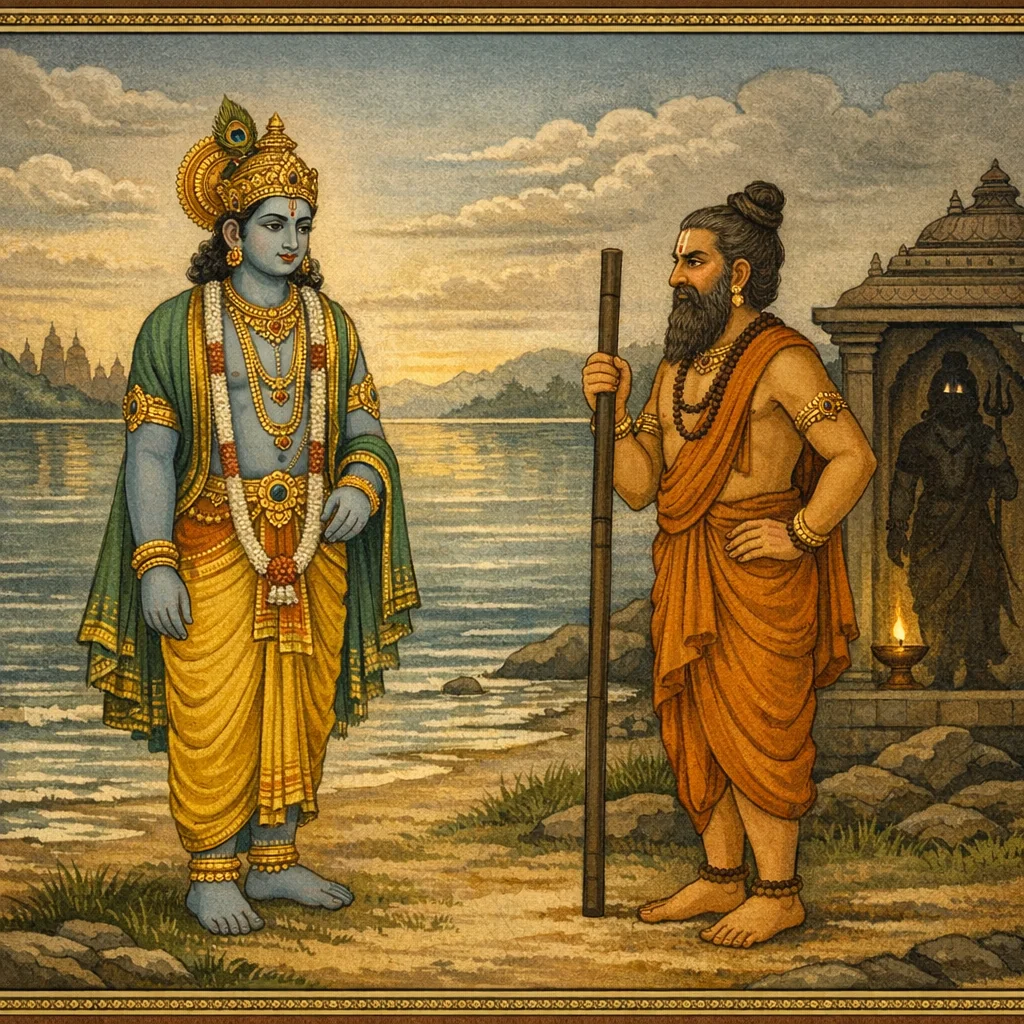
Īśvara tells Devī a sacred place-legend explaining why Cakradhara (Viṣṇu bearing the discus) and Daṇḍapāṇi (a Śaiva guardian) are stationed together at Prabhāsa. It begins with the deluded king Pauṇḍraka Vāsudeva, who imitates Viṣṇu’s insignia and challenges Kṛṣṇa to abandon the cakra and other emblems. Viṣṇu answers with a sharp reversal: he will “cast away” the cakra in Kāśī—by wielding it to defeat the pretender and expose the false claim. Viṣṇu slays Pauṇḍraka and Kāśirāja. Kāśirāja’s son propitiates Śaṅkara and receives a destructive kṛtyā that advances toward Dvārakā. Viṣṇu releases Sudarśana to neutralize it; the kṛtyā flees to Kāśī and seeks Śaṅkara’s protection. Śaṅkara’s intervention escalates the clash of divine weapons until Viṣṇu reaches Prabhāsa near Somēśa/Kālabhairava, where Daṇḍapāṇi urges restraint, warning that further release of the cakra could bring widespread harm. Viṣṇu accepts the injunction and remains there as Cakradhara beside Daṇḍapāṇi. The chapter ends with worship instructions and phalaśruti: devotees who honor Daṇḍapāṇi first and then Hari are freed from “sin-cuirasses” and attain auspicious destinations. Specific lunar days and fasts are praised for removing obstacles and gaining merit oriented toward liberation.
Shlokas
Verse 1
ईश्वर उवाच । ततो गच्छेन्महादेवि यत्र चक्रधरः स्थितः । दंडपाणिश्च देवेशि यत्रैकस्थानसंस्थितः
Īśvara said: Then, O Mahādevī, one should go to the place where Cakradhara abides—where, in that very same spot, Daṇḍapāṇi too, O Goddess of the gods, is established.
Verse 2
चंद्रेशात्पूर्वदिग्भागे ।सोमेशादुत्तरेस्थितः । धनुषां पंचसंस्थाने गंधर्वेशात्समीपतः
It lies to the east of Candra-eśa and to the north of Someśa—at a distance of five bow-lengths—near Gandharveśa.
Verse 3
उमाया नैरृते भागे ब्रह्मदेवर्षिसंस्थितः । तस्योत्पत्तिं प्रवक्ष्यामि सर्वपातकनाशिनीम्
In the south-western quarter of Umā’s shrine stands Brahmadevarṣi. I shall now recount his origin—an account that destroys all sins.
Verse 4
पौंड्रको वासुदेवस्तु वाराणस्यां पुराऽभवत् । तेन श्रुतं पुराणं तु पठ्यमानं द्विजातिभिः
Long ago, Pauṇḍraka Vāsudeva lived in Vārāṇasī. There he heard a Purāṇa being recited by the twice-born.
Verse 5
कल्पादौ द्वापरांते तु क्षत्रियाणां निवेशने । अवतारं महाबाहुवासुदेवः करिष्यति
At the beginning of the kalpa, and again at the close of the Dvāpara age, mighty-armed Vāsudeva will descend as an avatāra among the dwellings of the kṣatriyas.
Verse 6
स तु मूढमतिर्मेने अहं विष्णुरिति प्रिये । चिह्नानि धारयामास चक्रादीनि वरानने
But he, his mind deluded, believed, “I am Viṣṇu,” O beloved. And, O fair-faced one, he began to wear the divine insignia—such as the discus and the rest.
Verse 7
स दूतं प्रेषयामास द्वारकायां महोदरम् । स गत्वा प्राह विष्णुं वै चक्रादीनि परित्यज
He sent a messenger—Mahodara—to Dvārakā. Having gone there, the envoy indeed said to Viṣṇu: “Abandon the discus and the other emblems.”
Verse 8
इत्याह पौंड्रको राजा नचेद्वधमवा प्स्यसि । ततश्च भगवान्विष्णुः प्राहास्य रुचिरं वचः
Thus spoke King Pauṇḍraka: “If not, you shall surely meet death.” Then the Blessed Lord Viṣṇu, smiling, replied with graceful words.
Verse 9
वाच्यः स पौंड्रको राजा त्वया हंत वचो मम । गृहीतचक्र एवाहं काशीमागम्य ते पुरीम्
“Tell that King Pauṇḍraka this word of Mine: ‘Indeed, I shall come to Kāśī, to your city, bearing the discus in My hand.’”
Verse 10
संत्यक्ष्यामि ततश्चक्रं गदां चेमामसंशयम् । तद्ग्राह्यं भवता चक्रमन्यद्वा यत्तवेप्सितम्
“Then, without doubt, I shall cast away this discus and this mace. Let that discus be taken up by you—or any other weapon that you desire.”
Verse 11
इत्युक्तेऽथ गते दूते संस्मृत्याऽभ्या गतं हरिः । गरुत्मन्तं समारुह्य त्वरितस्तत्पुरं ययौ
When this was spoken and the messenger had departed, Hari, recalling his purpose and making ready, mounted Garuḍa and swiftly went to that city.
Verse 12
मित्रस्नेहात्ततस्तस्य काशिराजः सहानुगः । सर्वसैन्यपरीवारस्ततः पौंड्रमुपाययौ
Then, out of friendship for him, the King of Kāśī—together with his followers and surrounded by all his forces—went forth to support Pauṇḍra.
Verse 13
ततो बलेन महता काशिराजबलेन च । पौंड्रको वासुदेवोऽसौ केशवाभिमुखो ययौ
Then Pauṇḍraka—who called himself “Vāsudeva”—advanced to face Keśava, supported by his great force and also by the army of the King of Kāśī.
Verse 14
तं ददर्श हरिर्दूराद्दुर्वारे स्यंदने स्थितम् । चक्रहस्तं गदाशार्ङ्गसंयुतं गरुडध्वजम्
From afar Hari saw him stationed in an impregnable chariot—holding the discus, furnished with mace and the Śārṅga bow, and bearing the banner of Garuḍa.
Verse 15
तं दृष्ट्वा भावगंभीरं जहास गरुडध्वजः । उवाच पौंड्रकं मूढमात्मचिह्नोपलक्षितम्
Seeing him with a grave demeanor, the Lord who bears the Garuḍa-banner laughed and spoke to the deluded Pauṇḍraka, who had marked himself with the Lord’s own emblems.
Verse 16
पौंड्रकोक्तं त्वया यत्तु दूतवक्त्रेण मां प्रति । समुत्सृजेति चिह्नानि तच्च सर्वं त्यजाम्यहम्
As for what Pauṇḍraka has said to Me through your mouth as his messenger—‘Cast away the emblems’—all that I now abandon.
Verse 17
चक्रमेतत्समुत्सृष्टं गदेयं च विस र्जिता । गरुत्मानेष ते गत्वा समारोहतु वै ध्वजम्
This discus is cast away, and this very mace is also released. Let this Garuḍa of yours go and mount your banner indeed!
Verse 18
इत्युच्चार्य विमुक्तेन चक्रेणासौ निपातितः । रथश्च गदया भग्नो गजाश्चा श्वाश्च चूर्णिताः
So saying, he was struck down by the discus that had been hurled. His chariot was smashed by the mace, and the elephants and horses were ground to pieces.
Verse 19
ततो हाहाकृते लोके काशिनाथो महाबली । युयुधे वासुदेवेन मित्रदुःखेन दुःखितः
Then, as the world cried out in alarm, the mighty lord of Kāśī fought with Vāsudeva, grieved at the sorrow of his ally.
Verse 20
ततः शार्ङ्गविनिर्मुक्तैश्छित्त्वा तस्य शरैः शिरः । काशीपुर्यां स चिक्षेप कुर्वंल्लोकस्य विस्मयम्
Then, with arrows shot from Śārṅga, he cut off his head and cast it into the city of Kāśī—astonishing the people of the world.
Verse 21
हत्वा तु पौंड्रकं शौरिः काशिराजं च सानु गम् । पुनर्द्वारवतीं प्राप्तो मृगयाया गतो यथा
After slaying Pauṇḍraka and the king of Kāśī together with his followers, Śauri returned once more to Dvāravatī, as one returns after going out to hunt.
Verse 22
ततः काशिपतेः पुत्रः पितुर्दुःखेन दुःखितः । शंकरं तोषयामास स च तस्मै वरं ददौ
Then the son of the lord of Kāśī, grieved by his father’s sorrow, propitiated Śaṅkara; and Śaṅkara granted him a boon.
Verse 23
स वव्रे भगवन्कृत्या पितुर्हंतुर्वधाय मे । समुत्तिष्ठतु कृष्णस्य त्वत्प्रसादात्सुरेश्वर
He chose this boon: “O Blessed Lord, by your grace, O Lord of the gods, let a Kṛtyā arise to slay Kṛṣṇa, the killer of my father.”
Verse 24
एवं भविष्यतीत्युक्ते दक्षिणाग्नेस्तु मध्यतः । महाकृत्या समुत्तस्थौ प्रस्थिता द्वारकां प्रति
When (Śiva) said, “So shall it be,” from the midst of the southern sacred fire a great Kṛtyā rose up and set out toward Dvārakā.
Verse 25
ज्वालामालाकरालां तां यादवा भयविह्वलाः । दृष्ट्वा जनार्द्दनं सर्वे शरणार्थमुपागताः
Seeing that terrifying being encircled by garlands of flame, the Yādavas, shaken with fear, all approached Janārdana seeking refuge.
Verse 26
ततः सुदर्शनं तस्या मुमोच गरुडध्वजः । वधाय सा ततो भग्ना चक्रतेजोऽभिपीडिता
Then the Garuḍa-bannered Lord (Kṛṣṇa) released Sudarśana against her for her destruction. Thereupon she was shattered, crushed by the blazing power of the discus.
Verse 27
कृत्यामनुजगामाशु विष्णोश्चक्रं सुदर्शनम् । कृत्या वाराणसीं प्राप्ता तस्याश्चक्रं तु पृष्ठतः
Sudarśana, Viṣṇu’s discus, swiftly pursued the Kṛtyā. The Kṛtyā reached Vārāṇasī, and the discus followed close behind her.
Verse 28
ततः सा भयसंत्रस्ता शंकरं शरणं गता । सोमनाथं जगन्नाथं नान्यः शक्तो हि रक्षितुम्
Then she, shaken with fear, sought refuge in Śaṅkara—Somnātha, the Lord of the universe—for none other had the power to protect her.
Verse 29
ततश्चक्रं वरैर्बाणैस्ताडयामास शंकरः । तच्च द्वारवतीं प्राप्तं शिवसायकमिश्रितम्
Then Śaṅkara struck the discus with excellent arrows; and that discus, mingled with Śiva’s missiles, reached Dvāravatī.
Verse 30
तद्दृष्ट्वा शिवनामांकैस्ताडितं भगवान्हरिः । चक्रं शरैस्ततः कुद्धो गृहीत्वा च करेण तत् । जगाम तत्र यत्रास्ते सोमेशः कालभैरवः
Seeing that his discus had been struck by arrows marked with Śiva’s name, Lord Hari became enraged; taking that discus in his hand, he went to the place where Someśa—Kālabhairava—abides.
Verse 31
स गत्वा रोष ताम्राक्षश्चक्रोद्यतकरः स्थितः । कृत्यां हंतुं मतिं चक्रे कालभैरवनिर्मिताम्
Having gone there, red-eyed with wrath, he stood with hand raised to cast the discus, and resolved to destroy the kṛtyā created by Kālabhairava.
Verse 32
दृष्टो देवैस्ततः सर्वैदंडपाणिगणेन च । देवानां प्रेक्षतां तत्र दण्डपाणिर्महागणः । चक्रोद्यतकरं दृष्ट्वा विष्णुं प्राहाब्जलोचनम्
Then he was seen by all the gods and by the hosts of Daṇḍapāṇi. While the gods looked on there, Daṇḍapāṇi, the great gaṇa, seeing Viṣṇu with hand raised to cast the discus, spoke to the lotus-eyed one.
Verse 33
दंडपाणिरुवाच । मा क्रोधं कुरु देवेश कृत्यां प्रति जगत्प्रभो
Daṇḍapāṇi said: “Do not give way to anger, O Lord of the gods, O Lord of the world, with regard to the kṛtyā.”
Verse 34
अमोघं युधि ते चक्रं कृत्या चापि च शांकरी । एवं चक्र विनिर्मुक्ते भवेत्कोधो हरे यदि । भविष्यति महद्दुःखं लोकानां संक्षयो हि वा
Your discus is unfailing in battle, and this Śaṅkara-born kṛtyā too is formidable. If, O Hari, anger persists when the discus is released, great suffering will arise for the worlds—or even their destruction.
Verse 35
न मोक्तव्यमतश्चक्र शृणु भूयो वचश्च नः । अत्र स्थाने नियुक्तोऽहं शंकरेण पुरा हरे
Therefore the discus must not be released—listen again to my words. In this very place, O Hari, I was formerly appointed by Śaṅkara (for a purpose).
Verse 36
पापिनां रक्षणार्थं वै विघ्नार्थं दुष्टचेतसाम् । तस्मात्त्वं मम सांनिध्ये तिष्ठ चक्रधरो हरे
Truly, I was appointed to protect even sinners and to thwart the wicked-minded. Therefore, O Hari, Bearer of the discus, remain here in my presence.
Verse 37
अत्र चक्रधरं देवं पूजयिष्यंति मानवाः । धूपमाल्योपहारैश्च नैवेद्यैर्विवि धैरपि
Here people will worship the god Cakradhara with incense, garlands, offerings, and with various kinds of naivedya (food oblations).
Verse 38
विष्णुरुवाच । एष एव निवृत्तोहं तव वाक्यांकुशेन वै । अत्र चक्रोद्यतकरः स्थास्ये तव समीपतः
Viṣṇu said: “By the goad of your words alone I have indeed withdrawn. Here, with my discus raised in my hand, I shall remain close by your side.”
Verse 39
एवं हि स्थितोदेवस्तत्र चक्रधरः प्रिये । दंडपाणिश्च भगवान्मम रूपी गणेश्वरः
“Thus indeed the Lord remains there, O beloved, as Cakradhara, the Bearer of the Discus; and there too stands Daṇḍapāṇi—the blessed Gaṇeśvara—who is of my very form.”
Verse 40
यस्तौ पूजयते भक्त्या दंडपाणिहरी क्रमात् । स पाप कंचुकैर्मुक्तो गच्छेच्छिवपुरं नरः
Whoever worships those two in devotion—Daṇḍapāṇi and Hari—in due order, that person, freed from the “garments” of sin, goes to Śiva’s city (Śivapura).
Verse 41
माघे मासि चतुर्द्दश्यां कृष्णाष्टम्यां विशेषतः । गंधधूपोपहारैर्यः पूजयेद्दण्डनायकम् । तस्य क्षेत्रे निवसतो न विघ्नं जायते क्वचित्
Especially in the month of Māgha—on the fourteenth lunar day and most of all on Kṛṣṇāṣṭamī—whoever worships Lord Daṇḍanāyaka with perfumes, incense, and offerings: for one who dwells in this sacred kṣetra, obstacles never arise anywhere.
Verse 42
एकादश्यां जिताहारो योऽर्चयेच्चक्रपाणिनम् । स मुक्तः पातकैः सर्वैर्याति विष्णोः सलोकताम्
On Ekādaśī, one who is restrained in diet and worships Cakrapāṇi, the Bearer of the discus, is freed from all sins and attains salokatā—dwelling in Viṣṇu’s world.
Verse 43
इति संक्षेपतः प्रोक्तं माहात्म्यं चक्रपाणिनः । दण्डपाणिगणस्यापि श्रुतं पापौघनाशनम्
Thus, in brief, the greatness of Cakrapāṇi has been declared; and the account of the host of Daṇḍapāṇi too has been heard—a narration that destroys torrents of sin.