Adhyaya 8
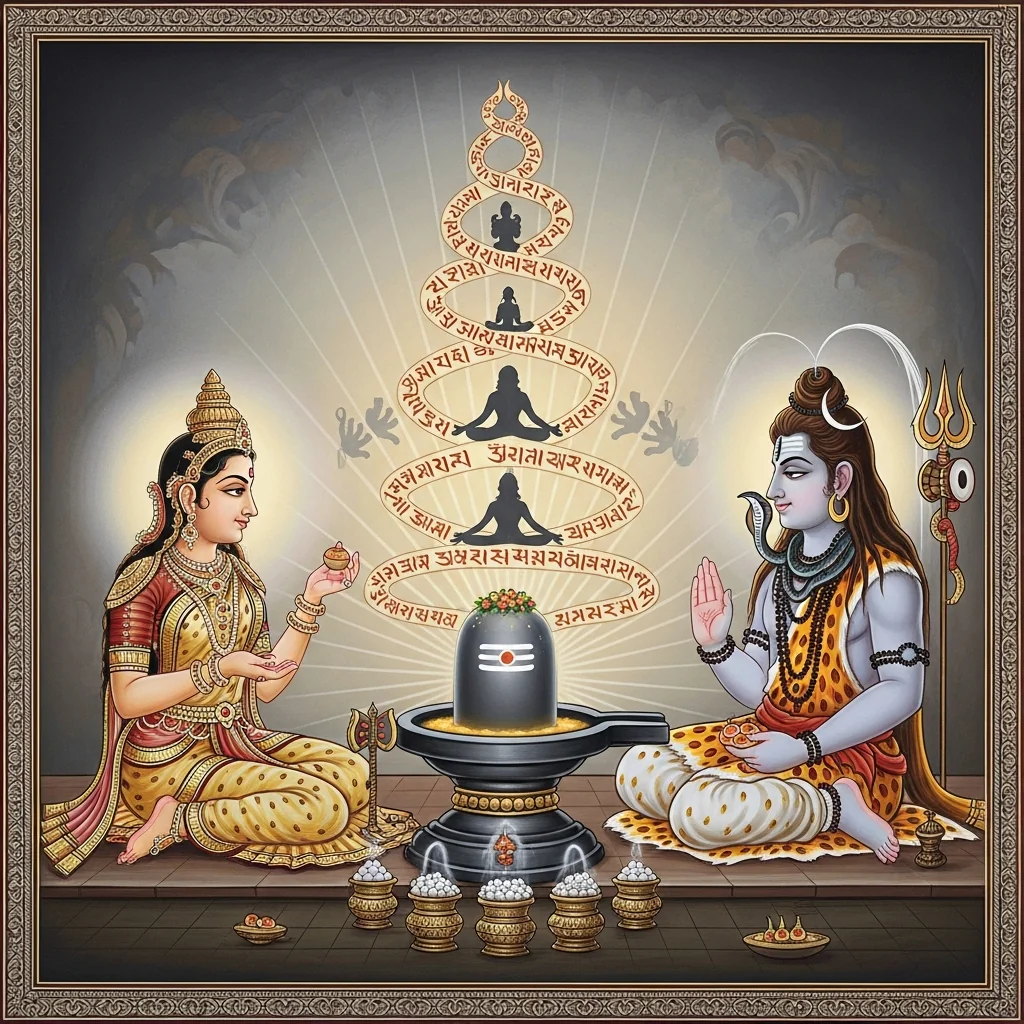
Chapter 8 unfolds as a Devī–Īśvara dialogue. Devī asks to hear again of Śrī Someśvara’s purifying greatness and the triadic theological frame of Brahmā–Viṣṇu–Īśa. Īśvara replies by describing marvels of the Someśvara-liṅga: vast hosts of ascetic ṛṣis are said to have entered or merged into the liṅga, and from it arise personified prosperities and stabilizing powers—siddhi, vṛddhi, tuṣṭi, ṛddhi, puṣṭi, kīrti, śānti, and lakṣmī. The chapter then catalogs mantra-siddhis, yogic attainments, medicinal/alchemical rasas, and specialized knowledge streams—Garuḍa lore, bhūta-tantra, and khecarī/antarī traditions—as emanations linked to this sacred locus. It names groups of siddhas (including Pāśupata-associated figures) who gained accomplishment at Someśvara in Prabhāsa across the yugas, while noting that ordinary beings often fail to recognize the site’s worth due to unwholesome karma. A detailed register of afflictions—planetary faults, spirit disturbances, and diseases—is presented as being neutralized through Someśvara-darśana. Someśvara is identified with epithets such as Paścimo Bhairava and Kālāgnirudra, and the chapter closes by reaffirming the condensed praise: Someśvara’s māhātmya is “sarva-pātaka-nāśana,” the tīrtha-theological doctrine of comprehensive moral purification.
Shlokas
Verse 1
देव्युवाच । पुनः कथय देवेश माहात्म्यं लोकशंकर । श्रीसोमेश्वरदेवस्य सर्वपातकनाशनम् । ब्रह्मविष्ण्वीशदैवत्यं तथात्र त्रितयं वद
The Goddess said: ‘O Lord of gods, O benefactor of the worlds, tell again the greatness of the venerable god Someśvara—the destroyer of all sins. Also explain here the triad of divine presence: Brahmā, Viṣṇu, and Īśa.’
Verse 2
ईश्वर उवाच । शृणुष्वैकमना भूत्वा मम गोप्यं पुरातनम् । तस्मिंल्लिंगे च यद्वृत्तमाश्चर्यं परमं महत्
Īśvara said: ‘Listen with a single-pointed mind to my ancient secret—what happened at that Liṅga, a supreme and great wonder.’
Verse 3
षष्टिकोटि सहस्राणि ऋषीणामूर्द्ध्वरेतसाम् । तस्मिंल्लिंगे प्रविष्टानि ते घृताहुतिरिवानले
Sixty crores of thousands of sages—masters of the upward-flowing vital power—entered into that Liṅga, like ghee-offerings poured into fire.
Verse 4
सिद्धिर्वृद्धिस्तथा तुष्टिरृद्धिः पुष्टिस्तु पंचमी । कीर्तिः शांतिस्तथा लक्ष्मीस्तस्मिंल्लिंगे समुत्थिता
From that very Liṅga arose Siddhi (accomplishment), Vṛddhi (increase), Tuṣṭi (contentment), Ṛddhi (prosperity), and Puṣṭi (nourishment) as the fifth; and also Kīrti (fame), Śānti (peace), and Lakṣmī (fortune).
Verse 5
सप्तकोट्यस्तु मंत्राणां सिद्धीनां चैव संभवः । दिव्ययोगरसाश्चान्ये दिव्यौषधिरसायनाः
From that holy source arise the attainments of mantra—seven crores in number—and the very possibility of supernatural perfections. There also manifest other divine yogic essences, and alchemical elixirs prepared from celestial herbs.
Verse 6
गारुडं भूततंत्रं च खेचर्यो व्यंतरीस्तथा । ते सर्वे सह योगेन तस्माल्लिंगात्समुत्थिताः
The Garuḍa-lore and the disciplines dealing with spirits, as well as the Khecarīs and the Vyantarīs— all of these, together with yogic power, are said to have arisen from that very Liṅga.
Verse 7
अन्याश्चैव तु याः काश्चित्सिद्धयोऽष्टौ प्रकीर्तिताः । ताः सर्वाः सह लिंगेन तस्मात्स्थानात्समुत्थिताः
And whatever other siddhis are proclaimed—especially the famed eight perfections— all of them, together with the Liṅga, have arisen from that sacred spot.
Verse 8
इति श्रीस्कान्दे महापुराण एकाशीतिसाहस्र्यां संहितायां सप्तमे प्रभासखण्डे प्रथमे प्रभासमाहात्म्ये श्रीसोमेश्वरैश्वर्यवर्णनं नामाष्टमोऽध्यायः
Thus ends the Eighth Chapter, entitled “The Description of the Sovereign Glory of Śrī Someśvara,” in the Prabhāsa Khaṇḍa—within the Prabhāsa Māhātmya—of the Śrī Skanda Mahāpurāṇa, in the compilation of eighty-one thousand verses.
Verse 9
अन्यद्देवि प्रवक्ष्यामि अत्र सिद्धिं गतास्तु ये । ममांशसंभवाः प्राप्ता अस्मिंल्लिंगे लयं गताः
O Devī, I shall declare something further: those who attained perfection here—born of a portion of my own power—having arrived, entered dissolution into this very Liṅga.
Verse 10
विमला दंडिकाश्चैव सप्तैते कुत्सिकाः स्मृताः । अस्मिंल्लिंगे पुरा सिद्धा योगात्पाशुपतान्मम
Vimalā and Daṇḍikā—these seven are remembered as the Kutsikās. Long ago they attained perfection at this Liṅga through my Pāśupata-yoga.
Verse 11
रुद्रो विप्रस्तथा दानश्चंद्रो मन्थोऽवलोककः । सूर्यावलोकश्चेति गार्गेयाः सप्त कीर्त्तिताः
Rudra, Vipra, Dāna, Candra, Mantha, Avalokaka, and Sūryāvaloka—these seven are celebrated as the Gārgeyās.
Verse 12
सोमेश्वरे च ते सिद्धाः प्रभासे वरवर्णिनि । मूकमन्यः शिवश्चैव प्रकाशः कपिलस्तथा
At Someśvara in Prabhāsa, O fair-complexioned one, they attained perfection. Mūka, Manya, Śiva, Prakāśa, and likewise Kapila—(these are among them).
Verse 13
सत्कुलः कर्णिकारश्च पौरुषेयाः प्रकीर्त्तिताः । सोमेश्वरे पुरा सिद्धाः प्रभासे पापनाशने
Satkula and Karṇikāra are proclaimed among the Pauruṣeyas. Long ago they attained perfection at Someśvara in Prabhāsa, the destroyer of sin.
Verse 14
युगेयुगे पुरा सिद्धास्तस्मिंल्लिंगे प्रिये मम । एते चान्ये च ये विप्रा भविष्यंति कलौ युगे
In age after age, beloved, many attained perfection at that Liṅga. And these—and others as well—those brāhmaṇas who shall arise in the Kali age will also be connected to it.
Verse 16
दुर्ल्लभं सर्वमर्त्त्यानां प्रभासे तु व्यवस्थितम् । न च कश्चिद्विजानाति अशुभैः कर्मभिर्वृतः
In Prabhāsa is established that which is hard to attain for all mortals; yet no one—enshrouded by inauspicious deeds—truly recognizes it.
Verse 17
ग्रहदोषास्तु ये केचिद्भूतदोषास्तथा परे । डाकिनीप्रेतवेताला राक्षसा ग्रहपूतनाः
Whatever afflictions arise from planets, and whatever other troubles come from spirits—ḍākinīs, pretas, vetālas, rākṣasas, and the seizing forces such as pūtanās—
Verse 18
पिशाचा यातुधानाश्च मातरो जातहारिकाः । बालग्रहास्तथा चान्ये बुद्धाश्चैव तु ये ग्रहाः
Piśācas and yātudhānas, the ‘mothers’ who steal away newborns, child-seizing forces, and other such grasping afflictions—
Verse 19
तत्र सिद्धिं गमिष्यंति दुर्ल्लभां त्रिदशैरपि । एतत्ते सर्वमाख्यातं तल्लिंगं सिद्धिदं परम्
There they attain siddhi—an accomplishment hard to gain even for the gods. Thus has all been declared to you: that liṅga is supreme, the highest bestower of siddhi.
Verse 20
दुर्नामकास्तथा चान्ये कुष्ठरोगास्तथा परे । क्षयरोगास्तथा चान्ये वातगुल्मास्तथैव च । अन्ये चैव तु ये केचिद्व्याधयस्तु प्रकीर्त्तिताः
So too are malignant swellings and other ailments—leprosy (kuṣṭha) and the like, consumption (kṣaya) and other wasting diseases, vāta-disorders and abdominal tumors, and whatever other maladies are spoken of—
Verse 21
सोमेश्वरं समासाद्य तस्य लिंगस्य दर्शनात् । सर्व एव विनश्यंति वह्नौ क्षिप्तमिवेन्धनम्
Approaching Someśvara, by the very sight of that liṅga, all these are destroyed—like fuel cast into fire.
Verse 22
उपसर्गाश्च चान्ये सर्पघोणपवृश्चिकाः । सर्वे तत्र विनश्यंति श्रीसोमेश्वरदर्शनात्
Other calamities too—snakes, ghoṇas, and scorpions—are all destroyed there by the sight (darśana) of venerable Someśvara.
Verse 23
योऽसौ सोमेश्वरो नाम्ना पश्चिमो भैरवः स्मृतः । कालाग्निरुद्रनाथेति पर्यायैर्नामभिः श्रुतः
He who is known by the name Someśvara is remembered as the Western Bhairava, and is also heard of by the synonymous names “Kālāgnirudra” and “Rudranātha”.
Verse 24
तस्मिंस्तिष्ठामि देवेशि भक्तानुग्रहकारकः । सर्वं च दुष्कृतं नृणां भक्षयामि न संशयः
O Goddess, I abide there as the bestower of grace upon devotees; and I devour all the evil deeds of men—of this there is no doubt.
Verse 25
योऽसौ प्राणः शरीरस्थो देहिनां देहसंचरः । ब्रह्मांडमेतद्यस्यांतरेको यश्चाप्यनेकधा
That very Prāṇa which abides within the body, moving through the bodies of embodied beings—within whom this entire cosmic egg exists—who is one, and yet also manifold.
Verse 26
वेदाः सर्वेऽपि यं देवं प्रशंसंति महर्षयः । परस्य ब्रह्मणो रूपं यस्य द्वारेण लभ्यते
That very God whom all the Vedas praise and whom the great sages extol—through whose ‘gateway’ the form of the Supreme Brahman is realized.
Verse 27
सोऽयं देवि महादेवः प्रभासे संव्यवस्थितः । यथा गुप्तं गृहे रत्नं न कश्चिद्विंदते नरः
O Goddess, this very Mahādeva abides firmly established in Prabhāsa. Just as a jewel hidden within a house is not found by just anyone, so too is He not recognized without right seeking.
Verse 28
प्रभासे तु स्थितं तद्वद्रत्नभूतं गृहे मम । तच्च लिंगं पुरा कल्पे सप्तपातालभेदकम्
Likewise, in Prabhāsa, within My own ‘house’, there stands that jewel-like presence. That Liṅga, in an ancient aeon, was said to pierce through the seven Pātālas (netherworlds).
Verse 29
कथितं कोटि सूर्यस्य प्रलयानलसंनिभम् । तेनकालाग्निरुद्रेति प्रोक्तं सोमेश्वरः पुरा
It is said to resemble the fire of cosmic dissolution, blazing like a crore of suns. Therefore, in ancient times Somēśvara was spoken of as “Kālāgnirudra”.
Verse 30
इति देवि समासेन कथितं तव पार्वति । सोमेश्वरस्य माहात्म्यं सर्वपातकनाशनम्
Thus, O Goddess Pārvatī, I have briefly told you the greatness of Somēśvara, the destroyer of all sins.