Adhyaya 7
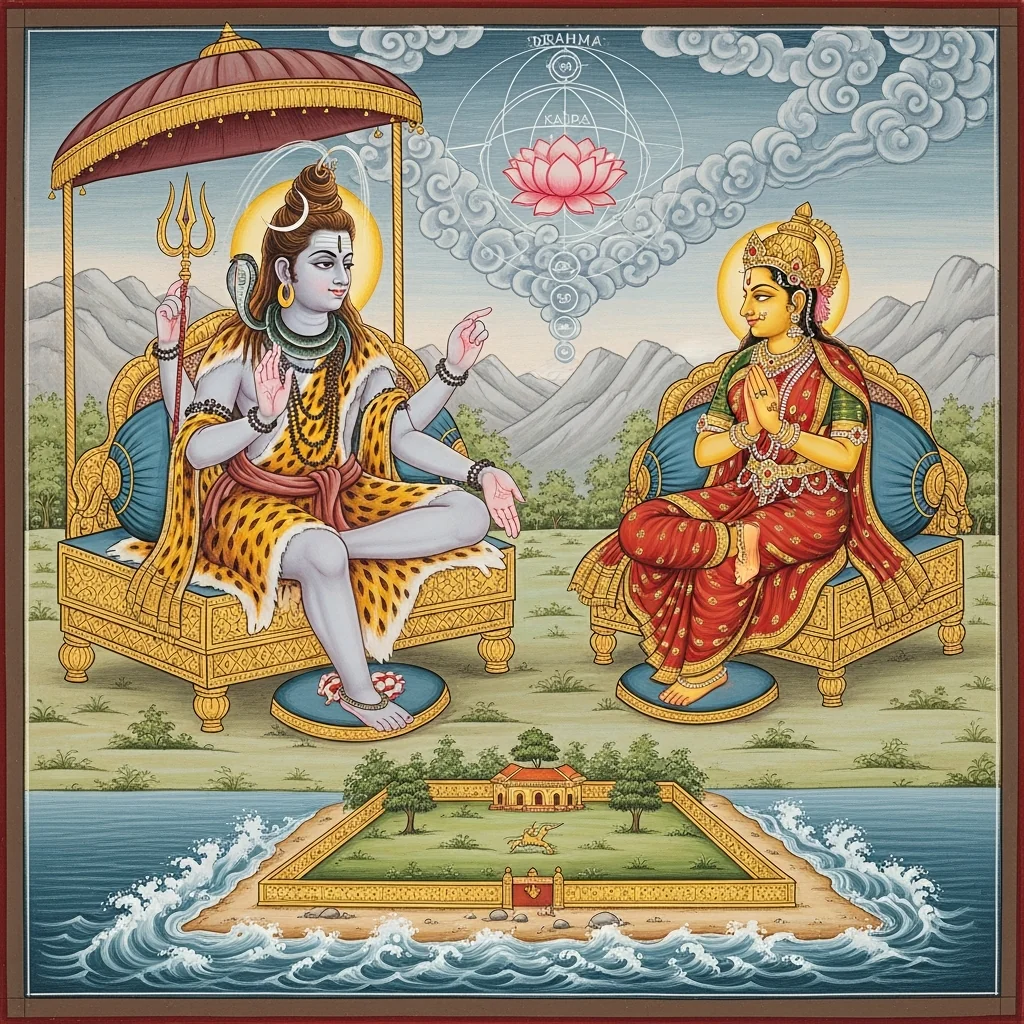
Chapter 7 unfolds as a theological dialogue between Devī and Śaṅkara. After hearing earlier praises, Devī asks how the name “Som(e)śvara/Somnātha” arose, whether it is truly stable, and how it can vary with time; she also inquires into the liṅga’s former and future names. Īśvara answers by placing the liṅga within cyclical cosmology: across successive Brahmā-epochs it bears different names, which he lists in sequence, culminating in the present “Somnātha/Som(e)śvara” and a future designation, “Prāṇanātha.” Devī’s forgetfulness is explained through her repeated avatāras across many kalpas; Śiva recounts her names and forms through multiple cycles, linking embodiment and memory-loss to prakṛti and cosmic function. The seeming fixity of “Somnātha” is then clarified through Soma/Candra’s tapas and worship of the liṅga (here invoked with a fierce epithet), and the boon that the name “Somnātha” remain renowned throughout the Brahmā-cycle for all future lunar incumbents. The chapter then turns to sacred topography: Śiva defines Prabhāsa’s extent, the central sanctum zone, directional boundaries, and the liṅga’s placement near the sea. It proclaims salvific results for beings who die within the holy circle, warns strongly against wrongdoing in that field, and introduces Vighnanāyaka’s protective governance to restrain grave transgressors. It closes with heightened praise of Som(e)śvara’s liṅga as uniquely beloved, a confluence of tīrthas and liṅgas, and a means to liberation through devotion, remembrance, and disciplined recitation.
Shlokas
Verse 1
सूत उवाच । एवं तत्र तदा देवी श्रुत्वा माहात्म्यमुत्तमम् । हर्षोत्कंठितया वाचा पुनः पप्रच्छ शंकरम्
Sūta said: Thus, at that time, the Goddess—having heard that excellent account of greatness—again questioned Śaṅkara, her words filled with joy and eager longing.
Verse 2
देव्युवाच । देवदेव जगन्नाथ भक्तानुग्रहकारक । समस्तज्ञानसंपन्न नमस्तेऽस्तु महेश्वर
The Goddess said: O God of gods, Lord of the world, bestower of grace upon devotees—O Mahēśvara, endowed with all knowledge—salutations be to you.
Verse 3
नमोऽस्तु वै त्रिपुरप्रहर्त्रे महात्मने तारकमर्दनाय । नमोऽस्तु ते क्षीरसमुद्र दायिने शिशोर्मुनीन्द्रस्य समाहितस्य
Salutations to You, the smiter of Tripura, the great-souled One who crushed Tāraka. Salutations to You who bestowed the Ocean of Milk, and to You who granted steadfast, gathered samādhi to the child-sage, lord among munis.
Verse 4
नमोऽस्तु ते सर्वजगद्विधात्रे सर्वत्र सर्वात्मक सर्वकर्त्रे । नमो भवायास्तु नमोऽभवाय नमोऽस्तु ते सर्वगताय नित्यम्
Salutations to You, the ordainer of the whole universe—everywhere present, the Self of all, the doer of all. Salutations to Bhava, salutations to Abhava; eternal salutations to You who pervade all.
Verse 5
ईश्वर उवाच । किं देवि पृच्छसेऽद्यापि सर्वं ते कथितं मया । संदिग्धमस्ति किंचिच्चेत्पुनः पृच्छस्व भामिनि
Īśvara said: “What do you still wish to ask, O Devī? I have told you everything. If anything remains doubtful, ask again, O fair one.”
Verse 6
देव्युवाच । सोमेश्वरेति यन्नाम कस्मिन्काले बभूव तत् । किं नामाग्रेऽभवल्लिंगं नाम किं भविताऽधुना
The Goddess said: “The name ‘Somēśvara’—at what time did it arise? What was the liṅga called in the beginning, and what name will it bear now, in the present age?”
Verse 7
एवं यस्य प्रभावो वै नोक्तः पूर्वं त्वया विभो । अन्येषां तीर्थदेवानां माहात्म्यं वर्णितं त्वया । न त्वीदृशं तु कथितं श्रीसोमेशस्य यादृशम्
Thus, O Lord, you have not previously spoken of this One’s true power. You have described the greatness of other tīrthas and their deities, yet nothing like the majesty of revered Śrī Somēśvara has been told.
Verse 8
ईश्वर उवाच । पूर्वमेवाहमेवासं स्पर्शलिंगस्वरूपवान् । न च मां तत्त्वतो वेद जनः कश्चिदिहेश्वरि
Īśvara said: Formerly, I myself abided here in the form of the Sparśa-liṅga. Yet, O Lady, no one in this place truly knew me in my real nature.
Verse 9
महाकल्पे तु सञ्जाते ब्रह्मणः प्रति संचरे । नामभावं भवेदन्यद्देवि लिंगे पुनःपुनः
When a great aeon arises and Brahmā enters his recurring cycles, O Devī, the liṅga repeatedly assumes different states of name and designation.
Verse 11
अस्मिन्ब्रह्मणि देवेशि संजाते ह्यष्टवार्षिके । तदा कालात्समारभ्य सोमेश इति विश्रुतः
O Devī, in this present creation-cycle of Brahmā, when the Lord became known in that phase, from that time onward, in the holy Prabhāsa-kṣetra, He was renowned as “Someśa” (the Lord of Soma).
Verse 12
अतीतेषु च देवेशि ब्रह्मसुप्तलयादनु । बभूवुर्यानि नामानि तानि त्वं शृणु पार्वति
And, O Devī—after the dissolutions that follow Brahmā’s “sleep”—whatever names (of the Lord at Prabhāsa) arose in those past cycles, hear them now, O Pārvatī.
Verse 13
आद्यो विरंचिनामासीद्यदा ब्रह्मा पितामहः । मृत्युञ्जयस्तदा नाम सोमनाथस्य कीर्तितम्
In the first cycle, when Brahmā was known as Virañci, the Grandsire, the name then celebrated for Somanātha was “Mṛtyuñjaya” (the Conqueror of Death).
Verse 14
द्वितीयोऽभूद्यदा ब्रह्मा पद्मभूरिति विश्रुतः । तदा कालाग्निरुद्रेति नाम प्रोक्तं शुभेंऽबिके
In the second cycle, when Brahmā was famed as Padmabhū, the Lotus-born, then, O auspicious Ambikā, the Lord’s name was proclaimed as “Kālāgnirudra,” Rudra as the Fire of Time.
Verse 15
तृतीयोऽभूद्यदा ब्रह्मा स्वयंभूरिति विश्रुतः । अमृतेशेति देवस्य तदा नाम प्रकीर्तितम्
In the third cycle, when Brahmā was renowned as Svayaṃbhū, the Self-born, the Lord’s name in that time was celebrated as “Amṛteśa,” the Lord of Immortality, of the Nectar.
Verse 16
चतुर्थोऽभूद्यथा ब्रह्मा परमेष्ठीति विश्रुतः । अनामयेति देवस्य तदा नाम स्मृतं शुभे
In the fourth cycle, when Brahmā was known as Parameṣṭhī, then, O auspicious one, the Lord’s name was remembered as “Anāmaya,” the Disease-less, the Unafflicted.
Verse 17
पंचमोऽभूद्यदा ब्रह्मा सुरज्येष्ठ इति स्मृतः । कृत्तिवासेति देवस्य नाम प्रोक्तं तदाम्बिके
In the fifth cycle, when Brahmā was remembered as Surajyeṣṭha, then, O Ambikā, the Lord’s name was declared as “Kṛttivāsa,” He who dwells in the skin, the austere Śiva.
Verse 18
षष्ठश्चाभूद्यदा ब्रह्मा हेमगर्भ इति श्रुतः । तदा भैरवनाथेति नाम देवस्य कीर्तितम्
In the sixth cycle, when Brahmā was spoken of as Hemagarbha, the Golden-womb, then the Lord’s name was celebrated as “Bhairavanātha,” Lord Bhairava.
Verse 19
अयं यो वर्त्तते ब्रह्मा शतानंद इति स्मृतः । सोमनाथेति देवस्य वर्तते नाम सांप्रतम्
In this present cycle, the Brahmā who now presides is remembered as Śatānanda; and at present the Lord’s Name is established as “Somanātha.”
Verse 20
अतः परं चतुर्वक्त्रो ब्रह्मा यो भविता यदा । प्राणनाथेति देवस्य तदा नाम भविष्यति
Hereafter, when the four-faced Brahmā who is yet to come arises, then the Lord’s Name will be “Prāṇanātha” (Lord of the life-breath).
Verse 21
अतीता ये विधातारो भविष्यंति च येऽधुना । तावत्तद्वर्त्तते नाम यावदन्योष्टवार्षिकः । संध्यासंध्यांशभेदेन विष्ण्वनंतसनातनाः
As many cosmic ordainers (vidhātṛs) as have passed, and as many as exist now or will come in the future—so long does that particular divine Name remain in force, until another cycle of eight years arises. Thus, according to the divisions of the twilight periods and their portions, the Lord is praised as Viṣṇu, Ananta, and Sanātana.
Verse 22
एवं नामानि देवस्य संक्षेपात्कीर्तितानि मे । विस्तरात्कथितुं नैव शक्यंते कालगौरवात्
Thus, I have recounted the Lord’s Names only in brief. To narrate them in full detail is not possible, because Time itself is vast and weighty.
Verse 23
देव्युवाच । आश्चर्यं देवदेवेश यत्त्वया कथितं प्रभो । पूर्वोक्तानि च नामानि न स्मरंति च मे कथम्
The Goddess said: “Marvelous indeed, O Lord of the gods, what you have spoken, O Master. But how is it that the Names you previously uttered do not arise in my memory?”
Verse 24
एतद्विस्तरतो ब्रूहि कारणं च जगत्पते । सर्वभूतहितार्थाय ममानुग्रहकाम्यया
Explain this to me in full detail, O Lord of the world, and also its cause—so that it may bring welfare to all beings, and out of your wish to bestow grace upon me.
Verse 25
ईश्वर उवाच । कल्पेकल्पे महादेवि अवतारं करोषि यत् । तेन ते स्मरणं नास्ति प्रभावात्प्रकृतेः प्रिये
Īśvara said: “O Great Goddess, because you take incarnation in each and every kalpa, your recollection does not remain—through the overpowering influence of Prakṛti, O beloved.”
Verse 26
तत्त्वावरणमध्ये तु तत्राद्या त्वं प्रतिष्ठिता । साऽवतीर्यांडमध्ये तु मया सार्द्धं वरानने
Indeed, within the midst of the veiling of principles (tattvas), you, the Primordial One, abide established there. Then, descending into the interior of the cosmic egg, you came—together with me, O fair-faced one.
Verse 27
अनुग्रहार्थं लोकानां प्रादुर्भूता पुनःपुनः । आद्ये कल्पे जगन्माता जगद्योनिर्द्वितीयके
For the sake of showing grace to the worlds, you manifest again and again. In the first kalpa you were known as ‘Mother of the Universe’; in the second, as ‘Womb/Source of the Universe.’
Verse 28
तृतीये शांभवीनाम चतुर्थे विश्वरूपिणी । पञ्चमे नंदिनीनाम षष्ठे चैव गणांबिका
In the third kalpa you were called Śāmbhavī; in the fourth, Viśvarūpiṇī (She whose form is the whole universe). In the fifth you were named Nandinī; and in the sixth, Gaṇāmbikā (Mother of the Gaṇas).
Verse 29
विभूतिः सप्तमे कल्पे सुभूतिश्चाष्टमे तदा । आनन्दा नवमे कल्पे दशमे वामलोचना
In the seventh kalpa you were called Vibhūti; then, in the eighth, Subhūti. In the ninth kalpa you were known as Ānandā; and in the tenth, Vāmalocanā—She of lovely eyes.
Verse 30
एकादशे वरारोहा द्वादशे च सुमङ्गला । कल्पे त्रयोदशे चैव महामाया ह्युदाहृता
In the eleventh kalpa you were called Varārohā, of majestic bearing; in the twelfth, Sumaṅgalā, the Most Auspicious. And in the thirteenth kalpa you were indeed proclaimed as Mahāmāyā, the Great Power of manifestation.
Verse 31
ततश्चतुर्दशे कल्पेऽनन्तानाम प्रकीर्तिता । भूतमाता पंचदशे षोडशे चोत्तमा स्मृता
Then, in the fourteenth kalpa, you were celebrated by the name Anantānāmā. In the fifteenth, you were renowned as Bhūtamātā, the Mother of beings; and in the sixteenth, you were remembered as Uttamā, the Supreme One.
Verse 32
ततः सप्तदशे कल्पे पितृकल्पे तु विश्रुता । दक्षस्य दुहिता जाता सतीनाम्नी महाप्रभा
Then, in the seventeenth kalpa—famed as the Pitṛ-kalpa—you were born as the daughter of Dakṣa, the great radiant one, renowned by the name Satī.
Verse 33
अपमानात्तु दक्षस्य स्वां तनूमत्यजत्पुनः । उमां कलां तु चन्द्रस्य पुरापूर्य च संस्थिता
But due to Dakṣa’s insult, you abandoned your own body once again. Thereafter you abided as Umā—indeed as a portion (kalā) of the Moon—filling the worlds and remaining established in your divine presence.
Verse 34
ततः प्रवृत्ते वाराहे कल्पे त्वं सुरसुन्दरि । पुनर्हिमवताराध्य दुहिता त्वमतः कृता
Then, when the Vārāha-kalpa commenced, O beauty among the gods, after propitiating Himavat, Lord of the mountains, you were again made the daughter of Himavat.
Verse 35
ततो देव्यद्भुतं तप्त्वा तपः परमदुश्चरम् । भर्त्तारं मां पुनः प्राप्य पार्वतीति निगद्यसे
Then, O Goddess, having performed marvelous austerity—tapas supremely hard to accomplish—you attained me again as your husband; therefore you are spoken of as Pārvatī.
Verse 36
कैलासनिलयश्चाहं त्वया सार्द्धं वरानने । क्रीडामि तव देवेशि यावत्कल्पावसानकम्
I dwell on Kailāsa, and together with you, O lovely-faced one, I sport in divine play, O Goddess, until the very end of the kalpa.
Verse 37
इदं चतुर्गुणं प्राप्य द्वापरे विष्णुना सह । महिषस्य वधार्थाय उत्पन्ना कृष्णपिंगला
Having attained this fourfold power, in the Dvāpara age—together with Viṣṇu—you arose as Kṛṣṇapiṅgalā for the purpose of slaying the buffalo-demon.
Verse 38
कात्यायनीति दुर्गेति विविधैर्नामपर्ययैः । नवकोटिप्रभेदेन जातासि वसुधातले
As Kātyāyanī, as Durgā, and by many variant names, you have manifested upon the earth with distinctions extending to nine koṭis—countless millions of forms.
Verse 39
यानि ते कल्पनामानि पूर्वमुक्तानि सुन्दरि । तानि त्रयोदशाकल्पादुदक्तात्कथितानि मे
O fair one, the kalpa-related names of yours spoken earlier—I have recounted them, beginning from the thirteenth kalpa onward.
Verse 40
अतीतानि भविष्याणि वर्त्तमानानि सुन्दरि । एवं ज्ञेयानि सर्वाणि ब्रह्मकल्पावधि प्रिये
O beautiful beloved, the past, the future, and the present are all to be understood in this manner—right up to the limit of Brahmā’s kalpa.
Verse 41
देव्युवाच । सोमनाथेति यन्नाम त्वया पूर्वमुदाहृतम् । तत्कथं निश्चलं नाम मन्यते त्रिपुरांतक
The Goddess said: “You previously uttered the name ‘Somanātha’. O Tripurāntaka (Destroyer of Tripura), how is that name regarded as constant and unchanging?”
Verse 42
असंख्यत्वाच्च चंद्राणां जन्मनामप्रभेदतः । मन्वन्तरे तु संजाते युगानामेकसप्ततौ
“Because the moons are countless, and because their births and names differ, when a Manvantara arises—comprising seventy-one yugas—these cycles proceed accordingly.”
Verse 43
चंद्रसूर्यादयो देवाः संह्रियंते पुनःपुनः । सप्तर्षयः सुराः शक्रो मनुस्तत्सूनवो नृपाः
“The deities beginning with the Moon and the Sun are dissolved again and again; likewise the Seven Sages (Saptarṣi), the gods, Indra (Śakra), Manu, and the kings who are his sons.”
Verse 44
एककालं च सृज्यंते संह्रियंते च पूर्ववत् । एतन्मे संशयं देव यथावद्वक्तुमर्हसि
They are created for a single period and then withdrawn again, as before. O Lord, please explain this doubt of mine correctly and in due order.
Verse 45
ईश्वर उवाच । साधु पृष्टं त्वया देवि रहस्यं पापनाशनम् । यन्न कस्यचिदाख्यातं तत्ते वक्ष्याम्यशेषतः
Īśvara said: “Well have you asked, O Goddess—this is a secret that destroys sin. What has not been told to anyone, that I shall explain to you completely.”
Verse 46
अयं यो वर्त्तते ब्रह्मा शतानन्द इति श्रुतः । तस्य चैवाष्टमे वर्षे मनुर्यः प्रथमो भवेत्
This Brahmā who presently presides is known as Śatānanda. In the eighth year of his rule, the one who becomes the first Manu arises.
Verse 47
तस्मिन्मन्वन्तरे देवि यश्चादौ रोहिणीपतिः । समुद्रगर्भात्संजातः सलक्ष्मीकौस्तुभादिभिः
In that Manvantara, O Goddess, the one who at the beginning became the lord of Rohiṇī—the Moon—was born from the womb of the ocean, together with Lakṣmī, the Kaustubha gem, and other treasures.
Verse 48
तेन चाराधितं लिंगं कालभैरवनामतः । महता तपसा पूर्वं युगानि च चतुर्द्दशे
By him the Liṅga named Kālabhairava was worshipped—formerly with great austerity—for fourteen yugas.
Verse 49
तस्याद्भुतं तपो दृष्ट्वा तुष्टोऽहं तस्य सुन्दरि । वरं वृणीष्वेति मया स च प्रोक्तो निशाकरः
Seeing his wondrous austerity, O fair one, I was pleased with him. “Choose a boon,” I said; and thus I addressed Niśākara, the Moon.
Verse 50
सहोवाच तदा देवि भक्त्या संस्तुत्य मां शुभे
Then he spoke, O Goddess—having praised me with devotion, O auspicious one.
Verse 51
चंद्र उवाच । यदि प्रसन्नो देवेश वरार्हो यदि वाऽप्यहम् । सोमनाथेति तं नाम भूयाद्ब्रह्मावधि प्रभो
Candra said: “O Lord of the gods—if You are pleased, and if I too am worthy of a boon—then, O Master, let that Name be ‘Somnātha’, enduring until the very limit of Brahmā’s age.”
Verse 52
ये केचिद्भवितारोऽन्ये मन्वन्ते शीतरश्मयः । तेषां भवतु देवेश देवोऽयं कुलदेवता
And whatever other Moon-gods, the cool-rayed ones, may arise in future Manvantaras—O Lord of gods—may this very Deity be their kuladevatā, their family-deity.
Verse 53
आराधयंतु ते सर्वे क्षेत्रेऽस्मिन्संस्थिता विभो । स्वकीयायुःप्रमाणेन ब्रह्मणः प्रलयादनु
May all of them, dwelling in this sacred region, worship You, O Lord—each according to the measure of their own lifespan—right up to the dissolution (pralaya) at the end of Brahmā’s age.
Verse 54
सोमनाथेति ते नाम ब्रह्मांडे सचराचरे । ख्यातिं प्रयातु देवेश तेजोलिंग नमोऽस्तु ते
May Your name—“Somnātha”—become renowned throughout the entire universe, with all that moves and does not move. O Lord of gods, O Tejo-liṅga, the Radiant Liṅga, homage to You.
Verse 55
ईश्वर उवाच । एवमस्त्वित्यहं प्रोच्य पुनर्लिंगे लयं गतः । एतत्ते कारणं देवि प्रोक्तं सर्वमशेषतः
Īśvara said: “So be it.” Having spoken thus, I merged once more into the Liṅga. O Devī, this entire cause has been explained to you completely, without remainder.
Verse 56
निःसन्दिग्धं तु संक्षेपात्पुरा पृष्टं यतस्त्वया । उद्देशमात्रं कथितं श्रीसोमेशगुणान्प्रति । समुद्रस्येव रत्नानामचिन्त्यस्तस्य विस्तरः
Since you formerly asked in brief, I have answered without doubt only succinctly—merely indicating the qualities of glorious Someśa. Their full expanse is inconceivable, like the ocean’s treasure of gems.
Verse 57
मोहनं तदभक्तानां भक्तानां बुद्धिवर्द्धनम् । मूढास्ते नैव पश्यंति स्वरूपं मम मोहिताः
It bewilders those who are not devoted, but it increases the understanding of devotees. Those deluded fools do not at all perceive My true form, for they are overcome by illusion.
Verse 58
देव्युवाच । ईदृशं यस्य माहात्म्यं तेजोलिंगस्य शंकर । कुत्र तिष्ठति तल्लिंगं क्षेत्रे तस्मिन्सुरेश्वर
Devī said: “O Śaṅkara, since the Tejo-liṅga is of such greatness—O Lord of the gods—where does that Liṅga stand in that sacred region?”
Verse 59
ईश्वर उवाच । शृणु देवि प्रयत्नेन श्रुत्वा चैवावधारय । प्रभासं परमं देवि क्षेत्रमेतन्मम प्रियम्
Īśvara said: “Listen with earnest care, O Devī; and having heard, hold it firmly in your mind. O Devī, Prabhāsa is the supreme sacred region—this kṣetra is dear to Me.”
Verse 60
देवानामपि संस्थानं तच्च द्वादशयोजनम् । पंचयोजनमानेन पीठं तत्र प्रकीर्त्तितम्
“It is a dwelling-place even for the gods, and it extends for twelve yojanas. There, a sacred seat (pīṭha) is renowned, measuring five yojanas.”
Verse 61
तन्मध्ये मद्गृहं देवि तच्च गव्यूतिमात्रकम् । समुद्रस्योत्तरे देवि देविकामुखसंज्ञितम्
“Within that region, O Goddess, lies My own abode, extending for only a gavyūti in measure. To the north of the ocean, O Goddess, it is renowned by the name Devikā-mukha.”
Verse 62
वज्रिण्याः पूर्वतश्चैव यावन्न्यंकुमती नदी । चतुष्टयं च विस्तारादायामात्पंचयोजनम्
“From the eastern side of Vajriṇī up to the river named Nyaṅkumatī—its breadth is four (units), and its length is five yojanas.”
Verse 63
क्षेत्रपीठमिति प्रोक्तमतो गर्भगृहं शृणु । समुद्रात्कौरवी यावद्दक्षिणोत्तरमानतः । पूर्वपश्चिमतो ज्ञेयं गोमुखादाऽश्वमेधकम्
“This has been declared the ‘kṣetra-pīṭha’; now hear of the garbhagṛha, the inner sanctum. From the ocean up to Kauravī is its north–south measure; and its east–west span is to be known as extending from Gomukha to Aśvamedhaka.”
Verse 64
एतन्मम गृहं देवि न त्यजामि कदाचन । तस्य मध्ये स्थितं लिंगं यत्र तत्ते प्रकीर्तितम्
O Goddess, this is My abode; I never abandon it. In its very center stands the sacred Liṅga—there, as I have proclaimed to you, it is established.
Verse 65
वारुणीं दिशमाश्रित्य सागरस्य च सन्निधौ । कृतस्मरस्यापरतो धन्वन्तरशतत्रये
Facing the Varuṇa-quarter (the western direction) and near the ocean—beyond Kṛtasmara—at a distance of three hundred dhanus (bows’ length)…
Verse 66
लिंगं महाप्रभावं तुं स्वयंभूतं व्यवस्थितम् । तत्र संनिहितो देवः शंकरः परमेश्वरः
There stands a Liṅga of mighty power, self-manifest (svayambhū) and firmly established. There the God—Śaṅkara, the Supreme Lord—abides in presence.
Verse 67
एतस्मिन्नन्तरे देवि सोमेशस्य समीपतः । चतुर्द्दशे विभागे तु धनुषां च शतद्वयम्
In this very area, O Goddess, near Someśa—within the fourteenth division—lies a measure of two hundred dhanus.
Verse 68
समंतान्मंडलाकारा कर्णिका सा मम प्रिया । तस्यां ये प्राणिनः सर्वे मृताः कालेन पार्वति
All around, circular in form, is that ‘Karṇikā’, dear to Me. Within it, O Pārvatī, whatever living beings die by the course of time…
Verse 69
कृमिकीटपतंगाद्या जीवा उत्तम मध्यमाः । निर्द्धूतकल्मषाः सर्वे यांति लोकं ममापि ते
Even worms, insects, moths and the like—beings high or middling—having all their sins shaken off, truly go to My world as well.
Verse 70
उत्तरं दक्षिणं चापि अयनं न विचारयेत् । सर्वस्तेषां शुभः कालो ये मृताः क्षेत्रमध्यतः
One should not weigh whether it is the northern or the southern course. For all who die in the very midst of this sacred field, every time is auspicious.
Verse 71
आदिनाथेन शर्वेण सर्वप्राणिहिताय वै । आद्यतत्त्वान्यथानीय क्षेत्रमेतन्महाप्रभम् । प्रभासितं महादेवि यत्र सिद्ध्यंति मानवाः
O Mahādevī, the Prime Lord Śarva (Śiva), for the welfare of all living beings, brought here the primordial principles and made this supremely radiant sacred field shine forth as Prabhāsa—where human beings attain siddhi.
Verse 72
हन्यमानोऽपि यो विद्वान्वसेद्विघ्नशतैरपि । कृतप्रतिज्ञो देवेशि यावज्जीवं सुरेश्वरि
O Devī, Lady of the gods, even if attacked and even amid hundreds of obstacles, the wise one who dwells here steadfastly—firm in vow—remains resolved for as long as he lives.
Verse 73
स गच्छेत्परमं स्थानं यत्र गत्वा न शोचति । तस्य क्षेत्रस्य माहात्म्यात्स्थाणोश्चाद्भुतकर्मणः
Through the greatness of that sacred field, and through Sthāṇu (Śiva) whose deeds are wondrous, he reaches the supreme abode—having gone there, he grieves no more.
Verse 74
कृत्वा पापसहस्राणि पश्चात्सन्तापमेति वै । प्रभासे तु वियुज्येत न सोंऽतकपुरीं व्रजेत्
Even if one has committed thousands of sins and later falls into remorse, if one departs (dies) at Prabhāsa, one does not go to Antaka’s city, the realm of Death.
Verse 75
ज्ञात्वा कलियुगं घोरं हाहाभूतमचेतनम् । नियुक्तस्तत्र देवेशि रक्षार्थं विघ्ननायकः
Knowing the dreadful Kali age—when people become bewildered and cry out in distress—O Devī, Vighnanāyaka was appointed there for protection.
Verse 76
ये तु ब्राह्मणविद्विष्टाः शिवभक्तिवितंडकाः । ब्रह्मघ्नाश्च कृतघ्नाश्च तथा नैष्कृतिकाश्च ये
But those who hate brāhmaṇas, who obstruct devotion to Śiva, who are slayers of brāhmaṇas, who are ungrateful, and who are utterly depraved—whoever they may be—
Verse 77
लोकद्विष्टा गुरुद्विष्टास्तीर्थायतनकण्टकाः । सर्वपापरताश्चैव ये चान्ये तु विकुत्सिताः
Those who hate the world (society), who hate their gurus, who are thorns to tīrthas and holy shrines, who are devoted to every kind of sin, and other despicable persons as well—
Verse 78
रक्षणार्थं ह वै तेषां नियुक्तो विघ्ननायकः । कालाग्निरुद्रपार्श्वे तु रुद्रतुल्यपराक्रमः
Indeed, for protection against them, Vighnanāyaka was appointed; and beside Kālāgnirudra stands one whose valor equals Rudra’s.
Verse 79
क्षेत्रं रक्षति देवेशि पापिष्ठानां नियामकः । म्रियंते यदि ब्रह्मघ्नास्तथा पातकिनो नराः
O Devī, the Lord who restrains even the most sinful protects this sacred field. If brāhmaṇa-slayers and other sinful men die there,
Verse 80
क्षेत्रे चास्मिन्वरारोहे तेषां देवि गतिं शृणु । दशवर्षसहस्राणि दिव्यानि कमलेक्षणे
And in this sacred field, O fair-hipped one—O Devī, lotus-eyed—hear their destiny: it endures for ten thousand divine years.
Verse 82
तस्मात्सर्वप्रयत्नेन पापं तत्र न कारयेत् । अन्यत्राऽवर्तितं पापं क्षेत्रे चास्मिन्विनश्यति
Therefore, with every effort one should not commit sin there. Yet sins incurred elsewhere are destroyed in this sacred field (Prabhāsa).
Verse 83
अस्मिन्पुनः कृतं पापं पैशाचनरकावहम् । भक्तानुकंपी भगवांस्तिर्यग्योनिगतेष्वपि
But sin committed in this place leads to the hells of the Piśācas. Yet the Blessed Lord, compassionate to His devotees, shows mercy—even to those who have fallen into animal births.
Verse 84
ददाति परमं स्थानं न तु ब्रह्मद्विषां प्रिये । ये च ध्यानं समासाद्य युक्तात्मानः समाहिताः
He grants the supreme abode—but not to those who hate Brahman, the sacred truth, O beloved. Those who attain meditation, disciplined in spirit and fully collected, become fit for that highest state.
Verse 85
संनियम्येन्द्रियग्रामं जपंति शतरुद्रियम् । प्रभासे तु स्थिता देवि ते कृतार्था न संशयः
Restraining the host of senses, they chant the Śatarudrīya. Abiding in Prabhāsa, O Goddess, they have fulfilled life’s purpose—of this there is no doubt.
Verse 86
यदि गच्छेन्नरः कश्चित्प्रभासं क्षेत्रमुत्तमम् । तमुपायं प्रकुर्वीत निर्गच्छेन्न पुनर्यथा
If any person goes to Prabhāsa, that supreme sacred field, he should undertake such a means of practice that he may not depart again—attaining final release and not returning to saṃsāra.
Verse 87
एतद्गोप्यं वरारोहे न देयं यस्य कस्यचित् । गोपनीयमिदं शास्त्रं यथा प्राणाः स्वकाः प्रिये
This is a secret, O fair-hipped one; it should not be given to just anyone. This teaching must be guarded, O beloved, as one guards one’s own life-breaths.
Verse 88
येनेदं विहितं शास्त्रं प्रभासक्षेत्रदीपकम् । स शिवश्चैव विज्ञेयो मानुषीं प्रकृतिं स्थितः
Whoever composed this teaching—this ‘Lamp for Prabhāsa-kṣetra’—should be known as Śiva himself, though dwelling in a human nature.
Verse 89
तस्यविग्रहसंस्थोऽहं सदा तिष्ठामि पार्वति । वंदितः पूजितो ध्यातो यथाहं नात्र संशयः
Established in that very form (icon), I ever abide, O Pārvatī. When it is praised, worshipped, and meditated upon, it is as though I myself am so honoured—of this there is no doubt.
Verse 90
कलौ च दुर्ल्लभं देवि प्रभासक्षेत्रमुत्तमम् । इदानीं तव स्नेहेन विशेषं कथयामि वै । सत्यंसत्यं पुनः सत्यं त्रिःसत्यं सुरसुन्दरि
In the Kali age, O Devī, the supreme Prabhāsa-kṣetra is hard to attain and to realize rightly. Now, out of love for you, I shall indeed declare a special point. Truth—truth—again truth; thrice I affirm it, O heavenly beauty.
Verse 91
यानि लिंगानि भूर्लोके सोमेशस्तेषु मे प्रियः । अस्मिंल्लिंगे गुणा ये तु ते देवि विदिता मम
Among whatever liṅgas exist in the world of mortals, Someśa is dear to me. And the qualities that abide in this liṅga, O Devī, are known to me.
Verse 92
अहमेव विजानामि नान्यो वेद कथंचन । अन्येषु चैव लिंगेषु अहं पूज्यः सुरासुरैः
I alone truly know it; no one else understands it in any way. And in other liṅgas too, I am the One worshipped by both the devas and the asuras.
Verse 93
लिंगं चेमं पुनर्देवि पूजयामो वयं स्वयम्
And again, O Devī, we ourselves worship this very liṅga.
Verse 94
यस्मिन्काले न वै ब्रह्मा न भूमिर्न दिवाकरः । सर्वं चैव जगन्नाथ तस्मिन्काले यशस्विनि
At that time when neither Brahmā exists, nor the earth, nor even the sun—when all has dissolved, O Jagannātha, Lord of the world—at that time, O glorious one…
Verse 95
इमं लिंगं परं चैव ब्रह्मणः प्रलये तदा । भाविनीं वृत्तिमास्थाय इदं स्थानं तु रक्षति
At the dissolution of Brahmā’s cosmic cycle, this supreme liṅga—taking up its destined function—protects this holy place.
Verse 96
दशकोट्यस्तु लिंगानां गंगाद्वाराद्वरानने । आगत्य तानि मध्याह्ने लिंगेऽस्मिन्यांति संलयम्
O fair-faced one, ten crores of liṅgas come from Gaṅgādvāra; and at midday they merge into dissolution within this very liṅga.
Verse 97
पृथिव्यां यानि तीर्थानि गगनस्थानि यानि तु । स्नानार्थमस्य लिंगस्य समागच्छंति सर्वदा
All tīrthas on earth, and those abiding in the heavens as well, continually gather here for the sake of bathing at this liṅga.
Verse 98
धन्यास्तु खलु ते मर्त्त्याः प्रभासे संव्यवस्थिताः । सोमेश्वरं ये द्रक्ष्यंति संसारभयमोचनम्
Blessed indeed are those mortals who dwell in Prabhāsa, who behold Someśvara—the liberator from the fear of worldly existence.
Verse 99
देवि सोमेश्वरं लिंगं ये स्मरिष्यंति भाविताः । सर्वपापक्षयस्तेषां भविष्यति न संशयः
O Devī, for those devoted ones who remember the Someśvara liṅga, all sins will be destroyed—of this there is no doubt.
Verse 100
एतत्स्मृतं प्रियतमं मम देवि नित्यं क्षेत्रं पवित्रमृषिसिद्धगणाभिरम्यम् । अस्मिन्मृताः सकलजीवमृतोऽपि देवि स्वर्गात्परं समुपयांति न संशयोऽत्र
O Devī, this—when remembered—is my most beloved, eternal sacred region: pure and delightful, graced by hosts of ṛṣis and siddhas. Those who die here—though death comes to all beings—attain a state beyond heaven; of this there is no doubt.
Verse 101
यं देवा न विजानंति ब्रह्मविष्णुपुरोगमाः । न सांख्येन न योगेन नैव पाशुपतेन च
Whom the gods—led by Brahmā and Viṣṇu—do not truly comprehend: not through Sāṃkhya, not through Yoga, nor even through the Pāśupata path alone.
Verse 102
कैवल्यं निष्कलं यत्तदस्मिंल्लिंगे तु लभ्यते । तावद्भ्रमंति संसारे देवाद्यास्तु यशस्विनि
That formless, partless Liberation—kaivalya—is indeed attained through this very Liṅga. Until it is obtained, even the gods and other beings continue to wander in saṃsāra, O illustrious one.
Verse 103
यावत्सोमेश्वरं देवं न विंदंति त्रिलोचनम् । क्षेत्रं प्रभासमित्युक्तं क्षेत्रज्ञोऽहं न संशयः
So long as they do not find the god Someśvara—the Three-eyed Lord—this place is called ‘Prabhāsa’. I am the Knower of the Field (kṣetrajña); of this there is no doubt.
Verse 104
एतं तवोक्तं ननु बोधनाय सोमेश्वरस्यैव महाप्रभावम् । ये वै पठिष्यंति नरा नितांतं यास्यंति ते तत्पदमिंदुमौलेः
This indeed you have spoken for awakening, proclaiming the great power of Someśvara. Those who recite it with deep intent shall reach the supreme state of the Moon-crested Lord, Śiva.
Verse 105
सोमेश्वरं देववरं मनुष्या ये भक्तिमंतः शरणं प्रपन्नाः । ते घोररूपे च भयावहे च संसारचक्रे न पुनर्भ्रमंति
Those who, filled with devotion, take refuge in Someśvara—the best of the gods—do not again wander in the wheel of saṃsāra, though it is dreadful in form and fear-producing.
Verse 106
ये दक्षिणा मूर्त्तिमुपाश्रिताः स्युर्जपंति नित्यं शतरुद्रियं द्विजाः । तेऽस्मिन्भवे नैव पुनर्भवंति संसारपारं परमं गता वै
Those twice-born who take refuge in the Southern Form and who daily recite the Śatarudrīya are not born again in this state of existence; truly they reach the supreme far shore beyond saṃsāra.
Verse 107
उद्देशमात्रं कथितो मया ते श्रीसोमनाथस्य कृतैकदेशः । अब्दैरनेकैर्बहुभिर्युगैर्वा न शक्यमेकेन मुखेन वक्तुम्
I have told you only an indication—just a small portion of the deeds of glorious Somanātha. Even with many years, with countless years, or even with many yugas, it is not possible to speak of it fully with a single mouth.