Adhyaya 57
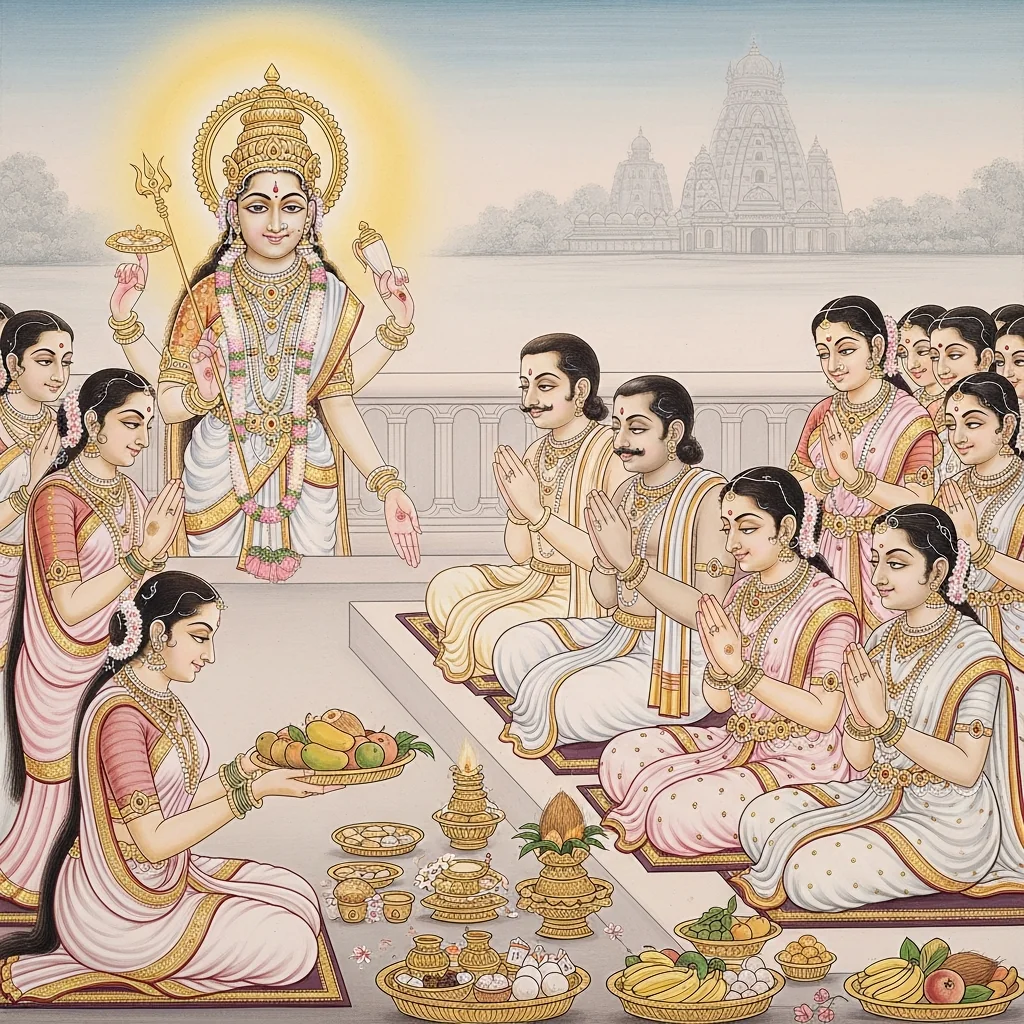
This chapter is framed as Īśvara’s theological instruction to Devī. Continuing the teaching on sacred liṅgas, it introduces a triad of śakti—icchā (will), kriyā (action), and jñāna (knowledge)—and lays down a ritual order: after worshipping the prescribed liṅgas according to one’s capacity, one should then worship the three śaktis. Icchā-śakti is specifically localized in Prabhāsa-kṣetra as Varārohā, associated with the Somēśvara region, and praised through a narrative on the origin of a vow. The legend tells of twenty-six wives abandoned by Soma who undertake austerities in the auspicious Prabhāsa field. Gaurī/Parvatī appears, grants boons, and establishes a remedial religious observance meant to relieve women’s misfortune. The observance is named a Gaurī-vrata to be performed on the third lunar day (tṛtīyā) in Māgha, involving darśana and worship, with a pattern of “sixteen” gifts/offerings—fruits, edible items, cooked foods—and the honoring of couples. The phalāśruti promises the removal of inauspiciousness, prosperity, and the fulfillment of desired aims, concluding that worship of Varārohā at Somēśvara destroys sins and poverty.
Shlokas
Verse 1
ईश्वर उवाच । पंचैवं सिद्धलिंगानि कथितानि तव प्रिये । यश्चैनं वेद संकेतं क्षेत्रवासी स उच्यते
Īśvara said: “Thus, O beloved, the five accomplished (siddha) Liṅgas have been described to you. Whoever understands this sacred indication (saṃketa) is truly called a resident of the holy kṣetra.”
Verse 2
अथ शक्तित्रयाणां ते रौद्रीणां वच्मि विस्तरम् । इच्छा क्रियाज्ञानशक्त्यस्तिस्रस्ताः परिकीर्त्तिताः
Now I shall explain to you in detail the triad of Rudra’s powers: they are proclaimed as the three—Will (Icchā), Action (Kriyā), and Knowledge (Jñāna).
Verse 3
पुनस्तासां पूजनायानुक्रमं क्रमतः शृणु । चतुर्दश तथा पंच पूर्वमुक्तानि यानि तु
Again, hear in proper sequence the order for worshipping them. The fourteen, and likewise the five, which were mentioned earlier—
Verse 4
चत्वारि त्रीणि चैकं वा यथाशक्त्याभिपूज्य च । लिंगानि तानि संपूज्य शक्तीस्तिस्रस्ततोऽर्चयेत्
Worship four, or three, or even one—according to one’s capacity. After duly worshipping those Liṅgas, one should then offer worship to the three Śaktis.
Verse 5
सोमेशादीशदिग्भागे वरारोहेति या स्मृता । अमा कला सा सोमस्य उमा पश्चात्प्रकीर्त्तिता
In the direction of Somnātha (Someśa), in the lordly quarter, she who is remembered as Varārohā is the Amā-kalā of Soma; thereafter she is also proclaimed as Umā.
Verse 6
इच्छाशक्तिस्तु सा ज्ञेयाप्रभासक्षेत्रसंस्थिता । तत्र देवि हितार्थाय सर्वेषां प्राणिनां भुवि
She is to be known as Icchāśakti, the Power of Will, abiding in the sacred kṣetra of Prabhāsa—there, O Goddess, for the welfare of all living beings upon the earth.
Verse 7
तस्या माहात्म्यमखिलं कथयामि तवाधुना । पुरा सोमेन त्यक्ताभिर्भार्याभिस्तु वरानने
Now I shall tell you her entire greatness. Formerly, O fair-faced one, Soma was abandoned by his wives—
Verse 8
षड्विंशद्भिस्तपस्तप्तं क्षेत्रे प्राभासिके शुभे । गौरी साऽराध्यमानाथ दिव्यवर्षगणान्बहून्
In the auspicious Prabhāsa-kṣetra, they performed austerities for twenty-six (years). There, Goddess Gaurī was worshipped unceasingly for many divine years.
Verse 9
तासां प्रत्यक्षतां प्राप्ता पार्वती परमेश्वरी । उवाच वरदा ब्रूत यद्वो मनसि संस्थितम्
Then Pārvatī, the Supreme Goddess, became manifest before them and spoke as the Giver of boons: “Tell me what is held in your hearts.”
Verse 10
अथ ताश्चाब्रुवन्देवि यदि तुष्टासि पार्वति । सौभाग्यं देहि नो भूरि लावण्यं परमं तथा
Then they said, “O Goddess—if you are pleased, O Pārvatī—grant us abundant good fortune and also supreme beauty.”
Verse 11
त्यक्ताः सर्वा वयं देवि निर्दोषाः स्वामिना शुभे । दौर्भाग्यदोषसंदग्धा दौर्भाग्येण तु पीडिताः
O Goddess, O Auspicious One, though blameless, all of us have been abandoned by our husbands. Scorched by the fault of ill-fortune, we are truly tormented by misfortune.
Verse 12
गौर्युवाच । अद्यप्रभृति सर्वा वः समं द्रक्ष्यति रात्रिपः । प्रसादान्मम चार्वंग्यो नैतन्मिथ्या भविष्यति
Gaurī said: From today onward, the king—your husbands—will look upon all of you equally. By my grace, O lovely-limbed ones, this shall not be false.
Verse 13
वरदा चेति मन्नाम वरदानाद्भविष्यति । इहागत्य तु या नारी पूजयिष्यति मां शुभाम्
“Varadā” shall be my name, for I am the giver of boons. Any woman who comes here and worships me—the Auspicious One—
Verse 14
न दौर्भाग्यं कुले तस्याः क्वचित्प्राप्स्यंति योषितः । माघमासे तृतीयायामुपवासपरायणा
In her family, women will never meet misfortune anywhere, if—on the third lunar day in the month of Māgha—they are devoted to fasting.
Verse 15
या मां द्रक्ष्यति सुश्रोणी मत्तुल्या सा भवि ष्यति । दम्पती षोडशैवात्र परिधाप्य प्रयत्नतः
Any fair-hipped woman who beholds me will become like me. Here, with earnest effort, she should have sixteen couples clothed (as a sacred gift).
Verse 16
फलानि भक्ष्यभोज्यं च पक्वान्नानि च षोडश । या प्रदास्यति वै नारी सा तूमैव भविष्यति
Sixteen kinds of fruits—edibles, delightful foods, and cooked dishes: whatever woman truly gives these, she becomes as you, attaining my very state.
Verse 17
एतद्गौरीव्रतंनाम तृतीयायां तु कारयेत् । अप्रसूता च या नारी या नारी दुर्भगा भवेत्
This is called the Gaurī-vrata, and it should indeed be performed on the third lunar day (tithi). A woman who is childless, and a woman who is unfortunate—
Verse 18
पुमानसकृदप्यैवं कृत्वा प्राप्स्यत्यभीप्सितम् । एवमुक्त्वा स्थिता तत्र सा देवी चारुलोचना
Even a man, if he does so in this very manner even once, will obtain what he desires. Having spoken thus, the beautiful-eyed Goddess remained there.
Verse 19
पश्यते रात्रिनाथश्च सर्वास्ता रोहिणीं यथा । अन्यापि दुःखसंदग्धा दौर्भाग्येण तु पीडिता
And the Lord of the Night, the Moon, looked upon them all as he looks upon Rohiṇī. Yet another woman too—burnt by sorrow and afflicted by misfortune—came there.
Verse 20
अपूजयदुमां देवीं सुभगा साऽभवत्ततः । इति संक्षेपतः प्रोक्तं माहात्म्यं शक्तिसंभवम्
She worshipped the Goddess Umā, and thereby she became fortunate and auspicious. Thus, in brief, has been told the greatness that arises from Śakti, the Divine Power.
Verse 21
सोमेश्वरे वरारोहा नामेति कथितं तव । सर्वपापक्षयकरं सर्वदारिद्र्यनाशनम्
At Someśvara, this Goddess is declared to you by the name “Varārohā.” Her worship destroys all sins and removes every poverty.
Verse 57
इति श्रीस्कांदे महापुराण एकाशीतिसाहस्र्यां संहितायां सप्तमे प्रभासखण्डे प्रथमे प्रभासक्षेत्रमाहात्म्ये वरारोहामाहात्म्यवर्णनंनाम सप्तपंचाशोऽध्यायः
Thus ends the fifty-seventh chapter, called “The Description of the Greatness of Varārohā,” in the first division of the Prabhāsakṣetra Māhātmya, within the seventh—Prabhāsa Khaṇḍa—of the glorious Skanda Mahāpurāṇa, in the compilation of eighty-one thousand verses.