Adhyaya 338
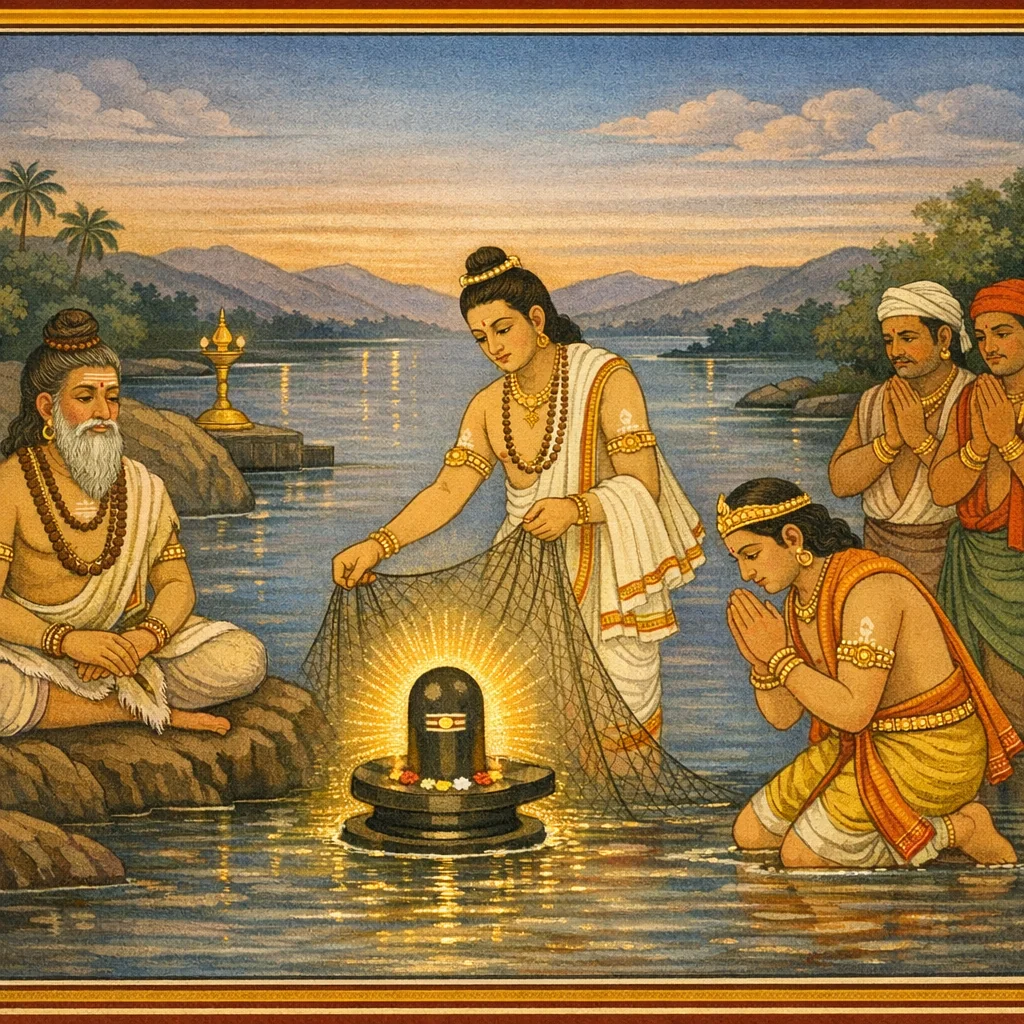
Īśvara describes a highly revered liṅga on the bank of the Devikā River, known as Jāleśvara, worshiped by nāga maidens and radiant in splendor; mere remembrance of it is said to destroy the grave sin of brahmahatyā. Devī asks how the name arose and what merits come from connection with that sacred place. Īśvara recounts an ancient itihāsa: the sage Āpastamba was performing austerities in Prabhāsa when fisherfolk cast a great net and, unintentionally, pulled the meditating sage up from the water. Stricken with remorse, they begged forgiveness. Āpastamba reflected on compassion and the dharma of benefiting suffering beings, wishing that his merit aid others and that their fault accrue to him. King Nābhāga arrived with ministers and priest and tried to compensate the fisherfolk with money as the sage’s “value,” but the sage rejected worldly measures. At Lomasha’s counsel, a cow was deemed the fitting price; Āpastamba accepted it, praising the sanctity of cows, the purifying pañcagavya, and the duty to protect and honor cows daily. The fisherfolk offered the cow, and the sage blessed them to ascend to heaven along with the fish they had lifted from the water, emphasizing intention and welfare. Nābhāga extolled the worth of saintly association, was instructed against royal arrogance, and requested the rare boon of dharma-intelligence. Īśvara concludes that the liṅga was established by the sage and named Jāleśvara because the sage fell into a net (jāla). The chapter ends with pilgrimage guidance: bathe and worship at Jāleśvara, hear the māhātmya, and make offerings—especially piṇḍa-dāna on Śukla Trayodaśī of Caitra and go-dāna to a Veda-knowing brāhmaṇa—as acts of great merit.
Shlokas
Verse 1
ईश्वर उवाच । ततो गच्छेन्महादेवि देविकातटसंस्थितम् । जालेश्वरेति विख्यातं सुरासुरनमस्कृतम्
Īśvara said: Then, O great goddess, one should go to the holy place on the bank of the Devikā, renowned as Jāleśvara, revered by both gods and asuras.
Verse 2
मन्वन्तरे चाक्षुषे च सम्प्राप्ते द्वापरे युगे । नाम्ना जालेश्वरं लिंगं देविकातटसंस्थितम्
In the Cākṣuṣa Manvantara, when the Dvāpara age arrived, there was a liṅga known as Jāleśvara, established on the bank of the Devikā.
Verse 3
पूज्यते नागकन्याभिर्न तत्पश्यंति मानवाः । महा तेजोमणिमयं चंद्रबिंबसमप्रभम् । स्मरणात्तस्य देवस्य ब्रह्महत्या प्रणश्यति
It is worshipped by the daughters of the Nāgas, yet humans do not behold it. It is formed of radiant, jewel-like splendor, shining like the disk of the moon. By merely remembering that deity, the sin of brahmahatyā is destroyed.
Verse 4
देव्युवाच । कथं जालेश्वरं नाम कस्मिन्काले बभूव तत्
The Goddess said: How did it come to be called Jāleśvara, and at what time did it arise?
Verse 5
साधुभिः सह संवासात्के गुणाः परिकीर्त्तिताः । के लोकाः कानि पुण्यानि तत्सर्वं शंस मे प्रभो
O Lord, what virtues are said to arise from dwelling in the company of the holy? What worlds are attained, and what merits are gained thereby? Tell me all of this.
Verse 6
ईश्वर उवाच । अत्रैवोदाहरंतीममितिहासं पुरातनम् । नाभागस्य च संवादमापस्तंबतपोनिधेः
Īśvara said: Right here I shall cite an ancient sacred account—namely, the dialogue between Nābhāga and Āpastamba, that treasure-house of austerity.
Verse 7
महर्षिरात्मवान्पूर्वमापस्तंबो द्विजाग्रणीः । उपावसन्सदा रम्भो बभूव भगवांस्तदा
Formerly, the great seer Āpastamba—self-controlled and foremost among the twice-born—was ever devoted to fasting; at that time he became radiant and venerable through his discipline.
Verse 8
नित्यं क्रोधं च लोभं च मोहं द्रोहं विसृज्य सः । देविकासरितो मध्ये विवेश सलिलाशये
Casting off anger, greed, delusion, and malice day by day, he entered the watery abode in the midst of the river Devikā.
Verse 9
क्षेत्रे प्राभासिके रम्ये सम्यग्ज्ञात्वा शिवप्रिये । तत्रास्य वसतः कालः समतीतो महांस्तदा
Having rightly understood the lovely Prābhāsa sacred field, dear to Śiva, he dwelt there—until a very long time passed.
Verse 10
परेण ध्यानयोगेन स्थाणुभूतस्य तिष्ठतः । ततः कदाचिदागत्य तं देशं मत्स्यजीविनः
As he stood absorbed in supreme meditation—motionless like a pillar—then, at some time, fishermen came to that place.
Verse 11
प्रसार्य सुमहज्जालं सर्वे चाकर्षयन्बलात् । अथ तं च महामत्स्यं निषादा बलदर्पिताः
Spreading out a very large net, they all hauled it in by force; then the Niṣādas, proud of their strength, drew up a great fish as well.
Verse 12
तस्मादुत्तारयामासुः सलिलाद्ब्रह्मनंदनम् । तं दृष्ट्वा तपसा दीप्तं कैवर्त्ता भयविह्वलाः । शिरोभिः प्रणिपत्योच्चैरिदं वचनमब्रुवन्
From those waters they hauled up the “son of Brahman” (the brāhmaṇa sage). Seeing him blazing with austerity, the fishermen, shaken with fear, bowed their heads and spoke aloud these words.
Verse 13
निषादा ऊचुः । अज्ञानात्कृतपापानामस्माकं क्षन्तुमर्हसि । किं वा कार्यं प्रियं तेऽद्य तदाज्ञापय सुव्रत
The Niṣādas said: “Forgive us, for through ignorance we have committed sin. What service, pleasing to you, shall we do today? Command us, O you of noble vows.”
Verse 14
स मुनिस्तन्महद्दृष्ट्वा मत्स्यानां कदनं कृतम् । कृपया परयाविष्टो दाशान्प्रोवाच दुःखितः
That sage, seeing the great slaughter of fish that had been done, was filled with profound compassion; grieving, he spoke to the fishermen.
Verse 15
केन मे स्यादुपायो हि सर्वे स्वार्थे बत स्थिताः । ज्ञानिनामपि यच्चेतः केवलात्महिते रतम्
“What means can there be for me? Alas—everyone stands fixed in self-interest; even the minds of the wise delight only in their own welfare.”
Verse 16
ज्ञानिनोपि यदा स्वार्थमाश्रित्य ध्यानमास्थिताः । दुःखार्त्तानीह सत्त्वानि क्व यास्यंति सुखं ततः
“When even the wise take up meditation while clinging to their own self-interest, where, then, shall suffering beings in this world find happiness?”
Verse 17
योऽभिवांछति भोक्तुं वै दुःखान्येकांततो जनः । पापात्पापतरं तं हि प्रवदंति मुमुक्षवः
“That person who truly wishes to ‘enjoy’ only suffering—such a one, the seekers of liberation declare, is more sinful than sin itself.”
Verse 18
को नु मे स्यादुपायो हि येनाहं दुःखितात्मवान् । अंतः प्रविष्टः सत्त्वानां भवेयं सर्वदुःखभुक्
“What method could there be for me, my heart made sorrowful, by which I might enter into all beings and partake of every sorrow?”
Verse 19
यन्ममास्ति शुभं किचित्तदेनानुपगच्छतु । यत्कृतं दुष्कृतं तैश्च तदशेषमुपेतु माम्
“Whatever little merit is mine—let it go to these beings. And whatever wrongdoing has been done by them—let all of it, without remainder, come upon me.”
Verse 20
दृष्ट्वांधान्कृपणान्व्यंगाननाथान्रोगिणस्तथा । दया न जायते यस्य स रक्ष इति मे मतिः
“Having seen the blind, the destitute, the disabled, the orphaned, and the sick—he in whom compassion does not arise, in my view, is a rākṣasa.”
Verse 21
प्राणसंशयमापन्नान्प्राणिनो भयविह्वलान् । यो न रक्षति शक्तोपि स तत्पापं समश्नुते
“Creatures who have fallen into danger of life and are trembling with fear—whoever, though able, does not protect them, he incurs that sin.”
Verse 22
आहुर्जनानामार्त्तानां सुखं यदुपजायते । तस्य स्वर्गोऽपवर्गो वा कलां नार्हति षोडशीम्
“They say that the happiness which arises for people in distress when they are helped—even heaven or liberation does not equal a sixteenth part of it.”
Verse 23
तस्मान्नैतानहं दीनांस्त्यक्त्वा मीनान्सुदुःखितान् । पदमात्रं तु यास्यामि किं पुनस्त्रिदशालयम्
Therefore I shall not abandon these wretched fish, sorely afflicted with suffering. I will not go even a single step—how much less to the abode of the gods.
Verse 24
ईश्वर उवाच । निशम्यैतदृषेर्वाक्यं दाशास्ते जातसंभ्रमाः । यथावृत्तं तु तत्सर्वं नाभागाय न्यवेदयन्
Īśvara said: Hearing these words of the sage, the fishermen, struck with agitation, reported the entire occurrence to Nābhāga exactly as it had happened.
Verse 25
नाभागोऽपि ततः श्रुत्वा तं द्रष्टुं ब्रह्मनन्दनम् । त्वरितः प्रययौ तत्र सामात्यः सपुरोहितः
Hearing of him, Nābhāga too hastened to see that son of Brahmā. Quickly he went there, accompanied by his ministers and his royal priest.
Verse 26
स सम्यक्पूजयित्वा तं देवकल्पमुनिं नृपः । प्रोवाच भगवन्ब्रूहि किं करोमि तवाज्ञया
After duly honoring that sage, godlike in splendor, the king said: “O Blessed One, tell me—what shall I do according to your command?”
Verse 27
आपस्तंब उवाच । श्रमेण महताविष्टाः कैवर्त्ता दुःखजीविनः । मम मूल्यं प्रयच्छेति यद्योग्यं मन्यसे नृप
Āpastamba said: “The fishermen, afflicted by great toil and living a life of hardship, say, ‘Pay my price.’ If you deem it proper, O king, then grant that payment.”
Verse 28
नाभाग उवाच । सहस्राणां शतं मूल्यं निषादेभ्यो ददाम्यहम् । निग्रहाख्यस्य भगवन्यथाह ब्रह्मनंदनः
Nabhāga said: “O Blessed One, I shall give the Niṣādas a payment of a hundred thousand, just as the son of Brahmā instructed concerning the one called Nigraha.”
Verse 29
आपस्तंब उवाच । नाहं शतसहस्रैश्च नियम्यः पार्थिव त्वया । सदृशं दीयतां मूल्यममात्यैः सह चिंतय
Āpastamba said: “O king, I am not to be ‘bought off’ even with a hundred thousand. Let a fitting payment be given—consider it together with your ministers.”
Verse 30
नाभाग उवाच । कोटिः प्रदीयतां मूल्यं निषादेभ्यो द्विजोत्तम । यद्येतदपि ते मूल्यं ततो भूयः प्रदीयते
Nabhāga said: “O best of the twice-born, let a koṭi be given as payment to the Niṣādas. And if even this is not the proper price, then more shall be given.”
Verse 31
आपस्तंब उवाच । नार्हं मूल्यं च मे कोटिरधिकं वापि पार्थिव । सदृशं दीयतां मूल्यं ब्राह्मणैः सह चिंतय
Āpastamba said: “O king, neither a koṭi nor even more is a worthy ‘price’ for me. Let an appropriate payment be given—deliberate together with the brāhmaṇas.”
Verse 32
नाभाग उवाच । अर्द्धराज्यं समस्तं वा निषादेभ्यः प्रदीयताम् । एतन्मूल्यमहं मन्ये किं वाऽन्यन्मन्यसे द्विज
Nabhāga said: “Let half my kingdom—or even the entire realm—be given to the Niṣādas. I consider this the proper payment. Or, O brāhmaṇa, do you think something else is fitting?”
Verse 33
आपस्तंब उवाच । अर्धराज्यसमस्तं वा नाहमर्हामि पार्थिव । सदृशं दीयतां मूल्यमृषिभिः सह चिंतय
Āpastamba said: “O king, I do not deserve either half the kingdom or the whole of it. Let a fitting offering be given—deliberate together with the ṛṣis.”
Verse 34
महर्षेस्तद्वचः श्रुत्वा नाभागः स विषादवान् । चिन्तयामास दुःखार्तः सामात्यः सपुरोहितः
Hearing those words of the great sage, Nabhāga grew downcast. Distressed with sorrow, he began to deliberate—together with his ministers and his royal priest.
Verse 35
ततः कश्चिदृषिस्तत्र लोमशस्तु महातपाः । नाभागमब्रवीन्मा भैस्तोषयिष्यामि तं मुनिम्
Then the great ascetic sage Lomaśa appeared there. He said to Nabhāga, “Do not be afraid; I shall satisfy that muni.”
Verse 36
नाभाग उवाच । ब्रूहि मूल्यं महाभाग मुनेरस्य महात्मनः । परित्रायस्व मामस्मात्सज्ञातिकुलबांधवम्
Nabhāga said: “O fortunate one, tell me the ‘price’—the proper offering—for this great-souled sage. Save me from this danger, together with my kinsmen, lineage, and relatives.”
Verse 37
निर्दहेद्भगवान्रुद्रस्त्रैलोक्यं सचराचरम् । किं पुनर्मानुषं हीनमत्यंतवि षयात्मकम्
Lord Rudra could burn the three worlds, together with all that moves and does not move—how much more easily, then, a frail human, inferior and utterly bound to sense-objects.
Verse 39
लोमश उवाच । त्वमीड्यो हि महाराज जगत्पूज्यो द्विजोत्तमः । गावश्च दिव्यास्तस्माद्गौर्मूल्यमम्यै प्रदीयताम्
Lomaśa said: “O great king, you are truly worthy of praise, foremost among the twice-born and honored by the world. And cows are divine; therefore let a cow be given to him as the proper offering.”
Verse 40
उत्तिष्ठोत्तिष्ठ भगवन्क्रीत एव न संशयः । एतद्योग्यतमं मूल्यं भवतो मुनिसत्तम
“Rise, rise, O venerable one—you have indeed been duly ‘purchased’ (satisfied), without doubt. This is the most fitting offering for you, O best of sages.”
Verse 41
आपस्तंब उवाच । उत्तिष्ठाम्येष सुप्रीतः सम्यक्क्रीतोऽस्मि पार्थिव । गोभ्यो मूल्यं न पश्यामि पवित्रं परमं भुवि
Āpastamba said: “I rise—fully pleased, O king. I have been properly satisfied. I see no ‘price’ superior to cows, the highest purifier upon the earth.”
Verse 42
गावः प्रदक्षिणीकार्याः पूजनीयाश्च नित्यशः । मंगलायतनं देव्यः सृष्टा ह्येताः स्वयंभुवा
Cows should be circumambulated (pradakṣiṇā) and worshipped daily. These divine ones are abodes of auspiciousness, created indeed by the Self-born (Brahmā).
Verse 43
अग्न्यगाराणि विप्राणां देवतायतनानि च । यद्गोमयेन शुद्ध्यंति किंभूतमधिकं ततः
When the fire-houses (agnyāgāra) of Brahmins and even the temples of the deities are purified by cow-dung, what could be more exalted than that?
Verse 44
गोमूत्रं गोमयं क्षीरं दधि सर्पिस्तथैव च । गवां पंच पवित्राणि पुनंति सकलं जगत्
Cow-urine, cow-dung, milk, curd, and ghee—these five purifiers of the cow purify the entire world.
Verse 45
गावो ममाग्रतो नित्यं गावः पृष्ठत एव च । गावो मे ह्रदये चैव गवां मध्ये वसाम्यहम
Cows are ever before me, and cows are behind me as well. Cows are in my very heart, and I dwell in the midst of cows.
Verse 46
एवं जपन्नरो मंत्रं त्रिसंध्यं नियतः शुचिः । मुच्यते सर्वपापेभ्यः स्वर्गलोकं च गच्छति
Thus, a man who—disciplined and pure—chants this mantra at the three daily junctions (dawn, noon, and dusk) is freed from all sins and goes to the heavenly world.
Verse 47
तृणाहारपरा गावः कर्त्तव्या भक्तितोऽन्वहम् । अकृत्वा स्वयमाहारं कुर्वन्प्राप्नोति दुर्गतिम्
Cows—whose food is simple grass—should be tended every day with devotion. But one who feeds himself while failing to provide their daily fodder falls into misfortune.
Verse 48
तेनाग्नयो हुताः सम्यक्पितरश्चापि तर्पिताः । देवाश्च पूजितास्तेन यो ददाति गवाह्निकम्
By that act, the sacred fires are properly offered into, the ancestors are satisfied, and the gods are worshipped—when a person gives the cow’s daily due (their daily sustenance/service).
Verse 49
मन्त्रः । सौरभेयी जगत्पूज्या देवी विष्णुपदे स्थिता । सर्वमेव मया दत्तं प्रतीच्छतु सुतोषिता
Mantra: “O Saurabheyī, goddess worshipped by all the world, abiding in Viṣṇu’s realm—may you, fully pleased, accept all that I have offered.”
Verse 50
रक्षणाद्बालपुत्राणां गवां कण्डूयनात्तथा । क्षीणार्तरक्षणाच्चैव नरः स्वर्गे महीयते
By protecting calves, by scratching and tending the cows, and by safeguarding those that are weak and distressed, a man is honored in heaven.
Verse 51
आदिर्गावो हि मर्त्यस्य मध्ये चांते प्रकीर्तिताः । रक्षंति तास्तु देवानां क्षीराज्यममृतं सदा
Cows are proclaimed to be at the beginning, in the middle, and at the end of a mortal’s life. They continually sustain the gods with milk and ghee—their nectar-like essence.
Verse 52
तस्माद्गावः प्रदातव्याः पूजनीयाश्च नित्यशः । स्वर्गस्य संगमा ह्येताः सोपानमिव निर्मिताः
Therefore cows should be given in charity and worshipped daily. For they are truly the meeting-place with heaven—fashioned like a staircase leading upward.
Verse 53
एतच्छ्रुत्वा निषादास्ते गवां माहात्म्यमुत्त मम् । प्रणिपत्य महात्मानमापस्तंबमथाब्रुवन्
Hearing this supreme greatness of cows, those Niṣādas bowed down to the great-souled Āpastamba and then spoke.
Verse 54
निषादा ऊचुः । संभाषो दर्शनं स्पर्शः कीर्तनं स्मरणं तथा । पावनानि किलैतानि साधूनामिति च श्रुतम्
The Niṣādas said: “Conversation, seeing, touch, praise (kīrtana), and remembrance—these indeed, as we have heard, are purifying in relation to holy persons.”
Verse 55
संभाषो दर्शनं चैव सहास्माभिः कृतं त्वया । कुरुष्वानुग्रहं तस्माद्गौरेषा प्रतिगृह्यताम्
“You have granted us conversation and your sight. Therefore show us favor—may this cow be accepted from us.”
Verse 56
आपस्तंब उवाच । एता वः प्रतिगृह्णामि गां यूयं मुक्तकिल्विषाः । निषादा गच्छत स्वर्गं सह मत्स्यैर्जलोद्धृतैः
Āpastaṃba said: “I accept this cow from you. You are now freed from sin. O Niṣādas, go to heaven—together with the fish that were lifted out of the water.”
Verse 57
प्राणिनां प्रीतिमुत्पाद्य निन्दिते नापि कर्मणा । नरकं यदि पश्यामि वत्स्यामि स्वर्ग एव तत्
“By bringing joy to living beings—even through an action considered blameworthy—if I were to behold hell, I would still dwell there as though it were heaven.”
Verse 58
यन्मया सुकृतं किञ्चिन्मनोवाक्कायकर्मभिः । कृतं स्यात्तेन दुःखार्ताः सर्वे यांतु शुभां गतिम्
“Whatever little good I have done by mind, speech, and body—by that merit, may all who are afflicted by suffering attain an auspicious destiny.”
Verse 59
ततस्तस्य प्रसादेन महर्षेर्भावितात्मनः । निषादास्तेन वाक्येन सह मत्स्यैर्दिवं गताः
Then, by the grace of that great seer of purified soul, the Niṣādas—through those very words—went to heaven together with the fish.
Verse 60
तान्दृष्ट्वा व्रजतः स्वर्गं समत्स्यान्मत्स्यजीविनः । सामात्यभृत्यो नृपतिर्विस्मयादिदमब्रवीत्
Seeing those fisherfolk, together with the fish, departing for heaven, the king—along with his ministers and attendants—spoke these words in astonishment.
Verse 61
सेव्याः श्रेयोऽर्थिभिः सन्तः पुण्यतीर्थे जलोपमाः । क्षणो पासनमप्यत्र न येषां निष्फलं भवेत्
“Holy men are to be served by those who seek the highest good. In this sacred tīrtha they are like life-giving water; even a moment’s attendance upon them here never becomes fruitless.”
Verse 62
सद्भिः सह सदासीत सद्भिः कुर्वीत सत्कथाम् । सतां व्रतेन वर्तेत नासद्भिः किञ्चिदाचरेत्
“One should always dwell in the company of the good; with the good one should engage in noble discourse. One should live by the vow and discipline of the virtuous, and do nothing at all in the company of the wicked.”
Verse 63
सतां समागमादेते समत्स्या मत्स्यजीविनः । त्रिविष्टपमनुप्राप्ता नराः पुण्यकृतो यथा
“Through association with the virtuous, these fisherfolk—together with the fish—have reached Triviṣṭapa (heaven), just as do men who have performed meritorious deeds.”
Verse 64
आपस्तंबो मुनिस्तत्र लोमशश्च महामनाः । वरैस्तं विविधैरिष्टैश्छंदयामासतुर्नृपम्
There, the sage Āpastaṃba and the great-souled Lomasha delighted the king by granting him many kinds of boons, each dear to his heart.
Verse 65
ततः स वरयामास धर्मबुद्धिं सुदुर्लभाम् । तथेति चोक्त्वा तौ प्रीत्या तं नृपं वै शशंसतुः
Then the king chose the exceedingly rare boon of a mind inclined toward dharma. Saying, “So be it,” the two sages, pleased, praised that king.
Verse 66
अहो धन्योऽसि राजेन्द्र यत्ते धर्मपरा मतिः । धर्मः सुदुर्लभः पुंसां विशेषेण महीक्षिताम्
Blessed indeed are you, O best of kings, for your mind is devoted to dharma. Dharma is exceedingly hard for men to attain—especially for those who bear the burden of ruling the earth.
Verse 67
यदि राजा मदाविष्टः स्वधर्मं न परि त्यजेत् । ततो जगति कस्तस्मात्पुमानभ्यधिको भवेत्
If a king, though intoxicated with power, does not abandon his own righteous duty, then who in this world could be superior to him?
Verse 68
ध्रुवं जन्म सदा राज्ञां मोहश्चापि सदा ध्रुवः । मोहाद्ध्रुवश्च नरको राज्यं निन्दन्त्यतो बुधाः
For kings, birth into sovereignty is certain, and delusion too is surely ever-present. From delusion, hell becomes a sure outcome; therefore the wise censure kingship when it breeds bondage.
Verse 69
राज्यं हि बहु मन्यंते नरा विषयलोलुपाः । मनीषिणस्तु पश्यन्ति तदेव नरकोपमम्
Men greedy for sense-objects greatly prize kingship; but the discerning behold that very kingship as akin to hell.
Verse 70
तस्माल्लोकद्वयध्वंसी न कर्त्तव्यो मदस्त्वया । यदीच्छसि महाराज शाश्वतीं गतिमात्मनः
Therefore you must not indulge in pride, for it destroys both worlds. If you desire an eternal destiny for yourself, O great king, abandon arrogance.
Verse 71
ईश्वर उवाच । इत्युक्त्वा तौ महात्मानौ जग्मतुः स्वं स्वमाश्रमम् । नाभागोऽपि वरं लब्ध्वा प्रहृष्टः प्राविशत्पुरम्
Īśvara said: Having spoken thus, those two great souls returned each to his own hermitage. And Nābhāga too, having obtained the boon, joyfully entered the city.
Verse 72
एतत्ते कथितं देवि प्रभावं देविकोद्भवम् । ऋषिणा स्थापितश्चापि भवो जाले श्वरस्तदा
O Goddess, this has been told to you—the wondrous power arising from Devikā. And there, Bhava (Śiva) was also established by the sage as Jāleśvara.
Verse 73
जाले निपतितो यस्माद्दाशानामृषिसत्तमः । जालेश्वरेति नामासौ विख्यातः पृथिवीतले
Because the best of sages fell into a net belonging to fishermen, he became renowned on the earth by the name ‘Jāleśvara’.
Verse 74
तत्र स्नात्वा महादेवि जालेश्वरसमर्चनात् । आपस्तंबश्च नाभागो निषादा मत्स्यजीविनः
There, O Great Goddess, by bathing and by duly worshipping Jāleśvara, Āpastamba and Nābhāga—as well as the Niṣādas who lived by fishing—attained auspicious results.
Verse 75
मत्स्यैः सह गताः स्वर्गं देविकायाः प्रभावतः । चैत्रस्यैव तु मासस्य शुक्लपक्षे त्रयोदशीम्
By the sacred potency of Devikā, they went to heaven together with the fish. This merit is connected with the thirteenth lunar day in the bright fortnight of the month of Caitra.
Verse 76
दद्यात्पिण्डं पितृभ्यो यस्तस्यांतो नैव विद्यते । गोदानं तत्र देयं तु ब्राह्मणे वेदपारगे । श्रोतव्यं चैव माहात्म्यं द्रष्टव्यो जालकेश्वरः
Whoever offers piṇḍa-oblations to the ancestors there gains merit without end. There one should also give the gift of a cow (go-dāna) to a Veda-learned brāhmaṇa. One should listen to the site’s sacred greatness (māhātmya) and behold Jālakeśvara in darśana.