Adhyaya 207
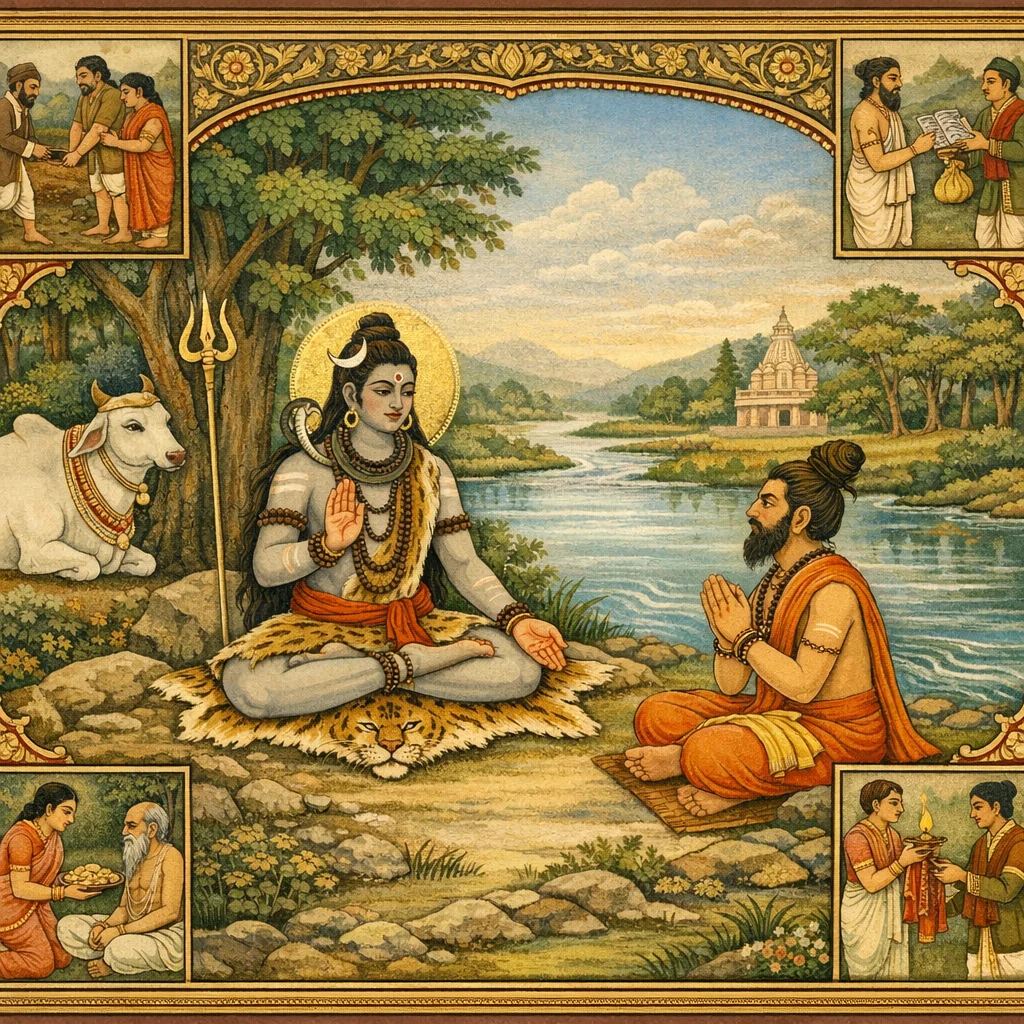
Chapter 207 presents a prescriptive theological teaching attributed to Īśvara within the sacred setting of Prabhāsa-kṣetra. It opens by arranging śrāddha-related gifts and their stated fruits, stressing that offerings for the pitṛs (ancestors) and even the act of feeding a single dvija near the holy presence of the Sarasvatī are counted as exceptionally meritorious. The discourse then turns to an ethical and legal taxonomy of pātra–apātra (worthy and unworthy recipients): it warns against neglected observances, condemns land-theft and illicit gains, and offers an extended denunciation of veda-vikraya—the commercialization of Vedic instruction—listing its forms and karmic consequences. Alongside this, it defines social-ritual boundaries through purity rules, unsuitable livelihoods, and the danger of eating or accepting food and wealth from disapproved sources. Finally, it sets forth a structured doctrine of dāna, comparing the value of gifts, insisting on choosing a qualified recipient (śrotriya, guṇavān, śīlavān), and teaching that improper giving can nullify merit. The chapter closes by reaffirming a graded ethic of virtues—truthfulness, non-violence, service, and regulated consumption—and by describing the fruits of specific donations such as food, lamps, fragrance, clothing, and bedding, uniting ritual practice with moral instruction.
Shlokas
Verse 1
ईश्वर उवाच । ईश्वर उवाच । अतः परं प्रवक्ष्यामि श्राद्धदानान्यनुक्रमात् । तारणाय च भूतानां सरस्वत्यब्धिसंगमे
Īśvara said: Now, next, I shall explain in proper sequence the gifts to be given in Śrāddha, for the deliverance of beings, at the confluence of the Sarasvatī and the ocean.
Verse 2
लोके श्रेष्ठतमं सर्वं ह्यात्मनश्चापि यत्प्रियम् । सर्वं पितॄणां दातव्यं तदेवाक्षय्यमिच्छताम्
Whatever in this world is held to be the finest, and whatever is dearest to one’s own heart, should be offered for the sake of the Pitṛs. For those who seek imperishable merit, that very offering becomes inexhaustible.
Verse 3
जांबूनदमयं दिव्यं विमानं सूर्यसन्निभम् । दिव्याप्सरोभिः संकीर्णमन्नदो लभतेऽक्षयम्
He who gives food attains an imperishable reward: a divine vimāna made of Jāmbūnada-gold, radiant like the sun, thronged with celestial Apsarases.
Verse 4
आच्छादनं तु यो दद्यादहतं श्राद्धकर्मणि । आयुः प्रकाशमैश्वर्यं रूपं तु लभते च सः
Whoever, in the rite of Śrāddha, gives unsoiled clothing as a covering-gift, gains long life, radiance, prosperity, and beauty.
Verse 5
कमण्डलुं च यो दद्याद्ब्राह्मणे वेदपारगे । मधुक्षीरस्रवा धेनुर्दातारमनुगच्छति
Whoever gives a kamaṇḍalu to a Brāhmaṇa well-versed in the Vedas— a cow that streams honey and milk follows that giver, as his merit and support.
Verse 6
यः श्राद्धे अभयं दद्यात्प्राणिनां जीवितैषिणाम् । अश्वदानसहस्रेण रथदानशतेन च । दन्तिनां च सहस्रेण अभयं च विशिष्यते
If, at the time of śrāddha, one grants fearlessness (abhaya) to living beings who seek to live, that gift of protection is superior—surpassing a thousand gifts of horses, a hundred gifts of chariots, and even a thousand gifts of elephants.
Verse 7
यानि रत्नानि मेदिन्यां वाहनानि स्त्रियस्तथा । क्षिप्रं प्राप्नोति तत्सर्वं पितृभक्तस्तु मानवः
Whatever jewels are on the earth—along with conveyances and even marital fortune—a man devoted to the Pitṛs quickly attains all of that.
Verse 8
पितरः सर्वलोकेषु तिथिकालेषु देवताः । सर्वे पुरुषमायांति निपानमिव धेनवः
In all worlds, at the appointed lunar dates (tithis), the Pitṛs are as deities; they all come to a man—just as cows gather to a watering place.
Verse 9
मा स्म ते प्रतिगच्छेयुः पर्वकाले ह्यपूजिताः । मोघास्तेषां भवन्त्वाशाः परत्रेह च मा क्वचित्
Let them not return from you, unhonored at the sacred parva-times. If they are not duly worshipped, their hopes become fruitless—neither in the hereafter nor even here.
Verse 10
सरस्वत्यास्तु सान्निध्यं यस्त्वेकं भोजयेद्द्विजम् । कोटिभोज्यफलं तस्य जायते नात्र संशयः
In the presence of Sarasvatī, if one feeds even a single twice-born (Brāhmaṇa), the merit becomes equal to feeding ten million—of this there is no doubt.
Verse 11
अमावास्यां नरो यस्तु परान्नमुपभुञ्जते । तस्य मासकृतं पुण्यमन्नदातुः प्रजायते
On the new-moon day (amāvāsyā), if a man partakes of food given by another, then the merit he has accumulated over an entire month accrues to the giver of that food.
Verse 12
षण्मासमयने भुंक्ते त्रीन्मासान्विषुवे स्मृतम् । वर्षैर्द्वादशभिश्चैव यत्पुण्यं समुपार्जितम् । तत्सर्वं विलयं याति भुक्त्वा सूर्येन्दुसंप्लवे
If one eats at the solstitial turning (ayana), it is said to consume the merit of six months; at the equinox (viṣuva), three months. And whatever merit has been accumulated over twelve years—by eating at the solar–lunar eclipse, all of it is destroyed.
Verse 13
साग्रं मासं रवेः क्रान्तावाद्यश्राद्धे त्रिवत्सरम् । मासिकेऽप्यथ वर्षस्य षण्मासे त्वर्धवत्सरम्
At the Sun’s passage (saṅkrānti), the consequence endures for a little more than a month; at the first śrāddha, for three years. Even at the monthly rite it lasts for a year; at the half-yearly rite, for half a year.
Verse 14
तथा संचयनश्राद्धे जातिजन्मकृतं नृणाम् । मृत शय्याप्रतिग्राही वेदस्यैव च विक्रयी । ब्रह्मस्वहारी च नरस्तस्य शुद्धिर्न विद्यते
Likewise, at the saṃcayana-śrāddha, certain defilements arising from caste and birth among men are to be taken into account. But for a man who accepts a dead person’s bed, who sells the Veda, and who steals what belongs to Brahmins—there is no purification.
Verse 15
तडागानां सहस्रेण ह्यश्वमेधशतेन च । गवां कोटि प्रदानेन भूमिहर्ता न शुद्ध्यति
Even by building a thousand tanks, even by a hundred Aśvamedha sacrifices, and even by gifting ten million cows—the stealer of land is not purified.
Verse 16
सुवर्णमाषं गामेकां भूमेरप्यर्धमंगुलम् । हरन्नरकमाप्नोति यावदाभूतसंप्लवम्
He who steals even a māṣa-weight of gold, a single cow, or even half a finger-breadth of land attains hell—lasting until the dissolution of beings.
Verse 17
ब्रह्महत्या सुरापानं दरिद्रस्य तु यद्धनम् । गुरोः पत्नी हिरण्यं च स्वर्गस्थमपि पातयेत्
Brahmin-slaying, drinking liquor, taking the wealth of the poor, violating the teacher’s wife, and stealing gold—these can cause even one established in heaven to fall.
Verse 18
सहस्रसंमिता धेनुरनड्वान्दश धेनवः । दशानडुत्समं यानं दशयानसमो हयः
A cow is valued as a thousand; an ox equals ten cows. A vehicle equals ten oxen; and a horse equals ten vehicles.
Verse 19
दशहयसमा कन्या भूमिदानं ततोऽधिकम् । तस्मात्सर्वप्रयत्नेन विक्रयं नैव कारयेत्
A maiden given in marriage is equal to ten horses; but the gift of land is even greater than that. Therefore, with every effort one should never cause sacred goods to be sold.
Verse 20
विशेषतो महाक्षेत्रे सर्वपातकनाशने । चितिकाष्ठं च वै स्पृष्ट्वा यज्ञयूपांस्तथैव च । वेदविक्रयकर्तारं स्पृष्ट्वा स्नानं विधीयते
Especially in this great sacred field that destroys all sins: if one touches the wood of a funeral pyre, or likewise the sacrificial posts (yūpa), or touches a seller of the Veda, bathing for purification is enjoined.
Verse 21
आदेशं पठते यस्तु आदेशं च ददाति यः । द्वावेतौ पापकर्माणौ पातालतलवासिनौ
But he who recites an ‘ādeśa’ and he who gives such an ‘ādeśa’—both are doers of sinful deeds, destined to dwell in Pātāla, the nether regions.
Verse 22
आदेशं पठते यस्तु राजद्वारे तु मानवः । सोऽपि देवि भवेद्वृक्ष ऊषरे कंटकावृतः । स्थितो वै नृपतिद्वारि यः कुर्याद्वेदविक्रयम्
O Goddess, the man who recites proclamations (ādeśa) at the king’s gate becomes a tree in barren, salt-stricken land, covered with thorns. Likewise, one who stands at the royal door and traffics in the Veda as merchandise falls into the same fate.
Verse 23
ब्रह्महत्यासमं पापं न भूतं न भविष्यति । वरं कुर्वन्ध्रुवं देवि न कुर्याद्वेदविक्रयम्
No sin equal to brahma-hatyā—the killing of a brāhmaṇa—has existed, nor will it exist. Therefore, O Goddess, even in seeking one’s own advantage, one must certainly not engage in selling the Veda.
Verse 24
हत्वा गाश्च वरं मांसं भक्षयीत द्विजाधमः । वरं जीवेत्समं म्लेच्छैर्न कुर्याद्वेदविक्रयम्
Even a wretched twice-born—better to kill cows and eat their flesh; better to live on equal terms with mlecchas—than to commit the selling of the Veda.
Verse 25
प्रत्यक्षोक्तिः प्रत्ययश्च प्रश्नपूर्वः प्रतिग्रहः । याजनाऽध्यापने वादः षड्विधो वेदविक्रयः
“Selling the Veda” is declared to be sixfold: stating the fee outright, bargaining/assurance, accepting gifts after prior questioning (i.e., conditional on queries), officiating sacrifices for payment, teaching for payment, and disputation for gain.
Verse 26
वेदाक्षराणि यावन्ति नियुंक्ते स्वार्थकारणात् । तावतीर्भ्रूणहत्या वै प्राप्नुयाद्वेदविक्रयी
However many Vedic syllables a seller of the Veda employs for selfish ends, that many acts of bhrūṇa-hatyā (embryo-slaying) he truly incurs.
Verse 27
वेदानुयोगाद्यो दद्याद्ब्राह्मणाय प्रतिग्रहम् । स पूर्वं नरकं याति ब्राह्मणस्तदनन्तरम्
Whoever gives a gift to a brāhmaṇa as payment tied to Vedic employment (a transaction for Vedic service) goes first to hell; the brāhmaṇa who accepts it follows thereafter.
Verse 28
वैश्वदेवेन हीना ये हीनाश्चातिथ्यतोऽपि ये । कर्मणा सर्ववृषला वेदयुक्ता ह्यपि द्विजाः
Those who neglect the Vaiśvadeva offering and those who also fail in hospitality toward guests—by their conduct they are wholly like vṛṣalas (base men), even if they are twice-born and even if they possess Vedic learning.
Verse 29
येषामध्ययनं नास्ति ये च केचिदनग्नयः । कुलं वाऽश्रोत्रियं येषां ते सर्वे शूद्रजातयः
Those in whom there is no study (of sacred learning), and those who keep no sacred fires—whose lineage is non-śrotriya (without Vedic tradition)—all such are regarded as of śūdra status.
Verse 30
मृतेऽहनि पितुर्यस्तु न कुर्याच्छ्राद्धमादरात् । मातुश्चैव वरारोहे स द्विजः शूद्रसंनिभः
He who, on the day of his father’s death, does not perform the śrāddha with reverence—and likewise for his mother, O fair-hipped one—such a ‘twice-born’ is deemed comparable to a śūdra in dharmic standing.
Verse 31
मृतके यस्तु भुञ्जीत गृहीतशशिभास्करे । गजच्छायासु यः कश्चित्तं च शूद्रवदाचरेत्
One who eats during the period of death-impurity (sūtaka), or when the moon and sun are ‘seized’ (an eclipse), and anyone who eats in the shade of elephants—such a person should be regarded as acting like a śūdra in dharmic conduct.
Verse 32
ब्रह्मचारिणि यज्ञे च यतौ शिल्पिनि दीक्षिते । यज्ञे विवाहे सत्रे च सूतकं न कदाचन
For a brahmacārin (celibate student), one engaged in a yajña, a yati (ascetic), an artisan at work, and a person under dīkṣā—likewise during a yajña, a marriage, or a satra—sūtaka impurity is never to be applied.
Verse 33
गोरक्षकान्वणिजकांस्तथा कारुकुशीलवान् । स्पृश्यान्वार्धुषिकांश्चैव विप्रान्शूद्रवदाचरेत्
Cow-protectors, traders, artisans and performers, as well as those deemed ‘touchable’ yet socially degraded, and usurers—such persons, even if born as brāhmaṇas, are to be treated like śūdras in matters of ritual conduct.
Verse 34
ब्राह्मणः पतनीयेषु वर्तमानो विकर्मसु । दाम्भिको दुष्कृतप्रायः स च शूद्रसमः स्मृतः
A brāhmaṇa who engages in fall-causing acts (pātana), lives by forbidden deeds (vikarma), is hypocritical and mostly given to wrongdoing—such a one is remembered as equal to a śūdra in dharmic assessment.
Verse 35
अस्नाताशी मलं भुंक्ते अजापी पूयशोणितम् । अहुत्वा तु कृमीन्भुंक्ते अदत्त्वा विषभोजनम्
One who eats without bathing is as though eating filth; one who performs no japa is as though consuming pus and blood; one who eats without first offering to the sacred fire and the deities is as though eating worms; and one who eats without giving dāna is as though eating poison.
Verse 36
परान्नेन तु भुक्तेन मिथुनं योऽधिगच्छति । यस्यान्नं तस्य ते पुत्रा अन्नाच्छुक्रं प्रवर्तते
He who, after eating another’s food, engages in sexual union—his children are said to belong to the giver of that food; for from food the generative seed (śukra) is set in motion.
Verse 37
राजान्नं तेज आदत्ते शूद्रान्नं ब्रह्मवर्चसम् । आयुः सुवर्णकारान्नं यशश्चर्मावकर्तिनः
A king’s food takes away one’s radiance; a śūdra’s food takes away brahmic splendor (brahmavarcasa); a goldsmith’s food takes away lifespan; and a leather-worker’s food takes away fame.
Verse 38
कारुकान्नं प्रजा हन्ति बलं निर्णेजकस्य च । गणान्नं गणिकान्नं च लोकेभ्यः परिकृन्तति
An artisan’s food destroys one’s progeny; a washerman’s food destroys strength; and the food of temple-attendants (gaṇa) and of a courtesan cuts one off from the higher worlds.
Verse 39
पूयं चिकित्सकस्यान्नं पुंश्चल्यास्त्वन्नमिन्द्रियम् । विष्ठा वार्धुषिकस्यान्नं शस्त्रविक्रयिणो मलम्
A physician’s food is likened to pus; a prostitute’s food is likened to the downfall of the senses (indriya); a usurer’s food is likened to excrement; and the food of one who sells weapons is likened to filth.
Verse 40
गायत्रीसारमात्रोऽपि वरं विप्रः सुयन्त्रितः । नायंत्रितश्चतुर्वेदी सर्वाशी सर्वविक्रयी
Better is a brāhmaṇa who knows only the essence of the Gāyatrī yet is well-restrained, than an unrestrained knower of the four Vedas who eats everything and sells everything.
Verse 41
सद्यः पतति मांसेन लाक्षया लवणेन च । त्र्यहेण शूद्रो भवति ब्राह्मणः क्षीरविक्रयात्
By selling meat, lac, or salt, one falls immediately. And by selling milk, a brāhmaṇa becomes a śūdra within three days.
Verse 42
रसा रसैर्नियंतव्या न त्वेव लवणं रसैः । कृतान्नं च कृतान्नेन तिला धान्येन तत्समाः
Tastes should be moderated by other tastes, but salt should not be ‘regulated’ by tastes. Cooked food is to be balanced only by cooked food; likewise, sesame seeds are to be matched with grain as their proper equivalent.
Verse 43
भोजनाभ्यञ्जनाद्दानाद्यदन्यत्कुरुते तिलैः । कृमिभूतः स विष्ठायां पितृभिः सह मज्जति
Whoever uses sesame seeds for purposes other than eating, anointing, or gifting as charity—he becomes a worm and sinks into filth along with his ancestors.
Verse 44
अपूपश्च हिरण्यं च गामश्वं पृथिवीं तिलान् । अविद्वान्प्रतिगृह्णाति भस्मीभवति काष्ठवत्
If an ignorant man accepts as gifts cakes, gold, cows, horses, land, or sesame, he is reduced to ashes like a piece of wood.
Verse 45
हिरण्यमायु रत्नं च भूर्गौश्चाकर्षतस्तनुम् । अश्वश्चक्षुस्त्वचं वासो घृतं तेजस्तिलाः प्रजाः
Gold draws forth longevity and vital life; jewels draw forth prosperity; land and cows uphold the body. A horse brings eyesight and strength; garments protect the skin; ghee nourishes radiance; sesame supports progeny and lineage.
Verse 46
अग्निहोत्री तपस्वी च क्षणवान्क्रियते यदि । अग्निहोत्रं तपश्चैव सर्वं तद्धनिनो धनम्
If an Agnihotrin and an ascetic, through need, become dependent even for a moment, then their Agnihotra and their austerities—all of it—seem to become the wealth of the rich man on whom they rely.
Verse 47
सोमविक्रयणे विष्ठा भेषजे पूयशोणितम् । नष्टं देवलके दानं ह्यप्रतिष्ठं च वार्धुके
In selling Soma there is sin like filth; in trading in medicines, it is like pus and blood. A gift is squandered when given to a devalaka, and when given to a moneylender it becomes fruitless and without standing.
Verse 48
देवार्चनपरो विप्रो वित्तार्थी भुवनत्रये । असौ देवलकोनाम हव्यकव्येषु गर्हितः
A Brahmin devoted to the worship of the gods, yet doing it for the sake of wealth—throughout the three worlds he is known as a ‘devalaka’, censured in matters of havya and kavya offerings to gods and ancestors.
Verse 49
भ्रातुर्मृतस्यभायायां यो गच्छेत्कामपूर्वकम् । धर्मेणापि नियुक्तायां स ज्ञेयो दिधिषूपतिः
He who approaches the wife of his deceased brother out of desire—even if she has been lawfully appointed for niyoga—is to be known as a didhiṣūpati, a censured husband.
Verse 50
दाराग्निहोत्रसंयोगं कुरुते योऽग्रजे स्थिते । परिवेत्ता स विज्ञेयः परिवित्तिस्तु पूर्वजः
He who marries and enters the householder state with the Agnihotra while his elder brother is still unmarried is known as a parivettā; the elder brother is called parivitti.
Verse 51
यो नरोऽन्यस्य वासांसि कूपोद्यानगृहाणि च । अदत्तान्युपयुंजानः स तत्पापतुरीयभाक्
A man who uses another’s clothes, wells, gardens, or houses without their being given (without permission) becomes a sharer in one-fourth of that person’s sin.
Verse 52
आमन्त्रितस्तु यः श्राद्धे वृषल्या सह मोदते । दातुर्यद्दुष्कृतं किञ्चित्तत्सर्वं प्रतिपद्यते
But the man who, though invited to a śrāddha, takes pleasure there in the company of a woman of impure conduct, takes upon himself every sin—whatever evil deed belongs to the donor.
Verse 53
ऋतामृताभ्यां जीवेत मृतेन प्रमृतेन वा । सत्यानृताभ्यां जीवेत न श्ववृत्त्या कथंचन
One should live by ṛta and amṛta, or even by mṛta and pramṛta; one may live by satya and anṛta, but never—under any circumstance—by śvavṛtti, a dog-like livelihood of servile dependence.
Verse 54
भक्ष्यं नित्यमृतं ज्ञेयममृतं स्यादयाचितम् । मृतं तु वृद्ध्याजीवित्वं प्रमृतं कर्षणं स्मृतम्
Food obtained in the regular course (without degradation) is to be known as ṛta; what is received without begging is called amṛta. Livelihood through interest is called mṛta, while pramṛta is remembered as living by cultivation (ploughing).
Verse 55
सत्यानृतं च वाणिज्यं तेन चैवोपजीव्यते । सेवा श्ववृत्तिराख्याता तस्मात्तां परिवर्जयेत
Commerce is called satyānṛta (a mixture of truth and untruth), and one may live by it. But service is termed śvavṛtti (dog's livelihood); therefore one should avoid it.
Verse 56
विप्रयोनिं समासाद्य संकरं परिवर्जयेत् । मानुष्यं दुर्लभं लोके ब्राह्मण्यमधिकं ततः
Having attained birth in a Brāhmaṇa lineage, one should avoid saṅkara (improper mixing). Human birth is rare in the world, and Brāhmaṇahood is rarer still and higher than that.
Verse 57
एकशय्यासनं पक्तिर्भाण्डपक्वान्नमिश्रणम् । याजनाध्यापनं योनिस्तथा च सह भोजनम् । नवधा संकरः प्रोक्तो न कर्तव्योऽधमैः सह
Sharing the same bed or seat, cooking together, mixing vessels, teaching, marital connection, and eating together—these nine forms of saṅkara should not be practiced with the base.
Verse 58
अजीवन्कर्मणा स्वेन विप्रः क्षात्त्रं समाश्रयेत् । वैश्यकर्माऽथवा कुर्याद्वार्षलं परिवर्जयेत्
If a Brāhmaṇa cannot sustain himself by his own proper duties, he may resort to Kṣatriya-ways, or else undertake Vaiśya work; but he should avoid the occupation of a Śūdra.
Verse 59
कुसीदं कृषिवाणिज्यं प्रकुर्वीत स्वयं कृतम् । आपत्काले स्वयं कुर्वन्स्नानेन स्पृश्यते द्विजः
He may undertake lending at interest, agriculture, and commerce—done by his own effort. In times of distress, when a twice-born does such work himself, he becomes purified again by bathing.
Verse 60
लब्धलाभः पितॄन्देवान्ब्रांह्मणांश्चैव तर्पयेत् । ते तृप्तास्तस्य तत्पापं शमयंति न संशयः
When one gains profit, one should satisfy the Pitṛs, the gods, and the brāhmaṇas through tarpaṇa. When they are pleased, they surely pacify that person’s sin, without doubt.
Verse 61
जलगोशकटारामयाञ्चावृद्धिवणिक्क्रियाः । अनूपं पर्वतो राजा दुर्भिक्षे जीविका स्मृताः
In a time of famine, these are remembered as means of livelihood: work with water (carrying/irrigation), tending cattle, transport by carts, pleasing service, begging, lending at interest, and trade. Likewise, dwelling in marshlands, on mountains, or under a king’s protection is also counted as a way to survive in scarcity.
Verse 62
असतोऽपि समादाय साधुभ्यो यः प्रयच्छति । धनं स्वामिनमात्मानं संतारयति दुस्तरात्
Even if one gathers wealth from an unworthy source, yet gives it to the virtuous, that wealth—together with its owner—carries the giver across the otherwise hard-to-cross, perilous passage of saṃsāra.
Verse 63
शूद्रे समगुणं दानं वैश्ये तद्द्विगुणं स्मृतम् । श्रोत्रिये तच्च साहस्रमनन्तं चाग्निहोत्रिके
A gift given to a Śūdra yields merit equal to the gift; to a Vaiśya it is remembered as double; to a learned śrotriya it becomes a thousandfold; and to an agnihotrin it is said to be limitless.
Verse 64
ब्राह्मणातिक्रमो नास्ति नाचरेद्यो व्यवस्थितिम् । ज्वलंतमग्निमुत्सृज्य न हि भस्मनि हूयते
There is no ‘bypassing’ the brāhmaṇa, and one should not violate the established order; for, having abandoned a blazing fire, one does not offer oblations into mere ashes.
Verse 65
विद्यातपोभ्यां हीनेन नैव ग्राह्यः प्रतिग्रहः । गृह्णन्प्रदातारमधो नयत्यात्मानमेव च
One who is devoid of learning and austerity should not accept gifts at all; for by accepting, he drags the donor downward—and himself as well.
Verse 66
तस्माच्छ्रोत्रिय एवार्हो गुणवाञ्छीलवाञ्छुचिः । अव्यंगस्तत्र निर्दोषः पात्राणां परमं स्मृतम्
Therefore, the śrotriya alone is truly worthy—virtuous, well-conducted, and pure; free from defect and blameless—he is remembered as the highest among recipients.
Verse 67
कपालस्थं यथा तोयं श्वदृतौ च यथा पयः । दूषितं स्थानदोषेण वृत्तहीने तथा श्रुतम्
Just as water kept in a skull, and milk placed in a dog’s skin, become tainted due to the fault of the vessel—so too, learning becomes defiled when it resides in one who lacks right conduct.
Verse 68
दत्तं पात्रमतिक्रम्य यदपात्रे प्रतिग्रहः । तद्दत्तं गामतिक्रम्य गर्दभस्य गवाह्निकम्
If, bypassing a worthy recipient, a gift is instead accepted by an unworthy one, it is like neglecting a cow and feeding a donkey with what is meant for a cow’s daily portion.
Verse 69
वृत्तं तस्मात्तु संरक्षेद्वित्तमेति गतं पुनः । अक्षीणो वित्ततः क्षीणो वृत्ततस्तु हतो हतः
Therefore one should protect one’s right conduct, for wealth can return even after it is gone. A person ruined in wealth is not truly ruined; but one ruined in conduct is ruined indeed.
Verse 70
प्रथमं तु गुरौ दानं दत्त्वा श्रेष्ठमनुक्रमात् । ततोऽन्येषां तु विप्राणां दद्यात्पात्रानुरूपतः
First, in proper order, one should offer the finest gift to one’s guru; thereafter, one should give to other Brahmins according to their fitness as worthy recipients.
Verse 71
गुरौ च दत्तं यद्दानं दत्तं पात्रेषु मानवैः । निष्फलं तद्भवेत्प्रेत्य यात्युताधोगतिं प्रति
A gift that should have been offered to the guru, but is given by people to other recipients—even if worthy—becomes fruitless after death and may even lead toward a downward state.
Verse 72
अवमानं गुरोः कृत्वा कोपयित्वा तु दुर्मतिः । गुर्वमानहतो मूढो न शांतिमधि गच्छति
A wicked-minded fool who insults his guru and provokes his anger—struck down by that contempt for the teacher—never attains peace.
Verse 73
गुरोरभावे तत्पुत्रं तद्भार्यां तत्सुतं विना । पुत्रं प्रपौत्रं दौहित्रं ह्यन्यं वा तत्कुलोद्भवम्
When the guru is absent, one should honor and approach his son—excluding the guru’s wife and his minor child; or else his grandson (son’s son), or his daughter’s son, or anyone else born in that lineage.
Verse 74
पंचयोजनमध्ये तु श्रूयते स्वगुरुर्यदा । तदा नातिक्रमेद्दानं दद्यात्पात्रेषु मानवः
But when one’s own guru is known to be within five yojanas, one should not pass over his due; one should give charity to worthy recipients in the proper manner, without neglecting what is owed to the guru.
Verse 75
यतिश्चेत्प्रार्थयेल्लोभाद्दीयमानं प्रतिग्रहम् । न तस्य देयं विद्वद्भिर्न लोभः शस्यते यतेः
If an ascetic, out of greed, asks for a gift that is being offered, the wise should not give it to him—for greed is never praised in an ascetic.
Verse 76
धनं प्राप्य यतिर्लोके मौनं ज्ञानं च नाभ्यसेत् । उपभोगं तु दानेन जीवितं ब्रह्मचर्यया
If, after obtaining wealth in the world, an ascetic does not practice sacred silence and true knowledge, then let him at least sanctify enjoyment through charity, and preserve his life through brahmacarya (continence).
Verse 77
कुले जन्म च दीक्षाभिर्ये गतास्ते नरोत्तमाः । सौभाग्यमाप्नुयाल्लोके नूनं रसविवर्जनात्
Those best of men, ennobled by birth in a good family and by consecrated initiations (dīkṣā), attain good fortune in the world—surely through abstaining from sensual indulgence.
Verse 78
आयुष्मत्यः प्रजाः सर्वा भवन्त्यामिषवर्जनात्
All offspring become long-lived through abstaining from meat.
Verse 79
चीरवल्कलधृक्त्यक्त्वा वस्त्राण्याभरणानि च । नागाधिपत्यं प्राप्नोति उपवासेन मानवः
Wearing bark-garments and rags, abandoning fine clothes and ornaments, a person attains lordship over the Nāgas through fasting.
Verse 80
क्रीडते सत्यवाक्येन स्वर्गे वै देवतैः सह । अहिंसया तथाऽरोग्यं दानात्कीर्तिमनुक्रमात्
By speaking truth, one sports in heaven together with the gods; by nonviolence, one gains health; by charity, fame—each in due order according to one’s deeds.
Verse 81
द्विजशुश्रूषया राज्यं द्विजत्वं चातिपुष्कलम् । दिव्यरूपमवाप्नोति देवशुश्रूषया नरः
By devoted service to the twice-born, a person attains kingship and abundant brahminical excellence; by devoted service to the gods, he attains a divine form.
Verse 82
अन्नदानाद्भवेत्तृप्तिः सर्वकामैरनुत्तमैः । दीपस्य तु प्रदानेन चक्षुष्माञ्जायते नरः
By gifting food, one attains deep contentment along with the finest fulfillments of desire. By gifting a lamp, a person is born endowed with clear and powerful eyesight.
Verse 83
तुष्टिर्भवेत्सर्वकालं प्रदानाद्गन्धमाल्ययोः । लवणस्य तु दातारस्तिलानां सर्पिषस्तथा । तेजस्विनोऽपि जायन्ते भोगिनश्चिरजीविनः
By offering perfumes and garlands, one gains lasting happiness at all times. And those who give salt, sesame, and ghee are born radiant, prosperous enjoyers, and long-lived.
Verse 84
सुचित्रवस्त्राभरणोपधानं दद्यान्नरो यः शयनं द्विजाय । रूपान्वितां पक्ष्मवतीं मनोज्ञां भार्यामरालोपचितां लभेत्सः
A person who gives to a brāhmaṇa a bed furnished with fine patterned cloth, ornaments, and bedding obtains a beautiful wife—graceful, lovely, with charming eyelashes—adorned with noble virtues.
Verse 207
इति श्रीस्कान्दे महापुराण एकाशीतिसाहस्र्यां संहितायां सप्तमे प्रभासखण्डे प्रथमे प्रभासक्षेत्रमाहात्म्ये श्राद्धकल्पे पात्रापात्रविचारवर्णनंनाम सप्तोत्तरद्विशततमोऽध्यायः
Thus ends, in the revered Skanda Mahāpurāṇa—within the Saṃhitā of eighty-one thousand ślokas—within the seventh, the Prabhāsa Khaṇḍa, and within the first subdivision, the Prabhāsakṣetra Māhātmya—the chapter on the Śrāddha rites entitled “The Description of Discerning Worthy and Unworthy Recipients,” being Chapter 207.