Adhyaya 2
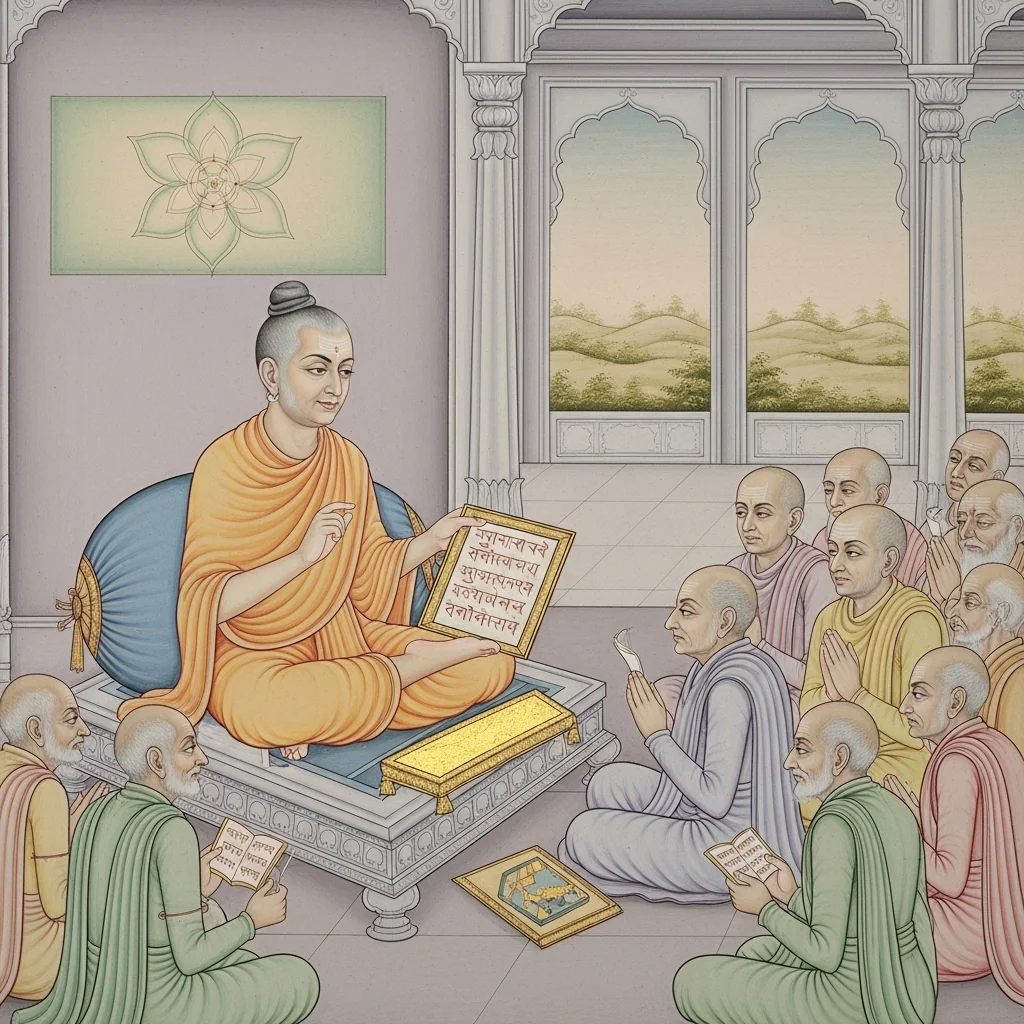
Chapter 2 proceeds as a technical dialogue in which the ṛṣis ask for standards to judge kathā (narrative discourse): its identifying marks, virtues and faults, and the means of discerning an authoritative composition. Sūta replies with a compressed account of Purāṇic literature—its primordial emergence alongside the Veda, the belief in an originally vast Purāṇa corpus, and Vyāsa’s periodic redaction and division of it into eighteen Mahāpurāṇas. The chapter then lists major Purāṇas and Upapurāṇas, often pairing each with an approximate verse-count and with dāna-focused injunctions—copying, gifting, and attendant rites—thus linking textual transmission to meritorious practice. It specifies the classical fivefold definition of a Purāṇa (pañcalakṣaṇa: sarga, pratisarga, vaṃśa, manvantara, vaṃśānucarita) and introduces a broad typology by guṇa orientation (sāttvika/rājasa/tāmasa) with corresponding deity-emphasis. In closing, it reaffirms the Purāṇas as stabilizing supports for Vedic meaning through itihāsa–purāṇa traditions, and situates the Prābhāsika division within the Skanda Purāṇa’s internal sevenfold segmentation, preparing the reader for the section’s place-based sacred geography.
Shlokas
Verse 1
ऋषय ऊचुः । कथाया लक्षणं ब्रूहि गुणदोषान्सविस्तरान् । आर्षेयपौरुषेयाणां काव्यचिह्नपरीक्षणम् । कथं ज्ञेयं महाबुद्धे श्रोतुमिच्छामहे वयम्
The sages said: “Explain to us the defining marks of a sacred narrative—its merits and faults in detail—and the criteria by which compositions of seer-origin (ārṣeya) and human-origin (pauruṣeya) are to be examined. O greatly intelligent one, how is this to be truly known? We wish to hear.”
Verse 2
सूत उवाच । अथ संक्षेपतो वक्ष्ये पुराणानामनुक्रमम् । लक्षणं चैव संख्यां च उक्तभेदांस्तथैव च
Sūta said: “Now I shall briefly state the proper sequence of the Purāṇas—their defining characteristics, their number, and their traditional classifications as well.”
Verse 3
पुरा तपश्चचारोग्रममराणां पितामहः । आविर्भूतास्ततो वेदाः सषडंगपदक्रमाः
In ancient times, the Grandsire of the gods, Brahmā, performed intense austerity. Thereupon the Vedas manifested—complete with their six auxiliaries and their ordered recitation and wording.
Verse 4
ततः पुराणमखिलं सर्वशास्त्रमयं ध्रुवम् । नित्यशब्दमयं पुण्यं शत कोटिप्रविस्तरम्
Then the entire corpus of the Purāṇas came forth—firm and authoritative, embodying the essence of all śāstras; holy, formed of eternal sacred speech, and vast in extent—spreading to a hundred koṭis (of verses).
Verse 5
निर्गतं ब्रह्मणो वक्त्राद्ब्राह्मं वैष्णवमेव च । शैवं भागवतं चैव भविष्यं नारदीयकम्
From Brahmā’s mouth issued forth the Purāṇas—namely the Brāhma, the Vaiṣṇava, the Śaiva, the Bhāgavata, the Bhaviṣya, and the Nāradīya.
Verse 6
मार्कण्डेयमथाग्नेयं ब्रह्मवैवर्तमेव च । लैङ्गं तथा च वाराहं स्कांदं वामनमेव च
Also (came forth) the Mārkaṇḍeya, the Āgneya, the Brahma-vaivarta, the Laiṅga, the Vārāha, the Skānda, and the Vāmana (Purāṇas).
Verse 7
कौर्म्यं मात्स्यं गारुडं च वायवीयमनन्तरम् । अष्टादशं समुद्दिष्टं सर्वपातकनाशनम्
(And) the Kaurma, the Mātsya, the Gāruḍa, and next the Vāyavīya—thus the eighteen Mahāpurāṇas are declared, destroyers of all sin.
Verse 8
एकमेव पुरा ह्यासीद्ब्रह्माण्डं शतकोटिधा
Formerly, indeed, the Brahmāṇḍa (the cosmic “egg”/Purāṇa) was one alone—yet in extent it measured a hundred koṭis.
Verse 9
ततोऽष्टादशधा कृत्वा वेदव्यासो युगेयुगे । प्रख्यापयति लोकेऽस्मिन्साक्षान्नारायणांशजः
Then, having divided it into eighteen parts, Vedavyāsa in every age proclaims it in this world—he who is directly a portion-incarnation of Nārāyaṇa.
Verse 10
अन्यान्युपपुराणानि मुनिना कथितानि तु । तानि वः कथयिष्यामि संक्षेपादवधार्यताम्
Other subsidiary Purāṇas (Upapurāṇas) too were taught by the sage. I shall tell them to you in brief—let them be carefully heeded.
Verse 11
आद्यं सनत्कुमारोक्तं नारसिंहमतः परम् । तृतीयं स्कान्दमुद्दिष्टं कुमारेणानुभाषितम्
“First is the (Upapurāṇa) spoken by Sanatkumāra; next comes the teaching of Nārasiṃha. The third is declared to be the Skānda, recounted again by Kumāra.”
Verse 12
चतुर्थं शिवधर्माख्यं साक्षान्नन्दीशभाषितम् । दुर्वाससोक्तमाश्चर्य्यं नारदोक्तमतः परम्
“The fourth is called Śivadharma, spoken directly by Nandīśa. Next comes the Āścarya spoken by Durvāsas; thereafter is that which was spoken by Nārada.”
Verse 13
कापिलं मानवं चैव तथैवोशनसेरितम् । ब्रह्माण्डं वारुणं चान्यत्कालिकाह्वयमेव च
“(There are) the Kāpila, the Mānava, and likewise that taught by Uśanas; also the Brahmāṇḍa, the Vāruṇa, and another called Kālikā.”
Verse 14
माहेश्वरं तथा सांबं सौरं सर्वार्थसंचयम् । पराशरोक्तं परमं मारीचं भार्गवाह्वयम्
Also there are the Māheśvara, the Sāmba, and the Saura— a compendium of all aims. There is the supreme one spoken by Parāśara; the Mārīca; and that which is known as Bhārgava.
Verse 15
एतान्युपपुराणानि कथितानि द्विजोत्तमाः
These Upapurāṇas have been declared, O best among the twice-born.
Verse 16
ऋषय ऊचुः । पुराणसंख्यामाचक्ष्व सूत विस्तरशः क्रमात् । दानधर्ममशेषज्ञ यथावदनुपूर्वशः
The sages said: “O Sūta, explain, in proper order and in detail, the number of the Purāṇas—step by step, correctly—O knower of the entire Dharma of dāna (sacred giving).”
Verse 17
सूत उवाच । इदमेव पुराणेऽस्मिन्पुराणपुरुषस्तदा । यदुक्तवान्स विश्वात्मा मनवे तन्निबोधत
Sūta said: “In this very Purāṇa, in former times, the Purāṇa-Puruṣa—the Soul of the universe—spoke to Manu. Hear and understand that teaching.”
Verse 18
पुराणं सर्वशास्त्राणां ब्रह्माण्डं प्रथमं स्मृतम् । अनन्तरं च वक्त्रेभ्यो वेदास्तस्य विनिर्गताः
Among all śāstras, the Brahmāṇḍa Purāṇa is remembered as the first. Thereafter, from his mouths, the Vedas issued forth.
Verse 19
पुराणमेकमेवासीत्तस्मिन्कल्पान्तरेतथा । त्रिवर्गसाधनं पुण्यं शतकोटिप्रविस्तरम्
In that former age-cycle, the Purāṇa was truly one alone. It was holy, a means to accomplish the three aims of life, and vast in extent—spreading to a hundred crores (koṭi) in measure.
Verse 20
विनिर्दग्धेषु लोकेषु कृष्णेनानन्तरूपिणा । साङ्गांश्च चतुरो वेदान्पुराणन्यायविस्तरम्
When the worlds had been utterly consumed at dissolution, Kṛṣṇa of infinite forms restored the four Vedas with their auxiliaries, and the Purāṇa—expanded according to proper method and sound reasoning.
Verse 21
मीमांसां धर्मशास्त्रं च परिगृह्यात्मसात्कृतम् । मत्स्यरूपेण च पुनः कल्पादावुदकार्णवे
He took up Mīmāṃsā and the treatises on Dharma, making them wholly his own; and again, at the beginning of the aeon, in the cosmic ocean, he assumed the form of a Fish—Matsya.
Verse 22
अशेषमेव कथितं ब्रह्मणे दिव्यचक्षुषे । ब्रह्मा जगाद च मुनींस्त्रिकालज्ञानदर्शनः
All of it, without remainder, was taught to Brahmā of divine vision; and Brahmā—endowed with insight into the knowledge of the three times—then proclaimed it to the sages.
Verse 23
प्रवृत्तिः सर्वशास्त्राणां पुराणस्याभवत्ततः
From that, the dissemination of all the śāstras—and of the Purāṇa tradition—came into being.
Verse 24
ततः कालक्रमेणासौ व्यासरूपधरो हरिः । अष्टादशपुराणानि संक्षेप्स्यति युगेयुगे
Then, in the course of time, that Hari—assuming the form of Vyāsa—will abridge the eighteen Purāṇas in every age, in every yuga.
Verse 25
चतुर्लक्षप्रमाणानि द्वापरेद्वापरे सदा । तदाष्टादशधा कृष्णा भूर्लोकेऽस्मिन्प्रभाषते
These Purāṇas are always of the measure of four lakhs (four hundred thousand verses) in each Dvāpara age; and then Kṛṣṇa proclaims them here in the human world in eighteen divisions.
Verse 26
अद्याऽपि देवलोके तु शतकोटिप्रविस्तरम् । तदर्थोऽत्र चतुर्लक्षः संक्षेपेण निवेशितः
Even today, in the world of the gods, it extends in full expanse to a hundred koṭis; but here its meaning has been set down in brief as four lakhs.
Verse 27
पुराणानि दशाष्टौ च सांप्रतं तदिहोच्यते । नामतस्तानि वक्ष्यामि संख्यां च मुनिसत्तमाः
Now the eighteen Purāṇas are spoken of here. I shall state them by name, and also their verse-counts, O best of sages.
Verse 28
ब्रह्मणाऽभिहितं पूर्वं यावन्मात्रं मरीचये । ब्राह्मं तद्दशसाहस्रं पुराणं तदिहोच्यते
That which Brahmā formerly taught to Marīci—of whatever measure it was—is here called the Brāhma Purāṇa, consisting of ten thousand verses.
Verse 29
लिखित्वा तच्च यो दद्याज्जलधेनुसमन्वितम् । वैशाख्यां पौर्णमास्यां च ब्रह्मलोके महीयते
Whoever has this written out and donates it together with the “water-cow” offering (jaladhenu) on the full-moon day of Vaiśākha is honored in the world of Brahmā.
Verse 30
एतदेव यदा पद्ममभूद्धैरण्मयं जगत् । तद्वृत्तांताश्रयांतं तत्पाद्ममित्युच्यते बुधैः
This very account pertains to the time when the lotus arose and the universe became golden; since it rests upon that narrative, the wise call it the Pādmā (Padma) Purāṇa.
Verse 31
पाद्मं तत्पञ्चपञ्चाशत्सहस्राणीह पठ्यते । तत्पुराणं च यो दद्यात्सुवर्णकमलान्वितम् । ज्येष्ठे मासि तिलैर्युक्तं सोऽश्वमेधफलं लभेत्
Here the Pādmā Purāṇa is recited as fifty-five thousand verses. Whoever gifts that Purāṇa, accompanied by golden lotuses and with sesame offered in the month of Jyeṣṭha, obtains merit equal to an Aśvamedha sacrifice.
Verse 32
वाराहकल्पवृत्तान्तमधिकृत्य परात्परः । यत्राह धर्मानखिलांस्तदुक्तं वैष्णवं विदुः
That discourse which takes up the account of the Vārāha Kalpa, wherein the Supreme of the supreme proclaims all dharmas, is known as the Vaiṣṇava (Purāṇa).
Verse 33
चरितैरञ्चितं विष्णोस्तल्लोके वैष्णवं विदुः । त्रयोविंशतिसाहस्रं पुराणं तत्प्रकीर्तितम्
That Purāṇa which is adorned with the deeds of Viṣṇu is known in the world as the Vaiṣṇava; it is proclaimed to consist of twenty-three thousand verses.
Verse 34
तदाषाढे च यो दद्याद्घृतधेनुसमन्वितम् । पौर्णमास्यां विशुद्धायां सं पदं याति वैष्णवम्
Whoever, in the month of Āṣāḍha, offers that gift together with a ‘ghee-cow’ on the pure full-moon day, attains the supreme Vaiṣṇava abode.
Verse 35
श्रुतकल्पप्रसङ्गेन धर्मान्वायुरथाब्रवीत् । यत्र तद्वायवीयं स्याद्रुद्रमाहात्म्यसंयुतम्
In connection with the Śruta Kalpa, Vāyu then taught the principles of dharma. That text in which this appears, joined with the greatness of Rudra, is known as the Vāyavīya Purāṇa.
Verse 36
चतुर्विंशतिसाहस्रं नाना वृत्तान्तसंयुतम् । धर्मार्थकाममोक्षैश्च साधुवृत्तसमन्वितम्
It is said to contain twenty-four thousand verses, filled with many accounts, and furnished with teachings on dharma, artha, kāma, and mokṣa, together with the conduct of the virtuous.
Verse 37
श्रावण्यां श्रावणे मासि गुडधेनुसमन्वितम् । यो दद्याद्दधिसंयुक्तं ब्राह्मणाय कुटुम्बिने । शिवलोके स पूतात्मा कल्पमेकं वसेन्नरः
On the full-moon day Śrāvaṇī in the month of Śrāvaṇa, whoever gives the prescribed gift, accompanied by a ‘jaggery-cow’ and together with curd, to a householder brāhmaṇa—he, purified in soul, dwells in Śiva’s world for one entire kalpa.
Verse 38
पुनः संजायते मर्त्यो ब्राह्मणो वेदवित्तमः । वेदविद्यार्थतत्त्वज्ञो व्याख्यातत्त्वार्थवित्तमः
He is born again as a brāhmaṇa, foremost among knowers of the Veda—one who understands the true purport and principles of Vedic knowledge, and who excels in discerning and expounding their real meaning.
Verse 39
यत्राधिकृत्य गायत्रीं वर्ण्यते धर्मविस्तरः । वृत्रासुरवधोपेतं तद्भागवतमुच्यते
That scripture which, taking the Gāyatrī as its foundation, sets forth the vast expanse of dharma and includes the slaying of Vṛtrāsura is called the Bhāgavata (Purāṇa).
Verse 40
सारस्वतस्य कल्पस्य मध्ये ये स्युर्नरामराः । तद्वृत्तान्तोद्भवं पुण्यं पुण्योद्वाहसमन्वितम्
Those beings—men and gods—who abide in the midst of the Sārasvata Kalpa: from their accounts arises a pure, merit-bestowing sacred narrative, attended by auspicious rites and holy observances.
Verse 41
लिखित्वा तच्च यो दद्याद्धेमसिंहसमन्वितम् । पौर्णमास्यां प्रौष्ठपद्यां स याति परमां गतिम्
Whoever has that text written out and donates it together with a golden lion-throne, on the full-moon day of the month of Prauṣṭhapada, attains the supreme state.
Verse 42
अष्टादशसहस्राणि पुराणं तत्प्रकीर्तितम्
That Purāṇa is proclaimed to consist of eighteen thousand (18,000) verses.
Verse 43
यत्राह नारदो धर्मान्बृहत्कल्पाश्रयांस्त्विह । पञ्चविंशत्सहस्राणि नारदीयं तदुच्यते
That (Purāṇa) in which Nārada here expounded the principles of dharma grounded in the Bṛhat-kalpa is called the Nāradiya, consisting of twenty-five thousand (25,000) verses.
Verse 44
तदिषे पञ्चदश्यां तु यो दद्याद्धेनुसंयुतम् । उत्तमां सिद्धिमाप्नोति इह लोके परत्र च । सर्वान्कामानवाप्नोति नात्र कार्या विचारणा
On the fifteenth day of the month of Iṣe (Āśvina), whoever makes the gift together with a cow attains the highest accomplishment, in this world and in the world to come. He gains all desired aims; there is no need for doubt or further deliberation.
Verse 45
यत्राधिकृत्य शकुनीन्धर्माधर्मविचारणम् । पुराणं नवसाहस्रं मार्कण्डेयं तदुच्यते
That Purāṇa which, taking birds as its basis, examines dharma and adharma is called the Mārkaṇḍeya, consisting of nine thousand verses.
Verse 46
परिलिख्य च यो दद्यात्सौवर्णकरिसंयुतम् । कार्तिक्यां पौण्डरीकस्य यज्ञस्य फलभाग्भवेत्
And whoever has it properly copied out and donates it together with a golden elephant in the month of Kārtika becomes a sharer in the fruit of the Pauṇḍarīka sacrifice.
Verse 47
यत्तदीशानकल्पस्य वृत्तान्तमधिकृत्य च । वशिष्ठायाऽग्निना प्रोक्तमाग्नेयं तत्प्रचक्षते
That (Purāṇa) which, taking as its subject the account of the Īśāna-kalpa, was taught by Agni to Vasiṣṭha is known as the Āgneya.
Verse 48
लिखित्वा तच्च यो दद्याद्धेमपद्मसमन्वितम् । मार्गशीर्षे विधानेन तिलधेनुयुतं तथा । तच्च षोडशसाहस्रं सर्वक्रतुफलप्रदम्
Whoever has that text written out and donates it together with a golden lotus, and—according to rule—in Mārgaśīrṣa also with the offering of a “sesame-cow” (tiladhenu), is said to (give) a scripture of sixteen thousand verses that bestows the fruits of all sacrifices.
Verse 49
यत्राधिकृत्य माहात्म्यमादित्यस्य चतुर्मुखः । अघोरकल्पवृत्तान्तप्रसंगेन जगत्पतिः । मनवे कथयामास भूतग्रामस्य लक्षणम्
In that Purāṇa, four-faced Brahmā, Lord of the world, taking up the greatness of Āditya and, in the course of the Aghora-kalpa narrative, explained to Manu the distinguishing marks of the host of beings.
Verse 50
चतुर्दशसहस्राणि तथा पञ्चशतानि च । भविष्यचरितप्रायं भविष्यं तदिहोच्यते
Fourteen thousand, and in addition five hundred (verses): this is here called the Bhaviṣya, largely concerned with accounts of what is yet to come.
Verse 51
तत्पौषमासि यो दद्यात्पौर्णमास्यां विमत्सरः । गुडकुम्भसमायुक्तमग्निष्टोमफलं लभेत्
Whoever, free from envy, on the full-moon day of the month of Pauṣa gives a pot filled with jaggery—such a donor attains merit equal to that of the Agniṣṭoma sacrifice.
Verse 52
रथंतरस्य कल्पस्य वृत्तान्तमधिकृत्य च । सावर्णिना नारदाय कृष्णमाहात्म्यसंयुतम् । प्रोक्तं ब्रह्मवराहस्य चरितं वर्ण्यतेऽत्र च
And taking up the account of the Rathaṃtara Kalpa, Sāvarṇi taught Nārada, together with the greatness of Kṛṣṇa; and here too the deeds of Brahma-Varāha are described.
Verse 53
तदष्टादशसाहस्रं ब्रह्मवैवर्तमुच्यते । पुराणं ब्रह्मवैवर्तं यो दद्याद्ब्राह्मणोत्तमे । माघमासे पौर्णमास्यां ब्रह्मलोके महीयते
That text of eighteen thousand (verses) is called the Brahma-vaivarta. Whoever gives the Brahma-vaivarta Purāṇa to an excellent brāhmaṇa on the full-moon day in the month of Māgha is honored in the world of Brahmā (Brahma-loka).
Verse 54
यत्राग्निलिङ्गमध्यस्थः प्राह देवो महेश्वरः । धर्मार्थकाममोक्षार्थानाग्नेयमधिकृत्य च
There, seated within the Agni-liṅga, the Lord Maheśvara spoke, taking as his theme the Āgneya teaching that leads to dharma, artha, kāma, and mokṣa.
Verse 55
कल्पं तल्लैङ्गमित्युक्तं पुराणं ब्रह्मणा स्वयम्
That kalpa was called “Laiṅga”—the Liṅga Purāṇa—by Brahmā himself.
Verse 56
तदेकादशसाहस्रं फाल्गुन्यां यः प्रयच्छति । तिलधेनुसमायुक्तं स याति शिवसात्म्यताम्
Whoever, in the month of Phālguna, gives that text of eleven thousand verses, accompanied by the gift of a “sesame-cow” (tiladhenu), attains communion with Śiva, becoming one with Śiva’s state.
Verse 57
महावराहस्य पुनर्माहात्म्यमधिकृत्य च । विष्णुनाऽभिहितं क्षोण्यै तद्वाराहमिहोच्यते
And again, taking up the greatness of the Great Varāha: that which Viṣṇu spoke to the Earth is here called the Vārāha (Purāṇa/teaching).
Verse 58
मानवस्य प्रसंगेन धन्यस्य मुनिसत्तमाः । चतुर्विंशत्सहस्राणि तत्पुराणमिहोच्यते
O best of sages, in connection with the blessed Mānavā (Manu-related) narrative, that Purāṇa is here said to consist of twenty-four thousand verses.
Verse 59
काञ्चनं गरुडं कृत्वा तिलधेनुसमन्वितम् । पौर्णमास्यामथो दद्याद्ब्राह्मणाय कुटुम्बिने । वाराहस्यप्रसादेन पदमाप्नोति वैष्णवम्
Having fashioned a golden Garuḍa and accompanying it with the gift of the sesame-cow (tiladhenu), one should give it on the full-moon day to a householder brāhmaṇa; by the grace of Varāha, one attains the Vaiṣṇava abode/state.
Verse 61
स्कांदं नाम पुराणं तदेकाशीति निगद्यते । सहस्राणि शतं चैकमिति मर्त्येषु पठ्यते
That Purāṇa called the Skānda is declared to be eighty-one thousand; yet among mortals it is recited as “one hundred and one thousand” (verses).
Verse 62
परिलेख्य च यो दद्याद्धेमशूलसमन्वितम् । शैवं स पदमाप्नोति मकरोपगमे रवेः
Whoever, after duly marking out an image or inscription, donates it together with a golden trident—when the Sun enters Makara (Capricorn)—attains the supreme Śaiva abode.
Verse 63
त्रिविक्रमस्य माहात्म्यमधिकृत्य चतुर्मुखः । त्रिवर्गमभ्यधात्तत्तु वामनं परिकीर्तितम्
Concerning the greatness of Trivikrama, the Four-faced (Brahmā) expounded the three aims of life (trivarga); and that account is celebrated as the Vāmana (Purāṇa/teaching).
Verse 64
पुराणं दशसाहस्रं कौर्मकल्पानुगं शिवम्
A Purāṇa of ten thousand (verses), auspicious and Śaiva in character, conforming to the Kaurma-kalpa (the cosmic cycle associated with Kūrma).
Verse 65
यः शरद्विषुवे दद्याद्धेमवस्त्रसमन्वितम् । क्षौमावृतं युतं धेन्वा स पदं याति वैष्णवम्
Whoever, at the autumnal equinox, gives a gift accompanied by golden cloth, together with a cow covered in linen, attains the supreme Vaiṣṇava abode.
Verse 66
यच्च धर्मार्थकामानां मोक्षस्य च रसातले । माहात्म्यं कथयामास कूर्मरूपी जनार्दनः
And the glory of dharma, artha, kāma, and also mokṣa—taught in Rasātala—was narrated by Janārdana in the form of the Tortoise (Kūrma).
Verse 67
इन्द्रद्युम्नप्रसंगेन ऋषीणां शक्रसन्निधौ । सप्तदशसहस्राणि लक्ष्मीकल्पानुषङ्गिकम्
In connection with the episode of Indradyumna—before Śakra and in the presence of the sages—a narration extending to seventeen thousand (verses), connected with the Lakṣmī-kalpa, was spoken.
Verse 68
यो दद्यादयने कौर्मं हेमकूर्मसमन्वितम् । गोसहस्रप्रदानस्य स फलं प्राप्नुयान्नरः
Whoever, at an ayana (solstitial transition), donates the Kaurma gift accompanied by a golden tortoise attains merit equal to gifting a thousand cows.
Verse 69
श्रुतीनां यत्र कल्पादौ प्रवृत्त्यर्थं जनार्दनः । मत्स्यरूपी च मनवे नरसिंहोपवर्णनम्
There, at the beginning of a kalpa, Janārdana—so that the Śrutis (the Vedas) might be set in motion—took the form of a Fish (Matsya) and narrated to Manu the account of Narasiṃha.
Verse 70
अधिकृत्याब्रवीत्सप्तकल्पवृत्तं मुनिव्रताः । तन्मात्स्यमिति जानीध्वं सहस्राणि चतुदर्श
O sages of holy vows, he spoke concerning the events of seven kalpas; know this as the Mātsya (account), consisting of fourteen thousand verses.
Verse 71
विषुवे हैममत्स्येन धेन्वा क्षौमयुगान्वितम् । यो दद्यात्पृथिवी तेन दत्ता भवति चाखिला
Whoever, at an equinox, makes a gift with a golden fish, together with a cow furnished with a pair of linen cloths—by him it is as though the entire earth were donated.
Verse 72
यदा वा गरुडे कल्पे विश्वाण्डाद्गरुडोऽभवत् । अधिकृत्याब्रवीत्कृष्णो गारुडं तदिहोच्यते
In the aeon called the Garuḍa-kalpa, when Garuḍa arose from the cosmic egg, Kṛṣṇa spoke an account concerning him; that narration is here called the Gāruḍa.
Verse 73
तदष्टादश चैकं च सहस्राणीह पठ्यते । स्वर्णहंससमायुक्तं यो दद्यादयने परे । स सिद्धिं लभते मुख्यां शिवलोके च संस्थितिम्
This is recited here as eighteen thousand and one verses. Whoever, at the auspicious solstitial passage, gives a gift accompanied by a golden swan attains the highest spiritual accomplishment and an abiding station in Śiva’s world.
Verse 74
ब्रह्मा ब्रह्माण्डमाहात्म्यमधिकृत्याब्रवीत्पुनः । तच्च द्वादशसाहस्रं ब्रह्माण्डं द्विशताधिकम्
Again, Brahmā spoke on the greatness of the Brahmāṇḍa; and that Brahmāṇḍa consists of twelve thousand verses, with two hundred more besides.
Verse 76
यो दद्यात्तु व्यतीपात ऊर्णायुगसमन्वितम् । राजसूयसहस्रस्य फलमाप्नोति मानवः
Whoever gives charity at the time of Vyatīpāta, together with a pair of woolen garments, attains the merit equal to that of a thousand Rājasūya sacrifices.
Verse 77
हेमधेन्वायुतं तच्च ब्रह्मलोकफलप्रदम् । चतुर्लक्षमिदं प्रोक्तं व्यासेनाद्भुतकर्मणा
And that gift, equal to ten thousand golden cows, bestows the reward of Brahmā’s world (Brahmaloka). This collection of four hundred thousand (verses) was proclaimed by Vyāsa of wondrous deeds.
Verse 78
इदं लोकहितार्थाय संक्षिप्तं द्वापरे द्विजाः
O twice-born ones, this was abridged in the Dvāpara age for the welfare of the world.
Verse 79
भविष्याणां च कल्पानां श्रूयते यत्र विस्तरः । तद्ब्रह्माण्डं पुराणं तु ब्रह्मणा समुदाहृतम्
That in which the detailed account of future kalpas is heard—this indeed is the Brahmāṇḍa Purāṇa, proclaimed by Brahmā.
Verse 80
पाद्मे पुराणे यत्प्रोक्तं नारसिंहोपवर्णनम् । तच्चाष्टादशसाहस्रं नारसिंहमिहोच्यते
The narration of Narasiṃha taught in the Padma Purāṇa—consisting of eighteen thousand (verses)—is here called the Nārasiṃha (Purāṇa/section).
Verse 81
नन्दिने यत्र माहात्म्यं कार्तिकेयेन वर्णितम् । लोके नन्दिपुराणं वै ख्यातमेतद्द्विजोत्तमाः
O best of the twice-born, that work in which Kārtikeya described the sacred greatness (māhātmya) to Nandin is renowned in the world as the Nandi Purāṇa.
Verse 82
यत्र साम्बं पुरस्कृत्य भविष्यति कथानकम् । प्रोच्यते तत्पुनर्लोके सांबमेव मुनिव्रताः
O sages of steadfast vows, that narrative to be told with Sāmba placed at the forefront is again known in the world simply as the Sāmba (teaching/Purāṇa).
Verse 83
एवमादित्यसंज्ञं तु तत्रैव परिपठ्यते । अष्टादशभ्यस्तु पृथक्पुराणं यच्च दृश्यते । विजानीध्वं द्विजश्रेष्ठास्तदेतेभ्यो विनिर्गतम्
Thus, what is known as the “Āditya” is recited there itself. And whatever separate Purāṇa is seen apart from the eighteen—know, O best of the twice-born, that it has arisen from these eighteen alone.
Verse 84
पञ्चाङ्गानि पुराणस्य चाख्यानमितरत्स्मृतम् । सर्गश्च प्रतिसर्गश्च वंशो मन्वन्तराणि च । वंशानुवंशचरितं पुराणं पञ्चलक्षणम्
A Purāṇa has five limbs; whatever else is mere narrative is remembered as ancillary. Creation, re-creation, genealogies, the Manvantaras, and the accounts of dynasties within dynasties—these are the five defining marks of a Purāṇa.
Verse 85
ब्रह्मविष्ण्वर्करुद्राणां माहात्म्यं भुवनस्य च । संहारश्च प्रदृश्येत पुराणं पञ्चलक्षणम्
Therein are also seen the sacred greatness of Brahmā, Viṣṇu, the Sun, and Rudra, along with the nature of the worlds and their dissolution (saṃhāra)—thus the Purāṇa is known by its fivefold marks.
Verse 86
धर्मश्चार्थश्च कामश्च मोक्षश्च परिकीर्त्यते । सर्वेष्वपि पुराणेषु तद्विरूढे च यत्फलम्
In all the Purāṇas, dharma, artha, kāma, and mokṣa are proclaimed, along with the fruits that arise when those teachings are rightly cultivated and lived.
Verse 87
सात्विकेषु च कल्पेषु माहात्म्यमधिकं हरेः । राजसेषु च माहात्म्यमधिकं ब्रह्मणो विदुः
In sāttvika cycles of creation, the greater glory is that of Hari; in rājasa cycles, the greater glory is known to be that of Brahmā.
Verse 88
तद्वदग्रे च माहात्म्यं तामसेषु शिवस्य हि । संकीर्णे च सरस्वत्याः पितॄणां च निगद्यते
Likewise, in tāmasa cycles the foremost glory is indeed that of Śiva. And in the mixed (saṃkīrṇa) type, the greatness of Sarasvatī and also of the Pitṛs is spoken of.
Verse 89
चतुर्भिर्भगवान्विष्णुर्द्वाभ्यां ब्रह्मा तथा रविः । अष्टादशपुराणेषु शेषेषु भगवाञ्छिवः
Among the eighteen Purāṇas, Viṣṇu is chiefly praised in four; Brahmā and likewise the Sun in two each; and in the remaining ones, the Blessed Lord Śiva.
Verse 90
वेदवन्निश्चलं मन्ये पुराणं वै द्विजोत्तमाः । वेदाः प्रतिष्ठिताः सर्वे पुराणे नात्र संशयः
O best of the twice-born, I regard the Purāṇa as steady and authoritative like the Veda. All the Vedas are established in the Purāṇas—of this there is no doubt.
Verse 91
बिभेत्यल्पश्रुताद्वेदो मामयं चालयिष्यति । इतिहासपुराणैस्तु निश्चलोऽयं कृतः पुरा
The Veda fears: “This one, scant in learning, will disturb me.” Yet through the Itihāsas and the Purāṇas it was made firm long ago—steady and unshakable.
Verse 92
यन्न दृष्टं हि वेदेषु न दृष्टं स्मृतिषु द्विजाः । उभयोर्यत्र दृष्टं च तत्पुराणेषु गीयते
Whatever is not found in the Vedas, nor found in the Smṛtis, O twice-born; and whatever is seen to be present in both—this is sung and taught in the Purāṇas.
Verse 93
यो वेद चतुरो वेदान्सांगोपनिषदो द्विजः । पुराणं नैव जानाति न च स स्याद्विचक्षणः
Even if a twice-born knows all four Vedas, together with their auxiliaries and the Upaniṣads—if he does not know the Purāṇa, he cannot truly be called discerning.
Verse 94
अष्टादशपुराणानि कृत्वा सत्यवतीसुतः । भारताख्यानमकरोद्वेदार्थैरुपबृंहितम्
After composing the eighteen Purāṇas, the son of Satyavatī (Vyāsa) then composed the narrative called the Bhārata, enriched with the essential meanings of the Vedas.
Verse 95
लक्षेणैकेन तत्प्रोक्तं द्वापरान्ते महात्मना । वाल्मीकिना च यत्प्रोक्तं रामोपाख्यानमुत्तमम्
That great narrative was spoken by the noble one at the close of the Dvāpara age in a measure of one lakh (one hundred thousand) verses; and the supreme Rāma-story was also declared by Vālmīki.
Verse 96
ब्रह्मणा विहितं यच्च शतकोटिप्रविस्तरम् । आह तन्नारदायैव तेन वाल्मीकये पुनः
That which Brahmā had ordained, spread out in an expanse of a hundred crores—he told it to Nārada, and Nārada in turn told it again to Vālmīki.
Verse 97
वाल्मीकिना च लोके तु धर्मकामार्थसाधकम्
And Vālmīki set it forth for the world as that which accomplishes dharma, kāma, and artha.
Verse 98
एवं सपादाः पञ्चैते लक्षाः पुण्याः प्रकीर्तिताः । पुरातनस्य कल्पस्य पुराणे तु विदुर्बुधाः
Thus these five lakhs and a quarter are proclaimed as sacred; and the wise know them in the Purāṇa as belonging to the ancient kalpa.
Verse 99
इतिहासपुराणानि भिद्यन्ते काल गौरवात् । स्कान्दं तथा च ब्रह्माण्डं पुराणं लैङ्गमेव च
The Itihāsas and Purāṇas become divided because of the weight of time; thus the Skānda, the Brahmāṇḍa Purāṇa, and also the Laiṅga (Liṅga Purāṇa) are found in differing divisions.
Verse 100
वाराहकल्पे विप्रेन्द्रास्तेषां भेदः प्रवर्तते । अष्टादशप्रकारेण ब्रह्माण्डं भिन्नमेव हि
O best of brāhmaṇas, in the Vārāha-kalpa their divisions come into operation; indeed, the Brahmāṇḍa (Purāṇa) is found divided in eighteen ways.
Verse 101
अष्टादशपुराणानि तेन जातानि भूतले । लैङ्गमेकादशविधं प्रभिन्नं द्वापरे शुभम्
Through him, the eighteen Purāṇas came to be upon the earth; and the auspicious Laiṅga (Liṅga Purāṇa) was widely divided into eleven forms in the Dvāpara age.
Verse 102
स्कान्दं तु सप्तधा भिन्नं वेद व्यासेनधीमता । एकाशीतिसहस्राणि शतं चैकं तु संख्यया
But the Skānda (Skanda Purāṇa), as the wise Vyāsa knows, is divided sevenfold; and by count its number is eighty-one thousand and one hundred.
Verse 103
तस्याऽद्यो यो विभागस्तु स्कन्दमाहात्म्यसंयुतः । माहेश्वरः समाख्यातो द्वितीयो वैष्णवः स्मृतः
Of that Purāṇic corpus, the first division—endowed with the greatness of Skanda—is known as the Māheśvara (Śaiva) division; the second is remembered as the Vaiṣṇava division.
Verse 104
तृतीयो ब्रह्मणः प्रोक्तः सृष्टिसंक्षेपसूचकः । काशीमाहात्म्यसंयुक्तश्चतुर्थः परिपठ्यते
The third division is said to belong to Brahmā, indicating a concise account of creation; the fourth, joined with the greatness of Kāśī, is likewise recited.
Verse 105
रेवायाः पञ्चमो भागः सोज्जयिन्याः प्रकीर्तितः । षष्ठः कल्पो नागरश्च तीर्थमाहात्म्यसूचकः
The fifth part is proclaimed as belonging to the Revā (Narmadā) and to Ujjayinī; the sixth is the Nāgara Kalpa, which points out the greatness of the tīrthas.
Verse 106
सप्तमो यो विभागोऽयं स्मृतः प्राभासिको द्विजाः । सर्वे द्वादशसाहस्रा विभागाः संप्रकीर्तिताः
O twice-born sages, this seventh division is remembered as the Prābhāsika; thus all the divisions—amounting to twelve thousand verses—have been duly enumerated.
Verse 107
अस्मिन्प्राभासिकः सर्वो वर्ण्यते क्षेत्रविस्तरः । तीर्थानां चैव माहात्म्यं माहात्म्यं शंकरस्य च
In this Prābhāsika section, the entire expanse of the sacred region is described—along with the greatness of its tīrthas, and also the greatness of Śaṅkara (Śiva).
Verse 108
अन्येषां चैव देवानां माहात्म्यं च प्रकीर्त्यते । इति भेदः पुराणानां संक्षेपात्कथितो द्विजाः
And the greatness of other deities, too, is proclaimed here. Thus, O twice-born, the distinctions among the Purāṇas have been stated in brief.
Verse 109
इममष्टादशानां तु पुराणानामनुक्रमम् । यः पठेद्धव्यकव्येषु स याति भवनं हरेः
Whoever recites this sequence of the eighteen Purāṇas during offerings to the gods and the ancestors attains the abode of Hari (Viṣṇu).