Adhyaya 148
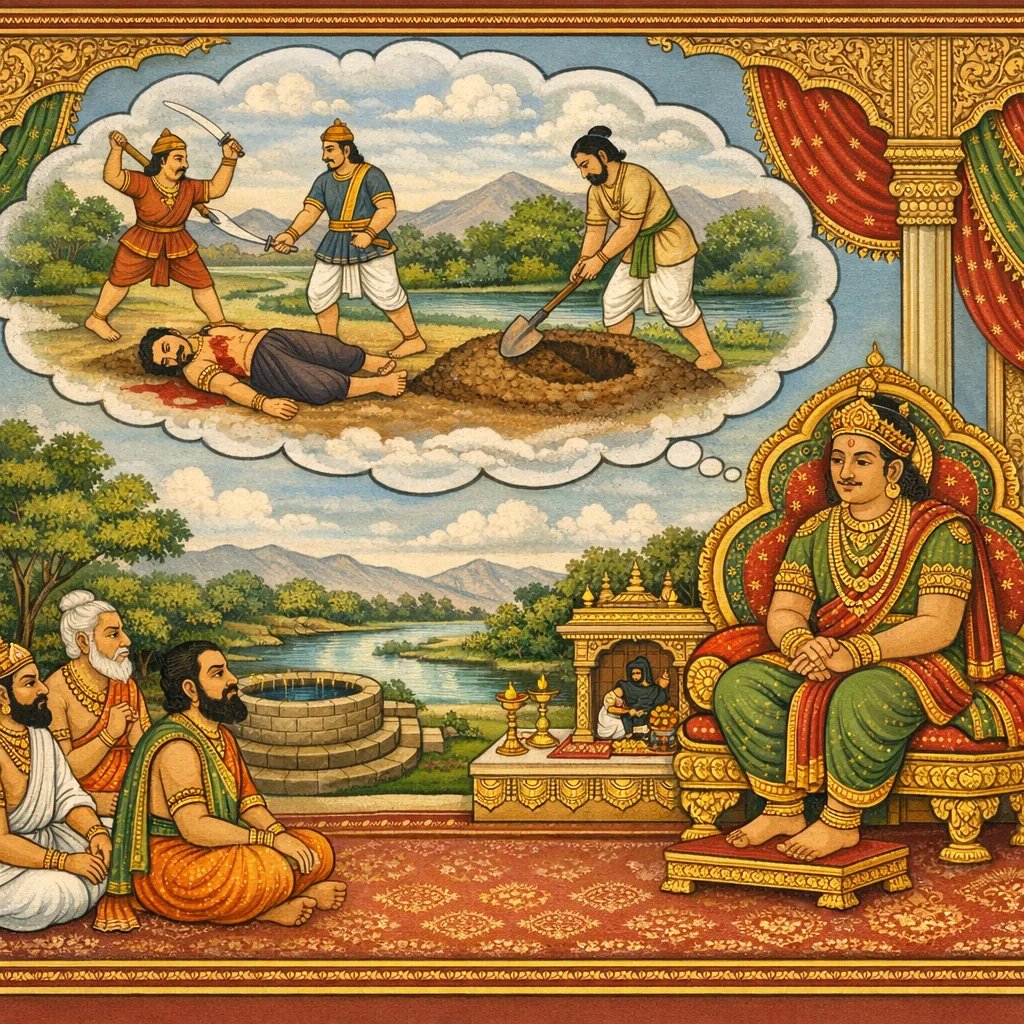
This chapter unfolds as a theological dialogue between Śiva and Devī. It first identifies a well (kūpa) north of Brahmakunda near Brahmatīrtha and proclaims its powerful purificatory virtue: bathing there frees one from the demerit of theft. It also extols Śivarātri as an especially auspicious time for rites such as piṇḍadāna, performed for the welfare of those violently slain and even those burdened with moral guilt. When Devī asks how the place became renowned, Īśvara relates an origin legend. King Sudarśana recalls a former birth connected with keeping vigil on Śivarātri at Prabhāsa: in that earlier life he was a thief who, attempting wrongdoing during the night of communal wakefulness, was killed by royal guards and buried north of Brahmatīrtha. Through his unintended association with Śivarātri wakefulness and the potency of the kṣetra, he gains a transformative fruit, culminating in rebirth as the righteous King Sudarśana. The narrative then points to a visible sign—gold being discovered—bringing public verification, and links this to the arising/naming of the Citrāpathā river. It prescribes that in the month of Śrāvaṇa, bathing at that well, performing śrāddha according to rule, and worshipping Citrāditya lead to honor in Śiva’s realm. The chapter ends with a phalaśruti promising purification and esteem in Rudra-loka to those who recite or listen.
Shlokas
Verse 1
ईश्वर उवाच । ततो गच्छेन्महादेवि कूपं कुंडलसंभवम् । तस्यैव चोत्तरे भागे ब्रह्मकुण्डसमीपतः
Īśvara said: “Then, O Great Goddess, one should go to the well called Kuṇḍalasaṃbhava; and to its northern side, near the sacred Brahmakuṇḍa.”
Verse 2
यत्र सिद्धो महादेवि रूपकुंडलहारकः । तत्र स्नात्वा नरो देवि मुच्येत्स्तेयकृतादघात्
O Great Goddess, there the accomplished one known as the “stealer of the beautiful earrings” attained perfection; by bathing there, a person is released from the sin arising from theft.
Verse 3
सप्त जन्मानि देवेशि न तस्यान्वयसंभवः । चौरः कश्चिद्भवेत्क्रूरस्तत्र स्नानप्रभावतः
O Goddess of the Lord of the gods, for seven births his lineage would not continue; by the potency bound to bathing in that place, he would become a cruel thief—such is the consequence taught in this account.
Verse 4
शिवरात्र्यां विशेषेण पिंडदानादिकां क्रियाम् । कुर्याच्छस्त्रहतानां च पापिनां तत्र मुक्तये
Especially on Śivarātri, one should perform rites there—such as the offering of piṇḍa—for the liberation of those slain by weapons and of sinners.
Verse 5
देव्युवाच । कथं कुण्डलरूपं तु पृथिव्यां ख्यातिमागतम् । एतत्कथय मे देव विस्तराद्वदतां वर
The Goddess said: “How did this ‘Kuṇḍala’, in the form of an earring, become renowned upon the earth? Tell me, O God—best of speakers—at length.”
Verse 6
ईश्वर उवाच । शृणु देवि महापुण्यां कथां पापप्रणाशनीम् । यां श्रुत्वा मुच्यते पापान्नरो जन्मशतार्जितात्
Īśvara said: “Listen, O Goddess, to this supremely meritorious tale that destroys sin; hearing it, a person is freed from sins amassed over a hundred births.”
Verse 7
प्रभासक्षेत्रमाहात्म्याच्छिवरात्र्यामुपोषितः । आसीत्सुदर्शनो राजा पृथिव्यामेकराट् सुधीः
Through the greatness of Prabhāsa Kṣetra and by fasting on Śivarātri, there once was King Sudarśana upon the earth—wise, and a sole sovereign.
Verse 8
धन्यो हि स धनाढ्यश्च प्रजां यत्नैरपालयत् । राज्यं तस्य सुसंपन्नं ब्राह्मणैरुपशोभितम् । समृद्धमृद्धिसंयुक्तं विटतस्करवर्जितम्
Truly he was blessed and wealthy; with diligent effort he protected his subjects. His kingdom was well-provided, adorned by Brāhmaṇas—prosperous, filled with abundance, and free from rogues and thieves.
Verse 9
तस्मिञ्जनपदे रम्ये पुरी भगवती शुभा । चातुर्वर्ण्यसमायुक्ता पुरप्राकारमंडिता
In that delightful realm there was an auspicious, splendid city—thriving with all four social orders, and embellished with the ramparts and walls of a fortified town.
Verse 10
तस्मिन्पुरवरे रम्ये राज्यं निहतकण्टकम् । करोति बान्धवैः सार्द्धमृद्धियुक्तः सुदर्शनः । हिरण्यदत्तस्य सुतो जातो गांधारकन्यया
In that lovely and excellent city, Sudarśana—endowed with prosperity—ruled a kingdom free from thorns (free from troubles), together with his kinsmen. He was the son of Hiraṇyadatta, born of a maiden of Gandhāra.
Verse 11
तस्य भार्या प्रिया साध्वी भर्तृव्रतपरायणा । सुनंदा नामविख्याता काशिराजसुता शुभा
His beloved wife was a virtuous and chaste woman, devoted to her husband’s sacred vow of fidelity. She was renowned by the name Sunandā, an auspicious daughter of the King of Kāśī.
Verse 12
तया सार्धं हि राजेन्द्रो भोगान्स बुभुजे सदा । भुंजमानस्य भोगान्वै चिरकालो गतस्तदा
Indeed, together with her, the lordly king continually enjoyed royal pleasures; and while he thus enjoyed those pleasures, a long time passed.
Verse 13
अकरोत्स महायज्ञान्ददौ दानानि भूरिशः । एवं कालो गतस्तस्य भार्यया सह सुव्रते
He performed great sacrifices and bestowed abundant gifts in charity. Thus time passed for him together with his wife of noble vows.
Verse 14
कदाचिन्माघमासे तु शिवरात्र्यां वरानने । सस्मार पूर्वजातिं स भार्यामाहूय चाब्रवीत्
Once, in the month of Māgha, on the night of Śivarātri, O fair-faced one, he remembered his former birth; and summoning his wife, he spoke.
Verse 15
सुदर्शन उवाच । शिवरात्रिव्रतं देवि मया कार्यं वरानने । व्रतस्यास्य प्रभावेन प्राप्तं राज्यं मया किल
Sudarśana said: “O goddess-like one, O fair-faced lady, I must observe the Śivarātri vow. Indeed, by the power of this very vow, I attained my kingdom.”
Verse 16
राज्ञ्युवाच । महान्प्रभावो राजेन्द्र एवमुक्तं त्वया मम । एतन्मे कारणं ब्रूहि आश्चर्यं हृदि वर्तते
The queen said: “O king, great indeed is the power of this, as you have told me. Tell me the reason for it; wonder has arisen in my heart.”
Verse 17
राजोवाच । शृणु तीर्थस्य माहात्म्यं शिवरात्रिमुपोषणात् । तस्मिञ्छिवपुरे रम्ये स्वर्गद्वारे सुशोभने
The king said: “Listen to the greatness of the sacred ford that comes from fasting on Śivarātri—there, in that delightful Śivapura, splendid like a gateway to heaven.”
Verse 18
आदितीर्थे प्रभासे तु कामिके तीर्थ उत्तमे
At Prabhāsa, at Āditīrtha—indeed, at the excellent sacred ford called Kāmika Tīrtha—
Verse 19
ऋद्धियुक्ते पुरे तस्मिन्नित्यं धर्मानुसेविते । शिवरात्र्यां गतो राज्ञि तिथीनामुत्तमा तिथिः
In that city endowed with prosperity, where dharma was ever observed, O queen, Śivarātri—the supreme of lunar days—arrived.
Verse 20
मानवास्तत्र ये केचित्पुरराष्ट्रनि वासिनः । तत्रागता वरारोहे शिवरात्र्यामुपोषितुम्
O fair-hipped lady, all the people dwelling there, in towns and countryside alike, came to that place to observe the fast on Śivarātri, the Night of Śiva.
Verse 21
धननामा वणिक्कश्चित्तत्रैव वसते सदा । धनाढ्यः स तु धर्मात्मा सदा धर्मपरायणः
A merchant named Dhana lived there always. Though wealthy, he was righteous by nature and ever devoted to dharma.
Verse 22
स भार्यासहितस्तत्र शिवरात्रिमुपोषितः । तस्य भार्याऽभवत्साध्वी रूपयौवनसंवृता
There, together with his wife, he observed the Śivarātri fast. His wife was virtuous, endowed with beauty and youth.
Verse 23
प्रचलन्मेखलाहारा सर्वाभरणभूषिता । स तया भार्यया सार्धं कामक्रोधविवर्जितः
With her girdle and necklace swaying, adorned with every ornament, she stood; and he, together with that wife, remained free from lust and anger.
Verse 24
प्रभासस्याग्रतो भूत्वा स्नातः शुक्लांबरः शुचिः । यथोक्तेन विधानेन भक्त्या निद्राविवर्जितः
Standing before Prabhāsa, he bathed, wore white garments, and remained pure; following the prescribed procedure with devotion, he kept himself free from sleep.
Verse 25
तत्राहं चौररूपेण पापः स्तैन्यं समाश्रितः । सच्छूद्राणां कुले जातो देवब्राह्मणपूजकः
There I was, sinful, in the guise of a thief, resorting to stealing. I was born in a respectable Śūdra family, yet I was one who worshipped the gods and honored the Brāhmaṇas.
Verse 26
पूर्वकर्मानुसंयोगाद्विकर्मणि रतः सदा । तस्यां रात्र्यामहं तत्र जनमध्ये तु संस्थितः
Through association with the results of my former deeds, I was always engaged in wrongful acts. On that night, however, I was present there, standing amid the crowd of people.
Verse 27
कुण्डलीनः स्थितस्तत्र रंध्रापेक्षी वरानने । वणिजस्तस्य भार्यायाश्छिद्रान्वेषणतत्परः
O fair-faced lady, I stayed there crouched down, waiting for an opening—intent on seeking a vulnerability in the merchant’s wife.
Verse 28
सा रात्रिर्जाग्रतस्तस्य गता मे विजने तथा । गीतनृत्यादिनिर्घोषैर्वेदमंगलपाटकैः
That night passed for him in wakefulness; and for me as well, in a lonely spot—filled with the sounds of singing and dancing, and with recitations of Vedic auspicious chants.
Verse 29
तालशब्दैस्तथा बन्धैः पुस्तकानां च वाचकैः । एवं रात्र्यां तु शेषायां यावत्तिष्ठति तत्र वै
With the sounds of rhythmic clapping and keeping time, with musical measures and compositions, and with those who read aloud from books—thus, for the remainder of the night, he continued to stay there indeed.
Verse 30
निरोधेन समायुक्ता पीड्यमाना शुचिस्मिता । धनिभार्या निरोधार्ता देवागाराद्बहिर्गता
Afflicted by a bodily obstruction and in pain, the wealthy man’s wife—gentle in her pure smile—went out from the temple precincts, distressed by that constriction.
Verse 31
तस्याः कर्णौ त्रोटयित्वा पुप्लुवेऽहं जले स्थितः । ततः कोलाहलस्तत्र कृतस्तत्पुरवासिभिः
Having struck and torn her ears, I plunged away, remaining in the water. Then a great uproar arose there, raised by the residents of that town.
Verse 32
श्रुत्वा कोलाहलं शब्दं कर्णत्रोटनजं तदा । धाविता रक्षकास्तत्र राजशासनकारकाः
Hearing that clamorous sound—arising from the tearing of the ears—then the guards ran there, those charged with enforcing the king’s command.
Verse 33
तैरहं शस्त्रहस्तैश्च उल्काहस्तैः समंततः । निरीक्षितोऽथ न प्राप्तं सुवर्णं मन्मुखे स्थितम्
Surrounded on every side by those bearing weapons and torches, I was searched; yet they did not obtain the gold that was lodged in my mouth.
Verse 34
खड्गेन तीक्ष्णधारेण छित्त्वा शीर्षं तदा मम । उल्काहस्ता निरीक्षन्तो नापश्यन्स्वर्णमण्वपि
Then, with a sharp-edged sword, they severed my head. Holding torches and searching, they did not see even the slightest bit of gold.
Verse 35
हित्वा मां ते गताः सर्वे गत्वा राज्ञे न्यवेदयन् । न किञ्चित्तत्र संप्राप्तं हतोऽस्माभिश्च तत्क्षणात्
Leaving me behind, they all went and reported to the king: ‘Nothing at all was obtained there; he was slain by us at that very moment.’
Verse 36
कथयित्वा तु ते सर्वे यथादेशं गताः पुनः । ततो वै बन्धुना तत्र भयभीतेन चेतसा
After reporting, they all returned again to their assigned duties. Then, there, a kinsman—his mind terrified with fear—(approached).
Verse 37
निखातं मम तत्रैव शिरः कायेन संयुतम् । खातं कृत्वा प्रिये तत्र ब्रह्मतीर्थस्य चोत्तरे
There itself my head—joined with the body—was buried. Having dug a pit there, O beloved, (it was done) to the north of Brahma-tīrtha.
Verse 38
पिहितोऽहं तु तत्रैव प्रभासे तीर्थ उत्तमे । शिवरात्रिप्रभावेन तज्जातिस्मरतां गतः
Thus covered there itself in Prabhāsa, that most excellent tīrtha, by the power of Śivarātri I attained remembrance of my former birth.
Verse 39
राज्यं निष्कण्टकं प्राप्तं समृद्धं वरवर्णिनि । एतत्प्रभासमाहात्म्यं शिवरात्रेरुपोषणात् । एतत्फलं मया लब्धं गत्वा तस्मादुपोषये
I obtained a prosperous kingdom, free of thorns, O fair one. Such is the greatness of Prabhāsa through fasting on Śivarātri. This fruit was gained by me; therefore I shall go and observe that fast.
Verse 40
राज्ञ्युवाच । गच्छावस्तत्र यत्रैव कपालं पतितं तव । स्फोटिते च कपाले च हिरण्यं दृश्यते यदि । प्रत्ययो मे भवेत्पश्चात्तव वाक्यं न संशयः
The queen said: “Let us go to the very place where your skull fell. If, when that skull is split open, gold is seen within it, then I shall gain certainty; your words will then be beyond doubt.”
Verse 41
राजोवाच । कल्पं हि तिष्ठते चास्थि यावद्भूमिविपर्ययः । उत्तिष्ठ व्रज भद्रं ते प्रभासं क्षेत्रमुत्तमम्
The king said: “Indeed, that bone remains for an entire aeon—until the upheaval of the earth. Rise, and let us go; may it be well with you—to Prabhāsa, the supreme holy field.”
Verse 42
तस्य तद्वचनं श्रुत्वा यद्राज्ञा समुदीरितम् । गमनाय मतिं चक्रे शिवरात्र्या उपोषणे
Having heard those words spoken by the king, she resolved to go—observing a fast on the night of Śivarātri.
Verse 43
ततोऽश्वैर्जवनैयुर्क्तं रथं हेमविभूषितम् । आस्थाय सह पत्न्या च प्रभासं क्षेत्रमेयिवान्
Then, mounting a chariot adorned with gold and yoked with swift horses, he set out—together with his wife—for the sacred region of Prabhāsa.
Verse 44
व्रतं कृत्वा प्रभासे तु यथोक्तं वरवर्णिनि । ब्रह्मतीर्थे समागत्य उद्धृत्य सकलं ततः
Having performed at Prabhāsa the vow exactly as prescribed, O fair lady, they came to Brahma-tīrtha; and there, lifting it all up from that place…
Verse 45
हिरण्यं दर्शयामास स्फोटयित्वा शवं स्वयम्
He revealed the gold—splitting open the corpse himself.
Verse 46
ईश्वर उवाच । जातसंप्रत्यया भार्या तस्य राज्ञो बभूव ह । जगाम परमं स्थानं यत्र कल्याणमुत्तमम्
Īśvara said: The king’s wife, her conviction now firmly born, indeed attained the supreme abode—where the highest auspiciousness is found.
Verse 47
जनोऽपि विस्मितः सर्वो दृष्ट्वा चित्रं तदद्भुतम्
All the people, too, were astonished on seeing that wondrous marvel.
Verse 48
नदी चित्रपथानाम तत्रोत्पन्ना वरानने । चित्रादित्यस्य पूर्वेण ब्रह्मतीर्थस्य चोत्तरे
O fair-faced one, there arose a river named Citrāpathā—east of Citrāditya and north of Brahma-tīrtha.
Verse 49
तस्यां तत्तिष्ठते तत्र सर्वपापप्रणाशनम्
There, within that river, abides a sacred power that destroys all sins.
Verse 50
श्रावणे मासि संप्राप्ते तस्मिन्कूपे विधानतः । यः स्नानं कुरुते देवि श्राद्धं तत्र विशेषतः
O Goddess, when the month of Śrāvaṇa arrives, whoever bathes in that well according to the prescribed rite—and especially performs śrāddha there—gains exceptional religious merit.
Verse 51
चित्रादित्यं तु संपूज्य शिवलोके महीयते
By duly worshipping Citrāditya, one is honored and exalted in Śiva’s world.
Verse 52
एतत्ते कथितं सर्वं शिवरात्र्या महत्फलम् । भुक्तिमुक्तिप्रदं पुण्यं सर्वपापप्रणाशनम्
Thus I have told you in full the great fruit of Śivarātri: a holy observance that grants worldly well-being and liberation, and destroys all sins.
Verse 53
य इदं पठते नित्यं शृणुयाद्वापि मानवः । सर्वपापविनिर्मुक्तो रुद्रलोके महीयते
Any person who regularly recites this, or even listens to it, is freed from all sins and is honored in Rudra’s world.