Adhyaya 33
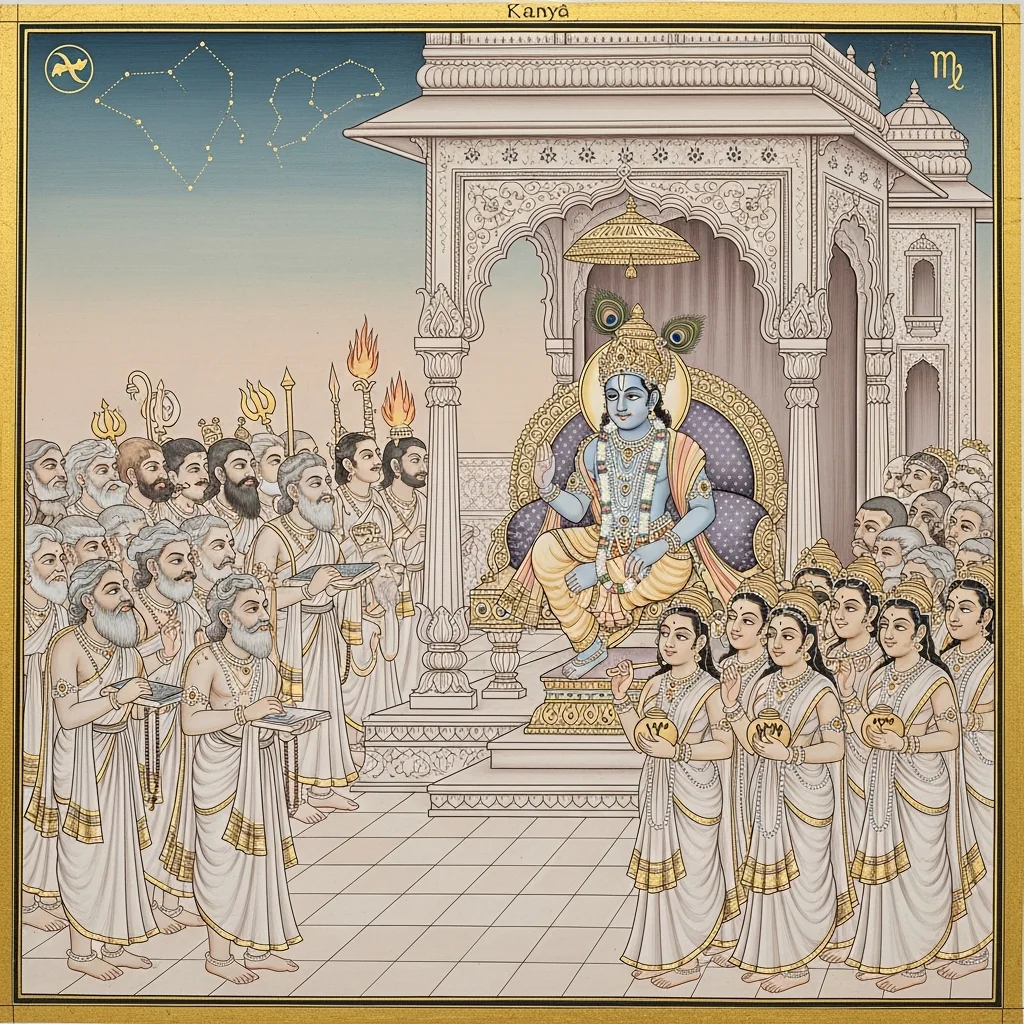
This adhyāya unfolds as a dialogue: Prahlāda, having heard remarks attributed to Viṣṇu’s attendants, asks to hear the māhātmya of Dvārakā. Brahmā and Maheśa reply by establishing Dvārakā as a royal preeminent center among tīrthas and liberation-bestowing kṣetras, praising it in a comparative manner that implicitly surpasses famed pilgrimage sites such as Prayāga and Kāśī. The chapter then turns to a systematic, direction-based enumeration: countless rivers and tīrthas (reckoned in koṭis) are said to dwell around Dvārakā, attending in devotion and repeatedly beholding Kṛṣṇa. A further catalogue names major kṣetras in the cardinal and intercardinal directions—Vārāṇasī, Avantī, Mathurā, Ayodhyā, Kurukṣetra, Purushottama, Bhṛgukṣetra/Prabhāsa, Śrīraṅga—followed by Śākta, Saura, and Gāṇapatya sacred sites, and mountains such as Kailāsa, Himavat, and Śrīśaila encircling the city. The conclusion frames this convergence as arising through śraddhā and bhakti, noting that when Guru (Bṛhaspati) is in Kanyā-rāśi, gods and sages joyfully come for darśana, affirming Dvārakā as an integrative pilgrimage cosmogram.
Shlokas
Verse 1
श्रीप्रह्लाद उवाच । श्रुत्वा ब्रह्ममहेशानौ यदुक्तं विष्णुपार्षदैः । द्वारकायास्तु माहात्म्यं तद्वर्णयितुमूचतुः
Śrī Prahlāda said: Having heard what was spoken by Viṣṇu’s attendants, Brahmā and Maheśa then began to describe the greatness of Dvārakā.
Verse 2
श्रीब्रह्मेशानावूचतुः । भोभोः क्षेत्राणि तीर्थानि सरांसि सागरादयः । प्रयागादीनि तीर्थानि काश्याद्या मुक्तिदायकाः
Śrī Brahmā and Īśāna said: O! O! Sacred regions, tīrthas, lakes, oceans and the like—tīrthas such as Prayāga, and places beginning with Kāśī, are bestowers of liberation.
Verse 3
भवतां तीर्थराजानां महाराजस्त्वियं शुभा । द्वारका सेवनीया वै स्थीयतां स्वेच्छया बहिः
O kings among sacred fords (tīrthas), this auspicious Dvārakā is your sovereign overlord. Indeed, Dvārakā is to be reverently served; therefore remain here outside (her precincts), according to your own wish.
Verse 4
श्रीप्रह्लाद उवाच । महेशवचनं श्रुत्वा सर्वेषामुत्सवोऽभवत् । प्रदक्षिणां ततः कृत्वा द्वारकां प्रणिपत्य च । आवासं चक्रिरे तत्र क्षेत्रतीर्थानि हर्षतः
Śrī Prahlāda said: Hearing Maheśa’s words, a great festival-joy arose in all. Then, having circumambulated and bowing to Dvārakā, those sacred kṣetras and tīrthas made their dwelling there with delight.
Verse 5
भागीरथी प्रयागं च यमुना च सरस्वती । सरयूगंडकी पुण्या गोमती पूर्ववाहिनी
There were Bhāgīrathī (Gaṅgā), Prayāga, Yamunā, and Sarasvatī; also the sacred Sarayū and Gaṇḍakī, and Gomati that flows eastward—all these holy rivers and tīrthas assembled.
Verse 6
अन्याश्च सरितः सर्वाः सिन्धुशोणौ नदौ तथा । पंचाशत्कोटिभिस्तीर्थैर्दिग्भागे ह्युत्तरे स्थिताः । लंपटाः कृष्णसेवायां पश्यतो द्वारकां मुहुः
And all the other rivers too—together with the Sindhu and the Śoṇa—stood in the northern quarter, accompanied by fifty crores of tīrthas. Fervently devoted to Kṛṣṇa’s service, they beheld Dvārakā again and again.
Verse 7
मन्दाकिनी तथा पुण्या नदी भागीरथी च या । महानदी नर्मदा च शिप्रा प्राची सरस्वती
Mandākinī too was there, and the holy river Bhāgīrathī; Mahānadī and Narmadā; Śiprā, Prācī, and Sarasvatī—these also were present among the tīrthas.
Verse 8
चक्षुर्भद्रा तथा सीता नद्योऽन्याः पापनाशिनी । वर्तंते पूर्वदिग्भागे तीर्थैश्च षष्टिकोटिभिः
Cakṣurbhadrā and Sītā, and other rivers that destroy sin, were present in the eastern quarter together with sixty crores of tīrthas.
Verse 9
पयोष्णी तपती पुण्या विदर्भा च पयस्विनी । गोदावरी महापुण्या भीमा कृष्णानदी तथा
Payoṣṇī and the sacred Tapatī; Vidarbhā and Payasvinī; the greatly holy Godāvarī; and Bhīmā and the river Kṛṣṇā as well—these were among the gathered tīrthas.
Verse 10
कावेरीप्रमुखाः पुण्या अन्यैश्चैवाघनाशिनीः । स्वतीर्थसहिता भक्त्या नवनवतिकोटिभिः
The holy rivers headed by Kāverī—together with other sin-destroying streams—came in devotion, accompanied by their own associated tīrthas, numbering ninety-nine crores.
Verse 11
स्थिता दक्षिणदिग्भागे द्वारकासेवनोत्सुकाः । क्रीडंति गोमतीनीरे तीरे च कृष्णसन्निधौ
They stood in the southern quarter, eager to serve Dvārakā. They sported upon the waters and along the banks of the Gomati, in the very presence of Śrī Kṛṣṇa.
Verse 12
सप्तद्वीपेषु याः संति तथाऽन्या वै सरिद्वराः । सागराश्च तथा सप्त पश्चिमायां दिशि स्थिताः
Whatever excellent rivers exist in the seven continents (sapta-dvīpas), and other noble rivers besides, along with the seven oceans—these were stationed in the western direction.
Verse 13
क्रीडंति चक्रतीर्थे वै तीर्थैश्च शतकोटिभिः । पश्यंति च मुहुः कृष्णं पश्चिमाभिमुखं सदा
Indeed, at Cakratīrtha they sport in divine joy, accompanied by tens of millions of sacred tīrthas; and again and again they behold Śrī Kṛṣṇa, ever facing west.
Verse 14
विदिशासु च सर्वासु तीर्थसंख्या न विद्यते । पुष्करादीनि तीर्थानि विशाला विरजा गया
In every direction, the number of sacred tīrthas cannot be counted—tīrthas such as Puṣkara and others, Viśālā, Virajā, and Gayā.
Verse 15
शतैककोटिभिस्तीर्थैर्गोमत्युदधिसंगमे । वर्त्तंते कृष्णसेवायां सोत्सवानि द्विजोत्तमाः
At the confluence of the Gomati and the ocean, amid tens of millions of tīrthas, the best of the twice-born remain engaged in Śrī Kṛṣṇa’s service, celebrating with festivals.
Verse 16
वाराणसी पूरैशान्यामवन्ती पूर्वदिक्स्थिता । आग्नेय्यां दिशि कांती च दक्षिणे मथुरा स्थिता
Vārāṇasī lies in the northeastern quarter; Avantī stands in the eastern direction; in the southeast is Kāntī, and in the south is Mathurā.
Verse 17
नैरृत्यां च तथा माया अयोध्या पश्चिमे स्थिताः । वायव्यां तु कुरुक्षेत्रं हरिक्षेत्रं तथोत्तरे
In the southwest lies Māyā; Ayodhyā is situated in the west. In the northwest is Kurukṣetra, and to the north is Harikṣetra.
Verse 18
शिवक्षेत्रं च ऐशान्यामैंद्र्यां च पुरुषोत्तमः । आग्नेय्यां च भृगुक्षेत्रं प्रभासं दक्षिणाश्रितम्
In the northeast is Śivakṣetra; in the eastern quarter is Puruṣottama. In the southeast is Bhṛgukṣetra, and Prabhāsa is established to the south.
Verse 19
श्रीरंगं नैरृते भागे लोहदंडं तु पश्चिमे । नारसिंहानि वायव्ये कोकामुख्यं तथोत्तरे
Śrīraṅga lies in the southwestern quarter; Lohadaṇḍa is in the west. In the northwest are the Narasiṃha shrines, and to the north is Kokāmukhya.
Verse 20
कामाख्या रेणुकादीनि शाक्तेयानि च सर्वशः । क्षेत्रराजानि सर्वाणि यथास्थाने वसंति हि
Kāmākhyā and Reṇukā and all the Śākta sacred seats—indeed, all these sovereign kṣetras dwell in their proper places.
Verse 21
उत्तरे चैव सौराणि गाणपत्यानि कृत्स्नशः । क्षेत्राण्युत्तरतः संति रुक्मिण्याः सन्निधौ द्विजाः
To the north, in full, are also the holy centers of the Sauras (of Sūrya) and the Gaṇapatyas (of Gaṇeśa). O best of the twice-born, those kṣetras lie on the northern side, near the sacred presence of Rukmiṇī.
Verse 22
धेनुकं नैमिषारण्यं दंडकं सैंधवं तथा । दशारण्यमर्बुदं च नरनारायणाश्रमम्
Dhenuka, Naimiṣāraṇya, Daṇḍaka, and likewise Saiṃdhava; Daśāraṇya, Arbuda, and the āśrama of Nara–Nārāyaṇa.
Verse 23
यथादिशं वसंति स्म द्वारकायाः समन्ततः । मेर्वाद्याः पर्वताः सौम्ये द्वारकासेवनोत्सुकाः
O gentle one, the mountains beginning with Meru are said to abide all around Dvārakā in their respective directions, eager to serve and attend upon Dvārakā.
Verse 24
कैलासाद्याश्च ऐशान्यामैन्द्र्यां हिमवदादयः । श्रीशैलाद्याश्च आग्नेय्यां सिंहाद्र्याद्या यमे तथा
Kailāsa and other holy mountains are stationed in the north-east; in the eastern quarter are Himavat and the rest; in the south-east are Śrīśaila and others; and likewise, in the southern quarter are Siṃhādri and the rest.
Verse 25
नैरृत्यां वाममार्गाद्या महेन्द्रऋषभादयः । अन्ये च पुण्यशैलाश्च सलोकालोक मानसाः । द्वारकां परितः संति पर्य्युपासंति प्रत्यहम्
In the south-west are Vāmamārga and others, and also Mahendra, Ṛṣabha, and the rest. Other holy mountains too—together with Lokāloka and Mānasa—are present all around Dvārakā, worshipping her and attending upon her every day.
Verse 26
एवं ब्रह्मादयो देवा ऋषयः सनकादयः । क्षेत्रतीर्थादिभिर्युक्ता अन्यैः पुण्यतमैस्तथा
Thus Brahmā and the other gods, and the sages beginning with Sanaka—together with sacred kṣetras, tīrthas, and the like, and also with other most holy presences—are found there.
Verse 27
श्रद्धया परया भक्त्या कन्याराशिस्थिते गुरौ । आयांति द्वारकां द्रष्टुं ब्राह्म्याद्याश्च प्रहर्षिताः
With deep faith and supreme devotion—when Guru (Bṛhaspati, Jupiter) is situated in the sign of Virgo—Brāhmī and the other goddesses come joyfully to behold Dvārakā.
Verse 33
इति श्रीस्कान्दे महा पुराण एकाशीतिसाहस्र्यां संहिताया सप्तमे प्रभासखण्डे चतुर्थे द्वारकामाहात्म्ये द्वारकामाहात्म्यवर्णनपूवकं द्वारकायां सर्वतीर्थक्षेत्रादिकृतनिवास वर्णनंनाम त्रयस्त्रिंशत्तमोऽध्यायः
Thus ends the thirty-third chapter, titled “Description of the residence of all tīrthas and kṣetras in Dvārakā, preceded by the account of Dvārakā’s greatness,” in the fourth part of the Dvārakā Māhātmya, within the seventh division of the Prabhāsa Khaṇḍa of the Śrī Skanda Mahāpurāṇa, the Saṃhitā of eighty-one thousand verses.