Adhyaya 29
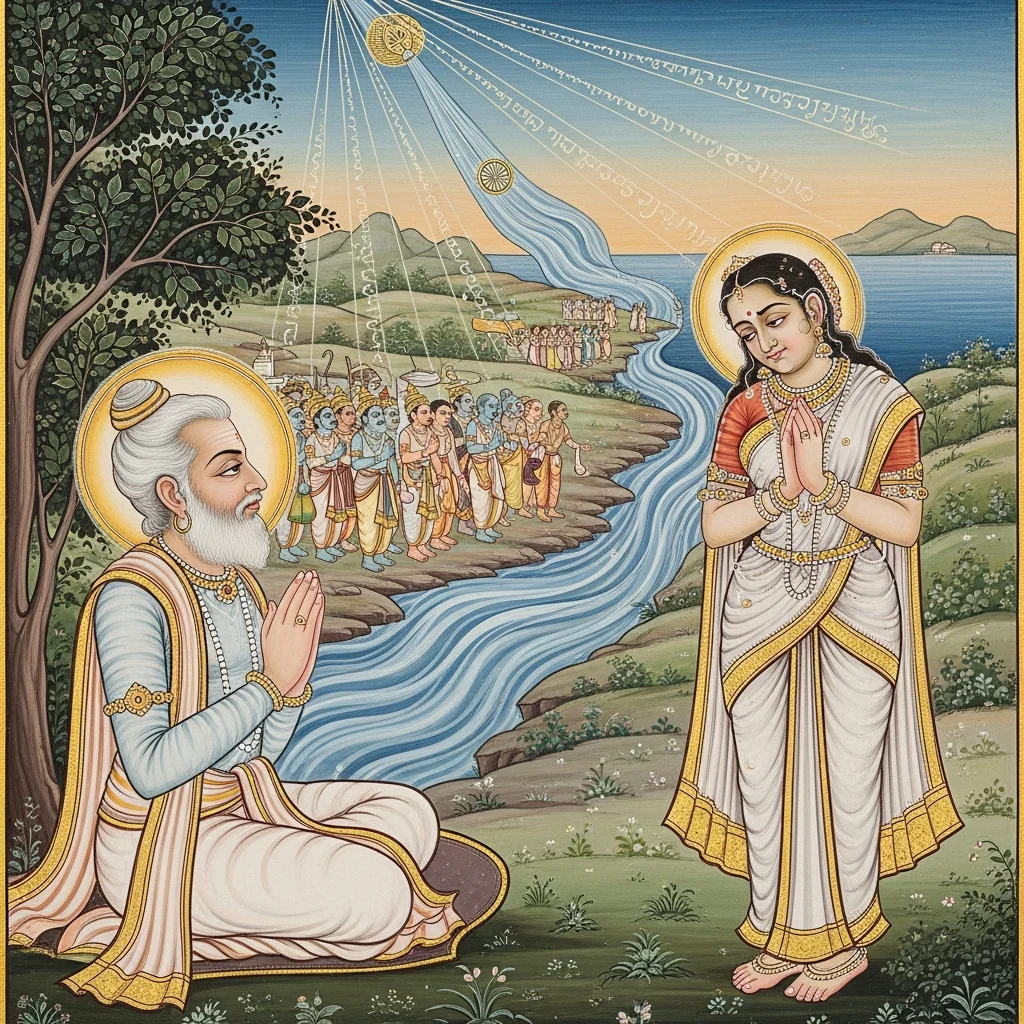
This chapter unfolds as a multi-voiced theological dialogue framed by Prahlāda’s narration. Nārada, noticing the auspicious time of Jupiter in Leo (siṃha-rāśi), witnesses an extraordinary gathering on the banks of the Godāvarī (Gautamī): great tīrthas, rivers, kṣetras, mountains, scriptures, siddhas, and divine beings assemble, astonished by the purity and radiance of that sacred locale. The personified Gautamī laments that she is weary and as though “burning” from contact with unethical people (durjana-saṃsarga), and she seeks a remedy to restore her serene purity. Nārada and the assembled holy entities deliberate; Gautama arrives and begins a contemplative appeal to Mahādeva. A bodiless divine voice then redirects the assembly to the northwestern seacoast, declaring Dvārakā—where the Gomati meets the ocean and where Viṣṇu abides facing west—to be the supreme purificatory field, like fire consuming fuel. The chapter ends with collective praise of Dvārakā and an intensified longing for bathing in the Gomati, bathing at Cakra-tīrtha, and receiving Kṛṣṇa’s darśana, while underscoring the ethical teaching: purity is strengthened by sat-saṅga (company of the good) and harmed by association with the wicked.
Shlokas
Verse 1
प्रह्लाद उवाच । अथान्यच्च प्रवक्ष्यामि गुह्याद्गुह्यतरं महत् । द्वारकायाः परं पुण्यं माहात्म्यं ह्युत्तमोत्तमम्
Prahlāda said: Now I shall declare something else—great, and more secret than the secret itself: the supremely holy, most exalted greatness of Dvārakā.
Verse 2
इतिहासं पुरावृत्तं वर्णयिष्ये मनोहरम् । तीर्थक्षेत्रादिदेवानामृषीणां संशयापहम्
I shall describe a charming ancient account—one that dispels the doubts of sages concerning tīrthas, sacred fields, and the presiding deities.
Verse 3
सौभाम्यमतुलं दृष्ट्वा सिंहराशिगते गुरौ । गोदावर्य्यां द्विजश्रेष्ठा नारदो भगवत्प्रियः
Beholding incomparable auspiciousness when Jupiter (Guru) had entered Leo, Nārada—the best of the twice-born, beloved of the Lord—arrived at the Godāvarī.
Verse 4
गौतमस्याऽभितो दृष्ट्वा त्रैलोक्यसंभवानि वै । तीर्थानि सरितः सर्वा विस्मयं परमं गतः
Seeing around Gautama the tīrthas and all the rivers said to arise from the three worlds, he was struck with the highest wonder.
Verse 5
तत्र काशी कुरुक्षेत्रमयोध्या मथुरापुरी । माया कांची ह्यवंती च अरण्यान्याश्रमैः सह
There were Kāśī, Kurukṣetra, Ayodhyā, and Mathurā; Māyā (Haridvāra), Kāñcī, and Avantī (Ujjayinī) as well—along with forests together with their hermitages.
Verse 6
हरिक्षेत्रं गया मिश्रक्षेत्रं च पुरुषोत्तमम् । प्रभासादीनि पुण्यानि मुक्तिक्षेत्राण्यशेषतः
Hari-kṣetra, Gayā, the famed Miśra-kṣetra, and Puruṣottama—together with Prabhāsa and the other sacred places—are all, without exception, holy fields that bestow liberation.
Verse 7
जाह्नवी यमुना रेवा तत्र पुण्या सरस्वती । सरयूर्गंडकी तापी पयोष्णी सरितां वरा
Jāhnavī (the Gaṅgā), Yamunā, Revā (Narmadā), and there the holy Sarasvatī; Sarayū, Gaṇḍakī, Tāpī, and Payoṣṇī—these are the finest among rivers.
Verse 8
कृष्णा भीमरथी पुण्या कावेर्य्याद्याः सरिद्वराः । स्वर्गे मर्त्ये च पाताले वर्त्तमानाः सतीर्थकाः
Kṛṣṇā, the holy Bhīmarathī, and the excellent rivers beginning with Kāverī—endowed with sacred fords—are present in heaven, on earth, and in the netherworlds.
Verse 9
स्थिता गोदावरीतीरे सिंहराशिं गते गुरौ । तथा च पुष्करादीनि सप्तसिंधुसरांसि च
When Bṛhaspati (Jupiter, the Guru) enters Leo, they abide on the bank of the Godāvarī; likewise they resort to Puṣkara and to the lakes of the Seven Rivers (Sapta-Sindhu) as well.
Verse 10
मेर्वादिपर्वताः पुण्या दर्शनात्पापनाशनाः । तीर्थराज प्रयागश्च सर्वतीर्थसमन्वितः
Meru and the other mountains are holy—by their very sight they destroy sin. And Prayāga, the king of tīrthas, is endowed with the presence of all tīrthas.
Verse 11
वेदोपवेदाः शास्त्राणि पुराणानि च सर्वशः । सिद्धा मुनिगणाः सर्वे देवर्षिपितृदेवताः
The Vedas and Upavedas, the treatises and the Purāṇas in every form; the Siddhas, all hosts of sages; and the divine seers, the Pitṛs, and the deities—were all present.
Verse 12
चंद्रादित्यौ सुरगणाः सिंहस्थे च बृहस्पतौ । स्थिता गोदावरीतीरे वर्षमेकं प्रहर्षिताः
When Bṛhaspati was stationed in Leo, the Moon and Sun, along with the hosts of gods, stayed on the bank of the Godāvarī for one year, filled with joy.
Verse 13
यानि कानि च पुण्यानि तीर्थक्षेत्राणि संति वै । त्रैलोक्ये तानि सर्वाणि गौतम्यां वीक्ष्य विस्मिताः
Whatever holy tīrthas and sacred regions exist in the three worlds—having beheld them all as if gathered in the Gautamī, they were astonished.
Verse 14
देवर्षिर्नारदस्तत्र मुनिभिर्मुदितोऽवसत् । सिंहस्यांते च सर्वाणि स्वस्थानगमनाय वै
There the divine seer Nārada dwelt, gladdened among the sages; and at the close of the Siṃha period, all prepared to depart to their own abodes.
Verse 15
आमन्त्र्य गौतमीं देवीं स्थितानि पुरतस्ततः । सर्वेषां शृण्वतां विप्रा गौतमी खिन्नमानसा । तप्ता दुर्जनसंसर्गान्नारदं दुःखिताऽब्रवीत्
Having taken leave of the goddess Gautamī, they stood before her. Then, as all the brāhmaṇas listened, Gautamī—troubled in mind, pained by the company of the wicked—spoke sorrowfully to Nārada.
Verse 16
गौतम्युवाच । पश्यैतानि सुतीर्थानि गंगाद्याः सरितोऽमलाः । सागरा गिरयः पुण्या गयात्रितयमेव च
Gautamī said: “Behold these most excellent tīrthas—pure rivers beginning with the Gaṅgā, the oceans, the holy mountains, and also the threefold Gayā—present here before you.”
Verse 17
क्षेत्राणि मोक्षदान्यंग त्रैलोक्यजानि नारद । देवाश्च पितरः सिद्धा ऋषयो मानवादयः
“These sacred fields are givers of liberation, dear one—renowned throughout the three worlds, O Nārada; and here are the gods, the ancestors, the Siddhas, the Ṛṣis, and also humans and others.”
Verse 18
तीर्थ राज प्रयागश्च सर्वतीर्थसमन्वितः । एतेषामेव सर्वेषां मत्संसर्गान्महामुने । विशुद्धानां प्रकाशेन राजते भुवनत्रयम्
“And Prayāga, the king of sacred fords, endowed with all tīrthas—O great sage—through association with me, all these become purified; by the radiance of the purified ones, the three worlds shine forth.”
Verse 19
प्रयांति तानि सर्वाणि स्वंस्वं स्थानं प्रति प्रभो । अधुनाऽहं परिश्रांता दह्यमाना त्वहर्निशम्
O Lord, all of them are departing, each to its own abode. And now I am utterly weary, as though burning day and night.
Verse 20
दुर्जनानां सुसंपर्काद्भृशं पापात्मना प्रभो । सौभण्यमधुना प्राप्तं सत्संसर्गेण नारद
O Lord, through close association with wicked people I became deeply sinful. But now, O Nārada, through the company of the virtuous I have attained well-being.
Verse 21
प्रयांत्येतानि सर्वाणि स्वस्थानं मुदितानि च
All these depart to their own abodes, and they go forth rejoicing.
Verse 22
एतानि मत्प्रसादेन पुण्यानि कथितानि च । कथय श्रमशांत्यर्थं दुःखि ता किं करोम्यहम्
By your grace these holy matters have been spoken. Now tell me, to relieve my weariness: afflicted with sorrow, what am I to do?
Verse 23
प्रह्लाद उवाच । गोदावर्य्या वचः श्रुत्वा भगवान्नारदो द्विजाः । क्षणं ध्यात्वा तु दुःखार्त्तः प्राह संशयमानसः
Prahlāda said: “Having heard the words of Godāvarī, the venerable Nārada—O brāhmaṇas—pondered for a moment; then, distressed, he spoke with a mind full of doubt.”
Verse 24
नारद उवाच । अहो अत्यद्भुतं ह्येतद्गौतम्या व्यसनं महत् । पश्यन्त्वसंशयं देवास्तीर्थक्षेत्रसरिद्वराः
Nārada said: “Alas—how exceedingly wondrous is this great calamity of the Gautamī! Let the gods, foremost among tīrthas, sacred regions, and rivers, behold it without doubt.”
Verse 25
सत्पुण्यनिचयो यस्यां युष्माकं समभूद्ध्रुवम् । तस्याः पापाग्निशमनं कथं स्यादिति चिन्त्यताम्
“In her, surely, your accumulation of true merit has arisen. Therefore consider this: how may the fire of sin in her be quenched?”
Verse 26
श्रीप्रह्लाद उवाच । तदा चिन्तयतां तेषां सर्वेषां भावितात्मनाम् । गौतमो भगवांस्तत्र समायातो मुनीश्वराः
Śrī Prahlāda said: As all those purified-souled beings were thus reflecting, the blessed sage-lord Gautama arrived there.
Verse 27
दृष्ट्वा तमृषयो देवा यथोचितमपूजयन् । जाह्नवी यमुना पुण्या नर्मदा च सरस्वती
Seeing him, the sages and the gods honored him as was fitting—and there were present the Jāhnavī (Gaṅgā), the Yamunā, the sacred Narmadā, and Sarasvatī.
Verse 28
अन्याश्च सर्वाः सरितस्त्रैलोक्यमनुवर्तिताः । वाराणसी कुरुक्षेत्र प्रमुखान्याश्रमैः सह । युगपत्तानि सर्वाणि संपूज्य मुनिमबुवन्
And all other rivers too—revered throughout the three worlds—came along with foremost holy places such as Vārāṇasī and Kurukṣetra, and with their āśramas. All of them together duly worshiped the sage and then spoke to him.
Verse 29
त्वत्प्रसादेन वै त्राताः सम्यक्छुद्धा महामुने । यदानीता त्वया गंगा गौतमी भूतलं प्रति
By your grace, O great sage, we have been saved and wholly purified—since you brought the Gaṅgā down to the earth as the Gautamī.
Verse 30
कृतार्था मानवाः सर्वे सर्वपापविवर्जिताः । किंतु दुर्जनसंपर्कात्संतप्ता गौतमी भृशम्
All people found fulfillment and were free from every sin; yet, through contact with the wicked, the Gautamī was greatly afflicted.
Verse 31
कथं पापैर्विनिर्मुक्ता परमानन्दसंप्लुता । सुप्रभा जायते देवी तद्गौतम विचिन्त्यताम्
How may the river-Goddess become Suprabhā—freed from sins and flooded with supreme bliss? O Gautama, let this be considered.
Verse 32
प्रह्लाद उवाच । एवमुक्तो मुनिस्तैस्तु चिन्ताकुलितमानसः । नारदस्य मुखं वीक्ष्य प्रहसन्गौतमोऽब्रवीत्
Prahlāda said: Thus addressed by them, the sage’s mind grew troubled with concern. Looking upon Nārada’s face, Gautama smiled and spoke.
Verse 33
गौतम उवाच । सर्वेषां क्षेत्रतीर्थानां महाशुभविनाशिनी । गौतमीयं महाभागा अस्यास्तापः क्व शाम्यति
Gautama said: O most fortunate one, this Gautamī is the great destroyer of all impurity for every sacred kṣetra and tīrtha. Where, then, could her affliction ever find rest?
Verse 34
नास्ति लोकत्रये तीर्थं स्नातुं सिंहगते गुरौ । यद्वै नायाति गौतम्यां क्षेत्रं चापि विशुद्धये । काशीप्रयागमुख्यानि राजंते यत्प्रसादतः
In the three worlds there is no tīrtha for sacred bathing, when Guru (Jupiter) is in Leo, that does not come to the Gautamī; nor is there any holy region seeking purification that does not depend upon her. Kāśī, Prayāga, and the foremost tīrthas shine by her grace.
Verse 35
वदंतु मुनयः सर्वे क्षेत्रतीर्थसमाश्रिताः । शुद्धं विचार्यं यत्कार्य्यं मयाऽस्मिञ्जातसंकटे
Let all the sages—abiding in the holy kṣetras and tīrthas—declare their counsel. In this crisis that has arisen, let what I should do be weighed with pure discernment.
Verse 36
प्रह्लाद उवाच । इत्युक्त्वा मुनयः सर्वे नोचुः किञ्चिद्विमोहिताः । तत्रोपायमविज्ञाय गौतमीं गौतमोऽब्रवीत्
Prahlāda said: Having spoken thus, all the sages fell silent, bewildered. Not knowing any remedy in that situation, Gautama addressed Gautamī.
Verse 37
गौतम उवाच । आनीतासि मया देवि तपसाऽराध्य शंकरम् । वदिष्यति स चोपायमित्युक्त्वाऽचिन्तयत्तदा
Gautama said: “O Goddess, I brought you here by worshipping Śaṅkara through austerity. Having said, ‘He will indeed declare the means,’ he then reflected deeply.”
Verse 38
गौतमः श्रद्धया भक्त्या गंगामौलिमखंडधीः । तदाऽभून्महदाश्चर्यं शृण्वंतु ऋषयोऽमलाः
Gautama—steadfast in intellect and revering the Lord crowned with the Gaṅgā—then, with faith and devotion, beheld a great wonder. “Let the stainless ṛṣis listen,” (says the narrator).
Verse 39
ध्यायमाने महादेवे गौतमेन महात्मना । अकस्मादभवद्वाणी हर्षयन्ती जगत्त्रयम्
As the great-souled Gautama meditated upon Mahādeva, suddenly a divine voice arose, delighting the three worlds.
Verse 40
नादयन्ती दिशः सर्वा आब्रह्मभुवनं द्विजाः । अरूपलक्षणाकारा विषादशमनी शुभा
O twice-born ones, it resounded through all directions, up to Brahmā’s world—auspicious, soothing sorrow, and bearing no visible form, mark, or shape.
Verse 41
दिव्यवाण्युवाच । अहो बत महाश्चर्य्यं सर्वेषां सुखदे शुभे । प्रसंगेऽत्र महाक्षेत्रे मग्ना दुःखार्णवे बुधाः
The divine voice said: “Alas—what a great wonder! In this auspicious, joy-bestowing great sacred region, the wise have nonetheless sunk into an ocean of sorrow due to circumstance.”
Verse 42
अहो हे गौतमाचार्य्य ऋषयो नारदादयः । शृण्वंतु तीर्थक्षेत्राणि कृपया संवदाम्यहम्
“O revered teacher Gautama—and you sages beginning with Nārada—listen. Out of compassion I shall speak of the holy tīrthas and sacred regions.”
Verse 43
पश्चिमस्य समुद्रस्य तीरमाश्रित्य वर्तते । अस्माच्च दिशि वायव्यां द्वारकाक्षेत्रमुत्तमम्
“On the shore of the western sea there lies—toward the north-west from here—the supremely excellent sacred region of Dvārakā.”
Verse 44
यत्राऽस्ते गोमती पुण्या सागरेण समन्विता । पश्चिमाभिमुखो यत्र महाविष्णुः सदा स्थितः
There the holy river Gomati is present, joined with the ocean; and there Mahāviṣṇu abides eternally, facing west.
Verse 45
अनेकपापराशीनामुग्राणामपि सर्वदा । दाहस्थान समाख्यातमिन्धनानां यथाऽनलः
It is famed as a “place of burning” even for heaps of fierce sins—just as fire consumes fuel.
Verse 46
देवविश्वद्रुहो यत्र दग्ध्वा पातकमद्भुतम् । लोकत्रयवधाज्जातं विराजतेऽर्कवत्सदा
There, the astounding sin—born of hostility toward the gods and of violence that harms the three worlds—is burnt away; and that holy realm ever shines like the sun.
Verse 47
तद्गम्यतां महाभागा गोमतीमघदाहकाम् । गोदावरीं पुरस्कृत्य क्षेत्रतीर्थसमन्विताम्
Therefore, O greatly fortunate ones, let Gomati—who burns away sin—be approached; and let the Godāvarī be honored in the forefront, together with her sacred kṣetras and tīrthas.
Verse 48
प्राप्य द्वारवतीं पुण्यां मत्प्रसादाद्द्विजोत्तमाः । प्रभावाद्द्वारकायाश्च सत्यमाविर्भविष्यति
Having reached the holy city of Dvāravatī, O best of the twice-born, by my grace—and by the mighty power of Dvārakā—the truth will become manifest.
Verse 49
प्रह्लाद उवाच । इत्युक्ते सति ते सर्वे हर्ष निर्भरमानसाः । श्रुत्वा सर्वोत्तमं क्षेत्रं जगर्जुर्हरिनामभिः
Prahlāda said: When this was spoken, all of them—hearts brimming with joy—on hearing of that supreme holy region, roared aloud with the names of Hari.
Verse 50
जितं भो जितमस्भाभिर्धन्या धन्यतमा वयम् । दैवादपगतो मोहो ज्ञातं तीर्थोत्तमोत्तमम्
“Victory—yes, victory is ours! We are blessed, most blessed indeed. By divine ordainment our delusion has departed, and we have come to know the most supreme of tīrthas.”
Verse 51
तदा सर्वाणि तीर्थानि क्षेत्रारण्याश्रमैः सह । वाराणसीप्रयागादि सरांसि सिन्धवो नगाः
Then all the tīrthas—together with sacred regions, forests, and āśramas—including Vārāṇasī, Prayāga, and the rest; the lakes, the rivers, and the mountains—all stirred in response.
Verse 52
गया च देवखातानि पितरो देवमानवाः । श्रुत्वा प्रमुदिता वाचं प्रोचुर्जयजयेति च
Gaya, the divinely dug holy pools, the Pitṛs, and the gods and humans—having heard those joy-giving words—proclaimed, “Victory! Victory!”
Verse 54
श्रीप्रह्लाद उवाच । श्रुत्वा सर्वोत्तमं क्षेत्रं तीर्थं सर्वोत्तमोत्तमम् । देवोत्तमोत्तमं देवं श्रीकृष्णं क्लेशनाशनम्
Śrī Prahlāda said: Having heard of the most excellent sacred region, the most supreme of tīrthas, and of the God who is best of the best—Śrī Kṛṣṇa, the destroyer of afflictions—
Verse 55
उत्कण्ठा ह्यभवत्तेषां तीर्थादीनां ह्यनुत्तमा । प्रोचुरन्योन्यतो वाचं सर्वाणि युगपत्तदा
Then, in those tīrthas and the rest, an unsurpassed longing arose; and all of them, at once, spoke words to one another.
Verse 56
ऋषितीर्थदेवा ऊचुः । कदा द्रक्ष्यामहे पुण्यां द्वारकां कृष्णपालिताम् । श्रीकृष्णदेवमूर्तिं च कृष्णवक्त्रं सुशोभितम्
The sages, the tīrthas, and the gods said: “When shall we behold the holy Dvārakā, protected by Kṛṣṇa—and also the divine form of Śrī Kṛṣṇa, his splendid, radiant face?”
Verse 57
कदा नु गोमतीस्नानमस्माकं तु भविष्यति । चक्रतीर्थे कदा स्नात्वा कृष्णदेवस्य मंदिरम् । द्रक्ष्यामः सुमहापुण्यं मुक्तिद्वारमपावृतम्
When, indeed, will the sacred bath in the Gomātī be ours? When, having bathed at Cakra-tīrtha, shall we behold the temple of Lord Kṛṣṇa—supremely meritorious, the very gateway to liberation standing open?
Verse 58
दुर्ल्लभो द्वारकावासो दुर्ल्लभं कृष्णदर्शनम् । दुर्ल्लभं गोमती स्नानं रुक्मिणीदर्शनं द्विजाः
Rare is residence in Dvārakā; rare is the vision of Lord Kṛṣṇa. Rare is bathing in the Gomātī, and rare—O twice-born—is the darśan of Rukmiṇī.
Verse 93
अहो सर्वोत्तमं क्षेत्रं सर्वेषां नोऽघनाशनम् । राजानं तीर्थराजानं द्वारकां शिरसा नमः
Ah! Dvārakā is the supreme of all sacred fields, the destroyer of all our sins. To Dvārakā—the king, the king among tīrthas—we bow our heads in reverence.