Adhyaya 17
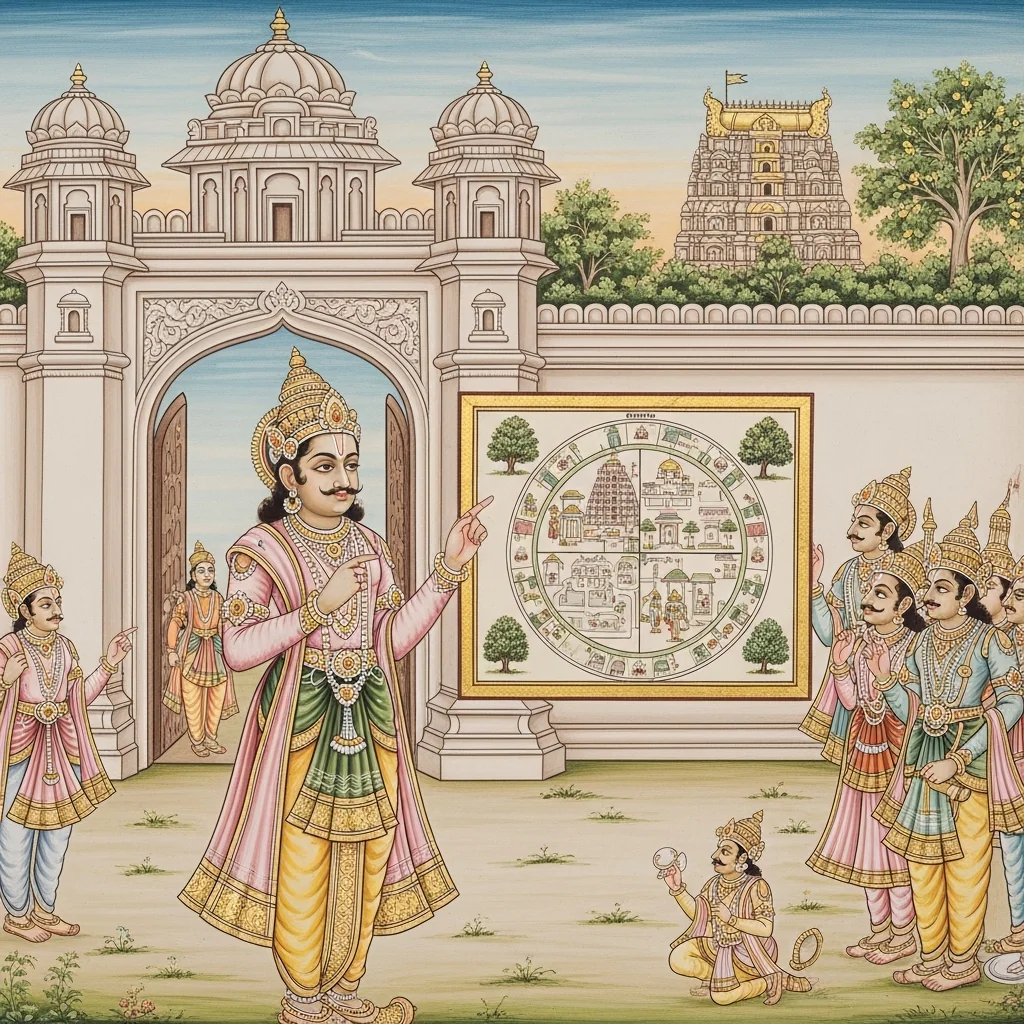
This chapter unfolds as a procedural dialogue. Prahlāda sets forth an ordered mode of worship for the Kali Yuga: after bathing at the tīrtha and giving suitable gifts (dakṣiṇā), the devotee should offer honors in sequence beginning at the thresholds and gates of Dvārakā, and only then approach Kṛṣṇa, Devakīnandana. The ṛṣis ask for a concise yet complete pūjā-vidhi, specifically inquiring who guards the city in each direction and who stands in front and behind. Prahlāda then enumerates the guardians by quarters: the eastern gate under Jayanta’s leadership, followed by the protectors of the southeast, south, southwest (nairṛti), west, northwest (vāyavya), north, and northeast (aiśānya). The chapter thus provides a ritual cartography: each direction is populated by named beings—devas, vināyakas, rākṣasas, nāgas, gandharvas, apsarases, and ṛṣis—and paired with a corresponding “royal tree” (such as nyagrodha, śāla, aśvattha, plakṣa), forming a complete ecology of sacred protection. An apparent anomaly is addressed: Gaṇeśa called “Rukmi” is worshiped first at Kṛṣṇa’s gate, though Rukmī opposed Kṛṣṇa in the Rukmiṇī episode. Prahlāda explains that after Rukmī’s conflict, humiliation, and release, Kṛṣṇa—so as to fulfill Rukmiṇī’s concern and to establish the principle of obstacle-removal—appointed Rukmī as a foremost, gate-associated form of Gaṇeśa. The chapter closes with a theological principle of ritual causality: the satisfaction of the gate-guardian (Gaṇeśa/Rukmi) is presented as a prerequisite for the Lord’s satisfaction, grounding temple etiquette in ethical discipline and liturgical hierarchy.
Shlokas
Verse 1
प्रह्लाद उवाच । कृत्वाऽभिषेकं तीर्थेषु यथावद्दत्त दक्षिणः । पूजयेच्च ततो देवं कृष्णाख्यं पुरुषं परम्
Prahlāda said: “Having duly performed the bathing-rites at the tīrthas and having given the proper dakṣiṇā, one should then worship the Lord—the Supreme Person known as Kṛṣṇa.”
Verse 2
ऋषय ऊचुः । पूजाविधिं तु कृष्णस्य श्रोतुकामाः समासतः । कथयाऽचरणोपेतं यथावद्दैत्यसत्तम
The sages said: “We wish to hear, in summary, the procedure of worship for Kṛṣṇa. O best among Daityas, tell it to us properly—complete with the practical steps of observance.”
Verse 3
द्वारपालाश्च के तत्र कः पूर्वं कश्च पृष्ठतः । पुरीयं सर्वतो दैत्य तिष्ठते केन पालिता
“Who, indeed, are the gate-guardians there? Who stands in front and who behind? And by whom is this city protected on every side, O Daitya?”
Verse 4
आनुपूर्व्यात्समासेन पूजनीया यथाविधि । कथयस्व विधिज्ञोऽसि कृष्णैकचरणप्रियः
“Tell (us), in due sequence and in brief, how they are to be worshipped according to proper rule. Speak—for you are a knower of rites and devoted to the feet of Kṛṣṇa alone.”
Verse 5
श्रीप्रह्लाद उवाच । श्रूयतां पूजनं विप्राः श्रुतपूर्वं विधानतः । कलौ कृष्णस्य विप्रेन्द्रा यथावदनुपूर्वशः
Śrī Prahlāda said: “Listen, O brāhmaṇas—(I shall describe) the worship, as heard from tradition and according to ordinance: in the Kali age, O best of brāhmaṇas, the proper worship of Kṛṣṇa, step by step.”
Verse 6
पूर्वद्वारस्थितान्देवाञ्छुणुध्वं सुसमाहिताः । जयंतः प्रथमं पूज्यः सर्वपापहरः शुभः
Listen with full attention to the deities stationed at the eastern gate. Jayanta is to be worshipped first—auspicious, and the remover of all sins.
Verse 7
स्थापितो देवराजेन पूजार्थं केशवस्य हि । तस्यैवानुचरान्वक्ष्ये तान्निबोधत सत्तमाः
He was installed by the King of the gods for the sake of worship of Keśava. Now I shall declare his attendants—understand them well, O excellent ones.
Verse 8
वज्रनाभः सुनाभश्च वज्रबाहुर्महा हनुः । वज्रदंष्ट्रो वज्रधारी वज्रहा वज्रलोचनः
(They are:) Vajranābha, Sunābha, Vajrabāhu, Mahāhanu, Vajradaṁṣṭra, Vajradhārī, Vajrahā, and Vajralocana.
Verse 9
श्वेतमूर्धा श्वेतमाली जयन्तानुचराश्च ते । एते शस्त्रोद्यतकरा रक्षन्ते तमहर्निशम्
Śvetamūrdhā and Śvetamālī are also attendants of Jayanta. These, with weapons raised in their hands, guard that (city) day and night.
Verse 10
पूर्वद्वारे सुसंनद्धा जयन्तोद्देशकारिणः । पूर्वद्वारे च रक्षार्थं नरनाथो विनायकः
At the eastern gate, fully armed and prepared, are those who act under Jayanta’s command. And for the protection of the eastern gate there is also Vināyaka, the lord of men.
Verse 11
तरुणार्कश्च वै सूर्यो देव्यो वै सहमातरः । ईश्वरश्चापि दुर्वासा नागराजस्तु तक्षकः
(There are also) Taruṇārka and Sūrya, the Sun; the Goddesses together with the Mothers; Īśvara; the sage Durvāsā; and Takṣaka, king of the nāgas.
Verse 12
सेनानीः कार्तिकेयश्च राक्षसश्च महाहनुः । तत्र दीर्घनखोनाम दानवः सुप्रतिष्ठितः
(There is) the commander Kārtikeya; and the rākṣasa Mahāhanu. There too stands firmly stationed a dānava named Dīrghanakha.
Verse 13
विश्वावसुश्च गन्धर्वो मेनका च वराप्सराः । सनत्कुमारसहितो वसिष्ठो भगवानृषिः
Viśvāvasu the Gandharva, Menakā the excellent Apsarā, and the revered sage Vasiṣṭha accompanied by Sanatkumāra—these illustrious beings (are present as holy guardians).
Verse 14
एते पूज्याः पूर्वतस्तु न्यग्रोधश्च महाद्रुमः । पूर्वद्वारस्थिता ह्येत आग्नेयाञ्छृणुताथ मे
These are to be worshipped on the eastern side; and there stands the great nyagrodha, the banyan tree. These are stationed at the eastern gate. Now hear from me of those in the south-east (Āgneya direction).
Verse 15
ज्वालामुखोऽथ रक्ताक्षः स्मशाननिलयः क्रथः । मांसादो रुधिराहारः कृष्णः कृष्णजटाधरः
Jvālāmukha; then Raktākṣa; Kratha who dwells in cremation grounds; Māṃsāda who eats flesh; Rudhirāhāra who feeds on blood; and Kṛṣṇa with dark matted locks—(these are the fierce guardians named for that quarter).
Verse 16
त्रासनो भञ्जनश्चैव ह्याग्न्येय्यां दिशि संस्थिताः । दिशं रक्षंति संनद्धा दक्षिणां शृणुताथ मे
Trāsana and Bhañjana, stationed in the south-east, stand armed and protect that quarter. Now hear from me concerning the southern direction.
Verse 17
दण्डपाणिर्महानादः पाशहस्तः सुलोचनः । अनिवर्त्यक्रमश्चैव तथा दुंदुभिनिस्वनः
Daṇḍapāṇi, Mahānāda, Pāśahasta, Sulocana, Anivartyakrama, and Duṃdubhinisvana—these are the guardians named for that quarter.
Verse 18
खरस्वनो घर्घरवाक्तथा मौनप्रियः सदा । मल्लिकाक्षश्च एतेषां प्रणतो द्वारपालकः
Kharasvana, Ghargharavāk, and Maunapriya, ever fond of silence; and Mallikākṣa, bowing in reverence, serves as the doorkeeper over them.
Verse 19
दक्षिणद्वाररक्षार्थं दुन्दुभिश्च विनायकः । महिषार्कश्च वै सूर्यो भूषणश्च तथेश्वरः
For the protection of the southern gate are Dundubhi and Vināyaka; also Mahiṣārka, Sūrya, Bhūṣaṇa, and Īśvara, appointed as guardians.
Verse 20
चण्डिका च तथा देवी ह्यूर्द्ध्वबाहुश्च राक्षसः । पद्माक्षः क्षेत्रपालश्च नागश्चाश्वतरस्तथा
Also Caṇḍikā the Goddess; and the Rākṣasa Ūrddhvabāhu; Padmākṣa and Kṣetrapāla; as well as Nāga and Aśvatara—these too stand as guardians.
Verse 21
चित्रांगदश्च गन्धर्व उर्वशी च वराप्सराः । यो राजा सर्ववृक्षाणां शालश्चापि महाद्रुमः
There are established Citrāṃgada the Gandharva, and Urvaśī, the foremost of Apsarās; and also the mighty Śāla tree, hailed as the king among all trees.
Verse 22
सनातन ऋषिश्रेष्ठो ह्यगस्त्यश्च महातपाः । एते याम्यदिशि द्वारं रक्षन्ति सुसमाहिताः
Sanātana, foremost among sages, and Agastya of great austerity—these, fully composed and attentive, protect the gate in the southern (Yāmya) direction.
Verse 23
गीतकृन्नर्तको नग्नः कंबली दहनप्रियः । हसनो नेत्रभंगश्च भ्रूविकारो विजृंभकः
“Gītakṛt, Nartaka, Nagna, Kaṃbalī, and Dahanapriya; Hasana, Netrabhaṅga, Bhrūvikāra, and Vijṛmbhaka”—these attendant beings are spoken of as part of the divine protective host.
Verse 24
मुशली प्रभुरेतेषां संनद्धो वर्तते द्विजाः । रक्षन्ति नैरृतीमाशां पश्चिमां शृणुतापरान्
“O twice-born ones, Muśalī stands as the armoured lord of these attendants. They guard the south-western quarter (Nairṛti); now hear also of those of the western direction.”
Verse 25
स्वस्तिकः शंखमूर्द्धा च नीलवासाः शुभाननः । पाशहस्तः शूलहस्त एकपादैकलोचनः
“Svastika; Śaṅkhamūrdhā; Nīlavāsā; Śubhānana; Pāśahasta; Śūlahasta; and Ekapāda-Ekalocana—such are the guardians named.”
Verse 26
पश्चिमायां दिशि तथा पुष्पदन्तो विनायकः । उद्धवार्कश्च वै सूर्यः शिवः सत्राजितेश्वरः
In the western direction are: Puṣpadanta Vināyaka; Uddhavārka; indeed Sūrya, the Sun; and Śiva, known as Satrājiteśvara.
Verse 27
तुंबरुर्नामगन्धर्वो घृताची च वराप्सराः । महोदरश्च नागेन्द्रो राक्षसश्च घटोत्कचः
There is the Gandharva named Tuṃbaru; and Ghṛtācī, the excellent Apsaras; Mahodara, lord of the Nāgas; and the Rākṣasa Ghaṭotkaca.
Verse 28
दैत्यः पञ्चजनोनाम ऋषिः कश्यप एव च । देवी कपालिनीनाम अश्वत्थस्तु महाद्रुमः
There is the Daitya named Pañcajana; and the Ṛṣi Kaśyapa; the Goddess named Kapālinī; and the Aśvattha (sacred fig), a mighty tree.
Verse 29
कपिलः क्षेत्रपालश्च प्रतीचीं पाति वै दिशम् । नमस्कार्यास्तथा पूज्या वायव्यो शृणुतापरान्
Kapila and the Kṣetrapāla indeed protect the western quarter. They are to be saluted and worshipped. Now hear of the guardians of the north-west (Vāyavya) direction.
Verse 30
भंजनो भैरवश्चैव कालिकोऽथ घटोदरः । झंझकामर्दनः पिंगो रुरुः सर्वभुजोव्रणी
They are: Bhaṃjana, and Bhairava as well; then Kālika and Ghaṭodara; Jhaṃjhakāmardana, Piṅga, Ruru, and Sarvabhujovraṇī.
Verse 31
सुपार्श्वः प्रभुरेतेषां संनद्धः पालयन्दिशम् । उदीच्यां दिशि विप्रेन्द्राः श्यामलश्च गणाधिपः
Supārśva, the armoured lord of these, guards that quarter. In the northern direction, O best of brāhmaṇas, stands Śyāmala, a chief among the Gaṇas.
Verse 32
मन्वन्तको विरूपाक्षो गोलकः श्वेत संप्लुतः । उन्मत्तः प्रभुरेतेषामुदीच्यां पालयन्दिशम्
Manvantaka, Virūpākṣa, Golaka, Śveta, and Saṃpluta—Unmatta is the lord of these, protecting the northern quarter.
Verse 33
मूलस्थानश्च वै सूर्य्य इन्द्रेशश्च महेश्वरः । देवी कण्ठेश्वरीनाम क्षेत्रपालश्च खञ्जनः
At Mūlasthāna stands Sūrya; and Indreśa is Maheśvara. There is the Goddess named Kaṇṭheśvarī, and the sacred field-guardian (kṣetrapāla) is Khañjana.
Verse 34
वासुकिर्नागराजश्च कूर्मपृष्ठश्च दानवः । सनकश्च ऋषिश्रेष्ठो गोलको राक्षसस्तथा
Vāsuki, king of the Nāgas; Kūrmapṛṣṭha, the Dānava; Sanaka, best among sages; and likewise Golaka, the Rākṣasa—these too are stationed there as revered presences.
Verse 35
नारदोनाम गन्धर्वो रंभा चैव वराप्सराः । एते पूज्याः प्रयत्नेन प्लक्षोनाम महाद्रुमः
A Gandharva named Nārada, and Rambhā, the excellent Apsarā—these should be worshipped with care; and so too the great tree known as Plakṣa.
Verse 36
यक्षेशः सवितानाम श्यामः पूज्यः प्रयत्नतः । ऐशान्यां दिशि विप्रेन्द्राः स्थिता ये तान्वदाम्यहम्
Yakṣeśa, named Savitā—and also Śyāma—should be worshipped with diligent effort. O best of brāhmaṇas, I shall now speak of those stationed in the northeastern direction.
Verse 37
दुर्धरो भैरवारावः किंकिणीको महाबलः । करालो विकटो मूलो बलिभुक्तो बलिप्रियः
Durdhara, Bhairavārāva, Kiṃkiṇīka of great strength; Karāla, Vikaṭa, Mūla—Balibhukta and Balipriya: these are the formidable guardians within the sacred precinct.
Verse 38
एतेषां क्षेत्रपालानां सस्त्रीणां च द्विजोत्तमाः । नेता प्रभु श्च स्वामी च जयन्तः पालकस्तथा
O best of the twice-born, for these guardians of the sacred field—together with their consorts—Jayanta is the leader, the lord, the master, and also the protecting overseer.
Verse 39
निगृह्णात्यनुगृह्णाति रक्षिता पुरवासिनाम् । जयन्तादेशमादाय ते दुष्टान्घातयन्ति च
They restrain and they also bestow favor, being protectors of the city-dwellers. Taking up Jayanta’s command, they strike down the wicked as well.
Verse 40
नागस्थलस्थितः स्वामी जयन्तः पालकः सदा । नागराजैः परिवृतः पूजनीयः प्रयत्नतः
The lord Jayanta, ever the protector, resides at Nāgasthala. Surrounded by serpent-kings, he should be worshipped with earnest care.
Verse 41
मांसप्रियमुखाश्चैत ऐशानीं पांति वै दिशम् । सहस्रशीर्षको देवः शेषो नागस्थलस्थितः । अनन्तो वासुकिश्चैव तक्षकः पद्म एव च
These guardians—fierce in visage and fond of flesh—indeed protect the northeastern quarter. The thousand-headed god Śeṣa abides at Nāgasthala; and there are Ananta, Vāsuki, Takṣaka, and also Padma.
Verse 42
शंखः कंबलकश्चैव नागश्चाश्वतरस्तथा । मुक्तकः कालियश्चैव जनकोऽथापराजितः
Śaṅkha and Kaṃbalaka; Nāga and Aśvatara as well; Muktaka and Kāliya; and then Janaka and Aparājita—these too are among the nāga hosts of the sacred precinct.
Verse 43
कर्कोटकमुखा नागास्ते च सन्ति सहस्रशः । ते पूज्या गंधपुष्पैश्च बलिभिर्धूपदीपकैः
There are serpent-beings headed by Karkoṭaka, indeed numbering in the thousands. They should be worshipped with fragrant offerings and flowers, with bali-offerings, and with incense and lamps.
Verse 44
पायसेन च मांसेन ह्यन्नाद्यैः सुरया तथा । ततः संपूज्य देवशं जयंतं रक्षिणां वरम्
With sweet milk-rice (pāyasa), and with meat, with various foods, and also with liquor—then, having duly worshipped Jayanta, the divine leader and the foremost among the protectors.
Verse 45
गंध पुष्पोपहारैश्च धूपवस्त्रादिभूषणैः । ततो गच्छेद्द्विजश्रेष्ठाः कृष्णं देवकिनन्दनम् । संपूज्यः प्रथमं तत्र गणेशो रुक्मिसंज्ञकः
With offerings of fragrance and flowers, with incense, garments, and other adornments—then, O best of the twice-born, one should go to Kṛṣṇa, the son of Devakī. There, first of all, Gaṇeśa known by the name “Rukmi” should be duly worshipped.
Verse 46
ऋषय ऊचुः । कथं स रुक्मिदैत्येन्द्रो यो दुष्टो गणतां गतः । साक्षाद्भगवतो द्वारि प्रत्यहं पूज्यते नरः
The sages said: How is it that Rukmī, lord among the daityas—though wicked—has attained the rank of a Gaṇa, and is worshipped each day at the very gate of the Blessed Lord?
Verse 47
श्रीप्रह्लाद उवाच । कृष्णाय रुक्मिणीं दातुं यदा भीष्मक उद्यतः । तद्द्वेषात्क्रोधसंयुक्तो रुक्मी चैद्यममन्यत
Śrī Prahlāda said: When Bhīṣmaka was ready to give Rukmiṇī to Kṛṣṇa, Rukmī—joined to wrath born of that hatred—regarded (Kṛṣṇa) as an enemy.
Verse 48
यदा जहार भगवान्रुक्मिणीमंबिकालयात् । सर्वान्विद्राव्य वै भूपाञ्जरासन्धमुखान्रणे
When the Blessed Lord carried off Rukmiṇī from the shrine of Ambikā, having routed in battle all the kings—headed by Jarāsandha—,
Verse 49
तदा रुक्मी महाबाहुर्भीष्मकस्य सुतो बली । नाहत्वा विनिवर्तिष्ये तमहं यादवं रणे
Then Rukmī, mighty-armed and powerful, the son of Bhīṣmaka, declared: “Unless I strike down that Yādava in battle, I shall not turn back.”
Verse 50
प्रतिज्ञां सर्वभूपानां शृण्वतां कृतवान्द्विजाः । एवमुक्त्वा स सन्नद्धो युद्धाय परिधावितः
O brāhmaṇas, he made this vow while all the kings were listening. Having spoken thus, he armed himself and rushed forth for battle.
Verse 51
अक्षौहिण्या दलेनैवायुद्ध्यत्कृष्णेन भो द्विजाः । स युध्यमानः कृष्णेन वध्यमानो हतौजसः
O brāhmaṇas, he fought with Kṛṣṇa, who was accompanied only by a division of an akṣauhiṇī. As he battled Kṛṣṇa, he was struck down, and his strength was shattered.
Verse 52
बद्धो भगवता तत्र कृत्वा वैरूप्यमेव च । रामेण बंधनान्मुक्तो मरणाय मतिं दधौ
There he was bound by the Blessed Lord and even made disfigured. Released from his bonds by Rāma, he then set his mind upon death.
Verse 53
रुक्मिणी भ्रातरं दृष्ट्वा मरणे कृतनिश्चयम् । उवाच कृष्णं वैदर्भी भ्रातरं ह्यानयस्व मे
Seeing her brother resolved upon death, Rukmiṇī, the princess of Vidarbha, spoke to Kṛṣṇa: “Bring my brother here to me.”
Verse 54
ततस्तत्प्रियकामार्थमनुमान्य जनार्द्दनः । चकार पार्षदां मध्ये प्रवरं विघ्ननाशनम्
Then Janārdana, consenting for the sake of fulfilling her beloved wish, established among his attendants the foremost remover of obstacles.
Verse 55
एतस्मात्कारणाद्विप्राः प्रथमं पूज्यते सदा । गंधधूपाक्षतैर्वस्त्रैर्मोदकैस्तं प्रतर्पयेत्
For this very reason, O brāhmaṇas, he is always worshipped first. One should gratify him with fragrance, incense, unbroken grains (akṣata), garments, and modakas.
Verse 56
तस्मिंस्तुष्टे जगन्नाथस्तुष्टो भवति नान्यथा
When he is pleased, Jagannātha is pleased—there is no other way.