Adhyaya 15
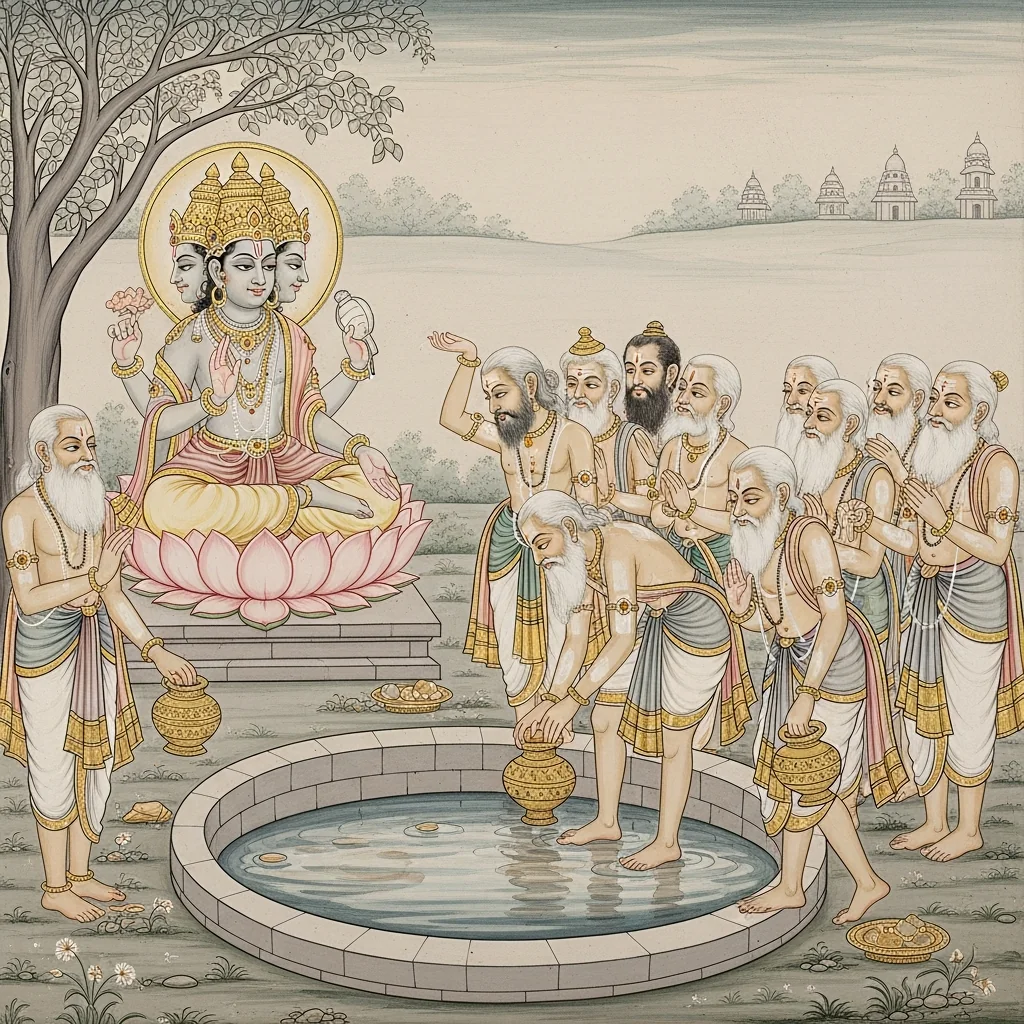
The chapter presents a theological and ritual sequence through sacred dialogue and the formal establishment of holiness. Prahlāda relates that Brahmā arrives and is honored by Sanaka and other sages; Brahmā blesses them, praising their devotion while noting that earlier their understanding had been limited by immaturity. A central doctrine is declared: worship of Kṛṣṇa is not regarded as complete if Nīlakaṇṭha (Śiva) is left unhonored; therefore Śiva should be worshiped with full effort, and such worship perfects bhakti. The yogasiddha sages go before the temple, install a Śiva-liṅga, and dig a well for ritual bathing; its water is lauded as pure like nectar. Brahmā then grants names and public authority: the liṅga is “Siddheśvara” and the well is “Ṛṣitīrtha.” The text specifies ritual efficacy: bathing there with devotion can liberate oneself along with one’s ancestors and cleanse faults such as false speech and habitual slander. Auspicious bathing times are listed (equinoxes, manv-ādi occasions, Kṛtayuga-ādya, the month of Māgha), and Śivarātri observance at Siddheśvara is exalted as especially powerful. A procedural ethic is outlined: offer arghya, apply sacred earth, bathe attentively, perform tarpaṇa for ancestors/deities/humans, conduct śrāddha, give dakṣiṇā without deceit, and donate prescribed items (grains, garments, fragrances, and more). The fruits promised are ancestral satisfaction, prosperity, progeny, destruction of demerit, increase of merit, fulfillment of aims, and finally an elevated destination for the faithful listener.
Shlokas
Verse 1
प्रह्लाद उवाच श्रुत्वा तमागतं देवं ब्रह्माणं पितरं स्वकम् । सनकाद्या नमस्कर्त्तुं जग्मुः सर्वे पितामहम्
Prahlāda said: Hearing that the god Brahmā—their own father—had arrived, Sanaka and the others all went to bow to the Grandfather, Brahmā.
Verse 2
तं दृष्ट्वा लोककर्त्तारं दण्डवत्प्रणताः क्षितौ । ततो दृष्ट्वा स तनयान्संगृह्य परिषस्वजे
Seeing the Creator of the worlds, they bowed to the ground like a staff. Then, seeing his sons, he drew them close and embraced them.
Verse 3
पृष्टश्चानामयं तैस्तु पृष्ट्वा तान्समुवाच ह । आराधितो यैर्भगवान्धन्या यूयं वयं तथा
When they asked after his well-being, he in turn questioned them and spoke: “Blessed are you—and we as well—since the Lord has been worshipped by you.”
Verse 4
संसिद्धिं परमां याता भगवद्दर्शनेन हि । न ज्ञातं पुत्रकाः सम्यगज्ञानाद्बालबुद्धिभिः
“Indeed, through the vision of the Lord you have reached the highest perfection. Yet, dear sons, this was not properly understood—because of ignorance and childish understanding.”
Verse 5
येनार्चितो महादेवस्तस्य तुष्यति केशवः । अनर्चिते नीलकण्ठे न गृह्णात्यर्चनं हरिः । तस्मात्सर्वप्रयत्नेन पूज्यतां नीललोहितः
Keśava is pleased with the one who worships Mahādeva. If Nīlakaṇṭha has not been worshipped, Hari does not accept the worship that is offered. Therefore, with every effort, Nīlalohita (Śiva) should be worshipped.
Verse 6
येन संपूर्णतां याति कृष्णपूजा कृता सदा । तच्छ्रुत्वा वचनं तस्या ब्रह्मपुत्रा ययुस्तदा
“By this, the worship of Kṛṣṇa, when performed always, attains completeness.” Hearing those words of his, the sons of Brahmā then departed.
Verse 7
देवागाराग्रतो गत्वा योगसिद्धा महर्षयः । लिंगं संस्थापयामासुः शिवभक्तिपुरस्कृता
Going to the front of the temple, the great sages perfected in yoga established a liṅga, placing devotion to Śiva in the forefront.
Verse 8
संस्थाप्य शिवलिंगं ते स्नानार्थं मुनिसत्तमाः । कूपं चक्रुस्ततः सर्व ऋषयः संशितव्रताः
After establishing a Śiva-liṅga, those foremost sages—intent on bathing—then all the ṛṣis of firm vows dug a well.
Verse 9
दृष्ट्वा तममृतप्रख्यं जलपूर्णं सुनिर्मलम् । संहृष्टा ऋषयः सर्वे साधुसाध्विति चाब्रुवन्
Seeing that well filled with water—spotless and like nectar—the sages rejoiced and exclaimed, “Excellent! Excellent!”
Verse 10
स्थापितं शिवलिंगं च दृष्ट्वा लोकपितामहः । उवाच वचनं ब्रह्मा प्रीतः पुत्रांस्तदा द्विजाः
Beholding the Śiva-liṅga duly installed, Brahmā—the grandsire of the worlds—pleased at heart, spoke words to those twice-born sons (the sages).
Verse 11
ब्रह्मोवाच । भवद्भिर्योगसंसिद्धैर्यस्मात्संस्थापितः शिवः । तस्मात्सिद्धेश्वर इति ख्यातिं लोके गमिष्यति
Brahmā said: “Since Śiva has been established by you, perfected through yoga, therefore he shall be renowned in the world by the name ‘Siddheśvara’—Lord of the Accomplished.”
Verse 12
समीपे शितिकण्ठस्य कूपोयमृषिभिः कृतः । ऋषितीर्थमिति ख्यातं तस्माल्लोके भविष्यति
Near Śitikaṇṭha (Śiva), this well was made by the sages; therefore it shall be known in the world as ‘Ṛṣitīrtha’.
Verse 13
विना श्राद्धेन विप्रेन्द्रा दानेन पितृतर्पणात् । भक्तितः स्नानमात्रेण पितृभिः सह मुच्यते
O best of brāhmaṇas, even without śrāddha, without gifts, and without offerings to the ancestors—by devotion alone, through mere bathing, one is freed together with one’s forefathers.
Verse 14
असत्यवादिनो ये च परनिन्दा परायणाः । स्नानमात्रेण शुध्यन्ति ऋषितीर्थे न संशयः
Even those who speak falsehood and those devoted to slandering others are purified by bathing alone at Ṛṣitīrtha—of this there is no doubt.
Verse 15
स्नानं प्रशस्तं विषुवे मन्वादिषु तथैव च । तथा कृतयुगाद्यायां माघस्य द्विजसत्तमाः
Bathing is especially praised at the equinoxes, on the Manv-ādi sacred days, and likewise at the commencement of the Kṛta-yuga; so too is it praised in the month of Māgha, O best of the twice-born.
Verse 16
शिवरात्रौ वसेद्यस्तु लिंगे सिद्धेशसंज्ञिते । स्नात्वा ऋषिकृते तीर्थे किं तस्यान्येन वै द्विजाः । गत्वा तत्र महाभागा गृहीत्वा फलमुत्तमम्
Whoever keeps vigil there on Śivarātri at the liṅga called Siddheśa, and bathes in the tīrtha fashioned by the sages—what need has he of any other holy observance, O brāhmaṇas? Going there, O fortunate ones, he attains the supreme reward.
Verse 17
अर्घ्यं दत्त्वा विधानेन कृत्वा च करयोः कुशान् । गृह्णंत्वर्घ्यमिमं देवा योगसिद्धा महर्षयः
Having offered arghya according to the rite, and placing kuśa-grass in both hands, one should pray: “May the Devas and the great ṛṣis, perfected in yoga, accept this arghya of mine.”
Verse 18
ऋषितीर्थे च पापघ्ने सिद्धेश्वरसमन्विते । दत्त्वार्घ्यं मृदमालभ्य स्नानं कुर्यात्समाहितः
At Ṛṣitīrtha—the sin-destroying ford associated with Siddheśvara—one should first offer arghya, then apply the sacred cleansing earth, and with a collected mind perform the ritual bath.
Verse 19
तर्पयेच्च पितॄन्देवान्मनुष्यांश्च यथाक्रमम् । ततः श्राद्धं प्रकुर्वीत पितॄणां श्रद्धयाऽन्वितः
Then, in due order, one should offer tarpaṇa to the Pitṛs, the Devas, and to human beings; thereafter, endowed with faith, one should perform śrāddha for the ancestors.
Verse 20
तथा च दक्षिणां दद्याद्वित्तशाठ्यविवर्जितः । विशेषतः प्रदेयानि फलानि रसवंति च
Likewise, free from miserliness in one’s wealth, one should give dakṣiṇā; and especially, one should offer choice, juicy fruits as gifts.
Verse 21
दद्याच्छयामाकनीवारान्विद्रुमं चाजिनानि च । सप्तधान्यानि शालींश्च सक्तूंश्च गुडसंयुतान्
One should give śyāmāka and nīvāra grains, coral, and skins; also the seven kinds of grains, rice, and roasted flour mixed with jaggery.
Verse 22
गंधमाल्यानि तांबूलं वस्त्राणि च तथा पयः । एवं कृत्वा समग्रं च कृतकृत्यो भवेन्नरः
One should also give perfumes and garlands, betel, garments, and milk. Having thus done everything in full, a man becomes one who has fulfilled his religious duty.
Verse 23
पूजयित्वा महादेवं सिद्धेश्वरमुमापतिम् । सफलं जन्म मर्त्यस्य जीवितं च सुजीवितम्
Having worshipped Mahādeva—Siddheśvara, the Lord of Umā—one’s human birth becomes fruitful, and one’s life becomes truly well-lived.
Verse 24
यः स्नात्वा ऋषितीर्थे तु पश्येत्सिद्धेश्वरं शिवम् । पितरस्तस्य तुष्यन्ति तुष्यन्ति च पितामहाः
Whoever bathes at Ṛṣitīrtha and beholds Siddheśvara Śiva—his ancestors are satisfied, and his forefathers too are satisfied.
Verse 25
अपुत्रा पुत्रिणः स्युस्ते पुत्रिणश्चापि पौत्रिणः । निर्धना धनवंतश्च सिद्धेश्वररता नराः
Men devoted to Siddheśvara—those without sons become blessed with sons; those with sons gain grandsons; and the poor become wealthy.
Verse 26
दुष्कृतं याति विलयं सुकृतं च विवर्द्धते । भवेन्मनोरथावाप्तिः प्रणते सिद्धनायके
Sinful deeds perish, merit increases, and the fulfillment of the heart’s desires arises for the devotee who bows to Siddhanāyaka (Siddheśvara).
Verse 27
ऋषितीर्थे नरः स्नात्वा दृष्ट्वा सिद्धेश्वरं हरम् । सर्वान्कामानवाप्नोति नात्र कार्या विचारणा
Having bathed at Ṛṣitīrtha and having seen Siddheśvara Hara, a man obtains all desired aims—of this there is no need for doubt or further deliberation.
Verse 28
शिवरात्र्यां विशेषेण सिद्धेशः संप्रपूजितः । यंयं कामयते कामं तं ददाति न संशयः । चिन्तामणिसमः स्वामी ह्यथवा चाक्षयो निधिः
Especially on Śivarātri, when Siddheśa is duly worshipped, whatever desire a devotee longs for—he grants it without doubt. That Lord is like a wish-fulfilling jewel (cintāmaṇi), indeed like an inexhaustible treasure.
Verse 29
श्रुत्वाध्यायमिमं पुण्यं सर्वाघहरणं परम् । प्रयाति परमं स्थानं मानवः श्रद्धयान्वितः
Having heard this holy chapter—supreme in removing all sins—a person endowed with faith attains the highest abode.