Adhyaya 59
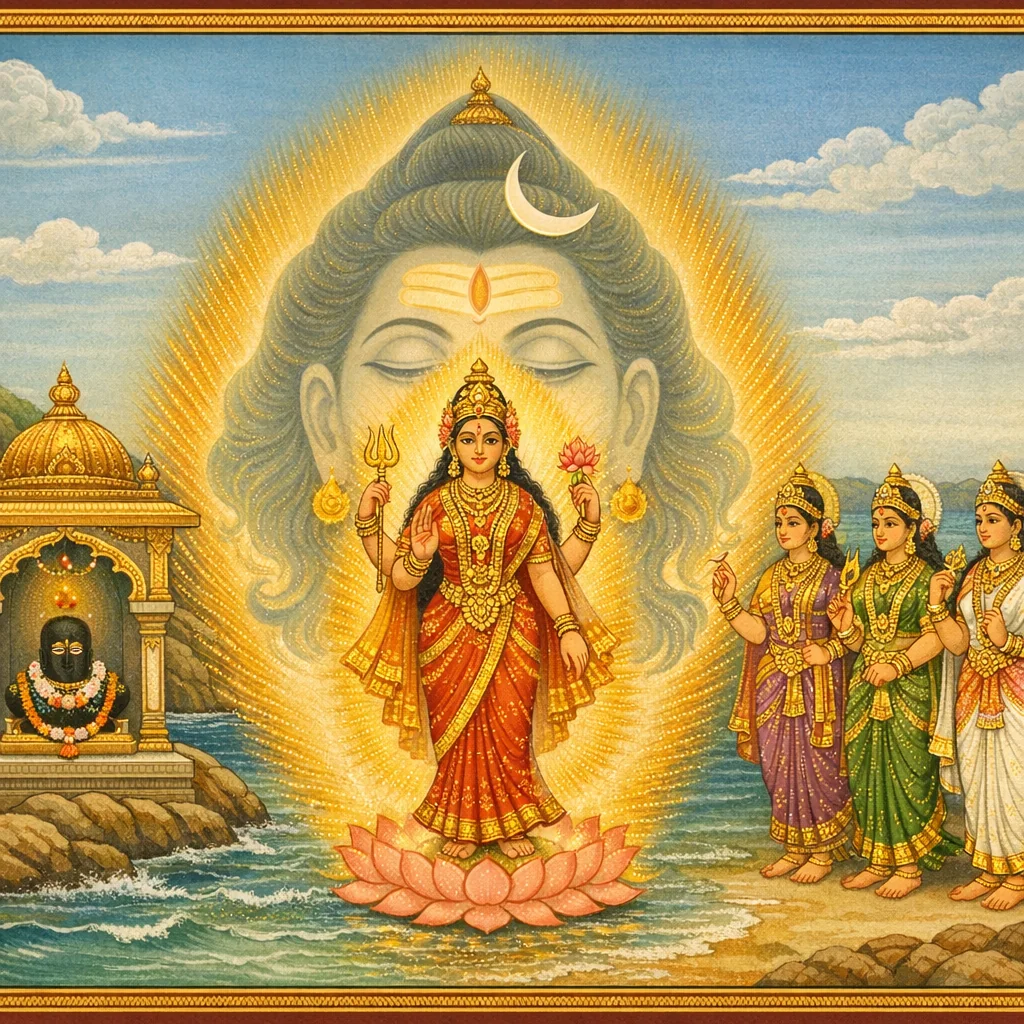
This adhyāya, narrated by Pulastya, unfolds as a tīrtha-legend. Mahaujasa is praised as a pātaka-nāśana tīrtha: by bathing there one’s tejas—radiant, auspicious potency—is restored. Indra (Śakra), suffering the consequences of brahmahatyā, is shown bereft of śrī and tejas, tainted by a foul odor, and excluded by the gods from social and ritual standing. Seeking renewal, Indra consults Bṛhaspati, who declares that tīrtha-yātrā on earth is the necessary means to regain tejas, for such increase is not attained without a tīrtha. After wandering through many sacred places, Indra reaches Arbuda, beholds a water-reservoir, bathes, and regains mahā-ojas, great vigor. Freed from the odor and welcomed again among the gods, Indra proclaims a time-bound phalaśruti: those who bathe here at Śakra’s “rise”—the end of the bright fortnight of Āśvina—attain the supreme state and are endowed with śrī across births. Thus the chapter tightly links moral injury, ritual remedy, sacred place, and calendrical observance.
Shlokas
Verse 1
पुलस्त्य उवाच । ततो महौजसं गच्छेत्तीर्थं पातकनाशनम् । यस्मिन्स्नातो नरो राजंस्तेजसा युज्यते ध्रुवम् । ब्रह्महत्याग्निना शक्रः पुरा दैन्यं परं गतः
Pulastya said: Then, O king, one should go to the Mahaujas Tīrtha, the destroyer of sins. Bathing there, a man surely becomes endowed with tejas, spiritual radiance. Formerly, Indra (Śakra), scorched by the fire of brahma-hatyā, fell into extreme wretchedness.
Verse 2
निःश्रीकस्तेजसा हीनो दुर्गन्धेन समन्वितः । परित्यक्तः सुरैः सर्वैर्विषादं परमं गतः
Deprived of fortune, bereft of tejas, and tainted with foul odor—abandoned by all the gods—he sank into the deepest despair.
Verse 3
ततः पप्रच्छ देवेन्द्रो द्विजश्रेष्ठं बृहस्पतिम् । भगवंस्तेजसो वृद्धिः कथं स्यान्मे यथा पुरा
Then the lord of the gods asked Bṛhaspati, foremost among the twice-born: “O venerable one, how may my tejas—my radiance—increase again, as it was before?”
Verse 4
बृहस्पतिरुवाच । तीर्थयात्रां सुरश्रेष्ठ कुरुष्व धरणीतले । तीर्थं विना ध्रुवं वृद्धिस्तेजसो न भविष्यति
Bṛhaspati said: “O best of the gods, undertake a tīrtha-yātrā—pilgrimage to the sacred tīrthas upon the earth. Without a tīrtha, surely there will be no increase of tejas.”
Verse 5
ततस्तीर्थान्यनेकानि भ्रांत्वा शक्रो नराधिप । क्रमेणैवार्बुदं प्राप्तस्तत्र दृष्ट्वा जलाशयम् । स्नानं चक्रे ततः श्रान्तो महौजाः प्रत्यपद्यत
Then, O king, Śakra (Indra), having wandered through many tīrthas, in due course reached Arbuda. There, seeing a lake, the mighty one—wearied—bathed, and thereafter attained great splendour and vigour, mahā-ojas.
Verse 6
दुर्गन्धेन विनिर्मुक्तस्ततो देवैः समावृतः । उवाच प्रहसन्वाक्यं शृणुध्वं सर्वदेवताः
Freed from foul odour, and then surrounded by the gods, he spoke with a smile: “Hear my words, O all deities.”
Verse 7
येऽत्र स्नानं करिष्यन्ति प्राप्ते शक्रोच्छ्रये सदा । आश्विने शुक्लपक्षांते ते यास्यंति परां गतिम् । सुश्रीकाश्च भविष्यंति सदा जन्मनिजन्मनि
Whoever bathes here, whenever the time of Śakrocchraya arrives—at the end of the bright fortnight of Āśvina—will attain the supreme goal. They will also be ever endowed with śrī: auspicious prosperity and beauty, birth after birth.
Verse 59
इति श्रीस्कांदे महापुराण एकाशीतिसाहस्र्यां संहितायां सप्तमे प्रभासखण्डे तृतीयेऽर्बुदखंडे महौजसतीर्थप्रभाववर्णनंनामैकोनषष्टितमोऽध्यायः
Thus ends the fifty-ninth chapter, entitled “Description of the Glory of Mahaujasā Tīrtha,” in the third Arbuda Khaṇḍa within the seventh Prabhāsa Khaṇḍa of the Śrī Skanda Mahāpurāṇa, in the Ekāśītisāhasrī Saṃhitā.