Adhyaya 37
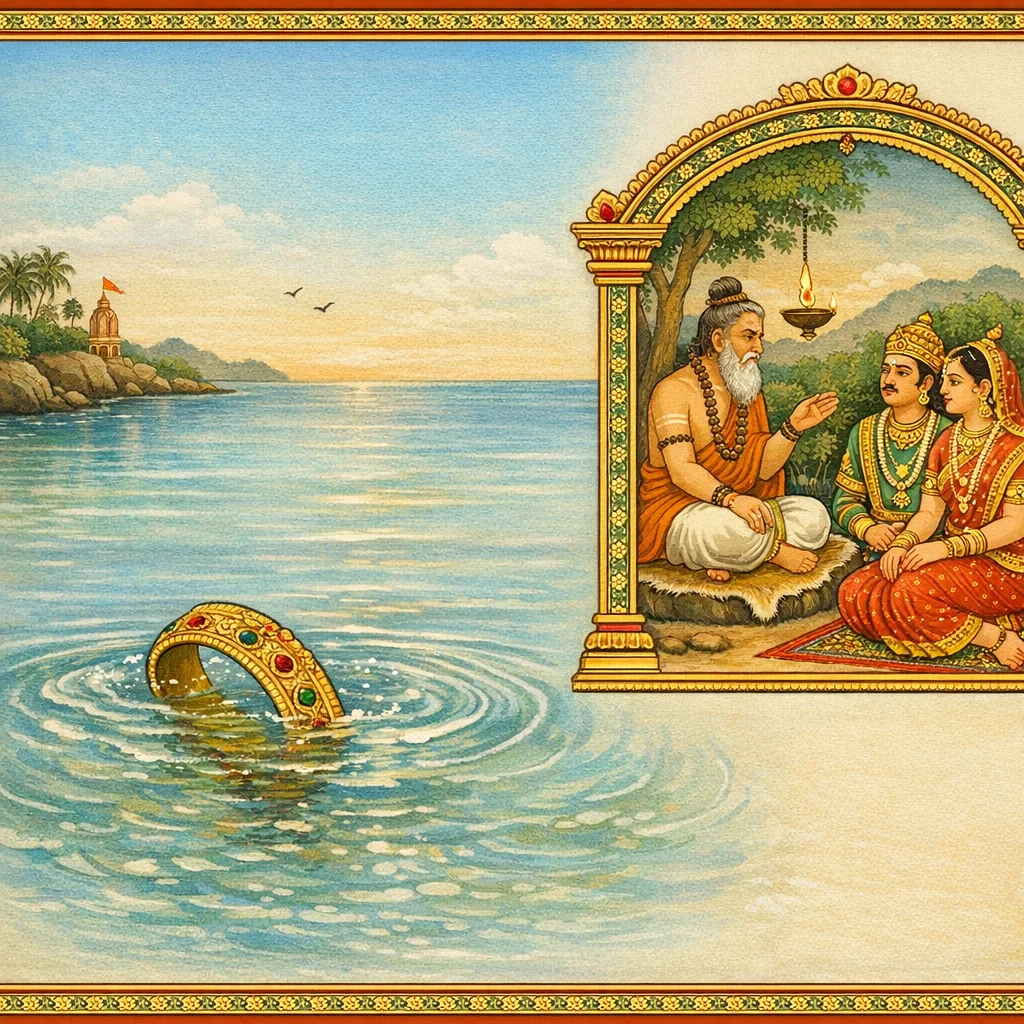
This chapter is framed as Pulastya’s instruction. He first directs one to go to Nāgahṛda, a sin-destroying tīrtha, and then explains its origin: the nāgas, distressed by Kadru’s curse and fearing destruction in Parīkṣit’s sacrificial fire, approach Śeṣa for guidance. Śeṣa advises disciplined tapas on Arbuda mountain and unceasing worship of the goddess Caṇḍikā, praised as kāmarūpiṇī, declaring that her remembrance dispels calamities. Entering the mountain through a cavern path, the nāgas perform severe austerities—homa, japa, fasting, and other observances—until the Devī is pleased. Caṇḍikā grants them protection: they may remain near her without fear until the sacrifice ends, and then return to their abode. She also proclaims that since the mountain cavern was cleft by them, the place will be known on earth as Nāgahṛda tīrtha. A calendrical rule follows: in the month of Śrāvaṇa, on the fifth lunar day (pañcamī), devoted bathing removes fear of serpents, and śrāddha performed there benefits one’s ancestors. The chapter closes by reaffirming the goddess’s abiding presence on Kṛṣṇa-pañcamī in Śrāvaṇa and recommending bathing and śrāddha at Nāgahṛda for one’s welfare.
Shlokas
Verse 1
पुलस्त्य उवाच । नागह्रदं ततो गच्छेत्तीर्थं पापप्रणाशनम् । यत्र नागैस्तपस्तप्तं रम्ये पर्वतरोधसि
Pulastya said: Then one should go to Nāgahrada, a tīrtha that destroys sin—where the Nāgas performed tapas on a beautiful mountain slope.
Verse 2
कद्रूशापं पुरा श्रुत्वा नागाः सर्वे भयातुराः । पप्रच्छुर्नागराजानं शेषं प्रणतकन्धराः
Having heard long ago of Kadrū’s curse, all the Nāgas, stricken with fear, bowed their necks in submission and questioned Śeṣa, the king of serpents.
Verse 3
मातृशापेन संतप्ता वयं पन्नगसत्तम । किं कुर्मः क्व च गच्छामः शापमोक्षो भवेत्कथम्
Afflicted by our mother’s curse, O best of serpents, what should we do and where should we go? How may release from the curse be attained?
Verse 4
शेष उवाच । प्रसादिता मया माता शापमुक्तिकृते पुरा । तयोक्तं ये तपोयुक्ता धर्मात्मानः सुसंयताः
Śeṣa said: Formerly, for the sake of release from the curse, I propitiated our mother. She then declared that those endowed with tapas, righteous in dharma, and well-restrained shall attain that deliverance.
Verse 5
न दहिष्यति तान्वह्निर्यज्ञे पारिक्षितस्य हि । तस्माद्गत्वार्बुदंनाम पर्वतं धरणीतले
Indeed, the sacrificial fire in King Parīkṣit’s yajña will not burn those who follow this counsel. Therefore, go to the mountain on earth named Arbuda.
Verse 6
तत्र यूयं तपोयुक्ता भवध्वं सुसमाहिताः । यत्रास्ते सा स्वयं देवी चंडिका कामरूपिणी
There, devote yourselves to austerity, with minds well gathered in concentration; for there abides the Goddess herself—Caṇḍikā, Kāmarūpiṇī, who assumes forms at will.
Verse 7
यस्याः संकीर्त्तनेनापि नश्यंति विपदो ध्रुवम् । आराधयध्वमनिशं तां देवीं मम वाक्यतः
Even by the mere chanting of her name, calamities surely perish; therefore, by my word, worship that Goddess unceasingly.
Verse 8
तस्याः प्रसादतः सर्वे भविष्यथ गतज्वराः । एतमेवात्र पश्यामि उपायं नागसत्तमाः । दैवो वा मानुषो वाऽपि नान्यो वो मुक्तिकारकः
By her grace you all shall become free from the fevered distress. This alone I see here as the means, O best of nāgas; whether divine or human, there is no other cause that will grant you liberation from the curse.
Verse 9
पुलस्त्य उवाच । एवमुक्तास्ततो नागा नागराजेन पार्थिव । प्रणम्य तं ततो जग्मुरर्बुदं पर्वतं प्रति
Pulastya said: Thus addressed by the serpent-king, O king, the nāgas bowed to him and then set out toward Mount Arbuda.
Verse 10
ते भित्त्वा धरणीपृष्ठं पर्वते तदनन्तरम् । निजग्मुर्बिलमार्गेण कृत्वा श्वभ्रे सुविस्तरम्
Splitting the earth’s surface upon the mountain, they then went by an underground passage, having made a very spacious cavernous opening.
Verse 11
ततो धृतव्रताः सर्वे देवी भक्तिपरायणाः । वसंति भक्तिसंयुक्ताश्चण्डिकाराधनाय ते
Then all of them, steadfast in their vows and wholly devoted to the Goddess, dwelt there—filled with bhakti—for the worship of Caṇḍikā.
Verse 12
तस्थुस्तत्र सदा होमं कुर्वन्तो जाप्यमुत्तमम् । एकाहारा निराहारा वायुभक्षास्तथा परे
They remained there, ever performing homa, the fire-offering, and the finest japa. Some lived on a single meal, some on no food, and others subsisted on air alone.
Verse 13
दन्तोलूखलिनः केचिदश्मकुट्टास्तथा परे । पञ्चाग्निसाधकाश्चान्ये सद्यः प्रक्षालकास्तथा
Some practiced austerities such as grinding with their teeth like a mortar; others were pounding stone. Some performed the pañcāgni, the five-fire penance, and others undertook immediate purificatory washings—thus they were engaged in severe tapas.
Verse 14
गीतं वाद्यं तथा चक्रुरन्ये देवाः पुरस्तदा । अनन्यश्रदयोपेतांस्तान्दृष्ट्वा पन्नगोत्तमान्
Then, in front of them, other gods took up singing and instrumental music. Seeing those foremost Nāgas endowed with single-minded faith, the deities rejoiced and celebrated them.
Verse 15
ततो देवी सुसन्तुष्टा वाक्यमेतदुवाच ह
Thereupon the Goddess, fully pleased, spoke these words.
Verse 16
देव्युवाच । परितुष्टास्मि वो वत्साः किमर्थं तप्यते तपः । वरयध्वं वरं मत्तो यः स्थितो भवतां हृदि
The Goddess said: “Dear children, I am well pleased with you. For what purpose is this austerity undertaken? Choose from me the boon that abides within your hearts.”
Verse 17
नागा ऊचुः । मातृशापेन संतप्ता वयं देवि निराश्रयाः । नागराजसमादेशाच्छरणं त्वां समागताः
The Nāgas said: “O Goddess, scorched by our mother’s curse, we are without refuge. At the command of the king of Nāgas, we have come to you seeking shelter.”
Verse 18
सा त्वं रक्ष भयात्तस्माच्छापवह्निसमुद्भवात् । वयं मात्रा पुरा शप्ताः कस्मिंश्चित्कारणान्तरे । पारिक्षितस्य यज्ञे वः पावको भक्षयिष्यति
“Therefore, protect us from that fear arising from the fire of the curse. Long ago our mother cursed us for a certain reason: in King Parīkṣit’s sacrifice, fire will consume you—the serpents.”
Verse 19
देव्युवाच । यावत्तस्य भवेद्यज्ञ स्तावद्यूयं ममान्तिके । संतिष्ठत विना भीत्या भोगान्भुङ्ध्वं सुपुष्कलान्
The Goddess said: “So long as his sacrifice continues, remain here near me. Stay without fear and enjoy abundant comforts.”
Verse 20
समाप्ते च क्रतौ भूयो गंतारः स्वं निकेतनम् । युष्माभिर्भेदितं यस्मादेतत्पर्वतकन्दरम्
“And when the rite is completed, you shall go again to your own abode—since this mountain-cavern has been opened up and made passable by you.”
Verse 21
नागह्रदं तु तत्तीर्थमेतद्भावि धरातले । अत्र यः श्रावणे मासि पञ्चम्यां भक्तितत्परः
This very place shall become upon the earth a sacred tīrtha called Nāgahrada. Whoever comes here in the month of Śrāvaṇa, on the fifth lunar day, devoted in faith…
Verse 22
करिष्यति नरः स्नानं तस्य नाहिकृतं भयम् । भविष्यति पुनः श्राद्धात्पितॄन्संतारयिष्यति
If a person bathes here, he shall have no fear caused by serpents. Moreover, by performing śrāddha, he will deliver his ancestors across to welfare.
Verse 23
ये भोगा भूतले ख्याता ये दिव्या ये च मानुषाः । नरो नित्यं लभिष्यति न संशयः
Whatever enjoyments are renowned on earth—whether celestial or human—those a man shall continually obtain; of this there is no doubt.
Verse 24
पुलस्त्य उवाच । ततो हृष्टा बभूवुस्ते मुक्त्वा तद्दारुणं भयम् । देव्याः शरणमापन्नास्तस्थुस्तत्र नगोत्तमे
Pulastya said: Then they became joyful, freed from that dreadful fear. Having taken refuge in the Goddess, they remained there upon that excellent mountain.
Verse 25
ततः कालेन महता सत्रे पारिक्षितस्य च । निर्वृत्ते ते तदा जग्मुः सुनिर्वृत्ता रसातलम्
Then, after a long time, when King Parīkṣit’s sacrificial session had concluded, they—fully satisfied—went then to Rasātala.
Verse 26
देव्या चैवाभ्यनुज्ञाताः प्रणिपत्य मुहुर्मुहुः । कृच्छ्रात्पार्थिवशार्दूल तद्भक्त्या निश्चलीकृताः
Granted leave by the Goddess, they bowed down again and again. O tiger among kings, after their hardship they were made steady and unwavering by that devotion.
Verse 27
अद्यापि कृष्णपंचम्यां श्रावणे मासि पार्थिव । सान्निध्यं तत्र कुर्वंति देवीदर्शनलालसाः
Even today, O king, on the fifth day of the dark fortnight in the month of Śrāvaṇa, those longing for the Goddess’s darśana keep vigil and sustain sacred presence there.
Verse 28
तस्मात्सर्वप्रयत्नेन श्राद्धं तत्र समाचरेत् । स्नानं च पार्थिवश्रेष्ठ य इच्छेच्छ्रेय आत्मनः
Therefore, whoever seeks one’s own highest good should, with every effort, perform śrāddha there—and also the purifying bath, O best of kings.
Verse 37
इति श्रीस्कान्दे महापुराण एकाशीतिसाहस्र्यां संहितायां सप्तमे प्रभासखण्डे तृतीयेऽर्बुदखण्डे नागोद्भवतीर्थमाहात्म्य वर्णनंनाम सप्तत्रिंशोऽध्यायः
Thus ends the thirty-seventh chapter, called “The Description of the Greatness of Nāgodbhava Tīrtha,” in the seventh book, the Prabhāsa Khaṇḍa, within the Arbuda Khaṇḍa, of the venerable Skanda Mahāpurāṇa—the Saṃhitā of eighty-one thousand verses.