Adhyaya 23
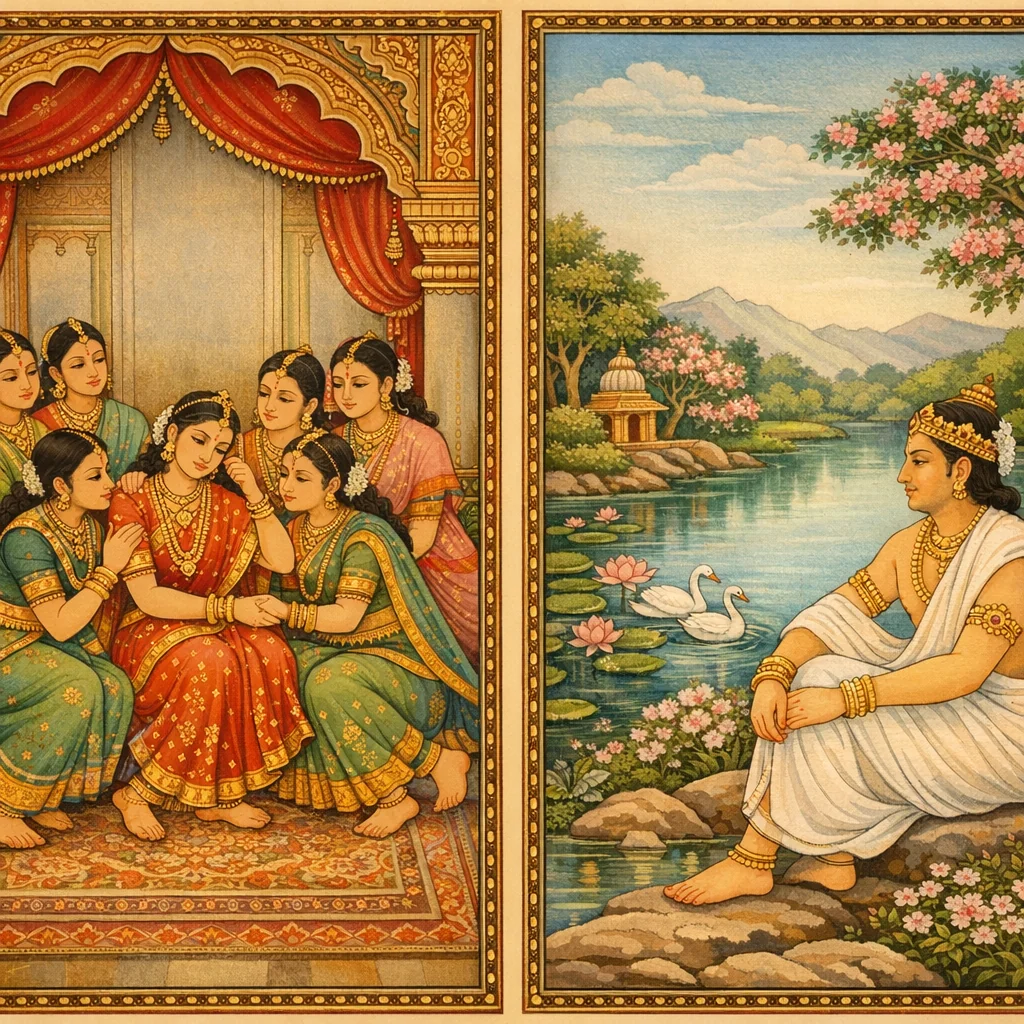
Pulastya tells a king of the fame of an unsurpassed sacred place called Śukla Tīrtha. A washerman (rajaka) named Śamilākṣa is seized with fear when garments set in indigo dye are spoiled, and he considers fleeing with his family. His distressed daughter confides in a girl from the fisherman community (dāśa-kanyā). The girl offers a practical remedy: in Arbuda there is a spring (nirjhara) whose water transforms whatever is cast into it, making it “white” (śukla). Fisherfolk and her brothers know its power; if the garments are washed there, they will quickly return to bright, lustrous whiteness, removing the cause of fear. The washerman follows her instruction, sees the cloth become white and shining, and reports the marvel to the king. The king tests the spring with other dyed cloths and witnesses the same change, then bathes there and performs the rites “as enjoined.” Later he renounces kingship, undertakes austerities at that tīrtha, and attains a superior accomplishment attributed to the site’s influence. The phala statement adds that śrāddha performed there on Ekādaśī uplifts one’s family and leads to heaven, while bathing there grants immediate freedom from sin within the sacred framing of the narrative.
Shlokas
Verse 1
पुलस्त्य उवाच । ततो गच्छेन्नृपश्रेष्ठ शुक्लतीर्थमनुत्तमम् । यत्ख्यातिमगमत्पूर्वं सकाशाद्दाशवर्गतः
Pulastya said: Thereafter, O best of kings, one should go to the unsurpassed Śukla Tīrtha, whose fame formerly arose in connection with a man of the fisher-folk.
Verse 2
पुराऽसीद्रजको नाम्ना शमिलाक्षो महीपते । नीलीमध्ये तु वस्त्राणि प्रक्षिप्तानि महीपते
Long ago, O King, there lived a washerman named Śamilākṣa; and, O King, the garments were cast into the indigo vat.
Verse 3
अथासौ भयमापन्नो ज्ञात्वा वस्त्रविडंबनम् । देशांतरं प्रस्थितोऽसौ स्वकुटुम्बसमावृतः
Then, gripped by fear on realizing the ruin of the garments, he set out for another land, accompanied by his own family.
Verse 4
अथ तस्य सुता राजन्दाशकन्यासखी शुभा । दुःखेन महताविष्टा दाश्यंतिकमुपाद्रवत्
Then, O King, his daughter—an auspicious maiden and a close friend of the fisher-girl—overcome by deep sorrow, hurried at once to the fisher-girl’s dwelling.
Verse 5
तस्यै निवेदयामास भयं वस्त्रसमुद्भवम् । विदेशचलनं चैव बाष्पगद्गदया गिरा
To her she disclosed the fear that had arisen because of the garments, and also the impending departure to a foreign land—speaking in a voice choked with tears.
Verse 6
दाशकन्यापि दुःखेन तस्या दुःखसमन्विता । अब्रवीद्वाष्संक्लिन्नां निश्वसंती मुहुर्मुहुः
The fisher-girl too, sharing in her sorrow, spoke—her eyes and face wet with tears, sighing again and again.
Verse 7
दाशकन्योवाच । अस्त्युपायो महानत्र विदितो मम शोभने । ध्रुवं तेन कृतेनैव निर्भयं ते च ते पितुः
The fisher-girl said: “Here there is a great remedy, O lovely one, known to me. When that is done, surely you and your father will become free from fear.”
Verse 8
अत्रास्ति निर्झरं सुभ्रूरर्बुदे वरवर्णिनि । तत्र मे भ्रातरश्चैव तथान्ये मत्स्यजीविनः
“Here in Arbuda, O fair-browed one, O exquisitely radiant one, there is a spring. There my brothers dwell, and others too who live by fishing.”
Verse 9
यच्चान्यदपि तत्रैव क्षिप्यते सलिले शुभे । तत्सर्वं शुक्लतामेति पश्य मे वपुरीदृशम्
“And whatever else is cast right there into that auspicious water, all of it turns white. Look—such is my own body, made fair by it.”
Verse 10
सर्वेषामेव दाशानां तस्य तोयस्य मज्जनात् । तानि वस्त्राणि तत्रैव तातस्तव सुमध्यमे । जले प्रक्षालयेत्क्षिप्रं प्रयास्यंति सुशुक्लताम्
“By mere immersion in that water, for all the fisherfolk, things become white. O slender-waisted one, your father’s garments should be washed right there in the water; quickly they will attain a brilliant whiteness.”
Verse 11
त्वयाऽत्र न भयं कार्यं गत्वा तातं निवारय । प्रस्थितं परदेशाय नात्र कार्या विचारणा
“You need not fear here. Go and stop your father—who is setting out for a foreign land. There is no need for hesitation in this matter.”
Verse 12
पुलस्त्य उवाच । सा तस्या वचनं श्रुत्वा गत्वा सर्वं न्यवेदयत् । जनकाय सुता तूर्णं ततोऽसौ तुष्टिमाप्तवान्
Pulastya said: Hearing her words, she went and swiftly reported everything to her father; then he became satisfied.
Verse 13
प्रातरुत्थाय तूर्णं स निर्झरं तमुपाद्रवत् । क्षिप्तमात्राणि राजेन्द्र तानि वस्त्राणि तेन वै
Rising early in the morning, he hurried to that spring. And, O lord of kings, the moment those garments were cast into it by him…
Verse 14
तस्मिंस्तोयेतिशुक्लत्वं गतानि बहुलां ततः । कांतिमापुश्च परमां तथा दृष्ट्वांबराणि च
In that water they became exceedingly white, and then gained abundant, supreme radiance; and on seeing the garments thus transformed, he was struck with wonder.
Verse 15
अथासौ विस्मयाविष्टस्तानि चादाय सत्वरः । राज्ञे निवेदयामास वृत्तांतं च तदुद्भवम्
Then, overwhelmed with astonishment, he quickly took those garments and reported to the king the full account and how it had come to be.
Verse 16
ततो विस्मयमापन्नः स राजा तत्र निर्झरे । अन्यानि नीलीरक्तानि वस्त्राणि चाक्षिपज्जले
Then the king, filled with wonder, there at that cascade, threw other garments—blue and red—into the water.
Verse 17
सर्वाणि शुक्लतां यांति विशिष्टानि भवंति च । ज्ञात्वा ततः परं तीर्थं स्नानं चक्रे यथाविधि
All of them became white and were made exceptional. Then, knowing the supreme nature of that tīrtha, he performed the sacred bath there according to the proper rite.
Verse 18
त्यक्त्वा राज्यं स तत्रैव तपस्तेपे महीपतिः । ततः सिद्धिं परां प्राप्तस्तीर्थस्यास्य प्रभावतः
Renouncing his kingdom, that lord of the earth performed austerities right there. Then, by the power of this tīrtha, he attained the highest spiritual accomplishment.
Verse 19
एकादश्यां नरस्तत्र यः श्राद्धं कुरुते नृप । स कुलानि समुद्धृत्य दश याति दिवं ततः । स्नानेनव विपापत्वं तत्क्षणादेव जायते
O king, the man who performs śrāddha there on the Ekādaśī day uplifts ten generations of his lineage, and then they go to heaven. And by bathing there, freedom from sin arises at that very instant.
Verse 23
इति श्रीस्कांदे महापुराण एकाशीतिसाहस्र्यां संहितायां सप्तमे प्रभासखंडे तृतीयेऽर्बुदखंडे शुक्लतीर्थमाहात्म्यवर्णनंनाम त्रयोविंशोऽध्यायः
Thus ends the twenty-third chapter, called “The Description of the Greatness of Śuklatīrtha,” in the Arbuda Khaṇḍa (third division) of the Prabhāsa Khaṇḍa, within the Skanda Mahāpurāṇa of the eighty-one-thousand-verse compilation.