Adhyaya 65
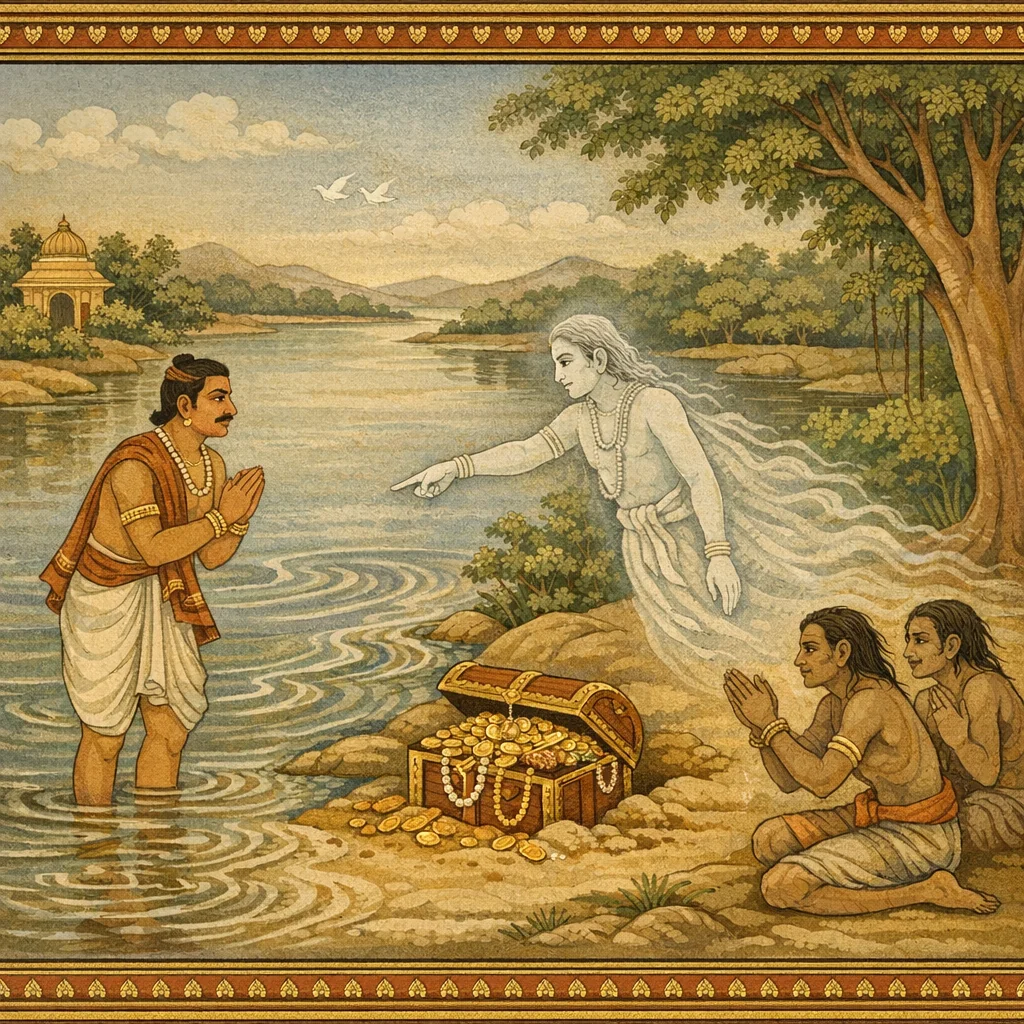
Sūta describes a pond fashioned by the devas and how King Ānarta (also called Suhaya) established a liṅga named Ānarteśvara. It is proclaimed that bathing on Aṅgāraka-ṣaṣṭhī bestows siddhi comparable to the king’s own attainment, and the ṛṣis ask how such siddhi came to be. The teaching then turns to an exemplum: the merchant Siddhasena’s caravan abandons an exhausted śūdra attendant in a desolate desert. At night the śūdra meets a “preta-king” with his retinue; they ask for hospitality yet provide food and water, repeating this cycle nightly. The preta-king explains that his nocturnal prosperity arises from the influence of a severe ascetic, a mahāvrata-dhara, at Hāṭakeśvara near the Gaṅgā–Yamunā confluence, who performs nocturnal purification using a skull-bowl (kapāla). Seeking release, the preta requests that the kapāla be ground to powder and cast into the confluence, and that śrāddhas be performed at the Gayaśiras tīrtha according to names sealed in a packet. Guided to hidden wealth to fund the rites, the śūdra completes the kapāla-rite and the śrāddhas, and the pretas attain improved post-mortem states. He remains in the kṣetra and establishes the Śūdrakeśvara liṅga. The phalaśruti concludes that bathing and worship here remove sins, gifts and feeding bring long satisfaction to ancestors, even a small gift of gold equals great sacrifices, and fasting unto death at the site is praised as liberation from rebirth.
Shlokas
Verse 1
। सूत उवाच । तथान्यदपि तत्रास्ति तडागं देवनिर्मितम् । यत्रानर्तो नृपः सिद्धः सुहयो नाम नामतः
Sūta said: Further, there is also there a pond fashioned by the gods, where the king Ānarta—named Suhaya—attained accomplishment.
Verse 2
तेनैव भूभुजा तत्र लिंगं संस्थापितं शुभम् । आनर्तेश्वरसंज्ञं च सर्व सिद्धिप्रदं नृणाम्
By that very ruler, a blessed liṅga was established there, known as Ānarteśvara, granting every kind of accomplishment to people.
Verse 3
तत्रांगारकषष्ठ्यां यस्तडागे स्नानमाचरेत् । स प्राप्नोति नरः सिद्धिं यथाऽनर्ताधिपेन च
Whoever bathes in that pond on Aṅgāraka-Ṣaṣṭhī attains accomplishment—just as King Ānarta did.
Verse 4
ऋषय ऊचुः । कथं सिद्धिस्तु संप्राप्ता आनर्तेन महात्मना । सर्वं कथय तत्सूत सर्वं वेत्सि न संशयः
The sages said: How, indeed, did the great-souled Ānarta attain accomplishment? Tell all, O Sūta—you know everything; there is no doubt.
Verse 5
सूत उवाच । आनर्तः सुहयो नाम पुरासीत्पृथिवीपतिः । सर्वारिभिर्हतो युद्धे पलायनपरायणः । उच्छिष्टो म्लेच्छसंस्पृष्ट एकाकी बहुभिर्वृतः
Sūta said: Formerly there was a king upon the earth named Ānarta, called Suhaya. Defeated in battle by all his enemies and intent on flight, he became defiled—tainted by contact with mlecchas—alone, yet as though surrounded by many troubles.
Verse 6
अथ तस्य कपालं च कापालिक व्रतान्वितः । जगृहे निजकर्मार्थं ज्ञात्वा तं वीरसंभवम्
Then, observing the Kāpālika vow, he took up that skull-bowl for the sake of his own ritual duty, knowing it to be a vessel born of heroic destiny.
Verse 7
आनर्तेश्वरसांनिध्ये वसमानो वने स्थितः । स रात्रौ तेन तोयेन सर्वदेवमयेन च
Dwelling near Ānarteśvara and residing in the forest, at night he would use that water, pervaded by the presence of all the gods.
Verse 8
तडागोत्थेन संपूर्णं रात्रौ कृत्वा प्रमुंचति । आसीत्पूर्वं वणिङ्नाम्ना सिद्धसेन इति स्मृतः । धनी भृत्यसमोपेतः सदा पुण्यपरायणः
Filling it at night with water drawn from the tank, he would then pour it out. Formerly there was a merchant remembered by the name Siddhasena—wealthy, attended by servants, and ever devoted to meritorious deeds.
Verse 9
कस्यचित्त्वथ कालस्य पण्यबुद्ध्या द्विजोत्तमाः । प्रस्थितश्चोत्तरां काष्ठां स सार्थेन समन्वितः
After some time, O best among the twice-born, with his mind set on trade, he set out toward the northern region, accompanied by a caravan.
Verse 10
अथ प्राप्तः क्रमात्सर्वैः स गच्छन्मरुमंडल म् । वृक्षोदकपरित्यक्तं सर्वसत्त्वविवर्जितम्
Then, as they proceeded step by step, he reached a desert tract—abandoned by trees and water, and bereft of living beings.
Verse 11
तत्र रात्रिं समासाद्य श्रांताः पांथाः समन्ततः । सुप्ताः स्थानानि संसृत्य गता निद्रावशं तथा
There, when night arrived, the travelers—wearied on every side—lay down in their places and thus fell under the power of sleep.
Verse 12
ततः प्रत्यूषमासाद्य समुत्थाय च सत्वरम् । प्रस्थिता उत्तरां काष्ठां मुक्त्वैकं शूद्रसेवकम्
Then, when dawn came, rising quickly they set out toward the northern quarter, leaving behind one Śūdra attendant.
Verse 13
स वै मार्गपरिश्रांतो गत्वा निद्रावशं भृशम् । न जजागार जातेऽपि प्रयाणे बहुशब्दिते
Worn out by the road, he fell deeply under sleep’s control, and did not awaken even when the departure began amid much noise.
Verse 14
न च तैः स स्मृतः सार्थैर्यैः समं प्रस्थितो गृहात् । न च केनापि संदृष्टः स तु रोधसि संस्थितः
And the caravan-men with whom he had set out from home did not remember him; nor was he seen by anyone—he remained there upon the riverbank/embankment.
Verse 15
एवं गते ततः सार्थे प्रोद्गते सूर्यमंडले । तीव्रतापपरिस्पृष्टो जजागार ततः परम्
When the caravan had thus gone on and the orb of the sun had risen, scorched by intense heat he then awoke.
Verse 18
एवं तस्य तृषार्तस्य पतितस्य धरातले । धृतप्राणस्य कृच्छ्रेण संयातोऽस्ताचलं रविः
Thus, as that man—tormented by thirst—lay fallen upon the ground, barely holding on to life with great difficulty, the Sun at last went down behind the western mountain.
Verse 19
ततः किंचित्ससंज्ञोऽभून्मंदीभूते दिवाकरे । चिन्तयामास चित्तेन क्वाहं गच्छामि सांप्रतम्
Then, when the Sun had grown faint, he regained a little consciousness and pondered in his heart, “Where shall I go now?”
Verse 20
न लक्ष्यते क्वचिन्मार्गो दृश्यते न च मानुषम् । नात्र तोयं न च च्छाया नूनं मे मृत्यु रागतः
No path is visible anywhere, nor is any human being seen. There is neither water here nor even shade—surely death has come upon me.
Verse 21
एवं चिन्ताप्रपन्नस्य तस्य शूद्रस्य निर्जने । मरौ तस्मिन्समायाता शर्वरी तदनन्तरम्
While that Śūdra, overwhelmed by anxious thoughts, remained alone in that desolate desert, night immediately came upon him thereafter.
Verse 22
अथ क्षणेन शुश्राव स गीतं मधुरध्वनि । पठतां नन्दिवृद्धानां तथा शब्दं मनोहरम्
Then, in a moment, he heard a song of sweet melody, and also a charming sound as of Nandivṛddhas reciting.
Verse 23
अथापश्यत्क्षणेनैव प्रेतसंघैः सभावृतम् । प्रेतमेकं च सर्वेषामाधिपत्ये व्यव स्थितम्
Then, in an instant, he saw an assembly encircled by hosts of Pretas, and one Preta established in sovereignty over them all.
Verse 24
ततस्ते पार्श्वगाः प्रेता एके नृत्यं प्रचक्रिरे । तत्पुरो गीतमन्ये तु स्तुतिं चैव तथा परे
Then those attendant Pretas—standing at his sides—some began to dance; others sang before him; and still others offered praises.
Verse 25
अथासौ प्राह तं शूद्रमतिथे कुरु भोजनम् । स्वेच्छया पिब तोयं च श्रेयो येन भवेन्मम
Then he said to that Śūdra, “O guest, prepare food; and drink water to your heart’s content—by which my own welfare may be secured.”
Verse 26
ततः स भोजनं चक्रे क्षुधार्तश्च पपौ जलम् । भयं त्यक्त्वा सुविश्रब्धः प्रेतराजस्य शासनात्
Then he prepared the meal, and—tormented by hunger—drank water. Casting off fear, he became calm and trusting, by the command of the Preta-king.
Verse 27
ततः प्रेताश्च ते सर्वे प्रेतत्वेन समन्विताः । यथाज्येष्ठं यथान्यायं प्रचक्रुर्भोजनक्रियाम्
Then all those Pretas—endowed with their preta-nature—performed the rites of eating, each according to seniority and according to proper rule.
Verse 28
एवं तेषां समस्तानां विलासैः पार्थिवोचितैः । अतिक्रान्ता निशा सर्वा क्रीडतां द्विजसत्तमाः
Thus, while they all enjoyed royal entertainments and pastimes befitting kings, the entire night passed away as they sported, O best of Brāhmaṇas.
Verse 29
ततः प्रभाते विमले प्रोद्गते रविमंडले । यावत्पश्यति शूद्रः स तावत्तत्र न किञ्चन
Then, at the clear and spotless dawn, when the orb of the sun had risen, as long as that Śūdra looked about, he saw nothing at all there.
Verse 30
ततश्च चिन्तयामास किमेतत्स्वप्नदर्शनम् । चित्तभ्रमोऽथवाऽस्माकमिन्द्रजालमथापि वा
Then he began to reflect: “Is this a vision seen in a dream? Or is it a delusion of the mind? Or could it be some kind of magical illusion?”
Verse 32
एवं चिन्तयमानस्य भास्करो गगनांगणम् । समारुरोह तापेन तापयन्धरणीतलम्
As he pondered thus, the Sun rose into the courtyard of the sky and, with its heat, scorched the face of the earth.
Verse 33
ततः कंचित्समाश्रित्य स्वल्पच्छायं महीरुहम् । प्राप्तवान्दिवसस्यांतं क्षुत्पिपासाप्रपीडितः
Then, taking shelter by a tree that offered only scant shade, he endured until day’s end, tormented by hunger and thirst.
Verse 34
ततो निशामुखे प्राप्ते भूयोऽपि प्रेतराजकम् । प्रेतैस्तैश्चसमोपेतं तथारूपं व्यलोकयत्
Then, when nightfall came, he once more beheld the king of the Pretas, accompanied by those very Pretas, appearing in the same form as before.
Verse 35
तथैव भोजनं चक्रे तस्यातिथ्यसमुद्भवम् । भयेन रहितः शूद्रो हर्षेण महतान्वितः
In the same manner he ate the food that arose from that hospitality; the Śūdra, free from fear, was filled with great delight.
Verse 36
एवं तस्य निशावक्त्रे नित्यमेव स भूपतिः । आतिथ्यं प्रकरोत्येव समागत्य तथैव च
Thus, whenever night arrived, that king would regularly come and perform hospitality in the very same way.
Verse 37
ततोऽन्यदिवसे प्राप्ते तेन शूद्रेण भूपतिः । पृष्टः किमेतदाश्चर्यं दृश्यते रजनीमुखे
Then, when another day arrived, the king was questioned by that Śūdra: “What is this wonder that is seen at the onset of night?”
Verse 38
विभवस्ते महाभाग प्रणश्यति निशाक्षये । एतत्कीर्तय मे गुह्यं न चेत्प्रेतप संस्थितम् । अत्र कौतूहलं जातं दृष्ट्वेदं सुविचेष्टितम्
“O fortunate one, your splendor vanishes when the night ends. Tell me this secret—unless you are truly established as the lord of the Pretas. A strong curiosity has arisen in me on seeing this well-ordered marvel.”
Verse 39
प्रेत उवाच । अस्ति पुण्यं महाक्षेत्रं हाटकेश्वरसंज्ञितम् । गंगा च यमुना चैव स्थिते तत्र च संगमे
The Preta said: “There is a supremely meritorious great sacred field known as Hāṭakeśvara. There, at the confluence, the Gaṅgā and the Yamunā are present.”
Verse 40
ताभ्यामतिसमीपस्थं शिवस्यायतनं शुभम् । महाव्रतधरस्तत्र तपस्यति सुनैष्ठिकः
“Very near those two rivers stands an auspicious shrine of Śiva. There a steadfast ascetic, a bearer of the Great Vow, performs austerities.”
Verse 41
स सदा रात्रिशौचार्थं कपालं जलपूरितम् । मदीयं शयने चक्रे तत्र कृत्वा निजां क्रियाम्
“He would always, for his nightly purification, fill a skull-bowl with water. After performing his own observance there, he would place it by my sleeping place.”
Verse 42
तत्प्रभावान्ममेयं हि विभूतिर्जायते निशि । दिवा रिक्ते कृते याति भूय एव महामते
By the power of that observance, this ash of mine comes into being at night. When it is emptied in the daytime, it disappears—only to arise again, O wise one.
Verse 43
तस्मात्कुरु प्रसादं मे तत्र गत्वा कपालकम् । चूर्णं कृत्वा मदीयं तत्तस्मिंस्तोये विनिक्षिप
Therefore, show me compassion: go there, take my skull, grind it into powder, and cast it into that water.
Verse 44
येन मे जायते मोक्षः प्रेतभावात्सुदारुणात्
So that liberation may arise for me—from this most dreadful state of being a preta.
Verse 45
तथा तत्रास्ति पूर्वस्यां दिशि तत्तीर्थमुत्तमम् । गयाशिर इति ख्यातं प्रेतत्वान्मुक्तिदा यकम्
Moreover, to the east of that place there is an excellent tīrtha, renowned as Gayāśira, which bestows release from pretahood.
Verse 46
तत्र गत्वा कुरु श्राद्धं सर्वेषां त्वं महामते । दृश्यते तव पार्श्वस्था भद्र संपुटिका शुभाम्
Having gone there, O wise one, perform the śrāddha for all (the departed). And see—by your side, O noble one, there is an auspicious casket (saṃpuṭikā).
Verse 47
अस्यां नामानि सर्वेषां यथाज्येष्ठं समालिख । ततः श्राद्धं कुरुष्वाशु दयां कृत्वा गरीयसीम्
Therein, write down the names of all the departed, in order of seniority. Then swiftly perform the śrāddha, showing the highest compassion.
Verse 48
वयं त्वां तत्र नेष्यामः सुखोपायेन भद्रक । निधिं च दर्शयिष्यामः श्राद्धार्थं सुमहत्तरम्
We shall lead you there by an easy means, O good man; and we shall show you a very great treasure, meant for the śrāddha.
Verse 49
तथेति समनुज्ञाते तेन शूद्रेण सत्वरम् । निन्युस्तं स्कन्धमारोप्य शूद्रं क्षेत्रे यथोदितम्
When the Śūdra had granted permission, they swiftly lifted him onto their shoulders and carried him into that sacred field (kṣetra), exactly as had been instructed.
Verse 50
दर्शयामासुरेवास्य निधानं भूरिवित्तजम् । तदादाय गतस्तत्र यत्रासौ नैष्ठिकः स्थितः
They then showed him his buried treasure—abundant wealth—and taking it up, he went to the place where that steadfast ascetic (naiṣṭhika) was staying.
Verse 51
ततः प्रणम्य तं भक्त्या कथ यामास विस्तरात् । तस्य भूतपतेः सर्वं वृत्तांतं विनयान्वितः
Then, bowing to him with devotion and filled with humility, he narrated in detail the entire account concerning that lord of beings (bhūtapati).
Verse 52
ततो लब्ध्वा कपालं तच्चूर्णयित्वा समाहितः । गंगायमुनयोर्मध्ये प्रचिक्षेप मुदान्वितः
Then, having obtained the kapāla (skull-bowl) and, with a mind gathered in concentration, crushing it into powder, he joyfully cast it into the waters between the Gaṅgā and the Yamunā.
Verse 53
एतस्मिन्नंतरे प्रेतो दिव्यरूपवपुर्धरः । विमानस्थोऽब्रवीद्वाक्यं शूद्रं तं हर्षसंयुतः
Just then, the preta—now bearing a radiant, divine form—seated upon a vimāna (celestial chariot), spoke with joy to that Śūdra.
Verse 54
प्रसादात्तव मुक्तोऽहं प्रेतत्वाद्दारुणादितः । स्वस्ति तेऽस्तु गमिष्यामि सांप्रतं त्रिदिवालयम्
“By your grace I have been freed from the dreadful state of being a preta. May auspiciousness be yours; now I shall depart for the abode of the gods.”
Verse 55
एतेषामेव सर्वेषामिदानीं श्राद्धमाचर । गत्वा गयाशिरः पुण्यं येन मुक्तिः प्रजायते
“Now perform śrāddha for all of these departed ones. And go to the holy Gayāśiras, by which liberation is obtained.”
Verse 56
ततः स विस्मयाविष्टस्तेषामेव पृथक्पृथक् । श्राद्धं चक्रे च भूतानां नित्यमेव समाहितः
Then, filled with wonder, he performed śrāddha for those departed beings—each one separately—remaining ever steady and attentive in the rite.
Verse 57
तेऽपि सर्वे गताः स्वर्गं प्रेतास्तस्य प्रभावतः । ददुश्च दर्शनं तस्य स्वप्रे हर्षसमन्विताः
Those pretas too—all of them—went to heaven by the power of his deed; and, filled with joy, they granted him a vision of themselves in his dream.
Verse 58
ततः शूद्रः स विज्ञाय तत्क्षेत्रं पुण्यवर्ध नम् । न जगाम गृहं भूयस्तत्रैव तपसि स्थितः
Then that Śūdra, understanding that holy field to be an increaser of merit, did not return home again; he remained there itself, established in austerity.
Verse 59
गंगायमुनयोः पार्श्वे शूद्रकेश्वरसंज्ञितम् । लिगं संस्थापितं तेन सर्वपातकनाशनम्
On the bank beside the Gaṅgā and Yamunā, he established a Liṅga known as Śūdrakeśvara—an emblem of Śiva that destroys all sins without exception.
Verse 60
यस्तयोर्विधिवत्स्नानं कृत्वा पूजयते नरः । शूद्रकेश्वरसंज्ञं च लिंगं श्रद्धासमन्वितः
Whoever, after bathing in due rite at those holy waters, worships with faith the Liṅga called Śūdrakeśvara—
Verse 61
स सर्वैः पातकैर्मुक्तः प्रयाति शिव मंदिरम् । स्तूयमानश्च गंधर्वैर्विमानवरमाश्रितः
—he is freed from every sin and proceeds to Śiva’s abode; praised by Gandharvas, he rides in a splendid celestial chariot.
Verse 62
यस्तत्र त्यजति प्राणान्कृत्वा प्रायोपवेशनम् । न च भूयोऽत्र संसारे स जन्माप्नोति ।मानवः
Whoever there relinquishes life by undertaking prāyopaveśana (fasting unto death) does not take birth again in this world of saṃsāra.
Verse 63
गंडूषमपि तोयस्य यस्तस्य निवसन्पिबेत् । सोऽपि संमुच्यते पापादाजन्ममरणांतिकात्
Even one who, dwelling there, drinks but a mouthful of that water is released from sin—even from the burden that clings from birth until death.
Verse 64
यस्तत्र ब्राह्मणेंद्राणां संप्रयच्छति भोजनम् । पितरस्तस्य तृप्यंति यावत्कल्पशतत्रयम्
Whoever there offers food to eminent brāhmaṇas—his ancestors (pitṛs) are satisfied for as long as three hundred kalpas.
Verse 65
त्रुटिमात्रं च यो दद्यात्तत्र स्वर्णं समाहितः । स प्राप्नोति फलं कृत्स्नं राजसूयाश्वमेधयोः
And whoever, with focused mind, gives even a tiny measure of gold there—he attains the full fruit of the Rājasūya and Aśvamedha sacrifices.
Verse 66
तस्मात्सर्वप्रयत्नेन तत्तीर्थवरमाश्रयेत् । य इच्छेच्छाश्वतं स्वर्गं सदैव मनुजो द्विजाः
Therefore, with every effort one should resort to that excellent tīrtha; whoever seeks enduring heaven while living as a human—O brāhmaṇas.
Verse 67
अत्र गाथा पुरा गीता गौतमेन महर्षिणा । गंगायमुनयोस्तं च प्रभावं वीक्ष्य विस्मयात्
Here, long ago, the great sage Gautama sang a gāthā, astonished upon beholding that very power of the Gaṅgā and the Yamunā.
Verse 68
गंगायमुनयोः संगे नरः स्नात्वा समाहितः । शूद्रेश्वरं समालोक्य सद्यः स्वर्गमवाप्नुयात्
At the confluence of the Gaṅgā and Yamunā, a person who bathes with collected mind and beholds Śūdreśvara attains heaven immediately.
Verse 69
एतद्वः सर्वमाख्यातं गंगायमुनयोर्मया । माहात्म्यं ब्राह्मणश्रेष्ठाः सर्वपातकनाशनम्
Thus have I fully narrated to you the greatness of the Gaṅgā and the Yamunā, O best of Brāhmaṇas—a sacred glory that destroys every sin.