Adhyaya 63
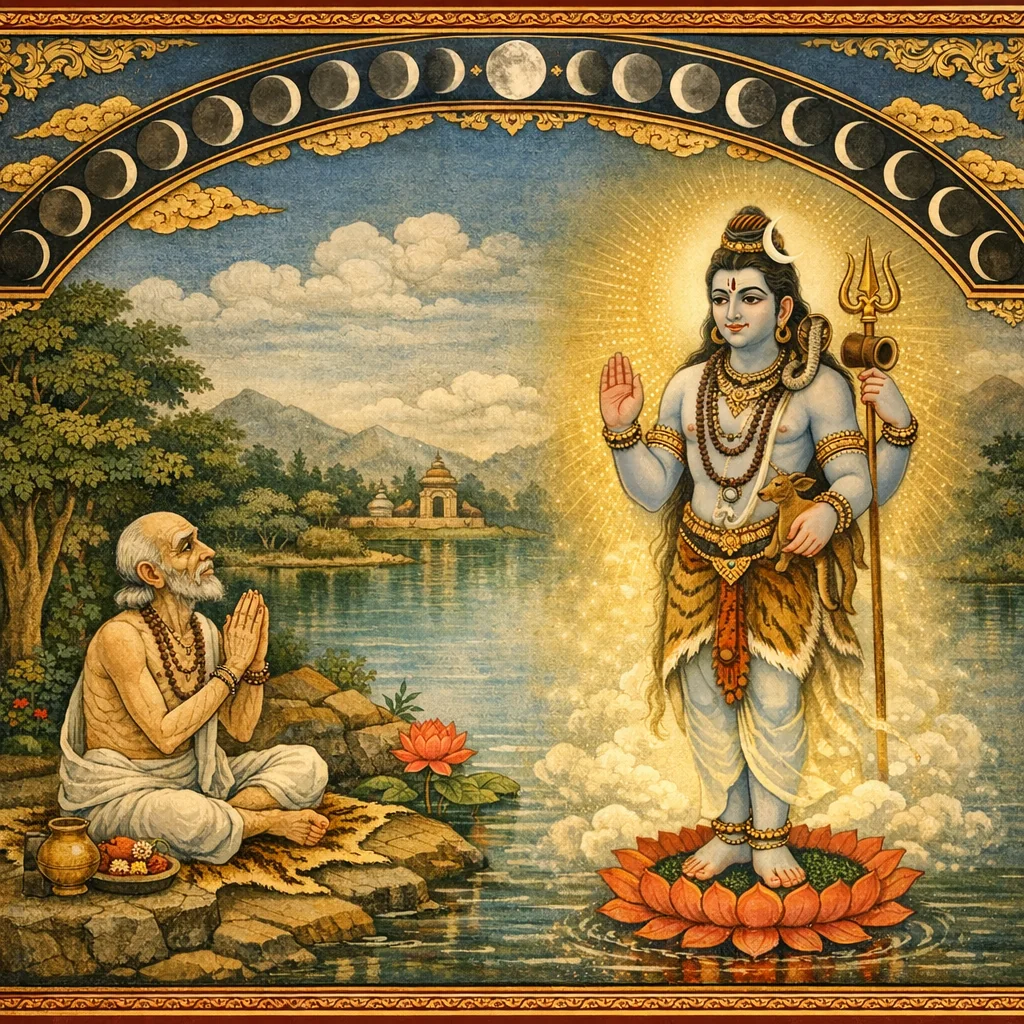
Chapter 63 gives the tīrtha-origin of Someśvara. Sūta speaks of a famed liṅga said to have been established by Soma, the Moon, and prescribes a time-bound observance: worship of Śiva on Mondays for a full year, bringing release from grievous diseases, including wasting ailments (yakṣmā) and other chronic conditions. The chapter then recounts how Soma’s affliction arose. Soma marries Dakṣa’s twenty-seven daughters (the Nakṣatras) but favors Rohiṇī alone; the others complain, and Dakṣa reproves him on dharma-grounds. Though Soma promises reform, he repeats the offense, and Dakṣa curses him with a wasting disease. Soma seeks cures and physicians in vain, turns to renunciation and pilgrimage, and reaches Prabhāsa-kṣetra, where he meets the sage Romaka. Romaka teaches that the curse cannot be directly annulled, yet its force can be eased through devotion to Śiva: Soma should establish liṅgas at the tīrthas (sixty-eight are mentioned) and worship with faith. Śiva appears, mediates with Dakṣa, and ordains a cyclical settlement—Soma will wax and wane by halves according to the pakṣas—thus upholding the truth of the curse while granting relief. At Soma’s request, Śiva agrees to remain specially near in these liṅgas, with particular proximity on Mondays, and the chapter closes by affirming Someśvara’s manifestations across the tīrthas.
Shlokas
Verse 1
सूत उवाच । अथ सोमेश्वराख्यं च तत्र लिंगं सुशोभनम् । अस्ति ख्यातं त्रिलोकेऽत्र स्वयं सोमेन निर्मितम्
Sūta said: There is a splendid liṅga there, renowned as Somēśvara, famed throughout the three worlds, established here by Soma (the Moon) himself.
Verse 2
सोमवारेण यस्तत्र वत्सरं यावदर्चयेत् । क्षणं कृत्वा स रोगेण दारुणेनापि मुच्यते
Whoever worships there on Mondays for a full year—even having undertaken only a brief observance—is freed even from dreadful disease.
Verse 3
यक्ष्मणापि न संदेहः किं पुनः कुष्ठपूर्वकैः । तस्मात्सर्वप्रयत्नेन रोगार्त्तस्तं प्रपूजयेत्
Even in the case of yakṣmā (consumption) there is no doubt of release—how much more with ailments such as leprosy (kuṣṭha) and the rest. Therefore, one afflicted by disease should worship Him there with every effort.
Verse 4
तदाराध्य पुरा सोमः क्षयव्याधिसमन्वितः । बभूव नीरुग्देहोऽसौ यथा पांड्यो नराधिपः
Long ago Soma, afflicted with the wasting disease, worshipped That—Somēśvara. His body became free from illness, just as the Pāṇḍya king later did.
Verse 5
ऋषय ऊचुः । ओषधीनामधीशस्य कथं सोमस्य सूतज । क्षयव्याधिः पुरा जाता उपशांतिं कथं गतः
The sages said: O son of Sūta, how did Soma—lord of medicinal herbs—come to suffer the wasting disease in ancient times? And how did it subside?
Verse 6
एतन्नः सर्वमाचक्ष्व विस्तरेण महामते । तथा तस्य महीपस्य पांड्यस्यापि कथां शुभाम्
Tell us all this in detail, O great-minded one—and also the auspicious account of that king, the Pāṇḍya.
Verse 7
सूत उवाच । दक्षस्य कन्यकाः पूर्वं सप्तविंशतिसंख्यया । उपयेमे निशानाथो देवाग्निगुरुसंनिधौ
Sūta said: Formerly, the Lord of the Night (Soma) married the daughters of Dakṣa—twenty-seven in number—in the presence of the gods, the sacred fire, and the gurus.
Verse 8
नक्षत्रसंज्ञिता लोके कीर्त्यंते या द्विजोत्तमैः । दैवज्ञैरश्विनीपूर्वा रूपौदार्यगुणान्विताः
They are known in the world as the Nakṣatras, praised by the best of the twice-born and by astrologers—beginning with Aśvinī—endowed with beauty, generosity, and virtues.
Verse 9
अथ तासां समस्तानां मध्ये तस्य निशापतेः । रोहिणी वल्लभा जज्ञे प्राणेभ्योऽपि गरीयसी
Then, among them all, Rohiṇī became the beloved of that Lord of the Night (the Moon), dearer to him even than his own life-breaths.
Verse 10
ततः समं परित्यज्य सर्वास्ता दक्षकन्यकाः । रोहिण्या सह संयुक्तः संबभूव दिवानिशम्
Thereafter, abandoning equal regard for all those daughters of Dakṣa, he remained joined with Rohiṇī—day and night.
Verse 11
ततस्ताः काम संतप्ता दौर्भाग्येन समन्विताः । प्रोचुर्दुःखान्विता दक्षं गत्वा बाष्पप्लुताननाः
Then those maidens, scorched by unfulfilled desire and burdened by ill-fortune, went to Dakṣa; their faces were drenched with tears, and in grief they spoke to him.
Verse 12
वयं यस्मै त्वया दत्ताः पत्न्यर्थं तात पापिने । ऋतुमात्रमपि प्रीत्या सोऽस्माकं न प्रयच्छति
“Father, you gave us to that sinful one as wives; yet he does not grant us even the season of intimacy—so much as a single ṛtu—nor does he approach us with affection.”
Verse 14
सूत उवाच । तासां तद्वचनं श्रुत्वा दक्षो दुःखसमन्वितः । सर्वास्ताः स्वयमादाय जगाम शशिसंनिधौ
Sūta said: Hearing their words, Dakṣa was filled with sorrow; taking all of them himself, he went to the presence of Śaśin (the Moon).
Verse 15
ततः प्रोवाच सोऽन्वक्षं तासां दक्षः प्रजापतिः । भर्त्सयन्परुषैर्वाक्यैर्निशानाथं मुहुर्मुहुः
Then Dakṣa Prajāpati, standing before them, again and again rebuked Niśānātha—the Lord of Night, the Moon—with harsh words.
Verse 16
किमिदं युज्यते कर्तुं त्वया रात्रिपतेऽधम । कर्म मूढ सतां बाह्य धर्मशास्त्रविगर्हितम्
“O Lord of the Night, base one—how can it be fitting for you to do this? O deluded one, this deed lies outside the conduct of the good and is condemned by the Dharma-śāstras.”
Verse 17
ऋतुकालेऽपि संप्राप्ते सुता मम समुद्भवाः । यन्न संभाषसि प्रीत्या धर्मशास्त्रं न वेत्सि किम्
“Even when the proper season has arrived, you do not speak with affection to my daughters, born of me. Do you not know the Dharma-śāstra?”
Verse 18
ऋतु स्नातां तु यो भार्यां संनिधौ नोपगच्छति । घोरायां भ्रूणहत्यायां युज्यते नात्र संशयः
“But he who does not approach his wife—bathed and ready in the ṛtu-season—even when she is near, incurs the dreadful sin akin to foeticide; of this there is no doubt.”
Verse 19
तस्य तद्वचनं श्रुत्वा सलज्जो रात्रिनायकः । प्रोवाचाधोमुखो दक्षं प्रकरिष्ये वचस्तव
Hearing those words, the Lord of Night felt ashamed; with his face lowered, he said to Dakṣa, “I shall carry out your command.”
Verse 20
ततो हृष्टमना दक्षः सुताः सर्वा हिमद्युते । निवेद्यामंत्र्य तं पश्चाज्जगाम निजमंदिरम्
Then Dakṣa, his heart delighted, presented all his daughters to Him of icy radiance—the Moon. Having bowed in reverence and taken leave, he returned to his own abode.
Verse 21
चन्द्रोऽपि पूर्ववत्सर्वास्ताः परित्यज्य दक्षजाः । रोहिण्या सह संसर्गं प्रचकारानुरागतः
Yet the Moon, as before, forsook all those daughters of Dakṣa and, bound by desire, continued his union with Rohiṇī.
Verse 22
अथ ता दुःखिता भूयो जग्मुर्यत्र पिता स्थितः । प्रोचुश्च बाष्पपूर्णाक्षास्तत्कालसदृशं वचः
Then, stricken with grief, they went again to where their father was staying. With eyes brimming with tears, they spoke words befitting the distress of that moment.
Verse 23
एतत्तात महद्दुःखमस्माकं वर्तते हृदि । यद्दौर्भाग्यं प्रसंजातं सर्वस्त्रीजनगर्हितम्
“Dear father, a great sorrow abides within our hearts, for misfortune has arisen for us—an affront condemned by all women.”
Verse 24
यत्पुनस्त्वं कृतस्तेन कामुकेन दुरात्मना । व्यर्थश्रमोऽप्रमाणीव कृतेऽस्माकं गतः स्वयम्
“And further, because of that lust-driven, wicked one, you have been made as though your effort were futile and your authority unheeded—though you acted for our sake.”
Verse 25
तद्दुःखं न वयं शक्ता हृदि धर्तुं कथंचन । रमते स हि रोहिण्या चंद्रमाः सहितोऽनिशम्
“We are not able to bear that sorrow in our hearts in any way—for the Moon continually delights, keeping company with Rohiṇī alone.”
Verse 26
विशेषात्तव वाक्येन निषिद्धो रात्रिनायकः । अनुज्ञां देहि तस्मात्त्वमस्माकं तत्र सांप्रतम् । दौर्भाग्यदुःखसंतप्तास्त्यजामो येन जीवितम्
“Especially by your command the Lord of the Night has been forbidden. Therefore, grant us permission now to go there—burned by the pain of misfortune, we would abandon our lives by that means.”
Verse 27
सूत उवाच । तासां तद्वचनं श्रुत्वा दक्षः कोपसमन्वितः । शशाप शर्वरीनाथं गत्वा तत्संनिधौ ततः
Sūta said: Having heard their words, Dakṣa, filled with anger, went into his presence and then cursed the Lord of the Night.
Verse 28
यस्मात्पाप न मे वाक्यं त्वया धर्मसमन्वितम् । कृतं तस्मात्क्षयव्याधिस्त्वां ग्रसिष्यति दारुणः
“Since, O sinful one, you did not follow my word grounded in dharma, therefore a dreadful wasting disease shall seize you.”
Verse 29
एवमुक्त्वा ययौ दक्षश्चन्द्रोऽपि द्विजसत्तमाः । तत्क्षणाद्यक्ष्मणाश्लिष्टः क्षयं याति दिने दिने
Having spoken thus, Dakṣa departed; and the Moon as well—O best of the twice-born—was from that very moment gripped by consumption, and day by day he wasted away.
Verse 30
ततोऽसौ कृशतां प्राप्तः संपरित्यज्य रोहिणीम् । अशक्तः सेवितुं कामं वभ्राम जगतीतले
Then he grew emaciated; abandoning Rohiṇī, and unable to pursue sensual pleasure, he wandered upon the earth’s surface.
Verse 31
क्षयव्याधिप्रणाशाय पृच्छ मानश्चिकित्सकान् । औषधानि विचित्राणि प्रकुर्वाणो जितेन्द्रियः
Seeking the destruction of the wasting disease, he questioned physicians, and—self-controlled—prepared various kinds of medicines.
Verse 32
तथापि मुच्यते नैव यक्ष्मणा स निशापतिः । दक्षशापेन रौद्रेण क्षयं याति दिनेदिने
Yet even so, the Lord of the Night (the Moon) is not freed from consumption (yakṣmā). By the fierce curse of Dakṣa, he wastes away, day after day.
Verse 33
ततो वैराग्यमापन्नस्तीर्थयात्रापरायणः । बभूव श्रद्धयायुक्तस्त्यक्त्वा भेषजमुत्तमम्
Then, falling into dispassion, he became devoted to pilgrimage to sacred fords; filled with faith, he set aside even the finest medicines.
Verse 34
अथासौ भ्रममाणस्तु तीर्थान्यायतनानि च । संप्राप्तो ब्राह्मणश्रेष्ठाः प्रभासं क्षेत्रमुत्तमम्
And so, while wandering through holy fords and sacred shrines, he arrived—O best of brāhmaṇas—at Prabhāsa, the supremely excellent sacred field.
Verse 35
तत्र स्नात्वा शुचिर्भूत्वा प्रभासं वीक्ष्य रात्रिपः । यावत्संप्रस्थितोन्यत्र तावदग्रे व्यवस्थितम्
There, having bathed and become purified, the Lord of Night beheld Prabhāsa. And as he was about to depart elsewhere, he saw someone standing before him.
Verse 36
अपश्यद्रोमकंनाम स मुनि संशितव्रतम् । तपोवीर्यसमोपेतं सर्वसत्त्वानुकम्पकम्
He saw a sage named Romaka—firm in vow, endowed with the power born of austerity, and compassionate toward all beings.
Verse 37
तं दृष्ट्वा स प्रणम्योच्चै स्ततः प्रोवाच सादरम् । क्षयव्याधियुतश्चन्द्रो निर्वेदाद्द्विजसत्तमाः
Seeing him, he bowed low and then spoke with reverence. Candra, afflicted with the disease of wasting, addressed him out of deep despair—O best of twice-born ones.
Verse 38
परिक्षीणोऽस्मि विप्रेंद्र क्षयव्याधिप्रभावतः । तस्मात्कुरु प्रतीकार महं त्वां शरणं गतः
‘O lord among brāhmaṇas, I am utterly worn down by the force of this wasting disease. Therefore, provide a remedy—I have come to you for refuge.’
Verse 39
मया चिकित्सकाः पृष्टास्तैरुक्तं भेषजं कृतम् । अनेकधा महाभाग परिक्षीणो दिनेदिने
‘I questioned physicians, and I used the medicines they prescribed in many ways; yet, O great one, I continue to waste away day by day.’
Verse 40
यदि नैवोपदेशं मे कञ्चित्त्वं संप्रदास्यसि । व्याधिनाशाय तत्तेन त्यक्ष्याम्यद्य कलेवरम्
If you will not grant me some instruction for the destruction of this disease, then for that very reason I shall abandon this body today.
Verse 41
रोमक उवाच । अन्यस्यापि निशानाथ न शापः कर्तुमन्यथा । शक्यते किं पुनस्तस्य दक्षस्यामिततेजसः
Romaka said: “O Lord of the Night, even another person’s curse cannot be made otherwise—how much less the curse of Dakṣa, whose splendor is immeasurable.”
Verse 42
तस्मादत्रोपदेशं ते प्रयच्छामि सुसंमतम् । येन ते स्यादसंदिग्धं क्षयव्याधि परिक्षयः
Therefore, I shall give you here a well-approved instruction, by which—without any doubt—your wasting disease will be completely brought to an end.
Verse 43
नादेयं किंचिदस्तीह देवदेवस्य शूलिनः । संप्रहृष्टस्य तद्वाक्यात्तस्मादाराधयस्व तम्
Here, there is nothing that is “not to be given” by Śūlin, the God of gods, when He is well-pleased. Therefore, by that very assurance, worship Him.
Verse 44
अष्टषष्टिषु तीर्थेषु सत्यं वासः सदा क्षितौ । तेषु संस्थाप्य तल्लिंगं तस्य नाशाय रात्रिप
Truly, among the sixty-eight tīrthas there is ever an abiding presence upon the earth. O king of the night, establish that liṅga in those tīrthas, for the destruction of that affliction.
Verse 45
आराधय ततो नित्यं श्रद्धापूतेन चेतसा । संप्राप्स्यसि न संदेहः क्षयव्याधि परिक्षयम्
Therefore, worship Him daily with a mind purified by faith. Without doubt, you will attain the complete ending of the wasting disease.
Verse 46
सूत उवाच । तस्य तद्वचनं श्रुत्वा संप्रहृष्टो निशापतिः । तस्मिन्प्रभासके क्षेत्रे दिव्यलिंगानि शूलिनः । संस्थाप्य पूजयामास स्वनामांकानि भक्तितः
Sūta said: Hearing those words, the Lord of the night (Candra) rejoiced. In the sacred region of Prabhāsa, he established the divine liṅgas of the Trident-bearer (Śiva) and worshipped them with devotion—liṅgas bearing his own name.
Verse 47
ततस्तुष्टो महादेवस्तस्य संदर्शनं गतः । प्रोवाच वरदोऽस्मीति प्रार्थयस्व यथेप्सितम्
Then Mahādeva, being pleased, granted him His vision and said, “I am the giver of boons—ask for whatever you desire.”
Verse 48
चन्द्र उवाच । परं क्षीणोऽस्मि देवेश यक्ष्मणाहं पदांतिकम् । प्राप्तस्तस्मात्परित्राहि नान्यत्संप्रार्थयाम्यहम्
Candra said: O Lord of the gods, I am utterly weakened; by yakṣmā I have been brought to the very brink. Therefore, save me—I ask for nothing else.
Verse 49
तस्य तद्वचनं श्रुत्वा भगवान्वृषभध्वजः । दक्षमाहूय तत्रैव ततः प्रोवाच सादरम्
Hearing his words, the Blessed Lord—He whose banner bears the bull—summoned Dakṣa there itself, and then spoke to him with due regard.
Verse 50
एष चंद्रस्त्वया शप्तो जामाता न कृतं शुभम् । तस्मादनुग्रहं चास्य मम वाक्यात्समाचर
This Candra—your son-in-law—has been cursed by you and has not acted well. Therefore, show him favor, acting in accordance with my word.
Verse 51
दक्ष उवाच । मया धर्म्यमपि प्रोक्तो वाक्यमेष कुबुद्धिमान् । नाकरोन्मे पुरः प्रोच्य करिष्यामीत्य सत्यवाक्
Dakṣa said: I spoke to him words of dharma as well, yet this foolish-minded one did not do them—having promised before me, ‘I will do it,’ he proved false to his word.
Verse 52
तेन शप्तस्तु कोपेन सुतार्थे वृषभध्वज । हास्येनापि मया प्रोक्तं नान्यथा संप्रजायते
O Bull-bannered Lord, for my daughter’s sake he cursed the Moon in anger; and even though I spoke it in jest, it cannot turn out otherwise—my words must come to pass.
Verse 53
देवदेव उवाच । अद्यप्रभृति सर्वास्ताः सुता एष निशाकरः । समाः संवीक्षते नित्यं मम वाक्यादसंशयम्
The Lord of gods said: “From today onward, this Moon shall behold all those daughters as equal, always—because of my command, without doubt.”
Verse 54
तस्मात्पक्षं क्षयं यातु पक्षं वृद्धिं प्रगच्छतु । येन ते स्याद्वचः सत्यं मत्प्रसादसमन्वितम्
Therefore, let one fortnight wane and the other fortnight wax—so that your statement may prove true, graced by my favor.
Verse 55
ततो दक्षस्तथेत्युक्त्वा जगाम निजमन्दिरम् । देवोऽपि शंकरो भूयः प्रोवाच शशलांछनम्
Then Dakṣa, saying, “So be it,” went to his own abode. And Śaṅkara too, once again, addressed the Moon, marked with the hare.
Verse 56
भूयोऽपि प्रार्थयाभीष्टं मत्तस्त्वं शशलांछन । येन सर्वं प्रयच्छामि यद्यपि स्यात्सुदुर्लभम्
O hare-marked Moon, ask of me again whatever you desire; by that means I grant everything—even what may be exceedingly hard to obtain.
Verse 57
चन्द्र उवाच । यदि तुष्टोऽसि देवेश यदि देयो वरो मम । तत्स्थापितेषु लिंगेषु मया सर्वेषु सर्वदा । संनिधानं त्वया कार्यं लोकानां हित काम्यया
Candra said: “If you are pleased, O Lord of gods, and if a boon is to be granted to me—then in all the liṅgas established by me, at all times, may your sacred presence be made manifest, out of a desire for the welfare of the worlds.”
Verse 58
देव उवाच । अष्टषष्टिषु लिंगेषु स्थापितेषु त्वया विभो । सोमवारेण सांनिध्यं करिष्ये वचनात्तव
The Lord said: “O mighty one, in the sixty-eight liṅgas established by you, I shall grant my special presence on Mondays, in accordance with your request.”
Verse 59
एवमुक्त्वा स देवेशस्ततश्चादर्शनं गतः । चन्द्रोऽपि हर्षसंयुक्तः समं पश्यति तास्ततः
Having spoken thus, the Lord of gods then vanished from sight. And Candra too, filled with joy, thereafter regarded them all equally.
Verse 60
सुता दक्षस्य विप्रेंद्रा शंकरस्य वचः स्मरन् । ततो हर्ष समायुक्ता वभूवुस्तदनंतरम्
O best of Brahmins, Dakṣa’s daughters, remembering Śaṅkara’s words, were immediately thereafter filled with joy.
Verse 61
एवं सोमेश्वरास्तत्र बभूवुर्द्विजसत्तमाः । अष्टषष्टिषु तीर्थेषु तथान्येषु ततः परम्
Thus, O best of Brahmins, Somēśvaras came to be there—in the sixty-eight sacred tīrthas, and in other places beyond them as well.