Adhyaya 231
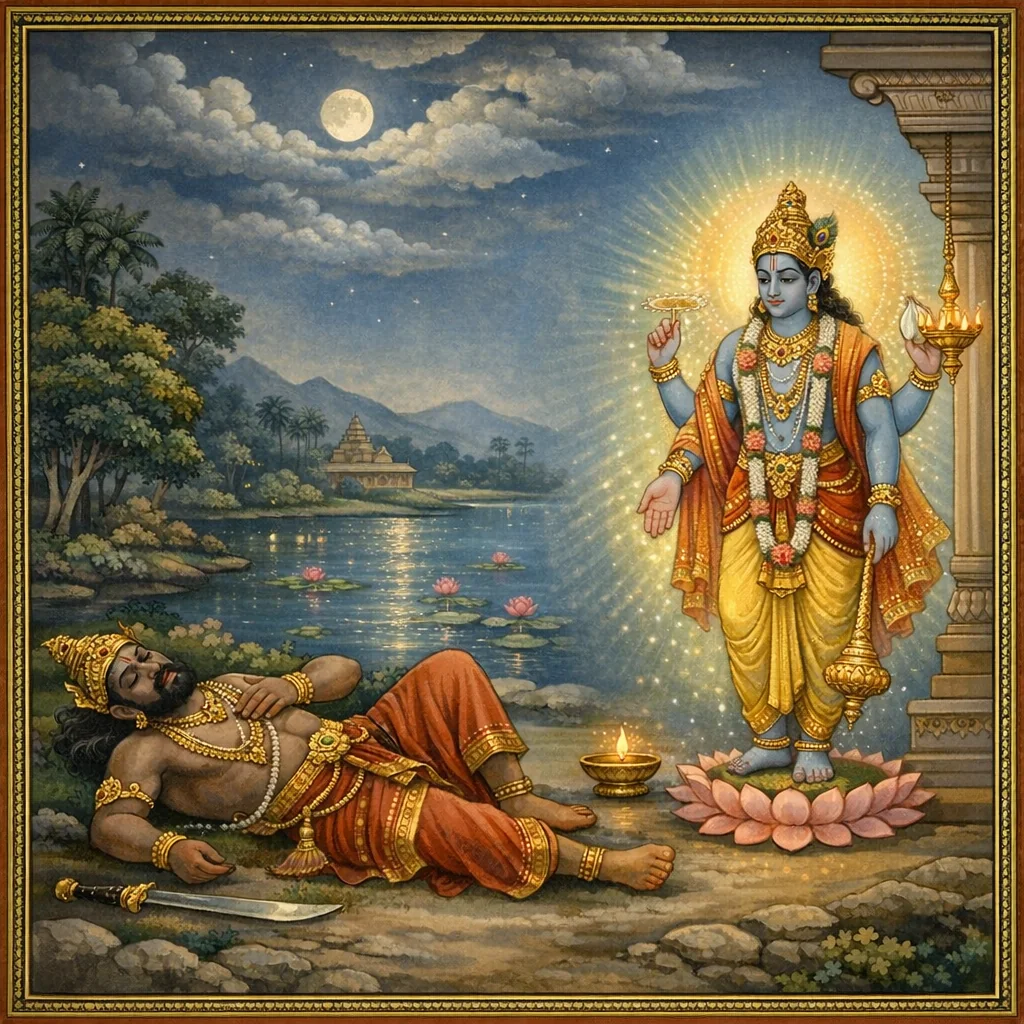
This adhyāya explains how ritual life is imperiled under Vṛka, a daitya ruler, who suppresses yajña, homa, and japa by sending agents to hunt down and kill practitioners. Yet hidden worship endures through the sages. The ṛṣi Sāṃkṛti performs secret austerities at Hāṭakeśvara-kṣetra before a four-armed Vaiṣṇava image; the daityas cannot harm him, checked by Viṣṇu’s protective radiance. Vṛka attacks in person, but his weapon fails; Sāṃkṛti curses him so that his feet fall away, leaving him incapacitated and allowing the devas to regain stability. Later Brahmā, pleased with Vṛka’s tapas, seeks his restoration, but Sāṃkṛti argues that full restoration would endanger the cosmic order. A compromise is set: Vṛka regains mobility only after a time-bound interval, aligned with the monsoon-season framework. Indra, distressed by repeated displacement, consults Bṛhaspati and undertakes the Aśūnyaśayana vrata for Viṣṇu. Viṣṇu then relocates seasonally to Hāṭakeśvara-kṣetra and “sleeps” upon Vṛka for four months (Cāturmāsya), immobilizing him and securing Indra’s rule. The chapter also states ritual-ethical restraints during Viṣṇu’s śayana period and exalts Ekādaśī—both śayana and bodhana—as exceptionally efficacious times for worship.
Shlokas
Verse 1
सूत उवाच । वृकोऽपि तत्समासाद्य राज्यं त्रैलोक्यसंभवम् । यदृच्छया जगत्सर्वं समाज्ञापयत्तदा
Sūta said: Vṛka too, having obtained that sovereignty extending through the three worlds, then—acting at his own will—issued commands over the entire universe.
Verse 2
सोंऽधकस्य बले वीर्ये धैर्ये कोपे च दानवः । सहस्रगुणितश्चासीद्रौद्रः परमदारुणः
That Dānava became, in strength, valor, steadfastness, and wrath, a thousandfold beyond Andhaka—fierce and exceedingly dreadful.
Verse 3
एतस्मिन्नंतरे कश्चिन्न मर्त्यो यजति क्षितौ । न होमं नैव जाप्यं च दैत्याञ्ज्ञात्वा सुरास्पदे
In that interval, no mortal on earth performed sacrifice—nor offering into fire, nor even mantra-recitation—knowing that the Daityas had taken their place in the realm of the gods.
Verse 4
अथ यः कुरुते धर्मं होमं वा जपमेव वा । सुगुप्तस्थानमासाद्य करोत्यमरतुष्टये
And whoever still performed righteous acts—whether homa or japa—did so only after reaching a well-hidden place, seeking to please the Immortals.
Verse 5
अथ स्वर्गस्थिता दैत्या यज्ञभागविवर्जिताः । तथा मर्त्योद्भवैर्भागैः संदेहं परमं गताः
Then the Daityas dwelling in heaven—deprived of their sacrificial shares—fell into great uncertainty, even as offerings arising from mortals (on earth) continued to be apportioned.
Verse 6
ततः कोपपरीतात्मा प्रेषयामास दानवः । मर्त्यलोके चरान्गुप्तान्निपुणांश्चाब्रवीत्ततः
Then that Dānava, his mind overwhelmed by wrath, dispatched skilled spies, hidden among men in the mortal world, and instructed them.
Verse 7
यः कश्चिद्देवतानां च प्रगृह्णाति करोति च । तदर्थं यजनं होमं दानं वा पृथिवीतले । स च वध्यश्च युष्माभिर्मम वाक्यादसंशयम्
“Whoever among mortals supports the gods or acts for their sake—performing sacrifice, offering oblations, or giving charity upon the earth—must surely be slain by you, in accordance with my command, without doubt.”
Verse 8
अथ ते तद्वचः श्रुत्वा दानवा बलवत्तराः । गत्वा च मेदिनीपृष्ठं गुप्ताः सर्पंति सर्वतः
Hearing those words, the powerful Dānavas went out upon the face of the earth and, remaining concealed, crept everywhere.
Verse 9
यं कञ्चिद्वीक्षयंतिस्म जपहोमपरायणम । स्वाध्यायं वा प्रकुर्वाणं तं निघ्नंति शितासिभिः
Whomever they chanced to see devoted to japa and homa, or engaged in svādhyāya (sacred recitation), they struck down with sharp swords.
Verse 10
एतस्मिन्नेव काले तु सांकृतिर्मुनिसत्तमः । गुप्तश्चक्रे ततस्तस्यां गर्तायां छन्नवर्ष्मकः । यत्र पूर्वं तपस्तप्तं वृकेण च द्विजाः पुरा
At that very time, the excellent sage Sāṃkṛti hid himself, concealing his body in a pit there—at the very place where, in former days, the brāhmaṇa Vṛka had practiced austerities (tapas).
Verse 11
अथ ते तं तदा दृष्ट्वा तद्गुहायां व्यवस्थितम् । भर्त्समानास्तपस्तच्च प्रोचुश्च परुषाक्षरैः
Then, seeing him established in that cave, they reviled him and his austerity, speaking in harsh words.
Verse 12
दृष्ट्वा तस्याग्रतः संस्थां गन्धपुष्पैश्च पूजिताम् । वासुदेवात्मिकां मूर्तिं चतुर्हस्तां द्विजोत्तमाः
O best of brāhmaṇas, they saw before him an image embodying Vāsudeva, four-armed, and worshiped with perfumes and flowers.
Verse 13
ततस्ते शस्त्रमुद्यम्य निर्जघ्नुस्तं क्रुधान्विताः । न शेकुस्ते यदा हंतुं संवृतं विष्णुतेजसा । कुण्ठतां सर्वशस्त्राणि गतानि विमलान्यपि
Then, raising their weapons in fury, they struck at him; yet they could not kill him, for he was enclosed by the radiance of Viṣṇu. All their weapons—even those spotless and keen—became blunted.
Verse 14
अथ वैलक्ष्यमापन्ना निर्विण्णाः सर्व एव ते । तां वार्तां दानवेन्द्राय वृकायोचुश्च ते तदा
Then all of them, ashamed and downcast, reported that news to Vṛka, the lord of the Dānavas.
Verse 15
कश्चिद्विप्रः समाधाय वैष्णवीं प्रतिमां पुरः । तपस्तेपे महाभाग क्षेत्रे वै हाटकेश्वरे
“A certain Brāhmaṇa, having duly set a Vaiṣṇava image before him, performed austerities, O noble one, in the sacred field of Hāṭakeśvara.”
Verse 16
यत्र त्वया तपस्तप्तं भीत्या सर्वदिवौकसाम् । अपि चौर्येण चास्माकं तपस्तपति तादृशम्
“In that very place where you performed such austerity that all the gods were struck with fear—there too, by your act of theft, an austerity of the same kind now burns against us.”
Verse 17
येन सर्वाणि शस्त्राणि कुण्ठतां प्रगतानि च । तस्य गात्रे प्रहारैश्च तस्मात्कुरु यथोचितम्
“Since because of him all weapons have become blunted, therefore do what is fitting—strike at his body with blows.”
Verse 18
तेषां तद्वचनं श्रुत्वा वृकः कोपसमन्वितः । जगाम सत्वं तत्र यत्रासौ सांकृतिः स्थितः
Hearing their words, Vṛka, filled with anger, went at once to the place where the sage Sāṃkṛti was staying.
Verse 19
स गत्वा वैष्णवीं मूर्तिं तामुत्क्षिप्य सुदूरतः । श्वभ्राद्बहिः प्रचिक्षेप भर्त्समानः पुनः पुनः
He went to the Vaiṣṇavī image, lifted it up, and flung it far away—casting it out of the pit again and again, while repeatedly hurling insults.
Verse 20
जघान पादघातेन दक्षिणेनेतरेण तम् । अब्रवीन्मम वध्यस्त्वं यन्मच्छत्रुं जनार्दनम्
He struck him with a kick—now with the right foot, now with the other—and said, “You deserve death, since you honor Janārdana, the enemy of mine.”
Verse 21
संपूजयसि चौर्येण तेन प्राणान्हराम्यहम् । एवमुक्त्वाथ खड्गेन तं जघान स दैत्यपः
“You worship through theft; therefore I shall take your life.” Saying this, that sinful one struck him with a sword.
Verse 22
ततस्तस्य स खड्गस्तु तीक्ष्णोऽपि द्विजसत्तमाः । तस्य काये प्रहीणस्तु शतधा समपद्यत
Then, O best of brāhmaṇas, that sword—though sharp—when brought down upon his body, shattered into a hundred pieces.
Verse 23
ततः कोपपरीतात्मा तं शशाप स सांकृतिः
Then Sāṃkṛti, his heart overtaken by righteous wrath, pronounced a curse upon him.
Verse 24
यस्मात्पाप त्वयाहं च पादघातैः प्रताडितः । तस्मात्ते पततां पादौ सद्य एव धरातले
Since, O sinner, you have struck me with kicks, therefore let your feet fall off at once upon the earth!
Verse 25
सूत उवाच । उक्तमात्रे ततस्तेन पादौ तस्य द्विजोत्तमाः । पतितौ मेदिनीपृष्ठे पंचशीर्षाविवोरगौ
Sūta said: “No sooner had he spoken than, O best of brāhmaṇas, that man’s two feet fell upon the earth’s surface—like two five-hooded serpents.”
Verse 26
एतस्मिन्नेव काले तु आक्रन्दः सुमहानभूत् । वृकस्य सैनिकानां च नारीणां च विशेषतः
Just at that very time a tremendous wail arose—especially among Vṛka’s soldiers, and among the women in particular.
Verse 27
अथ देवाः परिज्ञाय तं तदा पंगुतां गतम् । आगत्य मेरुपृष्ठं च निजघ्नुस्तत्परिग्रहम्
Then the gods, realizing that he had at that time become lame, came to the back of Mount Meru and struck down his encampment and retinue.
Verse 28
हतशेषाश्च दैत्यास्ते पातालांतःसमा गताः । वृकोऽपि पंगुतां प्राप्तस्तस्थौ तपसि सुस्थिरम्
Those daityas who survived after the slaughter withdrew together into the depths of Pātāla. Vṛka too, having become lame, stood firm in austerity, unwavering.
Verse 29
सर्वैरंतःपुरैः सार्धं दुःखशोकसमन्वितः । इन्द्रोऽपि प्राप्तवान्राज्यं तदा निहत कंटकम्
With all his inner chambers and household, filled with sorrow and grief, Indra too regained his sovereignty then—once the “thorn,” the menace, had been destroyed.
Verse 30
धर्मक्रियाः प्रवृत्ताश्च ततो भूयो रसातले
Thereafter, once again, the observances and acts of Dharma proceeded—even down in Rasātala.
Verse 31
अथ दीर्घेण कालेन तस्य तुष्टः पितामहः । उवाच तत्र चागत्य गर्त्तामध्ये द्विजोत्तमाः
Then, after a long time, Pitāmaha (Brahmā), pleased with him, came to that place and spoke there, in the midst of the pit—O best of Brahmins.
Verse 32
वृक तुष्टोऽस्मि ते वत्स वरं वरय सुव्रत । अहं दास्यामि ते नूनं यद्यपि स्यात्सुदुर्लभम्
“Vṛka, dear child, I am pleased with you. Choose a boon, O steadfast in vow; I shall surely grant it to you, even if it be exceedingly difficult to obtain.”
Verse 33
वृक उवाच । यदि तुष्टोऽसि मे देव यदि देयो वरो मम । पाददानं तदा देव मम ब्रह्मन्समाचर । पंगुता याति शीघ्रं मे येनेयं ते प्रसादतः
Vṛka said: “If you are pleased with me, O God, and if a boon is to be granted to me—then, O Lord, O Brahmā, bestow upon me the gift of feet (grant me sound feet), so that my lameness may quickly depart by your grace.”
Verse 34
तच्छ्रुत्वा तं समानीय सांकृतिं तत्र पद्मजः । प्रोवाच सांत्वपूर्वं च वृकस्यास्य द्विजोत्तम
Hearing this, Padmaja (Brahmā) brought Saṃkṛti there and, O best of Brahmins, spoke to this Vṛka with words of gentle reassurance.
Verse 35
मद्वाक्यात्पंगुता याति येनास्य त्वं तथा कुरु
“By my command his lameness shall depart; therefore do for him accordingly.”
Verse 36
सांकृतिरुवाच । अनृतं नोक्तपूर्वं मे स्वैरेष्वपि पितामह । ज्ञायते देवदेवेश तत्कथं तत्करोम्यहम्
Sāṃkṛti said: “O Grandfather, never have I spoken untruth—nor even in careless moments. Since the Lord of gods knows all, how could I do that, and utter what is false?”
Verse 37
ब्रह्मोवाच । मम भक्तिपरो नित्यं वृकोऽयं दैत्यसत्तमः । पौत्रस्त्वं दयितो नित्यं तेन त्वां प्रार्थयाम्यहम्
Brahmā said: “This Vṛka, foremost among the Dānavas, is ever devoted to me. And you, my grandson, are always dear to me—therefore I entreat you.”
Verse 38
तव वाक्यं च नो मिथ्या कर्तुं शक्नोमि सन्मुने
“And, O noble sage, I am not able to make your word false.”
Verse 39
सांकृतिरुवाच । एष दैत्यः सुदुष्टात्मा देवानामहिते स्थितः । विशेषाद्वासुदेवस्य पुरोर्मम महात्मनः
Sāṃkṛti said: “This Daitya is of exceedingly wicked nature and stands intent on the harm of the gods—especially (as an enemy) before Vāsudeva, my great-souled elder.”
Verse 40
पंगुतामर्हति प्रायः पापात्मा द्विजदूषकः । बलेन महता युक्तो जरामरणवर्जितः
“That sinful one—defiler of the twice-born—truly deserves lameness. Endowed with immense strength, he is free from old age and death.”
Verse 41
पुरा कृतस्त्वया देव स चेत्पादाववाप्स्यति । हनिष्यति जगत्सर्वं सदेवासुरमानुषम्
“O god, this (boon) was granted by you earlier. If he obtains (the use of) his feet, he will destroy the entire world—gods, demons, and humans alike.”
Verse 42
तस्मात्तिष्ठतु तद्रूपो न कल्पं कर्तुमर्हसि । त्वयापि चिन्ता कर्तव्या त्रैलोक्यस्य यतः प्रभो
“Therefore let him remain in that very condition; you should not set matters otherwise. You too must consider the welfare of the three worlds, for you are their lord.”
Verse 43
ब्रह्मोवाच । प्रावृट्काले तु सञ्जाते यानं कर्तुं न युज्यते । विजिगीषोर्विशेषेण मुक्त्वा शीतातपागमम्
Brahmā said: “When the rainy season has set in, travel is not proper—especially for one who seeks conquest—except for necessary movement to avoid cold or heat.”
Verse 44
तस्माच्च चतुरो मासान्वार्षिकान्पादसंयुतः । अगम्यः सर्वलोकानां कुर्यात्कर्माणि धैर्यतः
Therefore, for the four months of the rainy season, being only “foot-provided” (that is, with movement restrained), he should remain beyond the reach of all people and perform his duties with steady fortitude.
Verse 45
तद्भूयात्पादसंयुक्तः स वृको दान वोत्तमः । येन क्षेमं च देवानां द्विजानां जायते द्विज
Let that Vṛka, O best of givers, become “endowed with feet” in the intended and regulated manner, so that the welfare and security of the gods and the twice-born (dvija) may arise.
Verse 46
एवं कृते न मिथ्या ते वाक्यं विप्र भविष्यति । फलं च तपसस्तस्य न वृथा संभविष्यति
If it is done in this way, O brāhmaṇa, your word will not prove false, and the fruit of that one’s austerity (tapas) will not come to nothing.
Verse 47
सूत उवाच । बाढमित्येव तेनोक्ते सांकृतेन महात्मना । उत्थितौ सहसा पादौ तस्य गात्रात्पुनर्नवौ
Sūta said: When the great-souled Sāṃkṛta uttered, “So be it,” at once two new feet suddenly arose again upon his body.
Verse 48
पुनश्च दानवो रौद्रः पशुत्वं समपद्यत । तस्यामेव तु गर्तायां संतिष्ठति द्विजोत्तमाः
And once more the fierce dānava fell into the state of a beast; and in that very pit he remained, O best among the twice-born.
Verse 49
मासानष्टौ स दुःखेन सकलत्रः सबांधवः । स्मरमाणो महद्वैरं दैवैः सार्धं दिवानिशम्
For eight months he suffered, together with his wife and kinsmen, remembering day and night his great enmity with the gods.
Verse 51
विध्वंसयति सर्वाणि धर्मस्थानानि यानि च
He destroys all the seats of dharma—whatever they may be.
Verse 52
विध्वंसयति देवानां स्त्रियो मासचतुष्टयम् । उद्यानानि च सर्वाणि सपुराणि गृहाणि च
For four months he ravages the gods’ women; and he destroys all the gardens, and the houses with their cities and ancient precincts.
Verse 53
ततो देवाः समभ्येत्य देवदेवं जनार्दनम् । क्षीराब्धौ संस्थितं नित्यं शेषपर्यंकशायिनम्
Then the gods approached Janārdana, the God of gods—ever abiding in the Ocean of Milk, reclining upon the couch of Śeṣa.
Verse 54
चतुरो वार्षिकान्मासांस्तत्र स्थित्वा तदंतिके । मासानष्टौ पुनर्जग्मुस्त्रिदिवं प्रति निर्भयाः
Having stayed there near him for four months, they then went back again for eight months toward heaven, free from fear.
Verse 55
तस्मिन्पंगुत्वमापन्ने दैत्ये परमदारुणे । कस्यचित्त्वथ कालस्य देवराजो बृहस्पतिम् । प्रोवाच दुःखसंतप्त आषाढांते सुरो त्तमः
“When that exceedingly dreadful daitya had fallen into lameness, after some time the king of the gods—afflicted by sorrow—spoke to Bṛhaspati at the end of Āṣāḍha.”
Verse 56
गुरो स मासः संप्राप्तः प्रावृट्कालो भयावहः । आगमिष्यति यत्रासौ लब्धपादो वृकासुरः
“O Guru, that month has arrived—the dreadful season of rains. In that time Vṛkāsura, having regained his feet, will come wherever he is.”
Verse 57
गन्तव्यं च ततोऽस्माभिः क्षीरोदे केशवालये । मैवं दीनैस्तथा भाव्यं पराश्रयनिवासिभिः
“Thereafter we must go to Kṣīroda, the abode of Keśava. Those who live dependent on another’s shelter should not sink into such dejection.”
Verse 58
स्वगृहाणि परित्यज्य शयनान्यासनानि च । वाहनानि विचित्राणि यच्चान्य द्दयितं गृहे
“Abandoning their own homes, their beds and seats, their various splendid vehicles, and whatever else is dear within the house…”
Verse 59
तस्मात्कथय चास्माकमुपायं कञ्चिदेव हि । व्रतं वा नियमं वाथ होमं वा मुनिसत्तम
“Therefore, tell us some means indeed—whether a sacred vow, or a discipline, or even a fire-offering, O best of sages.”
Verse 60
अशून्यं शयनं येन स्वकलत्रेण जायते । तथा न गृहसंत्यागः स्वकीयस्य प्रजायते
By this observance, one’s bed is not left empty of one’s lawful spouse; likewise, one’s own home does not come to be abandoned.
Verse 61
निर्विण्णोऽहं निजस्थानभ्रंशाद्द्विजवरोत्तम । वर्षेवर्षे च सम्प्राप्ते स्थानकस्य च्युतिर्भवेत्
I am weary, O best of Brāhmaṇas, from being cast down from my own station. With each year that comes, a further fall from my position seems to occur.
Verse 62
पुनर्भूमौ शयिष्यामि यावन्मासचतुष्टयम् । निष्कलत्रो भयोद्विग्नो ब्रह्मचर्यपरायणः
Again I shall lie upon the ground for four months—without my spouse, shaken by fear, devoted to brahmacarya (celibate discipline).
Verse 63
तस्य तद्वचनं श्रुत्वा भयार्तस्य बृहस्पतिः । प्रोवाच सुचिरं ध्यात्वा ततो देवं शतक्रतुम्
Hearing those words of him who was afflicted by fear, Bṛhaspati—after pondering for a long time—then spoke to the god Śatakratu (Indra).
Verse 64
अशून्यशयनंनाम व्रतमस्ति महत्तपः । विष्णोराराधनार्थाय तत्कुरुष्व समा हितः
There is a vow called Aśūnyaśayana—an austerity of great power. Perform it with a focused mind for the sake of worshipping Viṣṇu.
Verse 65
देवो यत्रास्ति विष्णुः स क्षीराब्धौ मधुसूदनः । जलशायी जगद्योनिः स दास्यति हितं च ते
Where that god Viṣṇu abides—Madhusūdana in the Ocean of Milk—reclining upon the waters, the womb-source of the world, he will grant you what is beneficial.
Verse 66
यथा न शून्यं शयनं गृह भंगः प्रजायते । सर्वशत्रुविनाशश्च तत्प्रसादेन वासव
So that the bed may not become empty and the home may not be ruined; and by his grace, O Vāsava, there will also be the destruction of all enemies.
Verse 67
सूत उवाच । तस्मिन्व्रते ततश्चीर्णे ह्यशून्यशयनात्मके । तुतोष भगवान्विष्णुस्ततः प्रोवाच देवपम्
Sūta said: When that vow—known as the Aśūnyaśayana observance—had been duly performed, Lord Viṣṇu was pleased. Then he spoke to the lord of the gods (Indra).
Verse 68
शक्र तुष्टोऽस्मि भद्रं ते वरं वरय सुव्रत । व्रतेनानेन चीर्णेन चातुर्मास्योद्भवेन च । तस्मात्प्रार्थय देवेन्द्र नित्यं यन्मनसि स्थितम्
O Śakra, blessings to you—I am pleased. Choose a boon, O steadfast in vows. By this vow you have performed, born of the Cāturmāsya season; therefore, O lord of the gods, ask for what has ever remained in your heart.
Verse 69
इन्द्र उवाच । कृष्ण जानासि त्वं चापि यश्च मेऽत्र पराभवः । क्रियते दानवेन्द्रेण वृकेण सुदुरात्मना
Indra said: O Kṛṣṇa, you too know the defeat and humiliation that befalls me here—brought about by the Dānava king Vṛka, that wicked-souled one.
Verse 70
ममाष्टमासिकं राज्यं त्रैलोक्येऽपि व्यवस्थितम् । शेषांश्च चतुरो मासान्वर्षेवर्षे समेति सः
“My sovereignty, though established over the three worlds, lasts only for eight months. Each year he comes again for the remaining four months.”
Verse 71
एवं ज्ञात्वा सुरश्रेष्ठ दयां कृत्वा ममोपरि । तथा कुरु यथा राज्यं मम स्यात्सार्वकालिकम्
“Knowing this, O best of the gods, show compassion to me and act in such a way that my kingship may become enduring for all time.”
Verse 72
विष्णुरुवाच । अजरश्चामरश्चापि स कृतः पद्मयोनिना । तत्कथं जीवमानेन तेन राज्यं भवेत्तव
Viṣṇu said: “That one was made ageless and deathless by the Lotus-born (Brahmā). How, then, while he yet lives, can the kingdom be yours?”
Verse 73
परं तथापि देवेन्द्र करिष्यामि हितं तव
“Yet even so, O Devendra, I shall do what is for your welfare.”
Verse 74
क्षीरार्णवं परित्यज्य हाटकेश्वरसंज्ञिते । क्षेत्रे गत्वा समं लक्ष्म्या तस्योपरि ततः परम्
“Leaving the Ocean of Milk, go—together with Lakṣmī—to the sacred region known as Hāṭakeśvara; and then (act) further there, upon that (place).”
Verse 76
तस्मात्स्थानात्सहस्राक्ष मद्भारेण प्रपीडितः । वर्षेवर्षे सदा कार्यं मया तत्सुहितं तव
Therefore, O thousand‑eyed one, from that place he shall be pressed down by My weight; year after year I shall ever bring to pass what is for your great benefit.
Verse 77
तस्माद्गच्छाधुना स्वर्गे कुरु राज्यमकंटकम् । प्रावृट् काले तु संप्राप्ते न भीः कार्या तदुद्भवा
Therefore, go now to heaven and rule your kingdom without thorns (without obstruction). When the season of rains arrives, you need not fear what arises from that (enemy).
Verse 78
यो मां तत्र शयानं तु व्रतेनानेन देवप । पूजयिष्यति सद्भक्त्या तस्य दास्यामि वांछितम्
O lord of the gods, whoever worships Me there as I lie in sacred repose, observing this very vow with true devotion—unto that person I shall grant the desired boon.
Verse 79
सूत उवाच । एवमुक्त्वा हृषीकेशो विससर्ज शतक्रतुम् । निःशेषभयनिर्मुक्तं स्वराज्यपरिवृद्धये
Sūta said: Having spoken thus, Hṛṣīkeśa dismissed Śatakratu (Indra), now freed from every fear, for the further strengthening of his own sovereignty.
Verse 80
आषाढस्य सिते पक्ष एकादश्या दिने सदा । हाटकेश्वरजे क्षेत्रे तत्रागत्य स्वयं विभुः
Always, on the eleventh lunar day (Ekādaśī) of the bright fortnight of Āṣāḍha, the Lord Himself comes there—to the sacred field of Hāṭakeśvara.
Verse 81
वृकोपरि ततश्चक्रे शयनं यत्नमास्थितः । तेनाक्रांतस्ततः सोऽपि शक्नोति चलितुं न हि
Then, taking due care, He made His couch upon Vṛka. Pressed down by Him, that Vṛka too could not move at all.
Verse 82
मृतप्रायस्ततो नित्यं तद्भारेण प्रपीडितः । कार्तिकस्य सिते पक्ष एकादश्या दिने स्थिते
Thereafter, crushed continually by that weight, he remained as though lifeless—until the day of Ekādaśī in the bright fortnight of Kārttika arrived.
Verse 83
उत्थानं कुरुते विष्णुः क्षीरोदं प्रति गच्छति ा । सोऽपि सांकृतिशापेन वृकः पंगुत्वमाप्नुयात्
Viṣṇu then rises (from His sacred sleep) and departs toward the Ocean of Milk. And Vṛka, because of Sāṃkṛti’s curse, attains lameness.
Verse 84
एवं च चतुरो मासान्न त्यजेच्छयनं हरिः । भयात्तस्यासुरेंद्रस्य दानवस्य दुरात्मनः
Thus, for four months Hari did not abandon His recline—out of fear of that wicked Dānava, the lord of Asuras.
Verse 85
तत्र मर्त्यैः क्रिया सर्वाः क्रियते न मखोद्भवाः । यस्मात्स यज्ञपुरुषो न सुप्तो भागमश्नुते
During that time, mortals may perform all customary rites, but sacrifices born of the great ritual (makha) are not undertaken—because the Lord who is the very Person of Sacrifice does not, while asleep, receive His share.
Verse 86
तथा यज्ञाश्च ये सर्वे क्त्वयादानादि काः शुभाः । ते सर्वे न क्रियंते च चूडाकरणपूर्वकाः
Likewise, all auspicious sacrificial rites—together with dāna (sacred gifts) and related ceremonies—are not performed; and the saṃskāras beginning with the tonsure rite (cūḍākaraṇa) are not undertaken either.
Verse 87
मुक्त्वान्नप्राशनंनाम सीमंतोन्नयनं तथा । तस्मात्सुप्ते जगन्नाथे ताः सर्वाः स्युर्वृथा द्विजाः
Except for annaprāśana (the first feeding of solid food) and sīmantonnayana (the prenatal rite), when Jagannātha is in sacred sleep, all those rites become fruitless, O twice-born.
Verse 88
व्रतं वा नियमं वाथ तस्मिन्यः कुरुते नरः । प्रसुप्ते देवदेवेशे तत्सर्वं निष्फलं भवेत्
Whether a vow (vrata) or a religious restraint (niyama)—whatever a man undertakes at that time—when the Lord of lords is in sacred sleep, all of it becomes fruitless.
Verse 89
तस्मात्सर्वप्रयत्नेन संप्रसुप्ते जनार्दने । व्रतस्थैर्मानवैर्भाव्यं तस्य देवस्य तुष्टये
Therefore, when Janārdana is in sacred sleep, those established in vows should, with every effort, act in a manner that pleases that very Lord.
Verse 90
एकादश्यां दिने प्राप्ते शयने बोधने हरेः । यत्किंचित्क्रियते कर्म श्रेष्ठं तच्चाक्षयं भवेत्
When the day of Ekādaśī arrives—at the time of Hari’s going to sleep and His awakening—whatever act is performed then becomes excellent, and its merit becomes imperishable.
Verse 91
किंवात्र बहुनोक्तेन क्रियते यद्व्रतं नरैः । तेन तुष्टिं परां याति दैत्योपरि स्थितो हरिः
Why say more? Whatever vow men undertake, by that very vow Hari—who stands above the demons—attains supreme satisfaction.
Verse 92
एवं स भगवान्प्राह सुप्तस्तत्र जनार्दनः । किं वा तस्य ज्वरो जातो महती वेदनापि च
Thus spoke the Blessed Lord Janārdana, even while lying asleep there: “Has a fever arisen in him, and a great pain as well?”
Verse 93
तस्मिन्नहनि पापात्मा योन्नमश्नाति मानवः । तस्मात्सर्वप्रयत्नेन संप्राप्ते हरिवासरे
On that day, the man who eats food becomes sinful. Therefore, when Hari’s sacred day arrives, one should, with every effort, observe restraint.
Verse 94
अन्यस्मिन्नपि भोक्तव्यं न नरेण विजानता । किं पुनः शयनं यत्र कुरुते यत्र बोधनम्
A discerning man should not eat even on other sacred occasions—how much more so at the place where He lies down to sleep and where He is awakened.
Verse 95
सूत उवाच । एतद्वः सर्वमाख्यातं यत्पृष्टोऽस्मि द्विजो त्तमाः । हाटकेश्वरजे क्षेत्रे यस्माच्छेते जनार्दनः
Sūta said: O best of the twice-born, I have told you all this, as you asked—about the sacred field of Hāṭakeśvara, for it is there that Janārdana lies in holy repose.
Verse 96
क्षीराब्धिं संपरित्यज्य सदा मासचतुष्टयम् । श्रूयतां च फलं यत्स्यात्तस्मिन्नाराधिते विभो
Having left the Milk Ocean and dwelling there continually for four months, hear now what fruit arises when that Sovereign Lord is worshipped in that place, O Mighty One.
Verse 97
चतुरो वार्षिकान्मासान्यस्तं पूजयते विभुम् । व्रतस्थः स नरो याति यत्र देवः स संस्थितः
He who worships that mighty Lord for the four months of the year, steadfast in sacred vow, goes to the realm where that Deity abides.
Verse 98
किं दानैर्बहुभिर्दत्तैः किं व्रतैः किमुपोषितैः । तत्र यः पुंडरीकाक्षं सुप्तं पूजयति ध्रुवम्
What need is there of many gifts, of vows, or of prolonged fasting? For one who, in that holy place, surely worships the Lotus-eyed Lord (Puṇḍarīkākṣa) even while He rests in His sacred sleep—his merit is assured.
Verse 231
इति श्रीस्कांदे महापुराण एकाशीतिसाहस्र्यां संहितायां षष्ठे नागरखण्डे हाटकेश्वरक्षेत्रमाहात्म्ये जलशाय्युपाख्यान एकादशीव्रतमाहात्म्यवर्णनंनामैकत्रिंशदुत्तरद्विशततमोऽध्यायः
Thus ends, in the illustrious Skanda Mahāpurāṇa—within the eighty-one-thousand-verse Saṃhitā—within the sixth division, the Nāgara Khaṇḍa, in the Māhātmya of the Hāṭakeśvara sacred region, in the Jalaśāyī episode, the chapter entitled “The Description of the Greatness of the Ekādaśī Vow,” being Chapter 231.
Verse 785
करिष्यामि त्वहं शक्र शयनं यत्नमास्थितः । यावच्च चतुरो मासान्यथा स न चलिष्यति
O Śakra (Indra), exerting myself with full care, I shall arrange the Lord’s sacred repose so that for the full four months He will not be disturbed or made to move.