Adhyaya 21
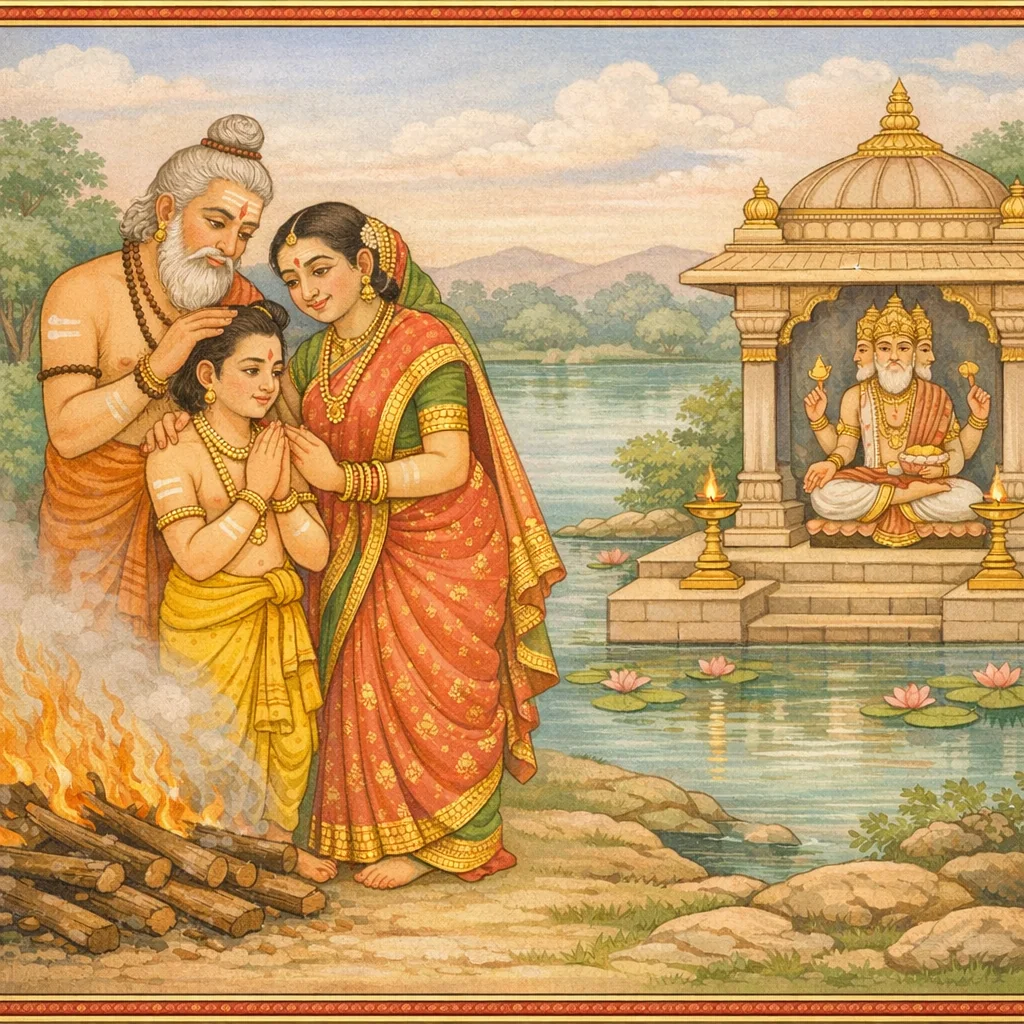
The chapter begins with brāhmaṇas asking Sūta about the sage Mārkaṇḍeya, and about the place where Brahmā (Pitamaha) was established for worship and where the sage’s āśrama lay. Sūta recounts how the ṛṣi Mṛkaṇḍu lived near Camatkārapura and was blessed with a radiant son, Mārkaṇḍeya, but a brāhmaṇa skilled in physiognomy foretold that the child would die within six months. Mṛkaṇḍu trained the boy in disciplined conduct, especially the reverent salutation of wandering brāhmaṇas and sages. As the child repeatedly bowed, many ṛṣis blessed him with “long life,” yet Vasiṣṭha warned that he would die on the third day, raising a crisis about the truth of blessings against the force of destiny. The sages agreed that only Brahmā could avert the ordained death; they journeyed to Brahmaloka, praised Brahmā with Vedic hymns, and presented the matter. Brahmā granted the boy freedom from old age and death and sent them back, instructing that the father must not perish of grief before seeing his son. Returning, the sages left the boy near the āśrama at Agnitīrtha and continued their pilgrimage. Mṛkaṇḍu and his wife, thinking the child lost and remembering the prophecy, prepared for self-immolation in sorrow, but the boy came back and told of the sages’ deed and Brahmā’s boon. In gratitude Mṛkaṇḍu honored the sages, who prescribed a fitting return: install Brahmā at that very spot and worship Him, where the sages and other brāhmaṇas would also worship. The place was named Bālasakhya (“friend of children”) and is praised as a boon for children—curing illness, dispelling fear, and protecting from disturbances of graha/bhūta/piśāca. The phalaśruti adds that even simple bathing there with faith yields lofty spiritual attainment, and that bathing in the month of Jyeṣṭha grants freedom from affliction for a full year.
Shlokas
Verse 1
। ब्राह्मणा ऊचुः । मार्कंडेन कदा तत्र स्थापितः प्रपितामहः । कस्मिन्स्थाने कृतस्तेन स्वाश्रमो मुनिना वद
The Brāhmaṇas said: “When did Mārkaṇḍeya establish the ‘Prapitāmaha’ there? And in what place did that sage build his own hermitage? Tell us.”
Verse 2
सूत उवाच । मृकण्डाख्यो द्विजश्रेष्ठ आसीद्वेदविदां वरः । चमत्कारपुराभ्याशेवानप्रस्याश्रमे स्थितः
Sūta said: “There was a foremost Brāhmaṇa named Mṛkaṇḍu, the best among the knowers of the Veda. Near Camatkārapura he dwelt in a vānaprastha hermitage, the forest-dweller’s āśrama.”
Verse 3
शांतात्मा नियमोपेतश्चकार सुमहत्तपः । तस्यैवं वर्तमानस्य वानप्रस्थस्य चाश्रमे
Calm-souled and disciplined, he performed mighty austerities. While that vānaprastha thus lived in his hermitage—
Verse 4
पश्चिमे वयसि प्राप्ते पुत्रो जज्ञे सुशोभनः । सर्वलक्षणसंपूर्णः पूर्णचंद्रसमप्रभः
When he had reached the later stage of life, a most splendid son was born—endowed with every auspicious mark, radiant like the full moon.
Verse 5
मार्कंड इति नामाऽथ तस्य चक्रे पिता स्वयम् । सोऽतीव ववृधे बालस्तस्मिन्नाश्रम उत्तमे
Then his father himself gave him the name “Mārkaṇḍa”. The child grew exceedingly in that excellent hermitage.
Verse 6
शुक्लपक्षं समासाद्य तारापतिरिवांबरे । वर्धमानस्य तस्यैवमतीताः पंच वत्सराः । बालक्रीडाप्रसक्तस्य पितुरुत्सङ्गवर्तिनः
As the bright fortnight waxes like the lord of stars in the sky, so the boy grew; thus five years passed—while he delighted in childish play and remained upon his father’s lap.
Verse 7
कस्यचित्त्वथ कालस्य कश्चित्तत्र समागतः । सामुद्रिकस्य कृत्स्नस्य वेत्ता ज्ञानविधानभू
Then, after some time, someone arrived there—a master who knew the entire science of sāmudrika (physiognomy), a wellspring of systematic knowledge.
Verse 8
स तं शिशुं समालोक्य नखाग्रान्मूर्द्धजावधिम् । विस्मयोत्फुल्लनयन ईषद्धास्यमथाऽकरोत्
He looked over the child from the tips of the nails up to the hair on the head; his eyes widened in astonishment, and then he gave a slight smile.
Verse 9
मृकंडोऽपि समालोक्य ज्ञानिनं सस्मिताननम् । पप्रच्छ विनयोपेतः किंचित्तुष्टेन चेतसा
Mṛkaṇḍu too, seeing the wise man with a gently smiling face, respectfully questioned him, his heart somewhat pleased and composed.
Verse 10
मृकण्ड उवाच । कस्मात्त्वं विप्रशार्दूल वीक्ष्येमं मम दारकम् । सुचिरं विस्मयाविष्टस्ततोऽभूः सस्मिताननः
Mṛkaṇḍu said: “O tiger among brāhmaṇas, why is it that, upon looking at this child of mine, you remained for a long time overcome with wonder, and then became smiling-faced?”
Verse 11
सूत उवाच । असकृत्तेन संपृष्टः सकृद्ब्राह्मणसत्तमः । ततश्च कथयामास हास्यकारणमेव हि
Sūta said: Being questioned repeatedly by him, the excellent brāhmaṇa at last spoke, explaining indeed the very cause of his smile.
Verse 12
ब्राह्मण उवाच । लक्षणानि शिशोरस्य दृश्यंते यानि सन्मुने । गात्रस्थानि भवेत्सत्यं तैः पुमानजरामरः
The brāhmaṇa said: “O noble sage, the bodily marks seen upon this child—if they truly remain fixed in their proper places—signify a man who will be free from aging and death.”
Verse 13
अस्य भावि पुनश्चाऽस्माद्दिवसान्निधनं शिशोः । षड्भिर्मासैर्न सन्देहः सत्यमेतन्मयोदितम्
“Yet, from this very day, this child is destined to die again—within six months, without doubt. This is the truth as I have declared.”
Verse 14
एवं ज्ञात्वा द्विजश्रेष्ठ कुरुष्वाऽस्य हितं च यत् । इह लोके परे चैव बालकस्य ममाऽज्ञया
“Knowing this, O best of the twice-born, do what is truly beneficial for this boy—both in this world and in the next—according to my instruction.”
Verse 15
एवमुक्त्वा स विप्रेंद्रो जगामाऽभीप्सितां दिशम् । मृकण्डोऽपि ततस्तस्य चक्रे मौंजीनिबन्धनम्
Having spoken thus, that chief of brāhmaṇas went in the direction he desired. Then Mṛkaṇḍu too performed for his son the tying on of the muñja girdle—the sacred rite of initiation.
Verse 16
अकालेऽपि कुमारस्य किंचिद्ध्यात्वा निजे हृदि । कारणं कारणज्ञः स ततः प्रोवाच तं सुतम्
Though it was before the usual time for the boy, he reflected briefly within his heart; knowing the hidden cause, he then spoke to his son.
Verse 17
यं कं चिद्वीक्षसे पुत्र भ्रममाणं द्विजोत्तमम् । तस्यावश्यं त्वया कार्यं विनयादभि वादनम्
My son, whichever excellent brāhmaṇa you may see wandering about, you must surely offer him humble and respectful salutations.
Verse 19
एवं तस्य व्रतस्थस्य षण्मासा दिवसैस्त्रिभिः । हीनाः स्युर्ब्राह्मणेंद्राणां नमस्कारपरस्य च
Thus, for one steadfast in his vow and devoted to salutations, by the grace of the foremost brāhmaṇas, six months were shortened by three days.
Verse 20
तान्दृष्ट्वा स मुनीन्सर्वान्नमश्चक्रे मुनेः सुतः । दीर्घायुर्भव तैरुक्तः सर्वैरपि पृथक्पृथक्
Seeing all those sages, the sage’s son bowed to them; and each of them, one by one, blessed him, saying, “May you be long-lived.”
Verse 21
अथ तं बालभावेन कौतुकाद्ब्रह्मचारिणः । चिरं दृष्ट्वाऽब्रवीद्वाक्यं वसिष्ठो मुनिपुंगवः
Then Vasiṣṭha, foremost among sages, gazed long at that brahmacārin with childlike simplicity and curiosity, and spoke these words.
Verse 22
सर्वैरेष शिशुः प्रोक्तो दीर्घा युरिति सादरम् । तृतीयेऽह्नि पुनः प्राणांस्त्यक्ष्यत्ययमसंशयः
All of you have affectionately declared this child to be “long-lived”; yet on the third day from now he will surely relinquish his life-breath—of this there is no doubt.
Verse 23
तन्न युक्तं भवेदीदृगस्माकं वचनं द्विजाः । तस्मात्तत्क्रियतां कर्म येनायं स्याच्चिरायुधृक्
O twice-born ones, it is not fitting that our words should turn out thus. Therefore let a deed be done by which this boy may bear life for a long time.
Verse 24
ततो मिथः समालोच्य सर्वे ते मुनिपुंगवाः । प्रोचुर्न जीवनोपायो भवेन्मुक्त्वा पितामहम्
Then, after consulting among themselves, all those foremost sages said: “There is no means of saving his life—except by approaching Pitāmaha (Brahmā).”
Verse 25
तस्मात्तस्य पुरो नीत्वा बालोऽयं क्षीणजीवितः । क्रियतां तस्य वाक्येन यथा स्याच्चिरजीवभाक्
Therefore, taking this boy—whose lifespan is dwindling—into his presence, let it be done according to his command, so that the child may become a sharer in long life.
Verse 26
ततस्तु ते समादाय सत्वरं ब्रह्मचारिणम् । ब्रह्मलोकं समाजग्मुस्त्यक्त्वा तीर्थपराक्रमम्
Then they quickly took that brahmacārin and went to Brahmaloka, setting aside their ongoing pilgrimage endeavors and sacred journeys.
Verse 27
ततः प्रणम्य तं देवं वेदोक्तैः स्तवनैर्द्विजाः । स्तुत्वाऽथ संविधे तस्य निषेदुस्तदनन्तरम्
Then the twice-born sages bowed to that god and praised him with hymns spoken in the Vedas; having thus extolled him, they sat down in his presence thereafter.
Verse 28
तेषामनंतरं सोऽपि नमश्चक्रे पितामहम् । बालः प्रोक्तश्च दीर्घायुर्भवेति च स्वयंभुवा
After them, the boy too bowed in reverence to Pitāmaha (Brahmā). And the Self-born Lord himself declared: “May this child be long-lived.”
Verse 29
अथोवाच मुनीन्सर्वान्विश्रांतान्पद्मयोनिजः । कुतो यूयं समायाताः सांप्रतं केन हेतुना
Then Padmayonija (Brahmā), seeing all the sages at rest, spoke to them: “From where have you come now, and for what reason?”
Verse 30
प्रोच्यतां चापि यत्कृत्यं युष्माकं क्रियतेऽधुना । मद्गृहे संप्रयातानां कोऽयं बालोऽपि सद्व्रती
Pray tell me also what duty or purpose brings you here now. And since you have come into my home—who is this boy, so steadfast in good vows and discipline?
Verse 31
मुनय ऊचुः । तीर्थयात्राप्रसंगेन भ्रममाणा महीतलम् ः । चमत्कारपुराभ्याशे वयं प्राप्ताः पितामह
The sages said: “While wandering over the face of the earth on pilgrimage to the sacred tīrthas, we have arrived, O Grandfather, near Camatkārapura.”
Verse 32
तत्रानेन वयं देव बालकेनाऽभिवादिताः । क्रमात्सर्वेरपि प्रोक्तो दीर्घायुरिति सादरम्
There, O Lord, we were greeted with reverence by this boy; and, one after another, each of us affectionately blessed him, saying, “May you be long-lived.”
Verse 33
एतस्य तु पुनः शेषमायुषो दिवसत्र यम् । विद्यते विबुधश्रेष्ठ व्रीडितास्तेन वै वयम्
Yet, O best among the gods, only three days of his lifespan remain. Therefore we are truly ashamed, for we had blessed him with long life.
Verse 34
ततश्चैनं समादाय वयं प्राप्तास्तवांतिकम् । भवताऽपि तथा प्रोक्तो दीर्धायु र्बालकोऽस्त्वयम्
Therefore, taking him with us, we have come into your presence. Do you also declare the same: “Let this boy be long-lived.”
Verse 35
तस्माद्यथा वयं सत्या भवता सह पद्मज । भवाम कुरु तत्कृत्यमेतस्मादागता वयम्
Therefore, O Lotus-born, so that we may be truthful together with you, do what must be done; for this very purpose we have come.
Verse 36
सूत उवाच । तेषां तद्वचनं श्रुत्वा मुनीनां पद्मसंभवः । प्रोवाच प्रहसन्वाक्यं समादाय च बालकम्
Sūta said: Having heard the words of those sages, the Lotus-born (Brahmā) took the boy with him and, smiling, spoke these words.
Verse 37
मत्प्रसादादयं बालोजरामृत्युवि वर्जितः । भविष्यति न संदेहो वेदविद्याविचक्षणः
“By my grace, this boy shall be free from old age and death—of this there is no doubt—and he will become discerning in Vedic knowledge and learning.”
Verse 38
तस्मात्प्राग्धरणीपृष्ठं व्रजध्वं मुनिसत्तमाः । बालमेनं समादाय तस्मिन्नेवास्य मंदिरं
Therefore, O best of sages, return to the surface of the earth. Take this boy with you, and in that very place establish his dwelling.
Verse 39
यावदस्य पिता वृद्धः पुत्रदर्शनविह्वलः । न याति निधनं सार्धं धर्मपत्न्या द्विजोत्तमाः
Until his aged father—overwhelmed with longing to behold his son—does not pass into death, together with his lawful wife, O best of the twice-born.
Verse 40
अथाऽयाताश्च तं बालं सर्वे ते मुनि सत्तमाः । आगत्य वसुधापृष्ठं तस्यैवाश्रमसंनिधौ
Then all those foremost sages came to that boy; and upon reaching the surface of the earth, near that very hermitage, they set him down there.
Verse 41
अमुंचन्नग्नितीर्थे तं समाभाष्य ततः परम् । तीर्थयात्राकृते पश्चाज्जग्मुरन्यत्र सत्वरम्
Leaving him at Agnitīrtha and speaking to him thereafter, they hurried on elsewhere to continue their pilgrimage to the sacred tīrthas.
Verse 42
एतस्मिन्नंतरे विप्रो मृकंडः सुतवत्सलः । नापश्यत्स्वसुतं पश्चाद्विललाप सुदुःखितः
Meanwhile, the brāhmaṇa Mṛkaṇḍa, deeply affectionate toward his son, did not see his own child; afterwards, overwhelmed with sorrow, he lamented.
Verse 43
अहो मे तनयोऽभीष्टः कथमद्य न दृश्यते । कूपांतः पतितः किं नु किं व्यालैर्वा निपातितः
Alas! My beloved son—why is he not seen today? Has he fallen into a well, or has he been struck down by wild beasts?
Verse 44
कृत्वा मां दुःखसंतप्तं मातरं चापि पुत्रकः । प्रस्थितो दीर्घमध्वानं विरुद्धं कृतवान्विधिः
Leaving me—and the mother as well—burning with sorrow, the child has set out on a long road; fate has acted contrary to what is right.
Verse 45
पश्य ब्राह्मणि पापेन मया दुष्कृतकारिणा । न बालस्य मुखं दृष्टं प्रस्थितस्य यमालये
See, O brāhmaṇī: because of sinful me—one who has done wrong—I have not even seen the boy’s face as he has gone forth to Yama’s abode.
Verse 46
कथितं ज्ञानिना तेन मम पूर्वं महात्म ना । षङ्भिर्मासैः सुतस्तेऽयं देहत्यागं करिष्यति
Earlier, that realized great soul had told me: “Within six months, this son of yours will abandon his body.”
Verse 47
सोऽहं पुत्रस्य दुःखेन साधयिष्ये हुताशनम् । यावच्छोकाग्निना कायो दह्यते न वरान ने
Therefore I, stricken by grief for my son, shall prepare the sacrificial fire; for my body is already being burned by the fire of sorrow, O fair-faced one.
Verse 48
ब्राह्मण्युवाच । ममापि मतमेतद्धि यत्त्वया परिकीर्तितम् । तत्किं चिरयसि ब्रह्मञ्छीघ्रं दारूणि चानय
The brāhmaṇī said: “Indeed, this is my view as well, just as you have declared. Why do you delay, O brāhmaṇa? Quickly bring the firewood too.”
Verse 49
येनाऽहं भवता सार्धं प्रवेक्ष्यामि हुताशनम् । पुत्रशोकेन संतप्ता सुभृशं दुःखशांतये
“So that I, scorched by grief for my son, may enter the fire (Hutāśana) together with you—seeking the complete pacification of my suffering.”
Verse 50
सूत उवाच । एवं तयोः प्रवदतोर्दंपत्योर्द्विज सत्तमाः । आजगामाऽथ संहृष्टः स बालः सन्निधिं तयोः
Sūta said: While that Brahmin couple were thus speaking, O best of the twice-born, the boy came there in great joy and approached their presence.
Verse 51
तं दृष्ट्वा ब्राह्मणो हृष्टो ब्राह्मण्या सहितस्तदा । आनंदाश्रुप्लुताक्षोऽथ सम्मुख स्तमुपाद्रवत्
Seeing him, the Brahmin—together with his wife—rejoiced. Then, his eyes flooded with tears of happiness, he ran straight toward the boy.
Verse 52
भूयोभूयः परिष्वज्य सभार्यः पृष्टवांस्तदा । क्व गतः स्वाश्रमाद्वत्स चिरात्कस्मादिहाऽगतः
Embracing him again and again, the Brahmin—along with his wife—asked: “Dear child, where did you go from our hermitage (āśrama)? After so long, why have you come here?”
Verse 53
शोकार्णवे परिक्षिप्य मां सभार्यं वयोऽधिकम् । तन्मा पुत्रक भूयस्त्वमीदृक्कर्म करिष्यसि
You cast me—together with your mother—into an ocean of grief, though we are advanced in age. Therefore, dear son, never again do such a deed.
Verse 54
मार्कंडेय उवाच । अत्राऽद्य मुनयः प्राप्ता मया ते चाभिवादिताः । क्रमेण विनयात्तात स्मरमाणेन ते वचः
Mārkaṇḍeya said: “Today, sages have arrived here, and I duly paid them homage in proper order, with humility, O father—remembering your words.”
Verse 55
दीर्घायुर्भव तैरुक्तः सर्वैरेव द्विजोत्तमैः । दृष्ट्वा मां विस्मयाविष्टैर्बालकं व्रतिनं विभो
All those best of twice-born said to me, “Be long-lived.” Seeing me—a mere boy, yet a vowed ascetic—they were filled with wonder, O revered one.
Verse 56
अथ तात समालोक्य तेषां मध्यगतो मुनिः । वसिष्ठस्तान्मुनीन्सर्वान्प्रोवाच प्रहसन्निव
Then, O father, the sage Vasiṣṭha—standing in their midst—looked at them and spoke to all those sages, as though smiling.
Verse 57
वसिष्ठ उवाच । दीर्घायुर्भव यः प्रोक्तो युष्माभिर्मुनिपुंगवाः । तृतीये दिवसे सोऽयं बालः पंचत्वमेष्यति
Vasiṣṭha said: “O foremost of sages, the ‘Be long-lived’ blessing that you pronounced—on the third day this boy will nonetheless meet death.”
Verse 58
ततस्ते मुनयो भीता असत्यात्तात तत्क्षणात् । समादाय ययुस्तत्र यत्र ब्रह्मा व्यवस्थितः
Then those sages, fearing falsehood, O father, at that very moment gathered themselves and went to where Brahmā was present.
Verse 59
नमस्कृतेन तेनाऽपि प्रोक्तोऽहं पद्मयोनिना । दीर्घायुर्भव पृष्टश्च कुतस्त्वमिह चागतः
Though I bowed in reverence, Padmayoni (Brahmā) addressed me: “Be long-lived,” and he also asked, “From where have you come here?”
Verse 60
अथ तैर्मुनिभिः सर्वैर्वृत्तांतं तस्य कीर्तितम् । आशीर्वादोद्भवं प्रोक्तं ततो वयमिहागताः
Then all those sages recounted the entire matter about him, declaring that it had arisen from a blessing; therefore we have come here.
Verse 61
यथाऽयं बालको देव त्वत्प्रसादात्पितामह । दीर्घायुर्जायते लोके तथा त्वं कर्तुमर्हसि
O Lord—O Grandfather (Brahmā)—by your grace, just as this child may become long-lived in the world, so you are able to make it so.
Verse 62
ततोऽहं ब्रह्मणा तात जरामरणवर्जितः । विहितः प्रेषितस्तूर्णं स्वगृहं प्रति तैः समम्
Then, dear one, Brahmā ordained me to be free from old age and death, and promptly dispatched me—together with them—toward my own home.
Verse 63
ते तु मां मुनयोत्रैव प्रमुच्याश्रमसन्निधौ । स्नानार्थं विविशुः सर्वे ह्रदेऽत्रैव सुशोभने
But those sages, leaving me there near the hermitage, all entered this splendid lake here for the sake of sacred bathing.
Verse 64
तच्छ्रुत्वा वचनं तस्य मृकंडो हर्षसंयुतः । प्रययौ सत्वरं तत्र यत्र ते मुनयः स्थिताः
Hearing his words, Mṛkaṇḍa—filled with joy—hurriedly went to the place where those sages were staying.
Verse 65
प्रणम्य तान्मुनीन्सर्वान्कृताञ्जलिपुटः स्थितः । प्रोवाच वः प्रसादेन कुलं मे वृद्धिमागतम्
Having bowed to all those sages, standing with joined palms, he said: “By your favor, my lineage has come to prosperity.”
Verse 66
साधु प्रोक्तमिदं कैश्चिदाचार्यैर्मुनिसत्तमाः । साधुलोकं समाश्रित्य विख्यातं च जगत्त्रये
O best of sages, this has been well spoken by certain teachers; relying upon the community of the righteous, it is renowned in the three worlds.
Verse 67
साधूनां दर्शनं पुण्यं तीर्थभूता हि साधवः । तीर्थं फलति कालेन सद्यः साधुसमागमः
The mere sight of the holy is meritorious, for the righteous themselves are living tīrthas. A pilgrimage-place yields fruit in time, but meeting sādhus bears fruit immediately.
Verse 68
तस्मादतिथयः प्राप्ता यूयं सर्वेऽद्य मे गृहम् । प्रकरोमि किमातिथ्यं प्रोच्यतां द्विजसत्तमाः
Therefore, since you have come as guests, all of you are today within my home. What hospitality shall I offer? Tell me, O best among the twice-born.
Verse 69
ऋषय ऊचुः । एतदेव मुनेऽस्माकमातिथ्यं कोटिसंमितम् । अल्पायुरपि ते बालो यज्जातो मृत्युवर्जितः
The sages said: “This alone, O sage, is hospitality to us worth millions—that though your child was destined for a short life, he has been born free from Death.”
Verse 70
मृकण्ड उवाच । मृत्युनाऽलिंगितं बालमस्मदीयं मुनीश्वराः । भवद्भिरद्य संरक्ष्य कुलं कृत्स्नं समुद्धृतम्
Mṛkaṇḍa said: “O lordly sages, Death had already clasped my child; yet today, protected by you, my entire lineage has been rescued and raised up.”
Verse 71
ब्रह्मघ्ने च सुरापे च चौरे भग्नव्रते तथा । निष्कृतिर्विहिता सद्भिः कृतघ्ने नाऽस्ति निष्कृतिः
“For the slayer of a brāhmaṇa, for the drinker of intoxicants, for a thief, and likewise for one who breaks a vow—expiations have been laid down by the good; but for the ungrateful person, there is no expiation.”
Verse 72
तस्मात्कृतघ्नतादोषो न स्यान्मम मुनीश्वराः । यथा कार्यं भवद्भिश्च तथा सर्वैर्न संशयः
“Therefore, O best of sages, let not the fault of ingratitude be mine. Whatever ought to be done by you—let it be done accordingly by all, without doubt.”
Verse 73
ऋषय ऊचुः । यदि प्रत्युपकाराय मन्यसे त्वं द्विजोत्तम । गृहं कुरुष्व नो वाक्याद्देवस्य परमेष्ठिनः
The sages said: “If you would make a worthy return, O best of the twice-born, then—by our word—establish here the abode of the god Parameṣṭhin.”
Verse 74
येनाऽयं बालकस्तेऽद्य कृतो मृत्युविवर्जितः । तस्मात्स्थापय तीर्थेन देवं तं प्रपितामहम्
“Since by him this child has today been made free from Death, therefore establish at this sacred ford that deity—Prapitāmaha (Pitāmaha, Brahmā).”
Verse 75
पुत्रेण सहितः पश्चादाराधय दिवानिशम् । वयमेव त्वया सार्धं तं च देवं पितामहम्
“Afterwards, together with your son, worship him day and night. We too, along with you, will worship that god Pitāmaha.”
Verse 76
नित्यं प्रपूजयिष्यामस्तथान्येऽपि द्विजोत्तमाः । बालेनाऽनेन सार्धं ते सख्यमत्र स्थितं यतः । बालसख्यमिति ख्यातं नाम्ना तेन भविष्यति
“We will worship him constantly—and other best of twice-born will do so as well. Since here your friendship with this child has become established, it will become renowned by that name as ‘Bālasakhya’.”
Verse 77
तीर्थमन्यैरिति ख्यातं बालकानां हितावहम् । रोगार्तानां भयार्तानामस्माकं वचनात्सदा
“This sacred place will also be famed by others as a tīrtha that brings welfare to children—always, by our declaration—for those afflicted by disease and for those afflicted by fear.”
Verse 78
अस्मिंस्तीर्थे शिशुं लोकाः स्नापयिष्यंति ये द्विज । रोगार्तं वा भयार्तं वा पीडितं वा ग्रहादिभिः
O twice-born, those people who bathe a child in this tīrtha—whether the child is afflicted by disease, afflicted by fear, or tormented by grahas and the like—
Verse 79
भविष्यति न संदेहः सर्वदोषविवर्जितः । पितामहप्रसादेन तथाऽस्मद्वचनाद्द्विज
—there is no doubt: he will become free from every defect and affliction, by the grace of Pitāmaha and also by our word, O twice-born.
Verse 80
ये पुनर्मानुषा विप्र निष्कामाः श्रद्धयान्विताः । स्नानमात्रं करिष्यंति ते यांति परमां गतिम्
But those people, O brāhmaṇa, who are free from selfish desire and endowed with faith—if they perform even the mere act of bathing (at this sacred ford), they attain the highest state.
Verse 81
एवमुक्त्वाथ ते सर्वे मुनयः शंसितव्रताः । तमामंत्र्य मुनिं जग्मुस्तीर्थान्यन्यानि सत्वराः
Having spoken thus, all those sages—renowned for their praised observances—took leave of that sage and swiftly went on to other sacred bathing-places.
Verse 82
मृकण्डोऽपि सपुत्रश्च तस्मिन्स्थाने पितामहम् । स्थापयामास संहृष्टो ज्येष्ठे ज्येष्ठास्थिते विधौ
Mṛkaṇḍu too, together with his son, joyfully established Pitāmaha (Brahmā) in that very place, when the proper rite was performed in the month of Jyeṣṭha, under the Jyeṣṭhā lunar asterism.
Verse 83
ततश्चाऽराधयामास दिवारात्रमतंद्रितः । सपुत्रः श्रद्धया युक्तः संप्राप्तश्च परां गतिम्
Thereafter, worshipping tirelessly day and night, he—together with his son and endowed with śraddhā (faith)—attained the supreme state.
Verse 84
सूत उवाच । ततःप्रभृति तत्तीर्थं बालसख्यमिति स्मृतम् । पावनं सर्वजंतूनां बालानां रोगनाशनम्
Sūta said: From that time onward, that tīrtha has been remembered as ‘Bālasakhya’. It purifies all beings and destroys the diseases of children.
Verse 85
ज्येष्ठे ज्येष्ठासु यो बालस्तत्र स्नानं समाचरेत् । न स पीडामवाप्नोति यावत्संवत्सरं द्विजाः
O twice-born ones, if a child bathes there in the month of Jyeṣṭha, on the days of the Jyeṣṭhā nakṣatra, that child suffers no affliction for a full year.
Verse 86
ग्रहभूतपिशाचानां शाकिनीनां विशेषतः । अगम्यः सर्वदुष्टानां तथाऽन्येषां प्रजायते
In particular, it makes one inaccessible to grahas, bhūtas, piśācas, and śākinīs; likewise, one becomes unassailable to all other malevolent forces.