Adhyaya 100
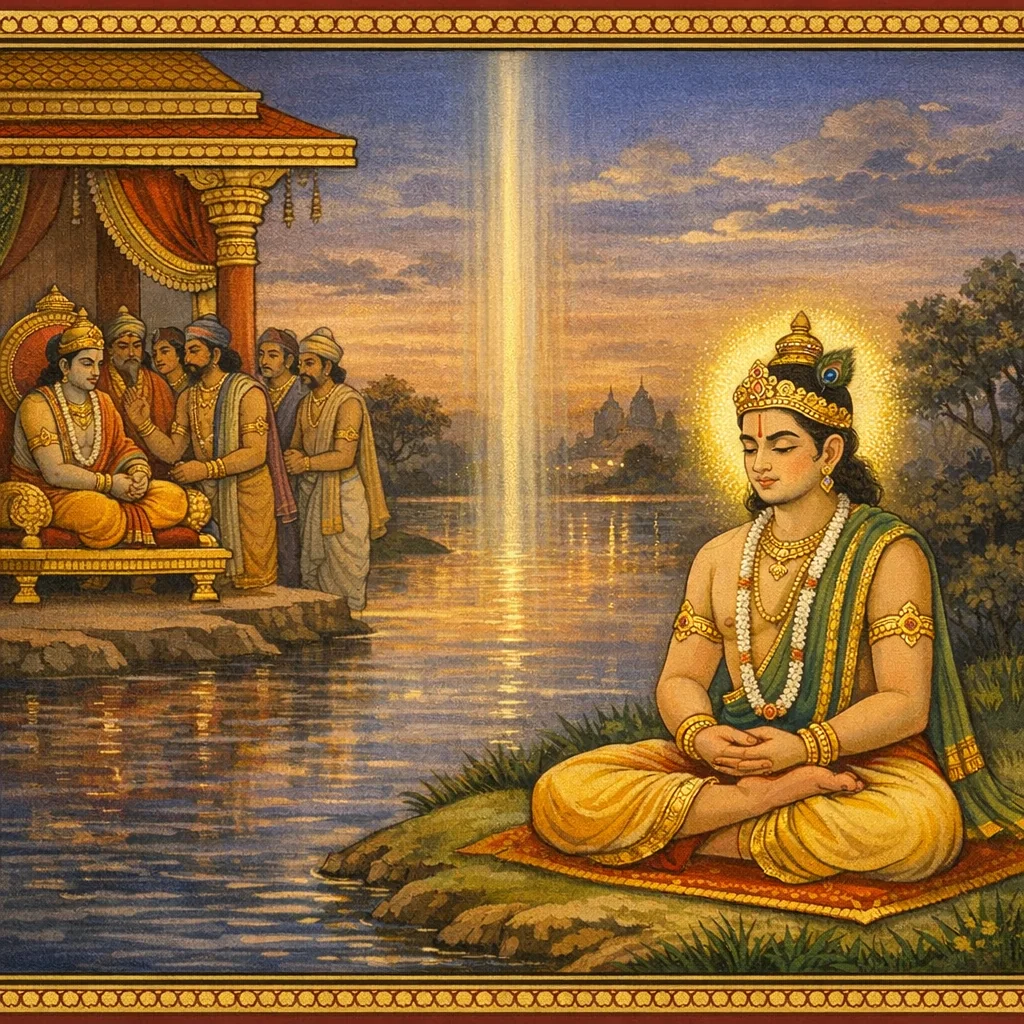
After the sage Durvāsas departs, a dharma-crisis arises: Lakṣmaṇa comes before Rāma with a sword and asks to be executed so that Rāma’s earlier pledge and royal truthfulness remain unbroken. Remembering his self-made vow and grieving inwardly, Rāma consults ministers and dharma-versed brāhmaṇas. The decision is not literal killing but enforced renunciation: Rāma commands Lakṣmaṇa to leave the realm at once and forbids any further meeting, for in the case of sādhus abandonment is held equal to death. Without speaking to his family, Lakṣmaṇa goes to the Sarayū, performs purification, assumes a yogic posture, and releases his tejas/self through the “brahma-door” (brahma-dvāra). His body falls inert on the riverbank. Rāma laments intensely, recalling Lakṣmaṇa’s past service and protection in the forest; ministers propose rites, but a celestial voice declares that for one established in brahma-jñāna and formal renunciation, fire-offering and cremation are not fitting. It is proclaimed that Lakṣmaṇa has reached Brahman’s abode through yogic exit; Rāma refuses to return home without him, speaks of installing Kuśa in rulership, and turns to allied kings—especially Vibhīṣaṇa in Laṅkā and the vānaras—to take counsel and prevent future disorder. Thus the chapter intertwines the tīrtha of Sarayū, the ethics of royal vows, and the ritual norms of renunciants.
Shlokas
Verse 1
सूत उवाच । एवं भुक्त्वा स विप्रर्षिर्वांछया राममंदिरे । दत्ताशीर्निर्गतः पश्चादामंत्र्य रघुनंदनम्
Sūta said: Thus, having eaten to his satisfaction in the temple of Rāma, that brāhmaṇa-sage bestowed blessings and then departed, taking leave of Raghunandana (Rāma).
Verse 2
अथ याते मुनौ तस्मिन्दुर्वाससि तदंतिकात् । लक्ष्मणः खङ्गमादाय रामदेवमुवाच ह
When that sage Durvāsā had departed from that place, Lakṣmaṇa took up a sword and spoke to Lord Rāma.
Verse 3
एतत्खङ्गं गृहीत्वाशु मां प्रभो विनिपातय । येन ते स्यादृतं वाक्यं प्रतिज्ञातं च यत्पुरा
“Taking this sword, quickly strike me down, O Lord—so that your word may remain true, and so that the promise you made long ago is fulfilled.”
Verse 4
ततो रामश्चिरात्स्मृत्वा तां प्रतिज्ञां स्वयं कृताम् । वधार्थं संप्रविष्टस्य समीपे पुरुषस्य च
Then Rāma, after some time, remembered the vow he had made himself: that whoever entered his presence with the intent to be slain would surely be put to death.
Verse 5
ततोऽतिचिंतयामास व्याकुलेनांतरात्मना । बाष्पव्याकुलनेत्रश्च निःष्वसन्पन्नगो यथा
Then he fell into deep contemplation, his inner self distressed; his eyes were clouded with tears, and he sighed like a serpent.
Verse 6
तं दीनवदनं दृष्ट्वा निःष्वसंतं मुहुर्मुहुः । भूयः प्रोवाच सौमित्रिर्विनयावनतः स्थितः
Seeing him with a sorrowful face, repeatedly sighing, Saumitrī (Lakṣmaṇa), standing with humble deference, spoke again.
Verse 7
एष एव परो धर्मो भूपतीनां विशेषतः । यथात्मीयं वचस्तथ्यं क्रियते निर्विकल्पितम्
This indeed is the highest dharma—especially for kings: that one’s own word, once given as truth, is carried out without hesitation or alternative.
Verse 9
तस्मात्त्वया प्रभो प्रोक्तं स्वयमेव ममाग्रतः । तस्यैव देवदूतस्य तारनादेन कोपतः
Therefore, O lord, you yourself spoke it in my very presence—about that divine messenger—whose piercing cry, in wrath, set these events in motion.
Verse 10
तदहं चागतस्तात भयाद्दुर्वाससो मुनेः । निषिद्धोऽपि त्वयातीव तस्माच्छीघ्रं तु घातय
Thus I have come, dear one, out of fear of the sage Durvāsas. Though you forbade it most sternly, therefore strike me quickly.
Verse 11
ततः संमंत्र्य सुचिरं मंत्रिभिः सहितो नृपः । ब्राह्मणैर्धर्मशास्त्रज्ञैस्तथान्यैर्वेदपारगैः
Then the king, together with his ministers, deliberated for a long time with brāhmaṇas skilled in Dharmaśāstra, and with others who had mastered the Vedas.
Verse 12
प्रोवाच लक्ष्मणं पश्चाद्विनयावनतं स्थितम् । वाष्पक्लिन्नमुखो रामो गद्गदं निःश्वसन्मुहुः
Afterwards Rāma spoke to Lakṣmaṇa, who stood bowed in humility; Rāma’s face was wet with tears, his voice choked, and he sighed again and again.
Verse 13
व्रज लक्ष्मण मुक्तस्त्वं मया देशातरं द्रुतम् । त्यागो वाथ वधो वाथ साधूनामुभयं समम्
Go, Lakṣmaṇa—released by me—swiftly to another land. For the righteous, whether abandonment or death, both are alike when borne for dharma’s sake.
Verse 14
न मया दर्शनं भूयस्तव कार्यं कथंचन । न स्थातव्यं च देशेऽपि यदि मे वांछसि प्रियम्
You must not seek to be seen by me again in any way; and you must not remain even in this land—if you desire what is dear to me.
Verse 15
तस्य तद्वचनं श्रुत्वा प्रणिपत्य ततः परम् । निर्ययौ नगरात्तस्मात्तत्क्षणादेव लक्ष्मणः
Hearing his words, Lakṣmaṇa bowed in reverence and, that very moment, departed from that city.
Verse 16
अकृत्वापि समालापं केनचिन्निजमंदिरे । मात्रा वा भार्यया वाथ सुतेन सुहृदाथवा
Without speaking to anyone at all in his own home—whether his mother, his wife, his son, or even a dear friend—
Verse 17
ततोऽसौ सरयूं गत्वाऽवगाह्याथ च तज्जलम् । शुचिर्भूत्वा निविष्टोथ तत्तीरे विजने शुभे
Then he went to the Sarayū, bathed in her waters, and, purified, sat upon that auspicious and solitary riverbank.
Verse 18
पद्मासनं विधायाथ न्यस्यात्मानं तथात्मनि । ब्रह्मद्वारेण तं पश्चात्तेजोरूपं व्यसर्जयत्
Then, assuming the lotus posture and fixing the self within the Self, he released that radiant life-breath through the Brahma-door at the crown.
Verse 19
अथ तद्राघवो दृष्ट्वा महत्तेजो वियद्गतम् । विस्मयेन समायुक्तोऽचिन्तयत्किमिदं ततः
Seeing that great radiance ascend into the sky, Rāghava was filled with wonder and thought, “What indeed is this?”
Verse 20
अथ मर्त्ये परित्यक्ते तेजसा तेन तत्क्षणात् । वैष्णवेन तुरीयेण भागेन द्विजसत्तमाः
At that very moment, when that radiance caused the mortal state to be cast off at once—O best of the twice-born—by the fourth Vaiṣṇava share belonging to Viṣṇu, his divine portion, he passed beyond.
Verse 21
पपात भूतले कायं काष्ठलोष्टोपमं द्रुतम् । लक्ष्मणस्य गतश्रीकं सरय्वाः पुलिने शुभे
Swiftly, Lakṣmaṇa’s body—bereft of its splendor—fell upon the earth like a piece of wood or a clod of soil, on the auspicious sandbank of the Sarayū.
Verse 22
ततस्तु राघवः श्रुत्वा लक्ष्मणं गतजीवितम् । पतितं सरितस्तीरे विललाप सुदुःखितः
Then Rāghava, hearing that Lakṣmaṇa’s life had departed and that he had fallen on the riverbank, lamented in profound sorrow.
Verse 23
स्वयं गत्वा तमुद्देशं सामात्यः ससुहृज्जनः । लक्ष्मणं पतितं दृष्ट्वा करुणं पर्यदेवयत्
Going himself to that spot, accompanied by ministers and friends, he saw Lakṣmaṇa fallen there and mourned with compassion.
Verse 24
हा वत्स मां परित्यज्य किं त्वं संप्रस्थितो दिवम् । प्राणेष्टं भ्रातरं श्रेष्ठं सदा तव मते स्थितम्
“Alas, dear one! Leaving me behind, why have you set forth to heaven? O best of brothers—beloved as my very life—ever steadfast in your resolve!”
Verse 25
तस्मिन्नपि महारण्ये गच्छमानः पुरादहम् । । अपि संधार्यमाणेन अनुयातस्त्वया तदा
Even in that great forest, when I departed from the city, you followed me then—enduring hardships and sustaining me.
Verse 26
संप्राप्तेऽपि कबंधाख्ये राक्षसे बलवत्तरे । त्वया रात्रिमुखे घोरे सभार्योऽहं प्ररक्षितः
Even when the mighty rākṣasa named Kabandha confronted us, in the dreadful onset of night you protected me—together with my wife.
Verse 28
येन शूर्पणखा ध्वस्ता राक्षसी सा च दारुणा । लीलयापि ममादेशात्सोयमेवंविधः स्थितः
By whose power Śūrpaṇakhā—that fierce rākṣasī—was destroyed, he now lies in such a state, even though it was done as if in play, merely by my command.
Verse 29
यद्बाहुबलमाश्रित्य मया ध्वस्ता निशाचराः । सोऽयं निपतितः शेते मम भ्राता ह्यनाथवत् ।
Relying on whose arm-strength I destroyed the night-roaming foes—this very brother of mine now lies fallen, as though bereft of all protection.
Verse 30
हा वत्स क्व गतो मां त्वं विमुच्य भ्रातरं निजम् । ज्येष्ठं प्राणसमं किं ते स्नेहोऽद्य विगतः क्वचित्
Alas, dear child—where have you gone, abandoning me, your own brother—your elder, dear as life itself? Has your affection today vanished somewhere?
Verse 31
सूत उवाच । एवं बहुविधान्कृत्वा प्रलापान्रघुनन्दनः । मातृभिः सहितो दीनः शोकेन महतान्वितः
Sūta said: “After uttering many such lamentations, Raghunandana—wretched with sorrow—remained with the mothers, overwhelmed by great grief.”
Verse 32
ततस्ते मंत्रिणस्तस्य प्रोचुस्तं वीक्ष्य दुःखितम् । विलपंतं रघुश्रेष्ठं स्त्रीजनेन समन्वितम्
Then his ministers, seeing him sorrow-stricken—the best of the Raghu line, lamenting amid the womenfolk—addressed him with counsel.
Verse 33
मंत्रिण ऊचुः । मा शोकं कुरु राजेन्द्र यथान्यः प्राकृतः स्थितः । कुरुष्व च यथेदं स्यात्सांप्रतं चौर्ध्वदैहिकम्
The ministers said: “O lord of kings, do not grieve like an ordinary man. Act now so that the proper post-funeral rites (ūrdhvadaihika) may be duly performed.”
Verse 34
नष्टं मृतमतीतं च ये शोचन्ति कुबुद्धयः । धीराणां तु पुरा राजन्नष्टं नष्टं मृतं मृतम्
“Those of poor understanding grieve for what is lost, dead, and gone. But for the steadfast, O king, what is lost is simply lost, and what is dead is simply dead.”
Verse 35
एवं ते मन्त्रिणः प्रोच्य ततस्तस्य कलेवरम् । लक्ष्मणस्य विलप्यौच्चैश्चन्दनोशीरकुंकुमैः
Thus having spoken, those ministers then, lamenting loudly, attended to Lakṣmaṇa’s body, anointing it with sandal, uśīra, and kuṅkuma.
Verse 36
कर्पूरागुरुमिश्रैश्च तथान्यैः सुसुगन्धिभिः । परिवेष्ट्य शुभैर्वस्त्रैः पुष्पैः संभूष्य शोभनैः
With camphor and aguru mingled, and with other sweet fragrances besides, they wrapped (the body) in auspicious cloth and adorned it with beautiful flowers.
Verse 37
चन्दनागुरुकाष्ठैश्च चितिं कृत्वा सुविस्तराम् । न्यदधुस्तस्य तद्गात्रं तत्र दक्षिणदिङ्मुखम्
Making a broad funeral pyre with sandalwood and aguru-wood, they placed his body upon it there, with the face turned toward the southern direction.
Verse 38
एतस्मिन्नंतरे जातं तत्राश्चर्यं द्विजोत्तमाः । तन्मे निगदतः सर्वं शृण्वंतु सकलं द्विजाः
In the meantime, O best of the twice-born, a wondrous event occurred there. Now hear from me, O brāhmaṇas, the entire account as I relate it.
Verse 39
यावत्तेंऽतः समारोप्य चितां तस्य कलेवरम् । प्रयच्छंति हविर्वाहं तावन्नष्टं कलेवरम्
Just as they were lifting his body onto the funeral pyre and were about to offer it to the fire—the bearer of oblations—at that very moment the body vanished.
Verse 40
एतस्मिन्नंतरे वाणी निर्गता गगनांगणात् । नादयंती दिशः सर्वाः पुष्पवर्षादनंतरम्
In that very interval, a celestial voice issued forth from the expanse of the sky, resounding through all directions, immediately after a shower of flowers.
Verse 41
रामराम महाबाहो मा त्वं शोकपरो भव । न चास्य युज्यते वह्निर्दातुं चैव कथंचन
“Rāma, Rāma, O mighty-armed one—do not be overcome by grief. It is in no way proper to consign him to the funeral fire.”
Verse 42
ब्रह्मज्ञानप्रयुक्तस्य संन्यस्तस्य विशेषतः । अग्निदानं न युक्तं स्यात्सर्वेषामपि योगिनाम्
“Especially for one established in Brahman-knowledge, and for a renunciate, the offering to fire is not appropriate—indeed, for yogins as a class it is not considered fitting.”
Verse 43
तवायं बांधवो राम ब्रह्मणः सदनं गतः । ब्रह्मद्वारेण चात्मानं निष्क्रम्य सुमहायशाः
“O Rāma, this kinsman of yours has gone to the abode of Brahmā. The greatly renowned one departed, releasing himself through the ‘Brahman-gate’.”
Verse 44
अथ ते मंत्रिणः प्रोचुस्तच्छ्रुत्वाऽकाशगं वचः । अशोच्यो यं महाराज संसिद्धिं परमां गतः । लक्ष्मणो गम्यतां शीघ्रं तस्मात्स्वभवने विभो
Then his ministers, having heard that utterance from the sky, said: “O great king, he is not to be mourned—he has attained the supreme perfection. Therefore, O lord, let Lakṣmaṇa be taken quickly from here to his own abode.”
Verse 45
चिन्त्यन्तां राजकार्याणि तथा यच्चौर्ध्वदैहिकम् । कुरु स्नेहोचितं तस्य पृष्ट्वा ब्राह्मणसत्तमान्
“Let the affairs of the kingdom be attended to, and also whatever is required regarding the post-death observances. Having consulted the best of brāhmaṇas, perform for him those acts that are proper to affection and duty.”
Verse 46
राम उवाच । नाहं गृहं गमिष्यामि लक्ष्मणेन विनाऽधुना । प्राणानत्र विहास्यामि यथा तेन महात्मना
Rāma said: “Now I will not go home without Lakṣmaṇa. Here I shall relinquish my life, just as that great-souled one did.”
Verse 47
एष पुत्रो मया दत्तः कुशाख्यो मम संमतः । युष्मभ्यं क्रियतां राज्ये मदीये यदि रोचते
“This son—named Kuśa and approved by me—I now entrust to you. If you consent, let him be installed in my kingdom.”
Verse 48
एवमुक्त्वा ततो रामो गन्तुकामो दिवालयम् । चिन्तयामास भूयोऽपि स्मृत्वा मित्रं विभीषणम्
Having spoken thus, Rāma—wishing to depart for the abode of the gods—reflected once more, remembering his friend Vibhīṣaṇa.
Verse 49
मया तस्य तदा दत्तं लंकायां राज्यमक्षयम् । बहुभक्तिप्रतुष्टेन यावच्चन्द्रार्कतारकाः
“At that time I granted him in Laṅkā an imperishable kingship—greatly pleased by his abundant devotion—so long as the moon, sun, and stars endure.”
Verse 50
अतिक्रूरतरा जाती राक्षसानां यतः स्मृता । विशेषाद्वरपुष्टानां जायतेऽत्र धरातले
For the race of the Rākṣasas is remembered as exceedingly fierce; and especially those strengthened by boons arise here upon the earth.
Verse 51
तच्चेद्राक्षसभावेन स महात्मा विभीषणः । करिष्यति सुरैः सार्धं विरोधं रावणो यथा
But if that great-souled Vibhīṣaṇa, through a Rākṣasa disposition, were to turn hostile toward the gods together with the Suras—just as Rāvaṇa did—
Verse 52
तं देवाः सूदयिष्यंति उपायैः सामपूर्वकैः । त्रैलोक्यकण्टको यद्वत्तस्य भ्राता दशाननः
the gods would destroy him by stratagems beginning with conciliation—just as they destroyed his brother Daśānana, that thorn to the three worlds.
Verse 53
ततो मे स्यान्मृषा वाणी तस्माद्गत्वा तदंतिकम् । शिक्षां ददामि तस्याहं यथा देवान्न दूषयेत्
then my own word would become false. Therefore, going to him in person, I shall give him instruction—so that he may not harm the gods.
Verse 54
तथा मे परमं मित्रं द्वितीयं वानरः स्थितः । सुग्रीवाख्यो महाभागो जांबवांश्च तथाऽपरः
Likewise, my second dearest ally stands among the Vānaras—Sugrīva, the greatly fortunate; and Jāmbavān as well, another steadfast friend.
Verse 55
सभृत्यो वायुपुत्रश्च वालिपुत्रसमन्वितः । कुमुदाख्यश्च तारश्च तथान्येऽपि च वानराः
There is also the son of Vāyu with his attendants, accompanied by Vāli’s son; and Kumuda, and Tārā, and other Vānaras as well.
Verse 56
तस्मात्तानपि संभाष्य सर्वान्संमंत्र्य सादरम् । ततो गच्छामि देवानां कृतकृत्यो गृहं प्रति
Therefore, having spoken with them also and having respectfully consulted all, I shall then go to the abode of the gods, my task fulfilled.
Verse 57
एवं संचिन्त्य सुचिरं समाहूय च पुष्पकम् । तत्रारुह्य ययौ तूर्णं किष्किन्धाख्यां पुरीं प्रति
Having reflected thus for a long while, he summoned the Puṣpaka, the aerial car; mounting it, he swiftly went toward the city called Kiṣkindhā.
Verse 58
अथ ते वानरा दृष्ट्वा प्रोद्द्योतं पुष्पकोद्भवम् । विज्ञाय राघवं प्राप्तं सत्वरं सम्मुखा ययुः
Then those Vānara heroes, seeing the radiant aerial car Puṣpaka shining forth, understood that Rāghava (Rāma) had arrived; and at once they hurried forward to meet him face to face.
Verse 59
ततः प्रणम्य ते दूराज्जानुभ्यामवनिं गताः । जयेति शब्दमादाय मुहुर्मुहुरितस्ततः
Then, bowing from afar, they dropped to the ground upon their knees; and again and again they raised the cry, “Victory!”
Verse 60
ततस्तेनैव संयुक्ताः किष्किन्धां तां महापुरीम् । विविशुः सत्पताकाभिः समंतात्समलंकृताम्
Thereafter, accompanied by him, they entered that great city of Kiṣkindhā, adorned on every side with noble banners.
Verse 61
अथोत्तीर्य विमानाग्र्यात्सुग्रीवभवने शुभे । प्रविवेश द्रुतं रामः सर्वतः सुविभूषिते
Then, descending from the foremost aerial car, Rāma swiftly entered Sugrīva’s auspicious residence, beautifully adorned on every side.
Verse 62
तत्र रामं निविष्टं ते विश्रांतं वीक्ष्य वानराः । अर्घ्यादिभिश्च संपूज्य पप्रच्छुस्तदनन्तरम्
There, seeing Rāma seated and resting, the Vānaras worshipped him with arghya and other offerings; immediately afterward, they questioned him.
Verse 63
वानरा ऊचुः । तेजसा त्वं विनिर्मुक्तो दृश्यसे रघुनन्दन । कृशोऽस्यतीव चोद्विग्नः कच्चित्क्षेमं गृहे तव
The Vānaras said: “O delight of the Raghu line, you appear bereft of your former radiance; you are very lean and anxious. Is all well in your home and household?”
Verse 64
काये वाऽनुगतो नित्यं तथा ते लक्ष्मणोऽनुजः । न दृश्यते समीपस्थः किमद्य तव राघव
“And your younger brother Lakṣmaṇa—who always follows you like your very body—he is not seen nearby. What is the reason today, O Rāghava?”
Verse 65
तथा प्राणसमाऽभीष्टा सीता तव प्रभो । दृश्यते किं न पार्श्वस्था एतन्नः कौतुकं परम्
“Likewise, Sītā—dearer to you than life itself, O Lord—why is she not seen standing at your side? This is our greatest wonder.”
Verse 66
सूत उवाच । तेषां तद्वचनं श्रुत्वा चिरं निःश्वस्य राघवः । वाष्पपूर्णेक्षणो भूत्वा सर्वं तेषां न्यवेदयत्
Sūta said: Hearing their words, Rāghava sighed deeply for a long while; then, with eyes filled with tears, he related everything to them.
Verse 67
अथ सीता परित्यक्ता तथा भ्राता स लक्ष्मणः । यदर्थं तत्र संप्राप्तः स्वयमेव द्विजोत्तमाः
“Thus Sītā has been sent away, and so too my brother Lakṣmaṇa. For that very purpose I have come here myself, O best of the twice-born.”
Verse 68
तच्छ्रुत्वा वानराः सर्वे सुग्रीवप्रमुखास्ततः । रुरुदुस्ते सुदुःखार्ताः समालिंग्य ततः परम्
Hearing that, all the Vānaras—led by Sugrīva—were overwhelmed with intense sorrow. They wept, and then, embracing (him/one another), they remained in grief.
Verse 69
एवं चिरं प्रलप्योच्चैस्ततः प्रोचू रघूत्तमम् । आदेशो दीयतां राजन्योऽस्माभिरिह सिध्यति
After lamenting aloud for a long time, they then addressed Raghūttama: “O King, give the command—whatever is to be accomplished here will be fulfilled by us.”
Verse 70
धन्या वयं धरापृष्ठे येषां त्वं रघुसत्तम । ईदृक्स्नेहसमायुक्तः समागच्छसि मंदिरे
Blessed are we upon the face of the earth, O best of the Raghu line, for you—so filled with such affection—come to our dwelling.
Verse 71
राम उवाच । उषित्वा रजनीमेकां सुग्रीव तव मंदिरे । प्रातर्लंकां गमिष्यामि यत्रास्ते स विभीषणः
Rāma said: “O Sugrīva, having stayed one night in your dwelling, in the morning I shall go to Laṅkā, where Vibhīṣaṇa resides.”
Verse 72
प्रधानामात्ययुक्तेन त्वयापि कपिसत्तम । आगंतव्यं मया सार्धं विभीषणगृहं प्रति
“O best of the monkeys, you too—accompanied by your chief ministers—must come with me toward the house of Vibhīṣaṇa.”
Verse 97
येनेन्द्रजिद्धतो युद्धे तादृग्रूपो निशाचरः । स एष पतितः शेते गतासुर्धरणीतले
That night-ranging demon—of such formidable form—by whom Indrajit was slain in battle: he now lies here fallen upon the earth, his life departed.