Adhyaya 3
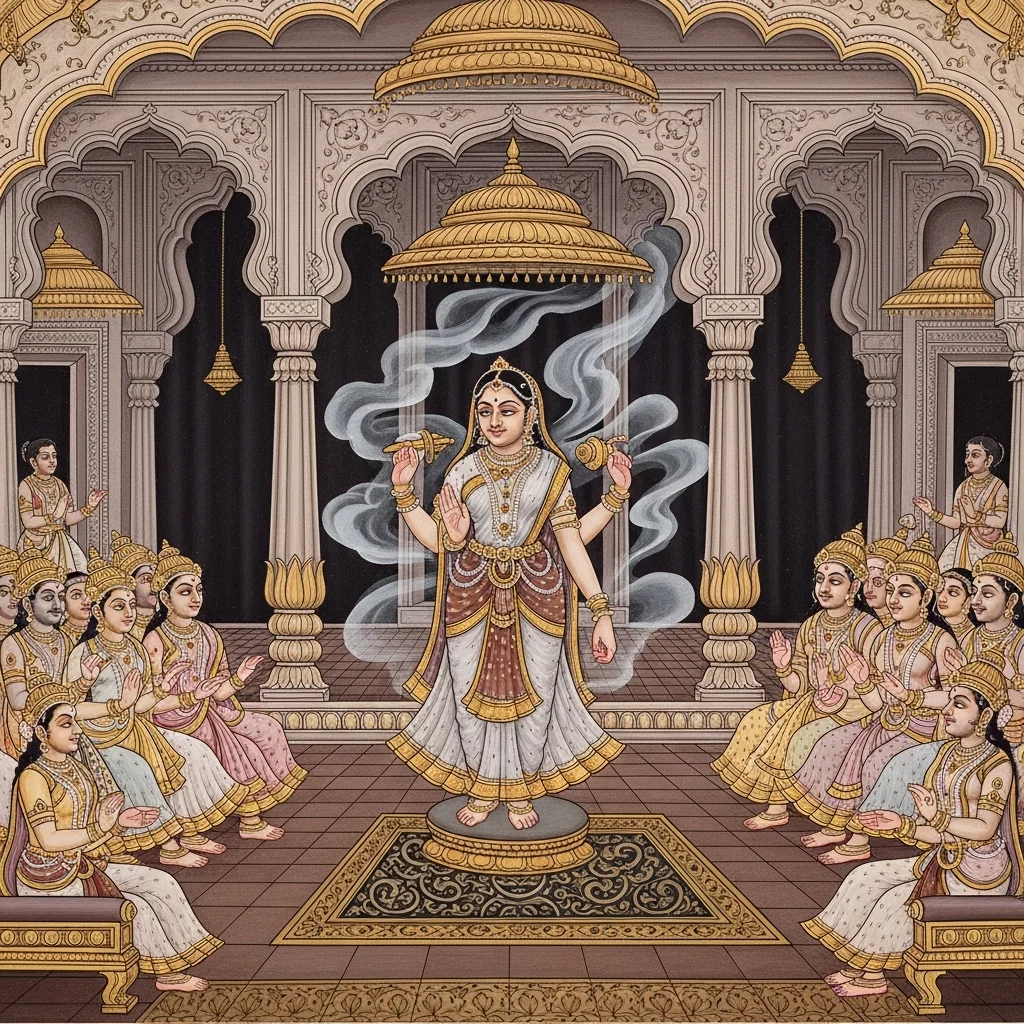
In this adhyāya, narrated by Lomāśa, the episode of Dakṣa’s yajña becomes a theological critique of sacrificial authority. Satī (Dākṣāyaṇī) arrives at her father Dakṣa’s great sacrifice and challenges the omission of Śambhu (Śiva), declaring that ritual substances, mantras, and offerings turn impure when the supreme divine Reality is dishonored. Addressing deva and ṛṣi authorities, she affirms Śiva’s cosmic pervasiveness and prior manifestations, insisting that the yajña is structurally incomplete without reverence to Īśvara. Dakṣa answers with anger and insults, branding Śiva inauspicious and outside Vedic norms. Unable to bear the denigration of Mahādeva, Satī states an ethical principle: both the slanderer and the complicit listener incur grave consequence; then she enters the fire and self-immolates. The assembly collapses into panic, violence, and self-harm. Nārada reports to Rudra, and Śiva’s wrath externalizes as the emergence of Vīrabhadra and Kālikā, accompanied by formidable gaṇas and ominous portents. Dakṣa seeks refuge in Viṣṇu, and Viṣṇu articulates a governing law of worship: where the unworthy are honored and the worthy neglected, famine, death, and fear arise; disrespect to Īśvara renders actions futile. The chapter closes with the doctrine that “kevala-karma”—ritual/action without Īśvara—secures neither protection nor fruit; only action joined to devotion and recognition of divine sovereignty yields results.
Shlokas
Verse 1
लोमश उवाच । दाक्षायणी गता तत्र यत्र यज्ञो महानभूत् । तत्पितुः सदनं गत्वा ना नाश्चर्यसमन्वितम्
Lomaśa said: Dakṣāyaṇī went there, where the great sacrifice was being performed; and, entering her father’s residence, she beheld it filled with many marvels.
Verse 2
द्वारि स्थिता तदा देवा अवतीर्य निजासनात् । नंदिनो हि महाभागा देवलोकं निरीक्ष्य च
Then the gods stood at the doorway, having descended from their own seats; and the greatly fortunate Nandin, after surveying the realm of the gods, looked on as well.
Verse 3
मातरं पितरं दृष्ट्वा सुहृत्संबंधि वांधवान् । अभिवाद्यैव पिरतं मातरं च मुदान्विता
Seeing her mother and father, along with friends, relations, and kinsmen, she joyfully bowed in reverence and paid homage to her father and mother.
Verse 4
बभाषे वचनं देवी प्रस्तापसदृशं तदा । अनाहूतस्त्वया कस्माच्छंभुः परमशोभनः
Then the Goddess spoke words befitting the occasion: “Why did you not invite Śambhu, the supremely splendid One?”
Verse 5
येन पूतमिदं सर्वं समग्रं सचराचरम् । यज्ञो यज्ञविदां श्रेष्ठो यज्ञांगो यज्ञदक्षिणः
By him this entire universe—moving and unmoving—is purified in its fullness: he is the sacrifice itself, the foremost among those who know sacrifice; he is the limb of sacrifice and the sacrificial fee (dakṣiṇā).
Verse 6
द्रव्यं मंत्रादिकं सर्वं हव्यं कव्यं च यन्मयम् । विना तेन कृतं सर्वमपवित्रं भविष्यति
All ritual substance and all mantras and the rest—oblations for the gods (havya) and offerings for the ancestors (kavya)—are of his very nature. Without him, everything that is done will become impure.
Verse 7
शंभुना हि विना तात कथं यज्ञः प्रवर्तते । एते कथं समायाता ब्रह्मणा सहिताः पितः
“Indeed, dear father, without Śambhu how can the sacrifice proceed? And how have these gods arrived here, accompanied by Brahmā, O father?”
Verse 8
हे भृगो त्वं न जानासि हे कश्यप महामते । अत्रे विशिष्ठ एकस्त्वं शक्र किं कृतमद्यते
O Bhṛgu, do you not know? O great-minded Kaśyapa! O Atri! O Vasiṣṭha—only you are foremost here. O Śakra, what has been done today?
Verse 9
हे विष्णो त्वं महादेवं जानासि परमेश्वरम् । ब्रह्मन्किं त्वं न जानासि महादेवस्य विक्रमम्
O Viṣṇu, you know Mahādeva, the Supreme Lord. O Brahmā, do you not know the prowess of Mahādeva?
Verse 10
पुरा पंचमुखो भूत्वा गर्वितोसि सदाशिवम् । कृतश्चतुर्मुखस्तेन विस्मृतोऽसि तदद्भुतम्
Formerly, having become five-faced, you grew arrogant toward Sadāśiva; by him you were made four-faced—have you forgotten that wondrous event?
Verse 11
भिक्षाटनं कृतं येन पुरा दारुवने विभुः । शप्तोयं भिक्षुको रुद्रो भवद्भिः सखिभिस्तदा
He who once, as the Lord, undertook the wandering for alms in the Dāru forest—this Rudra, appearing as a mendicant, was then cursed by you and your companions.
Verse 12
शप्तेनापि च रुद्रेण भवद्भिर्विस्मृतं कथम् । यस्यावयवमात्रेण पूरितं सचराचरम्
How have you forgotten this truth, even though Rudra has been spoken of and invoked? By but a mere portion of his being, the entire universe—moving and unmoving—stands pervaded and filled.
Verse 13
लिंगभूतं जगत्सर्वं जातं तत्क्षणमेव हि । लयानाल्लिंगमित्याहुः सर्वे देवाः सवासवाः
Indeed, the whole universe instantly became of the nature of the Liṅga. Because it is the sign by which dissolution is understood, all the gods—along with Indra—call it “Liṅga”.
Verse 14
सर्वे देवाश्च संभूता यतो देवस्य शूलिनः । सोऽसौ वेदांतगो देवस्त्वया ज्ञातुं न पार्यते
From that God—Śūlin, the Trident-bearer—indeed all the gods have arisen. That very Deity, established in the purport of the Vedānta, cannot be fully known by you through mere pride or limited vision.
Verse 15
तस्या वचनमाकर्ण्य दक्षः क्रुद्धोऽब्रवीद्वचः । किं त्वया बहुनोक्तेन कार्यं नास्तीह सांप्रतम्
Hearing her words, Dakṣa—angered—spoke: “What is the use of your lengthy speech? There is no purpose to it here, at present.”
Verse 16
गच्छ वा तिष्ठवा भद्रे कस्मात्त्वं हि समागता । अमंगलो हि भर्ता ते अशिवोसौ सुमध्यमे
“Go, or stay, O gentle one—why have you come here at all? For your husband is inauspicious; that one is ‘aśiva’ (not auspicious), O fair-waisted one.”
Verse 17
अकुलीनो वेदबाह्यो भूतप्रेतपिशाचराट् । तस्मान्नाकारितो भद्रे यज्ञार्थं चारुभाषिणि
“He is of no noble lineage, outside the Veda, a lord among bhūtas, pretas, and piśācas. Therefore, O dear one, sweet-speaking lady, he has not been invited for the sake of this sacrifice.”
Verse 18
मया दत्तासि सुश्रोणि पापिना मंदबुद्धिना । रुद्रायाविदितार्थाय उद्धताय दुरात्मने
O fair-hipped one, I—sinful and dull-witted—gave you to Rudra, who knows no propriety, is arrogant, and is of wicked nature.
Verse 19
तस्मात्कायं परित्यज्य स्वस्था भव शुचिस्मिते । दक्षेणोक्ता तदा पुत्री सा सती लोकपूजिता
Therefore, abandon this body and be at peace, O pure-smiling one. Thus spoke Dakṣa to his daughter—she who was Satī, revered by the worlds.
Verse 20
निंदायुक्तं स्वपितरं विलोक्य रुषिता भृशम् । चिंतयंती तदा देवी कथं यास्यामि मंदिरे
Seeing her own father filled with slander, the Goddess became intensely enraged. Then she pondered, “How shall I go back to my home and face Śiva?”
Verse 21
शंकरं द्रष्टुकामांह किं वक्ष्ये तेन पृच्छिता । यो निंदति महादेवं निंद्यमानं श्रृणोति यः । तावुभौ नरके यातो यावच्चन्द्रदिवाकरौ
“Desiring to see Śaṅkara, what shall I say when he asks me? Whoever reviles Mahādeva, and whoever listens while he is being reviled—both go to hell for as long as the Moon and the Sun endure.”
Verse 22
तस्मात्तयक्ष्याम्यहं देहं प्रवेक्ष्यामि हुताशनम्
“Therefore I shall abandon this body; I shall enter the sacrificial fire.”
Verse 23
एवं मीमांसमाना सा शिवरुद्रेतिभाषिणी । अपमानाभिभूता सा प्रविवेश हुताशनम्
Thus deliberating, she—uttering “Śiva, Rudra!”—overpowered by humiliation, entered the sacrificial fire.
Verse 24
हाहाकारेण महता व्याप्तमासीद्दिगंतरम् । सर्वे ते मंचमारूढाः शस्त्रैर्व्याप्ता निरंतराः
With a great cry of ‘Alas!’, the whole expanse of the directions was filled. All those on the platforms were continuously surrounded, weapons in hand.
Verse 25
शस्त्रैः स्वैर्जध्नुरात्मानं स्वानि देहानि चिच्छिदुः । केचित्करतले गृह्य शिरांसि स्वानि चोत्सुकाः
With their own weapons they struck themselves and cut their own bodies. Some, eager, took their own severed heads in the palms of their hands.
Verse 26
नीराजयंतस्त्वरिता भस्मीभूताश्च जज्ञिरे । एवमूचुस्तदा सर्वे जगर्ज्जुरतिभीषणम्
Hastening about, performing frantic circling gestures, they were reduced to ashes. Then all of them spoke thus and roared most terribly.
Verse 27
शस्त्रप्राहारैः स्वांगानि चिच्छिदुश्चातिभीषणाः । ते तथा विलयं प्राप्ता दाक्षायण्या समं तदा
With blows of weapons they cut their own limbs—most dreadful to behold. Thus they met destruction then, together with Dākṣāyaṇī.
Verse 28
गणास्तत्रायूते द्वे च तदद्भुतमिवाभवत् । ते सर्व ऋषयो देवा इंद्राद्याः समरुद्गणाः
There, two myriads of gaṇas appeared—truly it seemed a wonder. All the sages and gods were present—Indra and the rest, together with the hosts of the Maruts.
Verse 29
विश्वेऽश्वनौ लोकपालास्तूष्णींबूतास्तदाभवन् । विष्णुं वरेण्यं केचिच्च प्रार्थयंतः समंततः
Then the Viśvedevas, the Aśvins, and the guardians of the worlds fell silent. Some, on every side, began to beseech Viṣṇu, the most excellent.
Verse 30
एवं भूतस्तदा यज्ञो जातस्तस्य दुरात्मनः । दक्षस्य ब्रह्मबंधोश्च ऋषयो भयमागताः
Thus did the sacrifice become—such was the outcome for wicked-souled Dakṣa, that “brahma-bandhu,” a Brahmin in name alone. The sages were seized by fear.
Verse 31
एतस्मिन्नंतरे विप्रा नारदेन महात्मना । कथितं सर्वमेवैतद्दक्षस्य च विचेष्टितम्
Meanwhile, O Brahmins, the great-souled Nārada related all of this, including the conduct and misdeeds of Dakṣa.
Verse 32
तदाकर्ण्येश्वरो वाक्यं नारदस्य मुखोद्गतम् । चुकोप परमं क्रुद्ध आसनादुत्पतन्निव
Hearing the words that had come from Nārada’s mouth, the Lord (Īśvara) became exceedingly enraged—so wrathful that it seemed as though He would leap up from His seat.
Verse 33
उद्धृत्य च जटां रुद्रो लोकसंहारकारकः । आस्फोटयामास रुषा पर्वतस्य शिरोपरि
Then Rudra, the agent of cosmic dissolution, lifted up His matted jaṭā locks and, in fury, lashed them upon the mountain’s summit.
Verse 34
ताडनाच्च समुद्भूतो वीरभद्रो महायशाः । तथा काली समुत्पन्ना भूतकोटिभिरावृता
From that striking there arose the illustrious Vīrabhadra; likewise Kālī sprang forth, surrounded by crores of bhūtas, the spirit-hosts.
Verse 35
कोपान्निःश्वसितेनैव रुद्रस्य च महात्मनः । जातं ज्वराणां च शतं सन्निपातास्त्रयोदश
From the great-souled Rudra’s angry exhalation alone, a hundred fevers came into being, along with thirteen deadly afflictions, the sannipātas.
Verse 36
विज्ञप्तो वीरभद्रेण रुद्रो रौद्रपराक्रमः । किं कार्यं भवतः कार्यं शीघ्रमेव वद प्रभो
Then Vīrabhadra addressed Rudra of terrible might: “What is to be done for You? Tell me at once, O Lord.”
Verse 37
इत्युक्तो भगवान्रुद्रः प्रेषयामास सत्वरम् । गच्छ वीर महा बाहो दक्षयज्ञं विनाशय
Thus addressed, the Blessed Rudra dispatched him at once: “Go, O hero, O mighty-armed one—destroy Dakṣa’s sacrifice (yajña).”
Verse 38
शासनं शिरसा धृत्वा देवदेवस्य शूलिनः । कालिकाऽलिहितो वीरः सर्वभूतैः समावृतः । वीरभद्रो महातेजा ययौ दक्षमखं प्रति
Bearing upon his head the command of the God of gods, Śiva the Trident-bearer, that hero—marked by Kālī and surrounded by all the hosts of bhūtas—Vīrabhadra, radiant with great splendor, set forth toward Dakṣa’s sacrifice.
Verse 39
तदानीमेव सहसा दुर्निमित्तानि चाभवन् । रूक्षो ववौ तदा वायुः शर्कराभिः समावृतः
Just then, all at once, ominous portents arose. A harsh wind began to blow, thick with gravel and grit.
Verse 40
असृग्वर्षति देवश्च तिमिरेणाऽवृता दिवशः । उल्कापाताश्च बहवः पेतुरुर्व्यां सहस्रशः
Blood rained from the sky, daylight was shrouded in darkness, and countless meteors fell upon the earth by the thousands.
Verse 41
एवंविधान्यरिष्टानि ददृशुर्विबुधादयः । दक्षोऽपि भयमापन्नो विष्णुं शरणमाययौ
Seeing such calamities and ill omens, the gods and others were shaken with alarm. Dakṣa too, seized by fear, went to Viṣṇu for refuge.
Verse 42
रक्षरक्ष महाविष्णो त्वं हि नः परमो गुरुः । यज्ञोऽसि त्वं सुरश्रेष्ठ भयान्मां परिमोचय
“Protect me, protect me, O Mahāviṣṇu! You are truly our supreme Guru. You yourself are the sacrifice, O best of the gods—release me from this fear.”
Verse 43
दक्षेण प्रार्थ्य मानो हि जगाद मधुसूदनः । मया रक्षा विदातव्या भवतो नात्र संशयः
When Dakṣa thus implored him, Madhusūdana (Viṣṇu) replied: “Protection must indeed be granted by me to you—of this there is no doubt.”
Verse 44
अपूज्या यत्र पूज्यंते पूजनीयो न पूज्यते । त्रीणी तत्र प्रवर्तंते दुर्भिक्षं त्वया धर्ममजानताः । ईश्वरावज्ञया सर्वं विफलं च भविष्यति
“Where the unworthy are honored, and the truly worthy is not honored—three evils arise there: famine, and (the ruin that comes) from your not knowing dharma. Through contempt of the Lord, everything will become fruitless.”
Verse 45
अपूज्या यत्र पूज्यं ते पूजनीयो न पूज्यते । त्रीणी तत्र प्रवर्तंते दुर्भिक्षं मरणं भयम्
“Where the unworthy are honored and the truly worthy is not honored, three calamities arise there: famine, death, and fear.”
Verse 46
तस्मात्सर्वप्रयत्नेन माननीयो वृषध्वजः । अमानितान्महेशात्त्वां महद्भयमुपस्थितम्
“Therefore, with every effort, Vṛṣadhvaja (Śiva, whose banner bears the bull) must be honored. Because Maheśa has been dishonored, a great fear has now come upon you.”
Verse 47
अधुनैव वयं सर्वे प्रभवो न भवामहे । भवतो दुर्न्नयेनेव नात्र कार्या विचारणा
“From this very moment, none of us will remain capable or sovereign—only because of your misguided conduct. There is no need for further deliberation about it.”
Verse 48
विष्णोस्तद्वचनं श्रुत्वा दक्षश्चिंतापरोऽभवत् । विविर्णवदनो भूत्वा तूष्णीमासीद्भुवि स्थितः
Hearing those words of Viṣṇu, Dakṣa was overwhelmed with anxious care. His face fell; standing upon the ground, he remained silent.
Verse 49
वीरभद्रो महाबाहू रुद्रेणैव प्रचोदितः । काली कात्यायनीशाना चामुंडा मुंडमर्द्दिनी
Vīrabhadra of mighty arms—impelled by Rudra himself—appeared, together with Kālī, Kātyāyanī, Īśānā, and Cāmuṇḍā, the slayer of Muṇḍa.
Verse 50
भद्रकाली तथा भद्रा त्वरिता वैष्णवी तथा । नवदुर्गादिसहितो भूतानां च गणो महान्
There came also Bhadrakālī, Bhadrā, Tvaritā, and Vaiṣṇavī; and a mighty host of beings, accompanied by the Navadurgās and others.
Verse 51
शाकिनी डाकिनी चैव भूतप्रमथगुह्यकाः । तथैव योगिनीचक्रं चतुः षष्ट्या समन्वितम्
And also Śākinīs and Ḍākinīs; the Bhūtas, Pramathas, and Guhyakas; and likewise the circle of Yoginīs, complete with the sixty-four.
Verse 52
निजन्मुः सहसा तत्र यज्ञवाटं महाप्रभम् । वीरभद्रसमेता सर्वे हरपराक्रमाः । दशबाहवस्त्रिनेत्रा जटिला रुद्रभूषणाः
All at once they entered there—the splendid, mighty sacrificial enclosure. All of them, accompanied by Vīrabhadra, bore the valor of Hara (Śiva): ten-armed, three-eyed, matted-haired, adorned with Rudra’s insignia.
Verse 53
पार्षदाः शंकरस्यैते सर्वे रुद्रस्वरूपिणः । पंचवक्त्रा नीलकंठाः सर्वे ते शस्त्रपाणयः
These were Śaṅkara’s attendants—each bearing Rudra’s very form: five-faced, blue-throated, and all with weapons in hand.
Verse 54
छत्रचामरसंवीताः सर्वे हरपराक्रमाः । दशबाहवस्त्रिनेत्रा जटिला रुद्रभूषणाः
Surrounded by parasols and yak-tail fans, all displayed Hara’s valor—ten-armed, three-eyed, matted-haired, and adorned with Rudra’s emblems.
Verse 55
अर्धचंद्रधराः सर्वे सर्वे चैव महौजसः । सर्वे ते वृषभारूढाः सर्वे ते वेषभूषणाः
All bore the crescent moon; all were indeed of great radiance and power. All were mounted upon bulls, all adorned in their distinctive attire and ornaments.
Verse 56
सहस्रबाहुर्भुजगाधिपैर्वृतस्त्रिलोचनो भीमबलो भयावहः । एभिः समेतश्च तदा महात्मा स वीरभद्रोऽभिजगाम यज्ञम्
Thousand-armed, encircled by serpent-lords, three-eyed—terrible in strength and fearsome—Vīrabhadra, that great soul, accompanied by them, then advanced toward the sacrifice.
Verse 57
युग्यानां च सहस्रेण द्विप्रमाणेन स्यंदनम् । सिंहानां प्रयुतेनैव वाह्यमानं च तस्य तत्
His chariot, vast as an elephant in measure, was drawn by a thousand yoked steeds—and borne along as well by a myriad (prayuta) of lions.
Verse 58
तथैव दंशिताः सिंहा बहवः पार्श्वरक्षकाः । शार्दूला मकरा मत्स्या गजाश्चैव सहस्रशः । छत्राणि विविधान्येव चामराणि तथैव च
Likewise, many armed lions stood as flank-guards. Tigers, makaras, fishes, and elephants in their thousands were also present—along with many kinds of parasols and yak-tail fans (cāmara).
Verse 59
मूर्द्धनिध्रियमाणानि सर्वतोग्राणि सर्वशः । ततो भेरीमहानादाः शंखाश्च विविधस्वनाः । पटहा गोमुखाश्चैव श्रृंगाणि विविधानि च
Carried aloft upon their heads, their points turned in every direction, thereupon resounded the great bherī kettle-drums; conches (śaṅkha) of varied tones; and also paṭaha drums, gomukha horns, and many kinds of trumpets.
Verse 60
ततोऽवाद्यंत तान्येव घनानि सुषिराणि च । कलगानपराः सर्वे सर्वे मृदंगवादिनः
Then those very instruments were played—both solid-sounding percussion and hollow wind instruments. All were intent on measured singing; all were players of the mṛdaṅga drum.
Verse 61
अनेकलास्यसंयुक्ता वीरभद्राग्रतोभवन् । रणवादित्रनिर्घोषैर्जगर्जुरमितौजसः
Performing many kinds of dances, they moved before Vīrabhadra. Amid the tumult of war-instruments, those of immeasurable might roared aloud.
Verse 62
तेन नादेन महता नादितं भुवनत्रयम् । एवं सर्वे समायाता गणा रुद्रप्रणोदिताः
By that mighty roar, the three worlds resounded. Thus all the Gaṇas—impelled by Rudra—assembled together.
Verse 63
यज्ञवाटं च दक्षस्य विनाशार्थं प्रहारिणः । रजसा चाऽवृतं व्योम तमसा च वृता दिशः
The destroyers, striking to bring ruin upon Dakṣa’s sacrificial arena, advanced; the sky was veiled by dust, and the directions were enveloped in darkness.
Verse 64
सप्तद्वीपवती पृथ्वी चचाल साद्रिकानना । ते दृष्ट्वा महदाश्चर्य्यं लोकक्षयकरं तदा
The earth—endowed with the seven continents—trembled along with her mountains and forests. Seeing that great wonder, which seemed capable of bringing ruin upon the worlds, they were struck with awe then.
Verse 65
उत्तस्थुर्युगपत्सर्वे देवदैत्यनिशाचराः । ते वै ददृशुरायांतीं रुद्रसेना भयावहाम्
All—gods, daityas, and night-roaming beings—rose up at once. They saw Rudra’s army approaching, terrifying to behold.
Verse 66
पृथ्वीं केचित्समायाता गगने केचिदागताः । दिशश्च प्रदिशश्चैव समावृत्य तथापरे
Some came down upon the earth; some arrived in the sky. Others, likewise, spread out, covering the main directions and the intermediate quarters.
Verse 67
अनंता ह्यक्षयाः सर्वे शूरा रुद्रसमा युधि । एवंभूतं च तत्सैन्यं रुद्रैश्च परिवारितम् । दृष्ट्वो चुर्विस्मिताः सर्वे यामोऽद्य शस्त्रपाणयः
Endless and inexhaustible were all those heroes, equal to Rudra in battle. Such was that army, surrounded by the Rudras. Seeing it, all were utterly astonished, thinking, “Today we must advance with weapons in hand.”
Verse 68
इंद्रो हि गजमारूढो मृगारूढः सदागतिः । यमो महिषमारूढो यमदंडसमन्वितः
Indra, mounted upon his elephant; Vāyu, ever in motion, mounted upon a deer; and Yama, mounted upon a buffalo and bearing the staff of punishment—all stood ready.
Verse 69
कुबेरः पुष्पकारूढः पाशी मकरमेव च । अग्निर्बस्तमारूढो निरृतिः प्रेतमेव च
Kubera rode upon the celestial car Puṣpaka; Varuṇa, bearing the noose, rode upon a makara. Agni rode upon a goat, and Nirṛti upon a preta.
Verse 70
तथान्ये सुरसंघाश्च यक्षचारणगुह्यकाः । आरुह्य वाहनान्येव स्वानिस्वानि प्रतिपिनः
So too did other companies of gods—Yakṣas, Cāraṇas, and Guhyakas—mount their own respective vehicles, each in their own troop.
Verse 71
स्वेषामुद्योगमालोक्य दक्षश्चाश्रुमुखस्ततः । दंडवत्पतितो भूमौ सर्वानेवाभ्यभाषत
Seeing their determined mobilization, Dakṣa became tear-faced; and, falling to the ground like a staff in full prostration (daṇḍavat), he addressed them all.
Verse 72
युष्मद्बलेनैव मया यज्ञः प्रारंभितो महान् । सत्कर्मसिद्धये यूयं प्रमाणं सुमहाप्रभाः
“Only by your strength have I begun this great yajña. For the successful completion of righteous action, you—O greatly radiant ones—are the very authority and proof.”
Verse 73
विष्णो त्वं कर्मणः साक्षाद्यज्ञानां परिपालकः । धर्मस्य वेदगर्भस्य ब्रह्मण्यस्त्वं च माधव
O Viṣṇu, you are the manifest power directly behind ritual action, the protector of sacrifices. You uphold Dharma, whose womb is the Veda; and you, Mādhava, are devoted to Brahman and to the sacred cause.
Verse 74
तस्माद्रक्षा विधातव्या यज्ञस्याऽस्य महाप्रभो । दक्षस्य वचनं श्रुत्वा उवाच मधुसूदनः
Therefore, O great lord, protection must be arranged for this sacrifice. Having heard Dakṣa’s words, Madhusūdana replied.
Verse 75
मया रक्षा विधातव्या धर्मस्य परिपालने । तत्सत्यं तु त्वयोक्तं हि किं तु तस्य व्यतिक्रमः
Protection must indeed be provided by me for the safeguarding of Dharma. What you have said is true—but how can there be a transgression against that very Dharma?
Verse 76
यातस्त्वद्यैव यज्ञस्य यत्त्वयोक्तं सदाशिवम् । नैमिषेऽनिमिषक्षेत्रे तदा किं न स्मृतं त्वया
You have gone today to this sacrifice—yet why did you not remember Sadāśiva, as you yourself once spoke of him there in Naimiṣa, the field of the unblinking sages?
Verse 77
योऽयं रुद्रो महातेजा यज्ञरूपः सदाशिवः । यज्ञबाह्यः कृतो मूढ तच्च दुर्म्मत्रितं तव
This Rudra of great splendor is Sadāśiva himself, whose very form is the sacrifice. Yet you, deluded one, have made him ‘outside’ the yajña—this is your evil counsel and misguided plan.
Verse 78
रुद्रकोपाच्च को ह्यत्र समर्थो रक्षणे तव । न पश्यामि च तं विप्र त्वां वै रक्षति दुर्म्मतिम्
And before Rudra’s wrath—who here is able to protect you? O brāhmaṇa, I see no one who can truly safeguard you, you of misguided mind.
Verse 79
किं कर्म्म किमकर्म्मेति तन्न पश्यसि दुर्म्मते । समर्थं केवलं कर्मन भविष्यति सर्वदा
You do not discern what is right action and what is non-action, O misguided one. Action alone, by itself, is never truly sufficient at any time.
Verse 80
सेश्वरं कर्म विद्ध्योतत्समर्थत्वेन जायते । न ह्यन्यः कर्म्मणो दाता ईश्वरेण विना भवेत्
Know that action becomes effective only when it is joined with the Lord (Īśvara). For without Īśvara, there can be no other giver of the power and fruit of action.
Verse 81
ईश्वरस्य च ये भक्ताः शांतास्तद्गतमानसाः । कर्म्मणो हि फलं तेषां प्रयच्छति सदाशिवः
And those devotees of Īśvara who are peaceful, their minds absorbed in Him—Sadāśiva himself grants them the fruit of their actions.
Verse 82
केवलं कर्म चाश्रित्य निरीश्वरपरा जनाः । निरयं ते च गच्छंति कोटियज्ञशतैरपि
Those who rely only on ritual action and remain devoted to a godless view still fall into hell—even if they perform hundreds of millions of sacrifices.
Verse 83
पुनः कर्ममयैः पाशैर्बद्धा जन्मनिजन्मनि । निरयेषु प्रपच्यंते केवलं कर्म्मरूपिणः
Bound again and again, birth after birth, by nooses wrought of karma, those who take karma alone as their very self are boiled in the hells.