Adhyaya 62
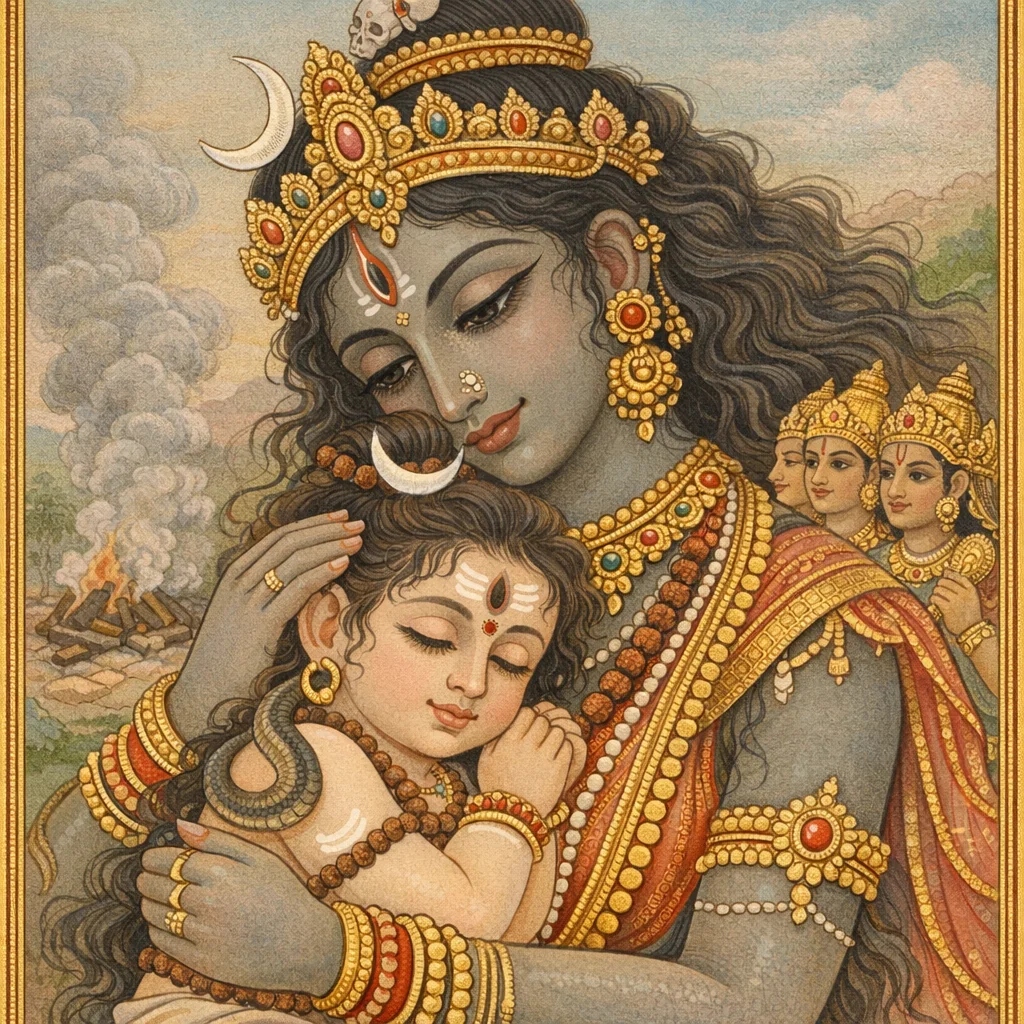
Śaunaka asks Sūta about the origin of Gaṇapa as a kṣetrapāla (guardian and “lord” of a sacred field) and how the “lord of the kṣetra” comes to be. Sūta recounts a crisis: the devas, oppressed by the mighty Dāruka, appeal to Śiva and Devī, declaring that Dāruka cannot be conquered by other gods without the Ardhanārīśvara principle. Pārvatī draws forth the “darkness” from Hara’s throat as a sign of concentrated śakti, manifests Kālīkā, names her, and commands swift destruction. Kālīkā’s dreadful roar slays Dāruka and his host, shaking the cosmos. To restore calm, Rudra appears as a crying child in the cremation-ground; Kālīkā nurses him, and the child as it were “drinks” the embodied wrath, making Kālīkā gentle. When the devas remain uneasy, Maheśvara in child-form reassures them and emanates sixty-four child-like kṣetrapālas from his mouth, assigning their jurisdictions across svarga, pātāla, and the fourteen-world bhū-loka system. The chapter specifies ritual obligations—offerings, especially black gram mixed with rice—and warns that neglect renders ritual fruit void, to be consumed by hostile beings. It then provides a concise worship guide: a nine-syllable kṣetrapāla mantra, offerings, lamps, and a long stuti listing guardian names and their placements (forests, waters, caves, crossroads, mountains, and more). A secondary account introduces Vaṭayakṣiṇī, who manifests through the austerities and daily worship of the widow Sunandā; Śiva decrees that worship of him while neglecting her yields fruitlessness, and a simple mantra-prayer promises fulfillment for women and men. Finally, Vijaya venerates Aparājitā Mahāvidyā, the “parama-vaiṣṇavī,” teaching an extended protective mantra with assurances of safety from many fears (elements, thieves, animals, hostile rites), and declaring that daily recitation removes obstacles even without elaborate ritual.
Shlokas
Verse 1
शौनक उवाच । सूत श्रुता पुरास्माभिरुत्पत्तिर्गणपस्य च । क्षेत्रनाथः कथं जज्ञे वदैतच्छृण्वतां हि नः
Śaunaka said: “O Sūta, we have formerly heard of the birth of Gaṇapa (Gaṇeśa). Now tell us—how did Kṣetranātha, the Lord of the sacred field, come to be? Explain this to us who are listening.”
Verse 2
सूत उवाच । यदा दारुकदैत्येन पीड्यमाना दिवौकसः । शिवं देव्या सहासीनं प्रणिपत्येदमब्रुवन्
Sūta said: “When the gods, tormented by the demon Dāruka, approached Śiva—seated together with the Goddess—and, bowing down, spoke these words…”
Verse 3
देव दैत्येन घोरेण दुर्जयेन सुरासुरैः । पीडिता दारुकेण स्मः स्वस्थानाच्चापि च्याविताः
“O Lord, by the dreadful demon Dāruka—invincible to gods and asuras alike—we have been oppressed and even driven away from our own abodes.”
Verse 4
न विष्णुना न चंद्रेण न चान्येनापि केनचित् । शक्यो हंतुं स दुष्टात्मा अर्धनारीश्वरं विना
“Neither by Viṣṇu, nor by the Moon-god, nor by anyone else can that wicked one be slain—except by Ardhanārīśvara (Śiva united with Śakti).”
Verse 5
तेन संपीड्यमानानामस्माकं शरणं भव । इत्युक्त्वा रुरुदुर्देवास्त्राहित्राहीति चाब्रुवन्
“Therefore, for us who are being crushed by him, be our refuge.” Having said so, the gods wept and cried again and again, “Save us, save us!”
Verse 6
ततोऽतिकृपयाविष्टहरकंठस्य कालिमाम् । गृहीत्वा पार्वती चक्रे नारीमेकां महाभयाम्
Then Pārvatī, moved by overwhelming compassion, took the dark radiance from Hara’s throat and fashioned from it a single, greatly terrifying woman.
Verse 7
आत्मशक्तिं तत्र मुक्त्वा प्रोवाचेदं वचः शुभा । यस्मादतीव कालासि नाम्ना त्वं कालिका भव
Having released her own power there, the auspicious Goddess spoke these words: “Since you are exceedingly dark, therefore by name you shall be Kālikā.”
Verse 8
देवारिं च दुरात्मानं शीघ्रं नाशय शोभने । एवमुक्ता महारावा कालिका प्राप्य तं तदा
“O fair one, swiftly destroy that wicked enemy of the gods!” Thus commanded, Kālikā—uttering a tremendous roar—then went forth and reached him.
Verse 9
रवेणैव मृतं चक्रे सानुगं स्फुटितहृदम् । ततोवन्ती श्मशानस्था महारावानमुंचत
By her roar alone she made him dead—together with his followers—his heart shattered. Then, standing in the cremation-ground, she let out a mighty, resounding cry.
Verse 10
यैरासन्विकला लोकास्त्रयोऽपि प्रमृता यथा । ततो रुद्रो बालरूपं कृत्वा विश्वकृते विभुः
By those causes the three worlds had become enfeebled, as though struck down. Therefore Rudra—the all-powerful Lord who acts for the welfare of the universe—assumed the form of a child.
Verse 11
रुदंस्तस्याः समीपे चाप्यागतः प्रेतसद्मनि । रुदंतं च ततो बालं कृत्वोत्संगे कृपान्विता
Crying, he drew near to her, even entering that dwelling of the pretas. Seeing the child weeping, she—moved by compassion—lifted him and set him upon her lap.
Verse 12
कालिकाऽपाययत्स्तन्यं मा रुदेति प्रजल्पती । स्तन्य व्याजेन बालोऽपि पपौ क्रोधं तदंगजम्
Kālikā made him drink her milk, softly saying, “Do not cry.” Yet under the pretext of nursing, the child also drank up her anger that had arisen from her own being.
Verse 13
योऽसौ हरकंठभवविषादासीत्सुदुर्धरः । पीतक्रोधस्वभावे च सौम्यासीत्कालिका तदा
That unbearable, poison-born sorrow which had arisen in Hara’s throat—once the anger was drunk away—then Kālikā became gentle and auspicious in her very nature.
Verse 14
बालोऽपि बालरूपं तत्त्यक्तुमैच्छत्कृतक्रियः
Having accomplished his purpose, the child too wished to abandon that child-form.
Verse 15
ततो देवाः कालिकायाः शंकमानाः पुनर्भयम् । ऊचुर्मा बाल बालत्वं परित्यज कृपां कुरु
Then the gods, again fearful and suspicious of Kālikā, said: “O child, do not abandon your child-state; show mercy.”
Verse 16
बाल उवाच । न भेतव्यं कालिकायाः सौम्या देवी यतः कृता । अस्ति चेद्भवतां भीतिरन्यान्स्रक्ष्यामि बालकान् । चतुःषष्टिक्षेत्रपालानित्युक्त्वा सोऽसृजन्मुखात्
The Child said: “Do not fear Kālikā, for the Goddess has been made gentle. Yet if fear still remains among you, I shall create other child-forms—sixty-four Kṣetrapālas.” Having said this, he emitted them from his mouth.
Verse 17
प्राह तान्बालरूपांश्च बालरूपी महेश्वरः । स्वर्गेषु पंचविशानां पातालेषु च तावताम्
Maheśvara, himself in child-form, addressed those child-forms: “In the heavens, for twenty-five of you—and in the netherworlds likewise, for the same number—there shall be your stations.”
Verse 18
चतुर्दशानां भूर्लोके वासो वः पालनं तथा । अयमेव श्मशानस्थो भविता श्वा च वाहनम्
“For fourteen of you, your dwelling and guardianship shall be upon the earth. This one shall remain stationed in the cremation-ground, and a dog shall be his vehicle.”
Verse 19
नैवेद्यं भवतां राजमाषतंदुलमिश्रकाः । अनभ्यर्च्य च यो युष्मान्किंचित्कृत्यं विधास्यति
“Your offering (naivedya) shall be a mixture of royal black-gram and rice. And whoever undertakes any activity without first worshipping you…”
Verse 20
तस्य तन्निष्फलं भावि भुक्तं प्रेतैश्च राक्षसैः । इत्युक्त्वा भगवान्रुद्रस्तत्रैवां तरधीयत
Saying, “For him, that act will become fruitless, and its offering will be consumed by pretas and rākṣasas,” the Blessed Rudra spoke thus and then disappeared right there.
Verse 21
क्षेत्रपालाः स्थिताश्चैव यथास्थाने निरूपिताः । इति वः क्षेत्रपालानां सृष्टिः प्रोक्ता समासतः
Thus the Kṣetrapālas were stationed, each appointed in his proper place. In this manner, the creation of the Kṣetrapālas has been told to you in brief.
Verse 22
आराधनं प्रवक्ष्यामि येन प्रीता भवंति ते
I shall now teach the method of worship by which those (Kṣetrapālas) become pleased.
Verse 23
ओंक्षां क्षेत्रपालाय नमः । इति नवाक्षरो महामंत्रः
“Oṃ kṣāṃ—obeisance to Kṣetrapāla.” This is declared to be the great nine-syllabled mantra.
Verse 24
अनेनात्र चंदनादि दत्त्वा राजमाषतण्डुलमिश्रकाश्च चतुःषष्टिकृतभागान्वटकान्निवेद्य तावत्यो दीपिकास्तावन्ति पत्राणि पूगानि निवेद्य दण्डवत्प्रणम्य महास्तुतिमेतां जपेत्
Here, using this mantra, one should offer sandal and the like; present vaṭakas (cakes) prepared from a mixture of black gram and rice, divided into sixty-four portions; offer the same number of lamps, and likewise leaves and areca-nuts; then, bowing full-length (daṇḍavat), one should recite this great hymn.
Verse 25
ओंऊर्ध्वकेशा विरू पाक्षा नित्यं ये घोररूपिणः । रक्तनेत्राश्च पिंगाक्षाः क्षेत्रपालान्नमामि तान्
Oṃ. I bow to those Kṣetrapālas whose hair stands upright, whose eyes are fearsome and strange, who are ever of terrible form—red-eyed and tawny-eyed.
Verse 26
अह्वरो ह्यापकुम्भश्च इडाचारस्तथैव यः । इंद्रमूर्तिश्च कोलाक्ष उपपाद ऋतुंसनः
Ahvara, Āpakumbha, and likewise Iḍācāra; Indramūrti, Kolākṣa, Upapāda, and Ṛtuṃsana—these too are numbered among the Kṣetrapālas, the praised guardians of the sacred ground.
Verse 27
सिद्धेयश्चैव वलिको नीलपादेकदंष्ट्रिकः । इरापतिश्चाघहारी विघ्नहारी तथांतकः
Siddheya and Valika; Nīlapāda-Ekadaṃṣṭrika; Irāpati; Āghahārī, Vighnahārī, and also Antaka—these are the Kṣetrapālas to whom reverent salutations are offered.
Verse 28
ऊर्ध्वपादः कम्बलश्च खंजनः खर एव च । गोमुखश्चैव जंघालो गणनाथश्च वारणः
Ūrdhvapāda, Kambala, Khaṃjana, and also Khara; Gomukha, Jaṃghāla, Gaṇanātha, and Vāraṇa—these are the Kṣetrapālas remembered in hymns of praise.
Verse 29
जटालोप्यजटालश्च नौमि स्वःक्षेत्रपालकान् । ऋकारो हठकारी च टंकपाणिः खणिस्तथा
I bow to my own Kṣetrapāla guardians—Jaṭāla and Ajaṭāla; Ṛkāra, Haṭhakārī, Ṭaṃkapāṇi, and likewise Khaṇi.
Verse 30
ठंठंकणो जंबरश्च स्फुलिंगास्यस्तडिद्रुचिः । दंतुरो घननादश्च नन्दकश्च तथा परः
I bow to the Kṣetrapāla guardian-deities named Ṭhaṃṭhaṃkaṇa, Jaṃbara, Sphuliṅgāsya (whose mouth emits sparks), Taḍidruci (radiant like lightning), Daṃtura, Ghananāda (thundering like a cloud), and Nandaka—together with the other protector as well.
Verse 31
फेत्कारकारी पंचास्यो बर्बरी भीमरूपवान् । भग्नपक्षः कालमेघो युवानो भास्करस्तथा
I bow to Phetkārakārī, to Paṃcāsya the five-faced, to Barbarī, to the dread-formed Bhīmarūpavān, to Bhagnapakṣa, to Kālamegha dark as a storm-cloud, to Yuvāna, and to Bhāskara as well.
Verse 32
रौरवश्चापि लंबोष्ठो वणिजः सुजटालिकः । सुगंधो हुहुकश्चैव नौमि पातालरक्षकान्
I also bow to Raurava, to Laṃboṣṭha the thick-lipped, to Vaṇija, to Sujaṭālika of well-matted hair, to Sugandha the fragrant, and to Huhuka—these guardians of Pātāla, the nether realms.
Verse 33
सर्वलिंगेषु हुंकारः स्मशानेषु भयावहः । महालक्षो वने घोरे ज्वालाक्षो वसतौ स्थितः
In all liṅga-shrines he is Huṃkāra; in cremation-grounds he is Bhayāvaha, the terror-inspiring. In dreadful forests he is Mahālakṣa, and in human dwellings he stands as Jvālākṣa, the flame-eyed.
Verse 34
एकवृक्षश्च वृक्षेषु करालवदनो निशि । घण्टारवो गुहावासी पद्मखंजो जले स्थितः
Among trees he is Ekavṛkṣa; at night he is Karālavadana, the grim-visaged. Dwelling in caves he is Ghaṇṭārava, the bell-roaring, and stationed in waters he is Padmakhaṃja.
Verse 35
चत्वरेषु दुरारोहः पर्वते कुरवस्तथा । निर्झरेषु प्रवाहाख्यो माणिभद्रो निधिष्वपि
At crossroads he is Durāroha, hard to approach; upon mountains he is Kurava. In waterfalls he is called Pravāhākhya, and even among hidden treasures he stands as Māṇibhadra.
Verse 36
रसक्षेत्रे रसाध्यक्षो यज्ञवाटेषु कोटनः । चतुर्दश भुवं व्याप्य स्थिताश्चैवं नमामि तान्
In the “Rasa-kṣetra” he is Rasādhyakṣa, and in the sacrificial enclosures he is Koṭana. Pervading the fourteen worlds and abiding thus, I bow to them all.
Verse 37
एवं चतुःषष्टिमिताञ्छरणं यामि क्षेत्रपान् । प्रसीदंतु प्रसीदंतु तृप्यंतु मम पूजया
Thus I take refuge in the Kṣetrapālas, sixty-four in number. May they be gracious—may they be gracious—and may they be satisfied by my worship.
Verse 38
सर्वकार्येषु यश्चैवं क्षेत्रपानर्चयेच्छुचिः । क्षेत्रपास्तस्य तुष्यंति यच्छंति च समीहितम्
Whoever, being pure, worships the Kṣetrapālas in this manner at the commencement of all undertakings—the Kṣetrapālas are pleased with him and grant what he desires.
Verse 39
इमं क्षेत्रपकल्पं च विजानन्विजयस्तथा । यथोक्तविधिनाभ्यर्च्य सिद्धेयं तुष्टुवे च तम्
Understanding this procedure for the Kṣetrapālas, Vijayā too—having worshipped according to the stated method—praised him (the guardian/deity), seeking success in her undertaking.
Verse 40
प्रणम्य च ततो देवीमानर्च वटयक्षिणीम् । पुरा यदा नारदेन कलापग्रामतो द्विजाः
Then, having bowed down, she worshipped the Goddess—the Vaṭayakṣiṇī. Formerly, when Nārada brought the brāhmaṇas from the village called Kalāpagrāma, O twice-born ones,
Verse 41
समानीतास्तैश्च साकं सुनंदा नाम ब्राह्मणी । विधवाभ्यागता तत्र तपस्तप्तुं महीतटे
Along with them was brought a brāhmaṇa woman named Sunandā; widowed, she came there to undertake austerities on the riverbank.
Verse 42
सा कृच्छ्राणि पराकांश्च अतिकृच्छ्राणि कुर्वती । ज्यैष्ठे भाद्रपदे चक्रे सावित्र्या द्वे त्रिरात्रिके
She performed the Kṛcchra, Parāka, and Ati-kṛcchra austerities; and in the months of Jyaiṣṭha and Bhādrapada she observed, with the Sāvitrī rite, two three-night vows.
Verse 43
मासोपवासं च तथा कार्तिके कुलनंदिनी । सप्तलिंगानि संपूज्य देवीपूजां सदा व्यधात्
And in Kārttika that noble lady observed a month-long fast; after duly worshipping seven liṅgas, she continually performed worship of the Goddess.
Verse 44
दर्शे स्नानं तथा चक्रे महीसागरसंगमे । इत्यादिबहुभिस्तैस्तैर्नित्यं नियमपालनैः
She also performed bathing on the new-moon day at the confluence of the river and the ocean; thus, by many such daily observances and disciplines,
Verse 45
धूतपापा ययौ लोकमुमायाः कृतस्वागता । अंशेन च तटे तस्मिन्संभूता वटयक्षिणी
Her sins washed away, she went to the world of Umā, having been graciously received; and upon that very bank, the Vaṭayakṣiṇī manifested as a portion of the Goddess.
Verse 46
तस्यास्तुष्टो वरं प्रादात्सिद्धलिंगस्थितो हरः । अनभ्यर्च्य य एनां च मत्पूजां प्रकरिष्यति
Hara (Śiva), abiding in the Siddha-liṅga, being pleased with her, granted a boon: “Whoever worships Me without first worshipping her…”
Verse 47
तस्य तन्निष्फलं सर्वमित्युक्तं पाल्यमेव मे । तस्मात्प्रपूजयेन्नित्यं वटस्थां वटयक्षिणीम् । पुष्पैर्धूपैस्तु नैवेद्यैर्मंत्रेणानेन भक्तितः
(Śiva says:) “For him, all of that becomes fruitless”—thus it is declared, and it must be observed by My command. Therefore, one should daily, with devotion, worship the Vaṭayakṣiṇī dwelling in the banyan tree, with flowers, incense, and naivedya (food-offerings), and with this mantra.
Verse 48
सुनंदे नंदनीयासि पूजामेतां गृहाण मे । प्रसीद् सर्वकालेषु मम त्वं वटयक्षिणि
“O Sunandā, you are worthy of delight; accept this worship of mine. Be gracious at all times—O my Vaṭayakṣiṇī.”
Verse 49
एवं संपूज्य तां नत्वा क्षमाप्य वटयक्षिणीम् । सर्वान्कामानवाप्नोति नरो नारी च सर्वदा
Thus, having duly worshipped her, bowed to her, and sought forgiveness from the Vaṭayakṣiṇī, a man or a woman always attains all desired aims.
Verse 50
विजयश्चापि माहात्म्यमिदं जानन्महामतिः । आनर्च वटवृक्षस्थां भक्तितो वटयक्षिणीम्
Vijaya too—being a man of great understanding and knowing the greatness of this sacred account—devoutly worshipped the Yakṣiṇī who dwelt in the banyan tree.
Verse 51
ततः सिद्धांबिकां स्तुत्वा जप्तवानपराजिताम् । महाविद्यां वैष्णवीं तु साधनेन समन्विताम्
Thereafter, having praised Siddhāmbikā, he performed japa of the invincible (Aparājitā)—the great Vaiṣṇavī Mahāvidyā—fully supported by the prescribed sādhana.
Verse 52
यस्याः स्मरणमात्रेण सर्वदुःखक्षयो भवेत् । तां विद्यां कीर्तयिष्यामि शृणुध्वं विप्रपुंगवाः
That sacred Vidyā—by the mere remembrance of which all sorrow is destroyed—I shall now proclaim. Listen, O foremost among the brāhmaṇas.
Verse 53
ॐ नमो भगवते वासुदेवाय नमोऽनंताय सहस्रशीर्षाय क्षीरोदार्णवशायिने शेषभोगपर्यंकाय गरुडवाहनाय पीतवाससे वासुदेव संकर्षण प्रद्युम्नानिरुद्ध हयशिरो वराह नरसिंह वामन त्रिविक्रम राम राम वरप्रद नमोऽस्तु ते नमोऽ स्तुते असुरदैत्यदानवयक्षराक्षस भूतप्रेतपिशाचकुंभांड सिद्धयोगिनी डाकिनी स्कंदपुरोगमान्ग्रहान्नक्षत्रग्रहांश्चान्यांश्च हन २ दह २ पच २ मथ २ विध्वंसय २ विद्रावय २ शंखेन चक्रेण वज्रेण गदया मुशलेन हलेन भस्मीकुरु सहस्रबाहवे सहस्रचरणायुध जय २ विजय २ अपराजित अप्रतिहत सहस्रनेत्र ज्वल २ प्रज्वल २ विश्वरूप बहुरूप मधुसूदन महावराह महापुरुष वैकुंठ नारायण पद्मनाभ गोविंद दामोदर हृषीकेश सर्वासुरो त्सादन सर्वभूतवशंकर सर्वदुःखप्रभेदन सर्वयंत्रप्रभंजन सर्वनागप्रमर्दन सर्वदेवमहेश्वर सर्वबंधविमोक्षण सर्वाहितप्रमर्दन सर्वज्वरप्रणाशन सर्वग्रह निवारण सर्वपापप्रशमन जनार्दन जनानंदकर नमोऽस्तु ते स्वाहा
Om—salutations to Bhagavān Vāsudeva... May You strike down, burn, cook, churn, destroy, and drive away all hostile forces—Asuras, Daityas, Dānavas, Yakṣas, Rākṣasas... reduce them to ashes... Salutations to You. Svāhā.
Verse 54
इमामपराजितां परमवैष्णवीं महाविद्यां जपति पठति शृणोति स्मरति धारयति कीर्तयति न च तस्य वाय्वग्निवज्रोपलाशनिवर्षभयं न समुद्रभयं न ग्रहभयं न च चौरभयं न च श्वापदभयं वा भवेत्
Whoever repeats, recites, listens to, remembers, wears, or proclaims this unconquered, supremely Vaiṣṇavī Mahāvidyā—for that person there will be no fear from wind, fire, thunderbolt, ocean, thieves, or wild beasts.
Verse 55
क्वचिद्रात्र्यंधकारस्त्रीराजकुलविषोपविषगरदवशीकरण विद्वेषणोच्चाटनवधबंधभयं वा न भवेदेतैर्मंत्रपदैरुदाहृतैर्हृदा बद्धैः संसिद्धपूजितैः
By these mantra-formulas—recited as prescribed... there will not arise any fear anywhere: whether from the darkness of night, from poison, from acts of subjugation, from enmity, from killing, or from captivity.
Verse 56
तद्यथा । नमोनमस्तेऽस्तु अभये अनघे अजिते अत्रसिते अमृते अपराजिते पठितसिद्धे स्मरितसिद्ध एकानंशे उमे ध्रुवे अरुंधति सावित्रि गायत्रि जातवेदसि मानस्तोके सरसि सरस्वति धरणि धारिणि सौदामिनि अदिते विनते गौरि गांधारि मातंगि कृष्णे यशोदे सत्यवादिनि ब्रह्मवादिनि कालि कपालिनि सद्योवयवचयनकरि स्थलगतं जलगतमंतरिक्षगतं वा रक्ष २ सर्वभूतभयोपद्रवेभ्यो रक्ष २ स्वाहा
Thus (the mantra is recited): “Homage, homage to You—O Fearless One; O Sinless One; O Unconquered One; O Unafraid One; O Immortal One; O Invincible One; O She whose power is accomplished by recitation, and accomplished by remembrance; O Ekānaṃśā; O Umā; O Dhruvā; O Arundhatī; O Sāvitrī; O Gāyatrī; O Jātavedasī; O tenderly protective toward the mind and one’s offspring; O Sarasi; O Sarasvatī; O Earth; O Supporter; O Lightning-like One; O Aditi; O Vinatā; O Gaurī; O Gāndhārī; O Mātaṅgī; O Kṛṣṇā; O Yaśodā; O Speaker of truth; O Proclaimer of Brahman; O Kālī; O Kapālinī; O Swift Gatherer and Restorer of the limbs—protect, protect (us), whether the danger arises on land, in water, or in the sky. Protect, protect (us) from the fears and afflictions caused by all beings. Svāhā.”
Verse 57
यस्याः प्रणश्यते पुष्पं गर्भो वा पतते यदि । म्रियंते बालका यस्याः काकवंध्या च या भवेत् । धारयेत इमां विद्यामेभिर्दोषैर्न लिप्यते
If a woman’s monthly flow is obstructed, or if her pregnancy miscarries; if her children die; or if she becomes one who conceives yet fails to bear living offspring—by retaining and wearing/holding this sacred vidyā, she is not tainted by these faults and afflictions.
Verse 58
रणे राजकुले द्यूते नित्यं तस्य जयो भवेत् । शस्त्र धारयते ह्येषां समरे कांडधारिणी
In battle, in the royal court, and even in games of chance, victory ever becomes his. For in combat this (power/deity) bears the weapon for them—the bearer of the spear-shaft/arrow-stem—granting triumph in the fray.
Verse 59
गुल्मशूलाक्षिरोगाणां नित्यं नाशकरी तथा । शिरोरोगज्वराणां च नाशनी सर्वदेहिनाम्
It ever destroys ailments such as abdominal tumors and colic, and likewise diseases of the eyes; and for all embodied beings it removes disorders of the head and fevers as well.
Verse 60
तद्यथा । हन २ कालि सर २ कालि सर २ गौरि धम २ गौरि धम २ विद्ये आले ताले माले गंधे वधे पच २ विद्ये नाशय पापं हन् दुःस्वप्नं विनाशय कष्टनाशिनि रजनि संध्ये दुंदुभिनादे मानसवेगे शंखिनि चक्रिणि वज्रिणि शूलिनि अपमृत्युविनाशिनि विश्वेश्वरि द्रविडि द्राविडि केशवदयिते पशुपतिमहिते दुर्द्दमदमिनि शर्वरि किराति मातंगि ओंह्रांह्रंह्रंह्रंक्रांक्रंक्रंक्रंत्वर २ ये मां द्विषति प्रत्यक्षं परोक्षं वा सर्वान्दम २ मर्द्द २ तापय २ पातय २ शोषय २ उत्सादय २ ब्रह्माणि माहेश्वरि वाराहि विनायकि ऐंद्रि आग्नेयि चामुंडे वारुणि प्रचंडविद्योते इंदोपेंद्रभगिनि विजये शांतिस्वस्तिपुष्टिविवर्धिनि कामांकुशे कामदुधे सर्वकामवरप्रदे सर्वभूतेषु वासिनि प्रति विद्यां कुरु २ आकर्षिणि वेशिनि ज्वालामालिनि रमणि रामणि धरणि धारिणि मानोन्मानिनि रक्ष २ वायव्ये ज्वालामालिनि तापनि शोषणि नीलपताकिनि महागौरि महाश्रये महामयूरि आदित्यरश्मि जाह्नवि यमधंटे किणि २ चिंतामणि सुरभि सुरोत्पन्ने कामदुघे यथा मनीषितं कार्यं तन्मम सिध्यतु स्वाहा ओंस्वाहा ओंभूः स्वाहा ओंभुवः स्वाहा ओंस्वः स्वाहा ओंभूर्भुवःस्वःस्वाहा यत्रैवागतं पापं तत्रैव प्रतिगच्छतु स्वाहा ओंबले महाबले उासिद्धसाधिनि स्वाहा
“Thus (is the great protective formula): ‘Strike, strike! O Kālī… O Gaurī… O Vidyā (Mantra-Power)… destroy sin; destroy evil dreams; O destroyer of hardships! O Night, O Twilight, O one who resounds like a drum; swift as the mind; bearing conch, discus, thunderbolt and trident; destroyer of untimely death; O Sovereign Lady… beloved of Keśava, praised by Paśupati; subduer of the ungovernable… Whoever hates me openly or secretly—blind them; crush them; burn them; cast them down; dry them up; utterly uproot them. O Brahmāṇī, Māheśvarī, Vārāhī, Vināyakī, Aindrī, Āgneyī, Cāmuṇḍā, Vāruṇī… O Victory; increaser of peace, auspiciousness and prosperity; goad of desire; wish-fulfilling cow; giver of all boons; dwelling in all beings—perform this vidyā (for my protection). O attractor, O enchanter, O garlanded with flames… protect (me). … May the work I have intended be accomplished for me—svāhā. Oṃ svāhā; oṃ bhūḥ svāhā; oṃ bhuvaḥ svāhā; oṃ svaḥ svāhā; oṃ bhūr-bhuvaḥ-svaḥ svāhā. Wherever the sin has come from, let it return there—svāhā. Oṃ, O Power, O Great Power, O accomplisher even of what is unaccomplished—svāhā.”
Verse 61
इतीमां साधयामास वैष्णवीमपरा जिताम् । विजयः संयतो भूत्वा मनोबुद्धिसमाधिभिः
Thus, having received and known this vidyā, Vijaya accomplished the Vaiṣṇavī Aparājitā, becoming disciplined and restrained by gathering mind and intellect in samādhi.
Verse 62
य इमां पठते नित्यं साधनेन विनापि च । तस्यापि सर्वविघ्नानि नश्यंति द्विजपुंगवाः
O best of the twice-born: even one who merely recites this daily—without any formal sādhana—has all obstacles destroyed.