Adhyaya 60
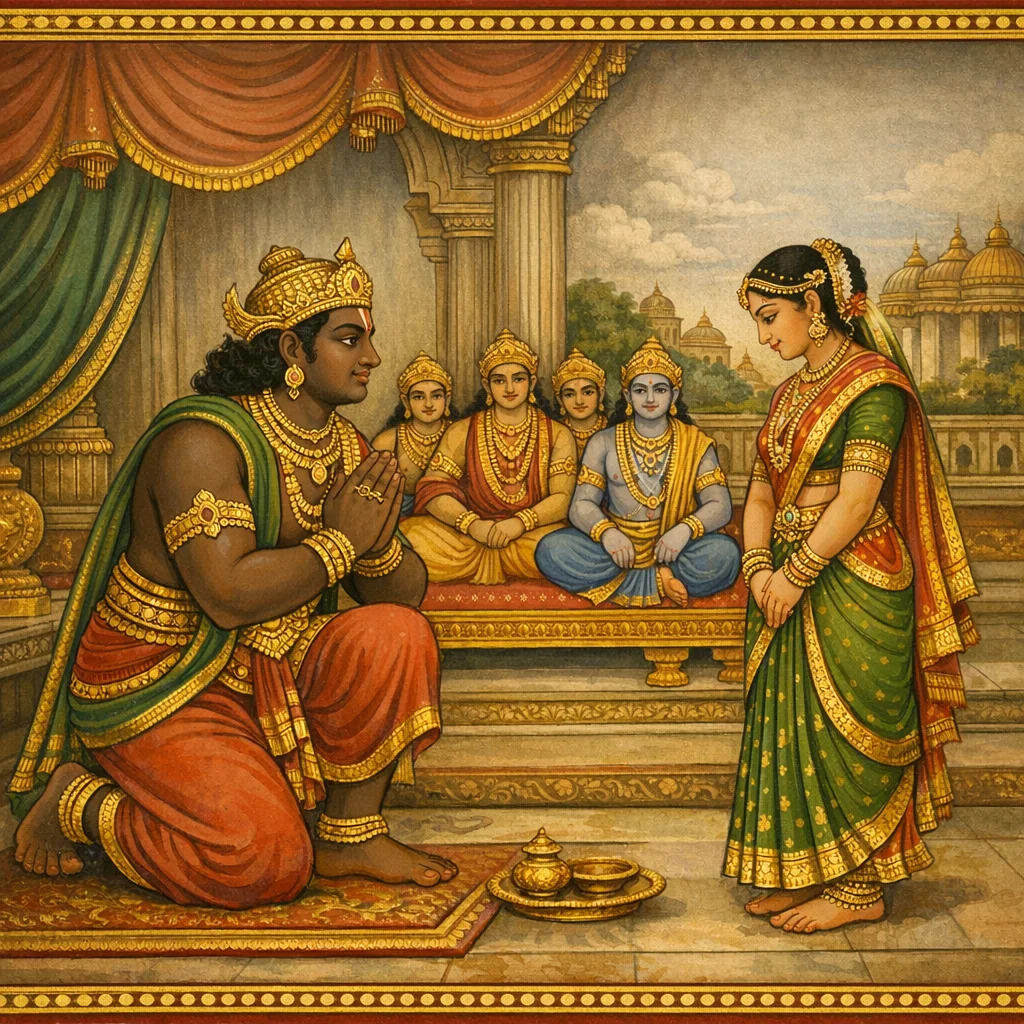
Narrated by Sūta, this chapter unfolds a courtly heroic episode. Ghaṭotkaca arrives outside Prāgjyotiṣa and beholds a radiant, multi-storied golden mansion filled with music and attendants. At the gate the doorkeeper Karṇaprāvaraṇā warns that many suitors have perished seeking Maurvī, Murā’s daughter, and even offers him pleasures and service; he rejects this as contrary to his purpose and insists on being announced as an atithi (honoured guest) for formal reception. Maurvī admits him but challenges him with a sharp genealogical riddle about whether one is “granddaughter or daughter,” born of an ethically disordered household. When it is not answered, she unleashes terrifying hordes; Ghaṭotkaca effortlessly counters them, subdues her, and is about to punish her severely, whereupon she yields, acknowledges his superiority, and offers service. The exchange then turns to social legitimacy: Ghaṭotkaca declares that a concealed or irregular union is improper, seeks formal permission from her kin (Bhagadatta), and escorts Maurvī to Śakraprastha. There, with Vāsudeva and the Pāṇḍavas’ approval, their marriage is solemnized according to prescribed norms; celebrations follow and the couple return to their realm. The chapter closes with the birth and rapid maturation of their son, named Barbarīka, and an intention to approach Vāsudeva at Dvārakā—linking lineage, dharma, and future narrative paths.
Shlokas
Verse 1
सूत उवाच । सोऽथ प्राग्ज्योतिषाद्बाह्ये महोपवनसंस्थितम् । सहस्रभूमिकं गेहमपश्यत हिरण्मयम्
Sūta said: Then, outside Prāgjyotiṣa, he beheld a golden mansion of a thousand stories, set within a vast pleasure-grove.
Verse 2
वेणुवीणामृदंगानां निःस्वनैः परिपूरितम् । दशसाहस्रसंख्याभिश्चेटीभिः परिपूरितम्
It was filled with the sounds of flutes, vīṇās, and mṛdaṅgas, and it was thronged with maidservants numbering ten thousand.
Verse 3
आयाद्भिः प्रतियाद्भिश्च भगदत्तस्य किंकरैः । किमिच्छन्तीति भगिनी पृच्छकैरभिपूरितम्
It was crowded with Bhagadatta’s attendants coming and going—questioners asking, “Sister, what do you desire?”
Verse 4
तदासाद्य स हैडंबिर्मेरोः शिखरवद्ग्रहम् । द्वारि स्थितां संददर्श कर्णप्रावरणां सखीम्
Reaching that house—lofty like a peak of Mount Meru—the Haiḍambī saw at the doorway a female companion named Karṇaprāvaraṇā standing there.
Verse 5
तामाह ललितं वीरो भद्रे सा क्व मुरोः सुता । कामुको द्रष्टुमिच्छामि दूरदेशागतोऽतिथिः
The hero addressed her courteously: “O gentle lady, where is the daughter of Mura? I am a suitor who longs to behold her—an honored guest come from a far land.”
Verse 6
कर्णप्रावरणोवाच । किं तवास्ति महाबाहो तया मौर्व्या प्रयोजनम् । कोटिशो निहताः पूर्वं तया कामुक कामुकाः
Karṇaprāvaraṇā said: “O mighty-armed one, what business have you with Mura’s daughter? In former times, countless suitors—lover after lover—have been slain by her.”
Verse 7
तव रूपमहं दृष्ट्वा घटहासं सदोत्कचम् । प्रणम्य पादयोर्वीर स्थिता ते वचनंकरी
Beholding your form—marked by a grim, mocking laugh and ever poised for action—I bow at your feet, O hero, and stand ready to do your bidding.
Verse 8
तन्मया सह मोदस्व भुंक्ष्व भोगांश्च कामुक । दास्याम्यनुचराणां ते त्रयाणां च प्रियात्रयम्
“Therefore rejoice with me; O suitor, partake of these pleasures as well. I shall also grant a triad of beloved women for your three attendants.”
Verse 9
घटोत्कच उवाच । कल्याणि किंवदंती ते प्रमुक्ता स्वोचिता शुभे । पुनर्नैतद्वचस्तुभ्यं विशते मम चेतसि
Ghaṭotkaca said: “Auspicious lady, what is this tale you have uttered—so unseemly and ill-omened? Even now, your words do not enter my heart.”
Verse 10
वामः कामो यतो भद्रे यस्मिन्नुपनिबद्ध्यते । स चात्र नैव बध्नाति तद्वयं कि प्रकुर्महे
O auspicious lady, love turns perverse when it fastens upon an unworthy object; and here it does not bind me at all. So what are we to do?
Verse 11
अद्य ते स्वामिनी दृष्टा जिता वा क्रीडते मया । तया वा विजितो यास्ये पूर्वेषां कामिनां गतिम्
Today I shall behold your mistress: either, having conquered her, I will sport with her; or, conquered by her, I shall go the way of the former men driven by desire.
Verse 12
कर्णप्रावरणे तस्माच्छीघ्रमेव निवेद्यताम् । यथा दर्शनमात्रेण पूजयंत्यतिथिं खलु
Therefore, whisper it quickly into her ear and announce me; for indeed a guest is honored even by mere audience at first sight.
Verse 13
इति भैमेर्वचः श्रुत्वा प्रस्खलंती निशाचरी । प्रासादशिखरस्थां तां मौर्वीमेवं वचोवदत्
Having heard these words of Bhīma’s son, the night-roaming woman (the maidservant), stumbling in haste, spoke thus to Maurvī who stood upon the palace rooftop.
Verse 14
देवि कोऽपि युवा श्रीमांस्त्रैलोक्येष्वमितप्रभः । कामातिथिस्तव द्वारि वर्तते दिश तत्परम्
Goddess, a certain splendid young man, of immeasurable radiance in the three worlds, stands at your door as a ‘guest of desire’. Command what is to be done.
Verse 15
कामकटंकटोवाच । मुच्यतां शीघ्रमेवासौ किमर्थं वा विलंबसे । कदाचिद्देवसंगत्या समयो मेऽभिपूर्यते
Kāmakaṭaṃkaṭa said: “Release him at once—why do you delay? Perhaps, by some divine concurrence, my appointed time is being fulfilled.”
Verse 16
इत्युक्तवचनाच्चेटी प्राप्यावोचद्घटोत्कचम् । व्रज शीघ्रं कामुक त्वं तस्या मृत्योश्च सन्निधौ
After being instructed thus, the maidservant went and said to Ghaṭotkaca: “Go quickly, O lustful one—into her presence, and into the very vicinity of death.”
Verse 17
इत्युक्तः स प्रहस्यैव तत्रोत्सृज्य स्वकानुगान् । प्रविवेश गृहं भैमिः सिंहो मेरुगुहामिव
Thus addressed, he merely laughed; leaving his own followers there, Bhīma’s son entered the house—like a lion entering a cave of Meru.
Verse 18
स पश्यञ्छुकसंघातान्पारावतगणांस्तथा । सारिकाश्च मदोन्मत्ताश्चेटीस्तां चाप्यपश्यत
There he saw flocks of parrots, and likewise groups of pigeons; and he also saw mynas, intoxicated with excitement, and that maidservant as well.
Verse 19
रूपेण वयसः चैव रतेरपि रतिंकरीम् । आंदोलकसुखासीनां सर्वाभरणभूषिताम्
She appeared captivating in beauty and youth, a very embodiment that kindles desire. Seated comfortably upon a swing, she was adorned with every kind of ornament.
Verse 20
तां विद्युतमिवोन्नद्धां दृष्ट्वा भैमिरचिंतयत । अहो कृष्णेन पित्रा मे निर्दिष्टेयं ममोचिता
Seeing her, radiant like a flash of lightning, Bhaimi reflected: “Ah! She whom my father Kṛṣṇa has indicated for me is truly suited to me.”
Verse 21
न्याय्यमेतत्कृते पूर्वं नष्टा यत्कामिनां गणाः । शरीरक्षयपर्याप्तं क्षीयते यदि कामिनाम्
“It is only fitting,” he thought, “that in former times multitudes of lovers perished—if, for the sake of desire, the very body itself is worn away to the point of ruin.”
Verse 22
कामिनीनां कृते येषां क्षीयते गणनात्र का । एवं बहुविधं कामी चिंतयन्नाह भीमभूः
“For the sake of women, when men waste away—what counting can there be of such cases?” Thus, thinking in many ways, the love-struck Bhīmabhū spoke.
Verse 23
निष्ठुरे वज्रहृदये प्राप्तोऽहमतिथिस्तव । उचितां तत्सतां पूजां कुरु या ते हृदि स्थिता
“O cruel one with a heart like a thunderbolt! I have come as your guest. Perform, as befits the virtuous, the proper hospitality that abides in your heart.”
Verse 24
इति हैडंबिवचनं श्रुत्वा कामकटंकटा । विस्मिताभूत्तस्य रूपात्स्वं निनिंद च बालिशम्
Hearing these words of Haiḍambī, Kāma-kaṭaṅkaṭā was astonished at his form; and she reproached herself as foolish.
Verse 25
धिगहं यन्मया पूर्वं समयः स कृतोऽभवत् । न कृतोऽभूद्यदि पुरा अभविष्यदसौ पतिः
“Shame upon me, for earlier I made that agreement! Had it not been made before, he would have become my husband.”
Verse 26
इति संचिन्तयन्ती सा भैमिं वचनमब्रवीत् । वृथा त्वमागतो भद्र जीवन्याहि पुनः सुखी
Thinking thus, she spoke these words to Bhaimi: “Good sir, you have come in vain. Go back alive, and be happy once more.”
Verse 27
अथ कामयसे मां त्वं तत्कथां शीघ्रमुच्चर । कथामाभाष्य यदि मां सन्देहे पातयिष्यसि । ततोऽहं वशगा जाता हतो वा स्वप्स्यसे मया
“Now, if you desire me, then speak that tale quickly. But if, after beginning the story, you cast me into doubt, then I shall not yield to you—either I will come under your power, or you will be slain by me and lie as though asleep.”
Verse 28
सूत उवाच । इत्युक्तवचनामेतां नेत्रोपांतेन वीक्ष्य सः
Sūta said: After she had spoken these words, he glanced at her from the corner of his eye.
Verse 29
स्मृत्वा चराचरगुरुं कृष्णमारब्धवान्कथाम् । कस्यांचिदभवत्पत्न्यां युवा कोऽप्यजितेद्रियः
Remembering Kṛṣṇa, the preceptor of all moving and unmoving beings, he began to narrate the tale. In the house of a certain man there lived a young fellow—one who had not conquered his senses.
Verse 30
तस्य चैका सुता जज्ञे भार्या तस्य मृताऽभवत् । ततो बालकिकां पुत्रीं ररक्ष च पुपोष च
To him a single daughter was born, and his wife passed away. Thereafter he protected and nourished that little girl, his own daughter.
Verse 31
सा यदाभूद्यौवनगा व्यंजितावयवा शुभा । प्रोल्लसत्कुचमध्यांगी प्रोल्लसन्मुखपंकजा
When she reached youth—auspicious, with well-developed limbs—her slender waist was framed by budding breasts, and her lotus-like face shone brightly.
Verse 32
तदास्य कामलुलितमालानं प्रजहौ मनः । प्रोवाच तां च तनयां समालिंग्य दुराशयः
Then his mind—shaken and entangled by desire—lost all propriety. Embracing his own daughter, the wicked-minded man spoke to her.
Verse 33
प्रातिवेश्मकपुत्री त्वं मयानीयात्र पोषिता । भार्यार्थं सुचिरं कालं तत्कार्यं साधय प्रिये
“You are the daughter of a neighbor, brought here and raised by me. For a long time I have kept you for the sake of a wife—now accomplish that purpose, dear.”
Verse 34
इत्युक्ता सा च मेने च तत्तथैव वचस्तदा । पतित्वेन च भेजे तं भार्यात्वेन स तां तथा
Thus addressed, she accepted his words just as he spoke them. She related to him as to a husband, and he likewise took her as a wife.
Verse 35
ततस्तस्यां सुता जज्ञे तस्मान्मदनरासभात् । वद सा तस्य भवति किं दौहित्री सुताऽथवा । एनं प्रश्नं मम ब्रूहि शीघ्रं चेच्छक्तिरस्ति ते
Then, from that lust-driven brute, a daughter was born to her. Tell me: to him, is she a granddaughter or a daughter? Answer this question for me quickly, if you have the power.
Verse 36
सूत उवाच । इति प्रश्नं सा च श्रुत्वा चिंतयद्बहुधा हृदि
Sūta said: Hearing this question, she pondered it in her heart in many ways.
Verse 37
न च पश्यति निर्द्धारं प्रश्नस्यास्य कथंचन । ततः प्रश्नेन विजिता स्वां शक्तिं समुपाददे
Yet she could not arrive at any definite conclusion to that question. Defeated by the question, she then summoned up her own power.
Verse 38
अताडयद्रुक्मरज्जुं कराभ्यां दोलकस्य च । ततो रक्षांसि निष्पेतुः कोटिशो भीषणान्यति
With both hands she struck the golden cord of the swing; and then, in countless millions, terrifying rākṣasas burst forth.
Verse 39
सिंहव्याघ्रवराहाश्च महिषाश्चित्रका मृगाः । समीक्ष्य तानसंख्येयान्खादितुं धावतो रुषा
Lions, tigers, boars, buffaloes, and spotted deer—seeing those countless beings—rushed forward in fury, intent on devouring them.
Verse 40
अवादयन्नखौ भैमिः कनिष्ठांगुष्ठजौ हसन् । ततो विनिःसृतास्तत्र द्विगुणा राक्षसादयः
Laughing, Bhaimī snapped his thumb and little finger; instantly, Rakshasas and others emerged there in double the number.
Verse 41
तैर्मौर्वीनिर्मिताः सर्वे क्षणादेव स्म भक्षिताः । विजितायां स्वशक्तौ च बलशक्तिमथाददे
All those created by Maurvī were devoured in a mere instant; seeing her own mystic power vanquished, she resorted to physical might.
Verse 42
उत्थाय सहसा दोलात्खड्गमादातुमैच्छत । उत्तिष्ठंतीं च तां भैमिरनुसृत्य जवादिव
Rising suddenly from the swing, she sought to seize a sword; but as she rose, Bhaimī pursued her with the speed of the wind.
Verse 43
केशेष्वादाय सव्येन पाणिनाऽपातयद्भुवि । ततः कंठे सव्यपादं दत्त्वादाय च कर्तिकाम्
Grasping her hair with his left hand, he threw her to the ground. Then, placing his left foot on her throat, he took up a knife.
Verse 44
दक्षिणेन करेणास्याश्छेत्तुमैच्छत नासिकाम् । विस्फुरंती ततो मौर्वी मंदमाह घटोत्कचम्
With his right hand, he intended to cut off her nose. Then Maurvī, trembling violently, spoke softly to Ghaṭotkaca.
Verse 45
प्रश्नेन शक्त्या च बलेन नाथ त्रिधा त्वयाहं विजिता नमस्ते । तन्मुंच मां कर्मकरी तवास्मि समादिश त्वं प्रकरोमि तच्च
By your questioning, by your śakti, and by your strength, O Lord, I have been conquered threefold—salutations to you. Release me; I am your servant to do your work. Command me, and that I shall perform.
Verse 46
घटोत्कच उवाच । यद्येवं तर्हि मुक्तासि भूयो दर्शय यद्बलम् । एवमुक्त्वा मुमोचैनां मुक्ता चाह प्रणम्य सा
Ghaṭotkaca said: “If so, then you are released. Show again what your power is.” Saying this, he freed her; and once released, she bowed in reverence and spoke.
Verse 47
जानामि त्वां महाबाहो वीरं शक्तिमतां वरम् । सर्वराक्षसभर्तारं त्रैलोक्येऽमितविक्रमम्
I know you, O mighty-armed hero—best among the powerful—the supporter and lord of all rākṣasas, of immeasurable valor throughout the three worlds.
Verse 48
गुह्यकाधिपतिस्त्वं हि कालनाभ इति स्मृतः । षष्टिकोटिपतिर्जातो यक्षरक्षाकृते भुवि
You are indeed the lord of the Guhyakas, remembered as Kālanābha. Born as the commander of sixty koṭis, you dwell on earth for the protection of the Yakṣas.
Verse 49
इति मां प्राह कामाख्या सर्वं तत्संस्मराम्यहम् । इदं गेहं सानुगं मे दत्तं मयात्मना तव
“Thus spoke Kāmakhyā to me; I remember all of that. This house—together with its attendants—has been given by me, with my very self, to you.”
Verse 50
समादिश प्राणनाथ कमादेशं करोमि ते । घटोत्कच उवाच । प्रच्छन्नस्तस्य घटते न विवाहः कथंचन
“Command me, O lord of my life; I shall fulfill your wish.” Ghaṭotkaca said: “So long as he remains concealed, no marriage can take place—by any means.”
Verse 51
मोर्वि यस्य हि वर्तंते पितरौ बांधवास्तथा । तन्मां शीघ्रं वह शुभे शक्रप्रस्थाय संप्रति
“O Maurvī—since his parents and kinsmen are present—carry me quickly, O auspicious one, to Śakraprastha, right now.”
Verse 52
अयं कुलक्रमोऽस्माकं यद्भार्या पतिमुद्वहेत् । तत्रानुज्ञां समासाद्य परिणेष्यामि त्वामहम्
“This is the tradition of our lineage—that the wife chooses and accepts the husband. Therefore, after obtaining permission there, I shall duly marry you.”
Verse 53
भगदत्तमथो नाथं ततो मौर्वी न्यवेदयत् । समादाय बहुद्रव्यं विससर्जाथ भ्रातरम्
Then Maurvī informed her lord, Bhagadatta. Taking abundant wealth, she then dispatched her brother with it.
Verse 54
ततः पृष्ठिं समारोप्य घटोत्कचमनिंदिता । नानाद्रव्यपरीवारा शक्रप्रस्थं समाव्रजत्
Thereupon the blameless lady mounted Ghaṭotkaca upon her back; accompanied by many valuables and attendants, she set out for Śakraprastha.
Verse 55
ततोऽसौ वासुदेवेन पांडवैश्चाभिनंदितः । शुभे लग्ने पाणिमस्या जगृहे भीमनंदनः
Then he was honored by Vāsudeva and by the Pāṇḍavas; at an auspicious moment, Bhīma’s son took her hand in sacred marriage.
Verse 56
कुरूणां राक्षसानां च प्रोक्तोत्तमविधानतः । उद्वाह्य तां तद्धनैश्च तर्पयामास पांडवान्
According to the excellent rites prescribed for both the Kurus and the Rākṣasas, having married her, he satisfied the Pāṇḍavas with those very riches.
Verse 57
कुंती च द्रौपदी चोभे मुमुदाते नितांततः । मंगलान्यस्य चक्राते मौर्व्याश्च धन तर्पिते
Kuntī and Draupadī—both—rejoiced exceedingly. They bestowed auspicious blessings upon him, and Maurvī too was satisfied with wealth.
Verse 58
ततो विवाहे निर्वृत्ते प्रतिपूज्य घटोत्कचम् । भार्यया सहितं राजा स्वराज्याय समादिशत्
When the wedding was concluded, the king honored Ghaṭotkaca in return and then directed him—together with his wife—to depart for his own kingdom.
Verse 59
मौर्व्याऽज्ञां शिरसा गृह्य हैडंबिर्भार्ययान्वितः । शुभं हिडम्बस्य वने स्वराज्यं समुपाव्रजत्
Accepting Maurvī’s command with bowed head, Haiḍambi—accompanied by his wife—set forth auspiciously and attained independent rule in the forest of Hiḍamba.
Verse 60
ततो राक्षसयोषाभिर्वीरकांस्यैः प्रवर्धितः । महोत्सवेन महता स्वराज्ये प्रमुमोद सः
Then, nurtured and upheld by the heroic rākṣasa women, he rejoiced in his own sovereignty and celebrated with a great and splendid festival.
Verse 61
ततो वनेषु चित्रेषु निम्नगापुलिनेषु च । रेमे सह तया भैमिर्मंदोदर्येव रावणः
Thereafter, in delightful forests and along the sandy banks of rivers, Bhaimi sported with her—like Rāvaṇa with Mandodarī.
Verse 62
एवं विक्रीडतस्तस्य गर्भो जज्ञे महाद्युतेः । हेडंबै राक्षसव्याघ्राद्बालसूर्यसमप्रभः
As he thus sported, a child was born to that great-splendoured one—by Heḍambā, from the tiger among rākṣasas—shining like the rising sun.
Verse 63
स जातमात्रो ववृधे क्षणाद्यौवनगोऽभवत् । नीलमेघचयप्रख्यो घटास्यो दीर्घलोचनः
Born only a moment, he grew at once into youth—dark like a mass of blue clouds, pot-faced, and long-eyed.
Verse 64
ऊर्ध्वकेशश्चोर्ध्वरोमा पितरौ प्रणतोऽब्रवीत् । प्रणमामि युवां चोभौ जातस्य पितरौ गुरू
With hair standing upright and his body-hair bristling, he bowed to his parents and said: “I bow to you both—my parents, my revered teachers—for I have been born.”
Verse 65
भवतोर्हि प्रियं कृत्वा अनृणः स्यां सदा ह्यहम् । भवद्भ्यां दत्तमिच्छामि अभिधानं यथात्मनः
For by doing what is dear to you both, I shall ever be free of debt to you; therefore I desire a name for myself, bestowed by you two, in accord with my own nature.
Verse 66
अतः परं तु यच्छ्रेयं कर्तव्यं प्रोन्नतिप्रदम् । ततो भेमिस्तमालिंग्य पुत्रं वचनमब्रवीत्
“Now then, tell us what is best to be done—what grants true rise and excellence.” Thereupon Bhaimī embraced his son and spoke these words.
Verse 67
बर्बराकारकेशत्वाद्बर्बरीकाभिधो भवान् । भविष्यति महाबाहो कुलस्यानन्दवर्धनः
“Because your hair is of a wild, bristling form, you shall be known as Barbarīka, O mighty-armed one—and you will increase the joy of our lineage.”
Verse 68
श्रेयश्च ते यत्परमं दृढं च तत्कीर्त्यते बहुधा विप्र मुख्यैः । प्रक्ष्यावहे तद्यदुवंशनाथं गत्वा पुरीं द्वारकां वासुदेवम्
That highest and steadfast good for you is spoken of in many ways by foremost brāhmaṇas. Let us go to the city of Dvārakā and ask Vāsudeva, the Lord of the Yadu line, about it.