Adhyaya 58
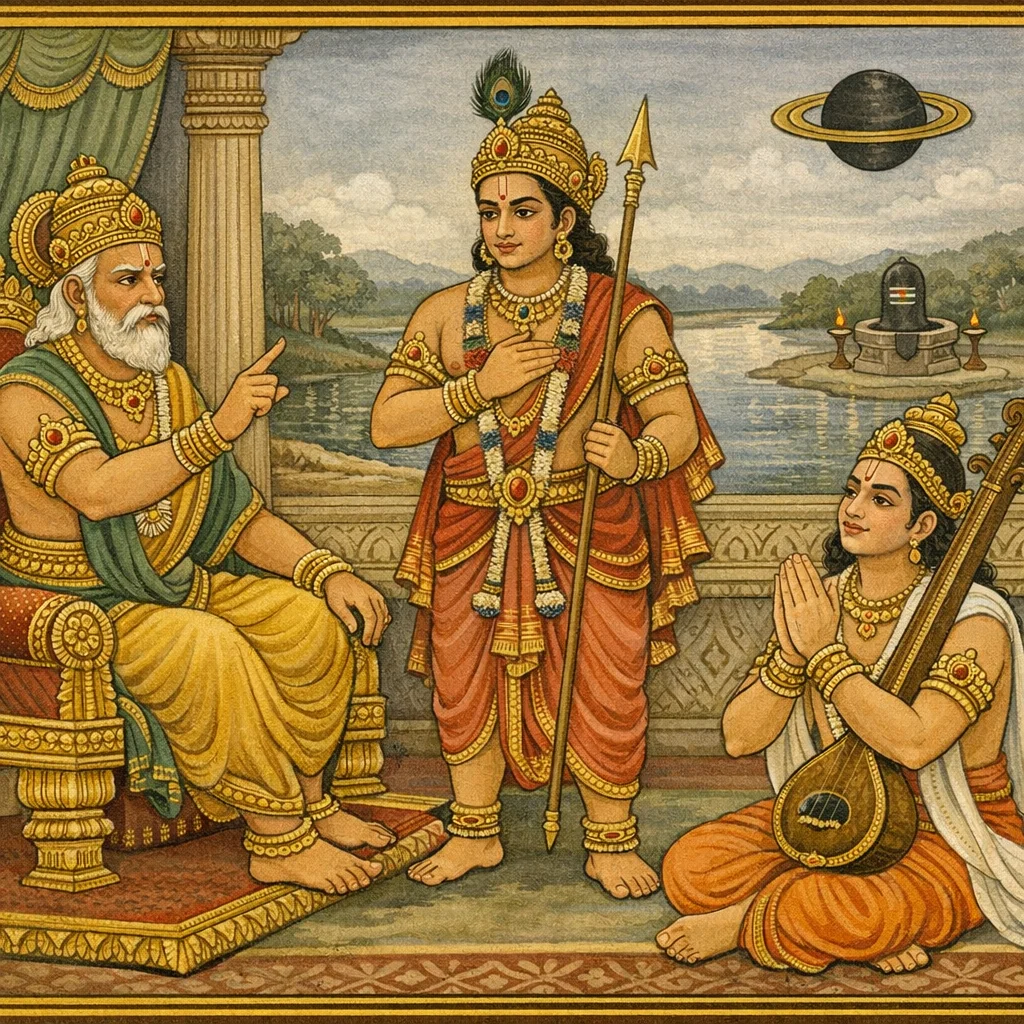
Chapter 58 opens with Arjuna asking Nārada why a supremely powerful holy region is nevertheless called a “hidden sacred field” (guptakṣetra). Nārada recounts an ancient episode: countless tīrtha-deities assemble in Brahmā’s court, seeking a decision on spiritual precedence. Brahmā wishes to offer a single arghya to the foremost tīrtha, yet neither he nor the tīrthas can readily judge who is supreme. The tīrtha known as Mahī-sāgara-saṅgama—the meeting of land and ocean, presented as a composite tīrtha—claims primacy with three reasons, including its connection with a liṅga installed by Guhā/Skanda and its recognition by Nārada. Dharma rebukes this self-praise, teaching that the virtuous should not proclaim their own merits even when true, and declares that the place will become “unfamed,” giving rise to the name Stambha-tīrtha (stambha: pride/obstinacy). Guhā challenges the severity while accepting the moral principle: the site may remain hidden for a time, but will later be renowned as Stambha-tīrtha and bestow the complete fruits of all tīrthas. A detailed comparison of merits follows, especially regarding Saturday new-moon observances (Śani-vāra amāvāsyā), said to equal multiple major pilgrimages. The chapter ends with Brahmā granting arghya and acknowledging the tīrtha’s status, and Nārada stating that hearing this account purifies one from sins.
Shlokas
Verse 1
अर्जुन उवाच । गुप्तक्षेत्रमिदं कस्मात्कस्माद्गुप्तं च नारद । यस्य प्रभावः सुमहान्नैव कस्यापि संस्तुतः
Arjuna said: O Nārada, why is this called a “hidden sacred region,” and why has it remained concealed, though its power is immense and praised by none?
Verse 2
नारद उवाच । पुरातनामत्र कथां गुप्तक्षेत्रस्य कारणे । शृणु पांडव शापेन गुप्तमासीदिदं यथा
Nārada said: Here is an ancient account explaining the cause of this hidden sacred region. Listen, O Pāṇḍava—how it became concealed due to a curse.
Verse 3
पुरा निमित्ते कस्मिंश्चित्सर्वतीर्थाधिदैवताः । प्रणामाय ब्रह्मसदो ब्रह्माणं सहिता ययुः
Once, on a certain occasion, the presiding deities of all tīrthas gathered together and went to Brahmā, who sits in the divine assembly, to bow to him in reverence.
Verse 4
पुष्करस्य प्रभासस्य निमिषस्यार्बुदस्य च । कुरुक्षेत्रस्य क्षेत्रस्य धर्मारण्यस्य देवताः
The presiding deities of Puṣkara, Prabhāsa, Nimiṣa, and Arbuda—together with those of Kurukṣetra and Dharmāraṇya—also came.
Verse 5
वस्त्रापथस्य श्वेतस्य फल्गुतीर्थं स्य चापि याः । केदारस्य तथान्येषां क्षेत्राणां कोटिशोऽपि याः
So too came the presiding deities of Vastrāpatha, Śveta, and Phalgutīrtha; likewise those of Kedāra—and even of countless other sacred regions besides.
Verse 6
सिंधुसागरयोगस्य महीसागरकस्य च । गंगासागरयोगस्य अधिपाः सूकरस्य च
Present were the lords of the sacred confluence of the Sindhu with the ocean, of Mahīsāgaraka, and of the Gaṅgā’s meeting with the sea (Gaṅgāsāgara), as well as of Sūkara-tīrtha.
Verse 7
गंगारेवामुखीनां तु नदीनामधिदेवताः । शोणह्रदपुरोगाणां ह्रदानां चाधिदेवताः
The presiding deities of the rivers, led by the Gaṅgā and the Revā, and also the presiding deities of the lakes, led by Śoṇa-hrada, came there.
Verse 8
ते सर्वे संघशो भूत्वा श्रैष्ठ्य ज्ञानाय चात्मनः । समुपाजग्मुरमला महतीं ब्रह्मणः सभाम्
All of them, forming themselves into an assembly, came—pure and untainted—to the great court of Brahmā, seeking true excellence and right understanding for themselves.
Verse 9
तत्र तीर्थानि सर्वाणि समायातानि वीक्ष्य सः । उत्तस्थौ सहितः सर्वैः सभासद्भिः पितामहः
There, seeing that all the tīrthas had assembled, Pitāmaha (Brahmā) rose, together with all the members of his court.
Verse 10
प्रणम्य सर्वतीर्थेभ्यः प्रबद्धकरसंपुटः । तीर्थानि भगवानाह विस्मयोत्फुल्ललोचनः
Having bowed to all the tīrthas with hands joined in reverence, the Blessed Lord (Brahmā) addressed the tīrthas, his eyes widened in wonder.
Verse 11
अद्य नः सद्म सकलं युष्माभिरतिपावितम् । वयं च पाविता भूयो युष्माकं दर्शनादपि
Today our entire abode has been exceedingly purified by you; and we ourselves are purified all the more, simply by beholding you.
Verse 12
तीर्थानां दर्शनं श्रेयः स्पर्शनं स्नानमेव च । कीर्तनं स्मरणं चापि न स्यात्पुण्यं विना परम्
For tīrthas, blessed indeed are: seeing them, touching them, and bathing in them; and even praising them and remembering them—none of these occurs without producing supreme merit (puṇya).
Verse 13
महापापान्विता रौद्रास्त्वपि ये स्युः सुनिष्ठुराः । तेऽपि तीर्थैः प्रपूयंते किं पुनर्धर्मसंस्थिताः
Even those who are laden with great sins—fierce and exceedingly cruel—are purified by sacred tīrthas. How much more, then, are those established in dharma made pure?
Verse 14
एवमुक्त्वा पुलस्त्यं स पुत्रमभ्यादिदेश ह । शीघ्रमर्घं तीर्थहेतोः समानय यथार्चये
Having thus spoken to Pulastya, he then instructed his son: “Quickly bring an argha—an offering of reverent water—for the sake of the tīrthas, so that I may worship them duly.”
Verse 15
पुलस्त्य उवाच । असंख्यानीह तीर्थानि दृश्यंते पद्मसंभव । यथा दिशसि मां तात अर्घमेकमुपानये
Pulastya said: “O Lotus-born Brahmā, countless tīrthas are seen here. As you direct me, dear father, I shall bring a single argha to be offered.”
Verse 16
धर्मप्रवचने श्लोको यत एष प्रगीयते
For in expositions of dharma, this very verse is traditionally recited as an authoritative maxim.
Verse 17
भवेयुर्यद्यसंख्याता अर्घयोग्याः समर्चने । ततस्तेषां वरिष्ठाय दातव्योऽर्घः किलैकतः
If, in an act of worship, there are innumerable recipients worthy of argha, then indeed a single argha should be offered to the best among them.
Verse 18
ब्रह्मोवाच । साभिप्रायं साधु वत्स त्वया प्रोक्तमिदं वचः । एवं कुरुष्वैकमर्घमानय त्वं सुशीघ्रतः
Brahmā said: “Well spoken, my child—your words are purposeful and well-intended. Therefore do as said: bring a single argha, and bring it with all haste.”
Verse 19
नारद उवाच । ततः पुलस्त्यो वेगेन समानिन्येऽर्घमुत्तमम् । तं च ब्रह्मा करे गृह्य तीर्थान्याहेति भारतीम्
Nārada said: Then Pulastya swiftly brought an excellent argha. Brahmā took it in his hand and, with sacred speech, addressed the tīrthas.
Verse 20
सर्वैर्भवद्भिः संहत्य मुख्यस्त्वेकः प्रकीर्त्यताम् । तस्मै चार्घं प्रयच्छामि नैवं मामनयः स्पृशेत्
“All of you, assembled together, declare the single foremost among you. To that one I shall offer this argha—so that no impropriety may touch me in this act.”
Verse 21
तीर्थान्यूचुः । न वयं श्रेष्ठतां विद्मः कथंचन परस्परम् । अस्माद्धेतोश्च संप्राप्ता ज्ञात्वा देहि त्वमेव तत्
The tīrthas said: “We do not know, in any way, our superiority relative to one another. For this reason we have come here—do you yourself determine it and then bestow that argha.”
Verse 22
ब्रह्मोवाच । नाहं वेद्मि श्रेष्ठतां वः कथंचन नमोऽस्तु वः । सर्वे चापारमाहात्म्यं स्वयं मे वक्तुमर्हथ
Brahmā said: “I do not know your superiority in any way—salutations to you all. Each of you possesses immeasurable greatness; therefore, you should yourselves declare to me your own boundless mahātmya.”
Verse 23
यत्र गंगा गया काशी पुष्करं नैमिषं तथा । कुरुक्षेत्रं तथा रेवा महीसागरसंगमः
“Where the Gaṅgā, Gayā, Kāśī, Puṣkara, and Naimiṣa are present; where Kurukṣetra and the Revā are present—there too is the confluence of Mahī, the Earth, with the Ocean.”
Verse 24
प्रभासाद्यानि शतशो यत्र नस्तत्र का मतिः
When hundreds of tīrthas beginning with Prabhāsa are present there, what doubt or counter-argument can remain?
Verse 25
नारद उवाच । एवमुक्ते पद्मभुवा कोपि नोवाच किंचन । चिरेणेदं ततः प्राह महीसागरसंगमः
Nārada said: “When Padmabhū (Brahmā) had spoken thus, no one said anything. After a long while, the Mahīsāgara-saṅgama spoke these words.”
Verse 26
ममैनमर्घं त्वं यच्छ चतुरानन शीघ्रतः । यतः कोटिकलायां वा मम कोऽपि न पूर्यते
“O Four-faced One, quickly grant this argha, this honor-offering, to me; for even in a span of ten million kalās, no equal of mine is ever found.”
Verse 27
यतश्चेन्द्रद्युम्नराज्ञा ताप्यमाना वसुंधरा । सर्वतीर्थद्रवीभूता महीनामाभवन्नदी
“For when the Earth was scorched by King Indradyumna, she melted into the essence of all tīrthas and became a river named Mahī.”
Verse 28
सा च सर्वाणि तीर्थानि संयुक्तानि मया सह । सर्वतीर्थमयस्तस्मादस्मि ख्यातो जगत्त्रये
“And she, the Mahī, has all tīrthas united with her together with me. Therefore I am renowned in the three worlds as ‘made of all tīrthas’.”
Verse 29
गुहेन च महालिंगं कुमारेश्वरमीश्वरम् । संस्थाप्य तीर्थमुख्यत्वं मम दत्तं महात्मना
And Guha (Skanda) established the great Liṅga—Lord Kumāreśvara, the Īśvara. Having installed it, that great-souled one bestowed on me the status of foremost among tīrthas.
Verse 30
नारदेनापि मत्तीरे स्थानं संस्थाप्य शोभनम् । सर्वेभ्यः पुण्यक्षेत्रेभ्यो दत्तं श्रैष्ठ्यं पुरा मम
And Nārada too established a splendid sacred seat upon my bank. Formerly, pre-eminence over all holy fields was granted to me.
Verse 31
एवं त्रिभिर्हेतुवरैर्ममेवार्घः प्रदीयताम् । गुणैकदेशेऽपि समं मम तीर्थं न वै परम्
Thus, for these three excellent reasons, let the argha be offered to me alone. Even in a single fraction of its virtues, no other tīrtha is equal to mine—much less superior.
Verse 32
इत्युक्ते वचने पार्थ तीर्थराजेन भारत । सर्वे नोचुः किंचनापि किं ब्रह्मा वक्ष्यतीति यत्
When these words were spoken by the King of Tīrthas, O Pārtha—O Bhārata—none of them said anything, wondering, “What will Brahmā say?”
Verse 33
ततो ब्रह्मसुतो ज्येष्ठः श्वेतमाल्यानुलेपनः । दक्षिणं बाहुमुद्धत्य धर्मो वचनमब्रवीत्
Then Dharma—the eldest son of Brahmā, adorned with white garlands and unguents—raised his right arm and spoke these words.
Verse 34
अहो कष्टमिदं कूक्तं तीर्थराजेन मोहतः । सन्तोऽपि न गुणा वाच्याः स्वयं सद्भिः स्वका यतः
Alas—how grievous is this utterance, spoken in delusion by the “king of tīrthas”! For even when one truly possesses virtues, the good do not proclaim their own qualities, since they are one’s own.
Verse 35
स्वीयान्गुणान्स्वयं यो हि सम्पत्सु प्रक्षिपन्परान् । ब्रवीति राजसस्त्वेष ह्यहंकारो जुगुप्सितः
Whoever, in times of prosperity, casts others down and speaks of his own virtues—this is a rājasic ego, a loathsome pride.
Verse 36
तस्मादस्मादहंकारात्सत्स्वप्येषु गुणेषु च । अप्रख्यातं ध्वस्तरूपमिदं तीर्थं भविष्यति
Therefore, because of this very ego—though virtues may indeed be present—this tīrtha will become obscure, its former glory ruined.
Verse 37
स्तंभतीर्थमिति ख्यातं स्तम्भो गर्वः कृतो यतः । स्तंभस्य हि फलं सद्यो ब्रह्मापि प्राप किं परः
It will be known as “Stambhatīrtha”, because arrogance (garva) was made into a “pillar” (stambha) there. Indeed, the fruit of such pride comes immediately—if even Brahmā met it, what then of others?
Verse 38
इत्युक्ते धर्मदेवेन हाहेति रव उत्थितः । ततः शीघ्रं समायातो योगीशोऽहं च पांडव
When Dharma-deva had spoken thus, a cry of “Alas! Alas!” arose. Then, swiftly, the Lord of Yogins arrived—and I too, O Pāṇḍava.
Verse 39
गुहस्ततो वचः प्राह धर्मदेवसमागमे । अयुक्तमेतच्छापोऽयं दत्तो यद्धर्म धार्ष्ट्यतः
Then Guha spoke in the presence of Dharma-deva: “O Dharma, this curse is not fitting, for it was bestowed through rashness and reckless boldness.”
Verse 40
ब्रवीतु कोऽपि सर्वेषां तीर्थानां तेषु वर्तताम् । यद्यैश्वर्यं नार्हतेसौ महीसागरसंगमः
“Let anyone speak of all the tīrthas that exist; if this confluence of earth (or river) and ocean does not deserve eminence, then what possibly could?”
Verse 41
तिष्ठत्वात्मगुणो यच्च तीर्थराजेन वर्णितः । तत्र को विगुणो नाम मिथ्यावादी यतो गुणः
“Let the innate virtue praised by the ‘king of tīrthas’ remain just as it is. Who there could be called ‘without merit’? For then virtue itself would become a liar.”
Verse 42
अहो न युक्तं पालानां यदि तेऽप्यविमृश्य च । एवमर्थान्करिष्यंति कं यांति शरणं प्रजाः
“Alas, it is not fitting for protectors (rulers) if even they act without reflection in such matters. If they decide affairs like this, to whom will the people go for refuge?”
Verse 43
एवमुक्ते गुहेनाथ धर्मो वचनमब्रवीत् । सत्यमेतद्यदर्होऽयं महीसागरसंगमः
When the Lord Guha had spoken thus, Dharma replied: “Indeed it is true—this confluence of earth (or river) and ocean is truly worthy of the highest sanctity.”
Verse 44
मुख्यत्वं सर्वतीर्थानामर्घं चापि पितामहात् । किंतु नात्मगुणा वाच्याः सतामेतत्सदा व्रतम् । परोक्षेपि स्वप्रशंसा ब्रह्माणमपि चालयेत्
Though this place holds primacy among all tīrthas and has received honor even from Pitāmaha (Brahmā), one must still not proclaim one’s own merits—this is the perpetual vow of the virtuous. Even indirect self-praise can unsettle even Brahmā.
Verse 45
स्वप्रशंसां प्रकुर्वाणः पराक्षेपसमन्विताम् । किं दिवः पृथिवीं पूर्वं ययातिर्न पपात ह । यानि पूर्वं प्रमाणानि कृतानीशेन धीमता
One who indulges in self-praise, mixed with disparaging others—does he not fall from heaven to earth, as King Yayāti once fell? Therefore, the ordinances earlier established by the wise Lord must be upheld as authoritative standards.
Verse 46
तानि सम्पालनीयानि तानि कोऽति क्रमेद्बुधः । तव पित्रा समादिश्य यदर्थं स्थापिता वयम्
Those ordinances must be carefully upheld—what wise person would transgress them? We were appointed for this very purpose by your father, under his command.
Verse 47
पालयामास एतच्च त्वं पालयितुमर्हसि । ईश्वराः स्वप्रमाणेन भवंतो यदि कुर्वते
He before you safeguarded this as well; you too ought to preserve it. If exalted lords act according to their own authority and standards, order is maintained thereby.
Verse 48
तदस्माभिरिदं युक्तं शासनं दिश्यतां परम् । एवमुक्त्वा स्वीयमुद्रां मोक्तुकामं वृषं तदा
Therefore, let this most fitting, supreme directive be issued by us. Having spoken thus, at that time (Dharma) desired to release his own seal/insignia, and turned toward the bull (vṛṣa), ready to let it go.
Verse 49
अहं प्रस्तावमन्वीक्ष्य वाक्यमेतदुदैरयम् । नमो धर्माय महते विश्वधात्रे महात्मने
Considering the situation, I spoke these words: “Salutations to mighty Dharma—the great-souled sustainer of the universe.”
Verse 50
ब्रह्मविष्णुशिवैर्नित्यं पूजितायाघनाशिने । यदि मुद्रां भवान्धर्म परित्यक्ष्यति कर्हिचित्
O Dharma—destroyer of sin, ever worshipped by Brahmā, Viṣṇu, and Śiva—if ever you were to abandon your seal, your insignia of authority…
Verse 51
तदस्माकं कुतो भावो मा विश्वं नाशय प्रभो । योगीश्वरं गुहं चापि संमानयितुमर्हसि
Then what hope would remain for us? O Lord, do not destroy the world. You ought to honor Guha as well—the Lord of Yogins.
Verse 52
शिववन्माननीयो हि यतः साक्षाच्छिवात्मजः । त्वां च देवो गुहः स्वामी संमानयितुमर्हति
Indeed he is to be honored like Śiva, for he is directly Śiva’s own son. And Guha, the divine Lord, is also worthy to honor you in return.
Verse 53
युवयोरैक्यभावेन सुखं जीवेदिदं जगत् । त्वया प्रदत्तः शापोऽयं मा प्रत्याख्यातिलक्षणः
By the harmony and oneness between you two, may this whole world live in well-being. And may this curse you have pronounced not become a mark of retraction or denial.
Verse 54
अनुग्रहश्च क्रियतां तीर्थराजस्य मानद
O bestower of honor, be pleased to grant your grace to the King of Tīrthas, the foremost sacred ford.
Verse 56
एवमुच्चरमाणं मां प्रशस्याहापि पद्मभूः । साध्वेतन्नारदेनोक्तं धर्मैतद्वचनं कुरु । सम्मानय गुहं चापि गुहः स्वामी यतो हि नः । एवमुक्ते ब्रह्मणा च धर्मो वचनमब्रवीत्
As I spoke thus, Padmabhū (Brahmā) praised me and said: “Excellent—Nārada has spoken well. O Dharma, carry out these words. And honor Guha also, for Guha is indeed our Lord.” When Brahmā had spoken so, Dharma replied with these words.
Verse 57
नमो गुहाय सिद्धाय किंकरायस्य ते वयम् । मदीयां स्कन्द विज्ञप्तिं नाथैनामवधारय
Salutations to Guha, the Perfect Siddha. We are servants of your Lord. O Lord Skanda, be pleased to heed this request of mine.
Verse 58
स्तंभादेतन्महातीर्थमप्रसिद्धं भविष्यति । स्तंभतीर्थमिति ख्यातं सुप्रसिद्धं भविष्यति
From this Pillar (stambha), this great tīrtha will no longer remain unknown. Renowned as “Stambhatīrtha”, it shall become exceedingly famous.
Verse 59
स्तम्भतीर्थमिति ख्यातं सर्वतीर्थफलप्रदम् । यश्चात्र स्नानदानानि प्रकरिष्यति मानवः
Known as Stambhatīrtha, it bestows the fruits of all tīrthas. And whatever person performs bathing and charitable gifts here—
Verse 60
यथोक्तं च फलं तस्य स्फुटं सर्वं भविष्यति । शनिवारे ह्यमावास्या भवेत्तस्याः फलं च यत्
The fruit that has been spoken of for him shall, without doubt, become wholly and clearly manifest. And whatever merit there is when the day of Amāvāsyā (the New-Moon) falls upon a Saturday—
Verse 61
महीसागरयात्रायां भवेत्तच्चावधारय । प्रभासदशयात्राभिः सप्तभिः पुष्करस्य च
Know this well: that very same merit arises from the pilgrimage to Mahīsāgara; and it is equal to ten pilgrimages to Prabhāsa and also to seven pilgrimages to Puṣkara—
Verse 62
अष्टाभिश्च प्रयागस्य तत्फलं प्रभविष्यति । पंचभिः कुरुक्षेत्रस्य नकुलीशस्य च त्रिभिः
That very fruit will arise as though one had performed eight pilgrimages to Prayāga, five to Kurukṣetra, and three to Nakulīśa—
Verse 63
अर्बुदस्य च यत्षड्भिस्तत्फलं च भविष्यति । वस्त्रापथस्य तिसृभिर्गंगायाः पंचभिश्च यत्
And that very merit will arise as though one had performed six pilgrimages to Arbuda, three to Vastrāpatha, and had gained fivefold the merit of the sacred Gaṅgā—
Verse 64
कूपोदर्याश्चतुर्भिश्च तत्फलं प्रभविष्यति । काश्याः षड्भिस्तथा यत्स्याद्गोदावर्याश्च पंचभिः
Here too the same spiritual fruit will arise: the merit gained by four visits to Kūpodarī, by six to Kāśī, and by five to the Godāvarī.
Verse 65
तत्फलं स्तंभतीर्थे वै शनिदर्शे भविष्यति । एवं दत्ते वरे स्कंदस्तदा प्रीतमनाभवत्
That very fruit will indeed be obtained at Staṃbhatīrtha, at Śanidarśa. When this boon was thus granted, Skanda became pleased at heart.
Verse 66
ब्रह्मापि स्तंभतीर्थाय ददावर्घं समाहितः । ददौ च सर्वतीर्थानां श्रेष्ठत्वममितद्युतिः
Brahmā too, with concentrated mind, offered arghya to Staṃbhatīrtha; and that immeasurably radiant one bestowed upon it the pre-eminence among all tīrthas.
Verse 67
तीर्थानि च गुहं नाथं सम्मान्य विससर्ज सः । एवमेतत्पुरा वृत्तं गुप्तक्षेत्रस्य कारणम्
Having duly honored the tīrthas and Lord Guha, he then dismissed them. Thus indeed it happened in ancient times—this is the cause of the place being known as Guptakṣetra, the ‘Hidden Sacred Field.’
Verse 68
भूयश्चापि प्रसिद्ध्यर्थं प्रेषिताप्सरसोऽत्र मे । विमोक्षिता ग्राहरूपात्त्वया ताश्च कुरूद्वह
Moreover, for the sake of this place’s wider renown, my apsarases were sent here; and you, O best of the Kurus, liberated them from the form of crocodiles.
Verse 69
यतो धर्मस्य सर्वस्य नानारूपैः प्रवर्ततः । परित्राणाय भवतः कृष्णस्य च भवो भवे
For from you, in many forms, the whole of Dharma proceeds; and for the protection of you—and of Kṛṣṇa—may Śiva be your helper, birth after birth.
Verse 70
तदिदं वर्णितं तुभ्यं सर्वतीर्थफलं महत् । श्रुत्वैतदादितः पूर्वं पुमान्पापैः प्रमुच्यते
Thus has this great “fruit of all tīrthas” been described to you. Whoever hears it from the beginning is freed from sins.
Verse 71
सूत उवाच । श्रुत्वेति विजयो धीमान्प्रशशंस सुविस्मितः । विसृष्टो नारदाद्यैश्च द्वारकां प्रति जग्मिवान्
Sūta said: Hearing this, the wise Vijaya (Arjuna), greatly astonished, praised the account. Then, dismissed by Nārada and the others, he departed toward Dvārakā.