Adhyaya 52
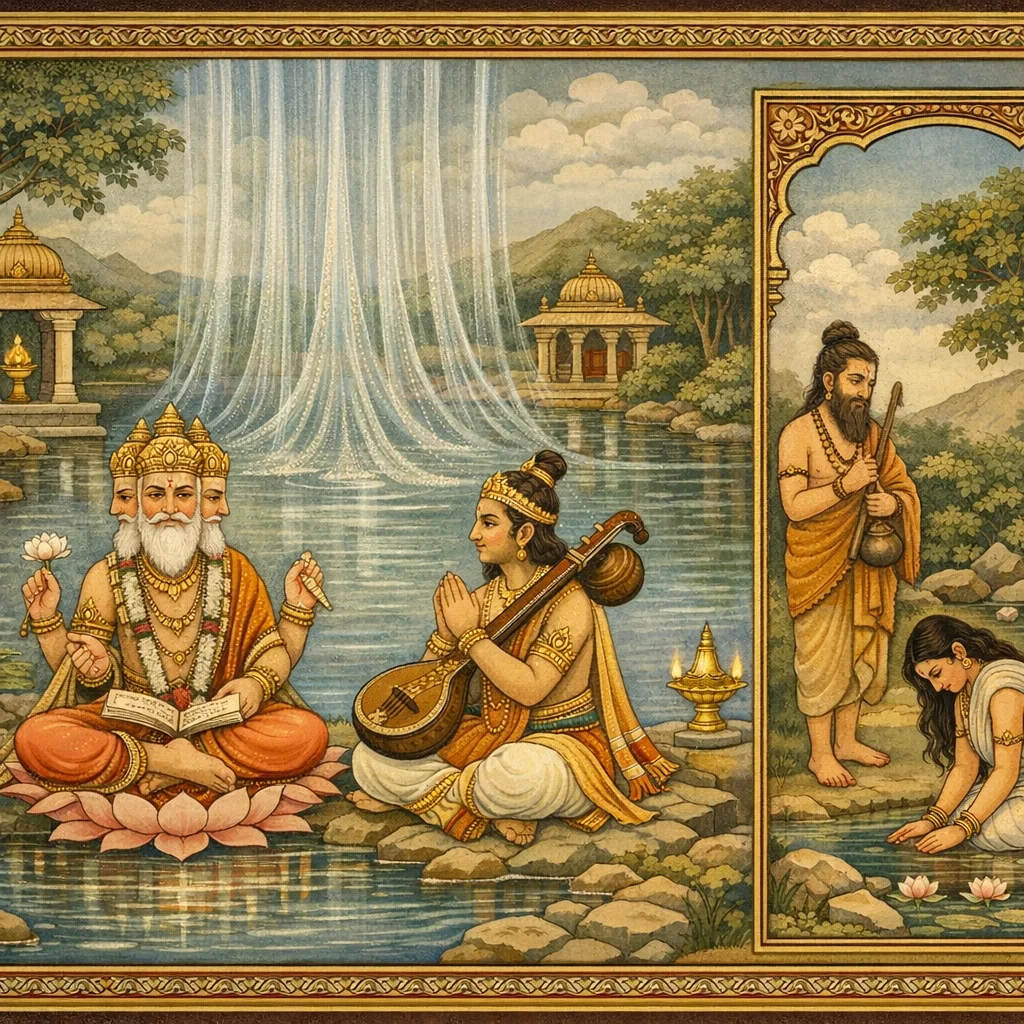
This chapter unfolds as a dialogue: Arjuna asks Nārada how Koṭitīrtha came into being, who constructed it, and why its promised fruits are so widely proclaimed. Nārada relates a cosmo-ritual origin: Brahmā is brought from Brahma-loka; as he recollects innumerable tīrthas, they manifest by that very remembrance from Svarga, Earth, and Pātāla, each with its corresponding liṅga. After bathing and worship, Brahmā mentally fashions a sacred lake (sarovara) and decrees that all tīrthas shall abide within it, and that worship of a single liṅga there is equivalent to worship of all liṅgas. The phalaśruti then declares the rewards: bathing (snāna) at Koṭitīrtha yields the fruit of all tīrthas and rivers, including the Gaṅgā; śrāddha and piṇḍadāna grant inexhaustible satisfaction to the ancestors; worship of Koṭīśvara bestows the merit of worshipping a koṭi of liṅgas. The sanctity is further localized through ṛṣi exemplars: Atri establishes Atrīśvara to the south and creates a reservoir; Bharadvāja installs Bharadvājeśvara and performs tapas and yajñas; Gautama undertakes fierce tapas seeking union with Ahalyā, after which Ahalyā creates Ahalyā-saras—bathing and rites there, with worship of Gautameśvara, lead to Brahma-loka. Ethical instruction on dāna is explicit: feeding even one brāhmaṇa with faith is said to satisfy a “crore,” and gifts given at this site multiply merit; but promising a donation and failing to give is severely condemned with grave consequences. The chapter also marks times of heightened efficacy—Māgha, the Sun’s entry into Makara, Kanyā-saṅkrānti, and Kārtika—asserting intensified ritual yield, even koṭi-yajña equivalence. It closes by exalting death, cremation, and bone-immersion connected with the place as beyond full verbal appraisal, affirming Koṭitīrtha’s exceptional glory.
Shlokas
Verse 1
अर्जुन उवाच । कोटितीर्थं कथं जातं केन वा निर्मितं मुने । कस्माद्वा कोटितीर्थानां फलमत्रोच्यते मुने
Arjuna said: “O sage, how did Koṭitīrtha come into being, and by whom was it established? And why is the fruit—the merit—of the Koṭitīrthas proclaimed specifically here, O muni?”
Verse 2
नारद उवाच । यदा मे स्थापितं स्थानं प्रसाद्याथ मया प्रभुः । ब्रह्मलोकात्समानीतः साक्षाद्ब्रह्मा पितामहः
Nārada said: “When my own abode had been established, and the Lord was graciously pleased with me, then Brahmā himself—the Grandfather, Pitāmaha—was brought here from Brahmaloka.”
Verse 3
ततो मध्याह्नसमये स्नानार्थे भगवान्विधिः । सस्मार कोटितीर्थानां स्मृतान्यत्रागतानि च
Then, at the midday hour, the venerable Ordainer (Brahmā) wished to bathe; and he invoked in his mind the Koṭitīrthas, whereupon the tīrthas thus remembered came there.
Verse 4
स्वर्गात्त्रिदशलक्षाणि सप्ततिश्च महीतलात् । पातालाद्विंशलक्षाणि स्मृतान्यभ्यागतानि च
From heaven came thirty lakhs; from the earth-sphere came seventy; and from Pātāla came twenty lakhs—thus the tīrthas that were remembered came forth and assembled.
Verse 5
अनेन प्रविभागेन लिंगान्यपि कुरूद्वह । आयातानि यथा पूजां विदधाति पितामहः
In this very distribution, O best of the Kurus, liṅgas—Śiva-emblems—also arrived; and the Grandfather (Brahmā) performed their worship in due manner.
Verse 6
ततोऽभिषेचनं कृत्वा लिंगान्यभ्यर्च्य पद्मभूः । मध्याह्नकृत्यं संसाध्य मम प्रेम्णा वरं ददौ
Then Padmabhū (Brahmā), having performed the abhiṣeka and duly worshipped the liṅgas, and having completed the midday rites, granted me a boon out of affection.
Verse 7
ततो भगवता ह्यत्र मनसा निर्मितं सरः । भगवानर्चितस्तीर्थैरिदमूचे प्रजापतिः
Thereupon the Blessed Lord, by mere thought, fashioned a lake in this very place; and then Prajāpati—Brahmā, the Lord, honored by all the tīrthas—spoke these words.
Verse 8
किं कुर्म भगवन्धातरादेशं देहि नः प्रभो । तेषां तद्वचनं श्रुत्वा ब्रह्मा प्राह प्रजापतिः
“What are we to do, O Blessed Creator (Dhātā)? O Lord, grant us your command.” Hearing their words, Brahmā, the Prajāpati, replied.
Verse 9
एतस्मिन्सरसि स्थेयं तीर्थैः सर्वैरथात्र च । एकस्मिंश्च तथा लिंगे सर्वलिंगैर्ममार्चनात्
“In this lake you should all abide here as tīrthas. And likewise, in a single liṅga, let worship be offered to me as though by all liṅgas.”
Verse 10
कोटीनामेव तीर्थानां लिंगानां स्नानपूजया । दानेन च फलं त्वत्र यदि सत्यं वचो मम
“Here indeed, by bathing and worship, and also by giving in charity, the fruit is equal to that of crores of tīrthas and liṅgas—if my word be true.”
Verse 11
यः श्राद्धं कुरुते चात्र पिंडदानं यथाविधि । पितॄणामक्षया तृप्तिर्जायते नात्र संशयः
Whoever performs śrāddha here and offers piṇḍa-dāna according to the proper rite brings about unfailing satisfaction for the Pitṛs (ancestral spirits)—of this there is no doubt.
Verse 12
स्नात्वा योऽभ्यर्चयेद्देवं कोटीश्वरमनन्यधीः । कोटिलिंगार्चनफलं व्यक्तं तस्योपजायते
After bathing, whoever worships the Lord Koṭīśvara with an undivided mind clearly attains the fruit of worshipping a koṭi (a crore) of liṅgas.
Verse 13
त्रैलोक्ये यानि तीर्थानि गंगाद्याः सरितस्तथा । तेषां स फलमाप्नोति कोटितीर्थावगाहनात्
Whatever sacred fords exist in the three worlds—and the holy rivers beginning with the Gaṅgā—one attains the fruit of them all simply by bathing at Koṭitīrtha.
Verse 14
एवं दत्त्वा वरं ब्रह्मा ब्रह्मलोकं ययौ प्रभुः । कोटितीर्थं च संजातं ततः प्रभृति विश्रुतम्
Thus, having granted the boon, Brahmā—the Lord—departed to Brahmaloka; and from that time onward this place became renowned far and wide as Koṭitīrtha.
Verse 15
अस्य तीरे पुरा पार्थ ब्रह्माद्यैर्देवसत्तमैः । यज्ञान्बहुविधान्कृत्वा ततः सिद्धिं परां ययुः
Formerly, O Pārtha, on the bank of this tīrtha, Brahmā and the foremost of the gods performed many kinds of sacrifices, and thereafter attained supreme fulfillment.
Verse 16
वसिष्ठाद्यैर्मुनिवरैस्तपश्चीर्णं पुरानघ । मनसोऽभीप्सितान्कामान्प्रापुरन्ये तपोधनाः
O sinless one, in ancient times Vasiṣṭha and other foremost sages practiced austerities here; and other ascetics, rich in tapas, obtained the desires cherished in their hearts.
Verse 17
अत्र तीर्थे पुरा पार्थ अत्रिणा विहितं तपः । कोटितीर्थाद्दक्षिणतः स्थापितं लिंगमुत्तमम्
At this tīrtha in ancient times, O Pārtha, Atri performed tapas; and to the south of Koṭitīrtha he installed an excellent liṅga.
Verse 18
अत्रीश्वराभिसंज्ञं तु महापापहरं परम् । स्थापयित्वा च तल्लिंगमग्रे चक्रे सरोवरम्
That liṅga, known as Atrīśvara, is supreme and removes great sins. Having installed it, he then created a sacred lake in front of it.
Verse 19
तत्र स्नात्वा च यो मर्त्यः श्राद्धं कुर्यात्प्रयत्नतः । अत्रीश्वरं समभ्यर्च्य रुद्रलोके वसेच्चिरम्
There, after bathing, whatever mortal earnestly performs śrāddha and duly worships Atrīśvara dwells for a long time in Rudra’s world.
Verse 20
भरद्वाजेन मुनिना कोटितीर्थे सरोवरे । तपश्चीर्णं महाबाहो यज्ञाश्च विहिताः किल
O mighty-armed one, at the Koṭitīrtha lake the sage Bharadvāja indeed practiced tapas, and sacrifices (yajñas) too were performed there, it is said.
Verse 21
भरद्वाजेश्वरं लिंगं स्थापितं सुमनोहरम् । तत्र कृत्वा सरो रम्यं परां मुदमवाप्तवान्
He established the beautiful and most enchanting liṅga known as Bharadvājeśvara; and having created there a delightful lake, he attained supreme joy.
Verse 22
तत्र स्नात्वा नरो भक्त्या श्राद्धं कुर्याद्विधानतः । भरद्वाजेश्वरं पूज्य शिवलोके महीयते
There, having bathed with devotion, a person should perform śrāddha according to the prescribed rite; and, having worshipped Bharadvājeśvara, he is honored in Śiva’s world.
Verse 23
ततश्च कोटितीर्थेऽस्मिन्गौतमो भगवानृषिः । अतप्यत तपो घोरमहल्यासंगमाशया
Then, at this Koṭitīrtha, the venerable sage Gautama practiced fierce austerities, hoping to be reunited with Ahalyā.
Verse 24
तं कामं प्राप्तवान्धीमान्परां मुदमुपागतः । अहल्यया समायोगमेतत्तीर्थप्रभावतः
That wise one attained his desired aim and entered into supreme joy—gaining union with Ahalyā through the power of this very tīrtha.
Verse 25
अस्मिन्क्षेत्रे महालिंगं गौतमेश्वरसंज्ञितम् । स्थापयामास भगवानहल्यासरसस्तटे
In this sacred region, the venerable one established a great liṅga named Gautameśvara, upon the bank of Ahalyā’s lake.
Verse 26
अर्जुन उवाच । अहल्यया कदा ब्रह्मन्खानितं वै महत्सरः । तन्मम ब्रूहि सकलमहल्यासरःकारणम्
Arjuna said: “O Brāhmaṇa, when indeed was the great lake dug by Ahalyā? Tell me fully the entire cause and account of Ahalyā’s lake.”
Verse 27
नारद उवाच । अहल्या शापमापन्ना गौतमात्किल फाल्गुन । पुरा चेंद्रसमायोगे परं दुःखमुपागता
Nārada said: “Ahalyā, O Phālguna, is said to have fallen under Gautama’s curse; and long ago, through her encounter with Indra, she sank into profound sorrow.”
Verse 28
ततो दुःखार्तः स मुनिः कोटितीर्थेऽकरोत्तपः । तपसा तेन वै पार्थाहल्यया सह संगतः
Thereafter, that sage, stricken with sorrow, performed austerities at Koṭitīrtha; and by the power of that tapas, O Pārtha, he was reunited with Ahalyā.
Verse 29
ततः साध्वी परं हृष्टा अत्र क्षेत्रे सरोवरम् । चकार सुमहत्पुण्यं तीर्थोदैः परिपूरितम्
Then the virtuous lady, greatly delighted, created in this sacred region a vast and holy lake, filled with the waters of the tīrthas.
Verse 30
अहल्यासरसि स्नानं पिंडदानं समाचरेत् । गौतमेशं च संपूज्य ब्रह्मलोकं स गच्छति
One should bathe in Ahalyā’s lake and duly perform the piṇḍa-offerings; and having fully worshipped Gautameśa, he goes to Brahmā’s world.
Verse 31
कोटितीर्थे नरश्रेष्ठ अनेके मुनयोऽमलाः । तपस्तप्त्वा सुघोरं च परां सिद्धिमपागताः
O best of men, at Koṭitīrtha many stainless sages performed exceedingly severe austerities and, having done so, attained the highest spiritual perfection.
Verse 32
राजभिर्बहुभिः पूर्वं तपो दानं तथाध्वराः । अस्मिंस्तीर्थे सुविहिताः परां सिद्धिमुपागताः
Formerly, many kings performed austerity, charity, and sacrificial rites well at this very tīrtha, and by that they attained the supreme perfection.
Verse 33
अस्य तीरे द्विजं चैकं मृष्टान्नैर्यश्च तर्पयेत् । तेन श्रद्धासहायेन कोटिर्भवति तर्पिता
Whoever, on this sacred bank, satisfies even a single brāhmaṇa with choice food—supported by faith—thereby becomes as though a crore (koṭi) have been satisfied.
Verse 34
अस्य तीरे नरः पार्थ रत्नानि विविधानि च । गोभूमितिलधान्यानि वासांसि विविधानि च
O Pārtha, on this bank a man may offer various jewels, as well as cows, land, sesame, grains, and garments of many kinds.
Verse 35
श्रद्धया परया पार्थ द्विजेभ्यः संप्रयच्छति । शतकोटिगुणं पुण्यं कोटितीर्थप्रभावतः । कोटितीर्थे प्रतिश्रुत्य द्विजेभ्यो न प्रयच्छति
O Pārtha, one who gives to brāhmaṇas here with supreme faith gains merit multiplied a hundred crores, by the power of Koṭitīrtha. But one who makes a promise at Koṭitīrtha and then does not give to the brāhmaṇas incurs grave demerit.
Verse 36
नरके पातयित्वा च कुलमेकोत्तरं शतम् । आत्मानं पातयेत्पश्चाद्दारुणं रौरवं महत्
He causes his lineage—one hundred and one generations—to fall into hell, and afterward he himself falls into the dreadful, great Raurava.
Verse 37
माघमासे तु संप्राप्ते प्रातःकाले तथाऽमले । यः स्नाति मकरादित्ये तस्य पुण्यं शृणुष्व मे
When the month of Māgha arrives, in the pure early morning—whoever bathes when the Sun is in Makara (Capricorn), hear from me the merit he gains.
Verse 38
सर्वतीर्थेषु यत्पुण्यं सर्वयज्ञेषु यत्फलम् । सर्वदानव्रतैर्यच्च कोटि तीर्थे दिनेदिने
Whatever merit is found in all tīrthas, whatever fruit is gained from all sacrifices, and whatever arises from all charities and vows—(that is obtained) day by day at Koṭitīrtha.
Verse 39
तत्पुण्यं लभते मर्त्यो नात्र कार्या विचारणा । कन्यागते सवितरि यः श्राद्धं कुरुते नरः
A mortal gains that very merit—there is no need for doubt here. When the Sun has entered Kanyā (Virgo), the man who performs śrāddha (ancestral rite) (here receives great fruit).
Verse 40
पितरस्तस्य तुष्यंति गयाश्राद्धशतैर्न तु । कार्तिके मासि संप्राप्ते स्नानादि कुरुते यदि
His ancestors become satisfied—indeed, more than by hundreds of Gayā-śrāddhas. And if, when the month of Kārttika arrives, he performs bathing and other observances (here, the fruit is immense).
Verse 41
तदक्षयफलं सर्वं ब्रह्मणो वचनं यथा । इष्ट्वात्र यज्ञमेकं तु कोटियज्ञफलं लभेत्
All that merit is imperishable—just as Brahmā’s word is unfailing. If one performs even a single sacrifice here, one obtains the fruit of ten million sacrifices.
Verse 42
कन्यां ब्राह्मेण विधिना दत्त्वा कोटिगुणं फलम् । सर्वदानं कोटिगुणं कोटितीर्थे भवेद्यतः
By giving a maiden in marriage according to the Brāhma rite, one gains fruit multiplied ten millionfold. Indeed, at Koṭitīrtha every act of charity becomes ten million times more fruitful.
Verse 43
कोटि तीर्थे त्यजेत्प्राणान्हृदि कृत्वा तु माधवम् । तस्य पार्थ चिरं स्वर्गे ह्यक्षया शाश्वती गतिः
If one gives up one’s life at Koṭitīrtha while holding Mādhava within the heart, then, O Pārtha, for that person there is a long stay in heaven—an imperishable and everlasting destiny.
Verse 44
कोटितीर्थे तीर्थवरे देहत्यागं करोति यः । तस्य पूजां प्रकुर्वंति ब्रह्माद्या देवतागणाः
Whoever abandons the body at Koṭitīrtha, the best of sacred fords—Brahmā and the hosts of gods themselves perform worship in that person’s honor.
Verse 45
अस्य तीरे देहदाहो यस्य कस्य प्रजायते । अस्थिक्षेपो यस्य भवेन्महीसागरसंगमे
On this bank, for whoever it may be, if cremation takes place—and if the casting of bones occurs at the confluence of land and ocean—
Verse 46
तत्फलं गदितुं पार्थ वागीशोऽपि न वै क्षमः । एतज्ज्ञात्वा परं पार्थ कोटितीर्थं प्रसेवते
O Pārtha, even the Lord of Speech is not capable of fully describing that fruit. Knowing this, therefore, O Pārtha, one should resort to and serve Koṭitīrtha.
Verse 47
दिनेदिने फलं तस्य कापिलं गोसहस्रकम् । स्वर्गे मर्त्ये च पाताले तस्मादेतत्सुदुर्लभम्
Day after day, its fruit equals the gift of a thousand tawny (Kāpila) cows. In heaven, on earth, and in the netherworlds—therefore this tīrtha and its merit are exceedingly hard to obtain.
Verse 52
इति श्रीस्कांदे महापुराण एकाशीतिसाहस्र्यां संहितायां प्रथमे माहेश्वरखण्डे कौमारिकाखण्डे कोटितीर्थमाहात्म्यवर्णनंनाम द्विपञ्चाशत्तमोऽध्यायः
Thus ends the fifty-second chapter, called “The Description of the Greatness of Koṭitīrtha,” in the Kaumārikākhaṇḍa of the first Māheśvarakhaṇḍa, in the Śrī Skanda Mahāpurāṇa, in the Saṃhitā of eighty-one thousand verses.