Adhyaya 30
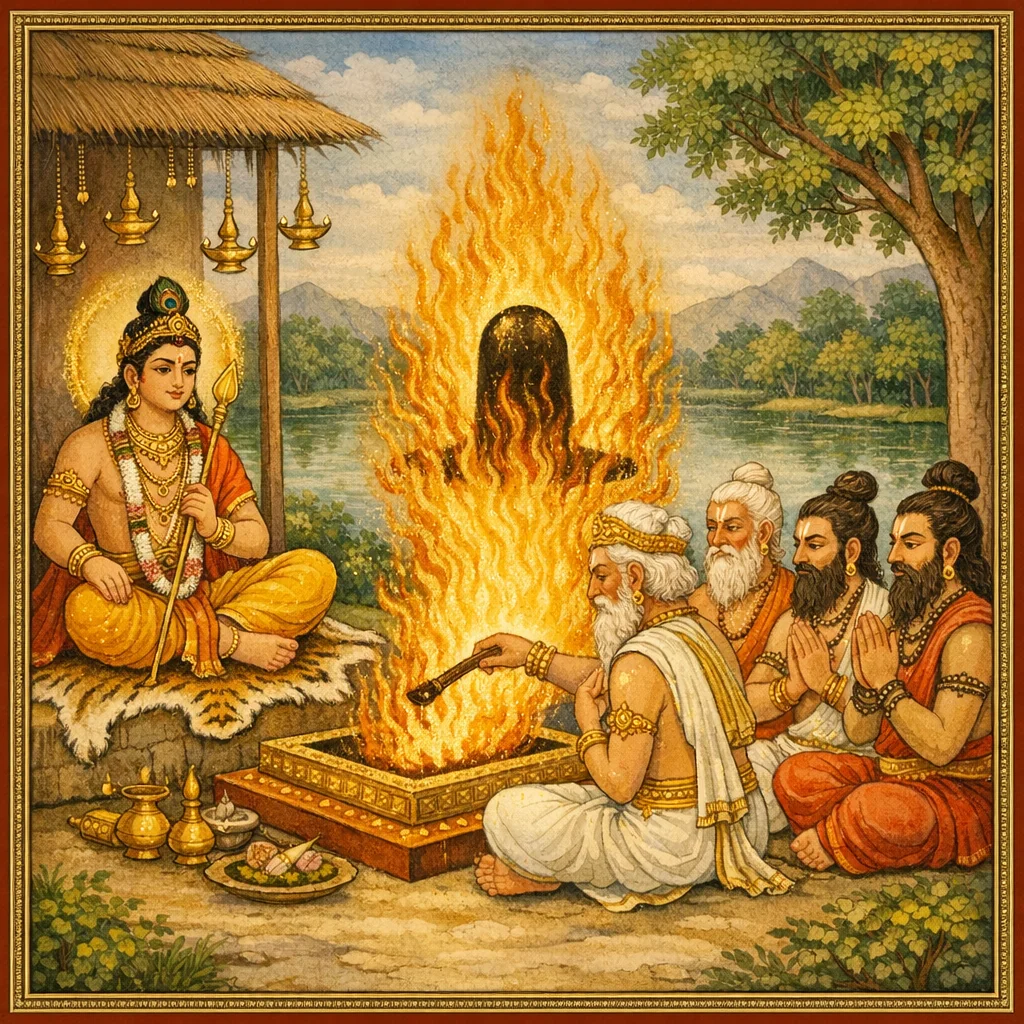
Adhyāya 30 begins with Nārada watching Skanda advance south from Śvetaparvata to confront Tāraka. A catalog of troubling forces—grahas and upagrahas, vetālas, śākinīs, unmādas, apasmāras, and piśācas—frames an instruction on protection gained through disciplined conduct, self-restraint, and steadfast devotion. The scene shifts to the bank of the Mahī, where the devas praise the Mahī-māhātmya and especially the Mahī–ocean confluence as a ritual concentration of all tīrthas. Bathing there and offering ancestral tarpaṇa are declared universally efficacious, even though the water is saline, its sanctifying power explained through analogies of transformative potency. Gods and sages then perform Skanda’s formal abhiṣeka as senāpati, assembling consecration materials and conducting a mantra-purified homa led by principal ṛtviks (including Brahmā and Kapila, as stated). A striking theological moment follows when Mahādeva reveals a liṅga-form within the fire-pit, a theophany taken as verification of the rite. The chapter culminates in a grand roll call of participating deities, cosmic classes, and beings, followed by the bestowal of gifts, weapons, attendants (parṣadas), and extensive mātr̥gaṇa lists. Skanda’s command is thus shown as cosmic and ritually authorized; he offers reverent salutations, and the devas stand ready to grant boons, sealing the themes of sacred geography, consecration liturgy, protective ethics, and divine legitimation of leadership.
Shlokas
Verse 1
नारद उवाच । ततः स्कन्दः सुरैः सार्धं श्वेतपर्वत मस्तकात् । उत्तीर्य तारकं हन्तुं दक्षिणां स दिशं ययौ
Nārada said: Then Skanda, accompanied by the gods, descended from the summit of Śvetaparvata and went southward, intending to slay Tāraka.
Verse 2
ततः सरस्वतीतीरे यानि भूतानि नारद । ग्रहाश्चोपग्रहाश्चैव वेतालाः शाकिनी गणाः
Then, on the bank of the Sarasvatī, O Nārada, the various beings—grahas and upagrahas, vetālas, and hosts of śākinīs—were gathered there.
Verse 3
उन्मादा ये ह्यपस्माराः पलादाश्च पिशाचकाः । देवैस्तेषामाधिपत्ये सोऽभ्यषिच्यत पावकिः
Those beings known as madness (unmāda), epilepsy-like seizures (apasmāra), the palāda spirits, and piśācas—over them, by the will of the gods, Pāvaki was consecrated as the lord and controller.
Verse 4
यथा ते नैव मर्यादां संत्यजंति दुराशयाः । एतैस्तस्मात्समाक्रांतः शरण्यं पावकिं व्रजेत्
Since those ill-intentioned beings never abandon their bounds and habits, therefore one afflicted by them should seek refuge in Pāvakī, the bestower of protection.
Verse 5
अप्रकीर्णेन्द्रियं दांतं शुचिं नित्यमतंद्रितम् । आस्तिकं स्कन्दभक्तं च वर्जयंति ग्रहादिकाः
The grahas and other afflicting forces avoid one whose senses are not scattered, who is self-controlled and pure, ever vigilant, faithful to dharma, and devoted to Skanda.
Verse 6
महेश्वरं च ये भक्ता भक्ता नारायणं च ये । तेषां दर्शनमात्रेण नश्यंते ते विदूरतः
Those forces perish from far away merely by the sight of devotees—whether devoted to Maheśvara or devoted to Nārāyaṇa.
Verse 7
ततः सर्वैः सुरैः सार्धं महीतीरं ययौ गुहः । तत्र देवैः प्रकथितं महीमाहात्म्यमुत्तमम्
Then Guha, together with all the gods, went to the bank of the Mahī River. There the gods proclaimed the supreme greatness of the Mahī.
Verse 8
श्रृण्वन्विसिष्मिये स्कन्दः प्रणनाम च तां नदीम् । ततो महीदक्षिणतस्तीरमाश्रित्य धिष्ठितम्
Hearing it, Skanda was filled with wonder and bowed to that river. Then, taking shelter on the southern bank of the Mahī, he took his seat there.
Verse 9
प्रणम्य शक्रप्रमुखा गुहं वचनमब्रुवन् । अभिषिक्तं विना स्कन्द सेनापतिमकल्मषम्
After bowing down, Indra and the other gods spoke to Guha: “O Skanda, without your consecration (abhiṣeka), you have not yet been स्थापित as the stainless commander of the host…”
Verse 10
न शर्म लभते सेना तस्मात्त्वमभिषेचय । महीसागरसंभूतैः पुण्यैश्चापि शिवैर्जलैः
“The army finds no peace; therefore accept consecration—by auspicious, holy waters born of the earth and the ocean.”
Verse 11
अभिषेक्ष्यामहे त्वां च तत्र नो द्रष्टुमर्हसि । यथा हस्तिपदे सर्वपदांतर्भाव इष्यते
“We shall consecrate you; yet you should not look there (upon that rite). For just as within an elephant’s footprint all other footprints are said to be contained…”
Verse 12
सर्वतीर्थान्तरस्थानं तथार्णवमहीजले । सर्वभूतमयो यद्वत्र्यंबकः परिकीर्त्यते
So too, within the waters of ocean and earth abides the seat of all tīrthas—just as Tryambaka (Śiva) is praised as being constituted of all beings.
Verse 13
सर्वतीर्थमयस्तद्वन्महीसागरसंगमः । अर्धनारीश्वरं रूपं यथा रुद्रस्य सर्वदम्
Likewise, the confluence of the Mahī River and the ocean is itself made of all tīrthas. It is like Rudra’s form as Ardhanārīśvara, bestowing every blessing.
Verse 14
तथा महीसमुद्रस्य स्नानं सर्वफलप्रदम् । येनात्र पितरः स्कन्द तर्पिता भक्तिभावतः
So too, bathing at the Mahī-ocean (the confluence) bestows every fruit. By it, O Skanda, the Pitṛs are satisfied here through a spirit of devotion.
Verse 15
तेन सर्वेषु तीर्थेषु तर्पिता नात्र संशयः । न चैतद्धृदि मंतव्यं क्षारमेतज्जलं हि यत्
By that act, they are satisfied as though at all tīrthas—of this there is no doubt. And one should not harbor the thought, “This water is salty,” for this water is indeed salty.
Verse 16
यथा हि कटुतिक्तादि गवा ग्रस्तं हि क्षीरदम् । एवमेतत्त्विदं तोयं पितॄणां तृप्ति दायकम्
Just as a cow may consume pungent and bitter things, yet still yields milk, so too this very water indeed bestows satisfaction upon the Pitṛs.
Verse 17
एवं ब्रुवत्सु देवेषु कपिलोऽपि मुनिर्जगौ । सत्यमेतदुमापुत्र सर्वतीर्थमयी मही
As the gods spoke thus, the sage Kapila also declared: “This is true, O son of Umā—this Mahī is pervaded by all sacred tīrthas.”
Verse 18
कर्दमो यस्त्वहमपि ज्ञात्वा तीर्थमहा गुणान् । सर्वां भुवं परित्यज्य कृत्वा ह्यश्रममास्तितः
“I—Kardama—also, having understood the great virtues of this tīrtha, abandoned all other regions of the earth and established an āśrama here.”
Verse 19
ततो महेश्वरः प्राह सत्यमेतत्सुरोदितम् । ब्रह्माद्यास्तं तथा प्राहुरत्र भूयोऽप्यथो गुरुः
Then Maheśvara said, “True indeed is what the gods have spoken.” Brahmā and the others said the same, and again the Guru affirmed it here.
Verse 20
अत्राभिषेकं ते वीर करिष्यामः समादिश । ततः सुविस्मितस्तत्र स्नात्वा स्कन्दो महामनाः
“Here we shall perform your abhiṣeka consecration, O hero—give the command.” Then Skanda, great-souled, bathed there in astonishment.
Verse 21
अभिषिञ्चन्तु मां देवा इति तानब्रवीद्वचः । ततोऽभिषेकसंभारान्सर्वान्संभृत्य शास्त्रतः
He said to them, “Let the gods consecrate me with abhiṣeka.” Then, in accordance with the śāstras, all the requisites for the abhiṣeka were properly gathered.
Verse 22
जुहुवुर्मंत्रपूतेऽग्नौ चत्वारो मुख्यऋत्विजः । ब्रह्मा च कपिलो जीवो विश्वामित्रश्चतुर्थकः
Four principal officiating priests offered oblations into the fire purified by mantras: Brahmā, Kapila, Jīva, and Viśvāmitra as the fourth.
Verse 23
अन्ये च शतशस्तत्र मुनयो वेदपारगाः । तत्राद्भुतं महादेवो दर्शयामास भारत
And there were hundreds of other sages as well, fully accomplished in the Vedas. There, O Bhārata, Mahādeva revealed a wondrous marvel.
Verse 24
यदग्निकुण्डमध्यस्थो लिंगमूर्तिर्व्यदृश्यत । अहमेवाग्निमध्यस्थो हविर्गृह्णामि नित्यशः
Then the Lord appeared as the form of the Liṅga, standing in the very midst of the fire-pit, as though proclaiming: “I Myself abide within the fire, and I continually receive the oblations.”
Verse 25
एतत्संदर्शनार्थाय लिंगमूर्तिरभूद्विभुः । तल्लिंगमतुलं देवा नमश्चक्रुर्मुदान्विताः
To grant this vision, the all-pervading Lord assumed the form of the Liṅga. Delighted, the gods bowed in reverence to that incomparable Liṅga.
Verse 26
सर्वपापापहं पार्थ सर्वकामफलप्रदम् । तत्र होमावसाने च दत्ते हिमवता शुभे
O Pārtha, it removes all sins and bestows the fruits of every rightful desire. And there, when the homa concluded, Himavat bestowed the auspicious gift.
Verse 27
दिव्यरत्नान्विते स्कन्दो निषण्णः परमासने । सर्वमंगलसंभारैर्विधिमंत्रपुरस्कृतम्
Skanda sat upon a supreme throne adorned with divine jewels. All auspicious articles were arranged, and the rites proceeded under the guidance of sacred mantras.
Verse 28
अभ्यषिंचंस्ततो देवाः कुमारं शंकरात्मजम् । इंद्रो विष्णुर्महावीर्यो ब्रह्मरुद्रौ च फाल्गुन
Then the gods performed the anointing (abhiṣeka) of Kumāra, the son of Śaṅkara—Indra, mighty Viṣṇu, and Brahmā and Rudra as well, O Phālguna.
Verse 29
आदित्याद्य ग्रहाः सर्वे तथोभावनिलानलौ । आदित्या वसवो रुद्राः साध्याश्चैवाश्विनावुभौ
All the celestial powers beginning with the Ādityas, and all the planets as well, together with Wind and Fire—also the Ādityas, the Vasus, the Rudras, the Sādhyas, and the two Aśvins—assembled to honor the sacred rite.
Verse 30
विश्वेदेवाश्च मरुतो गंधर्वाप्सरसस्तथा । देवब्रह्मर्षयश्चैव वालखिल्या मरीचिपाः
The Viśvedevas and the Maruts, the Gandharvas and the Apsarases too, along with the divine Brahmarṣis—also the Vālakhilyas and the sages led by Marīci—were present.
Verse 31
विद्याधरा योगसिद्धाः पुलस्त्यपुलहादयः । पितरः कश्यपोऽत्रिश्च मरीचिर्भृगुरंगिराः
The Vidyādharas, the perfected Yogins, Pulastya, Pulaha and others; the Pitṛs; Kaśyapa and Atri; Marīci, Bhṛgu, and Aṅgiras—all gathered there.
Verse 32
दक्षोऽथ मनवो ये च ज्योतींषि ऋतवस्तथा । मूर्तिमत्यश्च सरितो महीप्रभृतिकास्तथा
Then Dakṣa, the Manus, the luminaries, and the seasons as well; and the embodied rivers—beginning with Mahī (the Earth) and the rest—also came there.
Verse 33
लवणाद्याः समुद्राश्च प्रभासाद्याश्च तीर्थकाः । पृथिवी द्यौर्दिशश्चैव पादपाः पार्वतास्तथा
The oceans beginning with the Salt Sea, and the sacred fords (tīrthas) beginning with Prabhāsa; Earth and Heaven, the Directions as well, together with the trees and the mountains—all were present to honor Guha.
Verse 34
आदित्याद्या मातरश्च कुर्वंत्यो गुहमंगलम् । वासुकिप्रमुखा नागास्थथोभौ गरुडारुणौ
The Mothers, beginning with the Ādityas, performed auspicious rites for Guha; and the Nāgas led by Vāsuki, together with Garuḍa and Aruṇa, were also present in reverence.
Verse 35
वरुणो धनदश्चैव यमः सानुचरस्तथा । राक्षसो निरृतिश्चैव भूतानि च पलाशनाः
Varuṇa, Dhanada (Kubera), and Yama with his attendants; the hosts of Rākṣasas, Nirṛti as well, and the Bhūtas and other fierce beings—all joined the gathering.
Verse 36
धर्मो बृहस्पतिश्चैव कपिलो गाधिनंदनः । बहुलत्वाच्च ये नोक्ता विविधा देवतागणाः
Dharma and Bṛhaspati, Kapila, and Gādhi’s son (Viśvāmitra) were there; and many other diverse hosts of deities too—so numerous that they were not all named.
Verse 37
ते च सर्वे महीकूले ह्यभ्यषिंचन्मुदा गुहम् । ततो महास्वनामुग्रां देवदैत्यादिदर्पहाम्
All of them, upon the earth’s shore, joyfully anointed Guha with the consecrating abhiṣeka. Then there arose a mighty, terrifying roar—one that crushed the pride of devas, daityas, and the rest.
Verse 38
ददौ पशुपतिस्तस्मै सर्वभूतमहाचमूम् । विष्णुर्ददौ वैजयंतीं मालां बलविवर्धिनीम्
Paśupati granted him a vast host of all beings; Viṣṇu bestowed the Vaijayantī garland, a wreath that increases strength and victory.
Verse 39
उमा ददौ चारजसी वाससी सूर्यसप्रभा । गंगा कमंडलुं दिव्यममृतोद्भवमुत्तमम्
Umā bestowed two splendid garments, radiant as the sun; and Gaṅgā granted a divine and excellent kamaṇḍalu, born of amṛta, the nectar of immortality.
Verse 40
मही महानदी तस्य चाक्षमालां ससागरा । ददौ मुदा कुमाराय दंडं चैव बृहस्पतिः
Earth, together with the great rivers and the oceans, gladly offered him an akṣamālā, a sacred rosary; and Bṛhaspati too, rejoicing, gave the staff to Kumāra.
Verse 41
गरुडो दयितं पुत्रं मयूरं चित्रबर्हिणम् । अरुणस्ताम्रचूडं च प्रददौ चरणायुधम्
Garuḍa gave his beloved son—the peacock with its variegated plumage; and Aruṇa bestowed the cock, tāmra-cūḍa, the emblem-weapon borne upon the banner.
Verse 42
छागं च वरुणो राजा बलवीर्यसमन्वितम् । कृष्णाजिनं तथा ब्रह्मा ब्रह्मण्याय ददौ जयम्
King Varuṇa gave a goat endowed with strength and vigor; likewise Brahmā bestowed a kṛṣṇājina, a black antelope-skin, granting victory to Kumāra, protector of brahminical dharma.
Verse 43
चतुरोऽनुचरांश्चैव महावीर्यान्बलोत्कटान् । नंदिसेनं लोहिताक्षं घण्टाकर्णं च मानसान्
He also appointed four attendants, mighty in valor and formidable in strength: Nandisena, Lohitākṣa, Ghaṇṭākarṇa, and Mānasā.
Verse 44
चतुर्थं चाप्यतिबलं ख्यातं कुसुममालिनम् । ततः स्थाणुर्ददौ देवो महापारिषदं क्रतुम्
The fourth, renowned and exceedingly mighty, was Kusumamālin. Thereafter the god Sthāṇu (Śiva) bestowed the great gaṇa-attendant named Kratu.
Verse 45
स हि देवासुरे युद्धे दैत्यानां भीमकर्मणाम् । जघान दोर्भ्यां संक्रुद्धः प्रयुतानि चतुर्दश
For in the war between gods and asuras, he—enraged—slew with his own arms fourteen myriads of Dāityas of dreadful deeds.
Verse 46
यमः प्रादादनुचरौ यमकालोपमौ तदा । उन्माथं च प्रमाथं च महावीर्यौ महाद्युती
Then Yama granted two attendants, resembling Yama and Kāla themselves—Unmātha and Pramātha, both of great prowess and great splendor.
Verse 47
सुभ्राजौ भास्करस्यैव यौ सदा चानुयायिनौ । तौ सूर्यः कार्तिकेयाय ददौ पार्थ मुदान्वितः
Two radiant ones, ever the attendants of Bhāskara (the Sun)—those two Sūrya joyfully gave to Kārtikeya, O Pārtha.
Verse 48
कैलासश्रृङ्गसंकाशौ श्वेतमाल्यानुलेपनौ । सोमोऽप्यनुचरौ प्रादान्मणिं सुमणिमेव च
Resembling the peaks of Kailāsa, adorned with white garlands and white unguents, Soma too granted two attendants—Maṇi and Sumaṇi.
Verse 49
ज्वालजिह्वं ज्योतिषं च ददावग्निर्महाबलौ । परिघं च बलं चैव भीमं च सुमहाबलम्
Agni bestowed the two mighty ones, Jvālajihva and Jyotiṣ; he also granted Parigha and Bala, and Bhīma of immeasurable strength.
Verse 50
स्कंदाय त्रीननुचरान्ददौ विष्णुरुरुक्रमः । उत्क्रोशं पंचजं चैव वज्रदण्डधरावुभौ
Viṣṇu, the far-striding Lord, gave Skanda three attendants—Utkrośa, Pañcaja, and the two who bore the vajra and staff as their weapons.
Verse 51
ददौ महेशपुत्राय वासवः परवीरहा । तौ हि शत्रून्महेन्द्रस्य जघ्नतुः समरे बहून्
Vāsava (Indra), slayer of enemy heroes, gave them to the son of Maheśa; for those two indeed slew many of Mahendra’s foes in battle.
Verse 52
वर्धनं बंधनं चैव आयुर्वेदविशारदौ । स्कन्दाय ददतुः प्रीतावश्विनौ भरतर्षभ
Delighted, the Aśvins gave Skanda Vardhana and Bandhana—both skilled in Āyurveda, O bull among the Bhāratas.
Verse 53
बलं चातिबलं चैव महावक्त्रौ महाबलौ । प्रददौ कार्तिकेयाय वायुश्चानुचरावुभौ
Vāyu, the Wind-god, bestowed upon Kārtikeya the two attendants Bala and Atibala—mighty in strength and great of countenance—both endowed with immense power.
Verse 54
घसं चातिघसं वीरौ वरुणश्च ददौ प्रभुः । सुवर्चसं महात्मानं तथैवाप्यतिवर्चसम्
Lord Varuṇa bestowed the two heroes Ghasa and Atighasa, and also the great-souled Suvarcasa, as well as Ativarcasa—radiant with extraordinary splendor.
Verse 55
हिमवान्प्रददौ पार्थ साक्षाद्दौहित्रकाय वै । कांचनं च ददौ मेरुर्मेघमालिनमेव च
O Pārtha, Himavān directly bestowed an attendant upon his own grandson; and Mount Meru gave Kāñcana, as well as Meghamālin.
Verse 56
उच्छ्रितं चातिशृंगं च महापाषाणयोधिनौ । स्वाहेयाय ददौ प्रीतः स विंध्यः पार्षदौ शुभौ
Delighted, Mount Vindhya gave to Svāheya (Skanda) the two auspicious attendants Ucchrita and Atiśṛṅga—warriors who fight with massive boulders.
Verse 57
संग्रहं विग्रहं चैव समुद्रोऽपि गधाधरौ । प्रददौ पार्षदौ विरौ महीनद्या समन्वितः
The Ocean too—together with the great rivers—bestowed the two heroic attendants Saṃgraha and Vigraha, bearers of maces.
Verse 58
उन्मादं पुष्पदंतं च शंकुकर्णं तथैव च । प्रददावग्निपुत्राय पार्वती शुभदर्शना
Fair-visaged Pārvatī bestowed upon the Fire-born son (Skanda) Unmāda, Puṣpadanta, and likewise Śaṃkukarṇa.
Verse 59
जयं महाजयं चैव नागौ ज्वलनसूनवे । प्रददुर्बलिनां श्रेष्ठौ सुपर्णः पार्षदावुभौ
Suparṇa (Garuḍa) bestowed upon the son of Jvalana (Fire) the two nāga attendants, Jaya and Mahājaya—both foremost among the mighty.
Verse 60
एवं साध्याश्च रुद्राश्च वसवः पितरस्तथा । सर्वे जगति ये मुख्या ददुः स्कंदाय पार्षदान्
Thus the Sādhyas, the Rudras, the Vasus, and the Pitṛs—indeed all the foremost beings in the world—bestowed attendants upon Skanda.
Verse 61
नानावीर्यान्महावीर्यान्नानायुधविभूषणान् । बहुलत्वान्न शक्यंते संख्यातुं ते च फाल्गुन
Endowed with varied powers, great valor, and adorned with diverse weapons, they were so numerous that they cannot be counted—O Phālguna.
Verse 62
मातश्च ददुस्तस्मै तदा मातृगणान्प्रभो । याभिर्व्याप्तास्त्रयो लोकाः कल्याणीभिश्चराचराः
And then, O Lord, the Mothers bestowed upon him the hosts of Mātṛkās—those auspicious goddesses by whom the three worlds, with all moving and unmoving beings, are pervaded.
Verse 63
प्रभावती विशालाक्षी गोपाला गोनसा तथा । अप्सुजाता बृहद्दंडी कालिका बहुपुत्रका
“(They are) Prabhāvatī; wide‑eyed Viśālākṣī; Gopālā and Gonāsā; Apsujātā, born of the waters; Bṛhaddaṇḍī, bearer of the great staff; Kālikā; and Bahuputrakā, mother of many sons.”
Verse 64
भयंकरी च चक्रांगी तीर्थनेमिश्च माधवी । गीतप्रिया अलाताक्षी चटुला शलभामुखी
And there are Bhayaṃkarī, the fearsome; Cakrāṃgī, marked with the discus; Tīrthanemi; Mādhavī; Gītapriyā, lover of sacred song; Alātākṣī, whose eyes blaze like torches; Caṭulā, the quick and lively; and Śalabhāmukhī, with a moth- or locust-like face.
Verse 65
विद्युज्जिह्वा रुद्रकाली शतोलूखलमेखला । शतघंटाकिंकिणिका चक्राक्षी चत्वरालया
They are Vidyujjihvā, whose tongue is lightning; Rudrakālī; Śatolūkhalamekhalā, girdled with a hundred mortars; Śataghaṃṭākiṃkiṇikā, adorned with a hundred bells and tinkling ornaments; Cakrākṣī, with discus-like eyes; and Catvarālayā, who dwells at crossroads and squares.
Verse 66
पूतना रोदना त्वामा कोटरा मेघवाहिनी । ऊर्ध्ववेणीधरा चैव जरायुर्जर्जरानना
They are Pūtanā; Rodanā, the wailing one; Tvāmā; Koṭarā, dweller in hollows; Meghavāhinī, who rides upon clouds; Ūrdhvaveṇīdharā, with braids bound upward; Jarāyuḥ; and Jarjarānanā, whose face is withered and ruined.
Verse 67
खटखेटी दहदहा तथा धमधमा जया । बहुवेणी बहुशीरा बहुपादा बहुस्तनी
They are Khaṭakheṭī, Dahadahā, Dhamadhamā, and Jayā; Bahuveṇī, with many braids; Bahuśīrā, many-headed; Bahupādā, many-footed; and Bahustanī, many-breasted.
Verse 68
शतोलूकमुखी कृष्णा कर्णप्रावरणा तथा । शून्यालया धान्यवासा पशुदा धान्यदा सदा
They are Śatolūkamukhī, owl-faced; Kṛṣṇā, the dark one; Karṇaprāvaraṇā, whose ears are veiled; Śūnyālayā, who dwells in deserted places; Dhānyavāsā, abiding amid grain; Paśudā, giver of cattle; and ever Dhānyadā, giver of grain.
Verse 69
एताश्चान्याश्च बह्व्यश्च मातरो भरतर्षभ । बहुलत्वादहं तासां न संख्यातुमिहोत्सहे
These—and many other—Mothers, O bull among the Bhāratas, are beyond counting; because they are so many, I do not dare to enumerate them here.
Verse 70
वृक्षचत्वरवासिन्यश्चतुष्पथनिवेशनाः । गुहास्मशानवासिन्यः शैलप्रस्रवणालयाः
Some dwell in tree-groves and public squares; some abide at crossroads. Some live in caves and cremation-grounds; some make their home by mountain springs and waterfalls.
Verse 71
नानाभरणवेषास्ता नानामूर्तिधरास्तथा । नानाभाषायुधधराः परिवव्रुस्तदा गुहम्
Adorned with diverse ornaments and attire, bearing many forms, speaking in many tongues and wielding many weapons, they then surrounded Guha (Skanda) on all sides.
Verse 72
ततः स शुशुभे श्रीमान्गुहो गुह इवापरः । सैनापत्ये चाभिषिक्तो देवैर्नानामुनीश्वरैः
Then that glorious Guha shone forth—like another Guha, a hidden splendor made manifest—and he was consecrated as Commander-in-Chief by the gods and by many lordly sages.
Verse 73
ततः प्रणम्य सर्वांस्ता नेकैकत्वेन पावकिः । व्रियतां वर इत्याह भवब्रह्मपुरोगमान्
Then Pāvaki bowed to them all, one by one, and said to those led by Bhava (Śiva) and Brahmā: “Choose a boon to be granted.”