Adhyaya 10
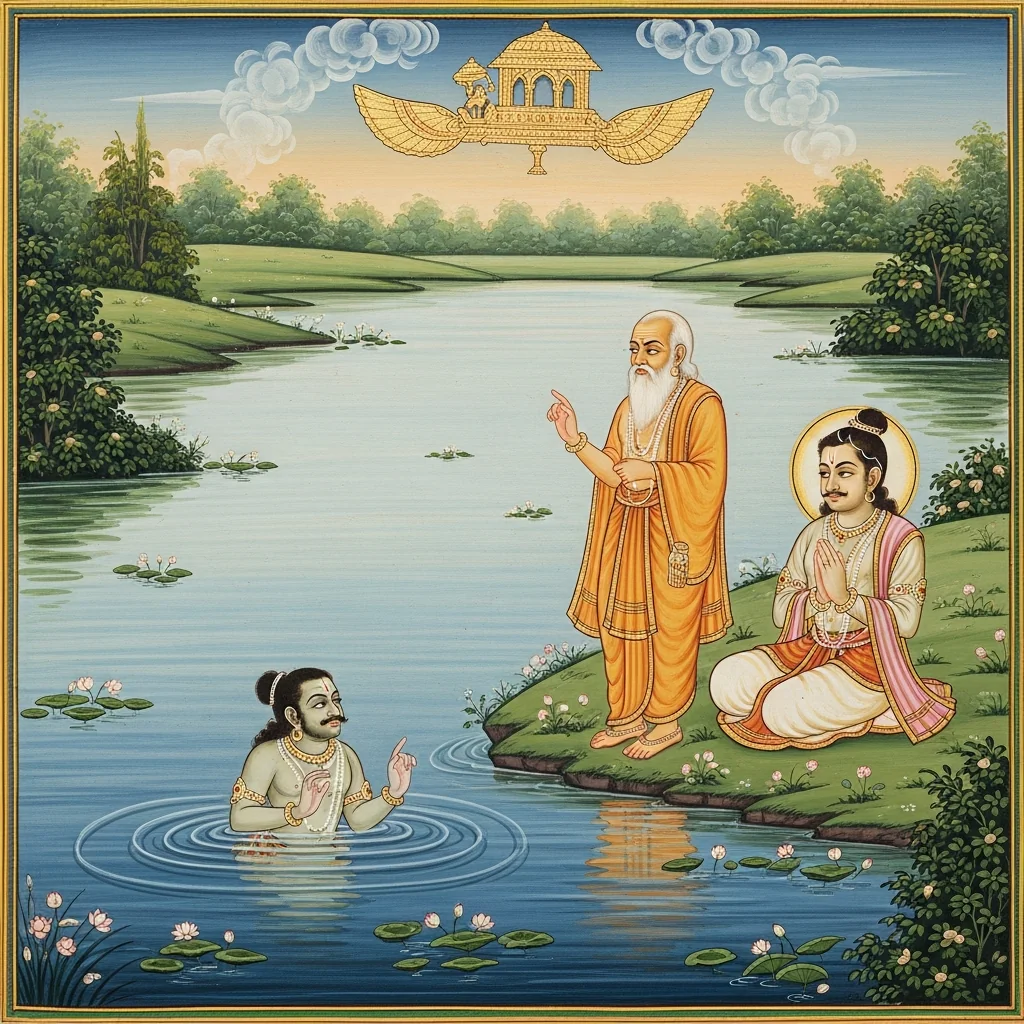
Led by Nārada’s narration, King Indradyumna—grieved and astonished—questions a vulture’s words and seeks the cause of his impending death. The party goes to the famed mānasa-saras to consult the tortoise Mantharaka, renowned for knowing hidden matters. Seeing them approach, Mantharaka withdraws into the water; the sage Kauśika rebukes this as a breach of ātithya-dharma, affirming the sacred duty of honoring guests and condemning guest-aversion as sin. Mantharaka replies that he understands hospitality, yet fears Indradyumna: at an earlier sacrifice in Raucaka-pura his back was burned by the sacrificial fire, and the wound still remains, so he dreads being burned again. As he speaks, flowers rain from the sky and divine music resounds, openly attesting that the king’s kīrti has been restored. A celestial chariot appears, and a devadūta invites Indradyumna to Brahmaloka, teaching that one abides in heaven only so long as one’s fame endures on earth, and linking merit to pūrta works such as tanks, wells, and gardens. Valuing loyalty and friendship, Indradyumna asks that his companions accompany him; the envoy explains they are fallen Śiva-gaṇas awaiting the end of a curse and desire no heaven apart from Mahādeva. The king refuses a heaven shadowed by fear of falling again, choosing instead alignment with Śiva’s retinue. He then asks the tortoise the secret of his long life; Mantharaka introduces a “divine, sin-destroying” Śiva-mahātmya and its phalaśruti, declaring that faithful listening purifies, and that his own longevity and tortoise-form arise from the grace of Śambhu.
Shlokas
Verse 1
नारद उवाच । गृध्रस्यैतद्वचः श्रुत्वा दुःखविस्मयसंयुतः । इन्द्रद्युम्नस्तमा पृच्छय मरणायोपचक्रमे
Nārada said: Hearing these words of the vulture, Indradyumna—overcome with grief and astonishment—questioned him further and began to prepare himself for death.
Verse 2
ततस्तमालोक्य तथा मुमूर्षुं कौशिकादिभिः । स संहितं विचिंत्याह दीर्घायुषमथात्मनः
Then, seeing him in that state—wishing to die—Kauśika and the others reflected together and spoke, seeking long life and welfare for him.
Verse 3
मैवं कार्षीः श्रुणु गिरं भद्रक त्वं चिरंतनः । मत्तोऽप्यस्ति स्फुटं चैव ज्ञास्यति त्वदभीप्सितम्
Do not act so. Listen, O noble one; you are destined for long life. Beyond me as well, there is someone who will clearly make known what you seek to understand.
Verse 4
मानसे सरसि ख्यातः कूर्मोमंथरकाख्यया । तस्य नाविदितं किंचिदेहि तत्र व्रजामहे
In the Mānasa lake there is a renowned tortoise known as Mantharaka. Nothing is unknown to him; come—let us go there.
Verse 5
ततः प्रतीतास्ते भूपमुनिगृध्रबकास्तथा । उलूकसहिता जग्मुः सर्वे कूर्मदिदृक्षवः
Then, convinced, the king, the sages, the vulture, and the crane—together with the owl—all set out, desiring to see the tortoise.
Verse 6
सरस्तीरे स्थितः कूर्मस्तान्निरीक्ष्य विदूरगान् । कांदिशीको विवेशासौ जलं शीघ्रतरं तदा
The tortoise, stationed on the lake’s shore, seeing them approaching from afar, grew alarmed and swiftly entered the water.
Verse 7
कौशिकोऽथ तमाहेदं प्रहस्य वचनं स्वयम् । कस्मात्कूर्म प्रनष्टोद्य विमुखोऽभ्यागतेष्वपि
Then Kauśika, smiling, addressed him: “Why, O tortoise, have you today vanished and turned away, even though guests have arrived?”
Verse 8
अग्निर्द्विजानां विप्रश्च वर्णानां रमणः स्त्रियाम् । गुरुः पिता च पुत्राणां सर्वस्याभ्यागतो गुरुः
Fire is the revered presence for the twice-born; the brāhmaṇa is the guide for the social orders; a husband is the beloved for women; a father is the guru for sons—yet for everyone, the arriving guest is to be honored as a guru.
Verse 9
विहाय तमिमं धर्ममातिथ्यविमुखः कथम् । गृह्णासि पापं सर्वेषां ब्रूहि कूर्माधुनोत्तरम्
Having abandoned this very dharma, how can you turn away from hospitality? How do you take upon yourself the sin belonging to all? Speak now, O tortoise—give your answer.
Verse 10
कूर्म उवाच । चिरंतनो हि जानामि कर्त्तुमातिथ्यसत्क्रियाम् । अभ्यागतेष्वपचितिं धर्मशास्त्रेषु निश्चितम्
The Tortoise said: “I am indeed ancient and know well how to render proper honor to a guest. Reverent regard for those who arrive as guests is firmly established in the Dharma-śāstras.”
Verse 11
सुमहत्कारणं चात्र श्रूयतां तद्वदामि वः । नाहं पराङ्मुखो जात एतावंति दिनान्यपि
Here there is a very great reason—listen, and I shall tell you. Not for all these days have I ever turned away from dharma and rightful duty.
Verse 12
अभ्यागतस्य कस्यापि सर्वसत्कारसद्व्रती । किं त्वेष पंचमो यो वो दृश्यते सरलाकृतिः
I keep a noble vow: to honor with every courtesy any guest who arrives. But who is this fifth among you, seen here in a simple, straightforward form?
Verse 13
इंद्रद्युम्नो महीपालो बिभोम्यस्मादलंतराम् । अमुना यजमानेन रौचकाख्ये पुरा पुरे
Indradyumna, the king—I fear him greatly for this reason: long ago, in a city called Raucaka, that very man, acting as the yajamāna (patron of the sacrifice), …
Verse 14
यज्ञपावकदग्धा मे पृष्ठिर्नाद्यापि निर्व्रणा । तन्मे भयं पुनर्जातं किमयं पुनरेव माम्
My back was burned by the sacrificial fire, and even now that wound has not healed. Therefore fear has arisen in me again: will this one harm me once more?
Verse 15
आसुतीवलमाधाय भुवि धक्ष्यति संप्रति । इति वाक्यावसाने तु कूर्मस्य कुरुसत्तम
“Taking up the force of swift impulse, he will now burn me upon the earth.” When the Tortoise (Kūrma) had finished speaking thus, O best of the Kurus, …
Verse 16
पपात पुष्पवृष्टिः खाद्विमुक्ताप्सरसां गणैः । सस्वनुर्देववाद्यानि कीर्त्युद्धारे महीपतेः
A rain of flowers fell from the sky, released by hosts of Apsarases. Divine instruments resounded, proclaiming the uplifting of the king’s fame.
Verse 17
विस्मितास्ते च ददृशुर्विमानं पुरतः स्थितम् । इंद्रद्युम्नकृते देवदूतेनाधिष्ठितं तदा
Amazed, they beheld a celestial chariot standing before them, then—occupied by a divine messenger—sent for Indradyumna’s sake.
Verse 18
अयातयामाः प्रददुराशिषोऽस्मै सुरद्विजाः । साधुवादो दिवि महानासीत्तस्य महीपतेः
The unwearied divine Brahmins bestowed blessings upon him. In heaven there arose a mighty acclaim—cries of “Well done!”—for that king.
Verse 19
ततो विमानमालंब्य देवदूतस्तमुच्चकैः । इंद्रद्युम्नमुवाचेदं श्रृण्वतां नाकवासिनाम्
Then, taking hold of the celestial chariot, the divine messenger spoke aloud to Indradyumna—while the dwellers of heaven listened.
Verse 20
देवदूत उवाच । नवीकृताधुना कीर्तिस्तव भूपाल निर्मला । त्रिलोक्यामपि तच्छीघ्रं विमानमिदमारुह
The divine messenger said: “O king, your spotless fame has now been renewed. It will quickly spread even through the three worlds—therefore ascend this celestial chariot at once.”
Verse 21
गम्यतां ब्रह्मणो लोकमाकल्पं तपसोर्जितम् । प्रेषितोऽहमनेनैव तवानयनकारणात्
Let us go to Brahmā’s world, won by austerity and enduring until the end of the aeon. I have been sent by him for the very purpose of bringing you there.
Verse 22
यावत्कीर्तिर्मनुष्यस्य पृथिव्यां प्रथिता भवेत् । तावानेव भवेत्स्वर्गी सति पुण्ये ह्यनंतके
So long as a person’s fame remains celebrated upon the earth, for just so long does he dwell in heaven—when supported by inexhaustible merit.
Verse 23
सुरालयसरोवापीकूपारामादिकल्पना । एतदर्थं हि पूर्ताख्या धर्मशास्त्रेषु निश्चिता
The establishing of temples for the gods, tanks and wells, stepwells, gardens, and the like—precisely for this purpose—is defined in the Dharma-śāstras as ‘pūrta’ (public works of merit).
Verse 24
इंद्रद्युम्न उवाच । अमी ममैव सुहृदो मार्कंडबककौशिकाः । गृध्रकूर्मौ प्रभावोऽयममीषां मम वृद्धये
Indradyumna said: “These are indeed my well-wishers—Mārkaṇḍa, Baka, and Kauśika. This wondrous power of the vulture and the tortoise has brought about their increase and my own uplift as well.”
Verse 25
तच्चेदमी मया साकं ब्रह्मलोकं प्रयांत्युत । पुरःस्थितास्तदायास्ये ब्रह्मलोकं च नान्यथा
“If these too indeed go with me to Brahmaloka, then—since they stand before me—I shall go to Brahmaloka at that very time, and not otherwise.”
Verse 26
परेषामनपेक्ष्यैव कृतप्रतिकृतं हि यः । प्रवर्तते हितायैव स सुहृत्प्रोच्यते बुधैः
He who, without waiting upon others, acts solely for another’s welfare and returns kindness for kindness is called a true friend by the wise.
Verse 27
स्वार्थोद्युक्तधियो ये स्युरन्वर्थास्तेप्यसुंधराः । मरणं प्रकृतिश्चैव जीवितं विकृतिर्यदा
Those whose minds are intent only on self-interest—though “living” in name—are not truly bearers of life. When death is taken as “natural” and life itself becomes a distortion, values have been inverted.
Verse 28
प्राणिनां परमो लाभः केवलं प्राणिसौहृदम् । दरिद्रा रागिणोऽसत्यप्रतिज्ञाता गुरुद्रुहः
For living beings, the highest gain is nothing but goodwill and friendship toward living beings. Yet those impoverished in virtue, ruled by attachment, become false in their promises and treacherous even to their teachers.
Verse 29
मित्रावसानिनः पापाः प्रायो नरकमंडनाः । परार्थनष्टास्तदमी पंच संप्रति साधवः
Sinners who bring friendships to ruin are, for the most part, adornments of hell. But these five, who have risked themselves for another’s good, are now truly righteous.
Verse 30
मम कीर्तिसमुद्धारः स प्रभावो महात्मनाम् । अमीषां यदि ते स्वर्गं प्रयास्यन्ति मया सह । तदाहमपि यास्यामि देवदूतान्यथा न हि
Such is the greatness of these noble souls—by them my fame has been uplifted. If those beings are to depart for heaven together with me, O divine messenger, then I too shall go; it cannot be otherwise.
Verse 31
देवदूत उवाच । एते हरगणाः सर्वेशापभ्रष्टाः क्षितिं गताः
The divine messenger said: “These gaṇas of Hara, fallen under the curse of the Lord of all, have gone down to the earth.”
Verse 32
शापांते हरपार्श्वे तु यास्यंति पृथिवीपते । विहायेमानतो भूप त्वमागच्छ मया सह
“At the end of the curse they will indeed return to Hara’s side, O lord of the earth. Therefore, O king, leave them here and come with me.”
Verse 33
न चैषां रोचते स्वर्गो हित्वा देवं महेश्वरम् । इंद्रद्युम्न उवाच । यद्येवं गच्छ तद्दूत नायास्येहं त्रिविष्टपम्
“Nor does heaven please them if it means abandoning Lord Maheśvara.” Indradyumna said: “If that is so, then go, O messenger—I will not go to Triviṣṭapa (heaven).”
Verse 34
तथा तथा यति ष्यामि भविष्यामि यथा गणः । अविशुद्धिक्षयाधिक्यदूषणैरेष निंदितः
“In that very manner I shall strive, and I shall become like a gaṇa (Śiva’s attendant). For this heaven is censured as being tainted—marked by impurity, the waning of merit, and other defects.”
Verse 35
स्वर्गः सदानुश्रविकस्तस्मादेनं न कामये । तत्रस्थास्य पुनः पातो भयं न व्येति मानसात्
“Heaven is only what is heard of in tradition, and therefore I do not desire it. The fear of falling again from that state does not leave my mind.”
Verse 36
पुनः पातो यतः पुंसस्तस्मात्स्वर्गं न कामये । सति पुण्ये स्वयं तेन पातितो निजलोकतः
Since a person must fall again, therefore I do not desire heaven. Even while merit remains, when that merit is exhausted one is cast down from one’s own world.
Verse 37
चतुर्मुखेन वैलक्ष्यं गतोऽस्मि कथमेमि तम् । इतीदमुक्त्वा दूतं तं श्रृण्वतोऽस्यैव विस्मयात्
I have become ashamed before the Four-faced one (Brahmā); how could I go to that heaven? Having said this, while the messenger listened, he remained astonished and reflective.
Verse 38
अप्राक्षीद्भूपतिः कूर्मं तदायुःकारणं तदा । इदमायुः कथं जातं कूर्म दीर्घतमं तव
Then the king questioned the tortoise about the cause of its lifespan: “How has this exceedingly long life come to you, O tortoise?”
Verse 39
सुहृन्मित्रं गुरुस्त्वं मे येन कीर्तिर्ममोद्धृता
You are my well-wisher, my friend, and my teacher—for by you my fame has been raised up.
Verse 40
कूर्म उवाच । श्रृणु भूप कथां दिव्यां श्रवणात्पापनाशिनीम् । कथां सुमधुरामेतां शिवमाहात्म्यसंयुताम्
Kūrma said: O King, listen to this divine narrative—by the very act of hearing it, sins are destroyed. This account is exceedingly sweet, and it is filled with the greatness (māhātmya) of Śiva.
Verse 41
श्रृण्वन्निमामपि कथां नृपते मनुष्यः सुश्रद्धया भवति पापविमुक्तदेहः । शंभोः प्रसादमभिगम्य यथायुरेवमासीत्प्रसादत इयं मम कूर्मता च
O King, whoever listens to this very tale with sincere faith becomes freed from sin in body and in being. Having attained the grace of Śambhu, one’s life is rightly sustained and brought to fulfillment—by that grace alone even my state as “Kūrma” came to be.