Adhyaya 1
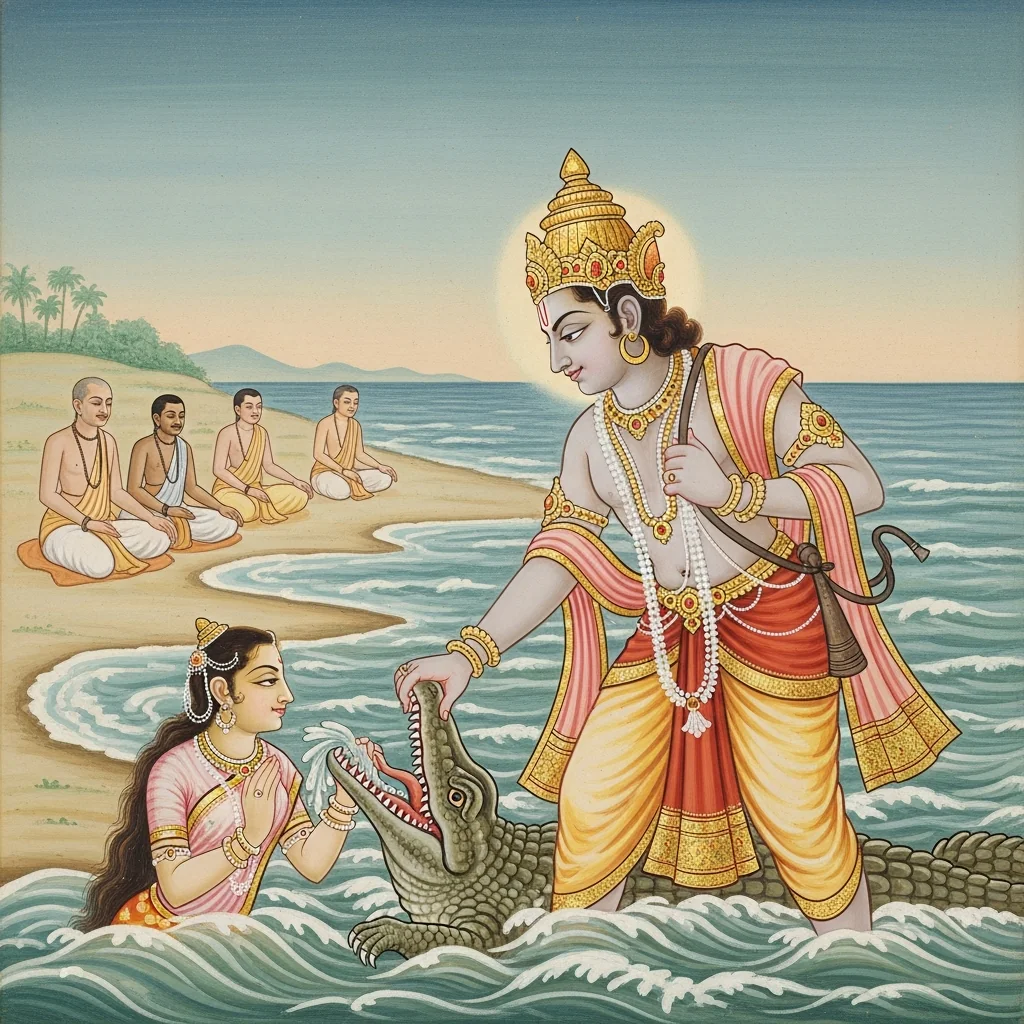
The chapter begins with sages asking about five sacred tīrthas on the southern ocean-shore and the complete merit said to arise from pilgrimage to them. Ugraśravas introduces a holy account centered on Kumāra (Skanda/Kārttikeya), portraying these tīrthas as exceptionally powerful. The royal hero Arjuna/Phālguna reaches the five sites and learns from ascetics that people avoid bathing there because grāhas seize bathers; he insists that the pursuit of dharma must not be blocked by fear. Entering the waters—especially at the Saubhadra tīrtha—he is seized, yet he drags the grāha up by force, whereupon it transforms into an ornamented divine woman, an apsaras. She explains that she and her companions once tried to disturb a brahmin ascetic’s tapas and were cursed to become aquatic grāhas for a fixed term, to be released only when drawn from the water by a great man. The brahmin’s ensuing discourse lays down ethical guidance on desire, household order, and disciplined speech and conduct, contrasting higher and lower ways through vivid moral imagery. Nārada then appears as an authoritative guide, directing the cursed beings to the southern pañca-tīrthas, where Arjuna’s successive baths restore them. The episode ends with Arjuna’s reflective questions about why such obstructions were permitted and why mighty protectors did not prevent them, leading into further explanation.
Shlokas
Verse 1
श्रीमुनय ऊचुः । दक्षिणार्णवतीरेषु यानि तीर्थानि पंच च । तानि ब्रूहि विशालाक्ष वर्णयंत्यति तानि च
The venerable sages said: “On the shores of the Dakṣiṇārṇava are five tīrthas, sacred bathing-places. O wide-eyed one, tell us of them, and describe them as they are celebrated.”
Verse 2
सर्वतीर्थफलं येषु नारदाद्य वदंति च । तेषां चरितमाहात्म्यं श्रोतुमिच्छामहे वयम्
Those tīrthas are said by Nārada and other sages to bestow the fruit of all pilgrimage-sites. We wish to hear their sacred story and their greatness.
Verse 3
उग्रश्रवा उवाच । श्रृणुध्वचत्यद्भुतपुण्यसत्कथं कुमारनाथस्य महाप्रभावम् । द्वैपायनो यन्मम चाह पूर्वं हर्षाबुरोमोद्गमचर्चितांगः
Ugraśravā (Sūta) said: “Listen to this wondrous, holy, and noble account of the great power of Kumāranātha. Formerly Dvaipāyana (Vyāsa) told it to me, while my body was marked by a thrill of joy.”
Verse 4
कुमारगीता गाथात्र श्रूयतां मुनिसत्तमाः । या सर्वदेवैर्मुनिभिः पितृभिश्च प्रपूजिता
O best of sages, hear here the “Kumāra-gītā,” a hymn-narrative revered and worshipped by all the gods, by the sages, and by the Pitṛs (ancestors).
Verse 5
मध्वाचारस्तं भतीर्थं यो निषेवेत मानवः । नियतं तस्य वासः स्याद्ब्रह्मलोके यथा मम
Whoever, with disciplined conduct, resorts to and serves that sacred tīrtha will surely gain residence in Brahmaloka—just as I, the narrator, do.
Verse 6
ब्रह्मलोकाद्विष्णुलोकस्तस्मादपि शिवस्य च । पुत्राप्रियत्वात्तस्यापि गुहलोको महत्तमः
Higher than Brahmaloka is Viṣṇuloka, and higher still is Śiva’s own realm. Yet, because of Śiva’s special affection for his son, Guhaloka—the realm of Guha/Skanda—is declared supremely great.
Verse 7
अत्राश्चर्यकथा या च फाल्गुनस्य पुरेरिता । नारदेन मुनिश्रेष्ठास्तां वो वक्ष्यामि विस्तरात्
O best of sages, I shall now recount in detail that wondrous tale of Phālguna which was formerly narrated by Nārada.
Verse 8
पुरा निमित्ते कस्मिंश्चित्करीटी मणिकूटतः । समुद्रे दक्षिणेऽभ्यागात्स्नातुं तीर्थानि पंच च
Once, on a certain occasion, the diadem-wearing hero set out from Maṇikūṭa and came to the southern ocean, intending to bathe at five sacred tīrthas.
Verse 9
वर्जयंति सदा यानि भयात्तीर्थानि तापसाः । कुमारेशस्य पूर्वं च तीर्थमस्ति मुनेः प्रियम्
The tīrthas that ascetics ever shun out of fear are as follows: to the east of Kumāreśa there is a tīrtha dear to the munis (sages).
Verse 10
स्तंभेशस्य द्वितीयं च सौभद्रस्य मुनेः प्रियम् । बर्करेश्वरमन्यच्च पौलोमीप्रियमुत्तमम्
The second is the tīrtha of Stambheśa, dear to the sage Saubhadra. Another is Barkareśvara—an excellent tīrtha beloved of Paulomī.
Verse 11
चतुर्थं च महाकालं करंधम नृपप्रिययम् । भरद्वाजस्य तीर्थं च सिद्धेशाख्यं हि पंचमम्
The fourth is Mahākāla, and also Karaṃdhama, beloved of kings. The fifth is Bharadvāja’s tīrtha, known as Siddheśa.
Verse 12
एतानि पंच तीर्थानि ददर्श कुरुपुंगवः । तपस्विभिर्वर्जितानि महापुण्यानि तानि च
The Kurupuṅgava, the bull among the Kurus, beheld these five tīrthas—places of great merit, though shunned by ascetics.
Verse 13
दृष्ट्वा पार्श्वे नारदीयानपृच्छत महामुनीन् । तीर्थानीमानि रम्याणि प्रभावाद्भुतवंति च
Seeing the Nārada-like great sages nearby, he asked: “These tīrthas are delightful—and their power is wondrous indeed.”
Verse 14
किमर्थं ब्रूत वर्ज्यंते सदैव ब्रह्मवादिभिः । तापसा ऊचुः । ग्राहः पंच वसंत्येषु हरंति च तपोधनान्
“For what reason, tell me, are they always avoided by the expounders of Brahman?” The ascetics replied: “Five crocodiles dwell in these, and they carry off those rich in austerity.”
Verse 15
अत एतानि वर्ज्यंते तीर्थानि कुरुनंदन । इति श्रुत्वा महाबाहुर्गमनाय मनो दधे
“Therefore these tīrthas are avoided, O joy of the Kurus.” Hearing this, the mighty-armed one resolved in his mind to go (there).
Verse 16
ततस्तं तापसाः प्रोचुथंतुं नार्हसि फाल्गुन । बहवो भक्षिता ग्राहै राजानो मुनयस्तथा
Then the ascetics said to him: “You ought not to go, O Phālguna. Many kings and sages alike have been devoured by the crocodiles.”
Verse 17
तत्त्व द्वारशवर्षाणि तीर्थानामर्बुदेष्वपि । स्नातः किमेतैस्तीर्थैस्ते मा पतंगव्रतो भव
“For twelve years—even among countless tīrthas—you have already bathed. What need have you of these tīrthas? Do not become like one vowed to the moth (rushing into danger).”
Verse 18
अर्जुन उवाच । यदुक्तं करुणासारैः सारं किं तदिहोच्यताम् । धर्मार्थी मनुजो यश्च न स वार्यो महात्मभिः
Arjuna said: “Whatever has been spoken by you—whose very essence is compassion—tell me here its true quintessence. And the man who seeks Dharma should never be restrained by great-souled ones.”
Verse 19
धर्मकामं हि मनुजं यो वारयति मंदधीः । तदाश्रितस्य जगतो निःश्वासैर्भस्मसाद्भवेत्
Truly, the dull-witted one who hinders a man intent upon Dharma—by his very breaths may he reduce to ashes the world that depends upon him.
Verse 20
यज्जीवितं चाचिरांशुसमानक्षणभंगुरम् । तच्चेद्धर्मकृते याति यातु दोषोऽस्ति को ननु
Life is fleeting like a sunbeam, fragile in a moment; if it is spent for Dharma’s sake, let it be so. What fault could there be in that?
Verse 21
जीवितं च धनं दाराः पुत्राः क्षेत्रगृहाणि च । यान्ति येषआं धर्मकृते त एव भुवि मानवाः
They alone are truly human on earth—those who, when Dharma demands it, relinquish life, wealth, wife, sons, fields, and home.
Verse 22
तापसा ऊचुः । एवं ते ब्रुवतः पार्थ दीर्घमायुः प्रवर्धताम् । सदा धर्मे रतिर्भूयाद्याहि स्वं कुरु वांछितम्
The ascetics said: “O Pārtha, as you speak thus, may your lifespan increase. May your delight ever abide in Dharma. Go now—fulfil your rightful desire.”
Verse 23
एवमुक्तः प्रणम्यैतानाशीर्भिरभिसंस्तुतः । जगाम तानि तीर्थानि द्रष्टुं भरतसत्तमः
Thus addressed, the best of the Bharatas bowed to them; praised with blessings, he set out to behold those sacred tīrthas.
Verse 24
ततः सौभद्रमासाद्य महर्षेस्तीर्थुमुत्तमम् । विगाह्य तरसा वीरः स्नानं चक्रे परंतपः
Then Arjuna, the foe-scorching hero, reached Saubhadra—the supreme tīrtha of the great sage—plunged in swiftly, and performed the sacred ritual bath.
Verse 25
अथ तं पुरुषव्याघ्रमंतर्जलचरो महान् । निजग्राह जले ग्राहः कुंतीपुत्रं धनंजयम्
Then a mighty crocodile, moving beneath the waters, seized in the river that tiger among men—Dhanañjaya, the son of Kuntī.
Verse 26
तमादायैव कौतेयो विस्फुरंतं जलेचरम् । उदतिष्ठन्महाबाहुर्बलेन बलिनां वरः
Lifting up that water-creature as it thrashed about, the son of Kuntī—mighty-armed, foremost among the strong—rose up by sheer force.
Verse 27
उद्धृतश्चैव तु ग्राहः सोऽर्जुनेन यशस्विना । बभूव नारी कल्याणी सर्वाभरणभूषिता
And that crocodile, when drawn out by the illustrious Arjuna, became a blessed woman, adorned with every ornament.
Verse 28
दीप्यमानशिखा विप्रा दिव्यरूपा मनोरमा । तदद्भुतं महद्दृष्ट्वा कुंतीपुत्रो धनंजयः
Beholding that wondrous, magnificent woman—radiant like a blazing flame, divine in form, and utterly enchanting—Dhanañjaya, the son of Kuntī, gazed upon the marvel in astonishment.
Verse 29
तां स्त्रियं परमप्रीत इदं वचनमब्रवीत् । का वै त्वमसि कल्याणि कुतो वा जलचारिणी
Greatly delighted, he spoke to that woman: “Who indeed are you, O auspicious one? And from where have you come, moving through the waters?”
Verse 30
किमर्थं च महात्पापमिदं कृतवती ह्यसि । नार्युवाच । अप्सरा ह्यस्मि कौतेय देवारण्यनिवासिनी
“And for what reason have you committed this great sin?” The woman replied: “O son of Kuntī, I am indeed an apsaras, dwelling in the divine forest.”
Verse 31
इष्टा धनपतेर्नित्यं वर्चानाम महाबल । मम सख्यश्चतस्रोऽन्याः सर्वाः कामगमाः शुभाः
“O mighty one, I am ever dear to Dhanapati (Kubera); my name is Varcā. I have four other companions—each auspicious, and each able to go wherever she desires.”
Verse 32
ताभिः सार्धं प्रयातास्मि देवराजनिवेशनात् । ततः पश्यामहे सर्वा ब्राह्मणं चानिकेतनम्
“Together with them I set out from the dwelling of the king of the gods. Then we all saw a brāhmaṇa—one without any fixed abode.”
Verse 33
रूपवंतमधीयानमेकमेकांतचारिणम् । तस्य वै तपसा वीर तद्वनं तेजसावृतम्
“He was handsome, engaged in sacred study, solitary, and dwelling in seclusion. O hero, by his austerity that forest was enveloped in splendor.”
Verse 34
आदित्य इव तं देशं कृत्स्नमेवान्व भासयत् । तस्य दृष्ट्वा तपस्तादृग्रूपं चाद्भुतदर्शनम्
Like the sun, he illumined that entire region. Seeing such austerity and such a form—marvelous to behold—
Verse 35
अवतीर्णास्ति तं देशं तपोविघ्नचिकीर्षया । अहं च सौरभेयी च सामेयी बुद्बुदालता
We descended to that place, intending to obstruct his austerities. I—and Saurabheyī, Sāmeyī, and Budbudālatā—
Verse 36
यौगपद्येन तं विप्रमभ्यगच्छाम भारत । गायंत्यो ललमानाश्च लोभयंत्यश्च तं द्विजम्
All at once we approached that brāhmaṇa, O Bhārata—singing, sporting, and trying to entice that twice-born.
Verse 37
स च नास्मासु कृतवान्मनोवीरः कथंचन । नाकंपत महातेजाः स्थितस्तपसि निर्मले
But that hero of mind paid us no heed in any way. The great-splendored one did not waver, remaining established in pure austerity.
Verse 38
सोऽशपत्कुपितोऽस्मासु ब्राह्मणः क्षत्रियर्षभ । ग्राहभूता जले यूयं भविष्यथ शतं समाः
O bull among Kṣatriyas, that brāhmaṇa, angered with us, pronounced a curse: “In the waters you shall become crocodile-spirits, and remain so for a hundred years.”
Verse 39
ततो वयं प्रव्यथिताः सर्वा भरतसत्तम । आयाताः शरणं विप्रं तपोधनमकल्मषम्
Then all of us—deeply shaken—O best of Bharata’s line, came seeking refuge in that brāhmaṇa, a treasure of austerity and free from sin.
Verse 40
रूपेण वयसा चैव कंदर्पेण च दर्पिताः । अयुक्तं कृतवत्यः स्म क्षंतुमर्हसि नो द्विज
Puffed up by beauty, youth, and the pride of desire, we acted improperly. O twice-born one, you should forgive us.
Verse 41
एष एव वधोऽस्माकं स पर्याप्तस्तपोधन । यद्वयं शंसितात्मानं प्रलोब्धुं त्वामुपागताः
This itself is enough punishment for us, O treasure of austerity—that we approached you, a blameless soul, seeking to tempt you.
Verse 42
अवध्याश्च स्त्रियः सृष्टा मन्यंते धर्मचिंतकाः । तस्माद्धर्मेण धर्मज्ञ एष वादो मनीषिणाम्
Those who reflect on dharma hold that women are created as not to be slain. Therefore, O knower of dharma, this is the reasoned position of the wise—let dharma be followed by dharma.
Verse 43
शरणं च प्रपन्नानां शिष्टाः कुर्वंति पालनम् । शरण्यं त्वां प्रपन्नाः स्मस्तस्मात्त्वं क्षंतुमर्हसि
The well-conducted protect those who have taken refuge. We have taken refuge in you, the giver of refuge; therefore you should forgive.
Verse 44
एवमुक्तस्तु धर्मात्मा ब्राह्मणः शुभकर्मकृत् । प्रसादं कृतवाञ्छूररविसोमसमप्रभः
Thus addressed, that righteous brāhmaṇa—doer of auspicious deeds—became gracious, radiant like the sun and moon, and possessed of heroic splendor.
Verse 45
ब्राह्मण उवाच । भवतीनां चरित्रेण परिमुह्यामि चेतसि । अहो धार्ष्ट्यमहो मोहो यत्पापाय प्रवर्तनम्
The brāhmaṇa said: “Your conduct bewilders my mind. Alas—what audacity, alas—what delusion, that it leads one into sin!”
Verse 46
मस्त कस्थायिनं मृत्युं यदि पश्येदयं जनः । आहारोऽपि न रोचेत किमुताकार्यकारिता
If a person were to see death standing upon his head, even food would not please him—how much less would he engage in wrongful acts?
Verse 47
आहो मानुष्यकं जन्म सर्वजन्मसु दुर्लभम् । तृणवत्क्रियते कैश्चिद्योषिन्मूढैर्दुराधरैः
Alas, human birth is rare among all births; yet by some—women foolish and hard to restrain—it is treated like a blade of grass.
Verse 48
तान्वयं समपृच्छामो जनिर्वः किंनिमित्ततः । को वा लाभो विचार्यैतन्मनासा सह प्रोच्यताम्
We ask you this directly: for what reason has this view arisen in you? Reflecting upon it carefully in your mind, tell us—what benefit is there in it?
Verse 49
न चैताः परिनिन्दामो जनिर्यार्भ्यः प्रवर्तते । केवलं तान्विनिंदामो ये च तासु निरर्गलाः
We do not condemn these women, for their conduct arises from their own nature and upbringing. We censure only those who, toward them, behave without restraint.
Verse 50
यतः पद्मभुवा सृष्टं मिथुनं विश्ववृद्धये । तत्तथा परिपाल्यं वै नात्र दोषोऽस्ति कश्चन
Since the Lotus-born (Brahmā) created the pair for the increase of the world, it should indeed be maintained accordingly; in this there is no fault whatsoever.
Verse 51
या बांधवैः प्रदत्ता स्याद्वह्निद्विजसमागमे । गार्हस्थ्यपालनं धन्यं तया साकं हि सर्वदम्
She who is given by one’s kin in the presence of the sacred fire and the twice-born—maintaining household life with her is blessed indeed, for with such a wife it becomes a giver of all prosperity.
Verse 52
यथाप्रकृति पुंयोमो यत्नेनापि परस्परम् । साध्यामानो गुणाय स्यादगुणायाप्यसाधितः
According to their own natures, man and woman—even with effort toward one another—when shaped and guided, can become a cause of virtue; when not properly guided, they can likewise become a cause of defect.
Verse 53
एवं यत्नात्साध्यमानं स्वकं गार्हस्थ्यमुत्तमम् । गुणाय महते भूयादगुणायाप्यसाधितम्
Thus, one’s own excellent householder life, when carefully cultivated through effort, becomes a great source of virtue; but if left uncultivated, it also becomes a source of vice.
Verse 54
पुरे पंचमुखे द्वाःस्थ एकादशभटैर्युतः । साकं नार्या बह्वपत्यः स कथं स्यादचेतनः
In the city of Pañcamukha, a doorkeeper attended by eleven guards, together with his wife and many children—how could such a man be without sense or responsibility?
Verse 55
यश्चस्त्रिया समायोगः पंचयज्ञादिकर्मभिः । विश्वोपकृतये सृष्टा मूढैर्हा साध्यतेऽन्यथा
Union with a wife—together with the duties beginning with the five great sacrifices—was ordained for the welfare of the world; alas, the deluded pursue it in a distorted way.
Verse 56
अहो श्रृणुध्वं नो चेद्वः शुश्रूषा जायते शुभा । तथापि बाहुमुद्धृत्य रोरूयामः श्रृणोति कः
Ah—listen! If no auspicious wish arises in you to heed our words, even so we shall raise our arms and cry aloud; but who, indeed, will listen?
Verse 57
षड्धातुसारं तद्वीर्यं समानं परिहाय च । विनिक्षेपे कुयोनौ तु तस्येदं प्रोक्तवान्यमः
That semen, the essence of the six constituents, is equal in potency; yet when it is cast into an unworthy womb, Yama has declared this concerning the one who does so.
Verse 58
प्रथमं चौषधीद्रोग्धा आत्मद्रोग्धा ततः पुनः । पितृद्रोग्धा विश्वद्रोग्धा यात्यंधं शाश्वतीः समाः
First comes the betrayer of healing herbs; next, the betrayer of one’s own self; then the betrayer of the ancestors; and finally the betrayer of the whole world. Such a person goes into blinding darkness for endless years.
Verse 59
मनुष्यं पितरो देवा मुनयो मानवास्तथा । भृतानि चोपजीवंति तदर्थं नियतो भवेत्
The ancestors, the gods, the sages, other people, and all who depend on one live supported by a person; therefore one should live disciplined and with purpose for their sake.
Verse 60
वचसा मनसा चैव जिह्वया करश्रोत्रकैः । दांतमाहुर्हि सत्तीर्थं काकतीर्थमतः परम्
By speech, by mind, by tongue, and by hands and ears—self-control is declared the true sacred ford (sat-tīrtha). Beyond that lies only the ‘crow-tīrtha’, a lesser and impure resort.
Verse 61
काकप्राये नरे यस्मिन्रमंते तामसा जनाः । हंसोऽयमिति देवानां कोऽर्थस्तेन विचिंत्यताम्
When tamasic people delight in a man who is ‘crow-like’, what purpose would the gods have in considering him a ‘swan’? Let this be reflected upon.
Verse 62
एवंविधं हि विश्वस्य निर्माणं स्मरतोहृदि । अपि कृते त्रिलोक्याश्च कथं पापे रमेन्मनः
For one who remembers in the heart this wondrous fashioning of the universe—even of the three worlds—how could the mind take delight in sin?
Verse 63
तदिदं चान्यमर्त्यानां शास्त्रदृष्टमहो स्त्रियः । यमलोके मया दृष्टं मुह्ये प्रत्यक्षतः कथम्
This indeed is something other mortals know only from scripture—ah, ladies! Yet I have seen it in Yama’s realm; how could I be bewildered when it stands before me directly?
Verse 64
भवतीषु च कः कोपो ये यदर्थे हि निर्मिताः । ते तमर्थं प्रकुर्वंति सत्यमस्तुभमेव च
What anger could there be toward you, when beings act for the very purpose for which they were fashioned? They fulfill that purpose—let this be accepted as truth, indeed.
Verse 65
शतं सहस्रं विश्वं च सर्वमक्षय वाचकम् । परिमाणं शतं त्वेव नैतदक्षय्यवाचकम्
‘A hundred’, ‘a thousand’, and ‘the whole universe’—such expressions can signify the inexhaustible. But ‘a hundred’ stated as a measured quantity is not a term for the inexhaustible.
Verse 66
यदा च वो ग्राहभूता गृह्णतीः पुरुषाञ्जले । उत्कर्षति जलात्कश्चित्स्थले पुरुषसत्तमः
And when some excellent man, standing on dry ground, pulls from the water the men whom you—like grasping crocodiles—are seizing there…
Verse 67
तदा यूयं पुनः सर्वाः स्वं रूपं प्रतिपत्स्यथ । अनृतं नोक्तपूर्वं मे हसतापि कदाचन । कल्याणस्य सुपृक्तस्य शुद्धिस्तद्वद्वरा हि वः
Then you all will again regain your own true forms. Never have I spoken falsehood before—nor even in jest, at any time. For when what is auspicious is well blended, purity arises accordingly; thus, indeed, is your excellent outcome.
Verse 68
नार्युवाच । ततोभिवाद्य तं विप्रं कृत्वा चैव प्रदक्षिणम्
The woman said: “Then, having respectfully saluted that brāhmaṇa and also circumambulated him (pradakṣiṇā),”
Verse 69
अचिंतयामापसृत्य तस्माद्देशात्सुदुःखिताः । क्व नु नाम वयं सर्वाः कालेनाल्पेन तं नरम्
We withdrew from that place, overwhelmed with sorrow, and pondered: “Where indeed shall we all, within a short time, find that man?”
Verse 70
समागच्छेम यो नः स्वं रूपमापादयेत्पुनः । ता वयं चिंतयित्वेह मुहूर्तादिव भारत
“—so that we might meet him, the one who could restore our own form again.” Thus we reflected here for what seemed but a moment, O Bhārata.
Verse 71
दृष्टवत्यो महाभागं देवर्षिमथ नारदम् । सर्वा दृष्टाः स्म तं दृष्ट्वा देवर्षिममितद्युतिम्
Then we beheld the greatly fortunate divine sage Nārada. On seeing that celestial seer of immeasurable splendor, we all fixed our gaze upon him.
Verse 72
अभिवाद्य च तं पार्थ स्थिताः स्मो व्यथिताननाः । स नोऽपृच्छद्दृःखमूलमुक्तवत्यो वयं च तम्
Having saluted him, O Pārtha, we stood there with anguished faces. He asked us the root cause of our sorrow, and we told him.
Verse 73
श्रुत्वा तच्च यथातत्त्वमिदं वचनमब्रवीत् । दक्षिणे सागरेऽनूपे पंच तीर्थानि संतिवै
Having heard it exactly as it truly was, he spoke these words: “On the southern seacoast, in a pleasant coastal region, there are indeed five tīrthas (sacred fords).”
Verse 74
पुण्यानि रमणीयानि तानि गच्छत मा चिरम् । तत्रस्थाः पुरुषव्याघ्रः पांडवो वो धनंजयः
Those places are holy and delightful—go to them without delay. There dwells your Pāṇḍava, Dhanaṃjaya, the tiger among men.
Verse 75
मोक्षयिष्यति शुद्धात्मा दुःखा दस्मान्न संशयः । तस्य सर्वा वयं वीर श्रुत्वा वाक्यमिहागताः
That pure-souled one will free us from suffering—of this there is no doubt. Hearing his words, O hero, we all came here to him.
Verse 76
त्वमिदं सत्यवचनं कर्तुमर्हसि पांडव । त्वद्विधानां हि साधूनां जन्म दीनोपकारकम्
O Pāṇḍava, you ought to make this truthful promise real. For the very birth of virtuous men like you is meant to uplift and aid the helpless.
Verse 77
श्रुत्वेति वचनं तस्याः सस्नौ तीर्थेष्वनुक्रमात् । ग्राहभूताश्चोज्जहार यथापूर्वाः स पांडवः
Hearing her words, that Pāṇḍava bathed in the tīrthas one by one in due order; and he drew out those seized by the ‘grāha’ spirit, restoring them to their former state.
Verse 78
ततः प्रणम्य ता वीरं प्रोच्यमाना जयाशिषः । गंतुं कृताभिलाषाश्च प्राह पार्थो धनंजयः
Then, having bowed to those heroic ones and receiving their blessings of victory, Pārtha Dhanaṃjaya—his resolve to depart now firm—spoke.
Verse 79
एष मे हृदि संदेहः सुदृढः परिवर्तते । कस्माद्वोनारदमुनिरनुजज्ञे प्रवासितुम्
This doubt, firm and unyielding, turns within my heart: why did the sage Nārada grant you leave to depart and wander?
Verse 80
सर्वः कोऽप्यतिहीनोऽपि स्वपूज्यस्यार्थसाधकः । स्वपूज्यतीर्थेष्वावासं प्रोक्तवान्नारदः कथम्
Anyone—even one greatly lacking in power—can accomplish the purpose of the deity he worships. How, then, did Nārada tell you to dwell in the very tīrthas sacred to your own worshipful Lord?
Verse 81
तथैव नवदुर्गासु सतीष्वतिबलासु च । सिद्धेशे सिद्धगणपे चापि वोऽत्र स्थितिः कथम्
Likewise, among the Nine Durgās and the supremely powerful Satīs—and even in the presence of Siddheśa and Siddhagaṇapa—how is it that you are able to remain here?
Verse 82
एकैक एषां शक्तो हि अपि देवान्निवारितुम् । तीर्थसंरोधकारिण्यः सर्वा नावारयत्कथम्
For each one of them is indeed able to restrain even the gods. Since all of them can bar access to the tīrtha, how did they not stop you?
Verse 83
इति चिंतयते मह्यं भृशं दोलायते मनः । महन्मे कौतुकं जातं सत्यं वा वक्तुमर्हथ
As I ponder thus, my mind wavers greatly. A great curiosity has arisen in me—please speak the truth.
Verse 84
अप्सरस ऊचुः । योग्यं पृच्छसि कौन्तेय पुनः पश्योत्तरां दिशम्
The Apsarases said: “O son of Kuntī, you ask what is fitting. Look again toward the northern direction.”