Adhyaya 6
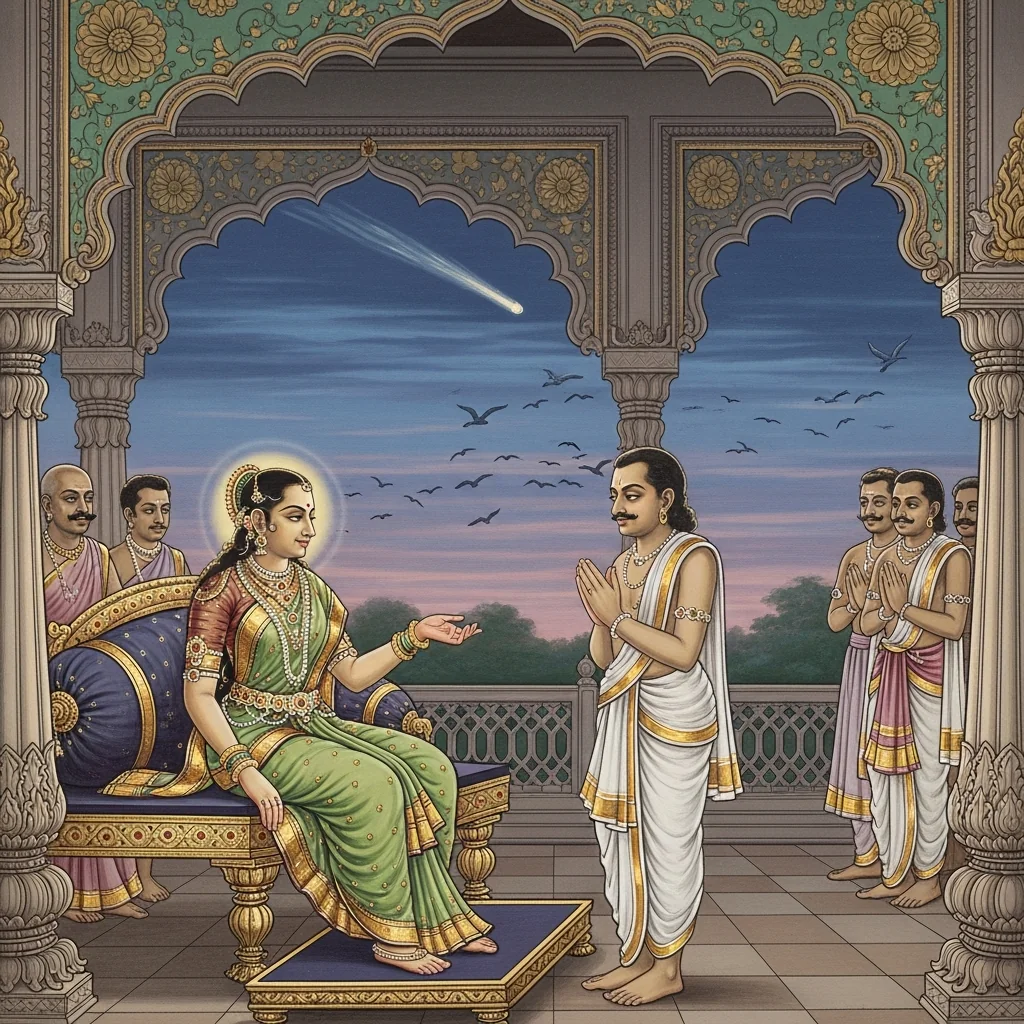
This chapter has Skanda narrate how Vināyaka (Vighnajit/Vighneśa), obeying Śiva’s command to bring about Kāśī’s destined transition, swiftly enters Vārāṇasī and adopts a calculated disguise. He appears as an aged brāhmaṇa—an astrologer and nakṣatra-reader—moving through the city, interpreting dreams and portents, and thereby winning public trust. A long array of ominous dreams and celestial and earthly signs is set forth: eclipses, hostile planetary alignments, comets, earthquakes, ill-omens among animals and trees, and symbolic scenes of civic ruin. Through this carefully shaped discourse, many residents are persuaded to depart, revealing how divine agency can work through culturally authoritative knowledge-systems such as dream-interpretation and jyotiṣa within an urban realm. The narrative then turns to the women of the inner palace, who praise the “brāhmaṇa” for exemplary virtues, leading Queen Līlāvatī to recommend him to King Divodāsa. The king honors him and privately asks about his condition and future; the disguised Vināyaka offers elaborate royal praise and instructs that within eighteen days a northern brāhmaṇa will arrive whose counsel must be followed without hesitation. The chapter closes by stating that the city has been brought under Vināyaka’s māyā, and it moves toward Agastya’s inquiry into how Śiva praised Vināyaka and what names and forms he bore in Kāśī.
Shlokas
Verse 1
स्कंद उवाच । अथेशाज्ञां समादाय गजवक्त्रः प्रतस्थिवान् । शंभोः काश्यागमोपायं चिंतयन्मंदराद्रितः
Skanda said: Then, having accepted the Lord’s command, the Elephant-faced one set forth, pondering the means by which Śambhu might come to Kāśī from Mount Mandara.
Verse 2
प्राप्य वाराणसीं तूर्णमाशु स्यंदनगो विभुः । वाडवीं मूर्तिमालंब्य प्राविशच्छकुनैः स्तुतः
Reaching Vārāṇasī swiftly, the mighty one, riding in a chariot, assumed the form of a mare and entered—praised by auspicious omens of birds.
Verse 3
नक्षत्रपाठको भूत्वा वृद्धः प्रत्यवरोधगः । चचार मध्ये नगरं पौराणां प्रीतिमावहन्
Becoming a reader of the stars—an elderly man who moved about unimpeded—he wandered through the midst of the city, bringing delight to the townspeople.
Verse 4
स्वयमेव निशाभागे स्वप्नं संदर्शयन्नृणाम् । प्रातस्तेषां गृहान्गत्वा तेषां वक्ति बलाबलम्
In the night itself he personally showed dreams to people; and in the morning, going to their homes, he would tell them what was strong and what was weak—the true measure of their situation.
Verse 5
भवद्भिरद्य रात्रौ यद्दृष्टं स्वप्नविचेष्टितम् । भवत्कौतूहलोत्पत्त्यै तदेव कथयाम्यहम्
“The dream-visions you saw tonight—I shall explain that very thing, so that your curiosity may be satisfied.”
Verse 6
स्वपता भवता रात्रौ तुर्ये यामे महाह्रदः । अदर्शि तत्र च भवान्मज्जन्मज्जंस्तटंगतः
While you slept at night, in the fourth watch, you beheld a great lake; and there you were seen again and again plunging in and rising up, until you reached the shore.
Verse 7
तदंबुपिच्छिले पंके मग्नोन्मग्नोसि भूरिशः । दुःस्वप्नस्यास्य च महान्विपाकोति भयप्रदः
In that mud made slippery with water, you sink and rise again and again. The ripened consequence (vipāka) of this evil dream is truly severe and exceedingly fear-bestowing.
Verse 8
काषायवसनो मुंडः प्रैक्ष्यहो भवतापि यः । परितापं महानेष जनयिष्यति दारुणम्
That shaven-headed man clad in ochre, whom you too beheld—alas—will bring forth great anguish, dreadful and severe.
Verse 9
रात्रौ सूर्यग्रहो दृष्टो महानिष्टकरो ध्रुवम् । ऐंद्रधनुर्द्वयं रात्रौ यदलोकि न तच्छुभम्
A solar eclipse beheld at night is surely a bringer of great calamity. And if a double rainbow is seen at night, that too is not auspicious.
Verse 10
प्रतीच्यां रविरागत्य प्रोद्यंतं व्योम्नि शीतगुम् । पातयामास भूपृष्ठे तद्राज्यभयसूचकम्
The sun, coming from the west, struck down the moon as it rose in the sky and cast it upon the earth—this is a sign that fear and peril will befall the kingdom.
Verse 11
युगपत्केतुयुगलं युध्यमानं परस्परम् । यददर्शि न तद्भद्रं राष्ट्रभंगाय केवलम्
That pair of comets you beheld—simultaneously battling one another—was not auspicious; it signifies only the sundering of the realm.
Verse 12
विशीर्यत्केशदशनं नीयमानं च दक्षिणे । आत्मानं यत्समद्राक्षीः कुटुंबस्यापि भीषणम्
You saw yourself with hair and teeth falling away, being dragged toward the south—this is dreadful, even for your household, foretelling fear for the family as well.
Verse 13
प्रासादध्वजभंगोयस्त्वयैक्षत निशाक्षये । राज्यक्षयकरं विद्धि महोत्पाताय निश्चितम्
The breaking of the palace-banner you saw at the end of the night—know it as a cause of the kingdom’s ruin, a great and certain portent of calamity.
Verse 14
नगरी प्लाविता स्वप्ने तरंगैः क्षीरनीरधेः । पक्षैस्त्रिचतुरैः शंके महाशंकां पुरौकसाम्
In a dream the city was flooded by the waves of a milky ocean; I suspect that within three or four fortnights great dread will arise among the city-dwellers.
Verse 15
स्वप्ने वानरयानेन यत्त्वमूढोसि दक्षिणाम् । अतस्तद्वंचनोपायः पुरत्यागो महामते
Since in the dream you were, in delusion, carried southward upon a monkey-vehicle, therefore the way to avert that omen is to abandon the city, O wise one.
Verse 16
रुदती या त्वया दृष्टा महिलैका निशात्यये । मुक्तकेशी विवसना सा नारी श्रीरिवोद्गता
That lone woman you saw at dawn, weeping—her hair unbound and her body unclothed—was as though Śrī (Lakṣmī) herself were rising up and departing: an omen that prosperity is leaving.
Verse 17
देवालयस्य कलशो यत्त्वया वीक्षितः पतन् । दिनैः कतिपयैरेव राज्यभंगो भविष्यति
Since you have seen the temple’s kalaśa, its crowning finial, falling down, within only a few days the kingdom will surely come to ruin.
Verse 18
पुरी परिवृता स्वप्ने मृगयूथैः समंततः । रोरूयमाणैरत्यर्थं मासेनैवोद्वसी भवेत्
If, in a dream, the city is seen surrounded on every side by herds of wild beasts, crying out dreadfully, then within a month it will become deserted.
Verse 19
आतायियूकगृध्राद्यैः पुरीमुपरिचारिभिः । सूच्यतेत्याहितं किंचिद्ध्रुवमत्र निवासिनाम्
When the city is roamed by robbers, lice, vultures, and the like, it is a sign that some harm is surely destined for those who dwell there.
Verse 20
स्वप्नोत्पातानिति बहूञ्शंसञ्शंसन्नितस्ततः । बहूनुच्चाटयांचक्रे स विघ्नेशः पुरौकसः
Proclaiming many dream-omens here and there, that Vighneśa among the city-dwellers drove many people away, seized with alarm.
Verse 21
केषांचित्पुरतो वादीद्ग्रहचारं प्रदर्शयन् । एकराशिस्थिताः सौरि सितभौमा न शोभनाः
Before some people, a speaker explained the courses of the planets: “Śani, Śukra, and Maṅgala, all stationed in a single zodiac sign, are not auspicious.”
Verse 22
सोयं धूमग्रहो व्योम्नि भित्त्वा सप्तर्षिमंडलम् । प्रयातः पश्चिमामाशां स नाशाय विशांपतेः
This smoky comet in the sky, having passed through the constellation of the Seven Sages, has moved toward the western quarter—foretelling the destruction of the lord of the people, the king.
Verse 23
अतिचारगतो मंदः पुनर्वक्राध्व संस्थितः । पापग्रहसमायुक्तो न युक्तोयमिहेष्यते
Saturn, having entered an abnormal course and again standing in retrograde motion, conjoined with malefic planets—this configuration is not fitting here and portends inauspicious results.
Verse 24
व्यतीते वासरे योयं भूकंपः समपद्यत । कंपं जनयतेऽतीव हृदो मेपि पुरौकसः
The earthquake that occurred the other day still makes my heart tremble greatly as well, O city-dweller.
Verse 25
उदीच्यादक्षिणाशायां येयमुल्का प्रधाविता । विलीना च वियत्येव स निर्घातं न सा शुभा
This meteor that shot from the northern quarter toward the south and then vanished in the sky—accompanied by a crash—was not auspicious.
Verse 26
उन्मूलितो महामूलो महानिलरयेण यः । चत्वरे चैत्यवृक्षोयं महोत्पातं प्रशंसति
This shrine-tree in the public square—deep-rooted, yet torn up by a mighty rush of wind—proclaims a great calamity.
Verse 27
सूर्योदयमनुप्राप्य प्राच्यां शुष्कतरूपरि । करटो रारटीत्येष कटूत्कट भयप्रदः
At sunrise, in the eastern quarter, upon a dry tree, a camel cried out—“rāraṭī!”—a harsh, grating sound that suddenly spread fear.
Verse 28
मध्ये विपणि यतूर्णं कौचिच्चारण्यचारिणौ । मृगौ मृगयतां यातौ पौराणां पुरतोऽहितौ
In the middle of the marketplace, two deer that normally roam the forest suddenly rushed about and appeared before the townspeople—an inauspicious sight.
Verse 29
रसालशालमुकुलं वीक्ष्यते यच्छरद्यदः । महाकालभयं मन्येप्यकालेपि पुरौकसाम्
When mango and śāla trees are seen budding as though it were autumn, even out of season, I deem it the terror of Mahākāla—a dread that falls upon the city-dwellers at an untimely hour.
Verse 30
साध्वसंजनयित्वेति केचिदुच्चाटिताः पुरः । तेन विघ्नकृतापौराः कपटद्विजरूपिणा
Thus, having stirred up panic, some were driven out from the city; and the townspeople were beset with obstacles by one who wore the guise of a deceitful brāhmaṇa.
Verse 31
अथ मध्येवरोधं स प्रविश्य निजमायया । दृष्टार्थमेव कथयन्स्त्रीणां विस्रंभभूरभूत्
Then, by his own māyā, he entered the women’s inner quarters; speaking only of “seen facts” and plausible matters, he became a ground of trust for the women.
Verse 32
तव पुत्रशतं जज्ञे सप्तोनं शुभलक्षणे । तेष्वेकस्तुरगारूढो बाह्याल्यां पतितो मृतः
“O lady of auspicious marks, you have borne a hundred sons, lacking seven; among them, one—mounted on a horse—fell in the outer lane and died.”
Verse 33
अंतर्वत्नी त्वियं कन्या जनयिष्यति शोभनाम् । एषा हि दुर्भगा पूर्वं सांप्रतं सुभगाऽभवत्
“This maiden is pregnant and will give birth to a beautiful child; though formerly unfortunate, she has now become fortunate.”
Verse 34
असौ हि राज्ञो राज्ञीनामत्यंतमिहवल्लभा । मुक्तालंकृतिरेतस्यै राज्ञा दत्ता निजोरसः
“She is exceedingly dear here to the king and to the queens; and the king has given her a pearl-ornament, taken from his own chest.”
Verse 35
पंचसप्तदिनान्येव जातानीतीह तर्क्यते । अस्यै राज्ञा प्रसादेन ग्रामौ दातुमुदीरितौ
“It is reckoned that only five to seven days have passed since this occurred; and by the king’s favor, two villages have been declared to be granted to her.”
Verse 36
इति दृष्टार्थकथनै राज्ञीमान्योभवद्द्विजः । वर्णयंति च ता राज्ञः परोक्षेपि गुणान्बहून्
By such speech recounting evident facts, the brāhmaṇa became honored by the queen; and those women, even when the king was absent, described many of his virtues.
Verse 37
अहो यादृगसौ विप्रः सर्वत्रातिविचक्षणः । सुशीलश्च सुरूपश्च सत्यवाङ्मितभाषणः
“Ah! What a remarkable brāhmaṇa he is—exceedingly discerning in every matter; well-mannered and handsome; a speaker of truth, and one whose words are measured.”
Verse 38
अलोलुप उदारश्च सदाचारो जितेंद्रियः । अपि स्वल्पेन संतुष्टः प्रतिग्रहपराङ्मुखः
“Free from greed and generous; established in good conduct and master of his senses; content even with little, and averse to accepting gifts.”
Verse 39
जितक्रोधः प्रसन्नास्यस्त्वनसूयुरवंचकः । कृतज्ञः प्रीतिसुमुखः परिवादपराङ्मुखः
“Having conquered anger, with a cheerful face; free from envy and free from deceit; grateful, pleasant in affection, and turned away from slander.”
Verse 40
पुण्योपदेष्टा पुण्यात्मा सर्वव्रतपरायणः । शुचिः शुचिचरित्रश्च श्रुतिस्मृतिविशारदः
“A teacher of what is meritorious, pure-souled, devoted to all sacred observances; himself pure and of spotless conduct; and deeply learned in Śruti and Smṛti.”
Verse 41
धीरः पुण्येतिहासज्ञः सर्वदृक्सर्वसंमतः । कलाकलापकुशलो ज्योतिःशास्त्रविदुत्तमः
Steadfast and wise; learned in sacred histories; clear-sighted and approved by all; skilled in the full range of arts, and foremost among knowers of the science of Jyotiṣa (astronomy/astrology).
Verse 42
क्षमी कुलीनोऽकृपणो भोक्ता निर्मलमानसः । इत्यादि गुणसंपन्नः कोपि क्वापि न दृग्गतः
Patient, well-born, not miserly, able to enjoy rightly, and of a stainless mind—endowed with these and other virtues, such a man is rarely seen anywhere at all.
Verse 43
इत्थं तास्तद्गुणग्रामं वर्णयंत्यः पदेपदे । कालं विनोदयंति स्म अंतःपुरचराः स्त्रियः
Thus, the women of the inner palace, describing his multitude of virtues at every step, used to pass their time in pleasant conversation.
Verse 44
एकदावसरं प्राप्य दिवोदासस्य भूभुजः । राज्ञी लीलावती नाम राज्ञे तं विन्यवेदयत्
Once, finding a fitting occasion, Queen Līlāvatī informed King Divodāsa about him.
Verse 45
राजन्वृद्धो गुणैर्वृद्धो ब्राह्मणः सुविचक्षणः । एकोस्ति स तु द्रष्टव्यो मूर्तो ब्रह्मनिधिः परः
O King, there is a brāhmaṇa—advanced in years and richer still in virtues—highly discerning. He is one of a kind and must be seen: a supreme treasure of Brahman made manifest in bodily form.
Verse 46
राज्ञी राज्ञा कृतानुज्ञा सखीं प्रेष्य विचक्षणाम् । आनिनाय च तं विप्रं ब्राह्मं तेज इवांगवत्
With the king’s permission granted, the queen sent a discerning companion and brought that brāhmaṇa—bearing brahmanic splendor, as though radiance itself had taken on a body.
Verse 47
राजापि दूरादायांतं त विलोक्यमहीसुरम् । यत्राकृतिर्गुणास्तत्र जहर्षेति वदन्हृदि
Even the king, seeing from afar that lordly brāhmaṇa approaching, rejoiced within himself, thinking: “Where such a noble presence is found, there too are virtues.”
Verse 48
पदैर्द्वित्रैर्नृपतिना कृताभ्युत्थानसत्कृतिः । चतुर्निगमजाभिः स तमाशीर्भिरनंदयत्
The king rose and advanced a step or two in respectful welcome; and that brāhmaṇa, delighting him, blessed him with benedictions born of the four Vedas.
Verse 49
कृतप्रणामो राज्ञा स सादरं दत्तमासनम् । भेजेथ कुशलं पृष्टः स राज्ञा तेन भूपतिः
After the king had offered obeisance, the brāhmaṇa accepted with honor the seat that was given. When asked about his welfare by that ruler, he replied with words of wellbeing.
Verse 50
परस्परं कुशलिनौ कुशलौ च कथागमे । प्रश्नोत्तराभ्यां संतुष्टौ द्विजवर्य क्षमाभृतौ
Each inquired after the other’s welfare; both were skilled in courteous conversation. Through questions and replies they were satisfied—O excellent brāhmaṇa—both bearing patience and forbearance.
Verse 51
कथावसाने राज्ञाथ गेहं विससृजे द्विजः । लब्धमानमहापूजः स स्वमाश्रममाविशत्
When the sacred conversation ended, the brāhmaṇa took leave of the king’s house. Having received honor and great worship, he entered his own hermitage.
Verse 52
गतेऽथ स्वाश्रमं विप्रे दिवोदासो नरेश्वरः । लीलावत्याः पुरो विप्रं वर्णयामास भूरिशः
After the brāhmaṇa had gone to his own hermitage, King Divodāsa, lord of men, spoke at length before Līlāvatī, describing that brāhmaṇa.
Verse 53
महादेवि महाप्राज्ञे लीलावति गुणप्रिये । यथाशंसि तथा विप्रस्ततोपि गुणवत्तरः
O great queen, O highly wise Līlāvatī, lover of virtue—just as you praise him, so indeed is that brāhmaṇa; rather, he is even more richly endowed with good qualities.
Verse 54
अतीतं वेत्ति सकलं वर्तमानमवैति च । प्रष्टव्यः प्रातराहूय भविष्यं किंचिदेष वै
He knows the entire past and understands the present as well. Therefore he should be summoned in the morning and questioned about something of the future—surely this man can tell it.
Verse 55
महाविभव संभारैर्महाभोगैरनेकधा । व्युष्टायां स नृपो रात्र्यां प्रातराहूतवान्द्विजम्
With abundant royal resources and many kinds of splendid enjoyments, when the night had passed, the king summoned the brāhmaṇa in the morning.
Verse 56
सत्कृत्य तं द्विजं भक्त्या दुकूलादि प्रदानतः । एकांते तं द्विजं राजा पप्रच्छ निजहृत्स्थितम्
Having honored that brāhmaṇa with devotion—by gifting fine garments and the like—the king then, in private, asked the brāhmaṇa about the matter resting in his own heart.
Verse 57
राजोवाच । द्विजवर्यो भवानेकः प्रतिभातीति निश्चितम् । यथातत्त्ववती ते धीर्न तथान्यस्य मे मतिः
The King said: “O best of twice-born ones, it is certain to me that you alone are truly discerning. Your intellect is grounded in reality as it is; I do not hold such an opinion about anyone else.”
Verse 58
दृष्ट्वा त्वां तु महाप्राज्ञं शांतं दांतं तपोनिधिम् । किंचित्प्रष्टुमना विप्र तदाख्याहि यथार्थवत्
“Seeing you—greatly wise, tranquil, self-controlled, a treasury of austerity—O brāhmaṇa, I wish to ask something. Please tell it to me exactly as it truly is.”
Verse 59
शासितेयं मया पृथ्वी न तथान्यैस्तु पार्थिवैः । यावद्भूति मया भुक्ता दिव्या भोगा अनेकधा
“This earth has been ruled by me—not so by other kings. And to the full extent of prosperity, I have enjoyed many kinds of splendid, even heavenly, pleasures.”
Verse 60
निजौरसेभ्योप्यधिकं रात्रिंदिवमतंद्रितम् । विनिर्जित्य हठाद्दुष्टान्प्रजेयं परिपालिता
“More than even for my own sons, I have guarded this realm day and night without negligence. Conquering the wicked by force, I have protected these subjects.”
Verse 61
द्विजपादार्चनात्किंचित्सुकृतं वेद्मि नापरम् । अनेनापरिकथ्येन कथितेनेह किं मम
I know only a little merit—namely, the worship of a brāhmaṇa’s feet; I know of no other. What use is it to me to speak here at length of this, which is scarcely worth recounting?
Verse 62
निर्विस्ममिव मे चेतः सांप्रतं सर्वकर्मसु । विचार्यार्य शुभोदर्कमत आख्याहि सत्तम
Now my mind feels as though it has grown indifferent toward all actions. O noble one, having considered, declare to me the counsel whose outcome is auspicious, O best among the good.
Verse 63
द्विज उवाच । अपि स्वल्पतरं कृत्यं यद्भवेद्भूभुजामिह । एकांते तत्तु पृष्टेन वक्तव्यं सुधिया सदा
The Brāhmaṇa said: “Even if it is a very small matter of duty concerning kings in this world, when asked, a wise person should always explain it—in private.”
Verse 64
अमात्येनाप्यपृष्टेन न वक्तव्यं नृपाग्रतः । महापमानभीतेन स्तोकमप्यत्र किंचन
Even a minister, if not asked, should not speak before the king. Fearing great disgrace, one should not say even the slightest thing here.
Verse 65
पृष्टश्चेत्कथयामीह मा तत्र कुरु संशयम् । तत्कृते तव गंता वै मनो निर्वेदकारणम्
But if I am asked, I shall speak here—do not doubt it. Because of that truth, your mind will indeed come to the cause of dispassion.
Verse 66
शृणु राजन्महाबुद्धे नायथार्थं ब्रवीम्यहम् । विक्रांतोस्यतिशूरोसि भाग्यवानसि सर्वदा
Listen, O King of great intelligence: I do not speak what is untrue. You are valiant, exceedingly heroic, and always fortunate.
Verse 67
पुण्येन यशसा बुद्ध्या संपन्नोस्ति भवान्यथा । मन्ये तथामरावत्यां त्रिदशेशोपि नैव हि
You are so richly endowed with merit, fame, and discernment that—even in Amarāvatī—I do not think even the lord of the gods possesses such fullness as you do.
Verse 68
सुधिया त्वां गुरुं मन्ये प्रसादेन सुधाकरम् । तेजसास्ति भवानर्कः प्रतापेनाशुशुक्षणिः
By your noble intelligence I deem you Bṛhaspati, the guru of the gods; by your graciousness, the Moon. By your radiance you are the Sun, and by your valor you are the swift-drying Fire.
Verse 69
प्रभंजनो बलेनासि श्रीदोसि श्रीसमर्पणैः । शासनेन भवान्रुद्रो निरृतिस्त्वं रणांगणे
In strength you are like the storm-wind; by your acts of bestowing and dedicating prosperity you are a giver of Śrī. In governance you are Rudra himself; on the battlefield you are like Nirṛti.
Verse 70
दुष्टपाशयिता पाशी यमो नियमनेऽसताम् । इंदनात्त्वं महेंद्रोसि क्षमया त्वमसि क्षमा
You bind the wicked with the noose, like a true wielder of bonds; in restraining the unrighteous you are Yama. By your power of kindling courage you are Mahendra, and by forgiveness you are Forgiveness itself.
Verse 71
मर्यादया भवानब्धिर्महत्त्वे हिमवानसि । भार्गवो राजनीत्यासि राज्येन मनुना समः
By keeping the proper bounds, you are like the ocean; in greatness, like Himālaya. In political wisdom you are like Bhārgava, and in sovereignty you are equal to Manu.
Verse 72
संतापहर्तांबुदवत्पवित्रो गांगनामवत् । सर्वेषामेव जंतूनां काशीव सुगतिप्रदः
You remove distress like a rain-cloud and purify like the Gaṅgā; for all beings you bestow a blessed passage, like Kāśī herself.
Verse 73
रुद्रः संहाररूपेण पालनेन चतुर्भुजः । विधिवत्त्वं विधातासि भारती ते मुखांबुजे
In the form of dissolution you are Rudra; in protection you are the four-armed Lord. In due order you are the Creator himself, and on the lotus of your face dwells Bhāratī, goddess of speech.
Verse 74
त्वत्पाणिपद्मे कमला त्वत्क्रोधेस्ति हलाहलः । अमृतं तव वागेव त्वद्भुजावश्विनीसुतौ
In the lotus of your hand is Kamalā (Lakṣmī); in your wrath is the Hālāhala poison. Your speech alone is nectar (amṛta), and your two arms are like the sons of Aśvin, the divine physicians.
Verse 75
तत्किं यत्त्वयि भूजानौ सर्वदेवमयो ह्यसि । तस्मात्तव शुभोदर्को मया ज्ञातोस्ति तत्त्वतः
What wonder is there, since you are truly composed of all the gods? Therefore I have understood, in their very truth, your auspicious rise and its blessed outcome.
Verse 76
आरभ्याद्य दिनाद्भूप ब्राह्मणोऽष्टादशेहनि । उदीच्यः कश्चिदागत्य ध्रुवं त्वामुपदेक्ष्यति
O king, beginning from today, on the eighteenth day a certain brāhmaṇa from the northern region will arrive and will surely instruct you.
Verse 77
तस्य वाक्यं त्वया राजन्कर्तव्यमविचारितम् । ततस्ते हृत्स्थितं सर्वं सेत्स्यत्येव महामते
O King, you must carry out his instruction without hesitation. Then everything that lies settled within your heart will surely be fulfilled, O great-minded one.
Verse 78
इत्युक्त्वा पृच्छ्य राजानं लब्धानुज्ञो द्विजोत्तमः । विवेश स्वाश्रमं तुष्टो नृपोप्याश्चर्यवानभूत्
Having spoken thus, and after addressing the king and receiving his permission, the best of Brahmins—content—entered his own hermitage. The king too was filled with wonder.
Verse 79
इत्थं विघ्नजिता सर्वा पुरी स्वात्मवशीकृता । सपौरा सावरोधा च सनृपा निजमायया
In this manner, by his own power of māyā, Vighnajit brought the entire city under his control—together with its citizens, its inner quarters, and even its king.
Verse 80
कृतकृत्यमिवात्मानं ततो मत्वा स विघ्नजित् । विधाय बहुधात्मानं काश्यां स्थितिमवाप च
Then Vighnajit, considering himself as one who had accomplished his purpose, manifested himself in many forms and took up his abiding station in Kāśī.
Verse 81
यदा स न दिवोदासः प्रागासीत्कुंभसंभव । तदातनं निजं स्थानमलंचक्रे गणाधिपः
O Agastya, when formerly Divodāsa was not present, then the Lord of the Gaṇas prepared and established for himself his own ancient seat.
Verse 82
दिवोदासे नरपतौ विष्णुनोच्चाटिते सति । पुनर्नवीकृतायां च नगर्यां विश्वकर्मणा
When King Divodāsa had been driven out by Viṣṇu, and when the city was renewed again by Viśvakarman,
Verse 83
स्वयमागत्य देवेन मंदरात्सुंदरां पुरीम् । वाराणसीं प्रथमतस्तुष्टुवे गणनायकम्
Then the God himself came from Mandara to the beautiful city of Vārāṇasī, and first of all he praised Gaṇanāyaka (the leader of the Gaṇas).
Verse 84
अगस्त्य उवाच । कथं स्तुतो भगवता देवदेवेन विघ्नजित् । कथं च बहुधात्मानं स चकार विनायकः
Agastya said: How was Vighnajit praised by the Blessed Lord, the God of gods? And how did that Vināyaka make himself into many forms?
Verse 85
केनकेन स वै नाम्ना काशिपुर्यां व्यवस्थितः । इति सर्वं समासेन कथयस्व षडानन
By what names, indeed, is he established in Kāśīpuri? Tell all of this to me concisely, O Ṣaḍānana.
Verse 86
इत्युदीरितमाकर्ण्य कुंभयोनेः षडाननः । यथावत्कथयामास गणराज कथां शुभाम्
Hearing the words spoken by Agastya, the Six-faced Lord (Ṣaḍānana) then narrated, in proper order, the auspicious account of the King of the Gaṇas.