Adhyaya 43
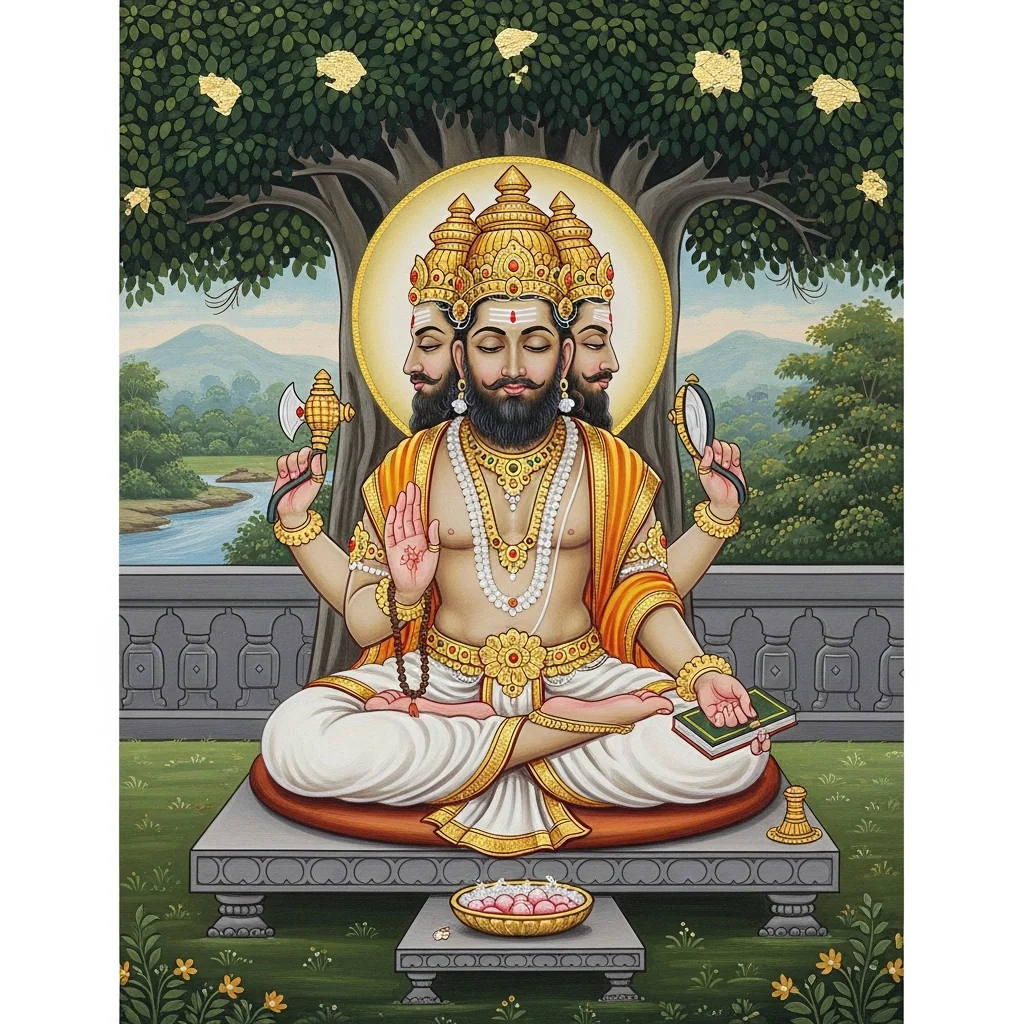
The chapter unfolds as a dialogue: after hearing the purifying greatness of the Narmadā, Agastya asks for the origin of Satiśvara. Skanda recounts a Brahmā–Śiva episode: Brahmā performs severe tapas, and Śiva, pleased, grants a boon. Brahmā requests that Śiva become his son and that the Goddess be born as Dakṣa’s daughter. Śiva agrees; from Brahmā’s forehead appears the moon-crested child who weeps, and by that very weeping receives the name “Rudra.” Agastya then asks why the omniscient Lord would cry. Skanda explains it as an affective-theological response—Mahādeva’s joyful wonder at Brahmā’s intended thought and the prospect of intimate relatedness (apathyatva), reflecting on creation without offspring and the transforming bliss of divine contact and darśana. The narrative returns to Satī: as Dakṣa’s daughter she performs austerities in Kāśī seeking a boon; Śiva promises marriage on the eighth day and establishes the liṅga there to be known as Satiśvara. Worship of Satiśvara swiftly fulfills intentions, grants auspicious marital outcomes, and even remembrance elevates sattva; the shrine lies east of Ratneśa, and darśana brings immediate release from sins and gradual attainment of knowledge.
Shlokas
Verse 1
अगस्त्य उवाच । नर्मदेशस्य माहात्म्यं श्रुतं कल्मषनाशनम् । इदानीं कथय स्कंद सतीश्वर समुद्भवम्
Agastya said: The greatness of Narmadeśa, the destroyer of defilement, has been heard. Now, O Skanda, tell me the origin of Satīśvara.
Verse 2
स्कंद उवाच । मित्रावरुणसंभूत कथयामि कथां शृणु यथा सतीश्वरं लिंगं काश्यामाविर्बभूव ह
Skanda said: O son of Mitra and Varuṇa (Agastya), I shall narrate the tale—listen—how the Satīśvara liṅga truly manifested in Kāśī.
Verse 3
पुरा तताप सुमहत्तपः शतधृतिर्मुने । तपसा तेन देवेशः संतुष्टो वरदोऽभवत्
Formerly, O sage, Śatadhṛti performed a very great austerity. Pleased by that austerity, the Lord of the gods became a bestower of boons.
Verse 4
उवाच चापि ब्रह्माणं नितरां ब्राह्मणप्रियः । सर्वज्ञनाथो लोकात्मा वरं वरय लोककृत्
And he spoke to Brahmā—he who is exceedingly dear to the brāhmaṇas, the omniscient Lord, the Soul of the world, the Creator—“Choose a boon.”
Verse 5
ब्रह्मोवाच । यदि प्रसन्नो देवेश वरं दास्यसि वांछितम् । तदा त्वं मे भव सुतो देवी दक्षसुताऽस्तु च
Brahmā said: If you are pleased, O Lord of the gods, and will grant the boon I desire, then become my son—and let the Goddess be the daughter of Dakṣa as well.
Verse 6
इति श्रुत्वा महादेवः सर्वदो ब्रह्मणो वरम् । स्मित्वा देवीमुखं वीक्ष्य प्रोवाच चतुराननम्
Hearing Brahmā’s boon, Mahādeva—the giver of all—smiled; and, gazing upon the Goddess’s face, he spoke to the four-faced Brahmā.
Verse 7
ब्रह्मंस्त्वद्वांछितं भूयात्किमदेयं पितामह । इत्युक्त्वा ब्रह्मणो भालादाविरासीच्छशांकभृत्
“O Brahmā, may what you desire come to pass—what is there that cannot be granted to you, O Pitāmaha?” Thus speaking, the Bearer of the Moon manifested from Brahmā’s forehead.
Verse 8
रुदन्स उत्तानशयो ब्रह्मणो मुखमैक्षत । ततो ब्रह्मापि तं बालं रुदंतं प्रविलोक्य च
Crying, the infant lay on his back and looked toward Brahmā’s face. Then Brahmā too, seeing the child weeping, gazed upon him.
Verse 9
किं मां जनकमाप्यापि त्वं रोदिषि मुहुर्मुहुः । श्रुत्वेति पृथुकः प्राह यथोक्तं परमेष्ठिना
“Even after attaining me as your father, why do you weep again and again?” Hearing this, the one called Pṛthuka spoke, in the very manner the Supreme Lord (Brahmā) had addressed him.
Verse 10
नाम्ने रोदिमि मे स्रष्टुर्नाम देहि पितामह । रोदनाद्रुद्र इत्याख्यां समाया डिंभको लभत्
“I weep for a name—O Creator, O Pitāmaha, grant me a name.” Because of that weeping, the infant obtained the appellation “Rudra.”
Verse 11
अगस्त्य उवाच । अर्भकत्वं गतोपीशः किं रुरोद षडानन । यदि वेत्सि तदाचक्ष्व महत्कौतूहलं हि मे
Agastya said: “Though the Lord became an infant, why did He weep, O Six-faced One? If you know, tell me—for great indeed is my longing to know.”
Verse 12
स्कंद उवाच । सर्वज्ञस्य कुमारत्वात्किंचित्किंचिदवैम्यहम् । रोदने कारणं वच्मि शृणु कुंभसमुद्भव
Skanda said: “Because the All-knowing One assumed childhood, I grasp it only a little, little by little. Yet I shall tell the cause of that weeping—listen, O Pot-born one.”
Verse 13
मनसीति विचारोभूद्देवस्य परमात्मनः । बुद्धिवैभवमस्याहो वीक्षितुं परमेष्ठिनः
A thought arose in the mind of that God, the Supreme Self: “Ah! Let Me behold the splendor of Brahmā’s intellect.”
Verse 14
सत्यलोकाधिनाथस्य चतुरास्यस्य वेधसः । इत्यानंदात्समुद्भूतो वाष्पपूरो महेशितुः
Thus, from joy, a flood of tears arose in the Great Lord—at the sight of the Four-faced Creator, the ruler of Satyaloka.
Verse 15
अगस्त्य उवाच । किं बुद्धिवैभवं धातुः शंभुना मनसीक्षितम् । येनानंदाश्रु संभारो बाल्येप्यभवदीशितुः
Agastya said: “What was that ‘splendor of intellect’ of the Creator (Dhātṛ, Brahmā) that Śambhu wished to behold within His mind—by which a store of blissful tears arose in the Lord even in childhood?”
Verse 16
एतत्कथय मे प्राज्ञ सर्वज्ञानंदवर्धन । श्रुत्वागस्त्युदितं वाक्यं तारकारिरुवाच ह
“Tell me this, O wise one, increaser of all knowledge and bliss.” Hearing Agastya’s words, the Slayer of Tāraka (Skanda) then spoke.
Verse 17
देवे न मनसि ध्यातमिति कुंभजने मुने । विनापत्यं जनेतारं क उद्धर्तुमिह प्रभुः
O Agastya, son of the pot, you have not contemplated the Lord within your mind. Without a son—one who continues the line—who indeed is capable of delivering a begetter in this world?
Verse 18
एको मनोरथश्चायं द्वितीयोयं सुनिश्चितम् । अपत्यत्वं गते चास्मिन्स्मर्तुरुत्पत्तिहारिणि
This is one wish; and a second, firmly resolved: when he who destroys the very arising of worldly becoming becomes my child, the goal will be secured.
Verse 19
क्षणंक्षणं समालोक्यमंगस्पर्शे क्षणंक्षणम् । एकशय्यासनाहारं लप्स्यतेऽनेन क्षणेक्षणे
Moment after moment he will gaze upon him, and moment after moment he will touch his body; sharing one bed, one seat, and one meal—he will gain all this with him, at every instant.
Verse 20
योयं न गोचरः क्वापि वाणीमनसयोरपि । स मेऽपत्यत्वमासाद्य किं न दास्यति चिंतितम्
He who is beyond the reach of speech and even mind—if he attains the state of being my child, what cherished desire will he not grant?
Verse 21
योऽमुं सकृत्स्पृशेज्जंतुर्योमुं पश्येत्सकृन्मुदा । न स भूयोभिजायेत भवेच्चानंदमेदुरः
Any being who touches him even once, or sees him even once with joy, will not be born again; he becomes filled and overflowing with bliss.
Verse 22
गृहक्रीडनकं मे सौ यदि भूयात्कथंचन । तदापरस्य सौख्यस्य निधानं स्यामसंशयम्
If, by any means, he could become a little playmate for me at home, then surely I would become a treasury of unsurpassed happiness.
Verse 23
विधेः समीहितं चेति नूनं ज्ञात्वा स सर्ववित् । आनंदवाष्पकलितं चक्षुस्त्रयमदीधरत्
Knowing surely, ‘This is the intention of Fate (Vidhātṛ),’ that all-knowing one’s three eyes became suffused with tears of joy.
Verse 24
श्रुत्वैत्यगस्तिः स्कंदस्य भाषितं पर्यमूमुदत् । ननाम चांघ्री प्रोवाच जयसर्वज्ञनंदन
Having heard Skanda’s words, Agastya rejoiced greatly. He bowed at his feet and said, “Victory to you, O delight of the All-knowing!”
Verse 25
विधेरपि मनोज्ञातं शंभोरपि मनोगतम् । सम्यक्चित्तं त्वया ज्ञातं नमस्तुभ्यं चिदात्मने
Even what is known only in Vidhātṛ’s mind, and what rests within Śambhu’s mind—you have rightly known it all. Salutations to you, whose very nature is pure consciousness.
Verse 26
स्कंदोपि नितरां तुष्टःश्रोतुरानंददर्शनात् । धन्योस्यगस्त्य धन्योसि श्रोतुं जानासि तत्त्वतः
Skanda too was exceedingly pleased on seeing the listener’s joy. “Blessed are you, Agastya—blessed indeed—for you know how to listen in accordance with truth.”
Verse 27
न मे श्रमो वृथा जातो ब्रुवतस्ते पुरः कथाम् । इत्यगस्तिं समाभाष्य पुनः प्राह षडाननः
“My effort has not been in vain, since I have spoken this account in your presence.” Thus addressing Agastya, Ṣaḍānana (Skanda) spoke once again.
Verse 28
देवे रुद्रत्वमापन्ने देवी दक्षसुताभवत् । सापि तप्त्वा तपस्तीव्रं सती काश्यां वरार्थिनी
When the God had assumed the state of Rudra, the Goddess became Dakṣa’s daughter. That Satī too, desiring a boon, performed intense austerities in Kāśī.
Verse 30
इदं सतीश्वरं लिंगं तव नाम्ना भविष्यति । यथा मनोरथस्तेऽत्र फलितो दक्षकन्यके
“This liṅga shall be known by your name as Satīśvara, so that your wish here may indeed bear fruit, O daughter of Dakṣa.”
Verse 31
तथैतल्लिंगमाराध्यान्यस्यापि हि फलिष्यति । कुमारी प्राप्स्यति पतिं मनसोपि समुच्छ्रितम्
Likewise, by worshipping this liṅga, the desire of others too will surely be fulfilled; a maiden will obtain a husband who matches even her highest hopes.
Verse 32
एतल्लिंगं समाराध्य कुमारोपि वरांगनाम् । यस्य यस्य हि यः कामस्तस्य तस्य हि स ध्रुवम्
By duly worshipping this liṅga, even a young man obtains an excellent bride. Whatever desire any person may have, that very aim for that person is assured indeed.
Verse 33
भविष्यति न संदेहः सतीश्वरसमर्चगात् । सतीश्वरं समभ्यर्च्य यो यो यं यं समीहते
There is no doubt: through worship of Satīśvara it surely comes to pass. Having worshipped Satīśvara, whatever anyone seeks—
Verse 34
तस्य तस्य स स क्षिप्रं भविष्यति मनोरथः
—for that person, that very wish swiftly becomes fulfilled.
Verse 35
इतोष्टमे च दिवसे त्वज्जनेता प्रजापतिः । मह्यं दास्यति कन्यां त्वां सफलस्ते मनोरथः । इत्युक्त्वा देवदेवेशस्तत्रैवांतर्हितोभवत्
“On the eighth day from now, your father—the Prajāpati—will give you to me in marriage as his daughter; your desire shall be fulfilled.” Having said this, the Lord of Lords vanished right there.
Verse 36
सापि स्वभवनं याता सती दाक्षायणी मुदा । पितापि तस्मै प्रादात्तां रुद्राय दिवसेष्टमे
Satī Dākṣāyaṇī too returned joyfully to her own home; and on the eighth day her father gave her to Rudra.
Verse 37
स्कंद उवाव । इत्थं सतीश्वरं लिंगं काश्यां प्रादुरभून्मुने । स्मरणादपि लिंगं च दद्यात्सत्त्वगुणं परम्
Skanda said: “Thus, O sage, the Satīśvara liṅga manifested in Kāśī. Even by merely remembering this liṅga, it bestows the supreme quality of sattva—purity and clarity.”
Verse 38
रत्नेशात्पूर्वतो भागे दृष्ट्वा लिंगं सतीश्वरम् । मुच्यते पातकैः सद्यः क्रमाज्ज्ञानं च विंदति
To the east of Ratneśa, on beholding the Satīśvara Liṅga, one is at once freed from sins; and in due course, one attains true spiritual knowledge (jñāna).
Verse 93
इति श्रीस्कांदे महापुराण एकाशीतिसाहस्र्यां संहितायां चतुर्थे काशीखंड उत्तरार्धे सतीश्वरप्रादुर्भावो नाम त्रिनवतितमोऽध्यायः
Thus ends the ninety-third chapter, entitled “The Manifestation of Satīśvara,” in the Uttarārdha of the Kāśī Khaṇḍa, within the fourth section of the Śrī Skanda Mahāpurāṇa, the compendium of eighty-one thousand verses.