Adhyaya 36
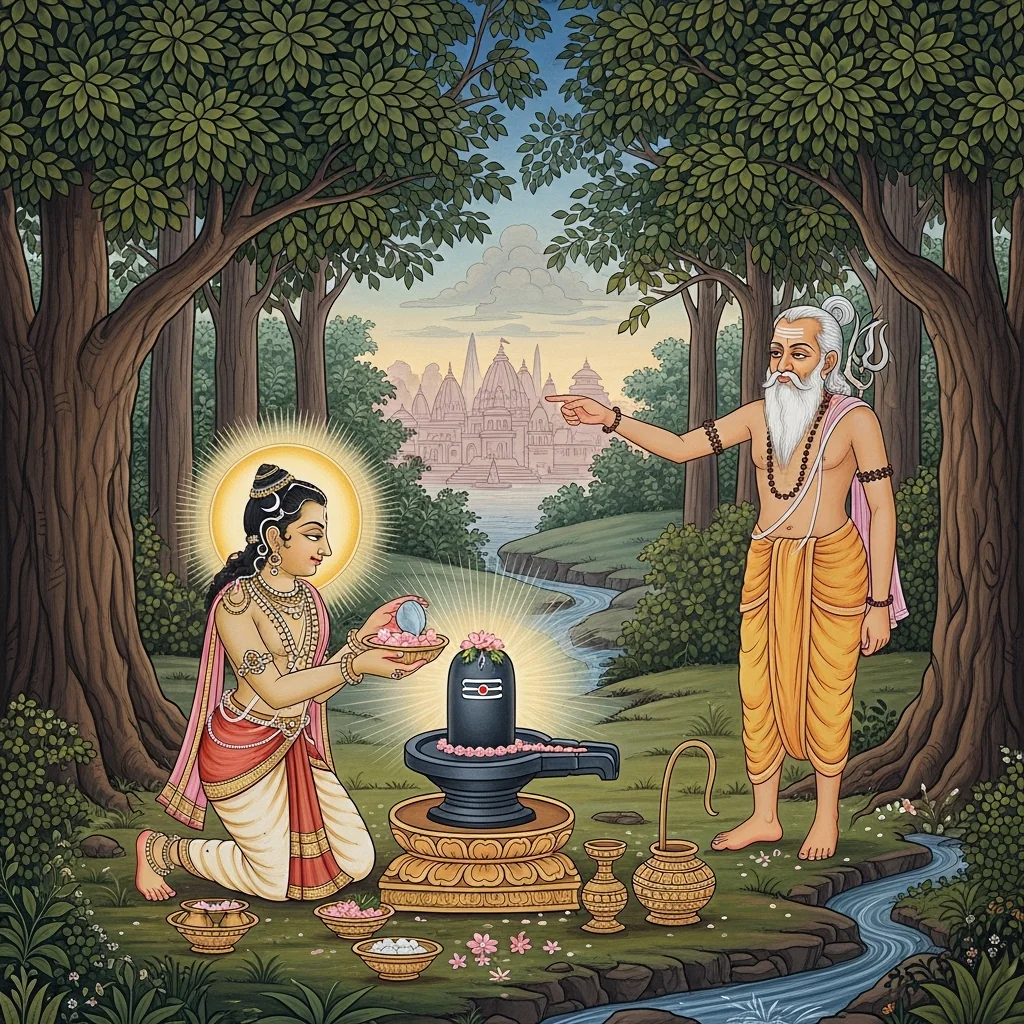
Prompted by Pārvatī’s question, Śiva recounts a sin-destroying (pātaka-nāśinī) narrative of how the Viśvakarmēśvara liṅga arose in Kāśī. Viśvakarmā—described as an earlier emanational form linked with Brahmā and as the son of Tvaṣṭṛ—lives as a brahmacārin in his guru’s house. The guru, the guru’s wife, son, and daughter press upon him a series of demanding commissions—durable garments and footwear, ornaments, and household implements—driving him into an ethical crisis about keeping accepted promises and upholding the dharma of service to one’s teacher. Overwhelmed, he withdraws to the forest and meets a compassionate tapasvin who urges him to seek Kāśī, especially the Vaiśveśvara sphere and Ānandavana, where Śiva’s grace makes even difficult aims attainable and where liberation is uniquely emphasized. Reaching Kāśī, Viśvakarmā recognizes the encounter as Śiva’s merciful intervention and undertakes sustained worship of the liṅga with offerings gathered from the forest. After a period of devotion, Śiva manifests from the liṅga, grants him extraordinary mastery of crafts and arts, confirms his name as Viśvakarmā, and proclaims the benefits for those who worship that liṅga. The account closes with a forward-looking note on royal patronage (Divodāsa) and reiterates the ethical primacy of honoring gurus and completing the duties one has accepted.
Shlokas
Verse 1
पार्वत्युवाच । विश्वकर्मेश्वरं लिंगं यत्काश्यां प्रथितं परम् । तस्य लिंगस्य कथय देवदेव समुद्भवम्
Pārvatī said: “O God of gods, tell me the sublime origin of that Viśvakarmeśvara liṅga which is renowned in Kāśī.”
Verse 2
देवदेव उवाच । शृणु देवि प्रवक्ष्यामि कथां पातकनाशिनीम् । विश्वकर्मेश लिंगस्य प्रादुर्भावं मनोहरम्
Devadeva said: “Listen, O Goddess. I shall relate a sin-destroying account—the delightful manifestation of the Viśvakarmeśa liṅga.”
Verse 3
विश्वकर्माभवत्पूर्वं ब्रह्मणस्त्वपरा तनुः । त्वष्टुः प्रजापतेः पुत्रो निपुणः सर्वकर्मसु
Formerly, Viśvakarman came to be as a secondary embodiment of Brahmā—also the son of Tvaṣṭṛ Prajāpati—skilled in every craft and work.
Verse 4
कृतोपनयनः सोथ बालो गुरुकुले वसन् । चकार गुरुशुश्रूषां भिक्षान्नकृतभोजनः
After his upanayana had been performed, he—still a boy—dwelt in the teacher’s household, serving the guru and living on food obtained by alms.
Verse 5
एकदा तद्गुरुः प्राह प्रावृट्काले समागते । कुरूटजं मदर्थं त्वं यथा प्रावृण्न बाधते
Once, when the rainy season had arrived, his guru said: “For my sake, make a hut (kurūṭaja) so that the rains do not trouble us.”
Verse 6
यत्कदाचिन्न भज्येत न पुरातनतां व्रजेत् । गुरुपत्न्यात्वभिहितो रे त्वाष्ट्र कुरु कंचुकम्
Thus addressed by the guru’s wife, she said: “O Tvāṣṭra, make me a bodice (kañcuka)—one that never tears at any time and never grows old.”
Verse 7
ममांगयोग्यं नो गाढं न श्लथं च प्रयत्नतः । विनैव वाससा चारु वाल्कलं च सदोज्ज्वलम्
“Let it fit my body—neither too tight nor too loose—made with care; and let it be a lovely bark-garment (vālkala), ever-bright, even without any additional cloth.”
Verse 8
गुरुपुत्रेण चाज्ञप्तो ममार्थं पादुके कुरु । यदारूढस्य मे पादौ न पंकः संस्पृशेत्क्वचित्
Commanded by the guru’s son, (he said): “Make sandals (pādukā) for me, so that when I wear them, mud may never touch my feet anywhere.”
Verse 9
चर्मादिबंधनिर्मुक्ते धावतो मे सुखप्रदे । याभ्यां च संचरे वारि स्थल भूमाविव द्रुतम्
“Let them be comfortable for me when running, free from leather-straps and the like; and by them may I move swiftly even over watery ground as though on dry land.”
Verse 10
गुरुकन्यापि तं प्राह त्वाष्ट्र मे श्रवणोचिते । भूषणे स्वेन हस्तेन कुरु कांचननिर्मिते
Then the guru’s daughter also said to him: “O Tvāṣṭra, with your own hand make for me ear-ornaments fit for my ears, fashioned of gold.”
Verse 11
कुमारी क्रीडनीयानि कौतुकानि च देहि मे । दंतिदंतमयान्येव स्वहस्तरचितानि च
“As a young maiden, give me playthings and delightful curios—indeed, ones made of elephant ivory and fashioned by your own hand.”
Verse 12
गृहोपकरणं द्रव्यं मुसलोलूखलादिकम् । तथा घटय मेधाविन्यथा त्रुट्यति न क्वचित्
“Make household implements—mortars, pestles, and the like—so well, O intelligent one, that they never break anywhere.”
Verse 13
अक्षालितान्यपि यथा नित्यं पीठानि सत्तम । उज्ज्वलानि भवंत्येव स्थालिकाश्च तथा कुरु
“O best of men, make the stools/seats and the small bowls so that, even without washing, they remain bright and shining every day.”
Verse 14
सूपकर्मण्यपि च मां प्रशाधि त्वष्ट्रनंदन । यथांगुल्यो न दह्यंते पाकः स्याच्च यथा शुभः
“And even in cooking, instruct and equip me, O son of Tvaṣṭṛ, so that my fingers are not burned and the cooking turns out auspicious and well-done.”
Verse 15
एकस्तंभमयं गेहमेकदारुविनिर्मितम् । तथा कुरु वरं त्वाष्ट्र यत्रेच्छा तत्र धारये
“O excellent Tvāṣṭra, make a house of a single pillar, fashioned from a single piece of wood, so that I may set it down and carry it wherever I desire.”
Verse 16
ये सहाध्यायिनोप्यस्य वयोज्येष्ठाश्च तेपि हि । सर्वेसर्वे समीहंते कर्म तत्कृतमेव हि
Even his fellow students—yes, even those older than he—each and every one expected that the task would indeed be accomplished by him alone.
Verse 17
तथेति स प्रतिज्ञाय सर्वेषां पुरतोद्रिजे । मध्ये वनं प्राविशच्च महाचिंताभयार्दितः
Saying, “So be it,” he made his pledge before them all; then, tormented by great anxiety and fear, he entered the forest in the midst of the mountain-born land.
Verse 18
किंचित्कर्तुं न जानाति प्रतिज्ञातं च तेन वै । सर्वेषां पुरतः सर्वं करिष्यामीति निश्चितम्
He did not know how to do even a little, yet he had truly promised; and before everyone he had firmly resolved, “I will accomplish it all.”
Verse 19
किं करोमि क्व गच्छामि को मे साहाय्यमर्पयेत् । बुद्धेरपि वनस्थस्य शरणं कं व्रजामि च
“What shall I do? Where shall I go? Who would grant me help? Here in the forest even my judgment falters—so to whom shall I go for refuge?”
Verse 20
अंगीकृत्य गुरोर्वाक्यं गुरुपत्न्या गुरोः शिशोः । यो न निष्पादयेन्मूढः स भवेन्निरयी नरः
Having accepted the Guru’s command—also that of the Guru’s wife and the Guru’s child—whoever, in delusion, does not carry it out becomes a man bound for hell.
Verse 21
गुरुशुश्रूषणं धर्म एको हि ब्रह्मचारिणाम् । अनिष्पाद्य तु तद्वाक्यं कथं मे निष्कृतिर्भवेत्
For brahmacārins, service to the Guru is the one central dharma. If I do not fulfill his command, how could there be any atonement for me?
Verse 22
गुरूणां वाक्यकरणात्सर्व एव मनोरथाः । सिद्ध्यंतीतरथा नैव तस्मात्कार्यं हि तद्वचः
By carrying out the word of the Gurus, all aspirations are fulfilled; otherwise, they are not fulfilled at all. Therefore, that command must indeed be done.
Verse 23
कथं तद्वचसः सिद्धिं प्राप्स्याम्यत्र वने स्थितः । कश्च मेत्र सहायी स्याद्धिषणादुर्बलस्य वै
“How can I accomplish that command while I remain here in the forest? And who here would be my helper, when I am indeed weak in understanding?”
Verse 24
आस्तां गुरुकथा दूरं योऽन्यस्यापि लघोरपि । ओमित्युक्त्वा न कुरुते कार्यं सोथ व्रजत्यधः
Leaving aside even talk of the Guru: if someone, even regarding another person’s small request, says “Yes” and then does not do the task, he goes downward, to ruin.
Verse 25
कथमेतानि कर्माणि करिष्येऽज्ञोऽसहायवान् । अंगीकृतानि तद्भीत्या नमस्ते भवितव्यते
How shall I perform these deeds—ignorant and without help? Since I have accepted them, fearing to fail my duty, I bow in submission; for so it must be.
Verse 26
यावदित्थं चिंतयति स त्वाष्ट्रो वनमध्यगः । तावत्तदेव संप्राप्तस्तेनैकोऽदर्शि तापसः
While the son of Tvaṣṭṛ (Tvāṣṭra) was thus reflecting in the midst of the forest, at that very moment a lone ascetic arrived there and became visible to him.
Verse 27
अथ नत्वा स तं प्राह वने दृष्टं तपस्विनम् । को भवान्मानसं मे यो नितरां सुखयत्यहो
Then, bowing to that ascetic whom he had seen in the forest, he said: “Who are you, revered sir, who so greatly gladdens my mind?”
Verse 28
त्वद्दर्शनेन मे गात्रं चिंतासंतापतापितम् । हिमानी गाहनेनेव शीतलं भवति क्षणम्
By seeing you, my body—burnt by the heat of anxious sorrow—becomes cool in an instant, as if by plunging into a snow-fed stream.
Verse 29
किं त्वं मे प्राक्तनं कर्म प्राप्तं तापसरूपधृक् । अथवा करुणावार्धिराविर्भूतः शिवो भवान्
Are you my own past karma come before me, taking the form of an ascetic? Or are you Śiva himself—an ocean of compassion—manifested here?
Verse 30
योसि सोसि नमस्तुभ्यमुपदेशेन युंक्ष्व माम् । गुरूक्तं गुरुपत्न्युक्तं गुर्वपत्योक्तमेव च
Whoever you may be—so be it; I bow to you. Join me to sacred instruction (teach me). For what is spoken by the guru, by the guru’s wife, and by the guru’s child—indeed all that—is to be accepted as authoritative.
Verse 31
कथं कर्तुमहं शक्तः कर्म तत्र दिशाद्भुतम् । कुरु मे बुद्धिसाहाय्यं निर्जने बंधुतां गतः
How am I able to accomplish that wondrous task, as though beyond all reach and hard to fathom? Grant me the support of right understanding—having become to me like a kinsman in this lonely place.
Verse 32
इत्युक्तस्तेन स वने तापसो ब्रह्मचारिणा । कारुण्यपूर्णहृदयो यथोक्तमुपदिष्टवान्
Thus addressed by that brahmacārin in the forest, the ascetic—his heart filled with compassion—gave instruction exactly as requested.
Verse 33
य आप्तत्वेन संपृष्टो दुर्बुद्धिं संप्रयच्छति । स याति नरकं घोरं यावदाभूतसंप्लवम्
One who, being questioned in trust as a reliable adviser, gives harmful counsel goes to a dreadful hell—until the dissolution of beings.
Verse 34
तापस उवाच । ब्रह्मचारिञ्शृणु ब्रूयां किमद्भुततरं त्विदम् । विश्वेशानुग्रहाद्ब्रह्माप्यभवत्सृष्टिकोविदः
The ascetic said: “Brahmacārin, listen; what could be more wondrous than this? By the grace of Viśveśa, even Brahmā became skilled in creation.”
Verse 35
यदि त्वं त्वाष्ट्र सर्वज्ञं काश्यामाराधयिष्यसि । ततस्ते विश्वकर्मेति नाम सत्यं भविष्यति
If you, O Tvāṣṭra, worship the Omniscient Lord in Kāśī, then the name “Viśvakarmā” will truly become yours.
Verse 36
विश्वेशानुग्रहात्काश्यामभिलाषा न दुर्लभाः । सुलभो दुर्लभो वै यद्यत्र मोक्षस्तनुत्यजाम्
By the grace of Viśveśvara, in Kāśī no worthy aspiration is hard to attain; for here, even liberation at the time of casting off the body becomes easy—though it is otherwise rare elsewhere.
Verse 37
सृष्टेःकरण सामर्थ्यं सृष्टिरक्षाप्रवीणता । विधिना विष्णुना प्रापि विश्वेशानुग्रहात्परात्
Even the Creator’s power to fashion creation, and Viṣṇu’s mastery in protecting it, are obtained through the supreme grace of Viśveśvara.
Verse 38
याहि वैश्वेश्वरं सद्म पद्मया समधिष्ठितम् । निर्वाणसंज्ञया बाला यदीच्छेः स्वान्मनोरथान्
Go to the abode of Vaiśveśvara, presided over by Padmā; O young one called Nirvāṇā—if you wish to fulfill your own heart’s desires.
Verse 39
स हि सर्वप्रदः शंभुर्याचितश्चोपमन्युना । पयोमात्रं ददौ तस्मै सर्वं क्षीराब्धिमेव च
For Śambhu is the giver of all. When requested by Upamanyu, He granted him mere milk—and thereby, indeed, the entire Ocean of Milk itself.
Verse 40
आनंदकानने शंभोः किं किं केन न लभ्यते । यत्र वासकृतां पुंसां धर्मराशिः पदेपदे
In Śambhu’s Ānandakānana, what is there that cannot be attained, and by whom? For those who merely dwell there, heaps of dharma arise at every step.
Verse 41
स्वर्धुनी स्पर्शमात्रेण महापातकसंततिः । यत्र संक्षयति क्षिप्रं तां काशीं को न संश्रयेत्
Where, by the mere touch of the celestial river, a succession of great sins quickly perishes—who would not seek refuge in that Kāśī?
Verse 42
न तादृग्धर्मसंभारो लभ्यते क्रतुकोटिभिः । यादृग्वाराणसी वीथी संचारेण पदेपदे
Such an accumulation of dharma is not gained even by crores of Vedic sacrifices, as is gained—step by step—simply by walking along the streets of Vārāṇasī.
Verse 43
धर्मार्थकाममोक्षाणां यद्यत्रास्ति मनोरथः । तदा वाराणसीं याहि याहि त्रैलोक्यपावनीम्
If anywhere you hold a desire for dharma, artha, kāma, or mokṣa—then go to Vārāṇasī; go to the purifier of the three worlds.
Verse 44
सर्वकामफलप्राप्तिस्तदैव स्याद्ध्रुवं नृणाम् । यदैव सर्वदः सर्वः काश्यां विश्वेश्वरः श्रितः
Then surely, at that very time, people attain the fruits of all desires—when they take refuge in Viśveśvara in Kāśī, who is the giver of all and the all-in-all.
Verse 45
स तापसोक्तमाकर्ण्य त्वाष्ट्र इत्थं सुहृष्टवान् । काशीसंप्रात्युपायं च तमेव समपृच्छत
Hearing the ascetic’s words, Tvāṣṭra was greatly delighted; and he asked that very sage about the means of reaching Kāśī.
Verse 46
त्वाष्ट्र उवाच । तदानंदवनं शंभोः क्वास्ति तापससत्तम । यत्र नो दुर्लभं किंचित्साधकानां त्रयीस्थितम्
Tvāṣṭra said: “O best of ascetics, where is that Ānandavana of Śambhu? In that place, for spiritual practitioners established in the Vedic way, nothing at all is hard to obtain.”
Verse 47
स्वर्गे वा मर्त्यलोके वा बलिसद्मनि वा मुने । क्व तदानंदगहनं यत्रानंदपयोब्धिजा
“Is it in heaven, or in the world of mortals, or in Bali’s abode, O sage—where is that dense grove of bliss, from which the ocean of bliss seems to arise?”
Verse 48
यत्र विश्वेश्वरो देवो विश्वेषां कर्णधारकः । व्याचष्टे तारकं ज्ञानं येन तन्मयतां ययुः
“Where is Lord Viśveśvara—helmsman of all beings—who expounds the saving ‘Tāraka’ wisdom, by which souls attain identity with That (the Supreme)?”
Verse 49
सुलभा यत्र नियतमानंदवनचारिणः । अपि नैःश्रेयसी लक्ष्मीः किमन्येल्प मनोरथाः
“There, for those who dwell steadily in Ānandavana, even the fortune of final beatitude is easily gained—what then of other small desires?”
Verse 50
कस्तां मां प्रापयेच्छंभोः कथं यामि तथा वद । स तपस्वीति तद्वाक्यमाकर्ण्य श्रद्धयान्वितम्
“Who will lead me to that place of Śambhu? How shall I go—tell me truly.” Hearing those words, the ascetic, endowed with faith, replied.
Verse 51
प्राहागच्छ नयामि त्वां यियासुरहमप्यहो । दुर्लभं प्राप्य मानुष्यं यदि काशी न सेविता
He said: “Come, I will take you; I too wish to go. Alas—having obtained the rare human birth, if Kāśī is not served (visited and honored), it is a grievous loss.”
Verse 52
पुनःक्व नृत्वं श्रेयोभूः क्व काशीकर्मबंधहृत् । वृथागते हि मानुष्ये काशीप्राप्तिविवर्जनात्
“What is mere ‘being human’ compared to Kāśī, the giver of the highest good, the remover of bondage to karma? Human life is truly wasted if one is deprived of attaining Kāśī.”
Verse 53
आयुष्यं च भविष्यं च सर्वमेव वृथागतम् । अतोहं सफलीकर्तुं मानुष्यं चातिचंचलम्
“Both lifespan and future prospects—everything—pass in vain. Therefore, to make this exceedingly unsteady human life fruitful, I will act accordingly.”
Verse 54
यास्यामि काशीमायाहि मायां हित्वा त्वमप्यहो । इति तेन सह त्वाष्ट्रो मुनिनातिकृपालुना
“I am going to Kāśī—come you too, casting off māyā (delusion)!” Thus, Tvāṣṭra set out together with that exceedingly compassionate sage.
Verse 55
पुरीं वैश्वेश्वरीं प्राप्तो मनःस्वास्थ्यमवाप च । ततः प्रापय्य तां काशीं तापसः क्वाप्यतर्कितम्
Having reached the sacred city of Vaiśveśvara, he attained peace and well-being of mind. Then the ascetic brought him into that Kāśī and led him onward to an unexpected place within it.
Verse 56
जगाम कुंभसंभूत स त्वाष्ट्रोपीत्यमन्यत । अवश्यं स हि विश्वेशः सर्वेषां चिंतितप्रदः
Then the pot-born sage departed; and Tvaṣṭṛ’s son thought, “Surely Lord Viśveśvara unfailingly grants to all devotees the fulfilment of what they have long contemplated and desired.”
Verse 57
सत्पथस्थिरवृतीनां दूरस्थोपि समीपगः । यस्मिन्प्रसन्नदृक्त्र्यक्षस्तं दविष्ठमपि ध्रुवम्
For those whose conduct is steady upon the true path, even when He seems far away, He is near. When the three-eyed Lord looks with favor, even what is most difficult becomes surely attainable.
Verse 58
सुनेदिष्ठं करोत्येव स्वयंवर्त्मोपदेशयन् । क्वाहं तत्र वने बालश्चिंताकुलितमानसः । क्व तापसः स यो मां वै सूदिश्येह चानयत्
He indeed makes one’s way most excellent, personally teaching the path. “Where was I—just a boy in that forest, my mind troubled with worries—and where is that ascetic who rightly directed me and brought me here?”
Verse 59
खेलोयमस्य त्र्यक्षस्य यस्य भक्तस्य कुत्रचित् । न दुर्लभतरं किंचिदहो क्वाहं क्व काशिका
This is the sport of that three-eyed Lord: for one who is His devotee, nothing anywhere is truly hard to obtain. Ah—what was I, and what is this Kāśikā!
Verse 60
नाराधितो मया शंभुः प्राक्तने जन्मनि क्वचित् । शरीरित्वानुमानेन ज्ञातमेतदसंशयम्
In some former birth I did not worship Śambhu. This I know without doubt, by inference from my embodied condition and its limitations.
Verse 61
अस्मिञ्जन्मनि बालत्वान्न चैवाराधितः स्फुटम् । प्रत्यक्षमेव मे वैतत्कुतोनुग्रहधीर्मयि
And in this very birth, due to childhood, I have not clearly worshiped Him either. This is evident to me directly—so how could I deserve even the thought of divine favor?
Verse 62
आज्ञातं गुरुभक्तिर्मे हेतुः शंभुप्रसादने । ययेहानुगृहीतोस्मि विश्वेशेन कृपालुना
Now I understand: my devotion to the guru is the cause of Śambhu’s favor—by which I have been blessed here by the compassionate Viśveśvara.
Verse 63
अथवा कारणापेक्षस्त्र्यक्षस्त्वितरदेववत् । रंकमप्यनुगृह्णाति केवलं कारणं कृपा
Or else—like other deities who look for some pretext—the three-eyed Lord may even favor a pauper. The only true cause is compassion itself.
Verse 64
यदि नो मय्यनुक्रोशः कथं तापससंगतिः । तद्रूपेण स्वयं शंभुरानिनायेह मां ध्रुवम्
If there were no compassion toward me, how would I have met that ascetic? In that very form, Śambhu Himself surely brought me here.
Verse 65
न दानानि न वै यज्ञा न तपांसि व्रतानि च । शंभोः प्रसादहेतूनि कारणं तत्कृपैव हि
Neither gifts, nor sacrifices, nor austerities, nor vows are the true causes of Śambhu’s favor; indeed, the cause of that grace is only His compassion.
Verse 66
दयामपि तदा कुर्यादसौ विश्वेश्वरः पराम् । यदाश्रुत्युक्तमध्वानं सद्भिः क्षुण्णं न संत्यजेत्
Then Viśveśvara bestows supreme compassion—when one does not abandon the path enjoined by sacred teaching, a path already trodden by the virtuous.
Verse 67
अनुक्रोशं समर्थ्येति स त्वाष्ट्रः र्शाभवं शुचिः । संस्थाप्य लिंगमीशस्याराधयत्स्वस्थमानसः
Having resolved to seek compassion, that pure Tvāṣṭra—born of Ṛśā—established the Lord’s liṅga and worshipped Īśa with a tranquil mind.
Verse 68
आनीय पुष्पसंभारमार्तवं काननाद्बहु । स्नात्वाभ्यर्चयतीशानं कंदमूलफलाशनः
Bringing abundant seasonal collections of flowers from the forest, bathing, and living on bulbs, roots, and fruits, he worshipped Īśāna.
Verse 69
इत्थं त्वष्टृतनूजस्य लिंगाराधनचेतसः । त्रिहायनात्प्रसन्नोभूत्तस्येशः करुणानिधिः
Thus, after three years of liṅga-worship by the son of Tvaṣṭṛ, the Lord—an ocean of compassion—became pleased with him.
Verse 70
तस्मादेव हि लिंगाच्च प्रादुर्भूय भवोऽब्रवीत् । वरं वरय रे त्वाष्ट्र दृढभक्त्यानया तव
From that very liṅga, Bhava manifested and said: “Choose a boon, O Tvāṣṭra—for by this firm devotion of yours I am satisfied.”
Verse 71
प्रसन्नोस्मि भृशं बाल गुर्वर्थकृतचेतसः । गुरुणा गुरुपत्न्या च गुर्वपत्यद्वयेन च
“I am exceedingly pleased, child, because your mind is devoted to serving the Guru’s welfare—honouring the Guru, the Guru’s wife, and the Guru’s two children as well.”
Verse 72
यथार्थितं तथा कर्तुं ते सामर्थ्यं भविष्यति
You will have the power to accomplish exactly what you have requested.
Verse 73
अन्यान्वरांश्च ते दद्यां त्वाष्ट्र तुष्टस्त्वदर्चया । ताञ्शृणुष्व महाभाग लिंगस्यास्याद्भुतश्रियः
“I shall grant you other boons as well, O Tvāṣṭra, for I am pleased by your worship. Listen, fortunate one, to the wondrous splendour of this liṅga.”
Verse 74
त्वं सुवर्णादिधातूनां दारूणां दृषदामपि । मणीनामपिरत्नानां पुष्पाणामपि वाससाम्
“You shall be master and knower of gold and other metals, of woods and even stones; of gems and precious jewels; and of flowers and garments as well.”
Verse 75
कर्पूरादिसुगंधीनां द्रव्याणामप्यपामपि । कंदमूलफलानां च द्रव्याणामपि च त्वचाम्
You shall gain knowledge and command even over fragrant substances such as camphor, over waters as well, and over bulbs, roots, and fruits—and also over materials derived from bark and skin.
Verse 76
सर्वेषां वस्तुजातानां कर्तुं कर्म प्रवेत्स्यसि । यस्य यस्य रुचिर्यत्र सद्म देवालयादिषु
You shall become able to undertake the making of every class of object and work. Wherever anyone’s taste inclines—toward a dwelling, a temple, and the like—you will be able to fashion it accordingly, to suit that desire.
Verse 77
तस्य तस्येह तुष्ट्यै त्वं तथा कर्तुं प्रवेत्स्यसि । सर्वनेपथ्यरचनाः सर्वाः सूपस्य संस्कृतीः
For the satisfaction of each person here, you will be able to make things exactly in that manner. You will know all arrangements and preparations—every kind of furnishing and equipment, and every refinement in the making of foods and dishes.
Verse 78
सर्वाणि शिल्पकार्याणि तौर्यत्रिकमथापि च । सर्वं ज्ञास्यसि कर्तुं त्वं द्वितीय इव पद्मभूः
You will master every kind of craft-work, and also the threefold musical arts. You will know how to do everything—like a second Padmabhū (Brahmā) himself.
Verse 79
नानाविधानि यंत्राणि नानायुधविधानकम् । जलाशयानां रचनाः सुदुर्गरचनास्तथा
You will know how to design many kinds of machines, and the making of weapons in diverse forms; the construction of reservoirs and waterworks, and likewise the building of strong fortifications.
Verse 80
तादृक्कर्तुं पुरा वेत्सि यादृङ्नान्योऽधियास्यति । कलाजातं हि सर्वं त्वमवयास्यसि मे वरात्
You will know beforehand how to accomplish such works as no other will even conceive. Indeed, by my boon, you will fully master the entire range of the arts.
Verse 81
सर्वेंद्रजालिकी विद्या त्वदधीना भविष्यति । सर्वकर्मसु कौशल्यं सर्वबुद्धिवरिष्ठताम्
Every vidyā of wondrous skill and māyā will be under your command. In all undertakings you will possess excellence, and you will attain the highest superiority of intellect.
Verse 82
सर्वेषां च मनोवृत्तिं त्वं ज्ञास्यसि वरान्मम । किं बहूक्तेन यत्स्वर्गे यत्पाताले यदत्र च
By my boon you will know the mental dispositions of all beings. What need is there to say much? Whatever exists in heaven, whatever in the netherworld, and whatever is here—you will comprehend it.
Verse 83
अतिलोकोत्तरं कर्म तत्सर्वं वेत्स्यसि स्वयम्
You will personally know all deeds and operations that transcend the ordinary worlds—works that are beyond the worldly measure.
Verse 84
विश्वेषां विश्वकर्माणि विश्वेषु भुवनेषु च । यतो ज्ञास्यसि तन्नाम विश्वकर्मेति तेऽनघ
Since you will know the works of all beings, in all the worlds and realms, therefore your name shall be ‘Viśvakarmā’—O sinless one.
Verse 85
अपरः को वरो देयस्तव तं प्रार्थयाश्वहो । तवादेयं न मे किंचिल्लिंगार्चनरतस्य हि
What other boon should be granted to you? Ask for it at once! For one devoted to the worship of the Liṅga, there is nothing that I would not bestow.
Verse 86
अन्यत्रापि हि यो लिंगं समर्चयति सन्मतिः । तस्यापि वांछितं देयं किंपुनर्योविकाशिकम्
Even one of noble understanding who duly worships the Liṅga elsewhere should be granted the boon he desires—how much more, then, one who worships it in Kāśī.
Verse 87
येन काश्यां समभ्यर्चि येन काश्यां प्रतिष्ठितम् । येन काश्यां स्तुतं लिंगं स मे रूपाय दर्पणः
He by whom worship was performed in Kāśī, by whom the Liṅga was established in Kāśī, and by whom the Liṅga was praised in Kāśī—he is a mirror reflecting My very form.
Verse 88
तत्त्वं स्वच्छोसि मुकुरो मम नेत्रत्रयस्य हि । काश्यां लिंगार्चनात्त्वाष्ट्र वरं वरय सुव्रत
Truly, you are a spotless mirror for My three eyes. O Tvāṣṭra (Viśvakarman), by worshipping the Liṅga in Kāśī, choose a boon—O you of excellent vow.
Verse 89
काश्यां यो राजधान्यां मे हित्वा मामन्यमर्चयेत् । स वराकोल्पधीर्मुष्टोऽल्पतुष्टिर्मुक्तिवर्जितः
In Kāśī, My royal city, whoever abandons Me and worships another is pitiable—of scant understanding, miserly, easily satisfied with little, and deprived of liberation (mokṣa).
Verse 90
तदानंदवनेह्यत्र समर्च्योहं मुमुक्षुभिः । द्रुहिणोपेंद्रचंद्रेंद्रैरिहान्यो न समर्च्यते
Therefore, here in Ānandavana, I alone am to be worshipped by those who seek liberation. Here none other is worshipped—even Brahmā, Viṣṇu, Soma, and Indra worship no other.
Verse 91
यथानंदवनं प्राप्य त्वं मामर्चितवानसि । तथान्ये पुण्यकर्माणो मामभ्यर्च्यैव मामिताः
Just as you, upon reaching Ānandavana, worshipped Me, so too others who performed meritorious deeds have, by worshipping Me alone, attained Me.
Verse 92
अनुग्राह्योऽसि नितरां ततो वरय दुर्लभम् । श्राणितं तदवैहि त्वं वद मा चिरयस्व भोः
You are greatly worthy of My favor; therefore ask for a rare boon. Know that it is already granted—speak, and do not delay, O dear one.
Verse 93
विश्वकर्मोवाच । इदं यत्स्थापितं लिंगं मयाज्ञेनापि शंकर । तल्लिंगमन्येप्याराध्य संतु समृद्धिभाजनम्
Viśvakarman said: O Śaṅkara, this Liṅga was established by me, though in ignorance. May others too, by worshipping that Liṅga, become recipients of prosperity and flourishing.
Verse 94
अन्यच्च नाथ प्रार्थ्योसि तच्च विश्राणयिष्यसि । मया विनिर्मापयिता स्वं प्रासादं कदा भवान्
And one more thing, O Lord: I have a further petition—please grant it. When will You have Your own temple-palace (prāsāda) built by me?
Verse 95
देवदेव उवाच । एवमस्तु यदुक्तं ते तव लिंगसमर्चकाः । समृद्धिभाजनं वै स्युः स्युश्च निर्वाणदीक्षिताः
Devadeva said: “So be it, as you have spoken. Those who worship your Liṅga shall indeed become recipients of prosperity, and they shall also be initiated into nirvāṇa, final liberation.”
Verse 96
यदा च राजा भविता दिवोदासो विधेर्वरात् । तदा मे वचनात्तात प्रासादं मे विधास्यति
When King Divodāsa arises by Brahmā’s boon, then, dear one, at my command he will have a temple-palace built for me.
Verse 97
नवीकृत्य पुनः काशी निर्विष्टा तेन भूभुजा । गणेशमायया राज्यात्परिनिर्विण्णचेतसा
After renewing Kāśī once again, that king settled there; and, through Gaṇeśa’s divine power, his mind grew utterly detached from worldly rule.
Verse 98
विष्णोः सदुपदेशाच्च मामेव शरणं गतः । निर्वाणलक्ष्मीः प्राप्तेह हित्वा राज्यश्रियं चलाम्
Through Viṣṇu’s noble instruction he took refuge in me alone; abandoning the fickle splendor of kingship, he attained here the very fortune of nirvāṇa, liberation.
Verse 99
विश्वकर्मन्व्रज गुरोः शासनाय यतस्व च । गुरुभक्तिकृतो यस्मान्मद्भक्ता नात्र संशयः
O Viśvakarman, go and strive to carry out the Guru’s command; for one formed by devotion to the Guru is indeed my devotee—of this there is no doubt.
Verse 100
ये गुरुं चावमन्यंते तेवमान्या मयाप्यहो । तस्माद्गुरूपदिष्टं हि कुरु शिष्यसमीहितम्
Those who dishonor the Guru are despised even by Me; therefore, O disciple, do exactly as the Guru has instructed, fulfilling the duty that is sought of a student.
Verse 110
ममार्च्यमविमुक्ताख्यं ततो देवि ममा ख्यकम् । विश्वनाथेति विश्वस्मिन्प्रथितं विश्वसौख्यदम्
My worshipful form is called Avimukta; and then, O Goddess, My celebrated name—Viśvanātha—is renowned throughout the world, bestowing well-being upon all.
Verse 120
काश्यां स्वलीलया देवि तिर्यग्योनिजुषामपि । ददामि चांते तत्स्थानं यत्र यांति न याज्ञिकाः
In Kāśī, by My own divine play, O Goddess, I grant—even to beings born in animal wombs—at the end a state, an abode, which even ritualists do not reach.
Verse 125
चतुर्दशानां लिंगानां श्रुत्वाख्यानानि सत्तमः । चतुर्दश सुलोकेषु पूजां प्राप्स्यत्यनुत्तमाम्
Having heard the sacred accounts of the fourteen liṅgas, the best of men will receive unsurpassed honor and worship in fourteen blessed worlds.