Adhyaya 30
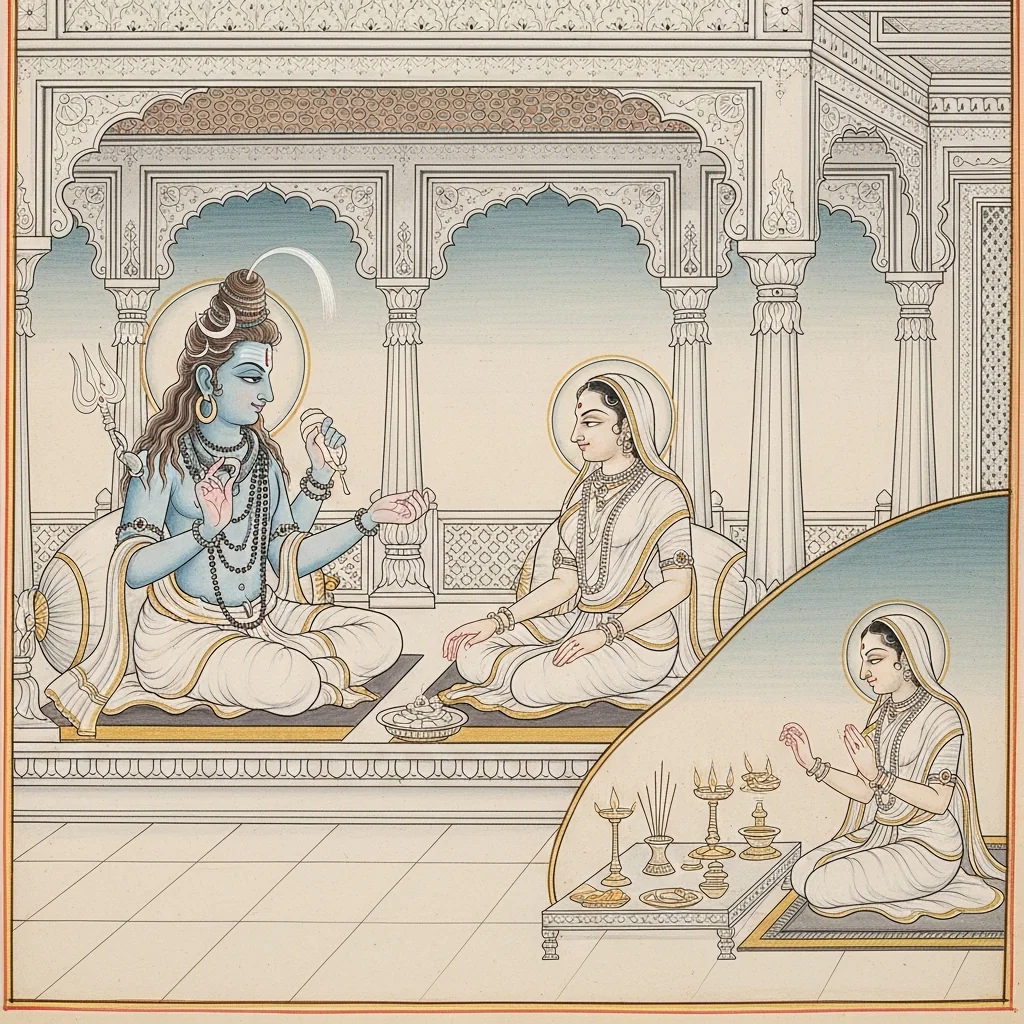
Chapter 30 sets forth a structured theological teaching on the vow called Manoratha-Tṛtīyā. The dialogue opens with the Goddess (Jagadambikā/Gaurī) resolving to remain near the Dharmapīṭha and to bestow siddhi upon devotees who worship the liṅga; Śiva affirms that worship of the Goddess as Viśvabhujā fulfills intentions and ultimately leads toward knowledge. Seeking procedural clarity, the Goddess prompts Śiva to recount an exemplar: Paulomī, daughter of Pulomā, who offers devotion through song, liṅga-pūjā, and prayer for auspicious marriage and steadfast bhakti. Śiva then details the vrata’s timing (notably Caitra-śukla Tṛtīyā), disciplines of purity, night-regulated worship (nakta), and the ritual sequence—first Āśā-Vināyaka, then Viśvabhujā Gaurī—with prescribed offerings, flowers, unguents, and fragrances, observed monthly for a year and concluded with homa and gifts to an ācārya. The chapter ends with a phalaśruti describing fruits for varied conditions—prosperity, progeny, learning, removal of misfortune, and mokṣa—and explains how the vow may be adapted outside Vārāṇasī through image-making and charitable donation (dāna).
Shlokas
Verse 1
स्कंद उवाच । कुंभोद्भूत तदाश्चर्यं विलोक्य जगदंबिका । उवाच शंभुं प्रणता प्रणतार्तिहरं परम्
Skanda said: O Kumbhodbhava (Agastya), then Jagadambikā, beholding that wondrous event, bowed down and spoke to Śambhu—the Supreme who removes the distress of those who take refuge.
Verse 2
अंबिकोवाच । अस्य पीठस्य माहात्म्यं महादेव महेश्वर । तिरश्चामपि यज्जातं ज्ञानं संसारमोचनम्
Ambikā said: O Mahādeva, O Maheśvara, tell the greatness of this sacred seat, by whose power even among animals there arises knowledge that liberates from saṃsāra.
Verse 3
अतः प्रभावं विज्ञाय धर्मपीठस्य धूर्जटे । धर्मेश्वरसमीपेहं स्थास्याम्यद्य दिनावधि
Therefore, having understood the power of this Dharma-pīṭha, O Dhūrjaṭi, I shall remain here near Dharmeśvara from today onward.
Verse 4
अत्र लिंगे तु ये भक्ताः स्त्रियो वा पुरुषास्तु वा । तेषामभीष्टां संसिद्धिं साधयिष्याम्यहं सदा
At this Liṅga, whoever are devotees—whether women or men—I shall always bring about their desired fulfilment and success.
Verse 5
ईश्वर उवाच । साधुकृतं त्वया देवि कृतवत्या परिग्रहम् । अस्येह धर्मपीठस्य मनोरथकृतः सताम्
Īśvara said: Well done, O Devī, that you have accepted this place as your abode. This Dharma-pīṭha here becomes the fulfiller of the noble devotees’ intentions.
Verse 6
त एव विश्वभोक्तारो विश्वमान्यास्त एव हि । ये त्वां विश्वभुजामत्र पूजयिष्यंति मानवाः
Indeed, they alone are the enjoyers of the world; they alone are honored by the world—those people who, here, will worship You, O Sustainer of the universe.
Verse 7
विश्वे विश्वभुजे विश्वस्थित्युत्पत्तिलयप्रदे । नरास्त्वदर्चकाश्चात्र भविष्यंत्यमलात्मकाः
O Lord of the universe, enjoyer of the universe, bestower of the world’s sustenance, creation, and dissolution—here, those who worship You will become pure in their very nature.
Verse 8
मनोरथतृतीयायां यस्ते भक्तिं विधास्यति । तन्मनोरथसंसिद्धिर्भवित्री मदनुग्रहात्
On Manoratha-tṛtīyā, whoever will cultivate devotion to You—his cherished aim shall be fulfilled by My grace.
Verse 9
नारी वा पुरुषो वाथ त्वद्व्रताचरणात्प्रिये । मनोरथानिह प्राप्य ज्ञानमंते च लप्स्यते
Whether a woman or a man, O beloved—by practicing Your vow, one gains desired aims in this world, and at the end attains spiritual knowledge as well.
Verse 10
देव्युवाच । मनोरथतृतीयायां व्रतं कीदृक्कथा कथम् । किं फलं कैः कृतं नाथ कथयैतत्कृपां कुरु
The Goddess said: “On Manoratha-tṛtīyā, what kind of vow is it, and what is its story and procedure? What is its fruit, and by whom has it been observed? O Lord, tell me this—show compassion.”
Verse 11
ईश्वर उवाच । शृणु देवि यथा पृष्टं भवत्या भवतारिणि । मनोरथव्रतं चैतद्गुह्याद्गुह्यतरं परम्
Īśvara said: “Listen, O Devī, as you have asked, O deliverer from worldly becoming. This Manoratha-vow is supreme—more secret than the secret itself.”
Verse 12
पुलोमतनया पूर्वं तताप परमं तपः । किंचिन्मनोरथं प्राप्तुं न चाप तपसः फलम्
Formerly, Pulomā’s daughter undertook the highest austerities to obtain a certain desire; yet she did not gain the fruit of that penance.
Verse 13
अपूपुजत्ततो मां सा भक्त्या परमया मुदा । गीतेन सरहस्येन कलकंठीकलेन हि
Then, with supreme devotion and joy, she worshipped Me—indeed with song bearing its sacred inner mystery, in a sweet, cuckoo-like melody.
Verse 14
तद्गानेनातिसंतुष्टो मृदुना मधुरेण च । सुतालेन सुरंगेण धातुमात्राकलावता
Delighted beyond measure by that singing—soft and sweet, well-timed and beautifully ornamented, rich with measured notes and artistry—
Verse 15
प्रोवाच तां वरं ब्रूहि प्रसन्नोस्मि पुलोमजे । अनेन च सुगीतेन त्वनया लिंगपूजया
He said to her: “Speak—choose a boon, O daughter of Pulomā. I am pleased by this excellent singing and by this worship of the Liṅga.”
Verse 16
पुलोमजोवाच । यदि प्रसन्नो देवेश तदा यो मे मनोरथः । तं पूरय महादेव महादेवी महाप्रिय
Pulomā’s daughter said: “If You are pleased, O Lord of the gods, then the wish I hold in my heart—fulfill it, O Mahādeva, O beloved of Mahādevī.”
Verse 17
सर्वदेवेषु यो मान्यः सर्वदेवेषु सुंदरः । यायजूकेषु सर्वेषु यः श्रेष्ठः सोस्तु मे पतिः
May he who is honored among all the gods, beautiful among all the gods, and foremost among all worshipful beings—may that Supreme One be my husband.
Verse 18
यथाभिलषितं रूपं यथाभिलषितं सुखम् । यथाभिलषितं चायुः प्रसन्नो देहि मे भव
Grant me, in Your graciousness, the form I desire, the happiness I desire, and the lifespan I desire.
Verse 19
यदायदा च पत्या मे संगः स्याद्धृत्सुखेच्छया । तदातदा च तं देहं त्यक्त्वान्यं देहमाप्नुयाम्
Whenever, out of the heart’s longing for joy, union with my husband should occur, then each time may I abandon that body and attain another body, so that our union remains ever renewed.
Verse 20
सदा च लिंगपूजायां मम भक्तिरनुत्तमा । भव भूयाद्भवहर जरामरणहारिणी
And may my devotion in the worship of the Liṅga be unsurpassed forever; O Bhava, O remover of worldly becoming, let it grow—devotion that destroys old age and death.
Verse 21
भर्तुर्व्ययेपि वैधव्यं क्षणमात्रमपीह न । मम भावि महादेव पातिव्रत्यं च यातु मा
Even if my husband should pass away, may widowhood not befall me here even for a single moment; and, O Mahādeva, may my sacred wifely fidelity (pātivratya) never depart from me in the time to come.
Verse 23
ईश्वर उवाच । पुलोमकन्ये यश्चैष त्वयाकारि मनोरथः । लप्स्यसे व्रतचर्यातस्तत्कुरुष्व जितेंद्रिये
Īśvara said: O daughter of Pulomā, this very wish you have conceived you shall attain through the disciplined observance of a vow (vrata). Therefore undertake it, O self-controlled one.
Verse 24
मनोरथतृतीयायाश्चरणेन भविष्यति । तत्प्राप्तये व्रतं वक्ष्ये तद्विधेहि यथोदितम्
It will come to pass through the observance of Manoratha-tṛtīyā. To obtain it, I shall describe the vow—practice it exactly as instructed.
Verse 25
तेन व्रतेन चीर्णेन महासौभाग्यदेन तु । अवश्यं भविता बाले तव चैवं मनोरथः
By performing that vow—truly the giver of great good fortune—your wish will certainly be fulfilled, O girl.
Verse 26
स्कंद उवाच । इमं मनोरथं तस्याः पौलोम्याः पुरसूदनः । समाकर्ण्य क्षणं स्मित्वा प्राहेशो विस्मयान्वितः
Skanda said: Hearing that wish of Paulomī, the Lord—the slayer of the demon-city—smiled for a moment and, filled with wonder, spoke.
Verse 27
कदा च तद्विधातव्यमिति कर्तव्यता च का । इत्याकर्ण्य शिवो वाक्यं तां तु प्रणिजगाद ह
“When should that be performed, and what exactly is to be done?”—hearing her words, Śiva then addressed her.
Verse 28
ईश्वर उवाच । मनोरथतृतीयायां व्रतं पौलोमि तच्छुभम् । पूज्या विश्वभुजा गौरी भुजविंशतिशालिनी
Īśvara said: “O Paulomī, on Manoratha-tṛtīyā the auspicious vow is to be observed. On that day Gaurī, known as Viśvabhujā—she whose arms pervade the universe—should be worshipped, she who is endowed with twenty arms.”
Verse 29
वरदोऽभयहस्तश्च साक्षसूत्रः समोदकः । देव्याः पुरस्ताद्व्रतिना पूज्य आशाविनायकः
The vow-observer should worship Āśā-Vināyaka before the Goddess—bearing the boon-giving gesture and the hand of fearlessness, holding the rosary-thread, and accompanied with modakas as sweet offerings.
Verse 30
चैत्रशुक्ल तृतीयायां कृत्वा वै दंतधावनम् । सायंतनीं च निर्वर्त्य नातितृप्त्या भुजिक्रियाम्
On the bright third day of Caitra, having cleansed the teeth and completed the evening rite, one should take food without excessive satiation.
Verse 31
नियमं चेति गृह्णीयाज्जितक्रोधो जितेंद्रियः । संत्यक्तास्पृश्य संस्पर्शः शुचिस्तद्गतमानसः
One should undertake the vow of restraint, having conquered anger and mastered the senses—avoiding contact with what is impure, remaining clean, and keeping the mind fixed upon Her.
Verse 32
प्रातर्व्रतं चरिष्यामि मातर्विश्वभुजेनघे । विधेहि तत्र सांनिध्यं मन्मनोरथसिद्धये
In the morning I shall observe the vow, O Mother Viśvabhujā, O sinless One. Bestow Your sacred presence there, that my cherished desire may be fulfilled.
Verse 33
नियमं चेति संगृह्य स्वपेद्रात्रौ शुभं स्मरन् । प्रातरुत्थाय मेधावी विधायावश्यकं विधिम्
Thus, having taken up the discipline, one should sleep at night remembering the auspicious—deity and rite. Rising in the morning, the wise should perform, in due order, the required daily duties.
Verse 34
शौचमाचमनं कृत्वा दंतकाष्ठं समाददेत् । अशोकवृक्षस्य शुभं सर्वशोकनिशातनम्
Having performed purification and the sipping rite (ācamana), one should take a tooth-stick—auspiciously from the Aśoka tree, the cutter-down of every sorrow.
Verse 35
नित्यंतनं च निष्पाद्य विधिं विधिविदांवरः । स्नात्वा शुद्धांबरः सायं गौरीपूजां समाचरेत्
Having completed the daily observances according to proper procedure, the foremost among those who know the rites should bathe, don clean garments, and in the evening perform the worship of Gaurī.
Verse 36
आदौ विनायकं पूज्य घृतपूरान्निवेद्य च । ततोर्चयेद्विश्वभुजामशोककुसुमैः शुभैः
First one should worship Vināyaka and offer ghṛtapūras, sweets filled with ghee. Then one should worship Viśvabhujā (Gaurī) with auspicious Aśoka blossoms.
Verse 37
अशोकवर्तिनैवेद्यैर्धूपैश्चागुरुसंभवैः । कुंकुमेनानुलिप्यादावेकभक्तं ततश्चरेत्
With offerings prepared from aśoka and with incense made of aguru, and after anointing the Deity with kunkuma (saffron), one should then observe ekabhakta—taking a single meal.
Verse 38
अशोकवर्तिसहितैर्घृतपूरैर्मनोहरैः । एवं चैत्रतृतीयायां व्यतीतायां पुलोमजे
O daughter of Pulomā, thus—after the tṛtīyā, the third lunar day of the month of Caitra, has passed—one should joyfully offer charming ghṛtapūras, ghee-filled cakes, prepared together with aśoka-wicks/filaments, as part of the vowed observance.
Verse 39
राधादिफाल्गुनांतासु तृतीयासु व्रतं चरेत् । क्रमेण दंतकाष्ठानि कथयामि तवानघे
From Rādhā-tṛtīyā onward, up to the concluding tṛtīyās of Phālguna, one should observe this vow on each third lunar day. O sinless one, I shall now describe, in due order, the proper twigs for tooth-cleaning (dantakāṣṭha).
Verse 40
अनुलेपनवस्तूनि कुसुमानि तथैव च । नैवेद्यानि गजास्यस्य देव्याश्चापि शुभव्रते
O you of auspicious vows, (prepare) unguents for anointing, and flowers as well; and also the food-offerings (naivedya) for Gajāsya (Gaṇeśa) and for the Goddess too.
Verse 41
अन्नानि चैकभक्तस्य शृणुतानि फलाप्तये । जंब्वपामार्ग खदिर जाती चूतकदंबकम्
Hear, for the attainment of merit’s fruit, the rules concerning foods for one who observes ekabhakta, eating only once a day. The prescribed tooth-stick trees (dantakāṣṭha) are: jambu, apāmārga, khadira, jātī, cūta, and kadamba.
Verse 42
प्लक्षोदुंबरखर्जूरी बीजपूरी सदाडिमी । दंतकाष्ठ द्रुमा एते व्रतिनः समुदाहृताः
Plakṣa, udumbara, kharjūrī (date-palm), bījapūrī (citron), and pomegranate—these trees are declared to be the proper sources of dantakāṣṭha (tooth-sticks) for those observing the vow.
Verse 43
सिंदूरागुरु कस्तूरी चंदनं रक्तचंदनम् । गोरोचना देवदारु पद्माक्षं च निशाद्वयम्
Vermilion, aguru, musk, sandalwood, red sandalwood, gorocanā, deodāra, padmākṣa, and the pair of niśā (the two ‘turmerics’)—these are the recommended anointing substances.
Verse 44
प्रीत्यानुलेपनं बाले यक्षकर्दमसंभवम् । सर्वेषामप्यलाभे च प्रशस्तो यक्षकर्दमः
Dear child, the pleasing unguent called ‘yakṣa-kardama’ should be applied with devotion. And when the other substances are unavailable, yakṣa-kardama alone is praised as fully suitable.
Verse 45
कस्तूरिकाया द्वौ भागौ द्वौ भागौ कुंकुमस्य च । चंदनस्य त्रयो भागाः शशिनस्त्वेक एव हि
Two parts of musk and two parts of saffron, three parts of sandalwood, and just one part of ‘śaśin’—indeed, this is the proportion for preparing the paste.
Verse 46
यक्षकर्दम इत्येष समस्तसुरवल्लभः । अनुलिप्याथ कुसुमैरर्चयेद्वच्मि तान्यपि
This paste called yakṣa-kardama is beloved of all the gods. After anointing (the deity), one should then worship with flowers; I shall also tell you those flowers.
Verse 47
पाटला मल्लिका पद्म केतकी करवीरकः । उत्पलै राजचंपैश्च नंद्यावर्तैश्च जातिभिः
With pāṭalā, mallikā, lotus, ketakī, and karavīra; with utpala, rāja-campā, nandīāvarta, and jātī—by offering these flowers one should perform worship.
Verse 48
कुमारीभिः कर्णिकारैरलाभेतच्छदैः सह । सुगंधिभिः प्रसूनोघैः सर्वालाभेपि पूजयेत्
With maiden-offerings and karṇikāra blossoms, together with alābheta leaves, and with heaps of fragrant flowers—indeed, even when nothing else is obtainable—one should worship in this manner.
Verse 49
करंभो दधिभक्तं च सचूतरसमंडकाः । फेणिका वटकाश्चैव पायसं च सशर्करम्
Offer karaṃbha and rice mixed with curd; cakes prepared with mango-juice (or mango-essence); also pheṇikā sweets and vaṭaka fritters; and payasa (milk-rice), together with sugar.
Verse 50
समुद्गं सघृतं भक्तं कार्त्तिके विनिवेदयेत् । इंडेरिकाश्च लड्डूका माघे लंपसिका शुभा
In Kārttika one should offer samudga and rice mixed with ghee. In Māgha, one should offer iṃḍerikā sweets and laddūkas, and the auspicious laṃpasikā as well.
Verse 51
मुष्टिकाः शर्करागर्भाः सर्पिषा परिसाधिताः । निवेद्याः फाल्गुने देव्यै सार्धं विघ्नजिता मुदा
In Phālguna, muṣṭikā sweets—filled with sugar and well-prepared with ghee—should be offered to the Goddess with joy, together with Vighnajitā.
Verse 52
निवेदयेद्यदन्नं हि एकभक्तपि तत्स्मृतम् । अन्यन्निवेद्य संमूढो भुंजानोऽन्यत्पतेदधः
Whatever food one offers—this alone is to be regarded as one’s “single meal” (ekabhakta). But if, deluded, one offers one thing and eats something else, one falls downward spiritually.
Verse 53
प्रतिमासं तृतीयायामेवमाराध्य वत्सरम् । व्रतसंपूर्तये कुर्यात्स्थंडिलेऽग्निसमर्चनम्
Thus worshipping on the third lunar day (tṛtīyā) each month for a full year, for the completion of the vow one should perform fire-worship on a prepared earthen altar (sthaṇḍila).
Verse 54
जातवेदसमंत्रेण तिलाज्यद्रविणेन च । शतमष्टाधिकं होमं कारयेद्विधिना व्रती
Using the Jātavedas mantra, and with sesame, ghee, and proper oblations, the vow-observer should duly have a homa performed—one hundred and eight offerings.
Verse 55
सदैव नक्ते पूजोक्ता सदा नक्ते तु भोजनम् । नक्त एव हि होमोऽयं नक्त एव क्षमापनम्
Worship is prescribed only at night; and food, too, is always to be taken at night. Indeed, this homa is to be done at night, and the act of seeking forgiveness is also at night.
Verse 56
गृहाण पूजां मे भक्त्या मातर्विघ्नजिता सह । नमोस्तु ते विश्वभुजे पूरयाशु मनोरथम्
O Mother—together with Vighnajitā—accept my worship offered with devotion. Salutations to You, O Viśvabhujā; swiftly fulfill my cherished desire.
Verse 57
नमो विघ्नकृते तुभ्यं नम आशाविनायक । त्वं विश्वभुजया सार्धं मम देहि मनोरथम्
Salutations to You who can bring forth obstacles; salutations, O Āśāvināyaka, ruler of hopes. You—together with Viśvabhujā—grant me the fulfilment I desire.
Verse 58
एतौ मंत्रौ समुच्चार्य पूज्या गौरीविनायकौ । व्रतक्षमापने देयः पर्यंकस्तूलिकान्वितः
Having recited these two mantras, one should worship Gaurī and Vināyaka. For the rite of seeking forgiveness and completing the vow, a couch furnished with a mattress should be given in gift.
Verse 59
उपधान्या समायुक्तो दीपीदपर्णसंयुतः । आचार्यं च सपत्नीकं पर्यंक उपवेश्य च
That couch should be arranged with pillows, and accompanied by a lamp and sacred leaves; then the teacher, together with his wife, should be seated upon the couch.
Verse 60
व्रती समर्चयेद्वस्त्रैः करकर्णविभूषणैः । सुगंधचंदनैर्माल्यैर्दक्षिणाभिर्मुदान्वितः
The vow-observer should worship and honour them with garments, ornaments for the hands and ears, fragrant sandal, garlands, and gifts of wealth—doing so with a joyful heart.
Verse 61
दद्यात्पयस्विनीं गां च व्रतस्यपरिपूर्तये । तथोपभोगवस्तूनिच्छत्रोपानत्कमंडलुम्
For the full completion of the vow, one should also give a milk-yielding cow; and likewise items of daily use—an umbrella, footwear, and a water-pot (kamandalu).
Verse 62
मनोरथतृतीयाया व्रतमेतन्मया कृतम् । न्यूनातिरिक्तं संपूर्णमेतदस्तु भवद्गिरा
This vow of Manoratha-tṛtīyā has been performed by me. By your sacred utterance, may it be complete—free from deficiency or excess.
Verse 63
इत्याचार्यं समापृच्छ्य तथेत्युक्तश्च तेन वै । आसीमांतमनुव्रज्य दत्त्वान्येभ्योपि शक्तितः
Having thus taken leave of the teacher—and being told “So be it” by him—one should escort him up to the boundary of the place, and also give gifts to others according to one’s capacity.
Verse 64
नक्तं समाचरेत्पोष्यैः सार्धं सुप्रीतमानसः । प्रातश्चतुर्थ्यां संभोज्य चतुरश्च कुमारकान्
At night, with a delighted mind, one should observe the rite together with those under one’s care. Then, on the morning of the fourth lunar day, one should feed four young boys.
Verse 65
अभ्यर्च्य गंधमाल्याद्यैर्द्वादशापि कुमारिकाः । एवं संपूर्णतां याति व्रतमेतत्सुनिर्मलम्
Having duly honoured twelve maidens with fragrances, garlands, and the like, this pure vow thus attains its full completion.
Verse 66
कार्यं मनोरथावाप्त्यै सर्वैरेतद्व्रतं शुभम् । पत्नीं मनोरमां कुल्यां मनोवृत्त्यनुसारिणीम्
This auspicious vow should be performed by all for the attainment of their desired aims. (Thereby one gains) a charming and well-born wife, who follows one’s disposition and intentions.
Verse 67
तारिणीं दुःखसंसारसागरस्य पतिव्रताम् । कुर्वन्नेतद्व्रतं वर्षं कुमारः प्राप्नुयात्स्फुटम्
By observing this vow for a year, an unmarried man surely attains a devoted, chaste wife—one who becomes a saving boat across the ocean of sorrowful saṃsāra.
Verse 68
कुमारी पतिमाप्नोति स्वाढ्यं सर्वगुणाधिकम् । सुवासिनी लभेत्पुत्रान्पत्युः सौख्यमखंडितम्
An unmarried girl obtains a husband who is prosperous and endowed with every virtue. A married woman gains sons, and her husband’s happiness becomes unbroken.
Verse 69
दुर्भगा सुभगास्याच्च धनाढ्या स्याद्दरिद्रिणी । विधवापि न वैधव्यं पुनराप्नोति कुत्रचित्
The unfortunate becomes fortunate; the poor is freed from poverty and attains abundance. Even a widow does not again fall into widowhood anywhere.
Verse 70
गुर्विणी च शुभं पुत्रं लभते सुचिरायुषम् । ब्राह्मणो लभते विद्यां सर्वसौभाग्यदायिनीम्
A pregnant woman gives birth to an auspicious son endowed with long life. A brāhmaṇa attains knowledge that bestows every kind of good fortune.
Verse 72
धर्मार्थी धर्ममाप्नोति धनार्थी धनमाप्नुयात् । कामी कामानवाप्नोति मोक्षार्थी मोक्षमाप्नुयात्
One who seeks dharma attains dharma; one who seeks wealth attains wealth. The desirous attains the desired enjoyments, and the seeker of liberation attains mokṣa.
Verse 73
यो यो मनोरथो यस्य स तं तं विंदते ध्रुवम् । मनोरथतृतीयाया व्रतस्य चरणाद्व्रती
Whatever wish a person holds in the heart, that very wish he surely attains, by observing the sacred Manoratha-tṛtīyā vow.
Verse 74
स्कंद उवाच । इत्थं निशम्य शिवतः शिवा संतुष्टमानसा । पुनः पप्रच्छ विश्वेशं प्रबद्धकरसंपुटा
Skanda said: Having thus heard from Śiva, Śivā (Pārvatī), her mind content, again questioned Viśveśa, with palms joined in reverence.
Verse 75
अन्यत्र ये व्रतं चैतत्करिष्यंति सदाशिव । ते कथं पूजयिष्यंति मां च आशाविनायकम्
O Sadāśiva, those who will perform this vow elsewhere—how will they worship me, and Āśāvināyaka as well?
Verse 76
शिव उवाच । साधु पृष्टं त्वया देवि सर्वसंदेहभेदिनि । वाराणस्यां समर्च्या त्वं विश्वे प्रत्यक्षरूपिणी
Śiva said: Well asked by you, O Goddess, dispeller of all doubts. In Vārāṇasī you are to be duly worshiped—O you whose form is manifest to the whole world.
Verse 77
आशा विघ्नजिता सार्धं सर्वाशापूर्तिकारिणा । हारिणानंतविघ्नानां मम क्षेत्र शुभार्थिना
In my sacred domain, Āśā—together with Vighnajit, fulfiller of every hope—removes endless obstacles for one who seeks auspicious good.
Verse 78
क्षिप्रमागमयित्वा च नत्वा दूरंगतानपि । कृतकृत्यान्विधायाथ चिंतितैः समनोरथैः
And swiftly drawing them near, and bowing even to those who are far away, he then makes their purpose fulfilled, granting the wished-for aims they had contemplated.
Verse 79
अन्यत्र व्रतिभिर्विश्वे कांचनीप्रतिमा तव । पंचकृष्णलकादूर्ध्वं कार्या विघ्नहृतोपि च
O Viśve, Lord of the universe, for other vow-observers elsewhere a golden image of You should be made, of value exceeding five kṛṣṇalakas, even if obstacles have arisen and must be removed by duly completing the rite.
Verse 80
आचार्याय व्रती दद्याद् व्रतांते प्रतिमा द्वयम् । सकृत्कृते व्रती चास्मिन्कृतकृत्यो व्रती भवेत्
At the conclusion of the vow, the vow-observer should give the teacher two images (pratimās). By doing this once in this rite, the observant becomes one whose duty is fulfilled—truly accomplished in the vow.
Verse 81
ततः पुलोमजा देवि श्रुत्वैतद्व्रतमुत्तमम् । कृत्वा मनोरथं प्राप यथाभिवांछितं हृदि
Then Pulomajā, O Goddess, having heard of this excellent vow, performed it and attained the heart’s desire—exactly as she had wished within.
Verse 82
अरुंधत्या वसिष्ठोपि लब्धोऽत्रिऽनसूयया । सुनीत्योत्तानपादाच्च ध्रुवः प्राप्तोंऽगजोत्तमः
By Arundhatī, even Vasiṣṭha was obtained; by Anasūyā, Atri was obtained. And by Sunīti and Uttānapāda, Dhruva—the excellent son—was attained.
Verse 83
सुनीतेदुर्भर्गत्वं च पुनरस्माद्व्रताद्गतम् । चतुर्भुजः पतिः प्राप्तः क्षीरनीरधिजन्मना
And by this vow Sunīti’s ill-fortune was again removed. She obtained a four-armed husband, born from the Ocean of Milk.
Verse 84
किं बहूक्तेन सुश्रोणि कृतंयेन व्रतं त्विदम् । व्रतानि तेन सर्वाणि कृतानि व्रतिना ध्रुवम्
What need is there to say more, O fair-hipped one? Whoever has performed this vow is surely regarded as having performed all vows.
Verse 85
श्रुत्वा धीमान्कथां पुण्यां पुनस्तद्गतमानसः । शुभबुद्धिमवाप्नोति पापैरपि विमुच्यते
Having heard this holy narrative, the wise one—his mind again absorbed in it—attains auspicious understanding and is released even from sins.