Adhyaya 28
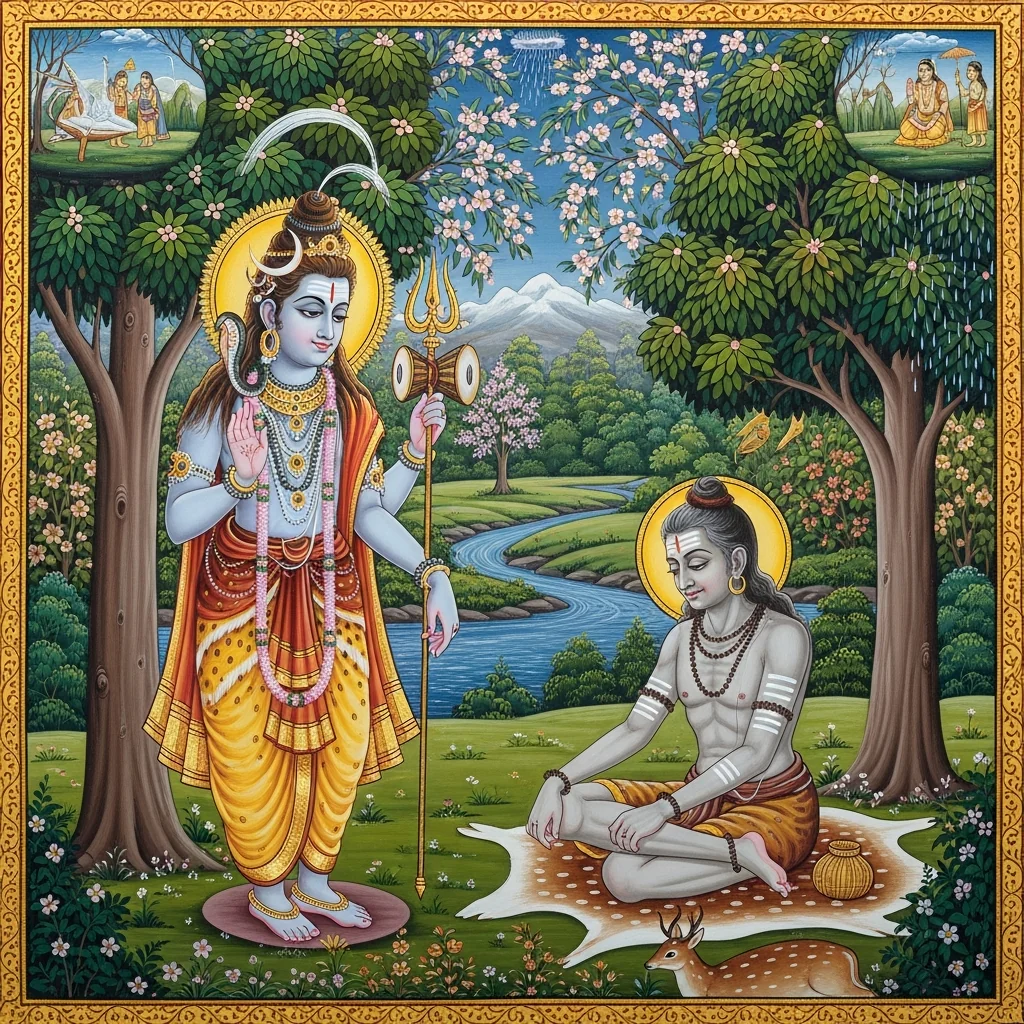
Chapter 28 unfolds as a layered dialogue. Pārvatī asks about a liṅga in Ānandakānana that greatly amplifies merit: remembrance, beholding, prostration, touch, and pañcāmṛta-abhiṣeka are said to lessen grave sins and yield imperishable fruit for offerings and japa. Śiva replies that this is a supreme personal secret (parama-rahasya) of Ānandavana, and the narration is then relayed through Skanda. The chapter identifies a Dharma-tīrtha and Dharma-pīṭha whose mere sight frees one from pāpa. Its central legend tells how Yama, son of Vivasvat, performs severe, long tapas—seasonal austerities, standing on one foot, and taking minimal water—to behold Śiva. Pleased, Śiva grants boons and formally appoints Yama as Dharma-rāja and witness of karma, charging him to govern beings’ rightful courses in accordance with their actions. It then establishes the power of worshiping the dharma-centered liṅga, Dharmeśvara: darśana, sparśana, and arcana promise swift siddhi; bathing at the tīrtha supports attainment of the puruṣārthas; and even simple offerings are portrayed as protective within dharma’s sacred order. A phala-focused close praises observances such as a Kārttika bright-aṣṭamī pilgrimage with fasting and night-vigil, and recitation of the hymn, as means to purity and auspicious destinies.
Shlokas
Verse 1
पार्वत्युवाच । आनंदकानने शंभो यल्लिंगं पुण्यवर्धनम् । यन्नामस्मरणादेव महापातकसंक्षयः
Pārvatī said: O Śambhu, in Ānandakānana, which Liṅga increases merit—by whose very name’s remembrance great sins are destroyed?
Verse 2
यत्सेव्यं साधकैर्नित्यं यत्र प्रीतिरनुत्तमा । यत्र दत्तं हुतं जप्तं ध्यातं भवति चाक्षयम्
Which is ever to be served by practitioners, where devotion is unsurpassed—where gifts, fire-offerings, recitations, and meditation all become imperishable?
Verse 3
यस्य संस्मरणादेव यल्लिंगस्य विलोकनात् । यल्लिंगप्रणतेश्चापि यस्य संस्पर्शनादपि
That Liṅga—by mere remembrance of it, by beholding it, by bowing to it, and even by touching it—(one attains the highest benefit).
Verse 4
पंचामृतादि स्नपनपूर्वाद्यस्यार्चनादपि । तल्लिंगं कथयेशान भवेच्छ्रेयः परंपरा
And even by worshipping it with rites that begin with bathing it in pañcāmṛta and the like—tell me of that Liṅga, O Īśāna, for it will become an unbroken succession of blessings.
Verse 6
देवदेव उवाच । उमे भवत्या यत्पृष्टं भवबंधविमोक्षकृत् । ततोऽहं कथयिष्यामि लिंगं स्थिरमना भव
Devadeva said: “O Umā, what you have asked is that which brings release from the bondage of worldly becoming. Therefore I shall tell you about that Liṅga—be steady and composed in mind.”
Verse 7
आनंदकानने चात्र रहस्यं परमं मम । न मया कस्यचित्ख्यातं न प्रष्टुं वेत्ति कश्चन
“Here in Ānandakānana is My supreme secret. I have not disclosed it to anyone, and no one even knows to ask about it.”
Verse 8
संति लिंगान्यनेकानि ममानंदवने प्रिये । परं त्वया यथा पृष्टं यथावत्तद्ब्रवीमि ते
“Beloved, many Liṅgas exist in My Ānandavana; yet, as you have asked, I shall tell you that matter exactly as it is.”
Verse 9
स्कंद उवाच । इति देवीसमुदितं समाकर्ण्य वटोद्भव । सर्वज्ञेन यदाख्यातं तदाख्यास्यामि ते शृणु
Skanda said: “O Vaṭodbhava, having heard what the Goddess thus spoke, I shall relate to you what was declared by the All-knowing One—listen.”
Verse 10
ममापि येन त्रिपुरं समरे जयकांक्षिणः । जयाशा पूरिता स्तुत्या बहुमोदकदानतः
By this, even I—when I yearned for victory in battle against Tripura—had my hope of triumph fulfilled through praise and through the offering of many sweet gifts.
Verse 11
यत्रास्ति तीर्थमघहृत्पितृप्रीतिविवर्धनम् । यत्स्नानाद्वृत्रहा वृत्रवधपापाद्विमुक्तवान्
There is a sacred tīrtha that removes sin and increases the contentment of the ancestors; by bathing there, Vṛtrahā (Indra) was freed from the sin incurred by slaying Vṛtra.
Verse 12
धर्माधिकरणं यत्र धर्मराजोप्यवाप्तवान् । सुदुष्करं तपस्तप्त्वा परमेण समाधिना
There is the seat of dharma’s jurisdiction, which even Dharmarāja attained after performing exceedingly difficult austerity in supreme samādhi.
Verse 13
पक्षिणोपि हि यत्रापुर्ज्ञानं संसारमोचनम् । रम्यो हिरण्मयो यत्र बभूव बहुपाद्द्रुमः
There even birds attained the knowledge that liberates from saṃsāra; and there a beautiful golden tree with many branches came into being.
Verse 14
यल्लिंगदर्शनादेव दुर्दमो नाम पार्थिवः । उद्वेजकोपि लोकानां क्षणाद्धर्ममतिस्त्वभूत्
By the mere sight of that Liṅga, a king named Durdama—though he was a terror to the people—became, in an instant, one whose mind was set on dharma.
Verse 15
तस्य लिंगस्य माहात्म्यमाविर्भावं च सुंदरि । निशामयाभिधास्यामि महापातक नाशनम्
O beautiful one, listen: I shall proclaim the greatness of that Liṅga and its sacred manifestation—a glory that destroys even the great sins.
Verse 16
धर्मपीठं तदुद्दिष्टमत्रानंदवने मम । तत्पीठदर्शनादेव नरः पापैः प्रमुच्यते
That sacred seat of Dharma has been indicated here in my Ānandavana (Kāśī). By the mere darśana of that very seat, a person is released from sins.
Verse 17
पुरा विवस्वतः पुत्रो यमः परमसंयमी । तपस्तताप विपुलं विशालाक्षि तवाग्रतः
Formerly, Yama—the son of Vivasvān, supremely self-controlled—performed vast austerities, O wide-eyed one, in your very presence.
Verse 18
शिशिरे जलमध्यस्थो वर्षास्वभ्रावकाशकः । तपर्तौ पंचवह्निस्थः कदाचिदिति तप्तवान्
In winter he stood immersed midstream in water; in the rainy season he remained exposed beneath the open sky; and in the heat-season he sat amidst the five fires—thus did he practice austerity continually.
Verse 19
पादाग्रांगुष्ठभूस्पर्शी बहुकालं स तस्थिवान् । एकपादस्थितः सोपि कदाचिद्बह्वनेहसम्
For a long time he remained standing so that only the tip of his great toe touched the earth. At times he stood on a single foot as well, enduring great hardship.
Verse 20
समीराभ्यवहर्तासीद्बहुदिष्टं सदिष्टवान् । पपौ स तु पिपासुः सन्कुशाग्रजलविप्रुषः
He lived as one who “fed upon the wind,” subsisting on what was scarcely allotted. And when parched with thirst, he drank only droplets of water clinging to the tips of kuśa grass.
Verse 21
दिव्यां चतुर्युगीमित्थं स निनाय तपश्चरन् । चतुर्गुणं दिदृक्षुर्मां परमेण समाधिना
Thus, practicing austerity, he passed a divine span of four yugas, desiring to behold Me fourfold, through the highest samādhi.
Verse 22
ततोहं तस्य तपसा संतुष्टः स्थिरचेतसः । ययौ तस्मै वरान्दातुं शमनाय महात्मने
Then, pleased by the austerities of that steadfast-minded one, I went to grant boons to that great soul—Śamana (Yama).
Verse 23
वटः कांचनशाखाख्यो यस्तपस्तापसंततिम् । दूरीचकार सुच्छायो बहुद्विजसमाश्रयः
A banyan tree known as “Golden-branched”—cool in shade and a refuge for many twice-born—drove away the oppressive heat of the ascetics’ austerities.
Verse 24
मंदमद मरुल्लोल पल्लवैः करपल्लवैः । योध्वगानध्वसंतप्तानाह्वये दिवतापहृत्
With its tender leaf-hands swaying in gentle, intoxicating breezes, it beckons weary travelers scorched by the road, removing their daytime heat and fatigue.
Verse 25
स्वानुरागैः सुरभिभिः स्वादुभिश्च पचेलिमैः । प्रीणयेदर्थिसार्थं यो वृत्तैर्निजफलैरलम्
With fruits naturally fragrant, sweet, and fully ripe, it delights the multitudes of supplicants, satisfying them abundantly with its own produce.
Verse 26
तदधस्तात्परं वीक्ष्य तमहं तपनांगजम् । स्थाणुनिश्चल वर्ष्माणं नासाग्रन्यस्तलोचनम्
Looking further below, I beheld the son of the Sun—his body motionless like a pillar, his gaze set upon the tip of his nose—steadfast in yogic tapas.
Verse 27
तपस्तेजोभिरुद्यद्भिः परितः परिधीकृतम् । भानुमंतमिवाकाशे सुनीले स्वेन तेजसा
On every side he was encircled by the upsurging radiance born of austerity—like the sun in the deep-blue sky, ringed by its own splendor.
Verse 28
स्वाख्यांकितं महालिंगं प्रतिष्ठाप्यातिभक्तितः । स्वच्छ सूर्योपलमयतेजः पुंजैरिवार्चितम्
Having installed with intense devotion a great Liṅga marked with his own name, he worshipped it as though with clusters of pure, sun-like crystal radiance.
Verse 29
साक्षीकृत्येव तल्लिंगं तप्यमानं महत्तपः । प्रत्यवोचं धर्मराजं वरं ब्रूहीति भास्करे
As though taking that very Liṅga as witness to his great tapas, I addressed Dharmarāja: “O son of Bhāskara, speak—choose a boon.”
Verse 30
अलं तप्त्वा महाभाग प्रसन्नोस्मि शुभव्रत । निशम्य शमनश्चेति दृष्ट्वा मां प्रणनाम ह
“Enough of your austerity, O blessed one of auspicious vows; I am well pleased.” Hearing this, Śamana (Yama) looked upon me and bowed down in reverence.
Verse 31
चकार स्तवनं चापि परिहृष्टेंद्रियेश्वरः । निर्व्याजं स समाधिं च विसृज्य ब्रध्ननंदनः
Delighted in all his senses, the son of Bradhna (the Sun) offered a hymn of praise; and, setting aside his unbroken samādhi, he rose from his absorption.
Verse 32
धर्म उवाच । नमोनमः कारणकारणानां नमोनमः कारणवर्जिताय । नमोनमः कार्यमयाय तुभ्यं नमोनमः कार्यविभिन्नरूप
Dharma said: “Homage, homage to You, the cause of all causes; homage to You, who are beyond all causation. Homage to You, who pervade as the very world of effects; homage to You, whose forms appear as the manifold of created things.”
Verse 33
अरूपरूपाय समस्तरूपिणे पराणुरूपाय परापराय । अपारपाराय पराब्धिपार प्रदाय तुभ्यं शशिमौलये नमः
Salutation to You—formless, yet the giver of form, the Bearer of all forms; subtler than the subtlest, beyond both higher and lower. Salutation to the Limitless One, the far shore of the boundless, who grants passage beyond the supreme ocean—O Lord with the moon upon Your crest.
Verse 34
अनीश्वरस्त्वं जगदीश्वरस्त्वं गुणात्मकस्त्वं गुणवर्जितस्त्वम् । कालात्परस्त्वं प्रकृतेः परस्त्वं कालाय कालात्प्रकृते नमस्ते
You are beyond lordship, and yet You are the Lord of the universe. You are constituted of the guṇas, and yet You are free of the guṇas. You are beyond time and beyond nature—salutations to You, the Time of time itself, the One beyond prakṛti.
Verse 35
त्वमेव निर्वाणपद प्रदोसि त्वमेव निर्वाणमनंतशक्ते । त्वमात्मरूपः परमात्मरूपस्त्वमंतरात्मासि चराचरस्य
You alone bestow the station of nirvāṇa; You alone are nirvāṇa itself, O Infinite Power. You are the very form of the Self, the form of the Supreme Self; You are the inner Self of all that moves and all that does not.
Verse 36
त्वत्तो जगत्त्वं जगदेवसाक्षाज्जगत्त्वदीयं जगदेकबंधो । हर्ताविता त्वं प्रथमो विधाता विधातृविष्ण्वीश नमो नमस्ते
From You arises the very reality of the world; indeed, You are the manifest witness of the universe. This universe is Yours, O sole kinsman of all creation. You are the first ordainer—destroyer and protector as well. O Lord, source of Brahmā and Viṣṇu, salutations—salutations to You.
Verse 37
मृडस्त्वमेव श्रुतिवर्त्मगेषु त्वमेव भीमोऽश्रुतिवर्त्मगेषु । त्वं शंकरः सोमसुभक्तिभाजामुग्रोसि रुद्र त्वमभक्तिभाजाम्
You alone are gentle and gracious toward those who walk the path taught by the Veda; but You are fearsome toward those who stray from the Vedic way. You are Śaṅkara to those endowed with pure devotion; but for the devotionless, O Rudra, You are the fierce one.
Verse 38
त्वमेव शूली द्विषतां त्वमेव विनम्रचेतो वचसां शिवोसि । श्रीकंठ एकः स्वपदश्रितानां दुरात्मनां हालहलोग्रकंठः
You alone are the trident-bearer against the hostile; and You are Śiva—auspiciousness itself—for those whose mind and speech are humble. You alone are Śrīkaṇṭha for those who take refuge at Your feet; but for the wicked-minded You are the dread-throated one who holds the terrible hālahala poison.
Verse 39
नमोस्तु ते शंकर शांतशंभो नमोस्तु ते चंद्रकलावतंस । नमोस्तु तुभ्यं फणिभूषणाय पिनाकपाणेंऽधकवैरिणे नमः
Salutations to You, O Śaṅkara, O tranquil Śambhu. Salutations to You whose crest is adorned with the crescent moon. Salutations to You who wear serpents as ornaments; salutations to You, O wielder of the Pināka bow, foe of Andhaka.
Verse 40
स एव धन्यस्तव भक्तिभाग्यस्तवार्चको यः सुकृती स एव । तवस्तुतिं यः कुरुते सदैव स स्तूयते दुश्च्यवनादि देवैः
Blessed indeed is the one graced with the fortune of devotion to You; truly meritorious is the one who worships You. Whoever ever offers Your praise is himself praised by the gods—by Duścyavana and the rest.
Verse 41
कस्त्वामिह स्तोतुमनंतशक्ते शक्नोति मादृग्लघुबुद्धिवैभवः । प्राचां न वाचामिहगोचरो यः स्तुतिस्त्वयीयं नतिरेव यावत्
Who here can truly praise You, O Infinite Power, when one like me is so small in understanding? You lie beyond the reach of even the ancient sages’ words; therefore whatever ‘praise’ I offer is only a bow of reverence.
Verse 42
स्कंद उवाच । उदीर्य सूर्यस्य सुतोतिभक्त्या नमः शिवायेति समुच्चरन्सः । इलामिलन्मौलिरतीव हृष्टः सहस्रकृत्वः प्रणनाम शंभुम्
Skanda said: Then the son of Sūrya, filled with intense devotion, repeatedly uttered, “Namaḥ Śivāya.” With his head bowed down to the earth, greatly rejoicing, he prostrated to Śambhu a thousand times.
Verse 43
ततः शिवस्तं तपसातिखिन्नं निवार्य ताभ्यः प्रणतिभ्य ईश्वरः । वरान्ददौ सप्ततुरंगसूनवे त्वं धर्मराजो भव नामतोपि
Then Lord Śiva, restraining him who had grown exceedingly weary through austerity and pleased with those acts of obeisance, granted boons to the son of the seven-horsed one (Sūrya): “Become Dharmarāja—even by name as well.”
Verse 44
त्वमेव धर्माधिकृतौ समस्त शरीरिणां स्थावरजंगमानाम् । मया नियुक्तोद्य दिनादिकृत्यः प्रशाधि सर्वान्मम शासनेन
You alone are appointed as the authority over dharma for all embodied beings, both the immovable and the moving. Today I commission you to the duties beginning with the reckoning of days and the ordering of conduct; govern all beings according to My command.
Verse 45
त्वं दक्षिणायाश्च दिशोधिनाथस्त्वं कर्मसाक्षी भव सर्वजंतोः । त्वद्दर्शिताध्वान इतो व्रजंतु स्वकर्मयोग्यां गतिमुत्तमाधमाः
Be the presiding Lord of the southern quarter, and be the witness of the deeds of every creature. Let beings depart from here along the path you reveal, attaining the destiny—higher or lower—befitting their own karma.
Verse 46
त्वया यदेतन्ममभक्तिभाजा लिंगं समाराधितमत्र धर्म । तद्दर्शनात्स्पर्शनतोऽर्चनाच्च सिद्धिर्भविष्यत्यचिरेण पुंसाम्
O Dharma, this liṅga—worshipped here by you with devotion to Me—will grant people swift fulfillment: by its very sight, by touching it, and by offering worship, siddhi will arise before long.
Verse 47
धर्मेश्वरं यः सकृदेव मर्त्यो विलोकयिष्यत्यवदातबुद्धिः । स्नात्वा पुरस्तेऽत्र च धर्मतीर्थे न तस्य दूरे पुरुषार्थसिद्धिः
Any mortal who, with a purified mind, beholds Dharmeśvara even once—and bathes here before you at the Dharma-tīrtha—will find the fulfillment of life’s aims not far away.
Verse 48
कृत्वाप्यघानामिह यः सहस्रं धर्मेश्वरं पश्यति दैवयोगात् । सहेतनो जातु स नारकीं व्यथां कथां तदीयां दिविकुर्वतेमराः
Even if one has committed thousands of sins, if by divine providence he beholds Dharmeśvara, he will never undergo the torments of hell; indeed, the gods in heaven celebrate even the account of that Lord.
Verse 50
यो धर्मपीठं प्रतिलभ्य काश्यां स्वश्रेयसे नो यततेऽत्र मर्त्यः । कथं स धर्मत्वमिवातितेजाः करिष्यति स्वं कृतकृत्यमेव । त्वया यथाप्ता इह धर्मराज मनोरथास्ते गुरुभिस्तपोभिः । तथैव धर्मेश्वरभक्तिभाजां कामाः फलिष्यंति न संशयोत्र
A mortal who, having reached Kāśī—the very seat of Dharma—does not strive here for his own highest good: how could such a one accomplish his true purpose, as though he might attain “Dharmahood” itself by mere brilliance? O Dharmarāja, just as you obtained your cherished aims here through mighty austerities (tapas), so too will the desires of those devoted to Dharmeśvara surely bear fruit—of this there is no doubt.
Verse 51
कृत्वाप्यघान्येव महांत्यपीह धर्मेश्वरार्चां सकृदेव कुर्वन् । कुतो बिभेति प्रियबंधुरेव तव त्वदीयार्चित लिंगभक्तः
Even if one has committed great sins in this world, by worshipping Dharmeśvara even once, how could he ever fear? He becomes, as it were, your dear kinsman, being a devotee of the liṅga worshipped as yours.
Verse 52
पत्रेण पुष्पेण जलेन दूर्वया यो धर्मधर्मेश्वरमर्चयिष्यति । समर्चयिष्यंत्यमृतांधसस्तं मंदारमालाभिरतिप्रहृष्टाः
Whoever worships Dharma‑Dharmeśvara with leaves, flowers, water, and dūrvā grass—him the gods too will honor with great joy, radiant with the nectar of immortality, offering garlands of mandāra blossoms.
Verse 53
त्वत्तो विभेष्यंति कृतैनसो ये भयं न तेषां भविता कदाचित् । धर्मेश्वरार्चा रचनां करिष्यतां हरिष्यतां बंधुतयामनस्ते
Those who have committed sins may fear you; yet for those who arrange and perform the worship of Dharmeśvara there will never be fear. Let your mind be drawn to them in kinship, for their worship removes dread.
Verse 54
यदत्र दास्यंति हि धर्मपीठे नरा द्युनद्यां कृतमज्जनाश्च । तदक्षयं भावि युगांतरेपि कृतप्रणामास्तव धर्मलिंगे
Whatever gifts people give here at the seat of Dharma—after bathing in the celestial river—become imperishable, even in another age; for they have bowed in reverence to your Dharma‑liṅga.
Verse 55
ये कार्तिके मासि सिताष्टमी तिथौ यात्रां करिष्यंति नरा उपोषिताः । रात्रौ च वै जागरणं महोत्सवैर्धर्मेश्वरे तेन पुनर्भवा भुवि
Those who, fasting, undertake the pilgrimage in the month of Kārttika on the bright eighth lunar day, and who keep night‑vigil amid great festival celebrations at Dharmeśvara, will not be born again upon the earth because of that observance.
Verse 56
स्तुतिं च ये वै त्वदुदीरितामिमां नराः पठिष्यंति तवाग्रतः क्वचित् । निरेनसस्ते मम लोकगामिनः प्राप्स्यंति ते वैभवतः सखित्वम्
And those people who, at any time, recite before You this hymn spoken by You—free from sin—shall go to my realm and attain friendship within Your glorious retinue.
Verse 57
पुनर्वरं ब्रूहि यथेप्सितं ददे तेजोनिधेर्नंदन धर्मराज । अदेयमत्रास्ति न किंचिदेव ते विधेहि वागुद्यममात्रमेव
“Ask again for a boon; I shall grant whatever you desire, O Dharmarāja, son of the Lord of Splendour. Here there is truly nothing that cannot be given to you—only make the effort of speech and state your wish.”
Verse 58
प्रसन्नमूर्तिं स विलोक्य शंकरं कारुण्यपूर्णं स्वमनोरथाभिदम् । आनंदसंदोहसरोनिमग्नो वक्तुं क्षणं नैव शशाक किंचित्
Beholding Śaṅkara’s serene form—overflowing with compassion and ready to fulfill his heart’s desire—he became submerged in a lake of gathered bliss, and for a moment could not speak a single word.
Verse 78
इति श्रीस्कांदे महापुराण एकाशीतिसाहस्र्यां संहितायां चतुर्थे काशीखंड उत्तरार्धे धर्मेशमहिमाख्यानं नामाष्टसप्ततितमोऽध्यायः
Thus, in the holy Skanda Mahāpurāṇa, in the collection of eighty-one thousand verses, in the fourth division, within the Kāśī Khaṇḍa (Uttarārdha), ends the twenty-eighth chapter entitled “The Account of the Glory of Dharmeśa.”