Adhyaya 30
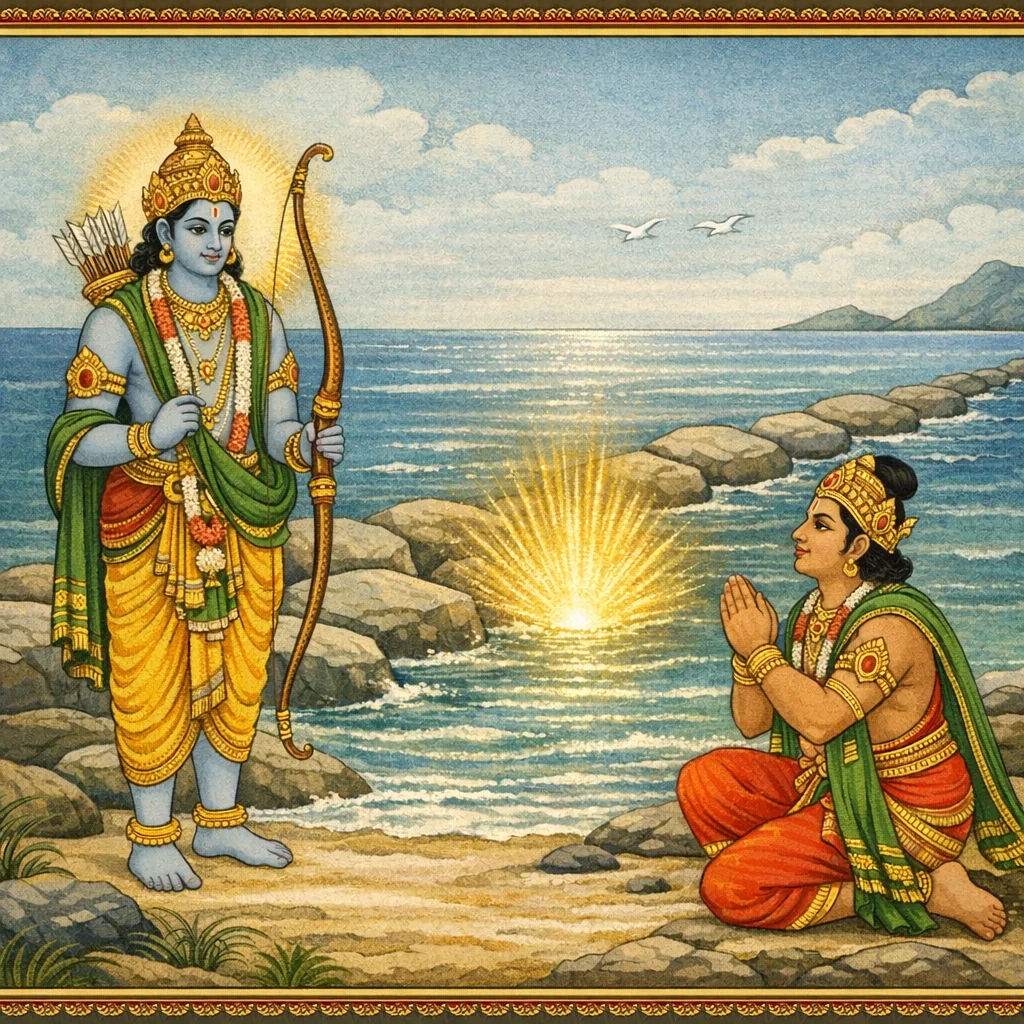
This adhyāya gives a condensed, chronological theological account of Śrī Rāma as a Vaiṣṇava aṃśa born in the Sūryavaṃśa. It begins with his dharma-formed youth: accompanying Viśvāmitra, protecting the yajña, slaying Tāḍakā, receiving dhanurveda, and restoring Ahalyā. It then establishes royal and marital legitimacy: at Janaka’s court Rāma breaks Śiva’s bow and weds Sītā. Through Kaikeyī’s boons he accepts fourteen years of forest exile; Daśaratha dies, and Bharata returns to rule in regency with Rāma’s pādūkā as the emblem of the throne. The narrative moves through crisis and recovery: the Śūrpaṇakhā episode, Sītā’s abduction, Jatāyu’s fall, alliance with Hanumat and Sugrīva, and missions of reconnaissance and message-bearing. The campaign follows—bridge-building, the siege of Laṅkā, tithi-marked phases of battle, the episodes of Indrajit and Kumbhakarṇa, and Rāvaṇa’s defeat. It closes with Vibhīṣaṇa’s consecration, the motif of Sītā’s purification, and the return to Ayodhyā, followed by an extended portrayal of Rāma-rājya as an ethical ideal of welfare, prosperity, freedom from crime, and reverence for elders and dvijas. Finally, Rāma inquires into tīrtha-māhātmya, linking epic remembrance to the meaning of pilgrimage.
Shlokas
Verse 1
। व्यास उवाच । पुरा त्रेतायुगे प्राप्ते वैष्णवांशो रघूद्वहः । सूर्यवंशे समुत्पन्नो रामो राजीवलोचनः
Vyāsa said: Long ago, when the Tretā Yuga had arrived, Rāma—lotus-eyed, the foremost of Raghu’s line—was born in the Solar dynasty as an incarnationary portion of Viṣṇu.
Verse 2
स रामो लक्ष्मणश्चैव काकपक्षधरावुभौ । तातस्य वचनात्तौ तु विश्वामित्रमनुव्रतौ
Rāma and Lakṣmaṇa as well—both wearing the “crow-wing” style of hair—obedient to their father’s word, followed Sage Viśvāmitra, steadfast in vow and discipline.
Verse 3
यज्ञसंरक्षणार्थाय राज्ञा दत्तौ कुमारकौ । धनुःशरधरौ वीरौ पितुर्वचनपालकौ
For the protection of the yajña, the king entrusted the two princes—heroic bearers of bow and arrows—steadfast guardians of their father’s command.
Verse 4
पथि प्रव्रजतो यावत्ताडकानाम राक्षसी । तावदागम्य पुरतस्तस्थौ वै विघ्नकारणात्
As they journeyed along the path, the rākṣasī named Tāḍakā came before them and stood there, intent on causing obstruction.
Verse 5
ऋषेरनुज्ञया रामस्ताडकां समघातयत् । प्रादिशच्च धनुर्वेदविद्यां रामाय गाधिजः
With the sage’s permission, Rāma struck down Tāḍakā; and Gādhi’s son (Viśvāmitra) imparted to Rāma the knowledge of Dhanurveda, the sacred science of archery.
Verse 6
तस्य पादतलस्पर्शाच्छिला वासवयोगतः । अहल्या गौतमवधूः पुनर्जाता स्वरूपिणी
By the touch of his foot-soles, the stone—through its connection with Vāsava (Indra)—was transformed: Ahalyā, the wife of Gautama, was born again into her own true form.
Verse 7
विश्वामित्रस्य यज्ञे तु संप्रवृत्ते रघूत्तमः । मारीचं च सुबाहुं च जघान परमेषुभिः
When Viśvāmitra’s sacrifice began, the noblest of the Raghu line slew Mārīca and Subāhu with supreme arrows.
Verse 8
ईश्वरस्य धनुर्भग्नं जनकस्य गृहे स्थितम् । रामः पंचदशे वर्षे षड्वर्षां चैव मैथिलीम्
In Janaka’s house was kept the Lord’s broken bow; and Rāma, in his fifteenth year, won Maithilī—six years of age—as his bride.
Verse 9
उपयेमे तदा राजन्रम्यां सीतामयोनिजाम् । कृतकृत्यस्तदा जातः सीतां संप्राप्य राघवः
Then, O King, he married the lovely Sītā, the one not born from a womb; and upon attaining Sītā, Rāghava felt his purpose fulfilled.
Verse 10
अयोध्यामगमन्मार्गे जामदग्न्यमवेक्ष्य च । संग्रामोऽभूत्तदा राजन्देवानामपि दुःसहः
As they went toward Ayodhyā, seeing Jāmadagnya (Paraśurāma) on the way, O King, a battle arose—one unbearable even for the gods.
Verse 11
ततो रामं पराजित्य सीतया गृहमागतः । ततो द्वादशवर्षाणि रेमे रामस्तया सह
Then, having defeated Rāma, he returned home with Sītā. Thereafter Rāma enjoyed twelve years together with her.
Verse 12
एकविंशतिमे वर्षे यौवराज्यप्रदायकम् । राजानमथ कैकेयी वरद्वयमयाच त
In Rāma’s twenty-first year, when the king was about to bestow the rank of heir-apparent, Kaikeyī approached the king and asked for two boons.
Verse 13
तयोरेकेन रामस्तु ससीतः सहलक्ष्मणः । जटाधरः प्रव्रजतां वर्षाणीह चतुर्दश
By one of those boons: let Rāma, together with Sītā and Lakṣmaṇa, bearing matted locks, depart into exile for fourteen years.
Verse 14
भरतस्तु द्वितीयेन यौवराज्याधिपोस्तु मे । मंथरावचनान्मूढा वरमेतमयाचत
And by the second boon: let Bharata, for my sake, become the holder of the heir-apparent’s rank. Deluded by Mantharā’s words, she asked for this boon.
Verse 15
जानकीलक्ष्मणसखं रामं प्राव्राजयन्नृपः । त्रिरात्रमुदकाहारश्चतुर्थेह्नि फलाशनः
The king sent Rāma into exile, accompanied by Jānakī and his companion Lakṣmaṇa. For three nights he lived only on water; on the fourth day he ate fruits.
Verse 16
पञ्चमे चित्रकूटे तु रामो वासमकल्पयत् । तदा दशरथः स्वर्गं गतो राम इति ब्रुवन्
On the fifth day, Rāma established his dwelling at Citrakūṭa. Then Daśaratha went to heaven, uttering only, “Rāma, Rāma.”
Verse 17
ब्रह्मशापं तु सफलं कृत्वा स्वर्गं जगाम किम् । ततो भरत शत्रुघ्नौ चित्रकूटे समागतौ
Thus, having made the Brahmin’s curse bear its fruit, he went to heaven. Thereafter Bharata and Śatrughna arrived at Citrakūṭa.
Verse 18
स्वर्गतं पितरं राजन्रामाय विनिवेद्य च । सांत्वनं भरतस्यास्य कृत्वा निवर्तनं प्रति
Informing Rāma, O king, that his father had gone to heaven, and consoling Bharata, they then turned toward returning.
Verse 19
ततो भरत शत्रुघ्नौ नंदिग्रामं समागतौ । पादुकापूजनरतौ तत्र राज्यधरावुभौ
Then Bharata and Śatrughna reached Nandigrāma. There, devoted to worshipping Rāma’s sandals, both bore the burden of the kingdom.
Verse 20
अत्रिं दृष्ट्वा महात्मानं दण्डकारण्यमागमत । रक्षोगणवधारम्भे विराधे विनिपातिते
After beholding the great-souled Atri, (Rāma) went to the Daṇḍaka forest. When the slaying of the rākṣasa-hosts began, Virādha was struck down.
Verse 21
अर्द्धत्रयोदशे वर्षे पंचवट्यामुवास ह । ततो विरूपयामास शूर्पणखां निशाचरीम् । वने विचरतरतस्य जानकीसहितस्य च
When thirteen years and a half had passed, he dwelt at Pañcavaṭī. Then he disfigured the night-stalking demoness Śūrpaṇakhā, while he roamed in the forest together with Jānakī.
Verse 22
आगतो राक्षसो घोरः सीतापहरणाय सः । ततो माघासिताष्टम्यां मुहूर्ते वृन्दसंज्ञके
A dreadful rākṣasa came, intent on abducting Sītā. This took place on the eighth day of the dark fortnight of Māgha, at the auspicious time known as Vṛnda.
Verse 23
राघवाभ्यां विना सीतां जहार दश कन्धरः । मारीचस्याश्रमं गत्वा मृगरूपेण तेन च
When Sītā was without the two Rāghavas, Daśakandhara carried her away—having gone to Mārīca’s hermitage, and with him assuming the form of a deer.
Verse 24
नीत्वा दूरं राघवं च लक्ष्मणेन समन्वितम् । ततो रामो जघानाशु मारीचं मृगरू पिणम्
After drawing Rāghava far away—along with Lakṣmaṇa—Rāma then swiftly slew Mārīca, who had taken the form of a deer.
Verse 25
पुनः प्राप्याश्रमं रामो विना सीतां ददर्श ह । तत्रैव ह्रियमाणा सा चक्रंद कुररी यथा
Returning to the hermitage, Rāma saw that Sītā was not there. Even there, as she was being carried away, she cried out like a kurarī-bird lamenting.
Verse 26
रामरामेति मां रक्ष रक्ष मां रक्षसा हृताम् । यथा श्येनः क्षुधायु्क्तः क्रन्दंतीं वर्तिकां नयेत्
“Rāma, Rāma—protect me! Protect me, carried off by the rākṣasa!”—as a hungry hawk might seize and bear away a crying quail.
Verse 27
तथा कामवशं प्राप्तो राक्षसो जनकात्मजाम् । नयत्येष जनकजां तच्छ्रुत्वा पक्षिराट् तदा
So too, the rākṣasa—overpowered by lust—was carrying off Janaka’s daughter. Hearing this, the king of birds then rose to act.
Verse 28
युयुधे राक्षसेंद्रेण रावणेन हतोऽपतत् । माघासितनवम्यां तु वसंतीं रावणालये
He fought with Rāvaṇa, lord of the rākṣasas; struck down, he fell. And on the ninth day of the dark fortnight of Māgha, she was dwelling in Rāvaṇa’s abode.
Verse 29
मार्गमाणौ तदा तौ तु भ्रातरौ रामलक्ष्मणौ
Then those two brothers, Rāma and Lakṣmaṇa, were searching for her.
Verse 30
जटायुषं तु दृष्ट्वैव ज्ञात्वा राक्षससंहृताम् । सीतां ज्ञात्वा ततः पक्षी संस्कृतस्तेन भक्तितः
Seeing Jaṭāyu and learning that the rākṣasa had struck him down—and thus knowing Sītā’s fate—Rāma performed the bird’s funeral rites with devotion.
Verse 31
अग्रतः प्रययौ रामो लक्ष्मणस्तत्पदानुगः । पंपाभ्याशमनुप्राप्य शबरीमनुगृह्य च
Rāma went on ahead, with Lakṣmaṇa following in his footsteps. Reaching the vicinity of Pampā, he also showed grace to Śabarī.
Verse 32
तज्जलं समुपस्पृश्य हनुमद्दर्शनं कृतम् । ततो रामो हनुमता सह सख्यं चकार ह
Having duly touched that sacred water, the meeting with Hanumān came to pass. Thereafter Rāma entered into friendship with Hanumān.
Verse 33
ततः सुग्रीवमभ्येत्य अहनद्वालिवानरम् । प्रेषिता रामदेवेन हनुमत्प्रमुखाः प्रियाम्
Then, approaching Sugrīva, he slew Vāli, lord of the vānara. By Lord Rāma’s command, the monkey-hosts—led by Hanumān—were dispatched to seek his beloved Sītā.
Verse 34
अंगुलीयकमादाय वायुसूनुस्तदागतः । संपातिर्दशमे मासि आचख्यौ वानराय ताम्
Taking the ring as a token, the Son of Vāyu set forth. And Sampāti, in the tenth month, revealed to the vānara the whereabouts of her—Sītā.
Verse 35
ततस्तद्वचनादब्धिं पुप्लुवे शतयोजनम् । हनुमान्निशि तस्यां तु लंकायां परितोऽचिनोत्
Then, at those words, Hanumān leapt across the ocean spanning a hundred yojanas. And in that Laṅkā, by night, he searched all around.
Verse 36
तद्रात्रिशेषे सीताया दर्शनं तु हनूमतः । द्वादश्यां शिंशपावृक्षे हनुमान्पर्यवस्थितः
In the remaining part of that night, Hanumān beheld Sītā. On the twelfth lunar day (tithi), he stayed poised upon a śiṃśapā tree.
Verse 37
तस्यां निशायां जानक्या विश्वासायाह संकथाम् । अक्षादिभिस्त्रयोदश्यां ततो युद्धमवर्त्तत
On that night, to win Jānakī’s trust, he spoke a reassuring account. Then, on the thirteenth tithi, battle began with Akṣa and the others.
Verse 38
ब्रह्मास्त्रेण त्रयोदश्यां बद्धः शक्रजिता कपिः । दारुणानि च रूक्षाणि वाक्यानि राक्षसाधिपम्
On the thirteenth tithi, the monkey—conqueror of Indra’s son—was bound by the Brahmāstra. And he addressed the lord of the rākṣasas with harsh and cutting words.
Verse 39
अब्रवीद्वायुसूनुस्तं बद्धो ब्रह्मास्त्रसंयुतः । वह्निना पुच्छयुक्तेन लंकाया दहनं कृतम्
Bound by the Brahmāstra, the Son of Vāyu spoke to him. Then, with fire fastened to his tail, the burning of Laṅkā was accomplished.
Verse 40
पूर्णिमायां महेंद्राद्रौ पुनरागमनं कपेः । मार्गशीर्षप्रतिपदः पंचभिः पथि वासरैः
On the full-moon day, upon Mount Mahendra, the monkey returned. It was the first day of Mārgaśīrṣa; in five days upon the road he completed the journey.
Verse 41
पुनरागत्य वर्षेह्नि ध्वस्तं मधुवनं किल । सप्तम्यां प्रत्यभिज्ञानदानं सर्वनिवेदनम्
Having returned—indeed on a rainy day—Madhuvana was laid waste. And on the seventh tithi, the token of recognition was given and the entire report was delivered.
Verse 42
मणिप्रदानं सीतायाः सर्वं रामाय शंसयत् । अष्टम्युत्तरफाल्गुन्यां मुहूर्ते विजयाभिधे
He reported to Rāma in full the matter of Sītā’s gift of the jewel—on the eighth tithi of Uttaraphālgunī, at the auspicious moment called “Vijayā” (Victory).
Verse 43
मध्यं प्राप्ते सहस्रांशौ प्रस्थानं राघवस्य च । रामः कृत्वा प्रतिज्ञां हि प्रयातुं दक्षिणां दिशम्
When the thousand-rayed Sun reached midday, Rāghava set out. Rāma, having made his vow, indeed departed toward the southern direction.
Verse 44
तीर्त्वाहं सागरमपि हनिष्ये राक्षसेश्वरम् । दक्षिणाशां प्रयातस्य सुग्रीवोऽथाभव त्सखा
“Having crossed even the ocean, I shall slay the lord of the Rākṣasas.” As he set out toward the southern quarter, Sugrīva then became his ally and friend.
Verse 45
वासरैः सप्तभिः सिंधोस्तीरे सैन्यनिवेशनम् । पौषशुक्लप्रतिपदस्तृतीयां यावदंबुधौ । उपस्थानं ससैन्यस्य राघवस्य बभूव ह
In seven days the army was encamped on the shore of the sea. From the bright first tithi of Pauṣa up to the third, Rāghava—together with his forces—stood arrayed before the ocean.
Verse 46
विभीषणश्चतुर्थ्यां तु रामेण सह संगतः । समुद्रतरणार्थाय पंचम्यां मंत्र उद्यतेः
On the fourth tithi, Vibhīṣaṇa joined with Rāma. On the fifth, counsel and ritual deliberation were undertaken for the purpose of crossing the ocean.
Verse 47
प्रायोपवेशनं चक्रे रामो दिनचतुष्टयम् । समुद्राद्वरलाभश्च सहोपायप्रदर्शनः
Rāma undertook prāyopaveśana—the fast unto death—for four days. From the Lord of the Ocean he obtained a boon, along with the revelation of the means and method to proceed.
Verse 48
सेतोर्दशम्यामारंभस्त्रयोदश्यां समापनम् । चतुर्दश्यां सुवेलाद्रौ रामः सेनां न्यवे शयत्
The building of the bridge began on the tenth tithi and was completed on the thirteenth. On the fourteenth, upon Mount Suvela, Rāma stationed his army.
Verse 49
पूर्णिमास्या द्वितीयायां त्रिदिनैः सैन्यतारणम् । तीर्त्वा तोयनिधिं रामः शूरवानरसैन्यवान्
On the second day after the full moon, within three days the army was ferried across. Having crossed the ocean, Rāma—possessed of a heroic host of vānaras—stood upon the farther shore.
Verse 50
रुरोध च पुरीं लंकां सीतार्थं शुभलक्षणः । तृतीयादिदशम्यंतं निवेशश्च दिनाष्टकः
And Rāma, marked with auspicious signs, laid siege to the city of Laṅkā for Sītā’s sake. From the third day up to the tenth, the encampment endured for eight days.
Verse 51
शुकसारणयोस्तत्र प्राप्तिरेकादशीदिने । पौषासिते च द्वादश्यां सैन्यसंख्यानमेव च
There, on the eleventh day, Śuka and Sāraṇa arrived. And on the twelfth, in the dark fortnight of Pauṣa, the counting of the army was also carried out.
Verse 52
शार्दूलेन कपींद्राणां सारासारोपवर्णनम् । त्रयोदश्याद्यमांते च लंकायां दिवसैस्त्रिभिः
In Laṅkā, beginning with the thirteenth tithi and for three days, Śārdūla spoke to the lords of the Vānara hosts of what is essential and what is not, discerning true substance from mere semblance.
Verse 53
रावणः सैन्यसं ख्यानं रणोत्साहं तदाऽकरोत् । प्रययावंगदो दौत्ये माघशुक्लाद्यवासरे
Then Rāvaṇa reviewed the strength of his army and roused the ardor of war. On the first day of Māgha’s bright fortnight, Aṅgada set forth as an envoy upon his mission.
Verse 54
सीतायाश्च तदा भर्तुर्मायामूर्धादिदर्शनम् । माघशुक्लद्वितीया यां दिनैः सप्तभिरष्टमीम्
Then Sītā was shown an illusory vision concerning her lord, beginning with the display of the head and the like. From the second day of Māgha’s bright fortnight, seven days passed, reaching the eighth tithi.
Verse 55
रक्षसां वानराणां च युद्धमासीच्च संकुलम् । माघशुक्लनवम्यां तु रात्राविंद्रजिता रणे
The battle between the Rākṣasas and the Vānaras grew fiercely crowded and confused. On the ninth tithi of Māgha’s bright fortnight, at night, Indrajit entered the fray.
Verse 56
रामलक्ष्मणयोर्ना गपाशबंधः कृतः किल । आकुलेषु कपीशेषु हताशेषु च सर्वशः
Indeed, the serpent-noose bondage was cast upon Rāma and Lakṣmaṇa. The Vānara chiefs were distressed and bewildered, their hopes shattered on every side.
Verse 57
वायूपदेशाद्गरुडं सस्मार राघवस्तदा । नागपाशविमोक्षार्थं दशम्यां गरु डोऽभ्यगात्
Then, at Vāyu’s instruction, Rāghava remembered and invoked Garuḍa; for release from the serpent-noose, Garuḍa arrived on the tenth tithi.
Verse 58
अवहारो माघशुक्लैस्यैकादश्यां दिनद्वयम् । द्वादश्यामांजनेयेन धूम्राक्षस्य वधः कृतः
On the eleventh tithi of Māgha’s bright fortnight there was a withdrawal that lasted two days; on the twelfth, Āñjaneya (Hanumān) slew Dhūmrākṣa.
Verse 59
त्रयोदश्यां तु तेनैव निहतोऽकंपनो रणे । मायासीतां दर्शयित्वा रामाय दशकंधरः
On the thirteenth tithi, by him alone, Akampana was slain in battle; and Daśakaṇdhara (Rāvaṇa), having displayed an illusory Sītā to Rāma, sought to terrify him.
Verse 60
त्रासयामास च तदा सर्वान्सैन्यगतानपि । माघशुक्लचतुर्द्दश्यां यावत्कृष्णादिवासरम्
Then he struck terror even into all those stationed within the armies; this continued on the fourteenth tithi of Māgha’s bright fortnight, up to the first day of the dark fortnight.
Verse 61
त्रिदिनेन प्रहस्तस्य नीलेन विहितो वधः । माघकृष्णद्वितीयायाश्चतुर्थ्यंतं त्रिभिर्दिनैः
Within three days, Nīla accomplished the slaying of Prahasta; from the second tithi of Māgha’s dark fortnight up to the fourth, this unfolded over three days.
Verse 62
रामेण तुमुले युद्धे रावणो द्रावितो रणात् । पञ्चम्या अष्टमी यावद्रावणेन प्रबोधितः
In the tumult of battle, Rāma drove Rāvaṇa back from the field. From the fifth tithi up to the eighth, he was again roused and urged on by Rāvaṇa.
Verse 63
कुंभकर्णस्तदा चक्रेऽभ्यवहारं चतुर्दिनम् । कुम्भकर्णोकरोद्युद्धं नवम्यादिचतुर्दिनैः
Then Kumbhakarṇa partook of food for four days. Thereafter, beginning with the ninth tithi, Kumbhakarṇa waged war for four days.
Verse 64
रामेण निहतो युद्धे बहुवानरभक्षकः । अमावास्यादिने शोकाऽभ्यवहारो बभूव ह
In battle Rāma slew that devourer of many vānara. On the day of amāvasyā, there was eating only out of grief—truly a meal marked by sorrow.
Verse 65
फाल्गुनप्रतिपदादौ चतुर्थ्यंतैश्चतुर्दिनैः । नरांतकप्रभृतयो निहताः पञ्च राक्षसाः
Beginning with the first day of Phālguna, over four days ending on the fourth, five rākṣasas—starting with Narāntaka—were slain.
Verse 66
पंचम्याः सप्तमीं यावदतिकायवधस्त्र्यहात् । अष्टम्या द्वादशीं यावन्निहतो दिनपंचकात्
From the fifth to the seventh tithi, Atikāya’s slaying took three days. From the eighth up to the twelfth, within a reckoning of five days, he was brought down.
Verse 67
निकुम्भकुम्भौ द्वावेतौ मकराक्षश्चतुर्दिनैः । फाल्गुनासितद्वितीयाया दिने वै शक्रजिज्जितः
Nikumbha and Kumbha—these two—and also Makarākṣa fell within four days. And on the second tithi of the dark fortnight of Phālguna, Śakrajit (Indrajit), conqueror of Indra, met his destined end.
Verse 68
तृतीयादौ सप्तम्यंतदिनपञ्चकमेव च । ओषध्यानयवैयग्र्यादवहारो बभूव ह
Beginning with the third tithi and ending with the seventh—indeed over five days—there was the taking of food, chiefly because medicinal herbs were being brought.
Verse 69
अष्टम्यां रावणो मायामैथिलीं हतवान्कुधीः । शोकावेगात्तदा रामश्चक्रे सैन्यावधारणम्
On the eighth tithi, the evil-minded Rāvaṇa struck down Māyā-Sītā, the illusory Maithilī. Then, driven by a surge of grief, Rāma arranged and steadied the army for action.
Verse 70
ततस्त्रयोदशीं यावद्दिनैः पंचभिरिंद्रजित् । लक्ष्मणेन हतो युद्धे विख्यातबलपौरुषः
Then, up to the thirteenth tithi, within five days Indrajit—renowned for strength and heroism—was slain in battle by Lakṣmaṇa.
Verse 71
चतुर्द्दश्यां दशग्रीवो दीक्षामापावहारतः । अमावास्यादिने प्रागाद्युद्धाय दशकंधरः
On the fourteenth tithi, Daśagrīva undertook dīkṣā, a consecratory observance connected with his regimen of food. Then, on the day of amāvasyā (new moon), Daśakaṃdhara set forth for battle.
Verse 72
चैत्रशुक्लप्रतिपदः पंचमीदिनपंचके । रावणो युध्यमानो ऽभूत्प्रचुरो रक्षसां वधः
From the first lunar day of Caitra’s bright fortnight through the five-day span ending on the fifth, as Rāvaṇa fought on, there arose a great slaughter of the Rākṣasas.
Verse 73
चैत्रशुक्लाष्टमीं यावत्स्यंदनाश्वादिसूदनम् । चैत्रशुक्लनवम्यां तु सौमित्रेः शक्तिभेदने
Up to the bright eighth of Caitra came the destruction of chariots, horses, and the like; and on the bright ninth of Caitra occurred the spear’s piercing that struck Saumitrī (Lakṣmaṇa).
Verse 74
कोपाविष्टेन रामेण द्रावितो दशकंधरः । विभीषणोपदेशेन हनुमद्युद्धमेव च
Rāma, seized by wrath, drove Daśakaṇdhara (Rāvaṇa) into retreat; and, heeding Vibhīṣaṇa’s counsel, Hanumān’s battle too came to pass.
Verse 75
द्रोणाद्रेरोषधीं नेतुं लक्ष्मणार्थमुपागतः । विशल्यां तु समादाय लक्ष्मणं तामपाययत्
He went to bring the healing herb from Mount Droṇa for Lakṣmaṇa’s sake; then, taking Viśalyā, he administered it to Lakṣmaṇa.
Verse 76
दशम्यामवहारोऽभूद्रात्रौ युद्धं तु रक्षसाम् । एकादश्यां तु रामाय रथो मातलिसारथिः
On the tenth there was a withdrawal; at night there was battle with the Rākṣasas. On the eleventh, for Rāma, a chariot arrived with Mātali as charioteer.
Verse 77
प्राप्तो युद्धाय द्वादश्यां यावत्कृष्णां चतुर्दशीम् । अष्टादशदिने रामो रावणं द्वैरथेऽवधीत्
He entered battle from the twelfth day up to the fourteenth of the dark fortnight. On the eighteenth day, Rāma slew Rāvaṇa in a chariot duel.
Verse 78
संस्कारा रावणादीनाममावा स्यादिनेऽभवन् । संग्रामे तुमुले जाते रामो जयमवाप्तवान्
The funeral rites (saṃskāra) for Rāvaṇa and the others were performed on the day of Amāvasyā. When the battle grew fierce, Rāma attained victory.
Verse 79
माघशुक्लद्वितीयादिचैत्रकृष्णचतुर्द्दशीम् । सप्ताशीतिदिनान्येवं मध्ये पंवदशा हकम्
From the bright second of Māgha up to the dark fourteenth of Caitra, thus there were eighty-seven days in all, with a further interval stated in the middle.
Verse 80
युद्धावहारः संग्रामो द्वासप्ततिदिनान्यभूत् । वैशाखादि तिथौ राम उवास रणभूमिषु । अभिषिक्तो द्वितीयायां लंकाराज्ये विभी षणः
The withdrawals and the warfare together lasted seventy-two days. From the tithis of Vaiśākha onward, Rāma remained upon the battlefields. On the second tithi, Vibhīṣaṇa was anointed and consecrated to the kingship of Laṅkā.
Verse 81
सीताशुद्धिस्तृतीयायां देवेभ्यो वरलंभनम् । दशरथस्यागमनं तत्र चैवानुमोदनम्
On the third tithi came Sītā’s vindication of purity, and boons were received from the gods. Daśaratha’s arrival also occurred there, along with approval and rejoicing.
Verse 82
हत्वा त्वरेण लंकेशं लक्ष्मणस्याग्रजो विभुः । गृहीत्वा जानकीं पुण्यां दुःखितां राक्षसेन तु
Having swiftly slain the Lord of Laṅkā, the mighty elder brother of Lakṣmaṇa took back the virtuous Jānakī, whom the rākṣasa had cast into sorrow.
Verse 83
आदाय परया प्रीत्या जानकीं स न्यवर्तत । वैशाखस्य चतुर्थ्यां तु रामः पुष्पकमा श्रितः
Taking Jānakī with supreme joy, he turned back. And on the fourth tithi of Vaiśākha, Rāma boarded the Puṣpaka (vimāna) and took refuge therein.
Verse 84
विहायसा निवृत्तस्तु भूयोऽयोध्यां पुरीं प्रति । पूर्णे चतुर्दशे वर्षे पंचम्यां माधवस्य च
Returning once more through the sky toward the city of Ayodhyā, when the fourteen years were completed, it was on the fifth tithi of the month of Mādhava (Vaiśākha).
Verse 85
भारद्वाजाश्रमे रामः सगणः समु पाविशत् । नंदिग्रामे तु षष्ठ्यां स पुष्पकेण समागतः
Rāma, together with his retinue, entered the āśrama of Bhāradvāja. And on the sixth tithi, he arrived at Nandigrāma by the Puṣpaka (vimāna).
Verse 87
उवास रामरहिता रावणस्य निवेशने । द्वाचत्वारिंशके वर्षे रामो राज्यमकारयत्
She dwelt, separated from Rāma, in Rāvaṇa’s residence. In the forty-second year, Rāma caused the kingdom to be administered, establishing his rule.
Verse 88
सीतायास्तु त्रयस्त्रिंशद्वर्षाणि तु तदा भवन् । स चतुर्दशवर्षांते प्रविष्टः स्वां पुरीं प्रभुः
At that time, Sītā was thirty-three years of age. And upon the completion of the fourteen years, the Lord entered his own city.
Verse 89
अयोध्यां नाम मुदितो रामो रावणदर्पहा । भ्रातृभिः सहितस्तत्र रामो राज्यमकार यत्
In Ayodhyā, Rāma—joyful, the destroyer of Rāvaṇa’s pride—together with his brothers, established there the governance of the kingdom.
Verse 90
दशवर्षसहस्राणि दशवर्षशतानि च । रामो राज्यं पालयित्वा जगाम त्रिदिवालयम्
For ten thousand years and a further one thousand years, Rāma protected the kingdom; then he departed to the abode of the gods in heaven.
Verse 91
रामराज्ये तदा लोका हर्षनिर्भरमा नसाः । बभूवुर्धनधान्याढ्याः पुत्रपौत्रयुता नराः
In Rāma’s reign, the people’s minds overflowed with joy. Men became rich in wealth and grain, and were blessed with sons and grandsons.
Verse 92
कामवर्षी च पर्जन्यः सस्यानि गुणवंति च । गावस्तु घटदोहिन्यः पादपाश्च सदा फलाः
The rains fell as desired; the crops were excellent in quality. Cows yielded milk in abundance, as if filling pots, and trees were always laden with fruit.
Verse 93
नाधयो व्याधयश्चैव रामराज्ये नराधिप । नार्यः पतिव्रताश्चासन्पितृभक्तिपरा नराः
O king, in Rāma’s reign there were neither afflictions of the mind nor diseases of the body. Women were devoted to their husbands, and men were steadfast in devotion to their fathers.
Verse 94
द्विजा वेदपरा नित्यं क्षत्रिया द्विज सेविनः । कुर्वते वैश्यवर्णाश्च भक्तिं द्विजगवां सदा
The twice-born were ever devoted to the Vedas; the Kṣatriyas served the twice-born; and the Vaiśyas continually practiced devotion toward the twice-born and the cows.
Verse 95
न योनिसंकरश्चासीत्तत्र नाचारसंकरः । न वंध्या दुर्भगा नारी काकवंध्या मृत प्रजा
There was no confusion of lineage there, nor any corruption of proper conduct. No woman was barren or ill-fated; none was ‘barren in offspring’ or had children who died.
Verse 96
विधवा नैव काप्यासीत्सभर्तृका न लप्यते । नावज्ञां कुर्वते केपि मातापित्रोर्गुरोस्तथा
No woman at all was a widow; nor was any woman with a husband found to be lamenting. No one showed contempt toward mother and father, or toward the guru.
Verse 97
न च वाक्यं हि वृद्धानामुल्लं घयति पुण्यकृत् । न भूमिहरणं तत्र परनारीपराङ्मुखाः
No virtuous person transgressed the words of the elders. There was no seizure of land there, and people turned away from others’ wives.
Verse 98
नापवादपरो लोको न दरिद्रो न रोगभाक् । न स्तेयो द्यूतकारी च मैरेयी पापिनो नहि
People were not inclined to slander; none was poor, and none was afflicted with disease. There were no thieves, no gamblers, and no drinkers of intoxicants—indeed, no sinners.
Verse 99
न हेमहारी ब्रह्मघ्नो न चैव गुरुतल्पगः । न स्त्रीघ्नो न च बालघ्नो न चैवानृतभाषणः
There was no stealer of gold, no slayer of a brāhmaṇa, and no violator of the teacher’s bed. There was no killer of women, no killer of children, and no speaker of falsehood.
Verse 100
न वृत्तिलोपकश्चासीत्कूट साक्षी न चैव हि । न शठो न कृतघ्नश्च मलिनो नैव दृश्यते
There was no one who deprived others of their livelihood, and no false witness at all. No deceiver, no ingrate, and no impure-minded person was seen.
Verse 101
सदा सर्वत्र पूज्यंते ब्राह्मणा वेदपारगाः । नावैष्णवोऽव्रती राजन्राम राज्येऽतिविश्रुते
Veda-knowing brāhmaṇas were always honored everywhere. O king, in the greatly renowned reign of Rāma, there was no one who was non-Vaiṣṇava and without vows (undisciplined).
Verse 109
ततः स विस्मयाविष्टो रामो राजीवलोचनः । पप्रच्छ तीर्थमाहात्म्यं यत्तीर्थेषूत्तमोत्तमम्
Then Rāma, lotus-eyed and filled with wonder, asked about the greatness of that tīrtha which is the most excellent among all sacred fords.