Adhyaya 84
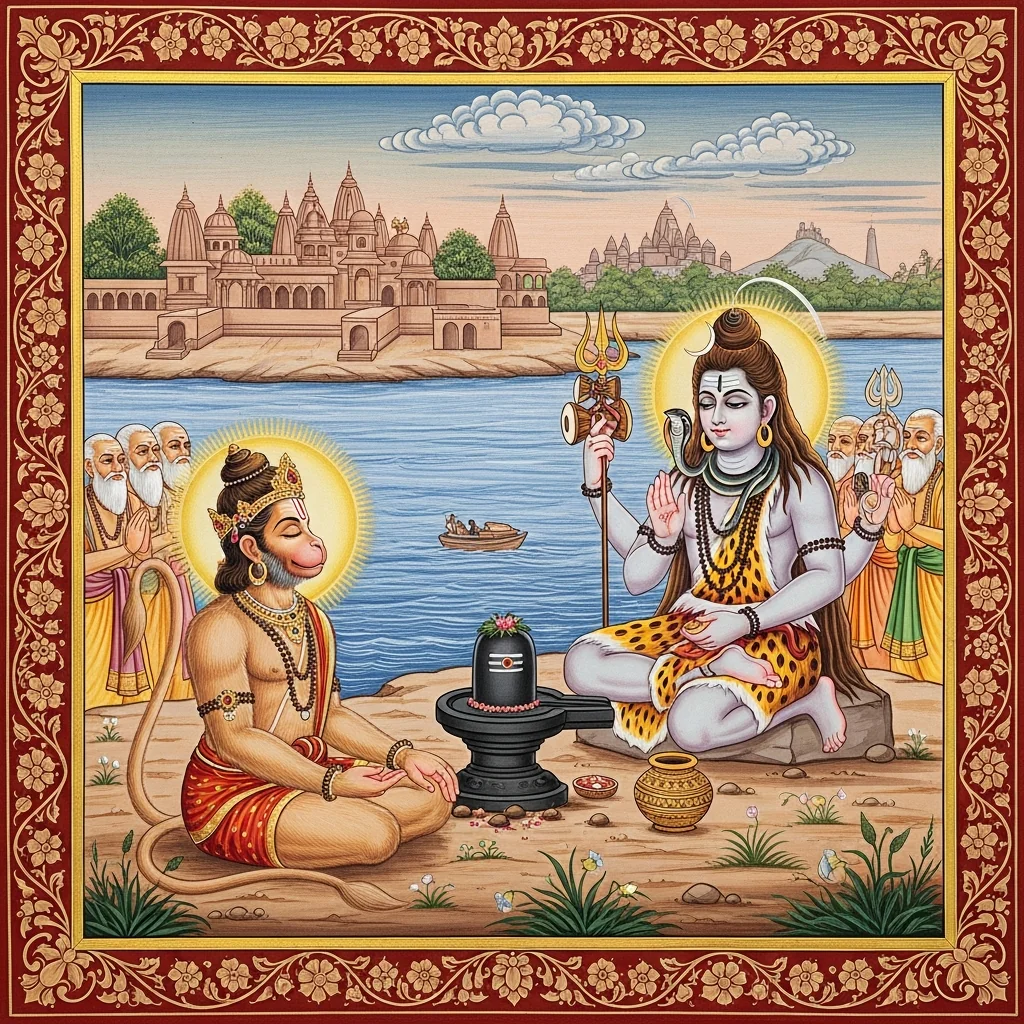
Chapter 84 is framed as an ancient remembrance by Mārkaṇḍeya within a Kailāsa setting where divine instruction is sought and bestowed. After Rāvaṇa’s fall and the destruction of the rākṣasas, Hanumān approaches Kailāsa but is first checked by Nandī, prompting a moral inquiry into the lingering taint of rākṣasa-slaying and its remedy through prescribed pilgrimage. Śiva names purifying rivers and sends Hanumān to a renowned tīrtha on the southern bank of the Revā near Somanātha, where sacred bathing and severe austerity dispel that darkness. Śiva embraces Hanumān, grants a boon, and establishes the place as Kapitīrtha, with the liṅga titled Hanūmanteśvara, declaring its power to remove sin, fulfill ancestral śrāddha, and multiply the fruit of gifts. The chapter then widens the tīrtha’s glory by recounting Rāma’s own Revā-side tapas (notably for twenty-four years), the installation of liṅgas by Rāma and Lakṣmaṇa, and the arising of Kumbheśvara (Kalākumbha) through a kumbha-water motif as sages gather tīrtha-waters. A detailed phalāśruti follows: the merits of Revā-snāna, liṅga-darśana (including a “triple-liṅga” viewing motif), śrāddha results measured in enduring uplift of ancestors, and injunctions on dāna—especially go-dāna and precious gifts—whose rewards are said to remain lasting. The chapter concludes by urging disciplined visitation to Kumbheśvara and associated liṅgas near Jyotiṣmatīpurī, presenting this tīrtha as a key pilgrimage node within the sacred landscape of Revākhaṇḍa.
Shlokas
Verse 1
श्रीमार्कण्डेय उवाच । अत्रैवोदाहरन्तीममितिहासं पुरातनम् । कैलासे पृच्छते भक्त्या षण्मुखाय शिवोदितम्
Śrī Mārkaṇḍeya said: Here itself I shall relate an ancient sacred history—spoken by Śiva—(when) on Kailāsa, with devotion, (someone) asked it of Ṣaṇmukha (Skanda).
Verse 2
ईश्वर उवाच । पूर्वं त्रेतायुगे स्कन्द हतो रामेण रावणः । चतुर्दश तदा कोट्यो निहता ब्रह्मरक्षसाम्
The Lord (Śiva) said: Formerly, in the Tretā Yuga, O Skanda, Rāvaṇa was slain by Rāma; and at that time fourteen crores of brahma-rākṣasas were also destroyed.
Verse 3
हतेषु तेषु वै तत्र रक्षणाय दिवौकसाम् । महानन्दस्तदा जातस्त्रिषु लोकेषु पुत्रक
When they were slain there, for the protection of the dwellers in heaven, a great joy then arose in the three worlds, dear son.
Verse 4
ततः सीतां समासाद्य समं वानरपुंगवैः । रामोऽप्ययोध्यामायातो भरतेन कृतोत्सवः । तस्मै समर्पयामास स राज्यं लक्ष्मणाग्रजः
Then, having regained Sītā together with the foremost of the Vānaras, Rāma too came to Ayodhyā, where Bharata had arranged celebrations. Lakṣmaṇa’s elder brother (Rāma) then entrusted the kingdom to him (Bharata).
Verse 5
तस्मिन्प्रशासति ततो राज्यं निहतकण्टकम् । कृतकार्योऽथ हनुमान्कैलासमगात्पुरा
When he was ruling then, the kingdom having been made free of thorns—troubles and enemies—Hanumān, his mission fulfilled, went to Kailāsa.
Verse 6
ततो नन्दी प्रतीहारो रुद्रांशमपि तं कपिम् । न च संगमयामास रुद्रेणाघौघहारिणा
Then Nandī, the gatekeeper, did not allow that monkey—though he was a portion of Rudra—to have an audience with Rudra, the remover of floods of sin.
Verse 7
तेन पृष्टस्तदा नन्दी किं मया पातकं कृतम् । येन रुद्रवपुः पुण्यं न पश्याम्यम्बिकान्वितम्
Questioned thus, Nandī said: “What sin have I committed, because of which I do not behold the holy form of Rudra accompanied by Ambikā?”
Verse 8
नन्द्युवाच । त्वयावतरणं चक्रे कपीन्द्रामरहेतुना । तथापि हि कृतं पापमुपभोगेन शाम्यति
Nandī said: “O lord of monkeys, your descent into the world was indeed for the sake of the gods. Even so, sin that has been done is exhausted only by undergoing its fruit.”
Verse 9
हनुमानुवाच । किं मयाकारि तत्पापं नन्दिन्देवार्थकारिणा । राक्षसाश्च हता दुष्टा विप्रयज्ञाङ्गघातिनः
Hanumān said: “O Nandī, what sin did I commit, I who acted for the sake of the gods? The wicked Rākṣasas were slain—those who destroy brāhmaṇas and the very limbs of sacrifice.”
Verse 10
ततस्तदालापकुतूहली हरो निजांशभाजं कपिमुग्रतेजसम् । उवाच द्वारान्तरदत्तदृष्टिः पुरःस्थितं प्रेक्ष्य कपीश्वरं पुनः
Then Hara (Śiva), curious about that exchange, spoke again—casting his gaze from within the doorway—after beholding the mighty lord of monkeys, fiercely radiant, who shared in his own divine portion, standing before him.
Verse 11
ईश्वर उवाच । गङ्गा गया कपे रेवा यमुना च सरस्वती । सर्वपापहरा नद्यस्तासु स्नानं समाचर
Īśvara (Śiva) said: “O monkey, Gaṅgā, Gayā, Revā, Yamunā, and Sarasvatī—these rivers remove all sins. Perform sacred bathing in them.”
Verse 12
नर्मदादक्षिणे कूले तीर्थं परमशोभनम् । सोमनाथसमीपस्थं तत्र त्वं गच्छ वानर
On the southern bank of the Narmadā is a supremely splendid sacred ford (tīrtha), situated near Somanātha. Go there, O Vānara.
Verse 13
तत्र स्नात्वा महापापं गमिष्यति ममाज्ञया । उत्पत्य वेगाद्धनुमाञ्छ्रीरेवादक्षिणे तटे
“Having bathed there, the great sin will depart by my command.” Then Hanumān, leaping swiftly, reached the auspicious southern bank of the Revā.
Verse 14
जगाम सुमहानादस्तपश्चक्रे सुदुष्करम् । तस्य वै तप्यमानस्य रक्षोवधकृतं तमः
With a mighty roar he went forth and performed exceedingly difficult tapas (austerities). As he practiced austerity, the darkness produced by the slaying of Rākṣasas began to be dispelled.
Verse 15
विलीनं पार्थ कालेन कियतेशप्रसादतः । ततो देवैः समं देवस्तत्तीर्थमगमद्धरः
O Pārtha, in time—by the grace of Īśa—that darkness dissolved away. Then Hara, the God, went to that tīrtha together with the gods.
Verse 16
कपिमालिङ्गयामास वरं तस्मै प्रदत्तवान् । अद्यप्रभृति ते तीर्थं भविष्यति न संशयः
He embraced the monkey and granted him a boon: “From today onward, this shall be your tīrtha—of this there is no doubt.”
Verse 17
कपितीर्थं ततो जातं तस्थौ तत्र स्वयं हरः । हनूमन्तेश्वरो नाम्ना सर्वहत्याहरस्तदा
From that event arose the sacred ford known as Kapitīrtha. There Śiva himself abided, famed by the name Hanūmanteśvara, and at that time he became the remover of even the gravest sins.
Verse 18
तत्र तीर्थे तु यः स्नात्वा भक्त्या लिङ्गं प्रपूजयेत् । सर्वपापानि नश्यन्ति हरस्य वचनं यथा
Whoever bathes at that tīrtha and, with devotion, worships the Śiva-liṅga—then all sins are destroyed, exactly as declared by Hara.
Verse 19
तत्रास्थीनि विलीयन्ते पिण्डदानेऽक्षया गतिः । यत्किंचिद्दीयते तत्र तद्धि कोटिगुणं भवेत्
There, even bones are said to dissolve; and by offering piṇḍa, one attains imperishable welfare for the departed. Whatever gift is given there becomes a millionfold in merit.
Verse 20
हनुमानप्ययोध्यायां रामं द्रष्टुमथागमत् । चकार कुशलप्रश्नं स्वस्वरूपं न्यवेदयत्
Hanumān too came to Ayodhyā to behold Rāma. He inquired after His welfare and then disclosed his own identity and true nature.
Verse 21
श्रीराम उवाच । कुर्वतो देवकार्यं ते मम कार्यं च कुर्वतः । ततोऽहमपि पापीयांस्तपस्तप्स्याम्यसंशयम्
Śrī Rāma said: “While you were accomplishing the work of the devas and fulfilling my mission as well, I must have become more burdened with sin; therefore, without doubt, I shall undertake austerity (tapas).”
Verse 22
तत्रैव दक्षिणे कूले रेवायाः पापहारिणि । चतुर्विंशतिवर्षाणि तपस्तेपेऽथ राघवः
Right there, on the southern bank of the sin-destroying Revā, Rāghava (Rāma) performed austerities for twenty-four years.
Verse 23
ज्योतिष्मतीपुरीसंस्थः श्रीरेवास्नानमाचरन् । तस्य शुश्रूषणं चक्रे लक्ष्मणोऽपि तदाज्ञया
Residing in the city of Jyotiṣmatī, he regularly performed the auspicious bathing rites in the Revā. By his command, Lakṣmaṇa too attended upon him in devoted service.
Verse 24
स्थापयामासतुर्लिङ्गे तौ तदा रामलक्ष्मणौ । प्रभावात्सत्यतपसो रेवातीरे महामती । निष्पापतां तदा वीरौ जग्मतू रामलक्ष्मणौ
Then Rāma and Lakṣmaṇa installed Śiva-liṅgas there. O wise one, by the power of their truthful austerity on the banks of the Revā, those heroic brothers attained freedom from sin.
Verse 25
ततस्तदा देवपुरोगमो हरो गतो हि वै पुण्यमुनीश्वरैः सह । आगत्य तीर्थं च वरं ददौ तदा निजां कलां तत्र विमुच्य तीर्थे
Then Hara (Śiva), preceded by the gods and accompanied by holy sages, came there. Arriving, he granted a boon and consecrated that place as an eminent tīrtha, releasing into that sacred ford a portion of his own divine potency.
Verse 26
मुनिभिः सर्वतीर्थानां क्षिप्तं कुम्भोदकं भुवि । एकस्थं लिङ्गनामाथ कलाकुम्भस्तथाभवत्
The sages poured upon the earth the water contained in jars—water gathered from all sacred tīrthas. In that single place arose a liṅga known as “Kalākumbha”.
Verse 27
कुम्भेश्वर इति ख्यातस्तदा देवगणार्चितः । रामोऽपि पूजयामास तल्लिङ्गं देवसेविवतम्
Thereupon that liṅga became renowned as “Kumbheśvara,” worshipped by the hosts of gods; and Rāma too adored that liṅga, ever attended and served by the Devas.
Verse 28
ततो वरं ददौ देवो रामकीर्त्यभिवृद्धये । चतुर्विंशतिमे वर्षे रामो निष्पापतां गतः
Then the Lord granted a boon for the increase of Rāma’s fame; and in the twenty-fourth year, Rāma attained a state of sinlessness.
Verse 29
यदा कन्यागतः पङ्गुर्गुरुणा सहितो भवेत् । तदेव देवयात्रेयमिति देवा जगुर्मुदा
“When Bṛhaspati (Jupiter, the ‘lame one’) enters Kanyā (Virgo) and is accompanied by the Preceptor (Guru), that very time is the season of divine pilgrimage”—thus the gods sang in joy.
Verse 30
यथा गोदावरीतीर्थे सर्वतीर्थफलं भवेत् । तथात्र रेवास्नानेन लिङ्गानां दर्शनैर्न्ःणाम्
Just as at the Godāvarī-tīrtha one gains the fruit of all sacred places, so here too: by bathing in the Revā (Narmadā) and by beholding the Liṅgas, people obtain that same merit.
Verse 31
करिष्यन्त्यत्र ये श्राद्धं पित्ःणां नर्मदातटे । कुम्भेश्वरसमीपस्थास्तत्फलं शृणु षण्मुख
Those who perform śrāddha for the Pitṛs here on the bank of the Narmadā, dwelling near Kumbheśvara—hear, O Ṣaṇmukha, the fruit they obtain.
Verse 32
यावन्तो रोमकूपाः स्युः शरीरे सर्वदेहिनाम् । तावद्वर्षप्रमाणेन पित्ःणामक्षया गतिः
For as many years as there are hair-pores upon the bodies of living beings, for that measure of years the Pitṛs attain imperishable progress and benefit.
Verse 33
पृथिव्यां देवताः सर्वाः सर्वतीर्थानि यानि तु । लभन्ते तत्फलं मर्त्या लिङ्गत्रयविलोकनात्
All the deities on earth and whatever holy places exist—mortals obtain the fruit of them all merely by beholding the three Liṅgas.
Verse 34
अपुत्रो लभते पुत्रं निर्धनो धनमाप्नुयात् । सरोगो मुच्यते रोगान्नात्र कार्या विचारणा
The childless gains a child, the poor attains wealth, and the diseased is freed from illness—here there is no need for doubt or deliberation.
Verse 35
सिंहराशिं गते जीवे यत्स्याद्गोदावरीफलम् । तद्द्वादशगुणं स्कन्द कुम्भेश्वरसमीपतः
When Jupiter enters Leo, whatever merit is gained at the Godāvarī—O Skanda—near Kumbheśvara, that very merit becomes twelvefold.
Verse 36
ये जानन्ति न पश्यन्ति कुम्भशम्भुमुमापतिम् । नर्मदादक्षिणे कूले तेषां जन्म निरर्थकम्
Those who know of Kumbhaśambhu, the Lord of Umā, yet do not behold Him on the southern bank of the Narmadā—their birth is fruitless.
Verse 37
यथा गोदावरीयात्रा कर्तव्या मुनिशासनात् । चतुर्विंशतिमे वर्षे तथेयं देवभाषितम्
Just as the pilgrimage to the Godāvarī must be undertaken according to the injunction of sages, so too this observance—declared by the gods—is to be performed in the twenty-fourth year.
Verse 38
यावच्चन्द्रश्च सूर्यश्च यावद्वै दिवि तारकः । तावत्तदक्षयं दानं रेवाकुम्भेश्वरान्तिके
As long as the moon and the sun endure, and as long as the stars remain in the sky, so long does that charity become imperishable when given near Revā–Kumbheśvara.
Verse 39
महादानानि देयानि तत्र लौकैर्विचक्षणैः । गोदानमत्र शंसन्ति सौवर्णं राजतं तथा
There, discerning people should offer great gifts. In that place, they especially commend the gift of a cow, and likewise gifts of gold and of silver.
Verse 40
यस्याः स्मरणमात्रेण नश्यते पापसञ्चयः । स्नानेन किं पुनः स्कन्द ब्रह्महत्यां व्यपोहति
Of that sacred Revā, by mere remembrance the heap of sins is destroyed. How much more, O Skanda, does bathing in her wash away even the sin of brahma-slaughter.
Verse 41
तत्र तीर्थे तु यः स्नात्वा श्राद्धं कुर्याद्युधिष्ठिर । एकोत्तरं कुलशतमुद्धरेच्छिवशासनात्
Whoever bathes at that tīrtha and then performs śrāddha, O Yudhiṣṭhira, delivers one hundred and one generations of his lineage—according to Śiva’s ordinance.
Verse 42
यानि कानि च तीर्थानि चासमुद्रसरांसि च । शिवलिङ्गार्चनस्येह कलां नार्हन्ति षोडशीम्
Whatever sacred fords there may be, and whatever lakes and waters—even up to the sea—they do not equal even a sixteenth part of the merit found here in the worship of Śiva’s liṅga.
Verse 43
एवं देवा वरं दत्त्वा हरीश्वरपुरोगमाः । स्वस्थानमगमन् पूर्वं मुक्त्वा तन्नाम चोत्तमम्
Thus the gods—led by Harīśvara—having granted the boon, returned to their own abodes, first proclaiming the excellent name of that tīrtha.
Verse 44
तीर्थस्यास्य वरं दत्त्वा स रामो लक्ष्मणाग्रजः । अयोध्यां प्रविवेशासौ निष्पापो नर्मदाजलात्
Having bestowed a boon upon this sacred tīrtha, Rāma—the elder brother of Lakṣmaṇa—entered Ayodhyā, freed from sin through the waters of the Narmadā.
Verse 45
सौवर्णीं च ततः कृत्वा सीतां यज्ञं चकार सः । अनुमन्त्र्य मुनींल्लोकान्देवताश्च निजं कुलम्
Then, having fashioned a golden Sītā, he performed a sacrifice, after duly inviting the sages, the people, the deities, and his own kinsmen.
Verse 46
पुरा त्रेतायुगे जातं तत्तीर्थं स्कन्दनामकम् । नियमेन ततो लोकैः कर्तव्यं लिङ्गदर्शनम्
In ancient times, in the Tretā Yuga, that sacred ford arose, bearing the name ‘Skanda.’ Therefore people should, with proper discipline, undertake the darśana of the liṅga there.
Verse 47
तावत्पापानि देहेषु महापातकजान्यपि । यावन्न प्रेक्षते जन्तुस्तत्तीर्थं देवसेवितम्
So long do sins remain lodged in embodied beings—even those born of the great transgressions—until the creature beholds that sacred ford, served and honored by the gods.
Verse 48
ते धन्यास्ते महात्मानस्तेषां जन्म सुजीवितम् । ज्योतिष्मतीपुरीसंस्थं ये द्रक्ष्यन्ति हरं परम्
Blessed indeed are they, those great-souled ones; their birth is well-lived—who shall behold the Supreme Hara abiding in the city of Jyotiṣmatī.
Verse 49
तस्मान्मोहं परित्यज्य जनैर्गन्तव्यमादरात् । तीर्थाशेषफलावाप्त्यै तीर्थं कुम्भेश्वराह्वयम्
Therefore, casting off delusion, people should go with reverence to the sacred ford called Kumbheśvara, in order to obtain the complete fruit of all tīrthas.
Verse 50
मार्कण्डेय उवाच । श्रुत्वेति शम्भुवचसा स षडाननोऽथ नत्वा पितुः पदयुगाम्बुजमादरेण । सम्प्राप्य दक्षिणतटं गिरिशस्रवन्त्याः कीशाग्र्यरामकलशाख्यशिवान् ददर्श
Mārkaṇḍeya said: Thus hearing the words of Śambhu, the Six-faced One bowed in reverence to his father’s lotus-like pair of feet. Reaching the southern bank of the river called Giriśasravantī, he beheld the Śivas known as Kīśāgrya, Rāma, and Kalaśa.
Verse 84
। अध्याय
Chapter (marker).