Adhyaya 232
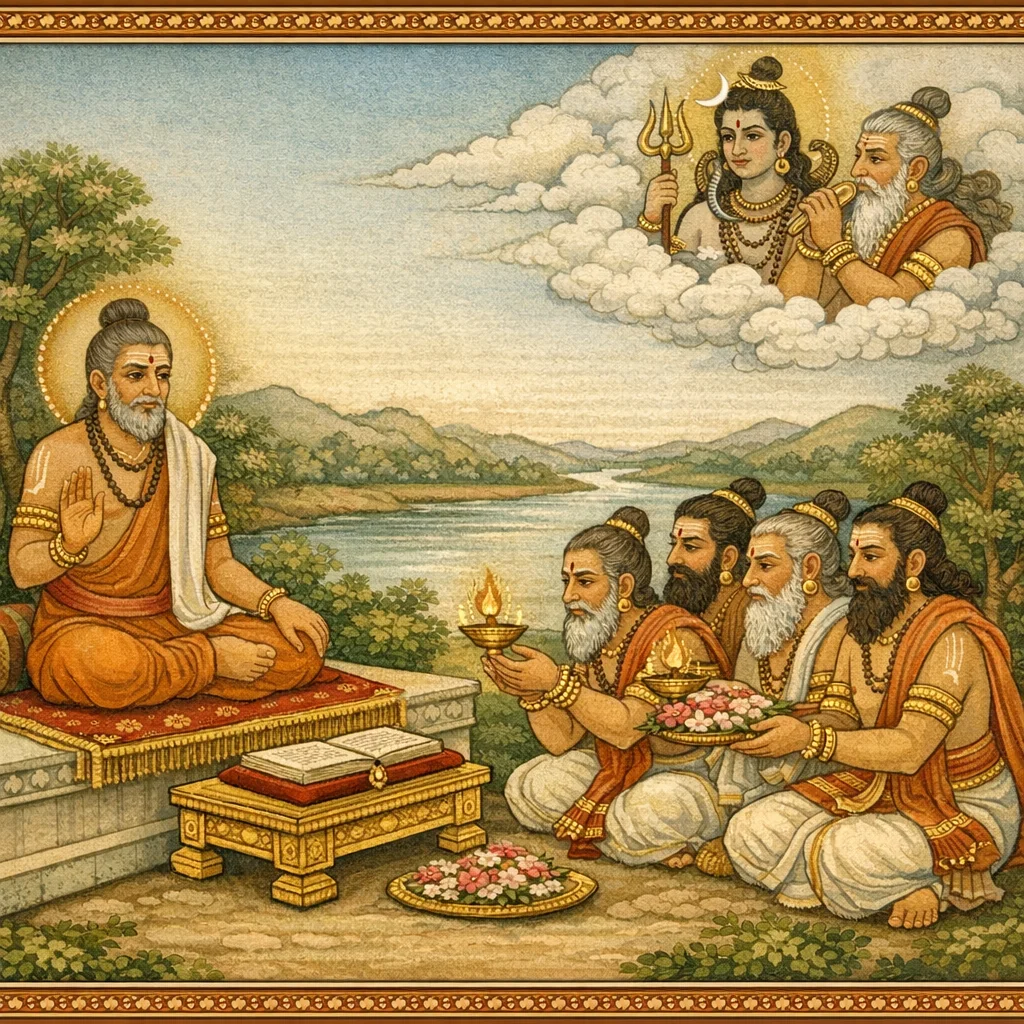
This adhyāya formally concludes the Revā/Narmadā-centered sacred geography in the Avanti Khaṇḍa. Sūta addresses the assembled brāhmaṇas, stating that the Revā-māhātmya has been related exactly as Mārkaṇḍeya earlier taught it to Pāṇḍu’s son, and that the clusters of tīrthas have been described in proper sequence. It proclaims the unsurpassed purity and sin-destroying power of both Revā’s waters and her sacred narrative, presenting the river as a Śaiva emanation established for the welfare of the world. Remembrance, hearing, recitation, and service of Revā are praised as especially potent in the Kali age. A major phalaśruti follows: listening to or reciting this text yields fruits surpassing Vedic study and prolonged sacrifices, and equals the merits of renowned tīrthas such as Kurukṣetra, Prayāga, and Vārāṇasī. The chapter also enjoins reverence for the written work—keeping the book at home and honoring the reciter and the manuscript with offerings—promising prosperity, social well-being, and nearness to Śiva-loka after death. Even grievous transgressions are said to be mitigated through sustained listening. It ends by reaffirming the transmission lineage from Śiva to Vāyu to the sages, and now through Sūta’s narration.
Shlokas
Verse 1
सूत उवाच । इति वः कथितं विप्रा रेवामाहात्म्यमुत्तमम् । यथोपदिष्टं पार्थाय मार्कण्डेयेन वै पुरा
Sūta said: Thus, O brāhmaṇas, the supreme glory of the Revā has been related to you—just as it was formerly taught to Pārtha by Mārkaṇḍeya.
Verse 2
तथा तीर्थकदम्बाश्च तेषु तीर्थविशेषतः । प्राधान्येन मया ख्याता यथासङ्ख्यं यथाक्रमम्
Likewise, among those clusters of sacred fords, the distinctive tīrthas have been proclaimed by me according to their primacy—each in due count and in proper sequence.
Verse 3
एतत्पवित्रमतुलं ह्येतत्पापहरं परम् । नर्मदाचरितं पुण्यं माहात्म्यं मुनिभाषितम्
This account is supremely purifying and incomparable; it is the highest remover of sin. This holy narrative of Narmadā has been spoken by sages.
Verse 4
सप्तकल्पानुगो विप्रो नर्मदायां मुनीश्वराः । मृकण्डतनयो धीमान्परमार्थविदुत्तमः
O lords among sages, there was a brāhmaṇa who had endured through seven kalpas on the Narmadā—Mṛkaṇḍa’s son, the wise one, foremost among knowers of the highest truth.
Verse 5
संसेव्य सर्वतीर्थानि नदीः सर्वाश्च वै पुरा । बहुकल्पस्मरां रेवामालक्ष्य शिवदेहजाम्
Having once frequented all tīrthas and all rivers, and recognizing Revā—remembered through many kalpas—as born from Śiva’s own body, he turned his mind toward her.
Verse 6
मे कलेति च शर्वोक्तां शरणं शर्वजां ययौ । अजराममरां देवीं दैत्यध्वंसकरीं पराम्
“In the Kali age, she is Mine,” thus declared Śarva (Śiva); therefore he sought refuge in the Goddess born of Śiva—the supreme Devī, ageless and deathless, the destroyer of the daityas.
Verse 7
महाविभवसंयुक्तां भवघ्नीं भवजाह्नवीम् । तस्यामाबध्य सत्प्रेम जातः सोऽप्यजरामरः
Endowed with great majesty, the slayer of worldly becoming, the “Jāhnavī of Bhava (Śiva)”—fixing true love upon her, he too became ageless and deathless in spiritual attainment.
Verse 8
षष्टितीर्थसहस्राणि षष्टिकोट्यश्च सत्तमाः । व्यवस्थितानि रेवायास्तीरयुग्मे पदे पदे
Sixty thousand tīrthas and sixty crores besides, O best among the virtuous, are established along Revā—on both banks, at every step.
Verse 9
सारितः परितः सन्ति सतीर्थास्तु सहस्रशः । न तुलां यान्ति रेवायास्ताश्च मन्ये मुनीश्वराः
Rivers all around indeed exist, with their tīrthas in the thousands; yet they do not attain equality with Revā—so I deem, O lords among sages.
Verse 10
एतद्वः कथितं सर्वं यत्पृष्टमखिलं द्विजाः । यन्महेशमुखाच्छ्रुत्वा वायुराह ऋषीन्प्रति
Thus, O twice-born ones, all that you asked—entirely—has been told to you: what Vāyu spoke to the sages after hearing it from the mouth of Maheśa (Śiva).
Verse 11
तद्वन्मृकण्डतनयोऽप्यनुभूयाखिलां नदीम् । सतीर्थां पदशः प्राह पाण्डुपुत्राय पावनीम्
In the same manner, Mṛkaṇḍa’s son too, having personally experienced the entire river together with her tīrthas step by step, described that purifier (Revā) to a son of Pāṇḍu.
Verse 12
एतच्च कथितं सर्वं संक्षेपेण द्विजोत्तमाः । नर्मदाचरितं पुण्यं त्रिषु लोकेषु दुर्लभम्
Thus, O best of the twice-born, all this has been told in brief—the sacred account of Narmadā, a meritorious glory that is rare to obtain in all the three worlds.
Verse 13
किमन्यैः सरितां तोयैः सेवितैस्तु सहस्रशः । यदि संसेव्यते तोयं रेवायाः पापनाशनम्
What need is there of resorting to the waters of other rivers, even thousands of times, if one partakes of and serves the water of Revā, the destroyer of sins?
Verse 14
मेकलाजलसंसेवी मुक्तिमाप्नोति शाश्वतीम्
One who reverently resorts to the waters of Mekalā attains everlasting liberation (mokṣa).
Verse 15
यथा यथा भजेन्मर्त्यो यद्यदिच्छति तीर्थगः । तत्तदाप्नोति नियतं श्रद्धयाश्रद्धयापि च
In whatever way a mortal worships at a tīrtha, and whatever he desires there—he surely attains that very result, whether with faith or even without faith.
Verse 16
इदं ब्रह्मा हरिरिदमिदं साक्षात्परो हरः । इदं ब्रह्म निराकारं कैवल्यं नर्मदाजलम्
This is Brahmā; this is Hari; this is directly the Supreme Hara. This is the formless Brahman—Narmadā’s water is liberation itself (kaivalya).
Verse 17
तावद्गर्जन्ति तीर्थानि नद्यो हृदयफलप्रदाः । यावन्न स्मर्यते रेवा सेवाहेवा कलौ नरैः
So long do other tīrthas and rivers roar, claiming to grant the heart’s desires—until Revā is remembered by people in the Kali age, through service and invocation.
Verse 18
ध्रुवं लोके हितार्थाय शिवेन स्वशरीरतः । शक्तिः कापि सरिद्रूपा रेवेयमवतारिता
Surely, for the welfare of the world, Śiva caused a certain divine Power to descend from his own body in the form of a river—this Revā.
Verse 19
तावद्गर्जन्ति यज्ञाश्च वनक्षेत्रादयो भृशम् । यावन्न नर्मदानामकीर्तनं क्रियते कलौ
So long do sacrifices and famed holy places—forests, sacred fields, and the rest—proclaim their greatness loudly, until the chanting of Narmadā’s name is performed in the Kali age.
Verse 20
गरिमा गाण्यते तावत्तपोदानव्रतादिषु । नरैर्वा प्राप्यते यावद्भुवि भर्गभवा धुनी
The greatness of austerity, charity, vows, and the like is sung—only until, upon the earth, people attain the sacred river-stream born of Bharga (Śiva).
Verse 21
ये वसन्त्युत्तरे कूले रुद्रस्यानुचरा हि ते । वसन्ति याम्यतीरे ये लोकं ते यान्ति वैष्णवम्
Those who dwell on the northern bank are indeed attendants of Rudra; and those who dwell on the southern bank go to the realm of Viṣṇu.
Verse 22
धन्यास्ते देशवर्यास्ते येषु देशेषु नर्मदा । नरकान्तकरी शश्वत्संश्रिता शर्वनिर्मिता
Blessed indeed are those lands—best among regions—in which the Narmadā flows: the ever-abiding river fashioned by Śarva (Śiva), the bringer of an end to hellish destinies.
Verse 23
कृतपुण्याश्च ते लोकाः शोकाय न भवन्ति ते । ये पिबन्ति जलं पुण्यं पार्वतीपतिसिन्धुजम्
Those people already possess merit; they do not become fit for sorrow—those who drink the holy water born from the river of the Lord of Pārvatī (Śiva).
Verse 24
इदं पवित्रमतुलं रेवायाश्चरितं द्विजाः । शृणोति यः कीर्तयते मुच्यते सर्वपातकः
O twice-born ones, this is the unequalled and purifying account of Revā; whoever hears it or proclaims it is released from every sin.
Verse 25
यत्फलं सर्ववेदैश्च सषडङ्गपदक्रमैः । श्रुतैश्च पठितैस्तस्मात्फलमष्टगुणं भवेत्
Whatever merit arises from hearing and studying all the Vedas, together with the six auxiliaries and their ordered recitation, that merit becomes eightfold.
Verse 26
सत्रयाजी फलं यच्च लभते द्वादशाब्दिकम् । श्रुत्वा सकृच्च रेवायाश्चरितं तत्फलं लभेत्
Whatever fruit a performer of sattrayāga gains over twelve years—by hearing the account of Revā even once, one attains that very fruit.
Verse 27
सर्वतीर्थावगाहाच्च यत्फलं सागरादिषु । सकृच्छ्रुत्वा च माहात्म्यं रेवायास्तत्फलं लभेत्
Whatever fruit comes from bathing at all tīrthas—at the ocean and other sacred waters—by hearing the greatness of Revā even once, one gains that same fruit.
Verse 28
एतद्धर्म्यमुपाख्यानं सर्वशास्त्रेष्वनुत्तमम् । देशे वा मण्डले वापि नगरे ग्राममध्यतः
This righteous sacred narrative, unsurpassed among all the śāstras—whether in a land, a province, a city, or in the midst of a village—wherever it abides, it sanctifies.
Verse 29
गृहे वा तिष्ठते यस्य लिखितं सार्ववार्णिकम् । स ब्रह्मा स शिवः साक्षात्स च देवो जनार्दनः
In whose home this text abides—written for all classes of people—such a one is to be revered: he is Brahmā, he is Śiva in person, and he is also the Lord Janārdana.
Verse 30
धर्मार्थकाममोक्षाणां मार्गेऽयं देवसेवितः । गुरूणां च गुरुः शास्त्रं परमं सिद्धिकारणम्
This teaching is the path to dharma, artha, kāma, and mokṣa—served by the devas. This śāstra is the guru of gurus, the supreme cause of spiritual accomplishment (siddhi).
Verse 31
यश्चेदं शृणुयान्नित्यं पुराणं देवभाषितम् । ब्राह्मणो वेदवान्भूयात्क्षत्रियो विजयी भवेत्
And whoever daily hears this Purāṇa spoken by the devas—a brāhmaṇa becomes endowed with Vedic wisdom, and a kṣatriya becomes victorious.
Verse 32
धनाढ्यो जायते वैश्यः शूद्रो वै धर्मभाग्भवेत्
A Vaiśya is born wealthy, and even a Śūdra becomes a rightful participant in dharma—worthy of merit and sacred duty.
Verse 33
सौभाग्यसन्ततिं नारी श्रुत्वैतत्समवाप्नुयात् । श्रियं सौख्यं स्वर्गवासं जन्म चैवोत्तमे कुले
A woman, by hearing this, attains good fortune and worthy progeny; she gains prosperity and happiness, residence in heaven, and birth again in an excellent family.
Verse 34
रसभेदी कृतघ्नश्च स्वामिध्रुङ्मित्रवञ्चकः । गोघ्नश्च गरदश्चैव कन्याविक्रयकारकः
Even one who betrays trust, is ungrateful, deceives master and friend, kills cows, administers poison, or traffics in the selling of a maiden—
Verse 35
ब्रह्मघ्नश्च सुरापी च स्तेयी च गुरुतल्पगः । नर्मदाचरितं शृण्वंस्तामब्दं योऽभिषेवते
—even a slayer of a brāhmaṇa, a drinker of liquor, a thief, or one guilty of violating the guru’s bed: whoever, while listening to the Narmadā narrative, observes it for a full year—
Verse 36
सर्वपापविनिर्मुक्तो जायते नात्र संशयः । पाकभेदी वृथापाकी देवब्राह्मणनिन्दकः
—he becomes freed from all sins; of this there is no doubt. Even one who spoils others’ cooking, cooks pointlessly (wasting food), or reviles the gods and brāhmaṇas—
Verse 37
परीवादी गुरोः पित्रोः साधूनां नृपतेस्तथा । तेऽपि श्रुत्वा च पापेभ्यो मुच्यन्ते नात्र संशयः
Even one who slanders the guru, the father, holy persons, and likewise the king—by hearing this, they too are released from sins; of this there is no doubt.
Verse 38
ये पुनर्भावितात्मानः शस्त्रं शृण्वन्ति नित्यशः । पूजयन्ति च तच्छास्त्रं नार्मदं वस्त्रभूषणैः
But those whose minds are purified—who listen daily to this sacred teaching, and who worship that Narmadā-śāstra with garments and ornaments—
Verse 39
पुष्पैः फलैश्चन्दनाद्यैर्भोजनैर्विविधैरपि । शास्त्रेऽस्मिन्पूजिते देवाः पूजिता गुरवस्तथा
With flowers, fruits, sandal and the like, and even various foods—when this scripture is worshiped, the gods are worshiped, and the gurus likewise are worshiped.
Verse 40
इह लोके परे चैव नात्र कार्या विचारणा । तस्मात्सर्वप्रयत्नेन गन्धवस्त्रादिभूषणैः
In this world and in the world beyond as well, there is no need for doubt or deliberation about this. Therefore, with every effort, with perfumes, garments, and ornaments—
Verse 41
पूजयेत्परया भक्त्या वाचकं शास्त्रमेव च । वेदपाठैश्च यत्पुण्यमग्निहोत्रैश्च पालितैः
—one should, with supreme devotion, honor the reciter and the scripture itself. Whatever merit arises from Vedic recitation and from duly maintained agnihotra rites—
Verse 42
तत्फलं समवाप्नोति नर्मदाचरिते शुभे । कुरुक्षेत्रे च यत्पुण्यं प्रभासे पुष्करे तथा
—one attains that very fruit through this auspicious narrative of the Narmadā, equal to the sacred merit gained at Kurukṣetra, at Prabhāsa, and likewise at Puṣkara.
Verse 43
रुद्रावर्ते गयायां च वाराणस्यां विशेषतः । गङ्गाद्वारे प्रयागे च गङ्गासागरसङ्गमे
—at Rudrāvarta, at Gayā, and especially at Vārāṇasī; at Gaṅgādvāra (Haridvāra), at Prayāga, and at the confluence of the Gaṅgā and the ocean (Gaṅgā-sāgara).
Verse 44
एवमादिषु तीर्थेषु यत्पुण्यं जायते नृणाम् । नर्मदाचरितं श्रुत्वा तत्पुण्यं सकलं लभेत्
Whatever merit arises for people at such and other holy tīrthas—by hearing the sacred account of the Narmadā, one gains all of that merit in full.
Verse 45
आदिमध्यावसानेषु नर्मदाचरितं शुभम् । यः शृणोति नरो भक्त्या शृणुध्वं तत्फलं महत्
This auspicious Narmadā narrative—at its beginning, middle, and conclusion—whoever hears it with devotion, hear now the great fruit that arises from it.
Verse 46
समाप्य शिवसंस्थानं देवकन्यासमावृतः । रुद्रस्यानुचरो भूत्वा शिवेन सह मोदते
Having reached the abode and station of Śiva, surrounded by celestial maidens, he becomes an attendant of Rudra and rejoices together with Śiva.
Verse 47
धर्माख्यानमिदं पुण्यं सर्वाख्यानेष्वनुत्तमम् । गृहेऽपि पठ्यते यस्य चतुर्वर्णस्य सत्तमाः
This holy dharma narrative is supremely excellent among all accounts. In the home where it is recited, the best among the four varṇas are present and blessed.
Verse 48
धन्यं तस्य गृहं मन्ये गृहस्थं चापि तत्कुलम् । पुस्तकं पूजयेद्यस्तु नर्मदाचरितस्य तु
Blessed, I deem, is that house—and blessed the household life and the entire family—of the one who worships the book of the Narmadā’s sacred narrative.
Verse 49
नर्मदा पूजिता तेन भगवांश्च महेश्वरः । वाचके पूजिते तद्वद्देवाश्च ऋषयोऽर्चिताः
By him the Narmadā is worshiped, and the Blessed Great Lord, Maheśvara, as well. When the reciter is honored, likewise the devas and the ṛṣis are worshiped.
Verse 50
लेखयित्वा च सकलं रेवाचरितमुत्तमम् । भूषणं सर्वशास्त्राणां यो ददाति द्विजन्मने
And whoever has the entire excellent Revā-carita written out and gives it to a twice-born—an ornament among all the śāstras—
Verse 51
नर्मदासर्वतीर्थेषु स्नानदानेन यत्फलम् । तत्फलं समवाप्नोति स नरो नात्र संशयः
Whatever fruit is gained by bathing and giving charity at all the tīrthas of the Narmadā—he attains that very fruit; of this there is no doubt.
Verse 52
एतत्पुराणं रुद्रोक्तं महापुण्यफलप्रदम् । स्वर्गदं पुत्रदं धन्यं यशस्यं कीर्त्तिवर्धनम्
This Purāṇa, spoken by Rudra, bestows the fruit of great merit. It grants heaven, grants progeny, brings auspiciousness, confers fame, and increases one’s renown.
Verse 53
धर्म्यमायुष्यमतुलं दुःखदुःस्वप्ननाशनम् । पठतां शृण्वतां चापि सर्वकामार्थसिद्धिदम्
It is righteous, life-enhancing, and incomparable; it destroys sorrow and evil dreams. For those who read it and those who hear it, it grants the fulfillment of all desired aims.
Verse 54
यत्प्रदत्तमिदं पुण्यं पुराणं वाच्यते द्विजैः । शिवलोके स्थितिस्तस्य पुराणाक्षरवत्सरी
When this holy Purāṇa is bestowed as a gift and is recited by the twice-born, the giver attains abiding in Śiva’s world—lasting for as many years as there are syllables in the Purāṇa.
Verse 55
इति निगदितमेतन्नर्मदायाश्चरित्रं पवनगदितमग्र्यं शर्ववक्त्रादवाप्य । त्रिभुवनजनवन्द्यं त्वेतदादौ मुनीनां कुलपतिपुरतस्तत्सूतमुख्येन साधु
Thus has this noble account of the Narmadā been declared—first spoken by Pavana and received from the mouth of Śarva (Śiva). Revered by the beings of the three worlds, it was rightly proclaimed at the beginning before the sages, in the presence of their chief, by that foremost of sūtas.