Adhyaya 21
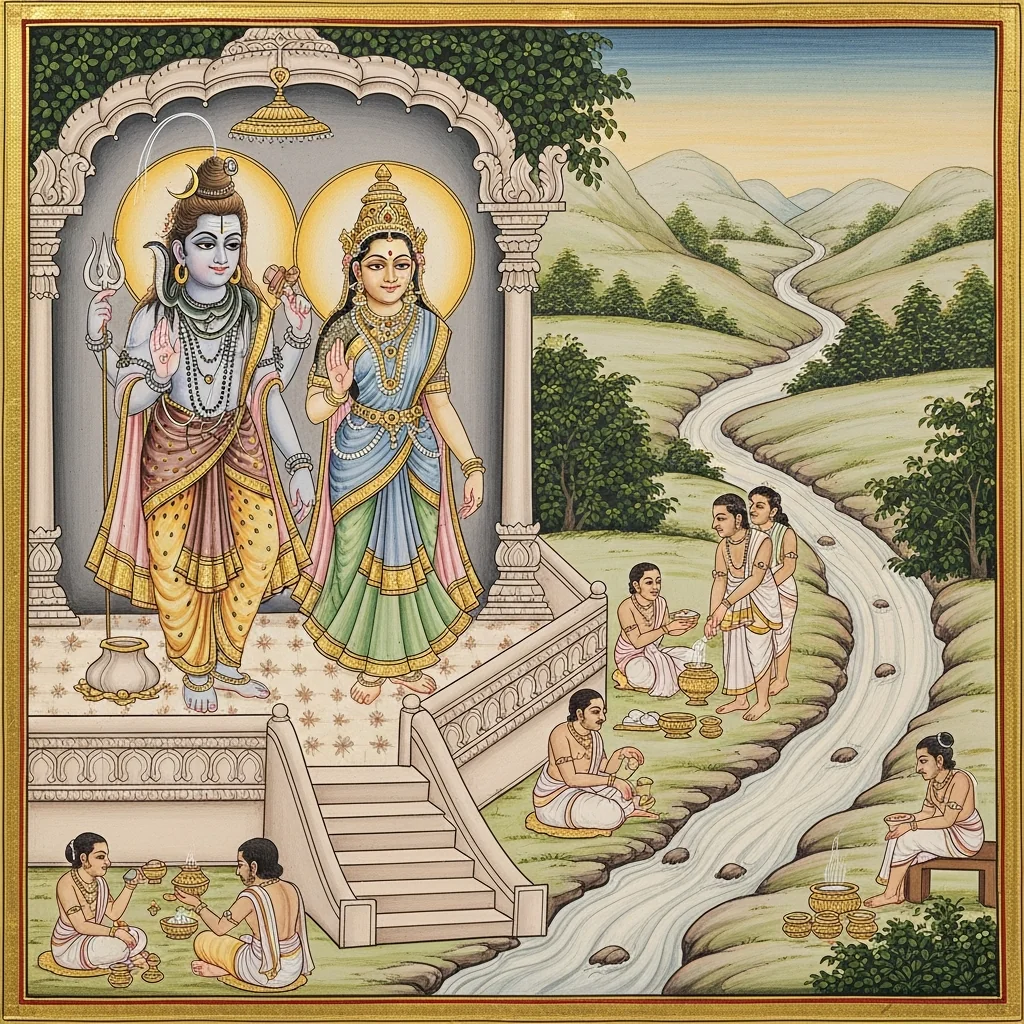
This chapter unfolds as a theological question-and-answer between Yudhiṣṭhira and the sage Mārkaṇḍeya. It proclaims the unrivaled purifying power of the Revā/Narmadā, contrasting holiness tied to particular locales (as with the Gaṅgā at specific spots) with the Revā’s sanctity everywhere. It then portrays the sacred landscape around Amarakantaka as a siddhi-kṣetra visited by devas, gandharvas, and ṛṣis, where tīrthas crowd both banks in near-inexhaustible abundance. A catalog-like section names prominent sites on the northern and southern banks—Charukā-saṅgama, Charukeśvara, Dārukeśvara, Vyatīpāteśvara, Pātāleśvara, Koṭiyajña, and clusters of liṅgas near Amareśvara; also Kedāra-tīrtha, Brahmeśvara, Rudrāṣṭaka, Sāvitra, and Soma-tīrtha. The chapter prescribes disciplined bathing, fasting, brahmacarya, and pitṛ-kriyā (tarpaṇa with tilodaka and piṇḍa offerings), detailing the resulting merit: extended heavenly enjoyment and auspicious rebirth. It further declares that rites performed there become “koṭi-guṇa,” multiplied by Īśvara’s grace, and that Narmadā’s salvific reach extends even to trees and animals touched by its waters; other sacred waters such as Viśalyā are also mentioned. The closing origin tale explains Kapilā’s birth: while Śiva sported in the Narmadā with Dākṣāyaṇī (Pārvatī), water wrung from her bathing garment became the Kapilā River, establishing its name, nature, and extraordinary puṇya.
Shlokas
Verse 1
युधिष्ठिर उवाच । श्रुतं मे विविधाश्चर्यं त्वत्प्रसादाद्द्विजोत्तम । भूयश्च श्रोतुमिच्छामि तन्मे कथय सुव्रत
Yudhiṣṭhira said: “By your grace, O best of Brahmins, I have heard many wondrous matters. I wish to hear more—therefore tell me, O you of excellent vow.”
Verse 2
कथमेषा नदी पुण्या सर्वनदीषु चोत्तमा । नर्मदा नाम विख्याता भूयो मे कथयानघ
“How is this river so holy, and the foremost among all rivers—she who is famed by the name ‘Narmadā’? O sinless one, tell me again in fuller detail.”
Verse 3
श्रीमार्कण्डेय उवाच । नर्मदा सरितां श्रेष्ठा सर्वपापप्रणाशिनी । तारयेत्सर्वभूतानि स्थावराणि चराणि च
Śrī Mārkaṇḍeya said: “Narmadā is the best of rivers, the destroyer of all sins. She carries across all beings—both the unmoving and the moving.”
Verse 4
नर्मदायास्तु माहात्म्यं यत्पूर्वेण मया श्रुतम् । तत्तेऽहं सम्प्रवक्ष्यामि शृणुष्वैकमना नृप
“The greatness of the Narmadā that I heard long ago—I shall now declare that to you. Listen with a single-pointed mind, O king.”
Verse 5
गङ्गा कनखले पुण्या कुरुक्षेत्रे सरस्वती । ग्रामे वा यदि वारण्ये पुण्या सर्वत्र नर्मदा
Gaṅgā is holy at Kanakhala; Sarasvatī is holy at Kurukṣetra. Yet whether in village or forest, Narmadā is holy everywhere.
Verse 6
त्रिभिः सारस्वतं तोयं सप्ताहेन तु यामुनम् । सद्यः पुनाति गाङ्गेयं दर्शनादेव नार्मदम्
Sarasvatī’s water purifies in three days, and Yamunā’s in seven. Gaṅgā’s water purifies at once; but Narmadā purifies merely by being seen.
Verse 7
कलिङ्गदेशात्पश्चार्धे पर्वतेऽमरकण्टके । पुण्या च त्रिषु लोकेषु रमणीया पदे पदे
To the west of the land of Kaliṅga lies the mountain called Amarakantaka. There she is holy in all the three worlds, and delightful at every step.
Verse 8
तत्र देवाश्च गन्धर्वा ऋषयश्च तपोधनाः । तपस्तप्त्वा महाराज सिद्धिं परमिकां गताः
There, gods and Gandharvas, and sages rich in austerity, performed penance; and having done so, O great king, they attained the highest perfection.
Verse 9
तत्र स्नात्वा नरो राजन्नियमस्थो जितेन्द्रियः । उपोष्य रजनीमेकां कुलानां तारयेच्छतम्
Having bathed there, O king, a man steadfast in observances and with senses conquered, fasting for a single night, would deliver a hundred generations of his lineage.
Verse 10
सिद्धिक्षेत्रं परं तात पर्वतो ह्यमरंकटः । सर्वदेवाश्रितो यस्मादृषिभिः परिसेवितः
That mountain Amarakantaka, dear one, is a supreme kṣetra of siddhi, for all the devas resort to it, and the ṛṣis diligently serve it.
Verse 11
सिद्धविद्याधरा भूतगन्धर्वाः स्थानमुत्तमम् । दृश्यादृश्याश्च राजेन्द्र सेवन्ते सिद्धिकाङ्क्षिणः
Siddhas, Vidyādharas, Bhūtas, and Gandharvas regard it as an excellent abode. Visible and invisible beings alike, O lord of kings, resort there, seeking siddhi.
Verse 12
अहं च परमं स्थानं ततः प्रभृति संश्रितः । अत्र प्रणवरूपो वै स्थाने तिष्ठत्युमापतिः
And I too, from that time onward, have taken refuge in this supreme abode. Here, in this very place, Umāpati (Śiva) remains established in the form of the sacred Praṇava, Oṃ.
Verse 13
श्रीकण्ठः सगणः सर्वभूतसङ्घैर्निषेवितः । अस्माद्गिरिवराद्भूप वक्ष्ये तीर्थस्य विस्तरम्
Śrīkaṇṭha (Śiva), together with his gaṇas, is attended by multitudes of beings. O King, from this excellent mountain I shall explain the full expanse of the sacred tīrtha.
Verse 14
यानि सन्तीह तीर्थानि पुण्यानि नृपसत्तम । यानि यानीह तीर्थानि नर्मदायास्तटद्वये
Whatever tīrthas are found here—holy and bestowing puṇya, O best of kings—whatever tīrthas exist here on both banks of the Narmadā…
Verse 15
न तेषां विस्तरं वक्तुं शक्तो ब्रह्मापि भूपते । योजनानां शतं साग्रं श्रूयते सरिदुत्तमा
O King, even Brahmā is not able to fully describe their vastness. It is heard that the most excellent of rivers extends a little more than a hundred yojanas.
Verse 16
विस्तरेण तु राजेन्द्र अर्धयोजनमायता । षष्टितीर्थसहस्राणि षष्टिकोट्यस्तथैव च
But in breadth, O lord of kings, it extends to half a yojana. There are sixty thousand tīrthas—and likewise sixty crores as well.
Verse 17
पर्वतादुदधिं यावदुभे कूले न संशयः
From the mountains up to the ocean—on both banks, without doubt.
Verse 18
सप्तषष्टिसहस्राणि सप्तषष्टिशतानि च । सप्तषष्टिस्तथा कोट्यो वायुस्तीर्थानि चाब्रवीत्
Sixty-seven thousand, and sixty-seven hundreds too; and likewise sixty-seven crores—thus Vāyu declared the tīrthas.
Verse 19
परं कृतयुगे तानि यान्ति प्रत्यक्षतां नृप । पश्यन्ति मानवाः सर्वे सततं धर्मबुद्धयः
But in the Kṛta Yuga, O King, those (tīrthas) become directly manifest. All people—ever endowed with a dharmic mind—behold them continually.
Verse 20
यथायथा कलिर्घोरो वर्तते दारुणो नृप । तथातथाल्पतां यान्ति हीनसत्त्वा यतो नराः
As the dreadful Kali age advances in its harshness, O King, so too do people—because their inner strength wanes—sink into ever greater littleness of capacity and merit.
Verse 21
अध्याय
Chapter (Adhyāya).
Verse 22
श्रेष्ठं दारुवनं तत्र चरुकासंगमः शुभः । उत्तरे नर्मदायास्तु चरुकेश्वरमुत्तमम्
There is found the supremely excellent Daruvana, and the auspicious confluence called Carukā-saṅgama. On the northern bank of the Narmadā stands the most exalted shrine of Carukeśvara.
Verse 23
दारुकेश्वरतीर्थं च व्यतीपातेश्वरं तथा । पातालेश्वरतीर्थं च कोटियज्ञं तथैव च
There too are the tīrtha of Dārukeśvara, and likewise Vyatīpāteśvara; the tīrtha of Pātāleśvara as well, and also the sacred place known as Koṭiyajña.
Verse 24
इति चैवोत्तरे कूले रेवाया नृपसत्तम । अमरेश्वरपार्श्वे च लिङ्गान्यष्टोत्तरं शतम्
Thus indeed, on the northern bank of the Revā, O best of kings, near Amareśvara there are one hundred and eight (108) Śiva-liṅgas.
Verse 25
वरुणेश्वरमुख्यानि सर्वपापहराणि च
Foremost among them is Varuṇeśvara; and all these shrines are destroyers of every sin.
Verse 26
मान्धातृपुरपार्श्वे च सिद्धेश्वरयमेश्वरौ । ओङ्कारात्पूर्वभागे च केदारं तीर्थमुत्तमम्
Near the city of Māndhātṛ are the shrines of Siddheśvara and Yameśvara. And to the east of Oṅkāra lies the excellent tīrtha called Kedāra.
Verse 27
तत्समीपे महाराज स्वर्गद्वारमघापहम् । नाम्ना ब्रह्मेश्वरं पुण्यं सप्तसारस्वतं पुरः
Near that place, O great king, is Svargadvāra, the remover of sin; and a holy shrine named Brahmeśvara; and in front nearby is Saptasārasvata.
Verse 28
रुद्राष्टकं च सावित्रं सोमतीर्थं तथैव च । एतानि दक्षिणे तीरे रेवाया भरतर्षभ
Rudrāṣṭaka, Sāvitra, and likewise Soma-tīrtha—these are on the southern bank of the Revā, O bull among the Bharatas.
Verse 29
अस्मिंस्तु पर्वते तात रुद्राणां कोटयः स्थिताः । स्नानैस्तुष्टिर्भवेत्तेषां गन्धमाल्यानुलेपनैः
On this mountain, dear one, crores of Rudras abide. They are pleased by bathing here, and by offerings of fragrance, garlands, and unguents.
Verse 30
प्रीतास्तेऽपि भवन्त्यत्र रुद्रा राजन्न संशयः । जपेन पापसंशुद्धिर्ध्यानेनानन्त्यमश्नुते
Here even the Rudras become pleased, O king—of this there is no doubt. By japa one is purified of sin, and by meditation one attains the Infinite.
Verse 31
दानेन भोगानाप्नोति इत्येवं शङ्करोऽब्रवीत् । पर्वतात्पश्चिमे देशे स्वयं देवो महेश्वरः । स्थितः प्रणवरूपोऽसौ जगदादिः सनातनः
“By dāna (sacred giving) one obtains enjoyments”—thus Śaṅkara declared. And to the west of the mountain the Lord Maheśvara Himself abides, established in the form of the Praṇava (Oṃ), the primordial and eternal source of the world.
Verse 32
तत्र स्नात्वा शुचिर्भूत्वा ब्रह्मचारी जितेन्द्रियः । पितृकार्यं प्रकुर्वीत विधिदृष्टेन कर्मणा
Having bathed there and become pure, abiding in brahmacarya and self-control, one should perform the rites for the ancestors according to the procedure sanctioned by sacred ordinance.
Verse 33
तिलोदकेन तत्रैव तर्पयेत्पितृदेवताः । आ सप्तमं कुलं तस्य स्वर्गे मोदति पाण्डव
Right there, with water mixed with sesame, he should satisfy the ancestral deities by libations. Up to the seventh generation of his lineage rejoices in heaven, O Pāṇḍava.
Verse 34
आत्मना सह भोगांश्च विविधान् लभते सुखी । षष्टिवर्षसहस्राणि क्रीडते सुरपूजितः
Happily he attains varied enjoyments befitting his own merit, and—honored by the devas—sports in heaven for sixty thousand years.
Verse 35
मोदते सुचिरं कालं पितृपूजाफलधितः । ततः स्वर्गात्परिभ्रष्टो जायते विमले कुले
Endowed with the fruit of honoring the ancestors, he rejoices for a long time. Then, when his heavenly merit is spent and he falls from heaven, he is born in a stainless, noble, and pure family.
Verse 36
धनवान्दानशीलश्च नीरोगो लोकपूजितः । पुनः स्मरति तत्तीर्थं गमनं कुरुते पुनः
He becomes wealthy, inclined to charity, free from disease, and honored by people. Again he remembers that sacred tīrtha, and again he undertakes the journey to it.
Verse 37
द्वितीये जन्मनि भवेद्ध्रदस्यानुचरोत्कटः । तथैव ब्रह्मचर्येण सोपवासो जितेन्द्रियः
In a second birth he becomes a formidable attendant of the lake (tīrtha), and likewise he lives in brahmacarya—fasting and self-controlled.
Verse 38
सर्वहिंसानिवृत्तस्तु लभते फलमुत्तमम् । एवं धर्मसमाचारो यस्तु प्राणान्परित्यजेत्
But one who has turned away from all violence attains the highest fruit. And whoever, living by such dharma, relinquishes his life—
Verse 39
तस्य पुण्यफलं यद्वै तन्निबोध नराधिप । शतं वर्षसहस्राणि स्वर्गे मोदति पाण्डव
Now understand the fruit of his merit, O king: for a hundred thousand years he rejoices in heaven, O Pāṇḍava.
Verse 40
अप्सरोगणसंकीर्णे दिव्यशब्दानुनादिते । दिव्यगन्धानुलिप्ताङ्गो दिव्यालङ्कारभूषितः
In that heaven thronged with hosts of Apsarās and resonant with celestial sounds, his body is anointed with divine fragrances and adorned with heavenly ornaments.
Verse 41
क्रीडते दैवतैः सार्द्धं सिद्धगन्धर्वसंस्तुतः । ततः स्वर्गात्परिभ्रष्टो राजा भवति वीर्यवान्
He sports together with the gods, praised by Siddhas and Gandharvas. Then, when his merit is spent and he falls from heaven, he becomes a mighty and valorous king.
Verse 42
हस्त्यश्वरथयानैश्च धर्मज्ञः शास्त्रतत्परः । गृहे स्तम्भशताकीर्णे सौवर्णे रजतान्विते
He becomes a knower of dharma, devoted to the śāstras, and is furnished with conveyances of elephants, horses, and chariots. He dwells in a mansion crowded with a hundred pillars, adorned with gold and inlaid with silver.
Verse 43
सप्ताष्टभूमिसुद्वारे दासीदाससमाकुले । मत्तमातङ्गनिःश्वासैर्वाजिहेषितनादितैः
With splendid gateways rising through seven or eight storeys, thronged with maidservants and attendants, it resounds with the breathings of intoxicated elephants and the neighing cries of horses.
Verse 44
क्षुभ्यते तस्य तद्द्वारमिन्द्रस्य भुवनं यथा । राजराजेश्वरः श्रीमान्सर्वस्त्रीजनवल्लभः
His very gateway seethes with bustle, like the realm of Indra. He becomes a splendid lord among kings, beloved of all womenfolk.
Verse 45
तस्मिन्गृहे वसित्वा तु क्रीडाभोगसमन्वितः । जीवेद्वर्षशतं साग्रं सर्वव्याधिविवर्जितः
Dwelling in that house, endowed with play and pleasures, he lives a full hundred years and more, free from every disease.
Verse 46
एवं तेषां भवेत्सर्वं ये मृता ह्यमरेश्वरे । अग्निप्रवेशं यः कुर्याद्भक्त्या ह्यमरकण्टके
Thus, all this comes to pass for those who die at Amareśvara. And whoever, with devotion, enters fire at Amarakantaka—
Verse 47
स मृतः स्वर्गमाप्नोति यास्यते परमां गतिम् । स्नानं दानं जपो होमः शुभं वा यदि वाशुभम्
Dying thus, he attains heaven and proceeds to the supreme state. Bathing, charity, japa, and homa—whether performed with auspicious intent or even otherwise—
Verse 48
पुराणे श्रूयते राजन्सर्वं कोटिगुणं भवेत् । तस्यास्तीरे तु ये वृक्षाः पतिताः कालपर्यये
It is heard in the Purāṇas, O King, that everything becomes multiplied a crore-fold. Even the trees on her bank that fall when time has run its course—
Verse 49
नर्मदातोयसंस्पृष्टास्ते यान्ति परमां गतिम् । अनिवृत्तिका गतिस्तस्य पवनस्याम्बरे यथा
Touched by the waters of the Narmadā, they go to the supreme goal. Their onward course does not turn back—like the wind moving through the sky.
Verse 50
पतनं कुरुते यस्तु तस्मिंस्तीर्थे नराधिप । कन्यास्त्रीणि सहस्राणि पाताले भोगभागिनः
But, O lord of men, whoever commits a moral fall at that sacred ford—thousands of maiden-women in the netherworld become partners in his enjoyments.
Verse 51
तिष्ठन्ति भवने तस्य प्रेषणे प्रार्थयन्ति च । दिव्यभोगैः सुसम्पन्नः क्रीडते कालम्
They remain in his palace, await his command, and entreat him as well. Endowed with divine enjoyments, he passes his time in delight.
Verse 52
पृथिव्यां ह्यासमुद्रायां तादृशो नैव जायते । यादृशोऽयं नरश्रेष्ठ पर्वतोऽमरकण्टकः
O best of men, on this earth—together with its oceans—there is born no mountain like this one: the wondrous Amarakanṭaka.
Verse 53
तत्र तीर्थं तु विज्ञेयं पर्वतस्यानु पश्चिमे । ह्रदो जालेश्वरो नाम त्रिषु लोकेषु विश्रुतः
There, to the west of the mountain, a holy tīrtha should be known: a lake named Jāleśvara, renowned throughout the three worlds.
Verse 54
तत्र पिण्डप्रदानेन सन्ध्योपासनकेन तु । पितरो द्वादशाब्दानि तर्पितास्तु भवन्ति वै
There, by offering piṇḍas and by performing the worship at the sacred twilight (sandhyā), one’s ancestors are indeed satisfied for twelve years.
Verse 55
दक्षिणे नर्मदातीरे कपिला तु महानदी । सरलार्जुनसंछन्ना खदिरैरुपशोभिता
On the southern bank of the Narmadā flows the great river Kapilā, shaded by sarala and arjuna trees and beautified by khadira trees.
Verse 56
माधवीसल्लकीभिश्च वल्लीभिश्चाप्यलंकृता । श्वापदैर्गर्जमानैश्च गोमायुवानरादिभिः
It is adorned with mādhavī and sallakī creepers and many vines, and it resounds with the cries of wild beasts—jackals, monkeys, and the like.
Verse 57
पक्षिजातिविशेषैश्च नित्यं प्रमुदिता नृप । साग्रं कोटिशतं तत्र ऋषीणामिति शुश्रुम
O king, it is ever gladdened by many kinds of birds; and we have heard that more than a hundred koṭis of ṛṣis dwell there.
Verse 58
तपस्तप्त्वा गतं मोक्षं येषां जन्म न चागमः । येन तत्र तपस्तप्तं कपिलेन महात्मना
Having practiced austerity (tapas), they attained liberation (mokṣa), and for them there was no return to birth. It was there that the great-souled Kapila performed his austerities.
Verse 59
तत्र तच्चाभवत्तीर्थं पुण्यं सिद्धनिषेवितम् । येन सा कापिलैस्तात सेविता ऋषिभिः पुरा
There, that place became a sacred tīrtha—holy and frequented by siddhas—because in ancient times it was resorted to, dear one, by the Kapila-sages and by other ṛṣis.
Verse 60
तेन सा कपिला नाम गीता पापक्षयंकरी । तत्र कोटिशतं साग्रं तीर्थानाममरेश्वरे
Therefore she is praised as “Kapilā,” the destroyer of sins. There, at Amareśvara, are more than a hundred crores of tīrthas.
Verse 61
अहोरात्रोषितो भूत्वा मुच्यते सर्वकिल्बिषैः । दानं च विधिवद्दत्त्वा यथाशक्त्या द्विजोत्तमे
Having stayed there for a day and a night, one is freed from all sins. And having duly given charity (dāna), according to one’s capacity, to an excellent brāhmaṇa—
Verse 62
ईश्वरानुग्रहात्सर्वं तत्र कोटिगुणं भवेत् । यस्मादनक्षरं रूपं प्रणवस्येह भारत
By the Lord’s grace, everything done there becomes multiplied a crore-fold, O Bhārata, because in that place the imperishable form of the Praṇava (Oṃ) is present.
Verse 63
शिवस्वरूपस्य ततः कृतमात्राक्षरं भवेत् । तिर्यञ्चः पशवश्चैव वृक्षा गुल्मलतादयः
Therefore, even the mere utterance of a single syllable of the Praṇava becomes communion with Śiva’s own nature. Even birds and beasts, and even trees, shrubs, creepers, and the like, are uplifted there.
Verse 64
तेऽपि तत्र क्षयं याताः स्वर्गं यान्ति न संशयः । विशल्या तत्र या प्रोक्ता तत्रैव तु महानदी
Even they, upon meeting their end there, go to heaven—of this there is no doubt. And there itself, upon that great river, is the place called Viśalyā.
Verse 65
स्नात्वा दत्त्वा यथान्यायं तत्रापि सुकृती भवेत् । तत्र देवगणाः सर्वे सकिन्नरमहोरगाः
Having bathed and offered gifts there according to proper rule, one becomes endowed with merit. There all the hosts of the gods are present, along with the Kinnaras and the great serpents.
Verse 66
यक्षराक्षसगन्धर्वा ऋषयश्च तपोधनाः । सर्वे समागतास्तां वै पश्यन्ति ह्यमरेश्वरे
Yakṣas, Rākṣasas, Gandharvas, and sages rich in austerity—all assemble and behold that sacred place at Amareśvara.
Verse 67
तैश्च सर्वैः समागम्य वन्दितौ तौ शुभौ कटौ । पुरा युगे महाघोरे सर्वलोकभयंकरे
And when all of them had assembled, those two auspicious banks were revered. In a former age—terribly dreadful and fearsome to all the worlds—this greatness was established.
Verse 68
नर्मदायाः सुतस्तत्र सशल्यो विशलीकृतः । सर्वदेवैश्च ऋषिभिर्विशल्या तेन सा स्मृता
There, the son of Narmadā—who had an arrowhead embedded in him—was made “without the arrow,” healed. Therefore, by all the gods and sages, she/that place is remembered as Viśalyā.
Verse 69
युधिष्ठिर उवाच । उत्पन्ना तु कथं तात विशल्या कपिला कथम् । कथं वा नर्मदापुत्रः शल्ययुक्तोऽभवन्मुने
Yudhiṣṭhira said: How did Viśalyā arise, revered sir? And how did (the cow) Kapilā come to be? And how, O sage, did Narmadā’s son become afflicted with an embedded arrowhead?
Verse 70
आश्चर्यभूतं लोकस्य श्रोतुमिच्छामि सुव्रत
I wish to hear this account, a wonder to the world, O you of excellent vows.
Verse 71
श्रीमार्कण्डेय उवाच । पुरा दाक्षायणी नाम सहिता शूलपाणिना । क्रीडित्वा नर्मदातोये परया च मुदा नृप
Śrī Mārkaṇḍeya said: Formerly, Dākṣāyaṇī by name, together with Śūlapāṇi (Śiva), sported in the waters of the Narmadā with supreme delight, O king.
Verse 72
जलादुत्तीर्य सहसा वस्त्रमन्यत्समाहरत् । देव्यास्तु स्नानवस्त्रं तत्पीडितं लीलया नृप
O King, having quickly come up out of the water, he at once took up another garment; and the Goddess’s bathing-cloth was playfully wrung out.
Verse 73
सहितानुचरीभिस्तु इन्द्रायुधनिभं भृशम् । तस्मिन्निष्पीड्यमाने तु वारि यन्निःसृतं तदा
And with her attendant maidens, she forcefully wrung it out, radiant like Indra’s bow; and at that time the water that flowed out from it appeared.
Verse 74
तस्मादियं सरिज्जज्ञे कपिलाख्या महानदी । संयोगादङ्गरागस्य वस्त्रोद्यत्कपिलं जलम्
From that, this river was born—the great river named Kapilā. Through the mingling of body-unguent and the cloth, the water took on a tawny hue.
Verse 75
गलितं तेन कपिला वर्णतो नामतोऽभवत् । तथा गन्धरसैर्युक्तं नानापुष्पैस्तु वासितम्
Thus, as it flowed forth, it became “Kapilā”—both in color and in name. It was also endowed with fragrance and essence, perfumed by many kinds of flowers.
Verse 76
नानावर्णारुणं शुभ्रं वस्त्राद्यद्वारि निःसृतम् । पीड्यमानं करैः शुभ्रैस्तैस्तु पल्लवकोमलैः
The water that issued from the cloth appeared in many hues—ruddy and bright. It was being wrung out by fair hands, tender like fresh sprouts.
Verse 77
कपिलं जलमिश्रैस्तु तस्मादेषा सरिद्वरा । कपिला चोच्यते तज्ज्ञैः पुराणार्थविशारदैः
Therefore, because its waters were mingled with tawny coloring, this excellent river is called “Kapilā” by those who know—adept in the meanings of the Purāṇas.
Verse 78
एषा वै वस्त्रसम्भूता नर्मदातोयसम्भवा । महापुण्यतमा ज्ञेया कपिला सरिदुत्तमा
This Kapilā indeed arose from a cloth, and was born of the waters of the Narmadā. Know her as supremely meritorious—Kapilā, the most excellent of rivers.