Adhyaya 191
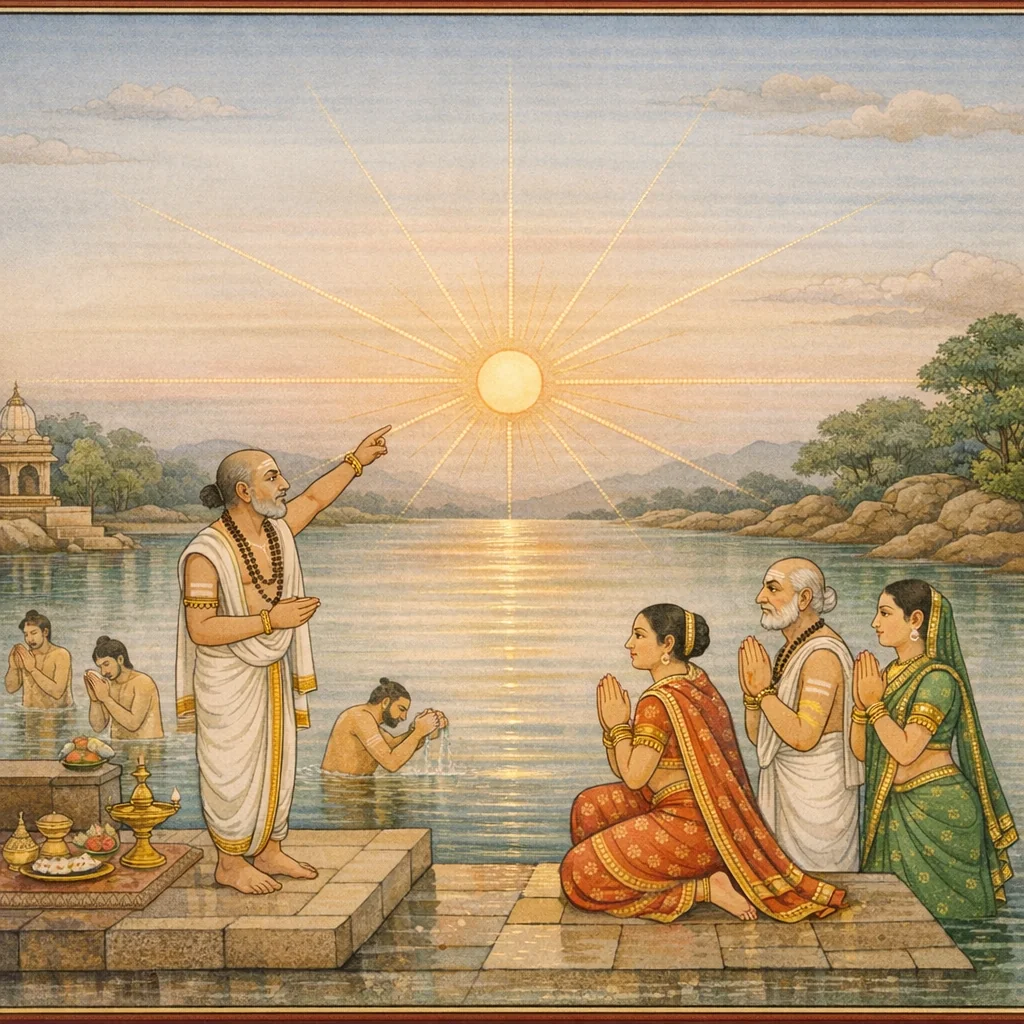
The chapter begins with Mārkaṇḍeya guiding the pilgrim to Siddheśvara and to a nearby self-manifest (svāyambhuva) liṅga praised as “amṛta-srāvin,” nectar-flowing. Mere immediate darśana of this sacred spot is said to bestow great merit, establishing the tīrtha’s exceptional holiness. Yudhiṣṭhira then asks how the gods attained siddhi at Siddheśvara, especially regarding the “twelve Ādityas.” Mārkaṇḍeya names the Dvādaśa Ādityas—Indra, Dhātā, Bhaga, Tvaṣṭā, Mitra, Varuṇa, Aryaman, Vivasvān, Savitṛ, Pūṣan, Aṃśumān, and Viṣṇu—and explains that, longing for solar status, they performed intense tapas on the bank of the Narmadā at Siddheśvara. Their success is marked by establishing Divākara at that tīrtha through the distribution of solar aṃśas (portions), after which the place becomes renowned. The discourse further links the Ādityas to cosmic functions at dissolution and to their deployment by directions, presenting a directional order (dik-vyavasthā) of solar powers. Finally it teaches pilgrimage discipline and phala: a morning bath followed by Dvādaśāditya-darśana destroys wrongs of speech, mind, and deed; pradakṣiṇā is equated with circumambulating the earth; fasting on saptamī here yields extraordinary results; and repeated circumambulations bring freedom from ailments and prosperity—health and progeny—set forth as the phalaśruti of steadfast devotion.
Shlokas
Verse 1
श्रीमार्कण्डेय उवाच । सिद्धेश्वरं ततो गच्छेत्तस्यैव तु समीपतः । अमृतस्रावि तल्लिङ्गमाद्यं स्वायम्भुवं तथा
Śrī Mārkaṇḍeya said: Then one should go to Siddheśvara; and close by it is that liṅga, flowing with amṛta—primeval and also self-manifest (svayambhū).
Verse 2
दृष्टमात्रेण येनेह ह्यनृणो जायते नरः । पुरा वर्षशतं साग्रमाराध्य परमेश्वरम्
By merely beholding it, a man in this world becomes free from indebtedness. In ancient times, after worshipping the Supreme Lord for a full hundred years and more, this greatness was proclaimed.
Verse 3
प्राप्नुयुः परमां सिद्धिमादित्या द्वादशैव तु । अतः सिद्धेश्वरः प्रोक्तः सिद्धिदः सिद्धिकाङ्क्षिणाम्
Indeed, the twelve Ādityas attained the supreme siddhi here. Therefore he is called ‘Siddheśvara’—the Lord of attainments—bestowing siddhi upon those who yearn for siddhi.
Verse 4
युधिष्ठिर उवाच । कथं सिद्धेश्वरे प्राप्ताः सिद्धिं देवा द्विजोत्तम । आदित्या इति यच्चोक्तं तन्मे विस्मापनं कृतम्
Yudhiṣṭhira said: “O best of the twice-born, how did the gods attain siddhi at Siddheśvara? And what you said about the ‘Ādityas’ has filled me with wonder.”
Verse 5
तपस्युग्रे व्यवसिता आदित्याः केन हेतुना । सम्प्राप्तास्तु द्विजश्रेष्ठ सिद्धिं चैवाभिलाषिकीम्
“For what reason did the Ādityas undertake fierce austerity? And, O best of brāhmaṇas, how did they obtain the very siddhi they desired?”
Verse 6
संक्षिप्य तु मया पृष्टं विस्तराद्द्विज शंस मे
“Though I have asked briefly, O brāhmaṇa, explain it to me in full detail.”
Verse 7
मार्कण्डेय उवाच । अदितेर्द्वादशादित्या जाताः शक्रपुरोगमाः । इन्द्रो धाता भगस्त्वष्टा मित्रोऽथ वरुणोऽर्यमा
Mārkaṇḍeya said: “From Aditi were born the twelve Ādityas, led by Śakra (Indra): Indra, Dhātā, Bhaga, Tvaṣṭṛ, Mitra, Varuṇa, and Aryaman.”
Verse 8
विवस्वान्सविता पूषा ह्यंशुमान्विष्णुरेव च । त इमे द्वादशादित्या इच्छन्तो भास्करं पदम्
“(They are) Vivasvān, Savitṛ, Pūṣan, Aṃśumān, and also Viṣṇu. These are the twelve Ādityas, desiring the status of Bhāskara (the Sun’s supreme station).”
Verse 9
नर्मदातटमाश्रित्य तपस्युग्रे व्यवस्थिताः । सिद्धेश्वरे महाराज काश्यपेयैर्महात्मभिः
“Taking refuge on the bank of the Narmadā, they engaged in fierce austerity at Siddheśvara, O great king—those great-souled ones, the descendants of Kaśyapa.”
Verse 10
परा सिद्धिरनुप्राप्ता द्वादशादित्यसंज्ञितैः । स्थापितश्च जगद्धाता तस्मिंस्तीर्थे दिवाकरः
The supreme siddhi was attained by those known as the Twelve Ādityas; and at that tīrtha, Divākara—the sustainer of the world—was स्थापित as a worshipful presence.
Verse 11
स्वकीयांशविभागेन द्वादशादित्यसंज्ञितैः । तदाप्रभृति तत्तीर्थं राजन्ख्यातिं गतं भुवि
By the distribution of their own portions—their radiant shares—by those called the Twelve Ādityas, from that time onward, O king, that tīrtha became renowned upon the earth.
Verse 12
प्रलये समनुप्राप्ते ह्यादित्या द्वादशैव ते । द्वादशादित्यतो राजन् सम्भवन्ति युगक्षये
O king, when pralaya—the cosmic dissolution—arrives, those twelve Ādityas indeed appear; and at the end of an age they arise as the manifestation of the Twelve-Sun form.
Verse 13
इन्द्रस्तपति पूर्वेण धाता चैवाग्निगोचरे । गभस्तिपतिर्वै याम्ये त्वष्टा नैरृतदिङ्मुखः
Indra blazes in the eastern direction; Dhātṛ shines in the region of Agni (southeast). Gabhastipati abides in the southern quarter, and Tvaṣṭṛ faces the southwest.
Verse 14
वरुणः पश्चिमे भागे मित्रस्तु वायवे तथा । विष्णुश्च सौम्यदिग्भागे विवस्वानीशगोचरे
Varuṇa is in the western quarter; Mitra likewise in the region of Vāyu (northwest). Viṣṇu is in the northern quarter, and Vivasvān in the region of Īśa (northeast).
Verse 15
ऊर्ध्वतश्चैव सविता ह्यधः पूषा विशोषयन् । अंशुमांस्तु तथा विष्णुर्मुखतो निर्गतं जगत्
Above is Savitṛ; below is Pūṣan, drying up the worlds. Likewise Aṃśumān and Viṣṇu—by their blazing radiance the universe is drawn forth from the mouth of the cosmic Principle.
Verse 16
प्रदहन्वै नरश्रेष्ठ बभ्रमुश्च इतस्ततः । यथैव ते महाराज दहन्ति सकलं जगत्
O best of men, they blaze and roam here and there; thus indeed, O great King, they burn up the entire world.
Verse 17
तथैव द्वादशादित्या भक्तानां भावसाधनाः । प्रातरुत्थाय यः स्नात्वा द्वादशादित्यसंज्ञितम्
In the same way, the Twelve Ādityas become a means for cultivating devotion in devotees. Whoever rises in the morning and, having bathed, beholds the deity known as Dvādaśāditya…
Verse 18
पश्यते देवदेवेशं शृणु तस्यैव यत्फलम् । वाचिकं मानसं पापं कर्मजं यत्पुराकृतम्
…and beholds the Lord of gods—listen to the fruit of that. Whatever sin was done before, whether by speech, by mind, or arising from action,
Verse 19
नश्यते तत्क्षणादेव द्वादशादित्यदर्शनात् । प्रदक्षिणं तु यः कुर्यात्तस्य देवस्य भारत
…is destroyed that very instant by the sight of Dvādaśāditya. And, O Bhārata, whoever performs pradakṣiṇā—reverent circumambulation—of that deity,
Verse 20
प्रदक्षिणीकृता तेन पृथिवी नात्र संशयः । तत्र तीर्थे तु सप्तम्यामुपवासेन यत्फलम्
By that act, the very earth is as though circumambulated in pradakṣiṇā—of this there is no doubt. And now, the fruit of fasting on the seventh tithi at that sacred tīrtha:
Verse 21
अन्यत्र सप्तसप्तम्यां लभन्ति न लभन्ति च । षष्ठ्यां वारे दैनकरे द्वादशादित्यदर्शनात्
Elsewhere, on the rare “seventh of the seventh” Saptamī, people may or may not obtain such fruit; but here, by the mere darśana of Dvādaśāditya—even on the sixth tithi, on the Sun’s own weekday—the merit is assured.
Verse 22
प्रदक्षिणं तु यः कुर्यात्तस्य पापं तु नश्यति । अरोगी सप्तजन्मानि भवेद्वै नात्र संशयः
Whoever performs pradakṣiṇā, his sins are destroyed. He becomes free from disease for seven births—of this there is no doubt.
Verse 23
यस्तु प्रदक्षिणशतं दद्याद्भक्त्या दिने दिने । दद्रूपिटककुष्ठानि मण्डलानि विचर्चिकाः
But one who, with bhakti, offers a hundred pradakṣiṇās day after day—ringworm, boils, leprosy, blotches, eczema, and the like are healed or kept at bay.
Verse 24
नश्यन्ति व्याधयः सर्वे गरुडेनेव पन्नगाः । पुत्रप्राप्तिर्भवेत्तस्य षष्ट्या वासरसेवनात्
All diseases perish—like serpents before Garuḍa. By serving this observance for sixty days, he attains the blessing of a son.
Verse 191
अध्याय
“Chapter” (a scribal/section marker indicating the chapter boundary).