Adhyaya 43: Portents of Death (Ariṣṭa-lakṣaṇas) and the Yogin’s Response; Alarka Renounces Kingship
ओङ्कारध्यायः / अरिष्टलक्षणाध्यायः (Oṅkārādhyāyaḥ / Ariṣṭa-lakṣaṇādhyāyaḥ)
The Sun's Course
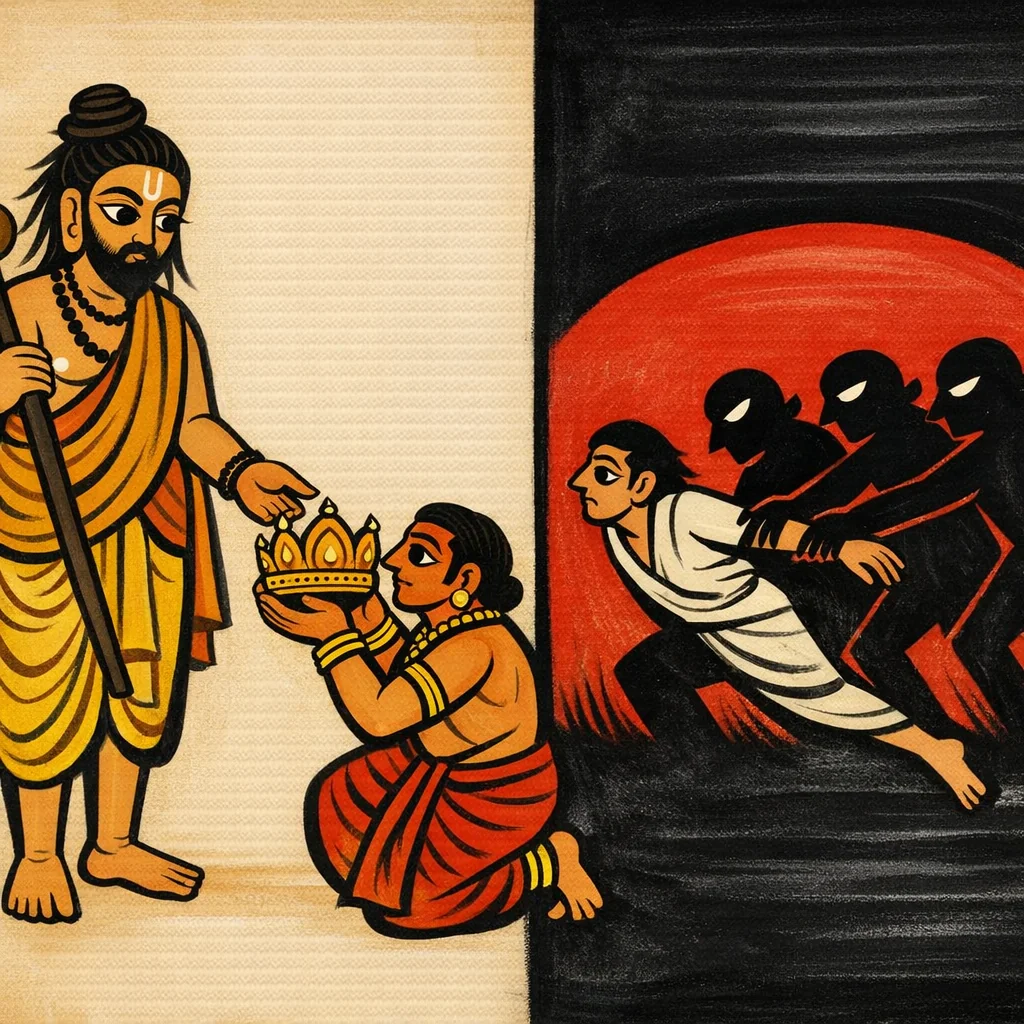
This adhyaya describes ariṣṭa-lakṣaṇas, the portents of approaching death, seen in bodily signs, dreams, and omens in the sky and nature. The yogin meets these with samādhi, mantra-recitation, and detachment, mastering fear and turning the mind toward liberation. King Alarka, realizing the impermanence of worldly power, renounces kingship and chooses the path of Dharma in pursuit of mokṣa.
Divine Beings
Celestial Realms
Key Content Points
Focus Keywords
Shlokas in Adhyaya 43
Verse 1
इति श्रीमार्कण्डेयपुराणे योगधर्मे ओङ्कारध्यायो नाम द्विचत्वारिंशोऽध्यायः । त्रिचत्वारिंशोऽध्यायः । दत्तात्रेय उवाच । अरिष्टानि महाराज ! शृणु वक्ष्यामि तानि ते । येषामालोकनान्मृत्युं निजं जानाति योगवित् ॥
Thus ends, in the Śrī Mārkaṇḍeya Purāṇa, within the section on Yoga-dharma, the forty-second chapter called ‘The Chapter on Meditation on Oṃkāra’. Now the forty-third chapter begins. Dattātreya said: ‘O great king, listen—I shall tell you the portents by seeing which the knower of yoga understands his own impending death.’
Verse 2
देवमार्गं ध्रुवं शुक्रं सोमच्छायामरुन्धतीम् । यो न पश्येन्न जीवेत स नरः संवत्सरात् परम् ॥
He who cannot see the Path of the Gods (the Milky Way), Dhruva (the Pole Star), Śukra (Venus), the Moon’s halo/shadow, and Arundhatī—such a man will not live beyond a year.
Verse 3
अरश्मिबिम्बं सूर्यस्य वह्निं चैवांशुमालिनम् । दृष्ट्वैकादशमासात् तु नरो नोर्धन्तु जीवति ॥
If a man sees the sun’s disk as without rays, and fire as bereft of its radiance, then, having seen this, he does not live beyond eleven months.
Verse 4
वान्ते मूत्रपुरीषे च यः स्वर्णं रजतं तथा । प्रत्यक्षं कुरुते स्वप्ने जीवेत स दशमासिकम् ॥
He who, in a dream, clearly sees gold and silver in vomit, urine, or feces—such a person lives (only) for ten months.
Verse 5
दृष्ट्वा प्रेतपिशाचादीन् गन्धर्वनगराणि च । सुवर्णवर्णान् वृक्षांश्च नव मासान् स जीवति ॥
Having seen pretas, piśācas and the like, and also ‘Gandharva cities’ (illusory cities), and trees of golden color—he lives for nine months.
Verse 6
स्थूलः कृशः कृशः स्थूलो योऽकस्मादेव जायते । प्रकृतेश्च निवर्तेत तस्यायुश्चाष्टमासिकम् ॥
If one suddenly becomes fat then thin, thin then fat, without cause, and departs from his normal constitution—his lifespan is (only) eight months.
Verse 7
खण्डं यस्य पदं पार्ष्ण्यां पादस्याग्रे च वा भवेत् । पांशुकर्दमयोर्मध्ये सप्त मासान् स जीवति ॥
If a man’s foot becomes ‘broken/defective’—either at the heel or at the front of the foot—and he is found (as it were) between dust and mud, he lives for seven months.
Verse 8
गृध्रः कपोतः काकालो वायसो वापि मूर्धनि । क्रव्यादो वा खगो नीलः षण्मासायुः प्रदर्शकः ॥
If a vulture, pigeon, crow, or even a raven perches upon one’s head—or if a blue flesh-eating bird does so—this is said to indicate a remaining lifespan of six months.
Verse 9
हन्यते काकपङ्क्तीभिः पांशुवर्षेण वा नरः । स्वां छायामन्यथा दृष्ट्वा चतुः पञ्च स जीवति ॥
A man is struck down (meets death) by flocks of crows or by a rain of dust. And if he sees his own shadow appearing otherwise (distorted/unnatural), he lives only four or five days.
Verse 10
अनभ्रे विद्युतं दृष्ट्वा दक्षिणां दिशमाश्रिताम् । रात्राविन्द्रधनुश्चापि जीवितं द्वित्रिमासिकम् ॥
If one sees lightning when there are no clouds, especially if it is situated in the southern direction; and if one sees a rainbow at night—then the remaining life is said to be only two or three months.
Verse 11
घृते तैले तथादर्शे तोये वा नात्मनस्तनुम् । यः पश्येदशिरस्कां वा मासादूर्ध्वं न जीवति ॥
If someone looks at his own body in ghee, oil, a mirror, or water, and sees it as headless—then he does not live beyond a month.
Verse 12
यस्य वस्तसमो गन्धो गात्रे शवसमोऽपि वा । तस्यार्धमासिकं ज्ञेयं योगिनो नृप ! जीवितम् ॥
O King, if a person’s body gives off an odor like a cloth that has grown stale/moldy, or even like that of a corpse, then the yogins say his remaining life should be known to be half a month.
Verse 13
यस्य वै स्त्रमात्रस्य हृत्पादमवशुष्यते । पिबतश्च जलं शोषो दशाहं सोऽपि जीवति ॥
If, even with slight exertion, a person’s heart-region and feet become parched and feeble, and even while drinking water he suffers dryness, then he lives only ten days.
Verse 14
सम्भिन्नो मारुतो यस्य मर्मस्थानानि कृन्तति । हृष्यते नाऽम्बुसंस्पर्शात् तस्य मृत्युरुपस्थितः ॥
If a disordered wind (vāta) in a person ‘cuts’ the vital points (marmas), and he feels no delight even from contact with water, then death has approached him.
Verse 15
ऋक्षवानरयानस्थो गायन् यो दक्षिणां दिशम् । स्वप्ने प्रयाति तस्यापि न मृत्युः कालमिच्छति ॥
If, in a dream, one goes toward the southern direction while mounted on a bear- or monkey-vehicle, singing, then for him too, death does not delay (it comes at its time without postponement).
Verse 16
रक्तकृष्णाम्बरधरा गायन्ती हसती च यम् । दक्षिणाशान्नयेन्नारी स्वप्ने सोऽपि न जीवति ॥
If, in a dream, a woman wearing red and black garments—singing and laughing—leads someone toward the southern quarter, then he too does not live (his death is imminent).
Verse 17
नग्नं क्षपणकं स्वप्ने हसमानाṃ महाबलम् । एकं संविक्ष्य वल्गन्तं विद्याद्मृत्युमुपस्थितम् ॥
If, in a dream, one sees a naked kṣapaṇaka (a naked ascetic), laughing—mighty and alone—leaping about, one should know that death has arrived (is near).
Verse 18
आमस्तकतालाद्यस्तु निमग्नं पङ्कसागरे । स्वप्ने पश्यत्यथात्मानं स सद्यो म्रियते नरः ॥
If a man sees himself in a dream sunk in a sea of mud up to the crown of his head, that man dies immediately.
Verse 19
केशाङ्गारांस्तथा भस्म भुजङ्गान्निर्जलां नदीम् । दृष्ट्वा स्वप्ने दशाहात्तु मृत्युरेकादशे दिने ॥
If one sees, in a dream, hair turned to embers, ash, serpents, or a river without water—then after ten days, death comes on the eleventh day.
Verse 20
करालैर्विकटैः कृष्णैः पुरुषैरुद्यतायुधैः । पाषाणैस्ताडितः स्वप्ने सद्यो मृत्युं लभेन्नरः ॥
If, in a dream, a man is struck with stones by hideous, monstrous, black men holding up weapons, he meets death immediately.
Verse 21
सूर्योदये यस्य शिवा क्रोशन्ती याति संमुखम् । विपरीतं परीतं वा स सद्यो मृत्युमृच्छति ॥
At sunrise, if a jackal (śivā) comes toward a man while howling—whether from the contrary direction or while circling—he meets death immediately.
Verse 22
यस्य वै भुक्तमात्रस्य हृदयं बाधते क्षुधा । जायते दन्तघर्षश्च स गतायुर्न संशयम् ॥
If, immediately after eating, hunger afflicts a man’s heart (chest), and grinding or chattering of the teeth arises, his lifespan is gone—without doubt.
Verse 23
दीपगन्धं न यो वेत्ति त्रस्यत्यह्नि तथा निशि । नात्मानं परनेत्रस्थं वीक्षते न स जीवति ॥
He who cannot perceive the scent of a lamp (its oil or its smoke), who is afraid by day and by night, and who does not behold his own Self as though situated in another’s eyes—he does not live.
Verse 24
शक्रायुधं चार्धरात्रे दिवा ग्रहगणं तथा । दृष्ट्वा मन्येत संक्षीणमात्मजीवितमात्मवित् ॥
If one sees Indra’s weapon (the rainbow) at midnight, or sees the hosts of planets by day, the wise should understand that his own life is dwindling away.
Verse 25
नासिका वक्रतामेति कर्णयोर्नमनॊन्नती । नेत्रञ्च वामं स्रवति यस्य तस्यायुरुद्गतम् ॥
If a man’s nose becomes crooked, his ears droop or rise unevenly, and his left eye waters or discharges—his lifespan has departed.
Verse 26
आरक्ततामेति मुखं जिह्वा वा श्यामतां यदा । तदा प्राज्ञो विजानीयान्मृत्युमासन्नमात्मनः ॥
When the face turns reddish, or when the tongue becomes dark, blackish, then the wise should know that death is near for him.
Verse 27
उष्ट्र-रासभयानेन यः स्वप्ने दक्षिणां दिशम् । प्रयाति तञ्च जानीयात् सद्योमृत्युं न संशयः ॥
He who, in a dream, travels toward the southern direction riding a camel or a donkey—know him to be destined for immediate death, without doubt.
Verse 28
पिधाय कर्णौ निर्घोषं न शृणोत्यात्मसम्भवम् । नश्यते चक्षुषोर्ज्योतिर्यस्य सोऽपि न जीवति ॥
If, after closing his ears, a man does not hear the inner sound that arises from within himself, and if the light (power) of his eyes is extinguished—such a person does not live (death is near).
Verse 29
पततो यस्य वै गर्ते स्वप्ने द्वारं पिधीयते । न चोत्तिष्ठति यः श्वभ्रात्तदन्तं तस्य जीवितम् ॥
If, in a dream, a man seems to be falling into a pit and the doorway closes, and if he does not rise up from that chasm—then his life is at its end.
Verse 30
ऊर्ध्वा च दृष्टिर्न च सम्प्रतिष्ठा रक्ताः पुनः सम्परिवर्तमाना । मुखस्य चोष्मा शुषिरञ्च नाभेः शंसन्ति पुंसामपरं शरीरम् ॥
Upturned gaze, loss of steadiness; eyes reddened and rolling about; heat leaving the face, and hollowness at the navel—these proclaim for men ‘another body’ (death and transition).
Verse 31
स्वप्नेऽग्निं प्रविशेद्यस्तु न च निष्क्रमते पुनः । जलप्रवेशादपि वा तदन्तं तस्य जीवितम् ॥
If in a dream one enters fire and does not come out again—or likewise enters water—then that marks the end of his life.
Verse 32
यश्चाभिहन्यते दुष्टैर्भूतै रात्रावथो दिवा । स मृत्युम् सप्तरा्त्र्यन्ते नरः प्राप्रोत्यसंशयम् ॥
He who is struck or tormented by wicked bhūtas, whether by night or by day—such a man, without doubt, meets death at the end of seven nights.
Verse 33
स्ववस्त्रममलं शुक्लं रक्तं पश्यत्यथासितम् । यः पुमान् मृत्युमासन्नं तस्यापि हि विनिर्दिशेत् ॥
If a man sees his own clean white garment as red, or else as black, one should declare that death is near for him as well.
Verse 34
स्वभाववैपरीत्यन्तु प्रकृतेश्च विपर्ययः । कथयन्ति मनुष्याणां सदासन्नौ यमान्तकौ ॥
A reversal of one’s disposition and a perversion of one’s natural state are said to indicate that Yama and Death are close at hand for a person.
Verse 35
येषां विनीतः सततं येऽस्य पूज्यतमा मताः । तानेव चावजानाति तानेव च विनिन्दति ॥
Those toward whom he was always humble, and who were regarded by him as most worthy of honor—if he begins to despise them and even censure them, that is a sign (of death’s nearness).
Verse 36
देवान्नार्चयते वृद्धान् गुरून् विप्रांश्च निन्दति । मातापित्रोर्न सत्कारं जामातॄणां करोति च ॥
He does not worship the gods; he reviles elders, teachers, and brāhmaṇas; he shows no proper honor to mother and father, and he does not extend due regard to sons-in-law—such conduct is to be understood as a grave sign (of the end).
Verse 37
योगिनां ज्ञानविदुषामन्येषां च महात्मनाम् । प्राप्ते तु काले पुरुषस्तद्विज्ञेयं विचक्षणैः ॥
When the time has come, a man (shows disregard) toward yogins, the wise in knowledge, and other great-souled persons; this is to be recognized by the discerning as a sign (of the end).
Verse 38
योगिनां सततं यत्नादरिष्टान्यवनीपते । संवत्सरान्ते तज्ज्ञेयं फलदानि दिवानिशम् ॥
O lord of the earth, the yogins, with unceasing effort, observe the portents (ariṣṭas). At the year’s end one should understand that they yield their results—by day and by night.
Verse 39
विलोक्या विशदा चैषां फलपङ्क्तिः सुभीषणाः । विज्ञाय कार्यो मनसि स च कालो नरेश्वर ॥
Having observed these clearly, one should understand and fix in the mind their sequence of results—most dreadful; and that time (kāla), O lord among men, should be recognized.
Verse 40
ज्ञात्वा कालञ्च तं सम्यगभयस्थानमाश्रितः । युञ्जीत योगी कालोऽसौ यथा नास्याफलो भवेत् ॥
Having correctly known that time, taking refuge in the state of fearlessness, the yogin should engage in yoga—so that this time does not become fruitless for him.
Verse 41
दृष्ट्वारिष्टं तथा योगी त्यक्त्वा मरणजं भयम् । तत्स्वभावं तदालोक्य काले यावत्युपागतम् ॥
Thus, having seen the portent, the yogin, abandoning the fear born of death, should examine its nature and observe how far that time has approached.
Verse 42
तस्य भागे तथैवाह्नो योगं युञ्जीत योगवित् । पूर्वाह्ने चापराह्ने च मध्याह्ने चापि तद्दिने ॥
In that very division of the day, the knower of yoga should practice yoga—whether in the forenoon, afternoon, or at midday, on that day.
Verse 43
यत्र वा रजनीभागे तदरिष्टं निरीक्षितम् । तत्रैव तावद्युञ्जीत यावत् प्राप्तं हि तद्दिनम् ॥
Or if that portent was observed during a portion of the night, then in that very portion one should practice, until that day indeed arrives.
Verse 44
ततस्त्यक्त्वा भयं सर्वं जित्वा तं कालमात्मवान् । तत्रैवावसथे स्थित्वा यत्र वा स्थैर्यमात्मनः ॥
Then, having abandoned all fear and having conquered that time, the self-possessed one should remain in that very dwelling—or wherever there is steadiness of the self.
Verse 45
युञ्जीत योगं निर्जित्य त्रीन् गुणान् परमात्मनि । तन्मयश्चात्मना भूत्वा चिद्वृत्तिमपि सन्त्यजेत् ॥
He should practice yoga, having conquered the three guṇas in the Supreme Self. Becoming of that (Supreme) nature with his own self, he should abandon even the modifications of consciousness.
Verse 46
ततः परमनिर्वाणमतीन्द्रियमगोचरम् । यद्बुद्धेर्यन्न चाख्यातुं शक्यते तत् समश्नुते ॥
Thereafter he attains the supreme nirvāṇa—beyond the senses, beyond all objects—what is beyond the intellect and cannot be expressed in words.
Verse 47
एतत् सर्वं समाख्यातं तवालर्क ! यथार्थवत् । प्राप्स्यसे येन तद्ब्रह्म संक्षेपात्तन्निबोध मे ॥
All this has been explained to you, O Alarka, truthfully. Now understand from me in brief that by which you will attain that Brahman.
Verse 48
शशाङ्करश्मिसंयोगाच्छन्द्रकान्तमणिः पयः । समुत्सृजति नायुक्तः सोपमा योगिनः स्मृता ॥
By contact with the moon’s rays, the moonstone (candrā-kānta) emits liquid; yet when there is no proper conjunction, it does not. This is remembered as a simile for the yogin.
Verse 49
यच्चार्करश्मिसंयोगादर्ककान्तो हुताशनम् । आविष्करोति नैकः सन्नुपमा सापि योगिनः ॥
And just as the sunstone (arkakānta), by conjunction with the sun’s rays, brings forth fire—though it is not itself many fires—so too this is a simile for the yogin.
Verse 50
पिपीलिकाखु-नकुल-गृहगोधा-कपिञ्जलाः । वसन्ति स्वामिवद् गेहे ध्वस्ते यान्ति ततोऽन्यतः ॥
Ants, mice, mongooses, house-lizards, and partridges dwell in a house as if they were its owners; when it is ruined, they go elsewhere.
Verse 51
दुःखन्तु स्वामिनो ध्वंसे तस्य तेषां न किञ्चन । वेश्मनो यत्र राजेन्द्र सोपमा योगसिद्धये ॥
When that house is destroyed, sorrow belongs to the owner; for those creatures it is nothing. O king, this simile is for the attainment of yogic perfection (siddhi).
Verse 52
मृद्वाहिकाल्पदेहापि मुखाग्रेणाप्यणीयसाः । करोति मृद्भारचयमुपदेशः स योगिनः ॥
Even an earth-carrying ant, though of a tiny body and with a mouth-tip smaller still, makes a heap of heavy earth. This is an instruction for the yogin.
Verse 53
पशुपक्षिमनुष्याद्यैः पत्रपुष्पफलान्वितम् । वृक्षं विलुप्यमानन्तु दृष्ट्वा सिध्यन्ति योगिनः ॥
Seeing a tree endowed with leaves, flowers, and fruits being plundered by beasts, birds, humans, and the like—by learning from that, a yogin attains accomplishment (siddhi).
Verse 54
रुरुशावविषाणाग्रमालक्ष्य तिलकाकृतिम् । सह तेन विवर्धन्तं योगी सिद्धिमवाप्नुयात् ॥
Observing the tip of a young ruru-deer’s horn, shaped like a sesame-seed mark, and how it grows along with it—thus may a yogin attain perfection by understanding gradual increase.
Verse 55
द्रवपूर्णमुपादाय पात्रमारोहतो भुवः । तुङ्गमार्गं विलोक्योच्चैर्विज्ञातं किं न योगिना ॥
Taking a vessel full of liquid and seeing (someone) climb up from the ground along a steep path—what would not be understood by a yogin about careful balance and ascent?
Verse 56
सर्वस्वे जीवनायालं निखाते पुरुषस्य या । चेष्टा तां तत्त्वतो ज्ञात्वा योगिनः कृतकृत्यता ॥
When a man buries away his entire wealth for the sake of living, whatever striving he undertakes—having known that effort in its true nature, the yogin becomes one who has fulfilled his purpose.
Verse 57
तद्गृहं यत्र वसतिः तद्भोज्यं येन जीवति । येन सम्पद्यते चार्थस्तत्सुखं ममतात्र का ॥
That is the “house” wherein one dwells; that is the “food” by which one lives; that is the “wealth” by which one’s purpose is fulfilled; that is the “pleasure”—what “mine-ness” is there in these?
Verse 58
अभ्यार्थितोऽपि तैः कार्यं करोति करणैर्यथा । तथा बुद्ध्यादिभिर्योगी पारक्यैः साधयेत्परम् ॥
Just as a person, though urged by others, performs an action through the instruments of action, so too should a yogin accomplish the Supreme by means of the intellect (buddhi) and the rest (mind and senses), treating them as if external to himself.
Verse 59
जड उवाच ततः प्रणम्यात्रिपुत्रमलर्कः स महीपतिः । प्रश्रयावनतो वाक्यमुवाचातिमुदान्वितः ॥
Jaḍa said: Then King Alarka, having bowed to Atri’s son, spoke with great joy, his words uttered with humility and reverence.
Verse 60
अलर्क उवाच दिष्ट्या देवैरिदं ब्रह्मन् ! पराभिभवसम्भवम् । उपपादितमत्युग्रं प्राणसन्देहदं भयम् ॥
Alarka said: By good fortune—indeed by the gods—this exceedingly fierce fear, born of my humiliation and defeat, has been brought about, a fear that made me doubt my very life.
Verse 61
दिष्ट्या काशिपतेर्भूरि-बलसम्पत्पराक्रमः । यदुच्छेदादिहासयातः स युष्मत्सङ्गदो मम ॥
By good fortune, the king of Kāśi possessed great strength, resources, and valor; because of the destruction of my power/position caused by him, I have come here—and that has granted me association with you.
Verse 62
दिष्ट्या मन्दबलश्चाहं दिष्ट्या भृत्याश्च मे हताः । दिष्ट्या कोशः क्षयं यातो दिष्ट्याहं भीतिमागतः ॥
By good fortune I became weak in power; by good fortune my retainers were slain; by good fortune my treasury went to ruin; by good fortune I came into fear.
Verse 63
दिष्ट्या त्वत्पादयुगलं मम स्मृतिपथं गतम् । दिष्ट्या त्वदुक्तयः सर्वा मम चेतसि संस्थिताः ॥
By good fortune, your pair of feet has entered the path of my memory; by good fortune, all your teachings have become firmly established in my mind.
Verse 64
दिष्ट्या ज्ञानं ममोत्पन्नं भवतश्च समागमात् । भवता चैव कारुण्यं दिष्ट्या ब्रह्मन् ! कृतं मम ॥
By good fortune, knowledge has arisen in me through meeting you; and by good fortune, O Brahmin, you have shown compassion to me.
Verse 65
अनर्थोऽप्यर्थतां याति पुरुषस्य शुभोदयॆ । यथेदमुपकाराय व्यसनं सङ्गमात्तव ॥
Even calamity becomes meaningful benefit for a person when auspicious awakening arises—just as this misfortune has become helpful to me through meeting you.
Verse 66
सुबाहुरुपकारी मे स च काशिपतिः प्रभो । ययोः कृतेऽहं संप्राप्तो योगीश ! भवतोऽन्तिकम् ॥
Subāhu was a benefactor to me—and so too was that king of Kāśi, O Lord; because of those two, O lord of yogins, I have reached your presence.
Verse 67
सोऽहं तव प्रसादाग्नि-निर्दग्धाज्ञानकिल्बिषः । तथा यतिष्ये येनेदृङ् न भूयां दुःखभाजनम् ॥
Thus I—my sins of ignorance burnt away by the fire of your grace—will strive in such a way that I may never again become a vessel of sorrow like this.
Verse 68
परित्यजिष्ये गार्हस्थ्यमार्तिपादपकाननम् । त्वत्तोऽनुज्ञां समासाद्य ज्ञानदातुर्महात्मनः ॥
“After obtaining your permission, O great-souled giver of knowledge, I shall abandon the householder’s life—its outward face is mere display and misery.”
Verse 69
दत्तात्रेय उवाच गच्छ राजेन्द्र ! भद्रं ते यथा ते कथितं मया । निर्ममो निरहङ्कारस्तथा चर विमुक्तये ॥
Dattātreya said: “Go, O best of kings; may good be yours. For liberation, live exactly as I have instructed—without possessiveness and without ego.”
Verse 70
जड उवाच एवमुक्तः प्रणम्यैनमाजगाम त्वारान्वितः । यत्र काशिपतिर्भ्राता सुबाहुश्चास्य सोऽग्रजः ॥
Jaḍa said: “Thus instructed, he bowed to him and went swiftly to the place where his brother, the lord of Kāśī, and his elder brother Subāhu were.”
Verse 71
समुत्पत्य महाबाहुं सोऽलर्कः काशिभूपतिम् । सुबाहोरग्रतो वीरमुवाच प्रहसन्निव ॥
Alarka, rising up, addressed the mighty-armed hero—the king of Kāśī—in front of Subāhu, as if with a slight smile.
Verse 72
राज्यकामुक काशीश ! भुज्यतां राज्यमूर्जितम् । तथा च रोचते तद्वत् सुबाहोः संप्रयच्छ वा ॥
“O lord of Kāśī, desirous of kingship! Enjoy this vigorous kingdom. Or, if that pleases you, then hand it over likewise to Subāhu.”
Verse 73
काशिराज उवाच किमलर्क ! परित्यक्तं राज्यं ते संयुगं विना । क्षत्रियस्य न धर्मोऽयं भवांश्च क्षत्रधर्मवित् ॥
The king of Kāśī said: “Why, Alarka, have you abandoned your kingdom without battle? This is not the duty of a kṣatriya—and you are one who knows kṣatriya-dharma.”
Verse 74
निर्जितामात्यवर्गस्तु त्यक्त्वा मरणजं भयम् । सन्दधीत शरं राजा लक्ष्यं उद्दिश्य वैरिणम् ॥
“Having brought his circle of ministers under control, and casting off the fear born of death, a king should set an arrow, taking aim at the enemy as the target.”
Verse 75
तं जित्वा नृपतिर्भोगान् यथाभिलषितान् वरान् । भुञ्जीत परमं सिद्ध्यै यजेत च महामखैः ॥
“Having conquered him, the king should enjoy excellent pleasures as desired, for supreme attainment; and he should also perform great sacrifices.”
Verse 76
अलर्क उवाच एवमीदृशकं वीर ! ममाप्यासीन् मनः पुरा । साम्प्रतं विपरीतार्थं शृणु चाप्यत्र कारणम् ॥
Alarka said: “Hero! My mind too was once of just this kind. But now hear the opposite conclusion—and also the reason for it.”
Verse 77
यथायं भौतिकः सङ्घस्तथान्तः करणं नृणाम् । गुणास्तु सकलास्तद्वदशेषेष्वेव जन्तुषु ॥
“Just as this body is a material aggregate, so too is the inner instrument (mind-complex) of human beings; and in the same way, all the guṇas are present entirely in all creatures without exception.”
Verse 78
चिच्छक्तिरेक एवायं यदा नान्योऽस्ति कश्चन । तदा का नृपते ज्ञानान्मित्रारिप्रभुभृत्यता ॥
O king, when this single Power of Consciousness alone exists and nothing else whatsoever, then once knowledge has arisen, what place remains for the notions of “friend” and “enemy,” or of “master” and “servant”?
Verse 79
तन्मया दुःखमासाद्य त्वद्भयोद्भवमुत्तमम् । दत्तात्रेयप्रसादेन ज्ञानं प्राप्तं नरेश्वर ॥
O lord of men, having encountered that supreme sorrow born of fear of you, by the grace of Dattātreya I attained true knowledge.
Verse 80
निर्जितेन्द्रियवर्गस्तु त्यक्त्वा सङ्गमशेषतः । मनो ब्रह्मणि सन्धाय तज्जये परमो जयः ॥
But having conquered the host of senses, abandoning attachment without remainder, and fixing the mind in Brahman—victory over That is the supreme victory.
Verse 81
संसाध्यमन्यत्तत्सिद्ध्यै यतः किञ्चिन्न विद्यते । इन्द्रियाणि च संयम्य ततः सिद्धिं नियच्छति ॥
For the attainment of that perfection there is nothing else that needs to be accomplished. By restraining the senses, one thereby secures success (siddhi).
Verse 82
सोऽहं न तेऽरिर्न ममासि शत्रुः सुबाहुरेषो न ममापकारी । दृष्टं मया सर्वमिदं यथात्मा अन्विष्यतां भूप ! रिपुस्त्वयान्यः ॥
I am not your enemy, nor are you my foe. This Subāhu has done me no wrong. I have seen all this as the Self. Seek, O king—the enemy is other than what you assume.
Verse 83
इत्त्थं स तेनाभिहितो नरेन्द्रो हृष्टः समुत्थाय ततः सुबाहुः । दिष्ट्येति तं भ्रातरमाभिनन्द्य काशीश्वरं वाक्यमिदं बभाषे ॥
Thus addressed by him, the king rose up, delighted. Then Subāhu, greeting that brother with “Good fortune!”, spoke these words to the lord of Kāśī.
Frequently Asked Questions
The chapter asks how a discerning person should respond to foreknowledge of death: Dattātreya frames mortality not as panic-worthy fate but as a prompt for intensified yoga, fear-conquest, and non-dual discrimination that dissolves rivalry and attachment.
This Adhyāya does not develop Manvantara chronology; it functions as an analytic-yogic interlude within the Alarka–Dattātreya discourse, emphasizing eschatological signs and liberation-oriented practice rather than genealogies or Manu-lineages.
It does not belong to the Devi Mahatmyam corpus (Adhyāyas 81–93). Its contribution is instead yogadharma: a Purāṇic, soteriological treatment of death-portents and the disciplined use of remaining time to attain nirvāṇa.