Adhyaya 89
Lomaśa’s Arrival and Report on Arjuna’s Divine Astras (लोमशागमनम्—अर्जुनदिव्यास्त्रलाभवृत्तान्तः)
Upa-parva: Tīrtha-yātrā Parva (Pilgrimage Cycle with Lomaśa)
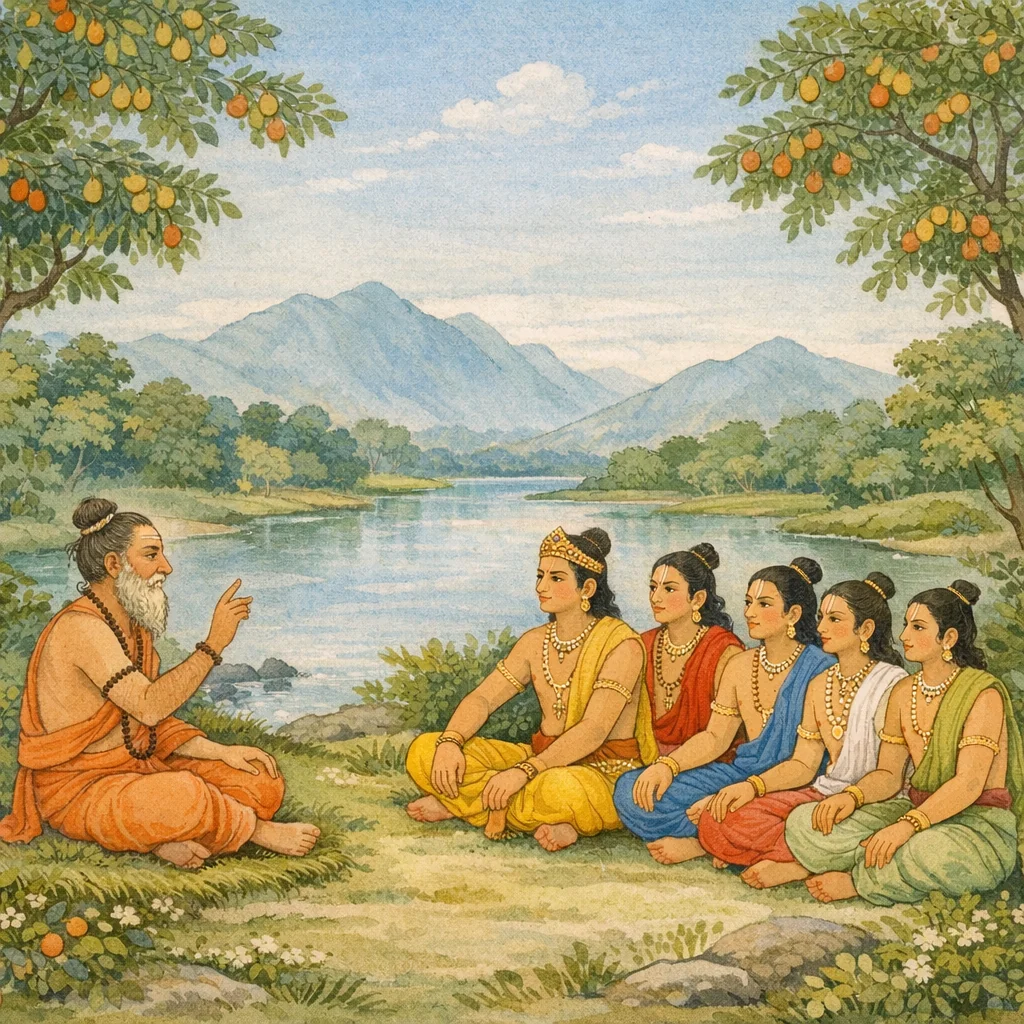
Vaiśaṃpāyana narrates the arrival of the radiant ṛṣi Lomaśa while Dhaumya is in conversation. Yudhiṣṭhira and accompanying brāhmaṇas rise to स्वागत (formal reception) and honor him according to rite. Questioned about his travels and purpose, Lomaśa explains that he has been wandering through worlds and has come from Indra’s abode, where he saw Arjuna seated near Indra, a sight that occasions his astonishment. Indra instructs Lomaśa to go to the Pāṇḍavas and convey reassuring news: Arjuna has obtained a major Rudra-derived weapon identified as Brahmaśiras, complete with mantras, withdrawal procedure, and expiatory safeguards. He has also learned additional divine astras from Yama, Kubera, Varuṇa, and Indra, and acquired Gandharva competencies—song, dance, sāman, and instruments—through Viśvāvasu’s lineage. Lomaśa further advises Yudhiṣṭhira to commit to tapas with his brothers, downplays the comparative threat posed by Karṇa in battle, and promises to explain the full aims and fruits of the forthcoming tīrtha-yātrā, asserting the credibility of a maharṣi’s teachings on pilgrimage merit.
Chapter Arc: वनवास की धूल में थके पाण्डवों के सामने धौम्य ऋषि पश्चिम दिशा के तीर्थों का द्वार खोलते हैं—जहाँ नर्मदा की प्रत्यक्-स्रोता धारा स्वयं पवित्रता का घोष करती है। → धौम्य एक-एक कर पश्चिम के पुण्य-आयतनों का विस्तार करते हैं—नदियाँ, वन, शैल-शिखर, देव-आश्रय और त्रैलोक्य-विख्यात तीर्थ; वर्णन बढ़ते-बढ़ते नर्मदा-तट के वैदूर्यशिखर, मैनाक, असित पर्वत और सिद्धिदायक आश्रमों तक पहुँचता है, मानो यात्रा का मानचित्र धीरे-धीरे जीवित हो उठे। → पुष्कर-तीर्थ का महात्म्य गाथा-रूप में उभरता है—यहाँ निवास की केवल मनसा-इच्छा से भी पाप विनष्ट होते हैं और साधक ‘नाकपृष्ठ’ (स्वर्गीय आनन्द) का स्पर्श पाता है; तीर्थ-फल का यह ‘मानसिक संकल्प’ वाला चरम विधान अध्याय का शिखर बनता है। → धौम्य पश्चिम दिशा के तीर्थ-समूह को समेटते हुए संकेत देते हैं कि इन स्थलों का स्मरण, संकल्प और दर्शन—तीनों ही पाण्डवों के वनवास को तपस्या में रूपान्तरित कर सकते हैं; तीर्थयात्रा का उद्देश्य केवल मार्ग नहीं, अंतःशुद्धि है। → पाण्डव अब इस पवित्र मानचित्र के अनुसार आगे किस तीर्थ की ओर प्रथम कदम बढ़ाएँगे—यह जिज्ञासा अगले वर्णन के लिए छोड़ दी जाती है।
Shlokas
Verse 1
हम () अऑपआ अपा८ एकोननवतितमो<ध्याय: धौम्यद्वारा पश्चिम दिशाके तीर्थोंका वर्णन धौम्य उवाच आनर्तेषु प्रतीच्यां वै कीर्तयिष्यामि ते दिशि । यानि तत्र पवित्राणि पुण्यान्यायतनानि च,धौम्यजी कहते हैं--युधिष्ठटिर! अब मैं पश्चिम दिशाके आनर्तदेशमें जो-जो पवित्र तीर्थ और पुण्यस्वरूप देवालय हैं, उन सबका वर्णन करूँगा
Dhaumya said: “O Yudhiṣṭhira, I shall now recount to you the sacred places in the western quarter, in the land of Ānarta—those tīrthas and holy shrines that purify and confer merit.”
Verse 2
प्रियड्ग्वाम्रवणोपेता वानीरफलमालिनी । प्रत्यक्स्रोता नदी पुण्या नर्मदा तत्र भारत,भरतनन्दन! पश्चिम दिशामें पुण्यमयी नर्मदा नदी प्रवाहित होती है, जिसकी धारा पूर्वसे पश्चिमकी ओर है। उसके तटपर प्रियंगु और आमके वृक्षोंका वन है। बेंत तथा फलवाले वृक्षोंकी श्रेणियाँ भी उसकी शोभा बढ़ाती हैं
Dhaumya said: “There, O Bhārata, flows the sacred river Narmadā, whose current runs westward. Her banks are graced with groves of priyangu and mango trees, and adorned with thickets of reeds and garlands of fruit-bearing trees—enhancing the river’s auspicious beauty.”
Verse 3
त्रैलोक्ये यानि तीर्थानि पुण्यान्यायतनानि च । सरिद्वनानि शैलेन्द्रा देवाश्ष सपितामहा:,भरतनन्दन कुरुश्रेष्ठ! त्रिलोकीमें जो-जो पुण्यतीर्थ, मन्दिर, नदी, वन, पर्वत, ब्रह्मा आदि देवता, सिद्ध, ऋषि, चारण एवं पुण्यात्माओंके समूह हैं, वे सब सदा नर्मदाके जलमें स्नान करनेके लिये आया करते हैं
Dhaumya said: “O descendant of Bharata, best of the Kurus! All the sacred fords throughout the three worlds, all holy shrines, rivers and forests, the lordly mountains, and even the gods together with Brahmā, the grandsire—all of them continually come to bathe in the waters of the Narmadā.”
Verse 4
नर्मदायां कुरुश्रेष्ठ सह सिद्धर्षिचारणै: । स्नातुमायान्ति पुण्यौचै: सदा वारिषु भारत,भरतनन्दन कुरुश्रेष्ठ! त्रिलोकीमें जो-जो पुण्यतीर्थ, मन्दिर, नदी, वन, पर्वत, ब्रह्मा आदि देवता, सिद्ध, ऋषि, चारण एवं पुण्यात्माओंके समूह हैं, वे सब सदा नर्मदाके जलमें स्नान करनेके लिये आया करते हैं
Dhaumya said: “O best of the Kurus, O Bhārata, the exalted holy ones—Siddhas, Ṛṣis, and Cāraṇas—continually come to the waters of the Narmadā to bathe. Thus the river is upheld as a supremely purifying tīrtha, drawing the spiritually accomplished and reminding a seeker that purity and merit are strengthened by reverent contact with sacred places and disciplined practice.”
Verse 5
निकेत: श्रूयते पुण्यो यत्र विश्रवसो मुने: । जज्ञे धनपतिर्यत्र कुबेरो नरवाहन:,वहीं मुनिवर विश्रवाका पवित्र आश्रम सुना जाता है, जहाँ नरवाहन धनाध्यक्ष कुबेरका जन्म हुआ था
Dhaumya said: “There is said to be a holy abode—belonging to the sage Viśravas—where Kubera, the lord of wealth, was born, famed as ‘Naravāhana’ (he whose vehicle is men).”
Verse 6
वैदूर्यशिखरो नाम पुण्यो गिरिवर: शिव: । नित्यपुष्पफलास्तत्र पादपा हरितच्छदा:
Dhaumya said: “There is a holy and auspicious best of mountains, named Vaidūryaśikhara. There the trees are ever green with fresh foliage, and they continually bear flowers and fruits.”
Verse 7
वैदूर्यशिखर नामक मंगलमय पवित्र पर्वत भी नर्मदा-तटपर है, वहाँ हरे-हरे पत्तोंसे सुशोभित सदा फल और फूलोंके भारसे लदे हुए वृक्ष शोभा पाते हैं ।। तस्य शैलस्य शिखरे सर: पुण्यं महीपते । फुल्लपद्म॑ महाराज देवगन्धर्वसेवितम्,राजन्! उस पर्वतके शिखरपर एक पुण्य सरोवर है जिसमें सदा कमल खिले रहते हैं। महाराज! देवता और गन्धर्व भी उस पुण्यतीर्थका सेवन करते हैं
Dhaumya said: “On the bank of the Narmadā stands a sacred and auspicious mountain called Vaidūryaśikhara. There, trees gleam with fresh green leaves and are ever bowed down by the weight of fruits and blossoms. Upon that mountain’s summit, O king, lies a holy lake, always adorned with fully blossomed lotuses. O great ruler, even the gods and Gandharvas resort to that sanctified tīrtha.”
Verse 8
बह्दाश्चर्य महाराज दृश्यते तत्र पर्वते । पुण्ये स्वर्गोपमे चैव देवर्षिगणसेविते,राजन! देवर्षिगणोंसे सेवित वह पुण्यपर्वत स्वर्गके समान सुन्दर एवं सुखद है। वहाँ अनेक आश्चर्यकी बातें देखी जाती हैं
Dhaumya said: “O great king, on that mountain many wondrous sights are to be seen. That holy peak—attended by companies of divine seers—is like heaven itself in its beauty and delight.”
Verse 9
हृदिनी पुण्यतीर्था च राजर्षेस्तत्र वै सरित् | विश्वामित्रनदी राजन् पुण्या परपुरंजय,शत्रुओंकी राजधानीपर विजय पानेवाले नरेश! वहाँ राजर्षि विश्वामित्रकी तपस्यासे प्रकट हुई एक पुण्यमयी नदी है, जो परम पवित्र तीर्थ मानी गयी है। उसीके तटपर नहुषनन्दन राजा ययाति स्वर्गसे साधु पुरुषोंके बीचमें गिरे थे और पुनः सनातन धर्ममय लोकोंमें चले गये थे
Dhaumya said: “O king—conqueror of enemy cities—there flows a river called the Viśvāmitra, sprung from the austerities of the royal sage Viśvāmitra. It is held to be a supremely holy ford (tīrtha). On its bank, King Yayāti, son of Nahuṣa, once fell from heaven into the midst of the righteous; and thereafter he again attained the eternal worlds founded upon dharma.”
Verse 10
यस्यास्तीरे सतां मध्ये ययातिर्नहुषात्मज: । पपात स पुनर्लोकॉल्ले भे धर्मान् सनातनान्,शत्रुओंकी राजधानीपर विजय पानेवाले नरेश! वहाँ राजर्षि विश्वामित्रकी तपस्यासे प्रकट हुई एक पुण्यमयी नदी है, जो परम पवित्र तीर्थ मानी गयी है। उसीके तटपर नहुषनन्दन राजा ययाति स्वर्गसे साधु पुरुषोंके बीचमें गिरे थे और पुनः सनातन धर्ममय लोकोंमें चले गये थे
On the bank of that sacred river, Yayāti, the son of Nahuṣa, once fell down from heaven into the midst of righteous sages. There, through the power of timeless dharma, he regained the eternal worlds again—showing that even a fall can be redeemed when one returns to the path upheld by the good.
Verse 11
तत्र पुण्यो हृद: ख्यातो मैनाकश्नैव पर्वत: । बहुमूलफलोपेतस्त्वसितो नाम पर्वत:,वहाँ पुण्यसरोवर, विख्यात मैनाक पर्वत और प्रचुर फलमूलोंसे सम्पन्न असित नामक पर्वत है
Dhaumya said: “There lies the renowned sacred lake, and also the famous Mount Maināka. There too is a mountain named Asita, rich with abundant roots and fruits.”
Verse 12
आश्रम: कक्षसेनस्य पुण्यस्तत्र युधिष्ठिर । च्यवनस्याश्रमश्चैव विख्यातस्तत्र पाण्डव,युधिष्ठिर! उसी पर्वतपर कच्छसेनका पुण्यदायक आश्रम है। पाण्डुनन्दन! महर्षि च्यवनका सुविख्यात आश्रम भी वहीं है
Dhaumya said: “O Yudhiṣṭhira, in that very place there is the holy hermitage of Kakṣasena. And there too, O son of Pāṇḍu, is the renowned hermitage of the sage Cyavana.”
Verse 13
तत्राल्पेनैव सिध्यन्ति मानवास्तपसा विभो । जम्बूमार्गो महाराज ऋषीणां भावितात्मनाम्
There, O mighty one, people attain success with only a little austerity. O great king, that is the Jambūmārga—the path frequented by sages whose selves are disciplined and refined.
Verse 14
आश्रम: शाम्यतां श्रेष्ठ मृगद्धिजनिषेवित: । प्रभो! वहाँ थोड़ी ही तपस्यासे मनुष्य सिद्धि प्राप्त कर लेते हैं। महाराज! पश्चिम दिशामें ही जम्बूमार्ग है, जहाँ शुद्ध अन्तःकरणवाले महर्षियोंका आश्रम है। शान्त पुरुषोंमें श्रेष्ठ युधिष्ठि! वह आश्रम पशु-पक्षियोंसे सेवित है ।। १३ $ ।। ततः पुण्यतमा राजन् सततं तापसैर्युता
Dhaumya said: “O best of men, let your mind be calmed. There is an ashram, frequented by deer and birds; there, even with a little austerity, people attain spiritual accomplishment. O king, to the west lies the Jambūmārga, where great seers of purified inner nature maintain their hermitage. O Yudhiṣṭhira, best among the peaceful, that ashram is attended by animals and birds.”
Verse 15
केतुमाला च मेध्या च गड्जाद्वारं च भूमिप । ख्यातं च सैन्धवारण्यं पुण्यं द्विजनिषेवितम्
Dhaumya said: “O king, there are Ketumālā and Medhyā, and also the place called Gaḍjādvāra; and the renowned Saindhava forest—holy and frequented by Brahmins, the twice-born.”
Verse 16
राजन्! उधर ही सदा तपस्वीजनोंसे भरे हुए पुण्यतम तीर्थ--केतुमाला, मेध्या और गंगाद्वार (हरिद्वार) हैं। भूपाल! द्विजोंसे सेवित सुप्रसिद्ध सैन्धवारण्य भी उधर ही है ।। पितामहसर: पुण्यं पुष्करं नाम नामतः । वैखानसानां सिद्धानामृषीणामाश्रम: प्रिय:,ब्रह्माजीका पुण्यदायक सरोवर पुष्कर भी पश्चिम दिशामें ही है, जो वानप्रस्थों, सिद्धों और महर्षियोंका प्रिय आश्रम है
Dhaumya said: “O king, in that western region lie ever-holy pilgrimage places, constantly frequented by ascetics—Ketumālā, Medhyā, and Gaṅgādvāra (Haridvāra). O protector of the earth, there too is the renowned Saindhava forest, revered and served by Brahmins. There is also the sacred lake called Puṣkara, famed by name—dear as a hermitage to Vaikhānasa forest-dwellers, perfected beings, and great seers.”
Verse 17
अप्यत्र संश्रयार्थाय प्रजापतिरथो जगौ । पुष्करेषु कुरुश्रेष्ठ गाथां सुकृतिनां वर,पुण्यवानोंमें प्रधान कुरुश्रेष्ठ! पुष्करमें निवास करनेके लिये प्रजापति ब्रह्माजीने एक गाथा गायी है, जो इस प्रकार है
“Indeed, for the sake of finding refuge here, Prajāpati (Brahmā) once sang a verse. O best of the Kurus, at Puṣkara he uttered a gāthā—an exalted saying—celebrating the foremost among the meritorious.”
Verse 18
मनसाप्यभिकामस्य पुष्कराणि मनस्विन: । विप्रणश्यन्ति पापानि नाकपृछे च मोदते,“जो मनस्वी पुरुष मनसे भी पुष्करतीर्थमें निवास करनेकी इच्छा करता है, उसके सारे पाप नष्ट हो जाते हैं और वह स्वर्गलोकमें आनन्द भोगता है”
Dhaumya said: Even if a resolute man merely forms in his mind the wish to dwell at the sacred Puṣkara, his sins are destroyed; and, attaining the heights of heaven, he rejoices.
Verse 89
इति श्रीमहाभारते वनपर्वणि तीर्थयात्रापर्वणि धौम्यतीर्थयात्रायां एकोननवतितमो<ध्याय:
Thus ends the eighty-ninth chapter in the Vana Parva of the Śrī Mahābhārata, within the section on pilgrimage to sacred fords (tīrthas), specifically the account of Dhaumya’s pilgrimage. This closing colophon marks the completion of a unit of teaching and narrative, framed around the ethical and purificatory power of visiting tīrthas under the guidance of a learned teacher.
Frequently Asked Questions
The tension is managing fear and uncertainty during exile: Lomaśa redirects attention from anxiety over opponents to disciplined tapas and informed confidence grounded in verified developments (Arjuna’s progress).
Tapas is presented as the highest practical means for attaining significant outcomes; alongside this, knowledge-power (āstra-vidyā) must be paired with restraint protocols (saṃhāra and prāyaścitta).
Yes. The chapter asserts that whatever pilgrimage-related merit involving tapas is taught by the maharṣi should be regarded as authoritative (śraddheya), establishing interpretive trust before the tīrtha-yātrā exposition.