Adhyaya 66
अध्याय ६६: संजयेन जनार्दन-प्रभाववर्णनम् (Sañjaya on Janārdana’s Decisive Sovereignty)
Upa-parva: Sañjaya–Dhṛtarāṣṭra Saṃvāda: Janārdana-Māhātmya and Pāṇḍava-Bala (Contextual Discourse)
Sañjaya responds to Dhṛtarāṣṭra’s repeated questioning about Pāṇḍava strength by placing Arjuna and Vāsudeva together as supremely honored archers, arising ‘elsewhere’ by will (kāma) for the purpose of removing burdens. He presents Kṛṣṇa’s cakra as operating through māyā and describes Kṛṣṇa’s prior victories over formidable adversaries (e.g., Naraka, Śambara, Kaṃsa, and Caidya) as effortless, thereby establishing a benchmark for assessing present political risk. The chapter repeatedly asserts Kṛṣṇa’s capacity to govern earth, mid-region, and heaven ‘as if in play,’ and frames him as the pivot of victory: where truth, dharma, modesty, and straightforwardness reside, there is Govinda; where Kṛṣṇa stands, there is jaya (success). Sañjaya further introduces the doctrine of cyclical governance—kālacakra, jagaccakra, yugacakra—turned continuously by Keśava through self-yoga, extending sovereignty over time, death, and all beings. Finally, the discourse explains Kṛṣṇa’s strategic concealment: though lord of all, he undertakes actions ‘like a weak farmer,’ deluding those who do not take refuge in him, while those who surrender are not confounded—an interpretive key for reading political events as both ethical and metaphysical.
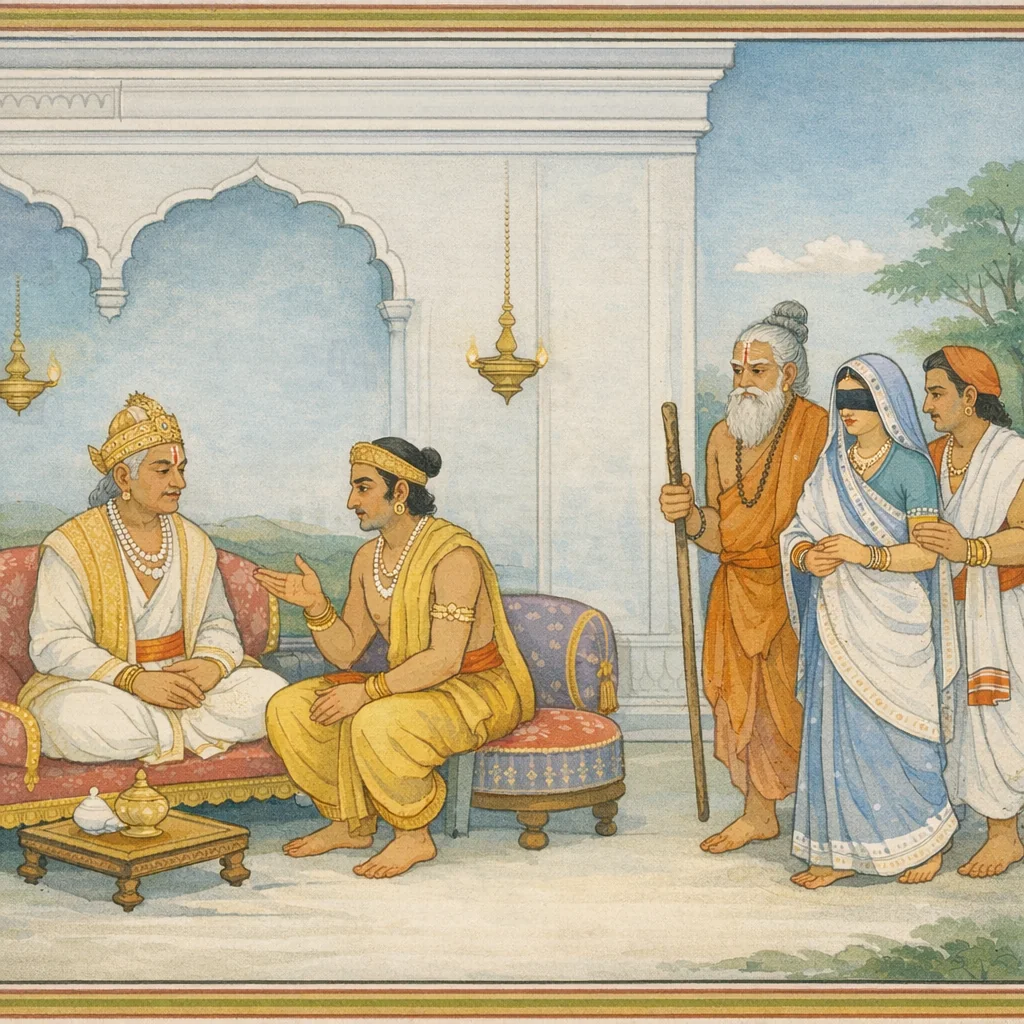
Chapter Arc: सभा से समस्त राजाओं के उठ जाने पर धृतराष्ट्र, पुत्र-विजय की आशा में, संजय को एकान्त में बुलाकर पाण्डवों और अपनी सेना की वास्तविक सामर्थ्य–दुर्बलता पूछते हैं। → धृतराष्ट्र का प्रश्न केवल सैन्य-गणना नहीं, भविष्य का निर्णय है—वे जानना चाहते हैं कि ‘कौन ज्येष्ठ, कौन कनिष्ठ’ और किसका पलड़ा भारी है; संजय, केशव–पार्थ के मत को ‘यथातथ्य’ कहने की तैयारी करता है, जिससे राजा की आशा और भय दोनों तीव्र होते जाते हैं। → संजय के कथन के आधार पर विदुर शीघ्रता से व्यास और गान्धारी को सभा में ले आते हैं; महाप्राज्ञ कृष्णद्वैपायन व्यास स्वयं आगे बढ़कर संजय को आदेश देते हैं कि धृतराष्ट्र के प्रश्न का उत्तर वासुदेव और अर्जुन के विषय में सत्य-सत्य, जैसा जानता है वैसा ही कहे। → व्यास का आदेश कथा को ‘राजनीतिक अनुमान’ से उठाकर ‘ऋषि-प्रमाणित सत्यवचन’ के धरातल पर स्थापित कर देता है; धृतराष्ट्र के सामने अब टालने योग्य नहीं, सुनने योग्य सत्य आने वाला है। → संजय को सत्य-वर्णन का आदेश मिल चुका है—अब वह धृतराष्ट्र को पाण्डवों की शक्ति और केशव–पार्थ के निश्चय का निर्णायक विवरण सुनाने ही वाला है।
Shlokas
Verse 1
/ अपन प्रात बछ। अकाल सप्तषष्टितमो< ध्याय: धृतराष्ट्रके पास व्यास और गान्धारीका आगमन तथा व्यासजीका संजयको और अर्जुनके सम्बन्धमें कुछ आदेश वैशम्पायन उवाच दुर्योधने धार्तराष्ट्रे तद् वचो नाभिनन्दति । तृष्णीम्भूतेषु सर्वेषु समुत्तस्थुर्नरर्षभा:,वैशम्पायनजी कहते हैं--जनमेजय! धृतराष्ट्रपुत्र दुर्योधनने जब श्रीकृष्ण और अर्जुनके उस कथनका कुछ भी आदर नहीं किया और सब लोग चुप्पी साधकर रह गये, तब वहाँ बैठे हुए समस्त नरश्रेष्ठ भूपालगण वहाँसे उठकर चले गये
Vaiśampāyana said: When Duryodhana, the son of Dhṛtarāṣṭra, showed no respect for those words, and when everyone fell into silence, the bull-like best of men—kings and eminent nobles seated there—rose up and departed. The scene underscores how contempt for wise counsel and diplomatic restraint isolates the obstinate and hastens the breakdown of righteous deliberation.
Verse 2
उत्थितेषु महाराज पृथिव्यां सर्वराजसु । रहिते संजयं राजा परिप्रष्टूं प्रचक्रमे,महाराज! भूमण्डलके सब राजा जब सभाभवनसे उठ गये, तब अपने पुत्रोंकी विजय चाहनेवाले तथा उन्हींके वशमें रहनेवाले राजा धृतराष्ट्रने वहाँ एकान्तमें अपनी, दूसरोंकी और पाण्डवोंकी जय-पराजयके विषयमें संजयका निश्चित मत जाननेके लिये उनसे कुछ और बातें पूछनी प्रारम्भ की
Vaiśampāyana said: “O King, when all the kings of the earth had risen and departed, King Dhṛtarāṣṭra, finding Saṃjaya alone, began to question him further—seeking a clear and settled judgment about victory and defeat, for himself, for the others, and for the Pāṇḍavas.”
Verse 3
आशंसमानो विजयं तेषां पुत्रवशानुग: । आत्मनश्न परेषां च पाण्डवानां च निश्चयम्,महाराज! भूमण्डलके सब राजा जब सभाभवनसे उठ गये, तब अपने पुत्रोंकी विजय चाहनेवाले तथा उन्हींके वशमें रहनेवाले राजा धृतराष्ट्रने वहाँ एकान्तमें अपनी, दूसरोंकी और पाण्डवोंकी जय-पराजयके विषयमें संजयका निश्चित मत जाननेके लिये उनसे कुछ और बातें पूछनी प्रारम्भ की
Vaiśampāyana said: When the kings of the earth had risen and departed from the assembly hall, King Dhṛtarāṣṭra—longing for victory for his sons and swayed by attachment to them—privately sought to learn Sañjaya’s settled judgment about the likely outcome for himself, for the others, and for the Pāṇḍavas. In this moment, the narrative highlights how partiality and desire for one’s own side can cloud discernment, even as a ruler turns to counsel to grasp the moral and practical consequences of impending conflict.
Verse 4
धृतराष्ट्र रवाच गावल्ल्गणे ब्रूहि न: सारफल्गु स्वसेनायां यावदिहास्ति किंचित् । त्वं पाण्डवानां निपुणं वेत्थ सर्व किमेषां ज्याय: किमु तेषां कनीय:
Dhṛtarāṣṭra said: “Sañjaya, son of Gavalgaṇa, tell us the very essence—whatever strength or weakness there is here in our own host. You also know all matters concerning the Pāṇḍavas with skill; therefore declare: in what are they superior, and in what do they fall short?”
Verse 5
धृतराष्ट्र बोले--गवल्गणपुत्र संजय! यहाँ अपनी सेनामें जो कुछ भी प्रबलता या दुर्बलता है, उसका हमसे वर्णन करो। इसी प्रकार पाण्डवोंकी भी सारी बातें तुम अच्छी तरह जानते हो, अत: बताओ; ये किन बातोंमें बढ़े-चढ़े हैं और उनमें कौन-कौन-सी त्रुटियाँ हैं? ४ ।। त्वमेतयो: सारवित् सर्वदर्शी धर्मार्थयोर्निपुणो निश्चयज्ञ: । स मे पृष्ट: संजय ब्रूहि सर्व युध्यमाना: कतरे5स्मिन् न सन्ति,संजय! तुम इन दोनों पक्षोंके बलाबलको जाननेवाले, सर्वदर्शी, धर्म और अर्थके ज्ञानमें निपुण तथा निश्चित सिद्धान्तके ज्ञाता हो; अतः मेरे पूछनेपर सब बातें साफ-साफ कहो। युद्धमें प्रवृत्त होनेपर किस पक्षके लोग इस लोकमें जीवित नहीं रह सकते?
Dhṛtarāṣṭra said: “Sañjaya, son of Gavalgaṇa, describe to me whatever strength or weakness there is in our own army here. You also know all matters concerning the Pāṇḍavas well; therefore tell me: in what are they superior, and what faults do they have? You know the true power of both sides, see all things as they are, are skilled in dharma and in practical advantage, and understand settled conclusions. Therefore, Sañjaya, since I ask you, speak everything plainly: when they enter into battle, which side’s men will not remain alive in this world?”
Verse 6
संजय उवाच नत्वां ब्रूयां रहिते जातु किंचि- दसूया हि त्वां प्रविशेत राजन् । आनयस्व पितरं महाव्रतं गान्धारी च महिषीमाजमीढ,संजयने कहा--राजन्! एकान्तमें तो मैं आपसे कभी कोई बात नहीं कह सकता, क्योंकि इससे आपके हृदयमें दोषदर्शनकी भावना उत्पन्न होगी। अजमीढनन्दन! आप अपने महान् व्रतधारी पिता व्यासजी और महारानी गान्धारीको भी यहाँ बुलवा लीजिये
Sañjaya said: “O King, I would never speak to you about this in private, for suspicion and fault-finding might enter your heart. O descendant of Ajamīḍha, summon here your father Vyāsa, the great observer of vows, and Queen Gāndhārī as well.”
Verse 7
तौ तेडसूयां विनयेतां नरेन्द्र धर्मज्ञौ तौ निपुणा निश्चयज्ञौ । तयोस्तु त्वां संनिधौ तद् वदेयं कृत्स्नं मतं केशवपार्थयोर्यत्,नरेन्द्र! वे दोनों धर्मके ज्ञाता, विचारकुशल तथा सिद्धान्तको समझनेवाले हैं; अतः वे आपकी दोषदृष्टिका निवारण करेंगे। उन दोनोंके समीप मैं आपको श्रीकृष्ण और अर्जुनका जो विचार है, वह पूरा-पूरा बता दूँगा
Sañjaya said: O king, those two—skilled in dharma, adept in deliberation, and discerning in settled conclusions—will remove your fault-finding suspicion. In their very presence, I shall tell you in full the considered intention of Keśava (Kṛṣṇa) and Pārtha (Arjuna), so that your judgment may be guided by what is right rather than by distrust.
Verse 8
वैशम्पायन उवाच इत्युक्तेन च गान्धारी व्यासश्चात्राजगाम ह । आनीतीौ विदुरेणेह सभां शीघ्र प्रवेशितो,वैशम्पायनजी कहते हैं--जनमेजय! संजयके ऐसा कहनेपर (धृतराष्ट्रकी प्रेरणासे) गान्धारी तथा महर्षि व्यास वहाँ आये। विदुरजी उन्हें यहाँ बुलाकर ले आये और सभाभवनमें शीघ्र ही उनका प्रवेश कराया
Vaiśampāyana said: When Sañjaya had spoken thus, Gāndhārī and the sage Vyāsa came there. Summoned and brought by Vidura, they were quickly ushered into the assembly hall—signaling the elders’ urgent involvement as the court moves toward a grave decision.
Verse 9
ततस्तन्मतमाज्ञाय संजयस्यात्मजस्य च । अभ्युपेत्य महाप्राज्ञ: कृष्णद्वैपायनोडब्रवीत्,तदनन्तर परम ज्ञानी श्रीकृष्णद्वैपायन व्यास सभा-भवनमें पहुँचकर संजय तथा अपने पुत्र धृतराष्ट्रके उस विचारको जानकर इस प्रकार बोले--
Then, understanding that intention—both of Sañjaya and of his own son (Dhṛtarāṣṭra)—the great sage Kṛṣṇa Dvaipāyana (Vyāsa) approached and spoke. The narrative underscores a decisive moment: a wise elder, discerning the inner resolve of those involved, enters the royal assembly to counsel them toward a course aligned with dharma before events harden into irreversible conflict.
Verse 10
व्यास उवाच सम्पृच्छते धृतराष्ट्राय संजय आचरक्ष्व सर्व यावदेषो<नुयुद्धक्ते । सर्व यावत् वेत्थ तस्मिन् यथावद् याथातथ्यं वासुदेवे3र्जुने च,व्यासजीने कहा--संजय! धुृतराष्ट्र तुमसे जो कुछ जानना चाहते हैं, वह सब इन्हें बताओ। ये भगवान् श्रीकृष्ण तथा अर्जुनके विषयमें जो कुछ पूछते हैं, वह सब, जितना तुम जानते हो, उसके अनुसार यथार्थरूपसे कहो
Vyāsa said: Sañjaya, tell Dhṛtarāṣṭra everything he wishes to know from you. And concerning Vāsudeva (Kṛṣṇa) and Arjuna, whatever he asks, speak truthfully and precisely, according to all that you know.
Verse 67
इति श्रीमहाभारते उद्योगपर्वणि यानसंधिपर्वणि व्यासगान्धार्यागमने सप्तषष्टितमो<ध्याय:
Thus, in the Śrī Mahābhārata, within the Udyoga Parva—specifically the section on the mission and negotiations—ends the sixty-seventh chapter, describing Vyāsa’s coming to Gāndhārī. The colophon signals a transition: after counsel and deliberation, the narrative turns toward a morally weighty encounter meant to guide conduct and avert ruin through wise admonition.
Frequently Asked Questions
Strength is defined as more than material resources; Sañjaya argues that the decisive ‘essence’ lies with Janārdana—so the strategic balance is interpreted through alignment with Kṛṣṇa and dharma rather than numerical comparison alone.
The verse functions as a normative thesis: victory is associated with the locus of dharma—truthfulness, moral order, modest restraint, and straightforward conduct—personified here in Kṛṣṇa, making ethical alignment a predictor of outcome.
Yes. It states that Keśava ‘deludes’ through māyā-yoga while acting in ordinary guises, and that those who take refuge in him are not confounded—presenting an interpretive framework for why actors may misread events despite abundant counsel.