Adhyaya 64
Udyoga-parva Adhyāya 64: Arjuna’s Instruction to Sanjaya (Message to the Kuru Assembly)
Upa-parva: Sanjaya–Arjuna Message Episode (Udyoga-parva context)
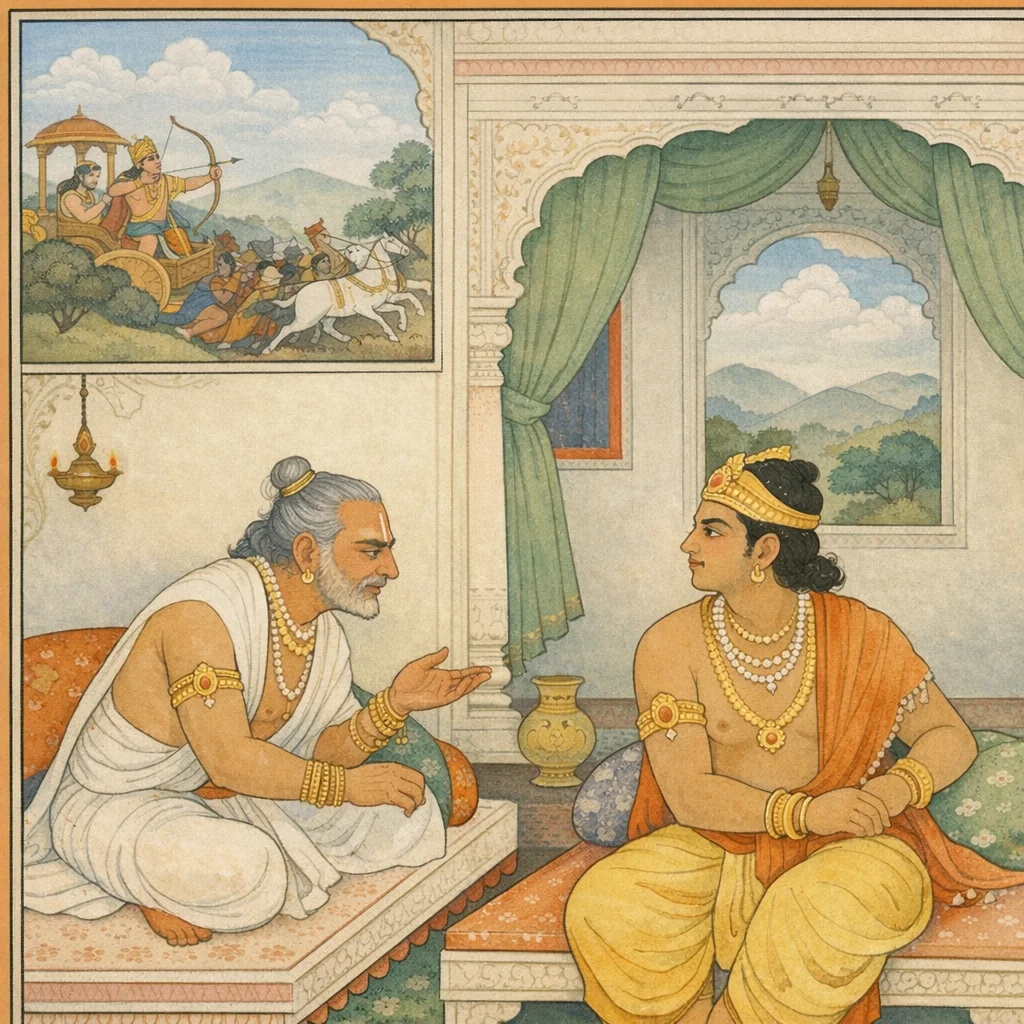
Vaiśaṃpāyana reports that after addressing Suyodhana, Dhṛtarāṣṭra again questions Saṃjaya about what remained to be told following Vāsudeva’s remarks. Saṃjaya recounts that Arjuna (Dhanaṃjaya), after hearing Vāsudeva, spoke at the appropriate moment while Vāsudeva listened. Arjuna enumerates प्रमुख (principal) figures of the Kuru side and associated rulers—elders, teachers, kin, and allies—indicating that Sanjaya should address them with proper courtesy and competence in the royal court. The message is to be delivered verbatim: Arjuna instructs that his words be communicated in the presence of assembled kings. The speech frames a conditional posture: if Yudhiṣṭhira’s desired rightful portion is not granted, Arjuna states an intention to proceed with force, using the conventional idiom of sending opponents to the “direction of the ancestors” through sharp arrows. The chapter closes with Saṃjaya stating he took leave of Vāsudeva and Arjuna, offered salutations, and returned swiftly to deliver the significant message to Dhṛtarāṣṭra.
Chapter Arc: अन्धे राजमहल में धृतराष्ट्र पुत्र को बुलाकर कहते हैं—“दुर्योधन, जिस पथ को तू मार्ग मान रहा है, वह उत्पथ है; मेरी बात सुन।” → धृतराष्ट्र दुर्योधन की विजय-लालसा को एक-एक करके काटते हैं: पाण्डवों का तेज पाँच महाभूतों-सा लोकधारक है; युधिष्ठिर धर्म के आश्रय हैं; धृष्टद्युम्न शत्रुमध्य में वज्र-वर्षा-सा है; और सबसे ऊपर कृष्ण—तीनों लोकों से अतिरिच्य—जिससे युद्ध करना बुद्धिमानी नहीं। फिर वे विराट-नगर की घटना स्मरण कराते हैं जहाँ अकेले अर्जुन ने कौरव-बल को छिन्न-भिन्न कर दिया था—तो समस्त पाण्डवों के सामने तुम्हारी सेना का क्या होगा? → धृतराष्ट्र का निर्णायक उपदेश: “सत्पुरुषों और हितैषियों की वाणी में ठहर; वृद्ध शान्तनव भीष्म, पितामह, उनकी सहनशील सलाह मान—हठ छोड़।” → अध्याय धृतराष्ट्र के तर्कपूर्ण, भय-और-धर्म दोनों से युक्त समझाने पर टिकता है—युद्ध की अनिवार्यता नहीं, अभी भी संधि का द्वार खुला है, यदि दुर्योधन अहंकार त्याग दे। → क्या दुर्योधन पिता की चेतावनी, भीष्म-वचन और कृष्ण-प्रभाव को मानकर संधि करेगा—या उसी उत्पथ पर अडिग रहेगा?
Shlokas
Verse 1
ऑपनआक्ात बछ। 2 पज्चषष्टितमो< ध्याय: धृतराष्ट्रका दुर्योधनको समझाना धृतराष्ट्र रवाच दुर्योधन विजानीहि यत् त्वां वक्ष्यामि पुत्रक । उत्पथं मन्यसे मार्गमनभिज्ञ इवाध्वग:,धृतराष्ट्र बोले--बेटा दुर्योधन! मैं तुमसे जो कुछ कहता हूँ, उसपर ध्यान दो। तुम इस समय अनजान बटोहीके समान कुमार्गको भी सुमार्ग समझ रहे हो
Dhṛtarāṣṭra said: “Duryodhana, my son, understand what I am about to tell you. Like a traveler who does not know the road, you are taking the wrong path to be the right one.”
Verse 2
पज्चानां पाण्डुपुत्राणां यत् तेज: प्रजिहीर्षसि । पज्चानामिव भूतानां महतां लोकधारिणाम्,यही कारण है कि तुम सम्पूर्ण लोकोंके आधारस्वरूप पाँच महाभूतोंके समान पाँचों पाण्डवोंके तेजका अपहरण करनेकी इच्छा कर रहे हो
Vidura said: “Why do you seek to strip away the splendor and rightful power of the five sons of Pāṇḍu—who, like the five great elements that uphold the worlds, are themselves great and world-sustaining? To desire the removal of such radiance is to oppose the very supports of order.”
Verse 3
युधिष्ठिरं हि कौन्तेयं परं धर्ममिहास्थितम् । परां गतिमसम्प्रेत्य न त्वं जेतुमिहाहसि,कुन्तीनन्दन युधिष्ठिर यहाँ उत्तम धर्मका आश्रय लेकर रहते हैं। तुम मृत्युको प्राप्त हुए बिना उन्हें जीत लोगे, यह कदापि सम्भव नहीं है
Vidura said: “O son of Kuntī, Yudhiṣṭhira stands here firmly established in the highest dharma. Unless you yourself reach the final state (death), you are not fit to claim that you will conquer him here—such a victory is not truly possible.”
Verse 4
भीमसेनं च कौन्तेयं यस्य नास्ति समो बले । रणान्तकं तर्जयसे महावातमिव द्रुम:,जैसे वृक्ष प्रचण्ड आँधीको डाँट बतावे, उसी प्रकार तुम समरांगणमें कालके समान विचरनेवाले कुन्तीकुमार भीमसेनको जिसके समान बलवान इस भूतलपर दूसरा कोई नहीं है, डराने-धमकानेका साहस करते हो
“And yet you dare to threaten Bhīmasena, the son of Kuntī—whose strength has no equal, who moves upon the battlefield like Kāla, Death itself, the ender of armies. It is as though a tree were to scold the raging tempest.”
Verse 5
सर्वशस्त्रभृतां श्रेष्ठ मेरें शिखरिणामिव । युधि गाण्डीवधन्वानं को नु युध्येत बुद्धिमान्,जैसे पर्वतोंमें मेरु श्रेष्ठ है, उसी प्रकार समस्त शस्त्रधारियोंमें गाण्डीवधारी अर्जुन श्रेष्ठ है। भला कौन बुद्धिमान् मनुष्य रणभूमिमें उसके साथ जूझनेका साहस करेगा?
As Mount Meru is foremost among mountains, so Arjuna, wielder of the Gāṇḍīva bow, is foremost among all who bear arms. What wise man would dare to contend with him on the field of battle?
Verse 6
धृष्टद्युम्नश्ष॒ पाउ्चाल्य: कमिवाद्य न शातयेत् । शत्रुमध्ये शरान् मुडचन् देवराडशनीमिव
And Dhṛṣṭadyumna, the Pāñcāla prince—whom would he not strike down today? Loosing arrows in the very midst of the foe, he is like Indra, king of the gods, hurling his thunderbolt.
Verse 7
जैसे देवराज इन्द्र वज्र छोड़ते हैं, उसी प्रकार पांचाल-राजकुमार धृष्टद्युम्न शत्रुओंकी सेनापर बाणोंकी वर्षा करता है। वह अब किसे छित्न-भिन्न नहीं कर डालेगा? ।। सात्यकिश्चापि दुर्धर्ष: सम्मतो5न्धकवृष्णिषु । ध्वंसयिष्यति ते सेनां पाण्डवेयहिते रत:,अन्धक और वृष्णिवंशका सम्माननीय योद्धा सात्यकि भी दुर्धर्ष वीर है। वह सदा पाण्डवोंके हितमें तत्पर रहता है। (युद्ध छिड़नेपर) वह तुम्हारी समस्त सेनाका संहार कर डालेगा
As Indra, king of the gods, hurls his thunderbolt, so the Pāñcāla prince Dhṛṣṭadyumna will shower arrows upon the enemy host—who now will he not hew down and shatter? And Sātyaki too, a hero hard to withstand, honored among the Andhakas and Vṛṣṇis, ever devoted to the welfare of the sons of Pāṇḍu: once war begins, he will destroy your entire army.
Verse 8
यः पुनः प्रतिमानेन त्रील्लॉकानतिरिच्यते । त॑ कृष्णं पुण्डरीकाक्षं को नु युद्धयेत बुद्धिमान्,जो तुलनामें तीनों लोकोंसे भी बढ़कर हैं, उन कमलनयन भगवान् श्रीकृष्णके साथ कौन समझदार मनुष्य युद्ध करेगा?
And who, being truly wise, would choose to wage war against Kṛṣṇa—the lotus-eyed Lord—whose worth, by every measure, surpasses even the three worlds?
Verse 9
एकतो हास्य दाराश्ष ज्ञातयश्ष सबान्धवा: | आत्मा च पृथिवी चेयमेकतश्च धनंजय:,श्रीकृष्णके लिये एक ओर स्त्री, कुटुम्बीजन, भाई-बन्धु, अपना शरीर और यह सारा भूमण्डल है, तो दूसरी ओर अकेला अर्जुन है (अर्थात् वे अर्जुनके लिये इन सबका त्याग कर सकते हैं)
For Kṛṣṇa, on one side stand his wives, his kinsmen, and all his relatives; on that side are also his very self and this whole earth. On the other side stands Dhanañjaya (Arjuna) alone.
Verse 10
वासुदेवो<पि दुर्धर्षो यतात्मा यत्र पाण्डव: | अविषटद्दां पृथिव्यापि तद् बल॑ यत्र केशव:,जहाँ अपने मन और इन्द्रियोंको संयममें रखनेवाला दुर्धर्ष वीर पाण्डुपुत्र अर्जुन है, वहीं वसुदेवनन्दन श्रीकृष्ण भी रहते हैं और जिस सेनामें साक्षात् श्रीकृष्ण विराज रहे हों, उसका वेग समस्त भूमण्डलके लिये भी असहा हो जाता है
Vidura declares that where the self-controlled, unconquerable Pāṇḍava Arjuna stands, Vāsudeva (Kṛṣṇa) is also present; and any force in which Keśava himself abides becomes so irresistible that even the whole earth would be unable to endure its onrush.
Verse 11
तिष्ठ तात सतां वाक्ये सुहृदामर्थवादिनाम् । वृद्ध शान्तनवं भीष्म तितिक्षस्व पितामहम्,तात! तुम सत्पुरुषों तथा तुम्हारे हितकी बात बतानेवाले सुहृदोंके कथनानुसार कार्य करो। वृद्ध शान्तनुनन्दन भीष्म तुम्हारे पितामह हैं। तुम उनकी प्रत्येक बात सहन करो
Vidura advises: “Dear son, stand by the counsel of the good and by the words of well-wishers who speak for your true benefit. Bhīṣma, the aged son of Śāntanu, is your grandsire—bear with him patiently, and endure his admonitions.”
Verse 12
मां च ब्रुवाणं शुश्रूष कुरूणामर्थदर्शिनम् । द्रोणं कृपं विकर्ण च महाराजं च बाह्लिकम्,मैं भी कौरवोंके हितकी ही बात सोचता हूँ; अतः मेरी भी सुनो। आचार्य द्रोण, कृप, विकर्ण और महाराज बाह्नलीक--ये भी तुम्हारे हितैषी ही हैं; अतः तुम्हें मेरे ही समान इनका भी समादर करना चाहिये। भरतनन्दन! ये सब लोग धर्मके ज्ञाता हैं और दोनों पक्षके लोगोंपर समानभावसे स्नेह रखते हैं
Vidura says: “Listen also to me as I speak—one who seeks the true welfare of the Kurus. And likewise heed Droṇa, Kṛpa, Vikarṇa, and the aged king Bāhlīka. They too are well-wishers devoted to your good; therefore you should honor their counsel as you would mine.”
Verse 13
एते हापि यथैवाहं मन्तुमरहसि तांस्तथा । सर्वे धर्मविदो होते तुल्यस्नेहाश्व भारत,मैं भी कौरवोंके हितकी ही बात सोचता हूँ; अतः मेरी भी सुनो। आचार्य द्रोण, कृप, विकर्ण और महाराज बाह्नलीक--ये भी तुम्हारे हितैषी ही हैं; अतः तुम्हें मेरे ही समान इनका भी समादर करना चाहिये। भरतनन्दन! ये सब लोग धर्मके ज्ञाता हैं और दोनों पक्षके लोगोंपर समानभावसे स्नेह रखते हैं
Vidura says: “You should regard these men just as you regard me. I too speak only for the welfare of the Kauravas—therefore listen to me. Droṇa the teacher, Kṛpa, Vikarṇa, and King Bāhlīka are likewise your well-wishers; you should honor them as you would honor me. O descendant of Bharata, all of them are knowers of dharma and bear equal goodwill toward people on both sides.”
Verse 14
यत् तद् विराटनगरे सह भ्रातृभिरग्रतः । उत्सृज्य गा: सुसंत्रस्तं बल॑ ते समशीर्यत,विराटनगरमें तुम्हारे भाइयोंसहित जो सारी सेना युद्धके लिये गयी थी, वह वहाँकी समस्त गौओंको छोड़कर अत्यन्त भयभीत हो तुम्हारे सामने ही भाग खड़ी हुई थी। उस नगरमें जो एक (अर्जुन)-का बहुतोंके साथ अत्यन्त अद्भुत युद्ध हुआ सुना जाता है; वह एक ही दृष्टान्त (उसकी प्रबलता और अजेयताके लिये) पर्याप्त है
Vidura said: That very incident in the city of Virāṭa is well known—when your army, which had marched out to fight in front of you along with your brothers, abandoned the cattle and, seized by extreme fear, broke ranks and fled. And the extraordinary battle heard of there—one warrior (Arjuna) against many—stands by itself as a sufficient example of his overwhelming strength and near-invincibility.
Verse 15
यच्चैव नगरे तस्मिउ्छूयते महदद्धुतम् । एकस्य च बहूनां च पर्याप्त तन्निदर्शनम्,विराटनगरमें तुम्हारे भाइयोंसहित जो सारी सेना युद्धके लिये गयी थी, वह वहाँकी समस्त गौओंको छोड़कर अत्यन्त भयभीत हो तुम्हारे सामने ही भाग खड़ी हुई थी। उस नगरमें जो एक (अर्जुन)-का बहुतोंके साथ अत्यन्त अद्भुत युद्ध हुआ सुना जाता है; वह एक ही दृष्टान्त (उसकी प्रबलता और अजेयताके लिये) पर्याप्त है
And further, in that very city there is heard a great marvel: the astonishing combat of a single warrior against many. That one example alone is sufficient as proof—showing the might and invincibility of that hero (Arjuna), before whom your brothers’ entire army once fled in terror at Virāṭa’s city, abandoning the cattle they had seized.
Verse 16
अर्जुनस्तत् तथाकार्षीत् कि पुनः सर्व एव ते । स भ्रातृनभिजानीहि वृत्त्या त॑ प्रतिपादय,देखो, जब अकले अर्जुनने इतना अद्भुत कार्य कर डाला, तब वे सब भाई मिलकर क्या नहीं कर सकते? अतः तुम पाण्डवोंको अपना भाई ही समझो और उनकी वृत्ति (स्वत्व) उन्हें देकर उनके साथ भ्रातृत्व बढ़ाओ
Vidura said: “Arjuna accomplished that deed exactly as it was required—what then could all of those brothers together not accomplish? Therefore, recognize the Pāṇḍavas as your own brothers, and by restoring to them their rightful means of livelihood and inheritance, strengthen brotherhood with them.”
Verse 65
इति श्रीमहाभारते उद्योगपर्वणि यानसंधिपर्वणि धृतराष्ट्रवाक्ये पजचषष्टितमो 5 ध्याय:,इस प्रकार श्रीमह्ा भारत उद्योगपर्वके अन्तर्गत यानसंधिपर्वमें धृतराष्ट्रवक्यविषयक पैंसठवाँ अध्याय पूरा हुआ
Thus ends the sixty-fifth chapter of the Udyoga Parva of the Śrī Mahābhārata, within the section on the mission and negotiations (Yāna–Sandhi), in the portion concerned with Dhṛtarāṣṭra’s discourse. (This is a colophon marking the close of the chapter.)
Frequently Asked Questions
The dilemma is the conditional shift from diplomatic claim to coercive enforcement: whether rightful entitlement should be secured through negotiated settlement or, if denied, through kṣātra-sanctioned compulsion, while still observing institutional protocol.
Speech acts have ethical weight in governance: accurate transmission, public accountability, and respectful address are presented as prerequisites for legitimate decision-making, even when outcomes may become adversarial.
No explicit phalaśruti appears here; the chapter functions as procedural and ethical documentation of intent, positioning the message as a record within the epic’s larger causal chain rather than as a standalone salvific recitation.