Adhyaya 169
अध्याय १६९ — भीष्मस्य पाण्डवसेनाप्रशंसा तथा शिखण्डिविषये नियमः (Bhīṣma’s Appraisal of Pāṇḍava Forces and His Constraint Regarding Śikhaṇḍin)
Upa-parva: Senānī-nirdeśa (Commander and Warrior Appraisals) — Bhīṣma’s Strategic Briefing
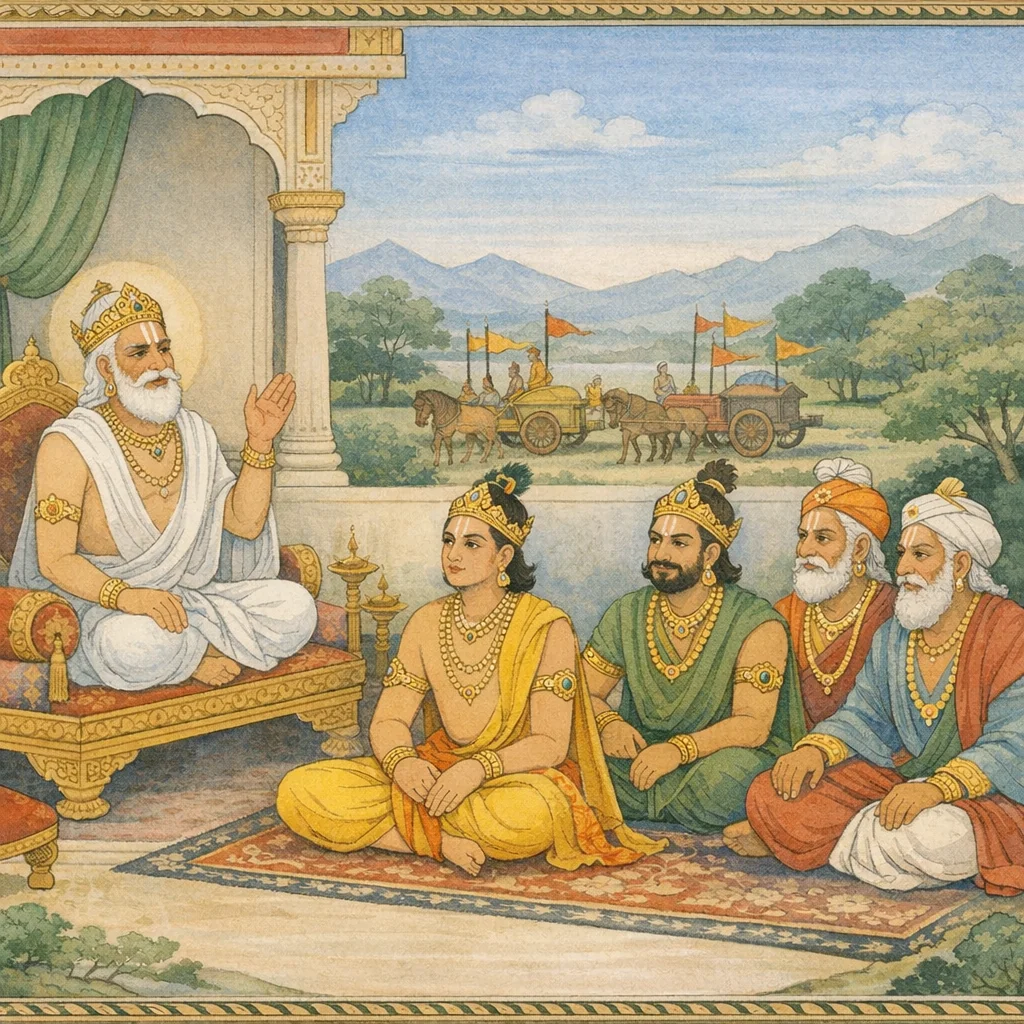
Bhīṣma addresses the Kuru king, presenting a structured appraisal of Pāṇḍava-aligned combat power. He praises Purujit-Kuntibhoja as a formidable archer and a major chariot-warrior, identifying him as Bhīma’s maternal uncle and classifying him among elite fighters. He then highlights Haiḍimba (Ghaṭotkaca), portraying him as a powerful, illusion-capable rākṣasa leader with subordinate rākṣasa warriors skilled in battle. Bhīṣma broadens the frame to include many regional rulers allied to the Pāṇḍavas under Vāsudeva’s leadership, and notes that these ratha/atiratha/ardharatha fighters will lead Yudhiṣṭhira’s army, with Arjuna (Kirīṭin) functioning as a decisive protector akin to Indra’s guardianship. Bhīṣma declares his intention to engage these opponents seeking victory or death, including confronting Arjuna and Kṛṣṇa. However, he explicitly states a rule of engagement: he will not strike Śikhaṇḍin, citing his own lifelong vow and the cultural-ethical premise that one should not kill a ‘woman’ or one deemed female-origin; he recalls his renunciation and service to the Kuru succession as evidence of vow-consistency. He concludes that he will fight other kings he meets, but not the sons of Kuntī.
Chapter Arc: भीष्म पाण्डव-पक्ष के रथियों और महारथियों का क्रमशः वर्णन आरम्भ करते हैं—मानो युद्ध से पहले ही पाण्डव-सेना की धड़कन गिनाई जा रही हो। → अभिमन्यु और सात्यकि जैसे युवा-प्रमुख योद्धाओं की क्षमता, नेतृत्व (रथ-यूथपतियों के भी यूथपति) और शत्रुनाशक स्वभाव का वर्णन युद्ध की अनिवार्यता को और तीखा करता है; साथ ही विराट और द्रुपद जैसे वृद्ध किन्तु क्षत्रधर्मनिष्ठ राजाओं की दृढ़ प्रतिज्ञा तनाव बढ़ाती है। → विराट और द्रुपद—वयोवृद्ध होते हुए भी—‘वीरगति के पथ’ पर स्थित होकर, सम्बन्ध-रक्षा और प्रत्यय-रक्षा हेतु प्राण त्यागने तक का संकल्प व्यक्त करते हैं; यह पाण्डव-पक्ष की नैतिक-राजनीतिक एकता का शिखर-घोष बनता है। → भीष्म का वर्णन पाण्डव-पक्ष की सैन्य-सम्पदा और सहयोगी राजाओं की निष्ठा को स्थापित कर देता है—युद्धभूमि में उतरने से पहले उनकी शक्ति-संरचना स्पष्ट हो जाती है। → कौरव-पक्ष इस बढ़ती हुई शक्ति-सूची का क्या प्रत्युत्तर देगा, और कौन-सा पक्ष ‘धर्म’ के नाम पर निर्णायक दावा करेगा—यह प्रश्न अगले प्रसंगों के लिए खुला रह जाता है।
Shlokas
Verse 1
२-27: हु हक अल सप्तत्याधिेकशततमो< ध्याय: पाण्डवपक्षके रथियों और महारथियोंका वर्णन तथा विराट और द्रुपदकी प्रशंसा भीष्म उवाच द्रौपदेया महाराज सर्वे पजच महारथा: । वैराटिरुत्तरशक्षैव रथोदारो मतो मम,भीष्मजी कहते हैं--महाराज! द्रौपदीके जो पाँच पुत्र हैं, वे सब-के-सब महारथी हैं। विराटपुत्र उत्तरको मैं उदार रथी मानता हूँ
Bhīṣma said: “O King, the five sons of Draupadī are all great chariot-warriors (mahārathas). And Uttara, the son of Virāṭa, in my judgment is a noble and eminent chariot-fighter.”
Verse 2
अभिमन्युर्महाबाहू रथयूथपयूथप: । सम: पार्थन समरे वासुदेवेन चारिहा,महाबाहु अभिमन्यु रथ-यूथपतियोंका भी यूथपति है। वह शत्रुनाशक वीर समरभूमिमें अर्जुन और श्रीकृष्णके समान पराक्रमी है। उसने अस्त्रविद्याकी विधिवत शिक्षा प्राप्त की है। वह युद्धकी विचित्र कलाएँ जानता है तथा दृढ़तापूर्वक व्रतका पालन करनेवाला और मनस्वी है। वह अपने पिताके क्लेशको याद करके अवश्य पराक्रम दिखायेगा
Bhīṣma said: “Abhimanyu, the mighty-armed hero, is a leader among the leaders of chariot-squadrons. In battle he is equal to Pārtha (Arjuna) and to Vāsudeva (Kṛṣṇa) in prowess, and he is a destroyer of foes.”
Verse 3
लब्धास्त्रश्चित्रयोधी च मनस्वी च दृढव्रत: । संस्मरन् वै परिकलेशं स्वपितुर्विक्रमिष्यति,महाबाहु अभिमन्यु रथ-यूथपतियोंका भी यूथपति है। वह शत्रुनाशक वीर समरभूमिमें अर्जुन और श्रीकृष्णके समान पराक्रमी है। उसने अस्त्रविद्याकी विधिवत शिक्षा प्राप्त की है। वह युद्धकी विचित्र कलाएँ जानता है तथा दृढ़तापूर्वक व्रतका पालन करनेवाला और मनस्वी है। वह अपने पिताके क्लेशको याद करके अवश्य पराक्रम दिखायेगा
Bhīṣma said: “Abhimanyu—mighty-armed, fully trained in weapons, skilled in the varied arts of battle, resolute in mind and firm in his vows—will surely display his valor when he recalls the hardship endured by his father. He is a leader even among the leaders of chariot-squadrons, a hero who destroys enemies, and on the battlefield he is as formidable as Arjuna and Śrī Kṛṣṇa. Having received proper instruction in the science of arms, he knows the intricate techniques of war; steadfast in discipline and strong-willed, he will not fail to act with courage, driven by remembrance of his father’s suffering.”
Verse 4
सात्यकिर्माधव: शूरो रथयूथपयूथप: । एष वृष्णिप्रवीराणाममर्षी जितसाध्वस:,मधुवंशी शूरवीर सात्यकि भी रथ-यूथपतियोंके भी यूथपति हैं। वृष्णिवंशके प्रमुख वीरोंमें ये सात्यकि बड़े ही अमर्षशील हैं। इन्होंने भयको जीत लिया है
Bhīṣma said: “Sātyaki, the Mādhava hero, is a valiant warrior—a commander even among the commanders of chariot-squadrons. Among the foremost champions of the Vṛṣṇis, he is fiercely unyielding in spirit and has conquered fear.”
Verse 5
उत्तमौजास्तथा राजन् रथोदारो मतो मम । युधामन्युश्व विक्रान्तो रथोदारो मतो मम,राजन! उत्तमौजाको भी मैं उदार रथी मानता हूँ। पराक्रमी युधामन्यु भी मेरे मतमें एक श्रेष्ठ रथी हैं
Bhīṣma said: “O King, in my judgment Uttamaujā is a noble chariot-warrior; and the valiant Yudhāmanyu too, in my judgment, is a noble chariot-warrior.”
Verse 6
एतेषां बहुसाहस्रा रथा नागा हयास्तथा | योत्स्यन्ते ते तनूंस्त्यक्त्वा कुन्तीपुत्रप्रियेप्सपा,इनके कई हजार रथ, हाथी और घोड़े हैं, जो कुन्तीपुत्र युधिष्ठिरका प्रिय करनेकी इच्छासे अपने शरीरको निछावर करके युद्ध करेंगे
Bhīṣma said: “On their side are many thousands of chariots, elephants, and horses. Those warriors will fight, ready to cast away their very bodies, driven by the desire to do what is dear to Kuntī’s son (Yudhiṣṭhira).”
Verse 7
पाण्डवै: सह राजेन्द्र तव सेनासु भारत | अग्निमारुतवद् राजन्नाह्यन्त: परस्परम्,भारत! राजेन्द्र! वे पाण्डवोंके साथ तुम्हारी सेनामें प्रवेश करके एक-दूसरेका आह्वान करते हुए अग्नि और वायुकी भाँति विचरेंगे
Bhīṣma said: “O best of kings, O Bhārata—entering your armies together with the Pāṇḍavas, they will range about like fire and wind, challenging one another.”
Verse 8
अजेयौ समरे वृद्धौ विराटद्रुपदौ तथा । महारथौ महावीर्यों मतौ मे पुरुषर्षभी,वृद्ध राजा विराट और ट्रुपद भी युद्धमें अजेय हैं। इन दोनों महापराक्रमी नरश्रेष्ठ वीरोंको मैं महारथी मानता हूँ
Bhīṣma said: “In battle, the aged kings Virāṭa and Drupada are unconquerable. In my judgment, those two bull-like men among warriors, endowed with great valor, are to be regarded as mahārathas.”
Verse 9
वयोवृद्धावपि हि तौ क्षत्रधर्मपरायणौ । यतिष्येते परं शक््त्या स्थितौ वीरगते पथि,यद्यपि वे दोनों अवस्थाकी दृष्टिसे बहुत बूढ़े हैं, तथापि क्षत्रिय-धर्मका आश्रय ले वीरोंके मार्गमें स्थित हो अपनी शक्तिभर युद्ध करनेका प्रयत्न करेंगे
Bhīṣma says: Though those two are very advanced in age, they remain devoted to the warrior’s dharma. Standing firm on the path that leads to a hero’s end, they will strive to fight with all the strength they still possess—choosing duty and valor over the weakness of years.
Verse 10
सम्बन्धकेन राजेन्द्र तौ तु वीर्यबलान्वयात् । आर्यवृत्तौ महेष्वासौ स्नेहपाशसितावुभौ,राजेन्द्र! वे दोनों नरेश वीर्य और बलसे संयुक्त श्रेष्ठ पुरुषोंके समान सदाचारी और महान् धनुर्धर हैं। पाण्डवोंके साथ सम्बन्ध होनेके कारण वे दोनों उनके स्नेह-बन्धनमें बँधे हुए हैं
O king, because of their relationship (by kinship/alliance), those two are endowed with valor and strength. They are great bowmen, upright in noble conduct; and, due to their connection with the Pāṇḍavas, both are bound fast in the cords of affection.
Verse 11
कारणं प्राप्य तु नरा: सर्व एव महाभुजा: । शूरा वा कातरा वापि भवन्ति कुरुपुड्व,कुरुश्रेष्ठ॒ कोई कारण पाकर प्रायः सभी महाबाहु मानव शूर अथवा कायर हो जाते हैं
Bhīṣma said: “O bull among the Kurus, when a determining cause arises, people—indeed all, even the mighty-armed—turn out to be either brave or fearful. It is circumstance and motive that bring forth courage or cowardice, revealing a person’s inner resolve in the moment of trial.”
Verse 12
एकायनगतावेतौ पार्थिवौ दृढ्धन्विनौ । प्राणांस्त्यक्त्वा परं शक्त्या घट्टितारी परंतप,परंतप! दृढ़तापूर्वक धनुष धारण करनेवाले राजा विराट और ट्रुपद एकमात्र वीरपथका आश्रय ले चुके हैं। वे अपने प्राणोंका त्याग करके भी पूरी शक्तिसे तुम्हारी सेनाके साथ टक्कर लेंगे
O scorcher of foes, those two kings, firm in their bowmanship, have taken refuge in a single course—the path of the hero. Even at the cost of their lives, they will clash with your army with all the strength they can muster.
Verse 13
पृथगक्षौहिणी भ्यां तावुभी संयति दारुणौ । सम्बन्धिभावं रक्षन्ती महत् कर्म करिष्यत:,वे दोनों युद्धमें बड़े भयंकर हैं, अतः अपने सम्बन्धकी रक्षा करते हुए पृथक्-पृथक् अक्षौहिणी सेना साथ लिये महान् पराक्रम करेंगे
Bhīṣma said: “Those two are both terribly formidable in battle. Therefore, while safeguarding the bond of kinship, they will each perform great deeds of valor, each supported by a separate akṣauhiṇī (full army division).”
Verse 14
लोकवीरीौ महेष्वासौ त्यक्तात्मानौ च भारत | प्रत्ययं परिरक्षन्ती महत् कर्म करिष्यत:,भारत! महान् धनुर्धर तथा जगतके सुप्रसिद्ध वीर वे दोनों नरेश अपने विश्वास और सम्मानकी रक्षा करते हुए शरीरकी परवा न करके युद्धभूमिमें महान् पुरुषार्थ प्रकट करेंगे
Bhishma said: O Bharata, those two world-renowned heroes, mighty archers, will act with self-forgetfulness. Guarding their pledged trust and honor, they will disregard their own bodies and display great valor on the battlefield, undertaking a momentous deed.
Verse 170
इति श्रीमहाभारते उद्योगपर्वणि रथातिरथसंख्यानपर्वणि सप्तत्यधिकशततमो<ध्याय:
Thus ends the one-hundred-and-seventieth chapter in the Udyoga Parva of the Śrī Mahābhārata, within the section known as the ‘Enumeration of Chariot-warriors and Great Chariot-warriors.’ This is a formal colophon marking the close of the chapter, signaling a transition in the narrative and emphasizing the careful accounting of martial strength that precedes the great war.
Frequently Asked Questions
He states he will not fight or kill Śikhaṇḍin, grounding the refusal in vow-consistency and the norm against killing someone regarded as ‘strīpūrvaka’ (female-origin), even in active combat.
It models pre-engagement intelligence: identifying key enemy champions, recognizing allied breadth, and anticipating command effects—especially the strategic impact of Arjuna operating under Kṛṣṇa’s leadership.
No explicit phalaśruti is presented here; its meta-function is archival and instructional, clarifying how vows and social norms can shape battlefield outcomes within the epic’s dharma framework.