Adhyaya 310
Śukasya Janma-yoga-phalaṁ — Vyāsasya Tapasā Putrārthaḥ (Śānti-parva 310)
Upa-parva: Mokṣa-dharma (Liberation-Oriented Instruction) — Śuka-Upākhyāna Context
Yudhiṣṭhira asks Bhīṣma for a detailed account of Śuka: how Vyāsa’s son was born, who his mother was, how a child attained subtle knowledge unmatched by others, and what constituted Śuka’s greatness, self-yoga, and realization (Ślokas 1–5). Bhīṣma begins by redefining greatness as grounded in learning and dharma rather than age, grey hair, wealth, or relatives, and identifies tapas—specifically sense-restraint—as the root mechanism of attainment (6–8). A comparative valuation follows: yogic practice is described as yielding results not equaled by massive accumulations of high ritual sacrifices (9). Bhīṣma then signals a narrative explanation of Śuka’s birth and yogic fruit (10), situating Vyāsa’s austerities on Meru amid divine assemblies and under Mahādeva’s presence (11–21). Vyāsa’s sustained ascetic absorption is portrayed as physically undiminished and radiant, with fiery matted locks as an emblem of concentrated power (22–25). Mahādeva, pleased by devotion and tapas, grants a boon: Vyāsa will have a son purified like the elements—fire, wind, earth, water, and space—whose fame will pervade the three worlds (26–29). The chapter thus establishes the causal chain: disciplined yoga and divine sanction leading to Śuka’s exceptional purity and later attainment.
Chapter Arc: युधिष्ठिर उस परम कल्याणकारी तत्त्व के विषय में पूछते हैं जो नित्य, अभय, अक्षर, अव्यय और अनायास है—धर्म-अधर्म के बन्धनों से परे कौन-सा सत्य है? → भीष्म उत्तर को ‘पुरातन इतिहास’ का रूप देते हैं और जनक–याज्ञवल्क्य संवाद आरम्भ कराते हैं। जनक क्रमशः इन्द्रियों, प्रकृतियों, अव्यक्त ब्रह्म और उससे परे के प्रश्न उठाकर ज्ञान को सूक्ष्म से सूक्ष्मतर स्तरों तक ले जाते हैं; याज्ञवल्क्य प्रकृतियों (आठ) और विकारों (सोलह), महाभूतों, इन्द्रियों-विषयों के ‘विशेष’ तथा गुणमयी सृष्टि की काल-संख्या/क्रम-व्यवस्था का निरूपण करते हैं। → तत्त्व-गणना और तत्त्व-भेद का शिखर तब आता है जब इन्द्रिय-समूह, विषय-विशेष और सृष्टि-क्रम को एक समग्र अध्यात्म-मानचित्र की तरह रखकर यह संकेत दिया जाता है कि ‘अव्यक्त’ और ‘परं ब्रह्म’ को जानना केवल सूची नहीं, प्रत्याहार/विवेक द्वारा बन्धन-छेदन का उपाय है। → अध्याय संवाद-परम्परा को स्थिर करता है: जनक का प्रश्न-क्रम और याज्ञवल्क्य का तत्त्व-निरूपण यह स्पष्ट करता है कि मोक्ष-मार्ग में पहले उपकरण (इन्द्रियाँ), क्षेत्र (भूत-विषय), कारण-समूह (प्रकृति-विकार) और गुण-प्रवाह को समझना आवश्यक है—तभी नित्य, अभय, अक्षर तत्त्व की ओर बुद्धि उन्मुख होती है। → संवाद आगे भी चलता है—तत्त्व-गणना के बाद ‘अव्यक्त’ और ‘परतस्तु किम्’ (उससे परे क्या) की निर्णायक व्याख्या अगले खण्ड में और गहन होने का संकेत देती है।
Shlokas
Verse 1
इस प्रकार श्रीमह्या भारत शान्तिपर्वके अन्तर्गत मोक्षधर्मपर्वमें जनकवंशी वयुमान्की उपदेशविषयक तीन सौ नवाँ अध्याय पूरा हुआ ॥/ ३०९ ॥/ अपन करा बछ। अ--छकऋाञजज दशाधिकत्रिशततमोब& ध्याय: याज्ञवल्क्थका राजा जनकको उपदेश---सांख्यमतके अनुसार चौबीस तत्त्वों और नौ प्रकारके सर्गोंका निरूपण युधिछिर उवाच धर्माधर्मविमुक्तं यद् विमुक्त सर्वसंशयात् । जन्ममृत्युविमुक्तं च विमुक्त पुण्यपापयो:,युधिष्ठिरने कहा--पितामह! जो धर्म और अधर्मके बन्धनसे मुक्त, सम्पूर्ण संशयोंसे रहित, जन्म और मृत्युसे रहित, पुण्य और पापसे मुक्त, नित्य, निर्भय, कल्याणमय, अक्षर, अव्यय (अविकारी), पवित्र एवं क्लेशरहित तत्त्व है, उसका आप हमें उपदेश कीजिये
Yudhiṣṭhira said: “Grandfather, please instruct us about that Reality which is free from the bondage of both dharma and adharma, released from every doubt, beyond birth and death, and untouched by merit and sin.”
Verse 2
यच्छिवं नित्यमभयं नित्यमक्षरमव्ययम् । शुचि नित्यमनायासं तद् भवान् वक्तुमहति,युधिष्ठिरने कहा--पितामह! जो धर्म और अधर्मके बन्धनसे मुक्त, सम्पूर्ण संशयोंसे रहित, जन्म और मृत्युसे रहित, पुण्य और पापसे मुक्त, नित्य, निर्भय, कल्याणमय, अक्षर, अव्यय (अविकारी), पवित्र एवं क्लेशरहित तत्त्व है, उसका आप हमें उपदेश कीजिये
Yudhiṣṭhira said: “Grandfather, please teach us that Reality which is auspicious and ever free from fear—eternal, imperishable, and unchanging; pure, ever the same, and effortless (unburdened by suffering). Tell us of that highest principle which lies beyond the binding oppositions of dharma and adharma, beyond doubt, beyond birth and death, and beyond merit and sin.”
Verse 3
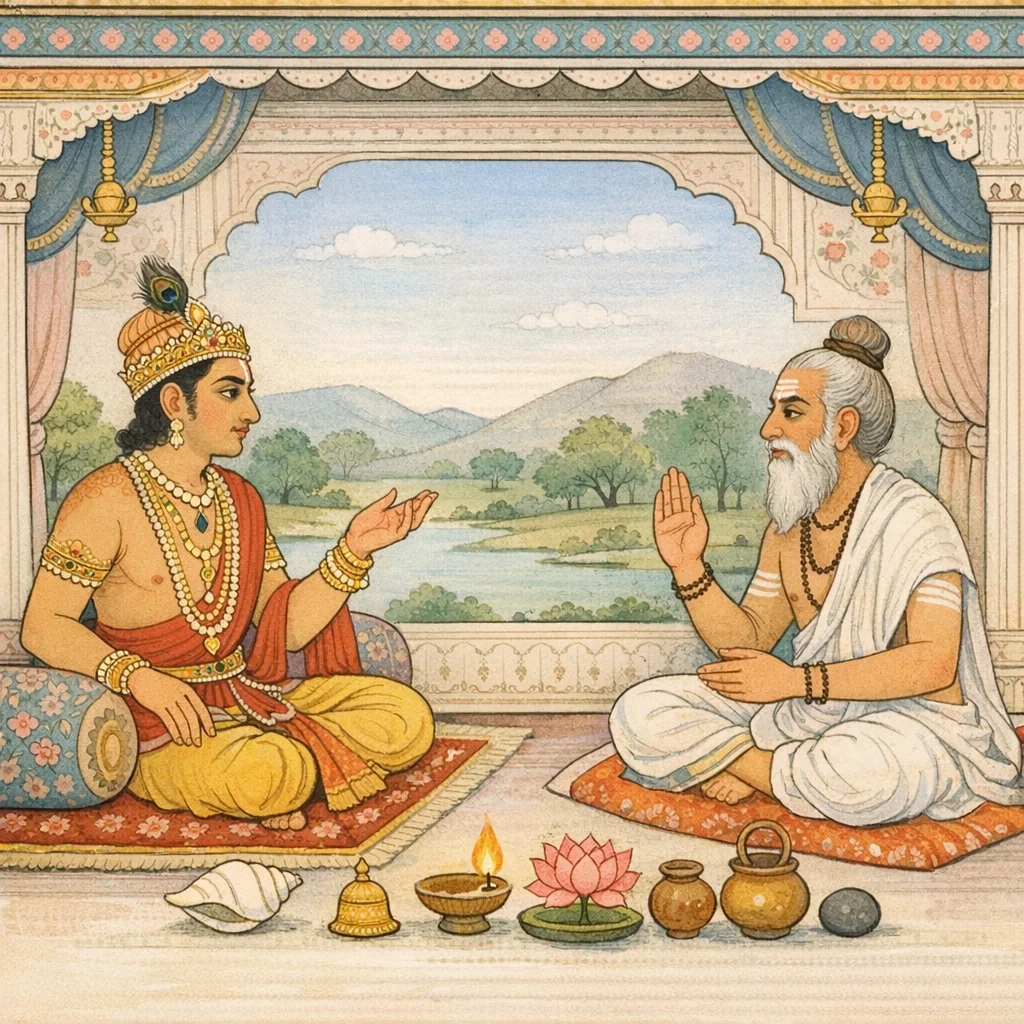
भीष्म उवाच अत्र ते वर्तयिष्यामि इतिहासं पुरातनम् । याज्ञवल्क्यस्य संवादं जनकस्य च भारत,भीष्मजी बोले--भरतनन्दन! इस विषयमें मैं तुम्हें जनक और याज्ञवल्क्यका संवादरूप एक प्राचीन इतिहास सुनाऊँगा
Bhishma said: “Here I shall recount to you an ancient tradition—O Bharata—a dialogue between Yājñavalkya and King Janaka. Through this old account, the matter at hand will be clarified by the wisdom of their exchange.”
Verse 4
याज्ञवल्क्यमृषिश्रेष्ठ॑ दैवरातिर्महायशा: । पप्रच्छ जनको राजा प्रश्न॑ प्रश्नविदां वरम्,एक बार देवरातके महायशस्वी पुत्र राजा जनकने प्रश्नबका रहस्य समझनेवालोंमें श्रेष्ठ मुनिवर याज्ञवल्क्यजीसे पूछा
Bhīṣma said: The illustrious King Janaka, son of Devarāta, questioned the foremost of sages, Yājñavalkya—best among those who understand questions—seeking to grasp a subtle truth.
Verse 5
जनक उवाच कतीन्द्रियाणि विप्रर्षे कति प्रकृतय: स्मृता: । किमव्यक्तं परं ब्रह्म तस्माच्च परतस्तु किम्,जनक बोले--ब्रह्मर्षे! इन्द्रियाँ कितनी हैं? प्रकृतिके कितने भेद माने गये हैं? अव्यक्त क्या है? और उससे परे परब्रह्म परमात्माका क्या स्वरूप है? सृष्टि और प्रलय क्या है? और कालकी गणना कैसे की जाती है? विप्रेन्द्र! ये सब बतानेकी कृपा करें; क्योंकि हमलोग आपकी कृपाके अभिलाषी हैं
Janaka said: “O brahmin seer, how many sense-faculties are there, and how many categories of Prakṛti are taught? What is the Unmanifest, and what is the nature of the Supreme Brahman beyond it? And what are creation and dissolution, and how is time to be reckoned? O best of brahmins, please explain all this to us, for we seek the grace of your instruction.”
Verse 6
प्रभवं चाप्ययं चैव कालसंख्यां तथैव च । वक्तुमर्हसि विप्रेन्द्र त्वदनुग्रहकाड्क्षिण:,जनक बोले--ब्रह्मर्षे! इन्द्रियाँ कितनी हैं? प्रकृतिके कितने भेद माने गये हैं? अव्यक्त क्या है? और उससे परे परब्रह्म परमात्माका क्या स्वरूप है? सृष्टि और प्रलय क्या है? और कालकी गणना कैसे की जाती है? विप्रेन्द्र! ये सब बतानेकी कृपा करें; क्योंकि हमलोग आपकी कृपाके अभिलाषी हैं
Janaka said: “O foremost of Brahmins, be pleased to explain to us the origin and dissolution (of the cosmos), and likewise the reckoning of Time. We seek your favor and instruction.”
Verse 7
अज्ञानात् परिपृच्छामि त्वं हि ज्ञानमयो निधि: । तदहं श्रोतुमिच्छामि सर्वमेतदसंशयम्,मैं इन बातोंको नहीं जानता, इसलिये पूछ रहा हूँ। आप ज्ञानके भण्डार हैं, इसलिये आपहीसे इन सब विषयोंको सुननेकी इच्छा हो रही है; जिससे सारा संदेह दूर हो जाय
Janaka said: “Out of ignorance I ask you. You are truly a treasury made of knowledge. Therefore I wish to hear all this from you, so that every doubt may be removed without remainder.”
Verse 8
याज़्ञवल्क्य उवाच श्रूयतामवनीपाल यदेतदनुपृच्छसि । योगानां परमं ज्ञानं सांख्यानां च विशेषत:,याज्ञवल्क्थजीने कहा--भूपाल! सुनो, तुम जो कुछ पूछते हो, वह योग और विशेषत: सांख्यका परम रहस्यमय ज्ञान तुम्हें बताता हूँ
Yājñavalkya said: “O king, listen. What you are asking about is the supreme knowledge of Yoga—and, in particular, the distinctive highest insight of Sāṅkhya. I shall explain it to you.”
Verse 9
न तवाविदितं किंचिन्मां तु जिज्ञासते भवान् । पृष्टेन चापि वक्तव्यमेष धर्म: सनातन:,यद्यपि तुमसे कोई भी विषय अज्ञात नहीं है, फिर भी मुझसे पूछते हो तो कहना ही पड़ता है; क्योंकि किसीके पूछनेपर जानकार मनुष्यको उसके प्रश्नका उत्तर देना ही चाहिये। यही सनातन धर्म है
Yājñavalkya said: “Though nothing is unknown to you, you still inquire of me. And when one is asked, one who knows must answer—this is the eternal Dharma.”
Verse 10
अष्टौ प्रकृतय: प्रोक्ता विकाराश्चापि षोडश । तत्र तु प्रकृतीरष्टौ प्राहुरध्यात्मचिन्तका:,प्रकृतियाँ आठ बतायी गयी हैं और उनके विकार सोलह। अध्यात्मशास्त्रका चिन्तन करनेवाले विद्वान् आठ प्रकृतियोंके नाम इस प्रकार बतलाते हैं--अव्यक्त (मूल प्रकृति), महत्तत्त्व, अहंकार, आकाश, वायु, अग्नि, जल और पृथ्वी
Yājñavalkya said: “Eight fundamental principles are declared to be ‘prakṛtis’, and their modifications are said to be sixteen. In this regard, those contemplatives who reflect on the inner self (adhyātma) enumerate the eight prakṛtis as the unmanifest root nature, the great principle (mahat), ego-sense (ahaṃkāra), and the five great elements—space, wind, fire, water, and earth.”
Verse 11
अव्यक्त च महान्तं च तथाहड़कार एव च | पृथिवी वायुराकाशमापो ज्योतिश्न॒ पञचमम्,प्रकृतियाँ आठ बतायी गयी हैं और उनके विकार सोलह। अध्यात्मशास्त्रका चिन्तन करनेवाले विद्वान् आठ प्रकृतियोंके नाम इस प्रकार बतलाते हैं--अव्यक्त (मूल प्रकृति), महत्तत्त्व, अहंकार, आकाश, वायु, अग्नि, जल और पृथ्वी
Yājñavalkya said: “The unmanifest (primordial Prakṛti), the Great Principle (mahat), and likewise egoity (ahaṅkāra); and then the elements—earth, wind, space, water, and fire/light—these are taught as the eight fundamental prakṛtis. From these arise the sixteen modifications (vikāras), as understood by those who contemplate the science of the Self.”
Verse 12
एता: प्रकृतयस्त्वष्टी विकारानपि मे शृणु । श्रोत्रं त्वक्चैव चक्षुश्व जिद्दा प्राणं च पडचमम्,ये आठ प्रकृतियाँ कही गयीं। अब मुझसे विकारोंका भी वर्णन सुनो-श्रोत्र, त्वचा, नेत्र, जिह्ठा, पाँचवीं नासिका, शब्द, स्पर्श, रूप, रस, गन्ध, वाणी, हाथ, पैर, लिंग और गुदा
“These are the eight prakṛtis. Now hear from me also the modifications (vikāras): the ear, the skin, the eye, the tongue, and fifth the nose; then sound, touch, form, taste, and smell; and also speech, the two hands, the two feet, the generative organ, and the anus—thus making sixteen.”
Verse 13
शब्द: स्पर्शक्ष रूपं च रसो गन्धस्तथैव च । वाक् च हस्तौ च पादौ च पायुर्मेढ्ें तथैव च,ये आठ प्रकृतियाँ कही गयीं। अब मुझसे विकारोंका भी वर्णन सुनो-श्रोत्र, त्वचा, नेत्र, जिह्ठा, पाँचवीं नासिका, शब्द, स्पर्श, रूप, रस, गन्ध, वाणी, हाथ, पैर, लिंग और गुदा
Yājñavalkya said: “Sound, touch, form, taste, and smell; and likewise speech, the two hands, the two feet, the anus, and the generative organ—these are enumerated. Now hear from me also the account of the modifications (vikāras): the ear, the skin, the eye, the tongue, and fifth the nose—together with sound, touch, form, taste, smell, speech, hands, feet, the organ of generation, and the anus.” In this teaching, the sage classifies the constituents of embodied experience to cultivate discernment and detachment, guiding the listener toward self-mastery and liberation rather than identification with the senses and their functions.
Verse 14
एते विशेषा राजेन्द्र महाभूतेषु पजचसु । बुद्धीन्द्रियाण्ययथैतानि सविशेषाणि मैथिल,राजेन्द्र! उनमें पाँच कर्मेन्द्रियों और शब्द आदि पाँच विषयोंकी “विशेष” संज्ञा है और ये पाँच ज्ञानेन्द्रियाँ 'सविशेष” कहलाती हैं। मिथिलानरेश! ये “विशेष” और “सविशेष” तत्त्व पञ्चमहाभूतोंमें ही स्थित हैं
Yājñavalkya said: “O king, these are called ‘particulars’ (viśeṣa) within the five great elements. And these very cognitive faculties (buddhi-indriyas) are termed ‘with particulars’ (sa-viśeṣa), O king of Mithilā. The categories of ‘particular’ and ‘with-particular’ are grounded in the five great elements themselves.”
Verse 15
मन: षोडशकं प्राहुरध्यात्मगतिचिन्तका: । त्वं चैवान्ये च विद्वांसस्तत्त्वबुद्धिविशारदा:,(ये सब मिलकर पंद्रह हैं) इनके साथ सोलहवाँ मन है। अध्यात्मगतिका चिन्तन करनेवाले तत्त्वज्ञान-विशारद तुम और दूसरे विद्वान् भी इन्हींको सोलह विकार कहते हैं
Yājñavalkya said: “Those who contemplate the inner course of the Self declare a set of sixteen, including the mind (manas). You, and other learned men skilled in discerning reality, likewise recognize these as the sixteen modifications (vikāras) that shape embodied experience.”
Verse 16
अव्यक्ताच्च महानात्मा समुत्पद्यति पार्थिव | प्रथमं सर्गमित्येतदाहु: प्राधानिकं बुधा:,पृथ्वीनाथ! अव्यक्त प्रकृतिसे महत्तत्त्व (समष्टि बुद्धि) की उत्पत्ति होती है। इसे विद्वान् पुरुष प्रथम एवं प्राकृत सृष्टि कहते हैं
Yājñavalkya said: “O king, from the Unmanifest (avyakta) arises the Great Principle (mahat), the cosmic intelligence. The wise call this the first creation, the primordial (prādhānika) emanation.”
Verse 17
महतकश्नलाप्यहड़कार उत्पन्नो हि नराधिप । द्वितीयं सर्गमित्याहुरेतद् बुछ्धात्मकं स्मृतम्,नरेश्वर! महत्तत्त्व्से अहंकार प्रकट होता है, जो दूसरा सर्ग बताया जाता है। इसे बुद्धात्मक सृष्टि माना गया है
Yājñavalkya said: “O king, from the Mahat-principle there indeed arises ahaṅkāra (the sense of ‘I’). The wise describe this as the second stage of creation, and it is remembered as a creation characterized by intellect (buddhi).”
Verse 18
अहडूकाराच्च सम्भूतं मनो भूतगुणात्मकम् | तृतीय: सर्ग इत्येष आहड्कारिक उच्यते,अहंकारसे मन उत्पन्न हुआ है, जो पञ्चभूत और शब्दादि गुणस्वरूप है। इसे तीसरा और आहंकारिक सर्ग कहा जाता है
Yājñavalkya said: “From ego-sense (ahaṅkāra) arises the mind, constituted of the elements and their qualities. This is described as the third stage of creation, known as the ‘ahaṅkāric’ creation—showing how inner self-identification becomes the source of mental activity and, thereby, of bondage and ethical struggle.”
Verse 19
मनसस्तु समुद्भधूता महा भूता नराधिप । चतुर्थ सर्गमित्येतन्मानसं विद्धि मे मतम्,राजन! मनसे पाँच सूक्ष्म महाभूत उत्पन्न हुए हैं। यह चौथा सर्ग है। मेरे मतके अनुसार इसे मानसी सृष्टि समझो
Yājñavalkya said: “O lord of men, from the mind the great elements arise. This is called the fourth creation; in my view, O king, understand it as a mental (mind-born) emanation.”
Verse 20
शब्द: स्पर्शक्ष रूपं च रसो गन्धस्तथैव च । पज्चमं सर्गमित्याहुभौतिकं भूतचिन्तका:,शब्द, स्पर्श, रूप, रस और गन्ध--ये पाँच विषय पञ्चमहाभूतोंसे उत्पन्न हुए हैं। यह पाँचवीं सृष्टि है। भूतचिन्तक विद्वान् इसे भौतिक सर्ग कहते हैं
Yājñavalkya said: “Sound, touch, form, taste, and smell—these five sense-objects arise from the great elements. This is declared to be the fifth creation; thinkers who contemplate the elements call it the ‘material’ (bhautika) emanation.”
Verse 21
श्रोत्र, त्वचा, नेत्र, जिह्ला और पाँचवीं नासिका--इसे छठा सर्ग बताया गया है। यह बहुचिन्तात्मक सर्ग माना गया है
Yājñavalkya said: “The ear, the skin, the eyes, the tongue, and as the fifth the nose—these are described as the ‘sixth creation/aggregate.’ This aggregate is regarded as one that gives rise to many and varied thoughts.”
Verse 22
अधथ: श्रोत्रेन्द्रियग्राम उत्पद्यति नराधिप । सप्तमं सर्गमित्याहुरेतदैन्द्रियकं स्मृतम्,नरेन्द्र! श्रोत्र आदि इन्द्रियोंके बाद कर्मेन्द्रियोंकी उत्पत्ति होती है। इसे सातवाँ सर्ग कहते हैं। इसीको ऐन्द्रियक सृष्टि भी कहा जाता है
Yājñavalkya said: “Then, O king, the group of sense-faculties beginning with hearing comes into manifestation. This is declared to be the seventh stage of creation, and it is remembered as the ‘sensory (aindriyaka) creation.’”
Verse 23
ऊर्ध्व॑ स्रोतस्तथा तिर्यगुत्पद्यपि नराधिप । अष्टमं सर्गमित्याहुरेतदार्जवकं स्मृतम्,तदनन्तर जिसका प्रवाह ऊपरकी ओर है, वह प्राण एवं तिरछा चलनेवाले समान, व्यान और उदान--ये सब प्रकट हुए। यह आठवाँ सर्ग है। इसीको आर्जवक सर्ग कहा गया है
Yājñavalkya said: “O king, there also arose the upward-flowing current, and likewise the transverse-moving one. These are identified with the vital functions—prāṇa and, among the lateral-moving breaths, vyāna and udāna. This is declared to be the eighth emanation (sarga), remembered as the ‘Ārjavaka’ creation.”
Verse 24
तिर्यकुस्रोतस्त्वध:स््रोत उत्पद्यति नराधिप । नवमं सर्गमित्याहुरेतदार्जवकं बुधा:,राजन! तत्पश्चात् जिसका प्रवाह तिरछा चलता है, वे व्यान और उदान अपान वायुके साथ निम्नभागमें प्रकट हुए। इसे नवम सर्ग कहते हैं। इसे भी विद्वान् पुरुष आर्जवक सृष्टिके नामसे ही पुकारते हैं
Yājñavalkya said: “O king, after this there arises the ‘tiryak-srotas’—the class whose current moves sideways—and also the ‘adhaḥ-srotas’—those whose tendency is downward. The wise call this the ninth creation (ninth sarga), and they also designate it by the name ‘Ārjavaka’ creation.”
Verse 25
एतानि नव सर्गाणि तत्त्वानि च नराधिप । चतुर्विशतिरुक्तानि यथाश्रुतिनिदर्शनात्,नरेश्वर! ये नौ सर्ग और चौबीस तत्त्व श्रुतिके निर्देशके अनुसार यहाँ बताये गये हैं
Yājñavalkya said: “O king, these nine ‘creations’ (stages of emanation) and the principles (tattvas) have been stated as twenty-four in number, in accordance with the indications of the Vedic revelation (śruti).”
Verse 26
अत ऊर्ध्व॑ महाराज गुणस्यैतस्य तत्त्वतः । महात्मभिरनुप्रोक्तां कालसंख्यां निबोध मे,महाराज! अब इसके बाद महात्मा पुरुषोंद्वारा बतायी गयी इस गुणमयी सृष्टिकी कालसंख्या भी मुझसे यथावत््रूपसे सुनो
Now then, O great king, learn from me—according to its true principle—the reckoning of time that governs this world of the guṇas, just as the great-souled sages have handed it down and explained it.
Verse 231
श्रोत्रं त्वक् चैव चक्षुश्न जिद्दा प्राणं च पजचमम् । सर्ग तु षष्ठमित्याहुर्बहुचिन्तात्मक॑ स्मृतम्
Yājñavalkya said: “Hearing, touch, sight, taste (the tongue), and the vital breath are spoken of as the five. As for ‘sarga’—creation, the impulse to bring forth—it is declared to be the sixth. This complex of faculties is remembered as a many-thoughted, restlessly deliberating principle.”
Verse 310
इति श्रीमहाभारते शान्तिपर्वणि मोक्षधर्मपर्वणि याज्ञवल्क्यजनकसंवादे दशाधिकत्रिशततमो<ध्याय:
Thus ends the three-hundred-and-tenth chapter in the Śānti Parva of the Śrī Mahābhārata, within the Mokṣadharma section, in the dialogue between Yājñavalkya and King Janaka. The colophon marks the close of this teaching episode, framing it as instruction on liberation and right understanding rather than action on the battlefield.
Frequently Asked Questions
He seeks a causal explanation for extraordinary realization—how Śuka attained subtle knowledge and supreme success—so that spiritual greatness is intelligible as a discipline-based process rather than a mystery of status.
Siddhi is presented as rooted in tapas operationalized through restraint of the senses; unregulated sense-contact leads to fault, while disciplined control is described as the pathway to accomplishment.
Yes; it asserts an asymmetry in results by stating that even a fraction of yoga is not matched by extensive sacrificial aggregates, implying an inward, discipline-centered hierarchy of spiritual efficacy.