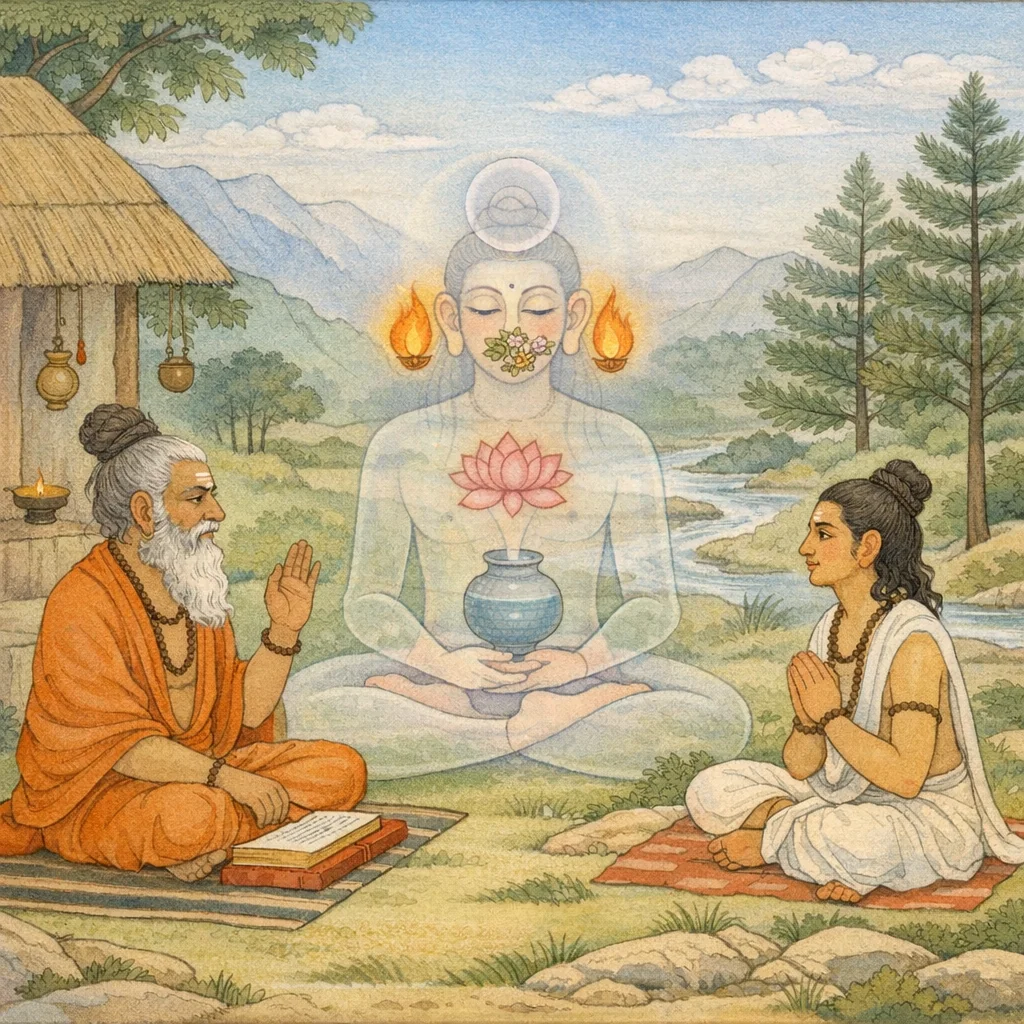
Adhyaya 251
धर्मलक्षण-प्रश्नः (Marks and Sources of Dharma) | Chapter 251: Inquiry into the Definition of Dharma
Upa-parva: Rājadharmānuśāsana Upa-Parva (Instruction on Royal Dharma)
Yudhiṣṭhira opens with a diagnostic question: people are uncertain about dharma—what it is, where it originates, and whether its value pertains to this world, the next, or both. Bhīṣma replies with a classificatory definition of dharma’s markers: sadācāra (established good conduct), smṛti (remembered tradition), and Veda; poets also include artha (pragmatic welfare/expediency) as a fourth indicator in practical reasoning. Dharma’s regulation is framed as enabling lokayātrā (the functioning of communal life) and yielding well-being in both domains (iha and para). The discourse then illustrates moral psychology through contrasts: the wrongdoer, lacking refined dharma, persists in wrongdoing and lives in pervasive suspicion; the disciplined person moves openly and without fear, not perceiving hidden fault in others. Truth (satya) is elevated as a social foundation—everything is upheld by it—and even those otherwise harsh must coordinate through truth and non-betrayal to avoid collapse. Norms such as non-appropriation of others’ wealth, generosity, and a reciprocity principle (do not do to others what you would not accept) are presented as enduring dharmas, though the powerful may dismiss them until vulnerability makes their necessity evident. The chapter closes by reiterating dharma’s subtlety, its orientation to social cohesion, and a caution against non-straightforwardness (anārjava).
Chapter Arc: व्यास शुकदेव के अनुप्रश्न के उत्तर में देह-रहस्य का द्वार खोलते हैं—मोक्षजिज्ञासु को पहले ‘शरीर’ में ही पञ्चमहाभूतों के कार्य-गुण पहचानने होंगे। → व्यास क्रमशः पञ्चभूतों (आकाश, वायु, तेज, आप, पृथ्वी) को इन्द्रियों और उनके विषय-गुणों से जोड़ते हैं—आकाश से श्रोत्र/शब्द, तेज से चक्षु/रूप, आप से जिह्वा/रस, पृथ्वी से घ्राण/गन्ध; और देह के स्थूल अवयव (अस्थि, दन्त, नख, केश, रोम, त्वचा आदि) को पृथ्वी-धातु की संघात-रचना बताते हैं। → सूक्ष्म से स्थूल तक एक ही सूत्र में देह का मानचित्र बनता है—पञ्चभूत-संघात की ‘संतति’ में मन को नवम और बुद्धि को दशम तत्त्व-रूप में प्रतिष्ठित कर, व्यास संकेत करते हैं कि इन्द्रिय-विषय-गुणों का बन्धन मन-बुद्धि के माध्यम से ही अनुभव बनता है। → अध्याय देह को ‘भूत-गुण-इन्द्रिय’ के संयोजन के रूप में स्पष्ट कर देता है—जो जानता है कि कौन-सा गुण किस भूत का है और कौन-सी इन्द्रिय किस तत्त्व से बनी है, वह देह-आसक्ति से ऊपर उठने की तैयारी करता है। → अगले अध्याय में यही विवेचन आगे बढ़कर मन-बुद्धि/भाव-अभाव/काल आदि के व्यापक तात्त्विक सम्बन्धों की ओर ले जाने का संकेत देता है।
Shlokas
Verse 1
ऑपन- मा बछ। -्स:ॉ् द्विपज्चाशर्दाधिकद्विशततमो< ध्याय: शरीरमें पञ्चभूतोंके कार्य और गुणोंकी पहचान व्यास उवाच दन्द्वानि मोक्षजिज्ञासुरर्थधर्मावनुछित: । वक्त्रा गुणवता शिष्य: श्राव्य: पूर्वमिदं महत्,व्यासजी कहते हैं--बेटा! जो अर्थ और धर्मका अनुष्ठान करके सुख-दुःख आदि द्न्द्दोंकोी धैर्यपूर्वक सहता हो और मोक्षकी जिज्ञासा रखता हो, उस श्रद्धालु शिष्यको गुणवान् वक्ता पहले इस महत्त्वपूर्ण अध्यात्म-शास्त्रका श्रवण कराये इस प्रकार श्रीमहाभारत शान्तिपर्वके अन्तर्गत मोक्षधर्मपर्वमें शुकदेवका अनुप्रश्नविषयक दो सौ बावनवाँ अध्याय पूरा हुआ ॥/ २५२ ॥/ नऔहा-<> 7 त्रिपज्चाशर्दाधिकद्विशततमो< ध्याय: स्थूल, सूक्ष्म और कारण-शरीरसे भिन्न जीवात्माका और परमात्माका योगके द्वारा साक्षात्कार करनेका प्रकार व्यास उवाच शरीराद् विप्रमुक्त हि सूक्ष्मभूतं शरीरिणम् | कर्मभि: परिपश्यन्ति शास्त्रोक्तै: शास्त्रवेदिन:
Vyāsa said: “My son, one who duly practices artha and dharma, who steadfastly endures the pairs of opposites—pleasure and pain—and who longs to know mokṣa: to such a faithful disciple a teacher endowed with virtue should first cause this great spiritual doctrine to be heard.”
Verse 2
आकाशं मारुतो ज्योतिराप: पृथ्वी च पञ्चमी । भावाभावौ च कालश्च सर्वभूतेषु पजचसु,आकाश, वायु जल, तेज और पाँचवाँ पृथ्वी तथा भाव पदार्थ अर्थात् गुण, कर्म, सामान्य, विशेष और समवाय एवं अभाव और काल (दिक्, आत्मा और मन)--ये सब-के- सब समस्त पांचभौतिक शरीरधारी प्राणियोंमें स्थित हैं
Space, Wind, Fire, Water, and fifthly Earth; and also being and non-being, and Time—all these abide within all creatures that bear bodies made of the five elements.
Verse 3
अन्तरात्मकमाकाशं तन्मयं श्रोत्रमिन्द्रियम् तस्य शब्दं गुणं विद्यान्मूर्तिशास्त्रविधानवित्,आकाश अवकाशस्वरूप है और श्रवणेन्द्रिय आकाशमय है। शरीर-शास्त्रके विधानको जाननेवाला मनुष्य शब्दको आकाशका गुण जाने
Vyāsa said: “Space (ākāśa) is the inner self of all that gives room and pervasion; the organ of hearing is constituted of that very space. Therefore, one who understands the principles laid down in the science of embodied form should know ‘sound’ to be the specific quality of space.”
Verse 4
चरणं मारुतात्मेति प्राणापानौ च तन््मयौ | स्पर्शन॑ चेन्द्रियं विद्यात् तथा स्पर्श च तन््मयम्,चलना-फिरना वायुका धर्म है। प्राण और अपान भी वायुस्वरूप ही हैं (समान, उदान और व्यानको भी वायुरूप ही मानना चाहिये)। स्पर्शन्द्रिय (त्वचा) तथा स्पर्श नामक गुणको भी वायुमय ही समझना चाहिये
Vyāsa said: “Movement is said to be of the very nature of Wind. The vital breaths—prāṇa and apāna—are likewise constituted of that same Wind. One should also understand the organ of touch (the skin) and the quality called touch to be pervaded by, and made of, that very Wind.”
Verse 5
ताप: पाक: प्रकाशश्न ज्योतिश्नक्षुश्न॒ पजचमम् । तस्य रूपं गुणं विद्यात् ताम्रगौरासितात्मकम्,ताप, पाक, प्रकाश और नेत्रेन्द्रिय--ये सब तेज या अग्नितत्त्वके कार्य हैं। श्याम, गौर और ताम्र आदि वर्णवाले रूपको उसका गुण समझना चाहिये
Vyāsa explains that heat, cooking (ripening), illumination, radiance, and the faculty of sight are all effects of tejas—the fire principle. One should understand its perceptible form and quality as appearing in hues such as coppery, fair/bright, and dark. The ethical implication is to discern causes from effects: recognize how a subtle element manifests through functions and observable qualities, rather than mistaking appearances for the whole reality.
Verse 6
प्रक्लेद: क्षुद्रता स्नेह इत्यपामुपदिश्यते । असृड्मज्जा च यच्चान्यत् स्निग्धं विद्यात् तदात्मकम्,क्लेदन (किसी वस्तुको सड़ा-गला देना), क्षुद्रता (सूक्ष्मता) तथा स्निग्धता--ये जलके धर्म बताये जाते हैं। रक्त, मज्जा तथा अन्य जो कुछ स्निग्ध पदार्थ हैं, उन सबको जलमय समझे
Moistening (softening and making things sodden), subtle fineness, and unctuousness are taught as the properties of water. Blood, marrow, and whatever else is oily or slick should be understood as having the nature of water.
Verse 7
रसन॑ चेन्द्रियं जिह्दा रसश्चापां गुणो मतः । संघात: पार्थिवो धातुरस्थिदन््तनखानि च,रसनेन्द्रिय, जिह्ला और रस--ये सब जलके गुण माने गये हैं। शरीरमें जो संघात या कड़ापन है, वह पृथ्वीका कार्य है, अतः हड्डी, दाँत और नख आदिको पृथ्वीका अंश समझना चाहिये
Vyāsa said: The organ of taste is the tongue, and ‘taste’ itself is held to be a quality of water. The body’s compactness and solidity arise from the earth-element; therefore bones, teeth, and nails should be understood as portions of earth. The teaching situates the senses and bodily structures within the elemental order, encouraging discernment and detachment from mere bodily identity.
Verse 8
श्मश्रु रोम च केशाश्व शिरा स्नायु च चर्म च । इन्द्रियं प्राणसंज्ञातं नासिकेत्यभिसंज्ञिता
Vyāsa said: “Beard, body-hair, and head-hair; veins, sinews, and skin—along with the faculty known as the life-breath (prāṇa), which is specifically identified here with the nose: these are enumerated to show the body’s constructed, perishable nature. By recognizing the self as distinct from such bodily constituents and functions, one is led toward detachment and steadiness in dharma.”
Verse 9
उत्तरेषु गुणा: सन्ति सर्वसत्त्वेषु चोत्तरा:,उत्तरोत्तर सभी भूतोंमें पूर्ववर्ती भूतोंके गुण विद्यमान हैं, (जैसे आकाशमें शब्दमात्र गुण है; वायुमें शब्द और स्पर्श दो गुण; तेजमें शब्द, स्पर्श और रूप--तीन गुण; जलमें शब्द, स्पर्श, रूप और रस--चार गुण तथा पृथ्वीमें शब्द, स्पर्श, रूप, रस और गन्ध--पाँच गुण हैं)
Vyāsa said: In the later (more developed) beings, the qualities of the earlier ones are present; thus, among all creatures, the succeeding forms contain the attributes of those that precede them. In this way the elements and embodied life show a graded increase of properties—space has sound alone; wind has sound and touch; fire has sound, touch, and form; water has sound, touch, form, and taste; and earth has sound, touch, form, taste, and smell.
Verse 10
पज्चानां भूतसंघानां संततिं मुनयो विदु: । मनो नवममेषां तु बुद्धिस्तु दशमी स्मृता,मुनिलोग भावना, अज्ञान और कर्म--इन तीनोंको पाँच महाभूतोंके समुदायकी संतति मानते हैं। इन्हीं तीनोंको अविद्या, काम और कर्म भी कहते हैं। ये सब मिलकर आठ हुए। इनके साथ मनको नवाँ और बुद्धिको दसवाँ तत्त्व माना गया है
Vyāsa said: The sages understand that from the aggregate of the five great elements there arises a further succession of principles. Among these, mind (manas) is regarded as the ninth, and intellect (buddhi) is remembered as the tenth. In this teaching, the inner instruments that drive perception and action are counted as distinct realities, showing how ignorance and impulse can shape conduct unless guided by discerning intellect.
Verse 11
एकादशस्त्वनन्तात्मा स सर्व: पर उच्यते | व्यवसायात्तमिका बुद्धिर्मनो व्याकरणात्मकम् | कर्मानुमानादू विज्ञेय: स जीव: क्षेत्रसंज़्क:,अविनाशी आत्मा ग्यारहवाँ तत्त्व है। उसीको सर्वस्वरूप और श्रेष्ठ बताया जाता है। बुद्धि निश्चयात्मिका होती है और मनका स्वरूप संशय बताया गया है। कर्मोका ज्ञाता और कर्ता कोई भी जड़तत्त्व नहीं हो सकता, इस अनुमान-ज्ञानसे उस क्षेत्रज्ञ नामक जीवात्माको समझना चाहिये
Vyāsa said: “The eleventh principle is the infinite Self; it is declared to be the all-encompassing reality and the supreme. Intellect (buddhi) is of the nature of decisive determination, while mind (manas) is described as the principle that analyzes and therefore wavers in doubt. From the inference drawn from action—since deeds require a knower and an agent—one should understand that there is an imperishable Self: the living being called the ‘knower of the field’ (kṣetrajña).”
Verse 12
एशभि: कालात्मकैभरविर्य: सर्वे: सर्वमन्वितम् । पश्यत्यकलुषं कर्म स मोहं नानुवर्तते,जो मनुष्य सारे जगत्को इन समस्त कालात्मक भावोंसे सम्पन्न देखता और निष्पाप कर्म करता है, वह कभी मोहमें नहीं पड़ता है
Vyāsa said: One who perceives the entire world as pervaded by all these time-constituted forces and conditions, and who performs action without moral taint, does not fall into delusion nor follow it.
Verse 86
गन्धश्षेवेन्द्रियार्थोडयं विज्ञेयः पृथिवीमय: । इसी प्रकार दाढ़ी-मूँछ, शरीरके रोएँ, केश, नाड़ी, स्नायु और चर्म--इन सबकी उत्पत्ति भी पृथ्वीसे ही हुई है। नासिका नामसे प्रसिद्ध जो प्राणेन्द्रिय है, वह भी पृथ्वीका ही अंश है। इस गन्धनामक विषयको भी पार्थिव गुण ही जानना चाहिये
Vyāsa explains that smell—the object apprehended by the sense-faculty—is to be understood as belonging to the earth-element. In the same way, the beard and moustache, the hairs of the body, the head-hair, the channels (nāḍīs), the sinews, and the skin all arise from earth. The life-sense known as the nose is likewise a portion of earth. Therefore, the object called “smell” should be recognized as an earthy quality.
Verse 251
इस प्रकार श्रीमह्याभारत शान्तिपर्वके अन्तर्गत गोक्षधर्मपर्वमें शुकदेवका अनुप्रश्नविषयक दी सौ इक्यावनवाँ अध्याय पूरा हुआ
Thus ends the two-hundred and fifty-first chapter of the Śānti Parva of the Śrī Mahābhārata, within the Gokṣa-dharma section, dealing with Śukadeva’s follow-up questions. This closing colophon marks the completion of that unit of instruction, framing the discourse as a structured inquiry into dharma through successive questions and clarifications.
Verse 252
इति श्रीमहाभारते शान्तिपर्वणि मोक्षधर्मपर्वणि शुकानुप्रश्ने द्विपज्चाशदधिकद्धिशततमो<5 ध्याय:
Thus, in the Śrī Mahābhārata, within the Śānti Parva—specifically the Mokṣa-dharma section—at the episode of Śuka’s inquiry, ends the two-hundred-and-fifty-second chapter. This is a concluding colophon marking the close of a teaching sequence oriented toward liberation and the ethical discipline that supports it.
Frequently Asked Questions
He seeks a stable definition of dharma—its source and scope—because ordinary people are uncertain whether dharma serves worldly welfare, otherworldly welfare, or both, which affects how a ruler judges right action.
Dharma is recognized through authoritative tradition (Veda, smṛti), lived ethical custom (sadācāra), and pragmatic welfare (artha), and it functions to sustain communal life; truthfulness and non-appropriation are central stabilizers of society.
No explicit phalaśruti formula appears; instead the chapter offers functional outcomes: dharma yields security and well-being ‘here and hereafter,’ while wrongdoing produces fear, social instability, and self-defeating suspicion.