Adhyaya 186
Ācāra-vidhi (Rules of Conduct) — Yudhiṣṭhira’s Inquiry and Bhīṣma’s Normative Catalogue
Upa-parva: Ācāra-anushāsana (Conduct and Daily Discipline) — within Śānti Parva
Yudhiṣṭhira requests instruction on the method of ācāra (proper conduct), regarding Bhīṣma as a comprehensive authority. Bhīṣma differentiates the recognizable markers of the virtuous (santaḥ) from patterns associated with poor conduct and imprudence. He then enumerates practical disciplines: avoiding public defilement in shared spaces; completing necessary cleansing and offering rites; maintaining regulated daily rhythms (including reverence to the sun and sandhyā practice); eating with restraint, composure, and without disparaging food; maintaining cleanliness in bodily habits; performing respectful circumambulation of sacred or socially valued persons/places; practicing equitable hospitality and appropriate meal timing; observing disciplined sexual ethics and privacy; honoring teachers with seat and salutations; maintaining courteous greetings; using the right hand in prescribed contexts; and avoiding discourtesy in address toward elders. The chapter closes with karmic-ethical reasoning: wrongdoing tends to follow the wrongdoer, concealed acts remain morally accountable, hoarded wealth unused is criticized due to life’s uncertainty, and mental intention is highlighted as a foundational layer of dharma—therefore one should cultivate benevolence toward all beings, practicing dharma even without external support, with the promise of well-being in post-mortem states grounded in dharmic life.
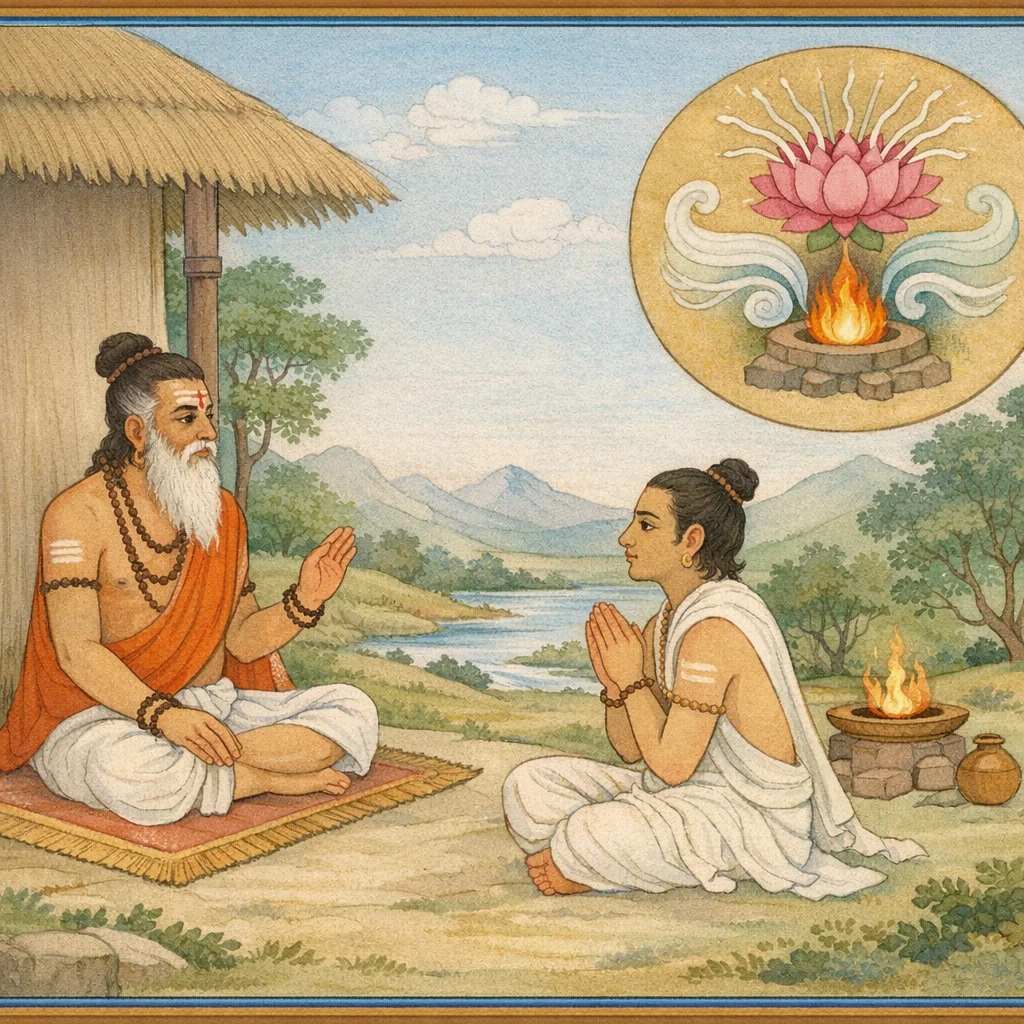
Chapter Arc: भरद्वाज ऋषि जिज्ञासा करते हैं—देह के भीतर जठरानल (पाचन-अग्नि) और प्राण-अपान आदि वायुओं की वास्तविक स्थिति और गति क्या है, जो जीव को चलाती और पालती है। → भृगु ऋषि सूक्ष्म देह-यंत्र का मानचित्र खोलते हैं: आत्मा का मस्तक-रन्ध्र में आश्रय लेकर शरीर की रक्षा करना, प्राण का मूर्धा/अग्नि के साथ विचरण, अपान का बस्ति-मूल और गुदा के निकट रहकर मल-मूत्र का निष्कासन, तथा नाभि-प्रदेश में समन वायु द्वारा पाचन-अग्नि का सम्यक् प्रज्वलन—इन सबका परस्पर आश्रय-सम्बन्ध। → नाभि-प्रदेश में ‘अपान-प्राण के मध्य’ समन का अधिष्ठान और उसी के सहारे पावक (जठराग्नि) का ‘सम्यक् पाचन’—यह निर्णायक बिन्दु बनता है, जहाँ देह की समस्त क्रियाएँ एक ही केन्द्र में संगठित दिखती हैं। → भृगु निष्कर्ष देते हैं कि हृदय से नाड़ियाँ/स्रोतस तिर्यक्-ऊर्ध्व-अधः दिशाओं में प्राण-प्रचोदित होकर प्रवाहित होते हैं; प्राण-अपान आदि वायुओं की सुव्यवस्था में ही जठराग्नि स्थाली में रखी अग्नि की भाँति निरन्तर प्रज्वलित रहती है और देह-धारण सम्भव होता है।
Shlokas
Verse 1
/ अपने-आप बछ। अर: पज्चाशीर्त्याधिकशततमो< ध्याय: शरीरके भीतर जठरानल तथा प्राण-अपान आदि वायुओंकी स्थिति आदिका वर्णन भरद्वाज उवाच पार्थिवं धातुमासाद्य शारीरो3ग्नि: कथं प्रभो । अवकाशविशेषेण कथं वर्तयतेडनिल:,भरद्वाजने पूछा--प्रभो! शरीरके भीतर रहनेवाली अग्नि पार्थिव धातु (पांचभौतिक देह) का आश्रय लेकर कैसे रहती है और वायु भी उसी पार्थिव धातुका आश्रय लेकर अवकाश-विशेषके द्वारा देहको कैसे चेष्टाशील बनाती है?
Bharadvāja said: “O Lord, how does the bodily fire (agni) abide by taking support of the earthly constituent—the material basis of the body? And how does the vital wind (vāyu), through specific bodily spaces, operate and set the body into activity?”
Verse 2
भूगुरुवाच वायोग्गतिमहं ब्रह्मन् कथयिष्यामि तेडनघ । प्राणिनामनिलो देहान् यथा चेष्टयते बली,भगुने कहा--ब्रह्मन! निष्पाप महर्षे! मैं तुमसे वायुकी गतिका वर्णन करता हूँ। प्रबल वायु प्राणियोंके शरीरोंको किस प्रकार चेष्टाशील बनाती है? यह बताता हूँ
Bhṛgu said: “O Brahmin, O sinless sage, I shall explain to you the course and functioning of the wind (vāyu). I will describe how the mighty vital air sets the bodies of living beings into motion and activity.”
Verse 3
श्रितो मूर्धानमात्मा तु शरीरं परिपालयन् । प्राणो मूर्थनि चाग्नौ च वर्तमानो विचेष्टते,आत्मा मस्तकके रन्ध्रस्थानमें स्थित होकर सम्पूर्ण शरीरकी रक्षा करता है और प्राण मस्तक तथा अग्नि दोनोंमें स्थित होकर शरीरको चेष्टाशील बनाता है
Bharadvāja said: “The Self (Ātman), abiding in the head, safeguards the entire body. And the vital breath (prāṇa), present both in the head and in the inner fire, sets the body into activity and sustains its movements.”
Verse 4
स जन्तु: सर्वभूतात्मा पुरुष: स सनातन: । मनो बुद्धिरहड्कारो भूतानि विषयश्चल सः,वह प्राणसे संयुक्त आत्मा ही जीव है, वही सम्पूर्ण भूतोंका आत्मा सनातन पुरुष है। वही मन, बुद्धि, अहंकार, पाँचों भूत और विषयरूप हो रहा है
Bharadvāja said: “That living being is the Self of all creatures—the eternal Person (Purusha). The same reality becomes mind (manas), intellect (buddhi), and ego (ahaṃkāra); it also appears as the elements and as the objects of sense.”
Verse 5
एवं त्विह स सर्वत्र प्राणेन परिचाल्यते । पृष्ठतस्तु समानेन स्वां स्वां गतिमुपाश्रित:,इस प्रकार (जीवात्मासे संयुक्त हुए) प्राणके द्वारा शरीरके भीतरके समस्त विभाग तथा इन्द्रिय आदि सारे बाह्य अंग परिचालित होते हैं। तत्पश्चात् समान वायुके रूपमें परिणत हो प्राण ही अपनी-अपनी गतिके आश्रित शरीरका संचालक होता है
Bharadvāja said: Here, in this body, all functions everywhere are set in motion by prāṇa. And then, from behind, as the balancing breath called samāna, that very prāṇa—having taken up its own proper course—governs and sustains the body’s operations in their respective paths.
Verse 6
बस्तिमूलं गुदं चैव पावकं समुपाश्रित: । वहन्मूत्रं पुरीषं चाप्यपान: परिवर्तते,अपान वायु जठरानल, मूत्राशय और गुदाका आश्रय ले मल एवं मूत्रको निकालता हुआ ऊपरसे नीचेको घूमता रहता है
Bharadvāja said: The apāna-vāyu, resorting to the region at the root of the bladder, the anus, and the digestive fire, continually moves downward; carrying urine and feces, it expels them from the body. The teaching underscores a disciplined, matter-of-fact understanding of bodily functions as part of self-knowledge and restraint, supporting ethical life through clarity about the embodied condition.
Verse 7
प्रयत्ने कर्मणि बले य एकस्त्रिषु वर्तते । उदान इति त॑ प्राहुरध्यात्मविदुषो जना:,जिस एक ही वायुकी प्रयत्न, कर्म और बल तीनोंमें प्रवृत्ति होती है, उसे अध्यात्मतत्त्वके जाननेवाले पुरुषोंने उदान कहा है
Bharadvāja said: “That single vital wind which operates in three spheres—effort, action, and strength—is called Udāna by those who know the truth of the Self. Thus, inner discipline and bodily power are understood as expressions of one subtle life-force when rightly discerned.”
Verse 8
संधिष्वपि च सर्वेषु संनिविष्टस्तथानिल: । शरीरेषु मनुष्याणां व्यान इत्युपदिश्यते,जो मनुष्योंके शरीरोंमें और उनकी समस्त संधियोंमें भी व्याप्त है, उस वायुको “व्यान' कहते हैं
Bharadvāja said: The vital wind that is present throughout all the joints and pervades the bodies of human beings is taught to be called Vyāna. In this teaching on the inner constitution of life, the name ‘Vyāna’ marks the all-pervading force that circulates and sustains bodily integration, showing how dharma also rests on understanding the ordered functioning of one’s own being.
Verse 9
धातुष्वग्निस्तु विततः समानेन समीरित: । रसान् धातूंशच दोषांश्व वर्तयग्नवतिष्ठते,शरीरके समस्त धातुओंमें व्याप्त जो अग्नि है, वह समान वायुद्वारा संचालित होती है। वह समान वायु ही शरीरगत रसों, धातुओं (इन्द्रियों) और दोषों (कफ आदि) का संचालन करती हुई सम्पूर्ण शरीरमें स्थित है
Bharadvāja said: The bodily fire that pervades all the constituents of the body is set in motion by the vital wind called Samāna. Remaining within the body, it regulates the bodily fluids, the tissues, and the humors (such as phlegm), sustaining their proper functioning. In this teaching, inner discipline is grounded in understanding the body’s ordered processes: balance and right regulation are presented as the basis for well-being and steadiness in dharma.
Verse 10
अपानप्राणयोर्मध्ये प्राणापानसमाहित: । समन्वितस्त्वधिष्ठानं सम्यक्पचति पावक:,अपान और प्राणके मध्यभाग (नाभि) में प्राण और अपान दोनोंका आश्रय लेकर स्थित हुआ जठरानल खाये हुए अन्नको भलीभाँति पचाता है
Bharadvāja said: In the region between apāna and prāṇa—at the navel—the digestive fire, supported by and harmonized with both prāṇa and apāna, properly “cooks” (digests) the food that has been eaten.
Verse 11
आय्यं हि पायुपर्यन्तमन्ते स्याद् गुदसंज्ञितम् । सत्रोतस्तस्मात् प्रजायन्ते सर्वस्रोतांसि देहिनाम्,मुखसे लेकर पायु (गुदा) तक जो महान् स्रोत (प्राणके प्रवाहित होनेका मार्ग) है, वही अन्तिम छोरमें गुदाके नामसे प्रसिद्ध है। उसी महान् स्रोतसे देहधारियोंके अन्य सभी छोटे- छोटे स्रोत (प्राणोंके संचरणके मार्ग अथवा नाडीसमुदाय) प्रकट होते हैं
Bharadvāja said: “This great channel that extends from the mouth down to the anus is, at its terminal end, known as the rectum. From that principal channel arise all the other channels of embodied beings.”
Verse 12
प्राणानां संनिपाताच्च संनिपात: प्रजायते । ऊष्मा चाग्निरिति ज्ञेयो योडज्न॑ं पचति देहिनाम्,उन स्रोतोंद्वारा सारे अंगोंमें प्राणोंका सम्बन्ध या प्रसार होनेसे उसके साथ रहनेवाले जठरानलका भी सम्बन्ध या प्रसार हो जाता है। प्राणियोंके शरीरमें जो गर्मीका अनुभव होता है, उसे उस जठरानलका ही ताप समझना चाहिये। वही देहधारियोंके खाये हुए अन्नको पचाता है
Bharadvāja said: When the vital breaths converge and pervade the body, a corresponding convergence arises. The warmth felt in living beings should be understood as fire—indeed the digestive fire—which “cooks” and digests the food eaten by embodied creatures.
Verse 13
अग्निवेगवह:ः प्राणो गुदान्ते प्रतिहन्यते । स ऊर्ध्वमागम्य पुन: समुत्क्षिपति पावकम्,अग्निके वेगसे बहता हुआ प्राण गुदाके निकट जाकर प्रतिहत हो जाता है; फिर ऊपरकी ओर लौटकर समीपवर्ती अग्निको भी ऊपर उठा देता है
Bharadvāja explains: the vital breath, driven with the force of fire, strikes an obstruction near the end of the rectum. Rebounding upward, it then lifts and kindles the nearby inner fire.
Verse 14
पकक््वाशयस्त्वधो नाभ्यामूर्थ्यमामाशय: स्थित: । नाभिमध्ये शरीरस्य सर्वे प्राणाश्ष॒ संस्थिता:,नाभिसे नीचे पक्क्वाशय और ऊपर आमाशय स्थित है तथा नाभिके मध्यभागमें शरीरसम्बन्धी सभी प्राण स्थित हैं
Bharadvāja said: Below the navel lies the pakvāśaya (the lower digestive receptacle), and above it is situated the āmāśaya (the stomach). In the region of the navel, within the body, all the vital airs are established.
Verse 15
प्रस्थिता हृदयात् सर्वे तिर्यगूर्ध्वमधस्तथा । वहन्त्यन्नरसात् नाड्यो दश प्राणप्रचोदिता:,वे समस्त प्राण हृदयसे इधर-उधर और ऊपर-नीचे प्रस्थान करते हैं; इसलिये दस- प्राणोंसे परिचालित होकर सारी नाड़ियाँ अन्नका रस वहन करती हैं
Bharadvāja said: From the heart they all set forth—moving sideways, upward, and downward. Driven by the ten vital airs, the nāḍīs carry the nutritive essence derived from food throughout the body.
Verse 16
एष मार्गो5थ योगानां येन गच्छन्ति तत्पदम् | जितक्लमा: समा धीरा मूर्थन्यात्मानमादधन्,यह मुखसे लेकर गुदातकका जो महान् स्रोत है, वह योगियोंका मार्ग है। उससे वे योगी परमपदको प्राप्त होते हैं, जिन्होंने सारे क्लेशोंको जीत लिया है, जो सर्वत्र समदर्शी और धीर हैं तथा जिन महात्माओंने सुषुम्णा नाड़ीके द्वारा मस्तकमें पहुँचकर वहीं अपने-आपको स्थित कर दिया है
Bharadvāja said: “This indeed is the path of the yogins—the channel by which they proceed to that supreme state. Those who have conquered fatigue and affliction, who remain even-minded everywhere, and who are steadfast in inner composure, establish the self at the crown of the head and, by that discipline, attain the highest goal.”
Verse 17
एवं सर्वेषु विहित: प्राणापानेषु देहिनाम् । तस्मिन् समिध्यते नित्यमग्नि: स्थाल्यामिवाहित:,प्राणियोंके प्राण, अपान आदि सभी वायुओंमें स्थापित हुई जठराग्नि शरीरमें ही रहकर सदा अग्नि-कुण्डमें रखी हुई अग्निकी भाँति प्रज्वलित होती रहती है
Bharadvāja said: Thus, within all embodied beings, the vital fires are duly set in the movements of prāṇa and apāna. There, the inner fire is kindled unceasingly—remaining within the body—like a fire kept and tended in a cooking-pot on the hearth.
Verse 184
इस प्रकार श्रीमह्ाभारत शान्तिपर्वके अन्तर्गत मोक्षधर्मपर्वमें भगु- भरद्वाजसंवादाविषयक एक सौ चौरासीवाँ अध्याय पूरा हुआ
Thus concludes the one hundred and eighty-fourth chapter of the Mokṣadharma section within the Śānti Parva of the Śrī Mahābhārata, dealing with the dialogue between Bhṛgu and Bharadvāja.
Verse 1815
इति श्रीमहा भारते शान्तिपर्वणि मोक्षधर्मपर्वणि पठ्चाशीत्यधिकशततमो<ध्याय: ।। २८५ ।। इस प्रकार श्रीमह्ाभारत शान्तिपर्वके अन्तर्गत मोक्षधर्मपर्वमें एक सौ पचासीवाँ अध्याय पूरा हुआ
Thus, in the Śrī Mahābhārata, within the Śānti Parva and specifically the Mokṣa-dharma section, the one hundred and eighty-fifth chapter concludes (chapter colophon).
Frequently Asked Questions
The dilemma is practical rather than episodic: how to reliably distinguish virtue from vice in daily life and how a ruler or householder should operationalize Dharma through repeatable conduct, not merely intention or status.
Dharma is enacted through disciplined micro-actions—cleanliness, restraint, respect, and hospitality—while moral accountability persists even for concealed wrongdoing; therefore ethical life must integrate outer conduct with inner intention (mānasa-dharma).
There is no formal phalaśruti formula, but a functional meta-claim appears: dharma ‘follows’ the doer as consequence, mental benevolence is foundational, and dharmic living is associated with enduring well-being beyond death—serving as the chapter’s implied motivational frame.