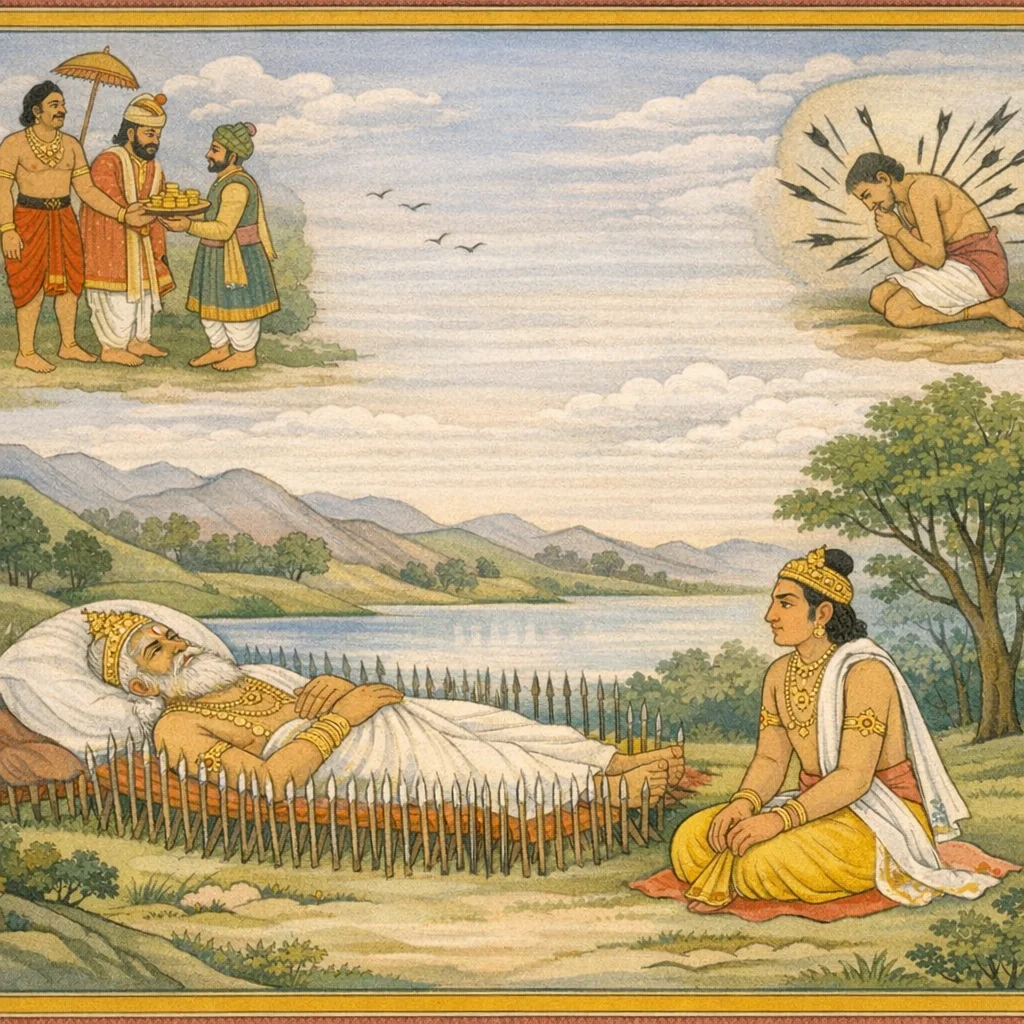
Adhyaya 135
दीर्घदर्शी–दीर्घसूत्र–संप्रतिपत्तिमान् आख्यानम् (The Parable of Foresight, Procrastination, and Presence of Mind)
Upa-parva: Rājadharmānuśāsana Upa-Parva (Instruction on Kingly Duty)
Bhīṣma presents an instructive narrative to Yudhiṣṭhira on kārya–akārya-viniścaya (deciding what must be done and what must be avoided) with special focus on timing. Three fish—named for cognitive strategies—live together in a shallow but fish-rich waterbody: Dīrghadarśī (far-sighted), Dīrghasūtra (procrastinating/over-deliberative), and Saṃpratipattimān (quickly adaptive/present-minded). When fishers begin draining and netting the water, Dīrghadarśī recognizes the approaching danger and exits early through a channel to deeper waters, illustrating pre-emptive risk management. Dīrghasūtra insists there is no need for haste and is later captured and dies, representing the failure to act at the decisive moment. Saṃpratipattimān, caught amid the crisis, uses immediate tactical intelligence—entering among others, manipulating the net situation, and escaping when the catch is washed—showing situational improvisation when early prevention was missed. The chapter then generalizes: those who do not understand the ripeness of time perish; those who plan for the unarrived misfortune prosper; and effective action depends on deśa and kāla as primary variables in dharma, artha, and mokṣa-oriented reasoning.
Chapter Arc: भीष्म युधिष्ठिर के सामने एक कठोर लोक-नीति रख देते हैं—पुराने धर्मवेत्ताओं का कथन है कि संसार में ‘बल’ ही प्रधान है, और धर्म-अधर्म की बहस से किसी के कर्तव्य-पालन में बाधा नहीं डालनी चाहिए। → वक्तव्य और तीखा होता जाता है: धर्म-अधर्म के फल प्रत्यक्ष नहीं दिखते; इसलिए राजा को पहले बल-संग्रह करना चाहिए। बलवान को श्री, सेना, मंत्री—सब मिल जाते हैं; उसके दोष भी भयवश अनदेखे रह जाते हैं, जबकि दुर्बल पर लोक-निंदा और वाक्-शल्य बरसता है। → चरम बिंदु पर यह विडंबना उभरती है कि लोक-मान्यता बल को ही सत्य का अधिकार दे देती है—बलवान के अधर्म पर भी कोई हाथ नहीं डालता, और दुर्बल की थोड़ी-सी चूक भी उसे ‘पापी’ ठहराकर जला देती है। → फिर भी भीष्म एक प्रत्युपाय दिखाते हैं: यदि कोई व्यक्ति कठिन साधन करके (यहाँ तक कि वर्ण-सीमाओं के पार जाने जैसी असाध्य बातों का संकेत) अपने को ऊँचा उठाए, और आचरण को ऐसा बना ले कि वह ‘अपाप’ प्रतीत हो, तो वह शीघ्र लोक-पूज्य बनता है और इहलोक-परलोक दोनों में फल पाता है—अर्थात बल-नीति के बीच भी आचरण/प्रायश्चित्त का द्वार खुला है। → बल-प्रधान लोक-व्यवहार और धर्म-प्रधान आदर्श—इन दोनों को आपद्धर्म में कैसे साधा जाए, इसका निर्णायक संतुलन अगले उपदेश की ओर संकेत करता है।
Shlokas
Verse 1
अप ह< बक। हक २ >> चतुस्त्रिंशर्दाधिकशततमो< ध्याय: बलकी महत्ता और पापसे छूटनेका प्रायद्षित्त भीष्म उवाच अत्र धर्मानुवचनं कीर्तयन्ति पुराविद: । प्रत्यक्षावेव धर्मार्थो क्षत्रियस्य विजानत:,भीष्मजी कहते हैं--राजन्! प्राचीनकालकी बातोंको जाननेवाले विद्वान् इस विषयमें जो धर्मका प्रवचन करते हैं, वह इस प्रकार है--विज्ञ क्षत्रियके लिये धर्म और अर्थ--ये दो ही प्रत्यक्ष हैं
Bhīṣma said: “O King, the sages who know the accounts of ancient times recite a teaching on dharma in this matter as follows: for a discerning kshatriya, dharma and artha are the two realities that stand directly before him—immediate, practical obligations and aims that must be recognized and acted upon.”
Verse 2
तत्र न व्यवधातव्यं परोक्षा धर्मयापना । अधर्मो धर्म इत्येतद् यथा वृकपदं तथा,धर्म और अधर्मकी समस्या रखकर किसीके कर्तव्यमें व्यवधान नहीं डालना चाहिये; क्योंकि धर्मका फल प्रत्यक्ष नहीं है। जैसे भेड़ियेका पदचिह्न देखकर किसीको यह निश्चय नहीं होता कि यह व्याप्रका पदचिह्न है या कुत्तेका? उसी प्रकार धर्म और अधर्मके विषयमें निर्णय करना कठिन है
Bhīṣma said: “In such matters one should not obstruct another person’s performance of duty, for the working of dharma is not directly visible. To decide ‘this is dharma’ or ‘this is adharma’ is difficult—like the track of a wolf, which can be mistaken for that of a tiger or a dog.”
Verse 3
धर्माधर्मफले जातु ददर्शेह न कश्नन । बुभूषेद् बलमेवैतत् सर्व बलवतो वशे,धर्म और अधर्मका फल किसीने कभी यहाँ प्रत्यक्ष नहीं देखा है। अतः राजा बलप्राप्तिके लिये प्रयत्न करे; क्योंकि यह सब जगत् बलवानके वशमें होता है
Bhishma said: No one in this world has ever directly seen the tangible fruits of dharma and adharma. Therefore a king should strive to acquire strength, for everything here falls under the control of the strong.
Verse 4
श्रियो बलममात्यांश्ष बलवानिह विन्दति । यो हानाढ्य: स पतितस्तदुच्छिष्टं यदल्पकम्,बलवान् पुरुष इस जगतमें सम्पत्ति, सेना और मन्त्री सब कुछ पा लेता है। जो दरिद्र है, वह पतित समझा जाता है और किसीके पास जो बहुत थोड़ा धन है, वह उच्छिष्ट या जूठन समझा जाता है
Bhishma said: In this world, a powerful man readily obtains prosperity, military strength, and ministers. But the poor are treated as fallen, and whatever little wealth they have is regarded as mere leftovers—something contemptible.
Verse 5
बह्वदपथ्यं बलवति न किंचित् क्रियते भयात् । उभौ सत्याधिकारस्थौ त्रायेते महतो भयात्,बलवान पुरुषमें बहुत-सी बुराई होती है तो भी भयके मारे उसके विषयमें कोई मुहसे कुछ बात नहीं निकालता है। यदि बल और धर्म दोनों सत्यके ऊपर प्रतिष्ठित हों तो वे मनुष्यकी महान् भयसे रक्षा करते हैं
Bhishma said: Even when a powerful man is full of many harmful faults, out of fear no one dares to act against him or even speak openly about it. But when both strength and righteousness stand grounded in satya (truth), they protect a person from great fear—because power restrained by truth becomes a safeguard rather than a threat.
Verse 6
अतिथर्माद् बल॑ मन्ये बलादू धर्म: प्रवर्तते । बले प्रतिष्ठितो धर्मों धरण्यामिव जड़मम्,मैं धर्मसे भी बलको ही अधिक श्रेष्ठ मानता हूँ; क्योंकि बलसे धर्मकी प्रवृत्ति होती है। जैसे चलने-फिरनेवाले सभी प्राणी पृथ्वीपर ही स्थित हैं, उसी प्रकार धर्म बलपर ही प्रतिष्ठित है
I deem strength superior even to dharma, for from strength the course of dharma proceeds. As all moving creatures stand upon the earth, so dharma is established upon strength.
Verse 7
धूमो वायोरिव वशे बलं धर्मो<डनुवर्तते । अनीथश्वरो बले धर्मो द्रुमे वललीव संश्रिता,जैसे धूआँ वायुके अधीन होकर चलता है, उसी प्रकार धर्म भी बलका अनुसरण करता है; अतः: जैसे लता किसी वृक्षके सहारे फैलती है, उसी प्रकार निर्बल धर्मबलके ही आधारपर सदा स्थिर रहता है
Bhishma said: As smoke moves under the control of the wind, so dharma follows after power. Dharma, when it lacks mastery and support, depends upon power—just as a creeper spreads only by taking refuge in a tree.
Verse 8
वशे बलवतां धर्म: सुखं भोगवतामिव । नास्त्यसाध्यं बलवतां सर्व बलवतां शुचि,जैसे भोग-सामग्रीसे सम्पन्न पुरुषोंके अधीन सुख-भोग होता है, उसी प्रकार धर्म बलवानोंके वशमें रहता है। बलवानोंके लिये कुछ भी असाध्य नहीं है। बलवानोंकी सारी वस्तु ही शुद्ध एवं निर्दोष होती है
As pleasure and enjoyment lie under the sway of those furnished with the means of indulgence, so does Dharma lie under the sway of the strong. For the strong, nothing is unattainable. All that belongs to the strong is deemed pure and without blemish.
Verse 9
दुराचार: क्षीणबल: परित्राणं न गच्छति । अथ तस्मादुद्विजते सर्वो लोको वृकादिव,जिसका बल नष्ट हो गया है, जो दुराचारी है, उसको भय उपस्थित होनेपर कोई रक्षक नहीं मिलता है। दुर्बलसे सब लोग उसी प्रकार उद्विग्न हो उठते हैं, जैसे भेड़ियेसे
Bhishma said: A man of wicked conduct, whose strength has been worn away, finds no refuge when fear arises. Indeed, the whole world becomes wary of such a weakened person, just as it is alarmed by a wolf.
Verse 10
अपध्वस्तो हावमतो दुःखं जीवति जीवितम् | जीवितं यदपक्रुष्ट यथैव मरणं तथा,दुर्बल अपनी सम्पत्तिसे वंचित हो जाता है, सबके अपमान और उपेक्षाका पात्र बनता है तथा दुःखमय जीवन व्यतीत करता है। जो जीवन निन्दित हो जाता है, वह मृत्युके ही तुल्य है
Bhīṣma said: “When a man is ruined and held in contempt, he drags on a life of suffering. A life that has become degraded and despised is, in truth, no different from death.”
Verse 11
यदेवमाहु: पापेन चारित्रेण विवर्जित: । सुभृशं तप्यते तेन वाक्शल्येन परिक्षत:,दुर्बल मनुष्यके विषयमें लोग इस प्रकार कहने लगते हैं--'अरे! यह तो अपने पापाचारके कारण बन्धु-बान्धवोंद्वारा त्याग दिया गया है।” उनके उस वाग्बाणसे घायल होकर वह अत्यन्त संतप्त हो उठता है
People speak of such a weak man in this way: “Alas—because of his sins and his depraved conduct, he has been cast off by kinsmen and companions.” Wounded by those arrows of speech, he burns with intense anguish.
Verse 12
अन्रैतदाहुराचार्या: पापस्य परिमोक्षणे | त्रयीं विद्यामवेक्षेत तथोपासीत वै द्विजान्,यहाँ अधर्मपूर्वक धनका उपार्जन करनेपर जो पाप होता है, उससे छूटनेके लिये आचार्योने यह उपाय बताया है--उक्त पापसे लिप्त हुआ राजा तीनों वेदोंका स्वाध्याय करे, ब्राह्मणोंकी सेवामें उपस्थित रहे, मधुर वाणी तथा सत्कर्मोद्वारा उन्हें प्रसन्न करे, अपने मनको उदार बनावे और उच्चकुलमें विवाह करे। मैं अमुक नामवाला आपका सेवक हूँ, इस प्रकार अपना परिचय दे, दूसरोंके गुणोंका बखान करे, प्रतिदिन स्नान करके इष्ट-मन्त्रका जप करे, अच्छे स्वभावका बने अधिक न बोले, लोग उसे बहुत पापाचारी बताकर उसकी निन््दा करें तो भी उसकी परवा न करे और अत्यन्त दुष्कर तथा बहुत-से पुण्यकर्मोंका अनुष्ठान करके ब्राह्मणों तथा क्षत्रियोंके समाजमें प्रवेश करे
Bhishma said: “The teachers have declared this to be the means for release from sin: one should attend to the threefold Vedic knowledge and should duly serve the twice-born (Brahmins).”
Verse 13
प्रसादयेन्मधुरया वाचा चाप्यथ कर्मणा । महामनाश्चापि भवेद् विवहेच्च महाकुले,यहाँ अधर्मपूर्वक धनका उपार्जन करनेपर जो पाप होता है, उससे छूटनेके लिये आचार्योने यह उपाय बताया है--उक्त पापसे लिप्त हुआ राजा तीनों वेदोंका स्वाध्याय करे, ब्राह्मणोंकी सेवामें उपस्थित रहे, मधुर वाणी तथा सत्कर्मोद्वारा उन्हें प्रसन्न करे, अपने मनको उदार बनावे और उच्चकुलमें विवाह करे। मैं अमुक नामवाला आपका सेवक हूँ, इस प्रकार अपना परिचय दे, दूसरोंके गुणोंका बखान करे, प्रतिदिन स्नान करके इष्ट-मन्त्रका जप करे, अच्छे स्वभावका बने अधिक न बोले, लोग उसे बहुत पापाचारी बताकर उसकी निन््दा करें तो भी उसकी परवा न करे और अत्यन्त दुष्कर तथा बहुत-से पुण्यकर्मोंका अनुष्ठान करके ब्राह्मणों तथा क्षत्रियोंके समाजमें प्रवेश करे
Bhishma said: One should win them over with sweet speech and also through right conduct. Let him become large-minded, and let him contract marriage into a great family. In this context, the teaching concerns expiation for the sin incurred by acquiring wealth through unrighteous means: the king who has become tainted should study the three Vedas, remain in attendance upon teachers and Brahmins, please them by gentle words and good deeds, cultivate generosity of mind, and strengthen his social and moral standing through alliance with a noble lineage—thus seeking purification and re-entry into the community of the righteous.
Verse 14
इत्यस्मीति वदेदेवं परेषां कीर्तयेद् गुणान् जपेदुदकशील: स्यात् पेशलो नातिजल्पक:,यहाँ अधर्मपूर्वक धनका उपार्जन करनेपर जो पाप होता है, उससे छूटनेके लिये आचार्योने यह उपाय बताया है--उक्त पापसे लिप्त हुआ राजा तीनों वेदोंका स्वाध्याय करे, ब्राह्मणोंकी सेवामें उपस्थित रहे, मधुर वाणी तथा सत्कर्मोद्वारा उन्हें प्रसन्न करे, अपने मनको उदार बनावे और उच्चकुलमें विवाह करे। मैं अमुक नामवाला आपका सेवक हूँ, इस प्रकार अपना परिचय दे, दूसरोंके गुणोंका बखान करे, प्रतिदिन स्नान करके इष्ट-मन्त्रका जप करे, अच्छे स्वभावका बने अधिक न बोले, लोग उसे बहुत पापाचारी बताकर उसकी निन््दा करें तो भी उसकी परवा न करे और अत्यन्त दुष्कर तथा बहुत-से पुण्यकर्मोंका अनुष्ठान करके ब्राह्मणों तथा क्षत्रियोंके समाजमें प्रवेश करे
Bhīṣma said: “Thus should he speak, identifying himself with humility—‘I am so-and-so’—and he should celebrate the virtues of others. He should be devoted to ritual purity and daily bathing, recite his chosen sacred formula, be courteous and well-mannered, and not be excessively talkative.”
Verse 15
ब्रह्मक्षत्रं सम्प्रविशेद् बहु कृत्वा सुदुष्करम् । उच्चमानो हि लोकेन बहुकृत् तदचिन्तयन्,यहाँ अधर्मपूर्वक धनका उपार्जन करनेपर जो पाप होता है, उससे छूटनेके लिये आचार्योने यह उपाय बताया है--उक्त पापसे लिप्त हुआ राजा तीनों वेदोंका स्वाध्याय करे, ब्राह्मणोंकी सेवामें उपस्थित रहे, मधुर वाणी तथा सत्कर्मोद्वारा उन्हें प्रसन्न करे, अपने मनको उदार बनावे और उच्चकुलमें विवाह करे। मैं अमुक नामवाला आपका सेवक हूँ, इस प्रकार अपना परिचय दे, दूसरोंके गुणोंका बखान करे, प्रतिदिन स्नान करके इष्ट-मन्त्रका जप करे, अच्छे स्वभावका बने अधिक न बोले, लोग उसे बहुत पापाचारी बताकर उसकी निन््दा करें तो भी उसकी परवा न करे और अत्यन्त दुष्कर तथा बहुत-से पुण्यकर्मोंका अनुष्ठान करके ब्राह्मणों तथा क्षत्रियोंके समाजमें प्रवेश करे
Bhishma said: “Having undertaken many extremely difficult acts, let him enter the Brahmin–Kshatriya sphere. Even if the world censures him and calls him a great sinner, he should not brood over it; rather, by performing abundant meritorious deeds and rigorous disciplines, he becomes fit to be received among Brahmins and Kshatriyas.”
Verse 16
अपापो होवमाचार: क्षिप्रं बहुमतो भवेत् । सुखं च चित्र भुड्जीत कृतेनैकेन गोपयेत्,ऐसे आचरणवाला पुरुष पापहीन हो शीघ्र ही बहुसंख्यक मनुष्योंके आदरका पात्र हो जाता है, नाना प्रकारके सुखोंका उपभोग करता है और अपने किये हुए विशेष सत्कर्मके प्रभावसे अपनी रक्षा कर लेता है। लोकमें सर्वत्र उसका आदर होने लगता है तथा वह इहलोक और परलोकमें भी महान् फलका भागी होता है
Bhishma says: A person whose conduct is free from sin quickly becomes widely respected. He enjoys varied kinds of happiness, and by the power of even a single well-performed virtuous deed he safeguards himself. Thus he comes to be honored everywhere in the world and becomes a sharer of great results both here and hereafter.
Verse 17
लोके च लभते पूजां परत्रेह महत् फलम्,ऐसे आचरणवाला पुरुष पापहीन हो शीघ्र ही बहुसंख्यक मनुष्योंके आदरका पात्र हो जाता है, नाना प्रकारके सुखोंका उपभोग करता है और अपने किये हुए विशेष सत्कर्मके प्रभावसे अपनी रक्षा कर लेता है। लोकमें सर्वत्र उसका आदर होने लगता है तथा वह इहलोक और परलोकमें भी महान् फलका भागी होता है
Bhishma said: One who lives by such conduct gains honor in this world and, hereafter, a great reward. Becoming free from sin, he quickly earns the respect of many people, enjoys diverse forms of happiness, and is protected by the power of his own distinguished good deeds. Thus he comes to be honored everywhere in this life and becomes a sharer of great fruits both here and in the next world.
Verse 134
इति श्रीमहाभारते शान्तिपर्वणि आपद्धर्मपर्वणि चतुस्त्रिंशयदधिकशततमो<ध्याय: ।। १३४ || इस प्रकार श्रीमहाभारत शान्तिपर्वके अन्तर्गत आपद्धर्मपर्वमें एक सौ चौतीयवाँ अध्याय पूरा हुआ
Thus, in the Śrī Mahābhārata, within the Śānti Parva—specifically in the section on dharma in times of distress (Āpaddharma Parva)—the one hundred and thirty-fourth chapter concludes. This is a colophon marking the end of the chapter rather than a doctrinal verse, situating the preceding instruction within the ethical framework of conduct under crisis.
Frequently Asked Questions
Whether to act early on credible risk signals or delay action under the assumption that conditions will remain stable; the narrative frames delay as a moral-technical failure when timing is integral to right action.
Optimal conduct combines anticipation (preventive exit when danger is foreseeable) with contingency skill (adaptive escape when already in crisis), while procrastination at the decisive moment leads to avoidable loss.
Rather than a formal phalaśruti, it states a governing rule: success follows those who properly establish deśa and kāla through examination (parīkṣā) and act accordingly; failure follows those who miss the ripe moment through delusion.