Adhyaya 133
Kāpavya-carita (कापव्यचरित) — Reforming Dasyus through Regulated Rāja-Dharma
Upa-parva: Rājadharmānuśāsana Parva (राजधर्मानुशासन पर्व) — Ethical Governance and Discipline
Bhīṣma introduces an ancient exemplum asserting that a boundaryless outlaw (dasyu) need not be spiritually ruined if reoriented to dharma. He describes Kāpavya, born of a Niṣāda mother and a kṣatriya father, who retains kṣatra-dharma while living in the forest: skilled in terrain, hunting, and protection, he supports blind and aged parents and sustains forest-dwelling renunciant brāhmaṇas with provisions. Disorderly raiders invite him to become their leader; he accepts on ethical conditions, issuing rules of engagement: do not harm women, children, ascetics, or noncombatants; do not seize women by force; ensure welfare for cows and brāhmaṇas; do not damage crops or disrupt ploughing; uphold reverence for gods, ancestors, and guests; and never insult brāhmaṇas, whose curse is portrayed as socially and cosmically decisive. He clarifies that punishment is for discipline, not gratuitous killing, while those who oppress the righteous merit decisive restraint. The raiders follow his governance, gain stable livelihood, abandon wrongdoing, and Kāpavya attains “siddhi” through protective leadership. A closing phalaśruti states that reciting this account dispels fear from forest beings and from humans and nonhumans alike, marking Kāpavya as a guardian figure of the wilderness.
Chapter Arc: युधिष्ठिर, पितामह भीष्म से पूछते हैं—जब समय अत्यन्त हीन हो, राज्य-रक्षा का आधार टूट जाए और आपत्ति सिर पर हो, तब ब्राह्मण कैसे जीवित रहे कि धर्म भी न टूटे और कुल भी न बिखरे? → भीष्म ‘विज्ञानबल’ (विवेक, शास्त्र-बुद्धि, आत्मसंयम) को आश्रय बनाकर जीवन-निर्वाह की बात कहते हैं, पर साथ ही चेताते हैं कि आपत्ति में भी अधर्म का बहाना न बने: निन्दा न करनी, न सुननी; दुष्ट संगति से हट जाना; और राजा को भी सुशिक्षित, वश में, भार-वहन में समर्थ बैलों की तरह संयमित होकर प्रजा-भार उठाना चाहिए। → भीष्म का तीखा निष्कर्ष—जो व्यक्ति ‘व्याज’ से धन खोजता है और विकर्म में पड़ता है, उसे देवता भी पतन की ओर ढकेलते हैं; ऐसे धन से धर्म क्षीण होता है। धर्म का पथ एक-एक पद रक्त-चिह्न की तरह सूक्ष्म संकेतों से पहचाना जाता है—जैसे घायल मृग के रक्त-लेप से उसका मार्ग जाना जाता है। → धर्म वही है जो वेद-विहित, स्मृति-सम्मत, सज्जन-सेवित और अंतःकरण से अनुमोदित हो; आपत्ति में भी उसी सूक्ष्म पथ पर चलना चाहिए। युधिष्ठिर को राजर्षियों के आचरण—सज्जनों के मार्ग—का अनुसरण करने का उपदेश देकर भीष्म अध्याय का उपसंहार करते हैं।
Shlokas
Verse 1
ऑपन-- माल बक। अकाल द्वात्रिशर्दाधिकशततमो< ध्याय: ब्राह्मणों और श्रेष्ठ राजाओंके धर्मका वर्णन तथा धर्मकी गतिको सूक्ष्म बताना युधिछिर उवाच हीने परमके धर्मे सर्वलोकाभिसंहिते । सर्वस्मिन् दस्युसादूभूते पृथिव्यामुपजीवने,युधिष्ठिरने पूछा--पितामह! यदि राजाका सम्पूर्ण लोकोंकी रक्षापर अवलम्बित परम धर्म न निभ सके और भूमण्डलमें आजीविकाके सारे साधनोंपर लुटेरोंका अधिकार हो जाय, तब ऐसा जघन्य संकटकाल उपस्थित होनेपर यदि ब्राह्मण दयावश अपने पुत्रों तथा पौत्रोंका परित्याग न कर सके तो वह किस वृत्तिसे जीवन-निर्वाह करे?
Yudhiṣṭhira said: “Grandfather, when the highest duty of kingship—grounded in the protection of all peoples—fails, and when, across the earth, the means of livelihood fall under the control of robbers, then in such a most dreadful time of crisis, if a brāhmaṇa, out of compassion, cannot abandon his sons and grandsons, by what mode of living should he sustain himself?”
Verse 2
केन स्विद् ब्राह्मणो जीवेज्जघन्ये काल आगते । असंत्यजनू पुत्रपौत्राननुक्रोशात् पितामह,युधिष्ठिरने पूछा--पितामह! यदि राजाका सम्पूर्ण लोकोंकी रक्षापर अवलम्बित परम धर्म न निभ सके और भूमण्डलमें आजीविकाके सारे साधनोंपर लुटेरोंका अधिकार हो जाय, तब ऐसा जघन्य संकटकाल उपस्थित होनेपर यदि ब्राह्मण दयावश अपने पुत्रों तथा पौत्रोंका परित्याग न कर सके तो वह किस वृत्तिसे जीवन-निर्वाह करे?
Yudhiṣṭhira said: “Grandfather, when a most dreadful time has come—when the ordinary supports of livelihood have collapsed—by what means should a brāhmaṇa maintain his life? If, out of compassion, he cannot abandon his sons and grandsons, what livelihood is proper for him in such extremity?”
Verse 3
भीष्म उवाच विज्ञानबलमास्थाय जीवितव्यं तथागते । सर्व साध्वर्थमेवेदमसाध्वर्थ न किंचन,भीष्मजीने कहा--युधिष्ठि!! ऐसी परिस्थितिमें ब्राह्मगको तो अपने विज्ञान-बलका आश्रय लेकर जीवन-निर्वाह करना चाहिये। इस जगतमें यह जो कुछ भी धन आदि दिखायी देता है, वह सब कुछ श्रेष्ठ पुरुषोंके लिये ही है, दुष्टोंके लिये कुछ भी नहीं है
Bhishma said: “When such a situation has arisen, one should sustain one’s life by relying on the strength of discernment and true knowledge. Whatever wealth and resources are seen in this world are meant for the good and virtuous; for the wicked, there is truly nothing (that rightly belongs to them).”
Verse 4
असाधुभ्यो<र्थमादाय साधुभ्यो य: प्रयच्छति । आत्मानं संक्रमं कृत्वा कृच्छूधर्मविदेव सः,जो अपनेको सेतु बनाकर दुष्ट पुरुषोंसे धन लेकर श्रेष्ठ पुरुषोंको देता है, वह आपद्धर्मका ज्ञाता है
Bhishma said: He who takes wealth from the wicked and gives it to the virtuous—making himself a ‘bridge’ for that transfer—he indeed is a knower of dharma in times of distress (āpaddharma), when hard choices must be made to protect the good and uphold order.
Verse 5
आकाड़क्षन्नात्मनो राज्यं राज्ये स्थितिमकोपयन् । अदत्तमेवाददीत दातुर्वित्तं ममेति च,जो अपने राज्यको बनाये रखना चाहे, उस राजाको उचित है कि वह राज्यकी व्यवस्थाका बिगाड़ न करते हुए ब्राह्मण आदि प्रजाकी रक्षाके उद्देश्यसे ही राज्यके धनियोंका धन मेरा ही है, ऐसा समझकर उनके दिये बिना भी बलपूर्वक ले ले
Bhishma said: A king who wishes to preserve his own kingdom should not disturb the established order of governance; yet, for the protection of the people—such as brahmins and other subjects—he may, regarding the wealth of the affluent as belonging to the realm (‘it is mine’), take it even when it has not been voluntarily given. The ethical point is that coercive exaction is justified only as a duty of protection and stability, not as personal greed or arbitrary oppression.
Verse 6
विज्ञानबलपूतो यो वर्तते निन्दितेष्वपि । वृत्तिविज्ञानवान् धीर: कस्तं वा वक्तुमहति,जो तत्त्वज्ञानके प्रभावसे पवित्र है और किस वृत्तिसे किसका निर्वाह हो सकता है, इस बातको अच्छी तरह समझता है, वह धीर नरेश यदि राज्यको संकटसे बचानेके लिये निन्दित कर्मोमें भी प्रवृत्त होता है तो कौन उसकी निन्दा कर सकता है?
Bhishma said: “One who is purified by the strength of true knowledge, and who clearly understands the means of livelihood—what sustains whom and by what conduct—such a steady and discerning king, even if he engages in actions that are ordinarily censured in order to save the kingdom from peril, who is fit to condemn him?”
Verse 7
येषां बलकृता वृत्तिस्तेषामन्या न रोचते । तेजसाभिप्रवर्तन्ते बलवन्तो युधिष्ठिर,युधिष्ठिर! जो बल और पराक्रमसे ही जीविका चलानेवाले हैं, उन्हें दूसरी वृत्ति अच्छी नहीं लगती। बलवान पुरुष अपने तेजसे ही कर्मामें प्रवृत्त होते हैं
Bhishma said: “Those whose livelihood is sustained by strength and prowess do not find any other mode of living agreeable. O Yudhishthira, men of power are impelled to action by their own fiery energy; they naturally take up deeds that match their force and valor.”
Verse 8
यदैव प्राकृतं शास्त्रमविशेषेण वर्तते । तदैवमभ्यसेदेवं मेधावी वाप्यथोत्तरम्,जब आपद्धर्मोपयोगी प्राकृत शास्त्र ही सामान्यरूपसे चल रहा हो, उस आपफत्तिकालमें “अपने या दूसरेके राज्यसे जैसे भी सम्भव हो, धन लेकर अपना खजाना भरना चाहिये” इत्यादि वचनोंके अनुसार राजा जीवन-निर्वाह करे। परंतु जो मेधावी हो, वह इससे भी आगे बढ़कर “जो दो राज्योंमें रहनेवाले धनीलोग कंजूसी अथवा असदाचरणके द्वारा दण्ड पानेयोग्य हों, उनसे ही धन लेना चाहिये।' इत्यादि विशेष शास्त्रोंका अवलम्बन करे
Bhishma said: “When the ordinary (general) rule of conduct is in force without any special distinction, one should practice accordingly. But a discerning person should go further and follow the higher, more specific guidance suited to the situation.”
Verse 9
ऋषत्विक्पुरोहिताचार्यान् सत्कृतानभिसत्कृतान् । न ब्राह्मणान् घातयीत दोषान् प्राप्रोति घातयन्,कितनी ही आपत्ति क्यों न हो, ऋत्विक्ू, पुरोहित, आचार्य तथा सत्कृत या असत्कृत ब्राह्मणोंसे, वे धनी हों तो भी धन लेकर उन्हें पीड़ा न दे। यदि राजा उन्हें धनापहरणके द्वारा कष्ट देता है तो पापका भागी होता है
Bhishma said: “One should not harm Brahmins—whether they are officiating priests (ṛtvij), household priests (purohita), or teachers (ācārya), whether they are honored or not honored. Whoever harms Brahmins incurs fault (sin). Even in times of severe distress, a king should not trouble them by seizing their wealth; if he causes them suffering through confiscation, he becomes a sharer in wrongdoing.”
Verse 10
एतत् प्रमाणं लोकस्य चक्षुरेतत् सनातनम् | तत् प्रमाणो&वगाहेत तेन तत् साध्वसाधु वा,यह मैंने तुम्हें सब लोगोंके लिये प्रमाणभूत बात बतायी है। यही सनातन दृष्टि है। राजा इसीको प्रमाण मानकर व्यवहारक्षेत्रमें प्रवेश करे तथा इसीके अनुसार आपत्तिकालमें उसे भले या बुरे कार्यका निर्णय करना चाहिये
Bhishma said: “This is the standard for the world; this is its eternal eye. Let the king take this as his authority and enter the sphere of practical action; and by this very measure, in times of crisis, he should decide whether a deed is to be judged good or bad.”
Verse 11
बहवो ग्रामवास्तव्या रोषाद् ब्रूयु: परस्परम् । न तेषां वचनाद् राजा सत्कुर्याद् घातयीत वा,यदि बहुत-से ग्रामवासी मनुष्य परस्पर रोषवश राजाके पास आकर एक- दूसरेकी निन्दा-स्तुति करें तो राजा केवल उनके कहनेसे ही किसीको न तो दण्ड दे और न किसीका सत्कार ही करे
Bhishma said: “When many villagers, driven by anger, speak against one another—praising some and blaming others—before the king, the ruler should not, merely on the strength of their words, either punish anyone or bestow honor. A king must not let public quarrels and partisan reports become the basis of judgment; he should act only after careful inquiry.”
Verse 12
न वाच्य: परिवादो<यं न श्रोतव्य:ः कथड्चन । कर्णावथ पिधातव्यौ प्रस्थेयं चान्यतो भवेत्,किसीकी भी निन्दा नहीं करनी चाहिये और न उसे किसी प्रकार सुनना ही चाहिये। यदि कोई दूसरेकी निन्दा करता हो तो वहाँ अपने कान बंद कर ले अथवा वहाँसे उठकर अन्यत्र चला जाय
Bhīṣma said: “This kind of slander should neither be spoken nor listened to in any way. If someone is speaking ill of another, one should close one’s ears—or else rise from that place and go elsewhere.”
Verse 13
असतां शीलमेतद् वै परिवादो5थ पैशुनम् । गुणानामेव वक्तार: सन्त: सत्सु नराधिप,नरेश्वर! दूसरोंकी निन्दा करना या चुगली खाना यह दुष्टोंका स्वभाव ही होता है। श्रेष्ठ पुरुष तो सज्जनोंके समीप दूसरोंके गुण ही गाया करते हैं
Bhishma said: “O king, O lord of men, slander and backbiting are indeed the very disposition of the wicked. The good, however, when among the good, speak only of others’ virtues.”
Verse 14
यथा सुमधुरौ दम्यौ सुदान्तौ साधुवाहिनौ | धुरमुद्यम्य वहतास्तथा वर्तेत वै नृप:,जैसे मनोहर आकृतिवाले, सुशिक्षित तथा अच्छी तरहसे बोझ ढोनेमें समर्थ नयी अवस्थाके दो बैल कंधोंपर भार उठाकर उसे सुन्दर ढंगसे ढोते हैं, उसी प्रकार राजाको भी अपने राज्यका भार अच्छी तरह सँभालना चाहिये
Bhīṣma said: “Just as two young oxen—pleasing in form, well-trained, thoroughly disciplined, and capable of bearing the yoke—lift the load upon their shoulders and carry it steadily and well, so too should a king conduct himself: he must competently uphold and manage the burden of his kingdom.”
Verse 15
यथा यथास्य बहव: सहाया: स्युस्तथा परे | आचारमेव मन्यन्ते गरीयो धर्मलक्षणम्,जैसे-जैसे आचरणोंसे राजाके बहुत-से दूसरे लोग सहायक हों, वैसे ही आचरण उसे अपनाने चाहिये। धर्मज्ञ पुरुष आचारको ही धर्मका प्रधान लक्षण मानते हैं
Bhishma said: “As a king finds many others supporting a certain course of conduct, so should he adopt that very conduct. For those who truly know dharma regard established right practice (ācāra) as the weightiest mark and measure of dharma.”
Verse 16
अपरे नैवमिच्छन्ति ये शंखलिखितप्रिया: । मात्सर्यादथवा लोभान्न ब्रूयुर्वाक्यमीदूशम्,किंतु जो शंख और लिखित मुनिके प्रेमी हैं--उन्हींके मतका अनुसरण करनेवाले हैं, वे दूसरे-दूसरे लोग इस उपर्युक्त मत (ऋत्विक् आदिको दण्ड न देने आदि) को नहीं स्वीकार करते हैं। वे लोग ईर्ष्या अथवा लोभसे ऐसी बात नहीं कहते हैं (धर्म मानकर ही कहते हैं)
Bhīṣma said: “Others, however—those devoted to the sages Śaṅkha and Likhita—do not accept this view. Yet they do not speak such words out of jealousy or greed; they speak from what they take to be dharma.”
Verse 17
आर्षमप्यत्र पश्यन्ति विकर्मस्थस्य पातनम् | न तादृक्सदृशं किज्चित् प्रमाणं दृश्यते क्वचित्,शास्त्र-विपरीत कर्म करनेवालेको दण्ड देनेकी जो बात आती है, उसमें वे आर्षप्रमाण भी देखते हैं-। ऋषियोंके वचनोंके समान दूसरा कोई प्रमाण कहीं भी दिखायी नहीं देता
Here, too, they discern the ṛṣi-authority (āṛṣa-pramāṇa) that speaks of the downfall of one who stands in acts contrary to the śāstra (vikarma). Nowhere is any other proof seen that equals the words of the seers.
Verse 18
देवताश्न विकर्मस्थं पातयन्ति नराधमम् | व्याजेन विन्दन वित्त हि धर्मात् स परिहीयते,देवता भी विपरीत कर्ममें लगे हुए अधम मनुष्यको नरकोंमें गिराते हैं; अतः जो छलसे धन प्राप्त करता है, वह धर्मसे भ्रष्ट हो जाता है
Bhishma said: The gods cast down into hell the vilest of men who persists in unrighteous conduct. Therefore, one who acquires wealth through deceit and pretext falls away from dharma and becomes deprived of righteousness.
Verse 19
सर्वतः सत्कृत: सद्धिर्भूतिप्रवरकारणै: । हृदयेना भ्यनुज्ञातो यो धर्मस्तं व्यवस्यति,ऐश्वर्यकी प्राप्तिके जो प्रधान कारण हैं, ऐसे श्रेष्ठ पुरुष जिसका सब प्रकारसे सत्कार करते हैं तथा हृदयसे भी जिसका अनुमोदन होता है, राजा उसी धर्मका अनुष्ठान करे
Bhishma said: The king should firmly resolve to practice that dharma which is honored in every way by the virtuous—those who are foremost causes of prosperity—and which is also approved by one’s own heart.
Verse 20
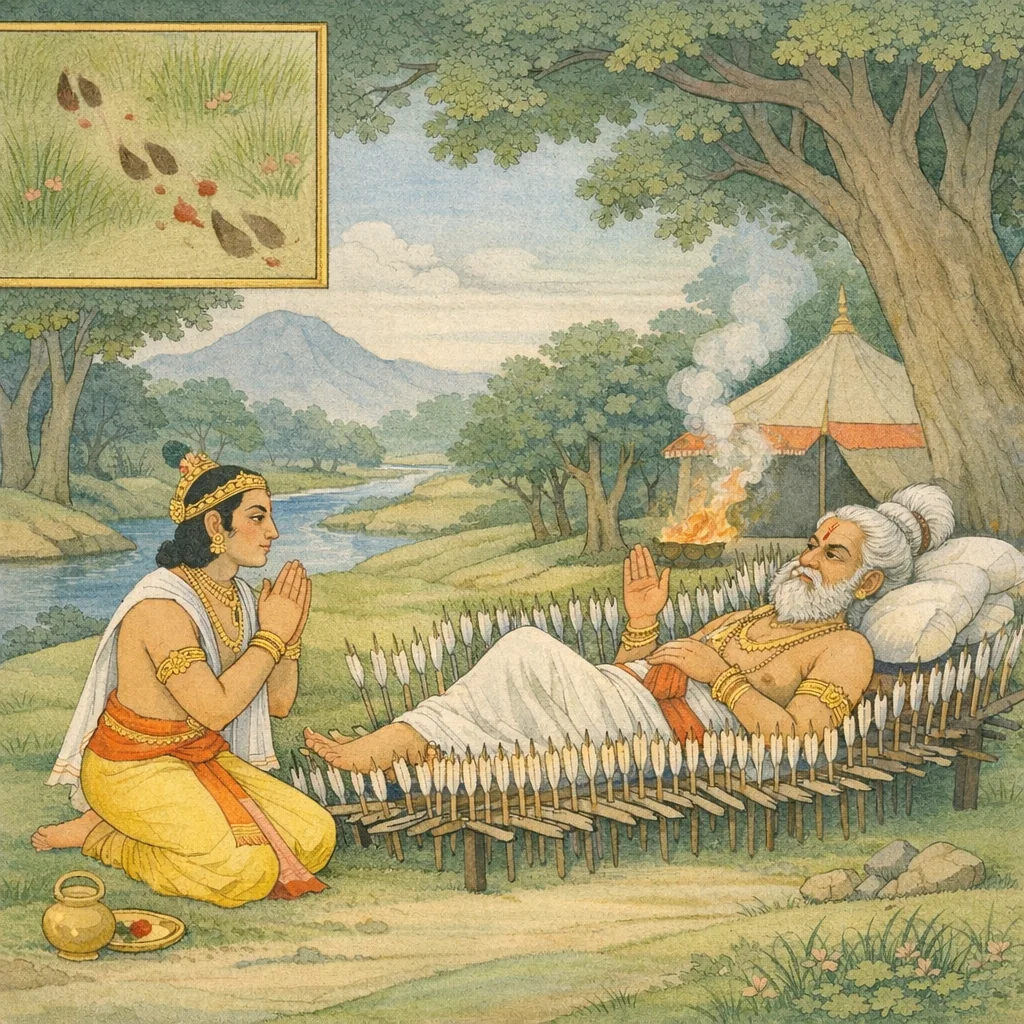
यश्षतुर्गुणसम्पन्नं धर्म ब्रूयात् स धर्मवित् । अहेरिव हि धर्मस्य पदं दुःखं गवेषितुम्,जो वेदविहित, स्मृतियोंद्वारा अनुमोदित, सज्जनोंद्वारा सेवित तथा अपनेको प्रिय लगनेवाला धर्म है, उसे चतुर्गुणसम्पन्न माना गया है। जो वैसे धर्मका उपदेश करता है, वही धर्मज्ञ है। सर्पके पदचिह्नकी भाँति धर्मके यथार्थ स्वरूपको ढूँढ़ निकालना बहुत कठिन है। जैसे बाणसे बिंधे हुए मृगका एक पैर पृथ्वीपर रक्तका लेप कर देनेके कारण व्याधको उस मृगके रहनेके स्थानको लक्षित कराकर वहाँ पहुँचा देता है, उसी प्रकार उक्त चतुर्गुणसम्पन्न धर्म भी धर्मके यथार्थ स्वरूपकी प्राप्ति करा देता है
Bhīṣma said: “He alone is a knower of dharma who teaches that dharma which is endowed with four qualities. For the true ‘footprint’ of dharma is hard to discover—like the track of a serpent.”
Verse 21
यथा मृगस्य विद्धस्य पदमेकं पद नयेत् । लक्षेद् रुधिरलेपेन तथा धर्मपदं नयेत्,जो वेदविहित, स्मृतियोंद्वारा अनुमोदित, सज्जनोंद्वारा सेवित तथा अपनेको प्रिय लगनेवाला धर्म है, उसे चतुर्गुणसम्पन्न माना गया है। जो वैसे धर्मका उपदेश करता है, वही धर्मज्ञ है। सर्पके पदचिह्नकी भाँति धर्मके यथार्थ स्वरूपको ढूँढ़ निकालना बहुत कठिन है। जैसे बाणसे बिंधे हुए मृगका एक पैर पृथ्वीपर रक्तका लेप कर देनेके कारण व्याधको उस मृगके रहनेके स्थानको लक्षित कराकर वहाँ पहुँचा देता है, उसी प्रकार उक्त चतुर्गुणसम्पन्न धर्म भी धर्मके यथार्थ स्वरूपकी प्राप्ति करा देता है
Bhishma said: Just as the track of a deer struck by an arrow can be followed step by step—because the smear of blood marks its footprints and leads the hunter to where it has gone—so too one may be led to the true “footprint” of dharma. The real nature of dharma is extremely hard to discern, like the track of a serpent; yet dharma that is (1) enjoined by the Veda, (2) affirmed by the Smṛtis, (3) practiced by the virtuous, and (4) inwardly approved as wholesome and dear, becomes a fourfold guide that helps one reach dharma’s authentic form. One who teaches such dharma is truly a knower of dharma.
Verse 22
एवं सद्धिर्विनीतेन पथा गन्तव्यमित्युत । राजर्षीणां वृत्तमेतदवगच्छ युधिछ्ठिर,युधिष्ठिर! इस प्रकार श्रेष्ठ पुरुष जिस मार्गसे गये हैं, उसीपर तुम्हें भी चलना चाहिये। इसीको तुम राजर्षियोंका सदाचार समझो
Bhishma said: “Thus it is declared: you should proceed along the disciplined and well-guided path that the good and noble have followed. Understand this, O Yudhishthira, as the established conduct of royal sages—an ethical standard to be adopted and lived.”
Verse 132
इति श्रीमहाभारते शान्तिपर्वणि आपद्धर्मपर्वणि राजर्षिवृत्तं नाम द्वात्रिशयदिधिकशततमो<ध्याय:
Thus, in the Śrī Mahābhārata, within the Śānti Parva and specifically the section on conduct in times of distress (Āpaddharma), concludes the one-hundred-and-thirty-second chapter, entitled “The Account of the Royal Sage.”
Frequently Asked Questions
How a leader can transform a violent, unregulated collective into a rule-bound community by restricting harm, protecting vulnerable groups, and redefining coercion as disciplined governance rather than predation.
Authority is legitimate only when bounded by prohibitions against harming noncombatants, when it safeguards productive and ritual life (crops, hospitality, cows, brāhmaṇas), and when punishment is corrective rather than arbitrary.
Yes. The text states that one who regularly recounts Kāpavya’s conduct does not experience fear from forest beings, nor fear from humans or nonhumans, presenting the narrative as a protective recollection tied to ethical order.