Adhyaya 66
अध्याय ६६: पुनर्द्यूत-प्रस्तावः (Proposal for a Renewed Dice Game)
Upa-parva: Dyūta-anuvṛtti (Renewed Dice-Counsel Episode)
Janamejaya asks how the minds of both Pāṇḍavas and Dhārtarāṣṭras stood after the Pāṇḍavas were permitted to depart with wealth. Vaiśaṃpāyana reports that Duḥśāsana quickly approaches Duryodhana in distress, asserting that the elder (Dhṛtarāṣṭra) is allowing assets to pass to rivals and urging immediate strategic recognition. Duryodhana, Karṇa, and Śakuni then address Dhṛtarāṣṭra with polished speech, invoking Bṛhaspati’s counsel on statecraft: enemies should be subdued by every method before they become dangerous. They describe the Pāṇḍavas as aroused and prepared, using vivid analogies (angered serpents) to argue that delay invites retaliation and public ridicule. Their proposed solution is a second dice match engineered through Śakuni’s expertise, with a structured exile condition (twelve years forest dwelling and a thirteenth year in concealment), aiming to secure control without open battle. Dhṛtarāṣṭra orders the Pāṇḍavas recalled despite widespread objections by elders and well-wishers who urge peace. Gāndhārī, grieving yet principled, reminds Dhṛtarāṣṭra of earlier omens and warnings about Duryodhana’s birth and character, cautioning that provoking restrained Pāṇḍavas is like breaking a dam or rekindling a quenched fire. Dhṛtarāṣṭra admits inability to restrain the dynasty’s internal drive and authorizes the renewed dice engagement, closing the chapter with institutional endorsement of a high-risk policy choice.
Chapter Arc: द्यूतसभा की धूल अभी बैठी भी नहीं कि दुर्योधन विदुर को पुकारकर द्रौपदी के विषय में कठोर वचन छेड़ देता है—और सभा में नीति का वज्रपात होने वाला है। → विदुर दुर्योधन के दुर्वचन को ‘कालपाश’ से बँधे मन की पहचान बताकर उसे चेताते हैं कि जो ऊँचाई पर लटक रहा हो, वह गिरने से पहले अपना संकट नहीं देख पाता। वे द्रौपदी को ‘दासी’ कहे जाने का खंडन करते हैं और द्यूत के नैतिक-वैधानिक आधार पर प्रहार करते हैं। → विदुर का निर्णायक उद्घोष—द्रौपदी दासी नहीं हो सकती; अनीश (स्वयं पर अधिकार खो चुके) राजा द्वारा उसे पणे पर रखना ही अधर्म है—और दुर्योधन का यह द्यूत-आसक्ति कुरुवंश के सर्वनाश का बीज है। → विदुर कटुवचन के परिणाम बताते हैं—कटु वाणी बाण बनकर पहले बोलने वाले को ही जलाती है; सुहृदों की पथ्य वाणी न सुनी जाए तो लोभ ही बढ़ता है। अध्याय का स्वर दुर्योधन के भविष्य-नाश की भविष्यवाणी पर टिकता है। → सुहृदों की नीति-अवज्ञा और लोभ-वृद्धि के बीच संकेत स्पष्ट है—सभा का अधर्म अब वंश-विनाश की ओर अपरिहार्य गति पकड़ चुका है।
Shlokas
Verse 1
(दाक्षिणात्य अधिक पाठके १६३ “लोक मिलाकर कुल ४६३ “लोक हैं) निज जा धन #* षट्षष्टितमो<5 ध्याय: विदुरका दुर्योधनको फटकारना दुर्योधन उवाच एहि क्षत्तद्रौपदीमानयस्व प्रियां भार्या सम्मतां पाण्डवानाम् | सम्मार्जतां वेश्म परैतु शीघ्र तत्रास्तु दासीभिरपुण्यशीला,दुर्योधन बोला--विदुर! यहाँ आओ। तुम जाकर पाण्डवोंकी प्यारी और मनोनुकूल पत्नी द्रौपदीको यहाँ ले आओ। वह पापाचारिणी शीघ्र यहाँ आये और मेरे महलमें झाड़ू लगाये। उसे वहीं दासियोंके साथ रहना होगा
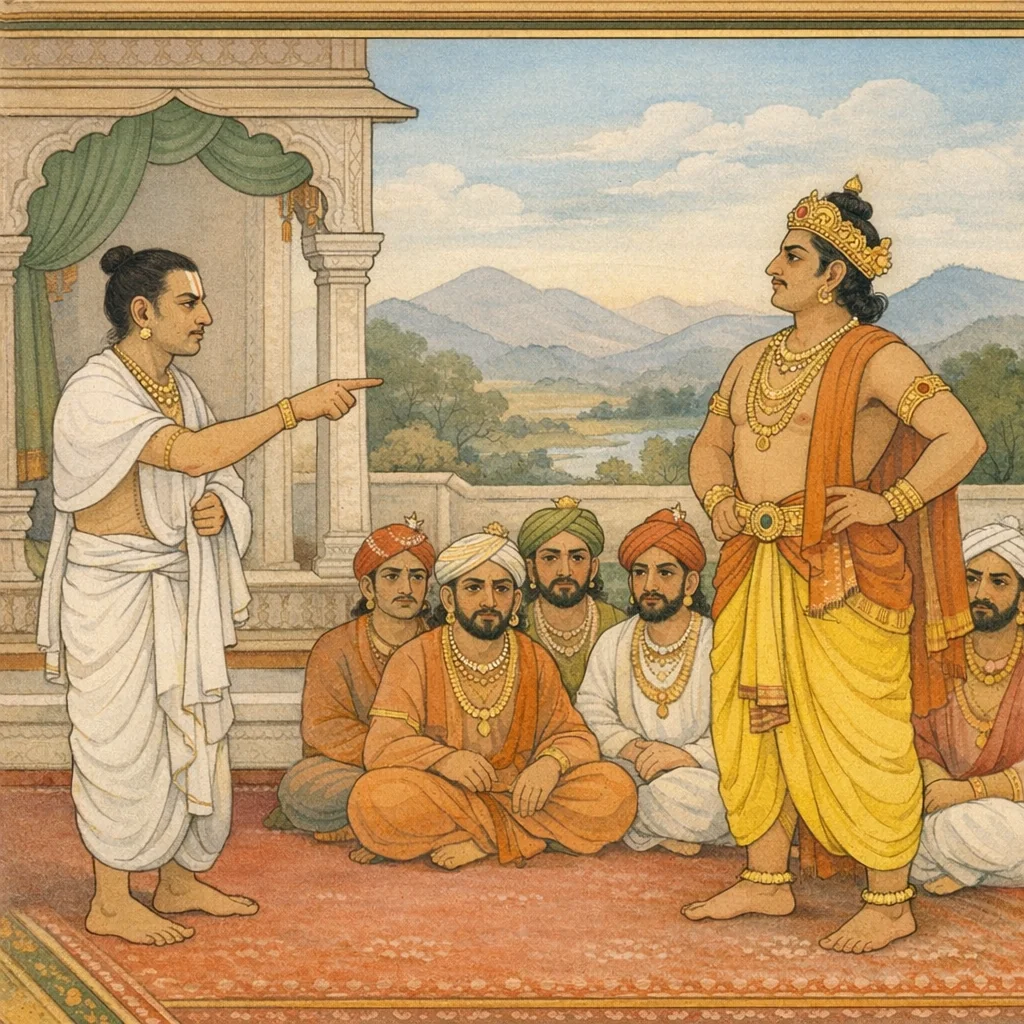
Duryodhana said: “Come here, Kṣattā (Vidura). Go and bring Draupadī—the beloved and cherished wife of the Pāṇḍavas—here. Let that woman of sinful conduct come at once and sweep my palace; there she shall remain among the maidservants.” This command casts Duryodhana’s humiliation of Draupadī as a deliberate display of power after the dice-game, laying bare a collapse of restraint and a direct affront to dharma and royal decorum.
Verse 2
विदुर उवाच दुर्विभाषं भाषितं त्वादृशेन न मन्द सम्बुध्यसि पाशबद्ध: । प्रपाते त्वं लम्बमानो न वेत्सि व्याप्रान मृरः कोपयसे5तिवेलम्
Vidura said: “Such harsh and improper speech has been uttered by one like you, yet you do not understand, for you are bound by the noose (of delusion and attachment). Hanging over a precipice, you do not realize your peril; like a distressed animal, you provoke anger beyond all measure.”
Verse 3
विदुर बोले--ओ मूर्ख! तेरे-जैसे नीचके मुखसे ही ऐसा दुर्वचन निकल सकता है। अरे! तू कालपाशसे बँँधा हुआ है, इसीलिये कुछ समझ नहीं पाता। तू ऐसे ऊँचे स्थानमें लटक रहा है जहाँसे गिरकर प्राण जानेमें अधिक विलम्ब नहीं; किंतु तुझे इस बातका पता नहीं है। तू एक साधारण मृग होकर व्याप्रोंको अत्यन्त क़ुद्ध कर रहा है ।। आशीविषास्ते शिरसि पूर्णकोपा महाविषा: | मा कोपिष्ठा: सुमन्दात्मन् मा गमस्त्वं यमक्षयम्,मन्दात्मन्! तेरे सिरपर कोपमें भरे हुए महान् विषधर सर्प चढ़ आये हैं। तू उनका क्रोध न बढ़ा, यमलोकमें जानेको उद्यत न हो
Vidura said: “You fool—only a base man like you could utter such vile words. You are bound in the noose of Time; that is why you understand nothing. You hang from a lofty height, from which a fall would cost you your life without much delay—yet you do not perceive it. Like a petty deer, you are provoking enraged tigers. Deadly, highly venomous serpents, their wrath fully roused, have climbed upon your head; do not inflame their anger further, dull-witted one—do not rush toward the abode of Yama (death).”
Verse 4
न हि दासीत्वमापन्ना कृष्णा भवितुमहति । अनीशेन हि राज्जैषा पणे न्यस्तेति मे मति:
Vidura declares that Kṛṣṇā (Draupadī) cannot rightly be reduced to the status of a slave. In his judgment, she was staked in the gambling match by a king who no longer had authority over her—having already lost his own freedom—so the wager itself is ethically and legally invalid.
Verse 5
द्रौपदी कभी दासी नहीं हो सकती, क्योंकि राजा युधिष्ठिर जब पहले अपनेको हारकर द्रौपदीको दाँवपर लगानेका अधिकार खो चुके थे, उस दशामें उन्होंने इसे दाँवपर रखा है (अतः मेरा विश्वास है कि द्रौपदी हारी नहीं गयी) ।। अयं धत्ते वेणुरिवात्मघाती फल राजा धृतराष्ट्रस्य पुत्र: । द्यूतं हि वैराय महाभयाय मत्तो न बुध्यत्ययमन्तकालम्
Vidura declares that Draupadī can never truly become a slave. Since King Yudhiṣṭhira had first lost himself, he had already forfeited the moral and legal right to stake Draupadī afterward; therefore Vidura holds that she was not won legitimately. He then warns that Dhṛtarāṣṭra’s son is embracing a self-destructive end, like one who clings to a bamboo that brings harm. Gambling breeds enmity and great peril, yet this man, intoxicated by it, does not perceive that it is leading him toward death and ruin.
Verse 6
जैसे बाँस अपने नाशके लिये ही फल धारण करता है, उसी प्रकार धृतराष्ट्रके पुत्र इस राजा दुर्योधनने महान् भयदायक वैरकी सृष्टिके लिये इस जूएके खेलको अपनाया है। यह ऐसा मतवाला हो गया है कि मौत सिरपर नाच रही है; किंतु इसे उसका पता ही नहीं है ।। नारुन्तुदः स्यान्न नृशंसवादी न हीनत: परमभ्याददीत । ययास्य वाचा पर उद्विजेत नतां वदेदुषतीं पापलोक्याम्,किसीको मर्मभेदी बात न कहे, किसीसे कठोर वचन न बोले। नीच कर्मके द्वारा शत्रुको वशमें करनेकी चेष्टा न करे। जिस बातसे दूसरेको उद्वेग हो, जो जलन पैदा करनेवाली और नरककी प्राप्ति करानेवाली हो, वैसी बात मुँहले कभी न निकाले
Just as a bamboo bears fruit only for its own destruction, so Duryodhana—son of Dhṛtarāṣṭra—has embraced this game of dice to bring into being a vast and terrifying enmity. He is so intoxicated with delusion that death seems to be dancing upon his head, yet he does not recognize it. Therefore one should not speak words that pierce another’s heart, nor use cruel speech; one should not seek advantage through base means; and one should never utter words that agitate others—words that burn with malice and lead to hellish consequences.
Verse 7
समुच्चरन्त्यतिवादाश्न वक्त्राद् यैराहत: शोचति रात्र्यहानि । परस्य नामर्मसु ते पतन्ति तान् पण्डितो नावसूजेत् परेषु,मुँहसे जो कटु वचनरूपी बाण निकलते हैं, उनसे आहत हुआ मनुष्य रात-दिन शोक और चिन्तामें डूबा रहता है। वे दूसरेके मर्मपर ही आघात करते हैं; अतः विद्वान् पुरुषको दूसरोंके प्रति निष्ठुर वचनोंका प्रयोग नहीं करना चाहिये
Vidura says: Harsh and excessive words that burst forth from one’s mouth strike another like weapons; the wounded person then grieves day and night. Such words fall upon the vulnerable points of others. Therefore, a wise person should not employ cruel speech toward anyone.
Verse 8
द्यूत-क्रीडामें युधिष्ठिरकी पराजय दुःशासनका द्रौपदीके केश पकड़कर खींचना अजो हि शस्त्रमगिलत् किलैक: शस्त्रे विपन्ने शिरसास्य भूमौ | निकृन्तनं स्वस्य कण्ठस्य घोरं तद्वद् वैरं मा कृथा: पाण्डुपुत्रै:,कहते हैं, एक बकरा कोई शस्त्र निगलने लगा; किंतु जब वह निगला न जा सका, तब उसने पृथ्वीपर अपना सिर पटक-पटककर उस शस्त्रको निगल जानेका प्रयत्न किया। जिसका परिणाम यह हुआ कि वह भयानक शस्त्र उस बकरेका ही गला काटनेवाला हो गया। इसी प्रकार तुम पाण्डवोंसे वैर न ठानो
Vidura warns through a stark simile: “Once a goat tried to swallow a sharp weapon. When it could not be swallowed, it kept striking its head on the ground in a desperate attempt to force it down—only to make that dreadful weapon cut its own throat. In the same way, do not nurse enmity toward the sons of Pāṇḍu.” In the setting of the dice-hall outrage—Yudhiṣṭhira’s defeat and Draupadī’s humiliation—Vidura cautions that reckless hostility and pride-driven escalation ultimately destroy the one who clings to them.
Verse 9
न किंचिदित्थं प्रवदन्ति पार्था वनेचरं वा गृहमेधिनं वा । तपस्विनं वा परिपूर्णविद्यं भषन्ति हैवं श्वनरा: सदैव,कुन्तीके पुत्र किसी वनवासी, गृहस्थ, तपस्वी अथवा विद्वानसे ऐसी कड़ी बात कभी नहीं बोलते। तुम्हारे-जैसे कुत्तेके-से स्वभाववाले मनुष्य ही सदा इस तरह दूसरोंको भूँका करते हैं
Vidura says: “The sons of Kuntī (the Pāṇḍavas) do not speak such harsh words to anyone—whether to a forest-dweller, a householder, an ascetic, or even to one fully accomplished in learning. Only men of dog-like nature bark at others in this manner again and again.”
Verse 10
द्वारं सुघोरं नरकस्य जिह्ां न बुध्यते धृतराष्ट्रस्य पुत्र: । तमन्वेतारो बहव: कुरूणां द्यूतोदये सह दुःशासनेन
Vidura warns that Dhṛtarāṣṭra’s son does not recognize the most dreadful gateway to hell—its very tongue, as it were. At the rise of the gambling match, many among the Kurus follow him into that ruin, together with Duḥśāsana, drawn along by the same reckless impulse.
Verse 11
धृतराष्ट्रका पुत्र नरकके अत्यन्त भयंकर एवं कुटिल द्वारको नहीं देख रहा है। दुःशासनके साथ कौरवोंमेंसे बहुत-से लोग दुर्योधनकी इस चद्यूतक्रीड़ामें उसके साथी बन गये ।। मज्जन्त्यलाबूनि शिला: प्लवन्ते मुहान्ति नावो5म्भसि शश्वदेव | मूढो राजा धृतराष्ट्रस्य पुत्रो न मे वाच: पथ्यरूपा: शूणोति,चाहे तूँबी जलमें डूब जाय, पत्थर तैरने लग जाय तथा नौकाएँ भी सदा ही जलमें डूब जाया करें; परंतु धृतराष्ट्रका यह मूर्ख पुत्र राजा दुर्योधन मेरी हितकर बातें नहीं सुन सकता
Vidura laments that the moral order seems inverted: gourds sink, stones float, and boats lose their way in the waters. In the same way, Dhṛtarāṣṭra’s foolish son—King Duryodhana—will not listen to Vidura’s wholesome, welfare-giving counsel. The verse underscores the ethical tragedy of a ruler who rejects good advice and embraces crooked, fearsome paths, especially in the context of the dice-game and the Kauravas’ complicity.
Verse 12
अन्तो नूनं भवितायं कुरूणां सुदारुण: सर्वहरो विनाश: । वाच: काव्या: सुहृदां पथ्यरूपा न श्रूयन्ते वर्धते लोभ एव
Vidura declares that a terribly cruel end is surely approaching the Kurus—an all-devouring ruin. The well-wrought, wholesome words of their well-wishers are no longer heeded; only greed continues to grow.
Verse 66
यह दुर्योधन निश्चय ही कुरुकूल॒का नाश करनेवाला होगा। इसके द्वारा अत्यन्त भयंकर सर्वगाशका अवसर उपस्थित होगा। यह अपने सुहृदोंका पाण्डित्यपूर्ण हितकर वचन भी नहीं सुनता; इसका लोभ बढ़ता ही जा रहा है ।। इति श्रीमहाभारते सभापर्वणि द्यूतपर्वणि विदुरवाक्ये षट्षष्टितमो5ध्याय:
Vidura warns that this resolve of Duryodhana will surely bring ruin upon the Kuru line. Through it, an occasion of extreme terror and universal destruction is arising. He will not listen even to the wise, beneficial counsel of his own well-wishers; his greed only continues to grow.
Frequently Asked Questions
Whether a king may authorize coercive strategy (a renewed dyūta designed to constrain rivals) under the logic of security and expediency, even when advisors warn it violates restraint, kin-protection, and the broader dharma of rulership.
Policy arguments framed as “necessary” can still be ethically corrosive when driven by fear and attachment; governance requires the capacity to restrain factional impulses, especially when institutional power can be used to formalize injustice.
No explicit phalaśruti appears; the chapter’s meta-significance is structural—showing how counsel, analogies, and procedural orders can normalize escalation, making later catastrophe intelligible as a chain of sanctioned decisions.