Adhyaya 60
सभा-पर्व (अध्याय ६०) — द्रौपदी-प्रश्नः सभायाम् / Draupadī’s Question in the Assembly
Upa-parva: Dyūta–Sabhyāhvāna (Dice-game Aftermath: Summons to the Assembly)
Vaiśaṃpāyana narrates how Dhṛtarāṣṭra’s son, emboldened, orders the charioteer-messenger Prātikāmin to bring Draupadī, asserting she has been won in the dice-game. Prātikāmin conveys this to Draupadī; she contests the claim by asking a precise legal-ethical question: did Yudhiṣṭhira first lose himself or wager her first? The messenger reports the query back to the assembly, where Yudhiṣṭhira remains silent and Duryodhana insists Draupadī come and speak publicly. Prātikāmin returns, warning of impending ruin and urging compliance; Draupadī appeals to dharma and the hope of ethical restraint. She is brought to the sabhā in distress and compromised condition, and Duryodhana presses for a public resolution. Duḥśāsana then forcefully seizes her by the hair and drags her toward the assembly; Draupadī protests the impropriety and addresses the learned elders, while the court’s seniors, including Bhīṣma, acknowledge dharma’s subtlety and hesitate to deliver a definitive ruling. The chapter closes with heightened tension, as coercion replaces deliberation and the assembly’s moral authority is tested.
Chapter Arc: द्यूत की तैयारी होते ही समस्त राजा धृतराष्ट्र को अग्रणी मानकर सभा में प्रवेश करते हैं—राजसभा का वैभव और भीतर छिपी अनिष्ट-योजना एक साथ मंच पर उतरती है। → भीष्म, द्रोण, कृप और विदुर अनमने मन से साथ चलते हैं; आसन-व्यवस्था, राजाओं की चमक-दमक और ‘सुहृद्-द्यूत’ का नाम लेकर खेल का आरम्भ—इन सबके बीच नैतिक असहजता गहराती जाती है। → युधिष्ठिर अपना बहुमूल्य धन दाँव पर रखकर पूछते हैं कि प्रतिदाँव क्या होगा; तत्क्षण शकुनि पासे उठाकर फेंकता है और ‘जितम्’ कहकर युधिष्ठिर को संबोधित करता है—पहला घाव लग जाता है। → सभा में द्यूत औपचारिक रूप से शुरू हो जाता है; राजाओं की उपस्थिति और धृतराष्ट्र की छत्रछाया में खेल को वैधता का आवरण मिल जाता है, जबकि धर्मज्ञों का मौन अस्वीकार भीतर ही भीतर जलता रहता है। → पहली जीत के साथ शकुनि का पलड़ा भारी हो चुका है—अब आगे कौन-कौन से दाँव लगेंगे और युधिष्ठिर कहाँ तक खिंचेंगे?
Shlokas
Verse 1
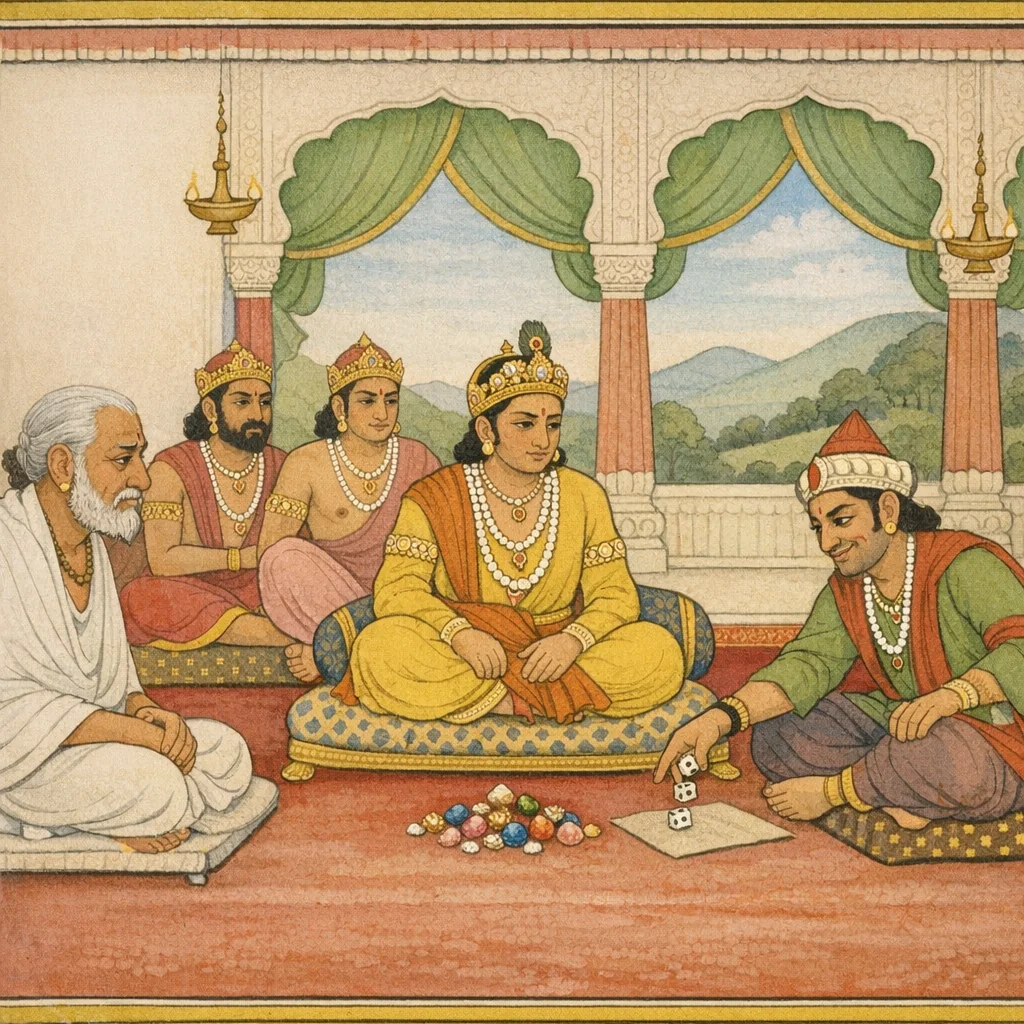
#+>.ोी >> श्न हि कम षष्टितमो< ध्याय: द्यूतक्रीड़ाका आरम्भ वैशम्पायन उवाच उपोहामाने द्यूते तु राजान: सर्व एव ते । धृतराष्ट्रं पुरस्कृत्य विविशुस्तां सभां तत:,वैशम्पायनजी कहते हैं--राजन्! जब जूएका खेल आरम्भ होने लगा, उस समय सब राजालोग धृतराष्ट्रको आगे करके उस सभामें आये
Vaiśampāyana said: As the game of dice was being set in motion, all those kings, placing Dhṛtarāṣṭra at their head, then entered that assembly hall.
Verse 2
भीष्मो द्रोण: कृपश्चैव विदुरश्च महामति: । नातिप्रीतेन मनसा तेडन्ववर्तन्त भारत,भारत! भीष्म, द्रोण, कृप और परम बुद्धिमान् विदुर--ये सब लोग असंतुष्ट चित्तसे ही धृतराष्ट्रके पीछे-पीछे वहाँ आये
Vaiśampāyana said: Bhīṣma, Droṇa, Kṛpa, and the great-minded Vidura followed behind Dhṛtarāṣṭra, O Bhārata, but with hearts not truly pleased.
Verse 3
ते द्न्दशशः पृथक् चैव सिंहग्रीवा महौजस: । सिंहासनानि भूरीणि विचित्राणि च भेजिरे
Vaiśampāyana said: Then those mighty heroes, lion-necked and full of vigor, in pairs and also singly, took their seats upon many splendid thrones, wondrously adorned.
Verse 4
सिंहके समान ग्रीवावाले वे महातेजस्वी राजालोग कहीं एक-एक आसनपर दो-दो तथा कहीं पृथक्ू-पृथक् एक-एक आसनपर एक ही व्यक्ति बैठे। इस प्रकार उन्होंने वहाँ रखे हुए बहुसंख्यक विचित्र सिंहासनोंको ग्रहण किया ।। शुशुभे सा सभा राजन् राजभिस्तै: समागतै: । देवैरिव महाभागै: समवेतैस्त्रिविष्टपम्,राजन! जैसे महाभाग देवताओंके एकत्र होनेसे स्वर्गलोक सुशोभित होता है, उसी प्रकार उन आगन्तुक नरेशोंसे उस सभाकी बड़ी शोभा हो रही थी
Vaiśampāyana said: O King, that royal assembly hall shone with the arrival of those kings. As Triviṣṭapa, heaven, grows splendid when the fortunate gods gather, so did the sabhā gain great splendor from the assembled monarchs.
Verse 5
सर्वे वेदविद: शूरा: सर्वे भास्वरमूर्तय: । प्रावर्तत महाराज सुहृद् द्यूतमनन्तरम्,महाराज! वे सब-के-सब वेदवेत्ता एवं शूरवीर थे तथा उनके शरीर तेजोयुक्त थे। उनके बैठ जानेके अनन्तर वहाँ सुहृदोंकी द्यूतक्रीड़ा आरम्भ हुई
Vaiśampāyana said: “All of them were knowers of the Vedas, and all were valiant; all bore radiant forms. Then, O King, as soon as they had taken their seats, the kinsmen’s friendly game of dice began.”
Verse 6
युधिछिर उवाच अयं बहुधनो राजन् सागरावर्तसम्भव: । मणिहरित्तर: श्रीमान् कनकोत्तमभूषण:,युधिष्ठिरने कहा--राजन्! यह समुद्रके आवर्तमें उत्पन्न हुआ कान्तिमान् मणिरत्न बहुत बड़े मूल्यका है। मेरे हारोंमें यह सर्वोत्तम है तथा इसपर उत्तम सुवर्ण जड़ा गया है
Yudhiṣṭhira said: “O King, this radiant jewel—born from an ocean whirlpool—is of immense value. It is a splendid ornament, set with the finest gold, and the best among my necklaces.”
Verse 7
एतदू राजन् मम धन प्रतिपाणो5स्ति कस्तव । येन मां त्वं महाराज धनेन प्रतिदीव्यसे
Yudhiṣṭhira said: “O King, this indeed is the stake I set against your wealth. With what counter-stake, O great king, will you gamble against me with riches?”
Verse 8
राजन! मेरी ओरसे यही धन दाँवपर रखा गया है। इसके बदलेमें तुम्हारी ओरसे कौन- सा धन दाँवपर रखा जाता है, जिस धनके द्वारा तुम मेरे साथ खेलना चाहते हो ।। दुर्योधन उवाच सन्ति मे मणयश्चैव धनानि सुबहूनि च । मत्सरश्न न मे<र्थेषु जयस्वैनं दुरोदरम्,दुर्योधन बोला--मेरे पास भी मणियाँ और बहुत-सा धन है, मुझे अपने धनपर अहंकार नहीं है। आप इस जूएको जीतिये
Duryodhana said: “I too possess jewels and abundant wealth. I bear no envy or petty rivalry regarding possessions. Win this gambler here.” In the dice-hall, his words project a show of detachment and confidence, yet they also normalize the reckless ethics of wagering—treating the game and its human stakes as something to be ‘won’ rather than judged by dharma.
Verse 9
वैशम्पायन उवाच ततो जग्राह शकुनिस्तानक्षानक्षतत्त्ववित् । जितमित्येव शकुनिर्युधिष्ठिरमभाषत,वैशम्पायनजी कहते हैं--जनमेजय! तदनन्तर पासे फेंकनेकी कलामें अत्यन्त निपुण शकुनिने उन पासोंको हाथमें लिया और उन्हें फेंककर युधिष्ठिरसे कहा--“लो, यह दाँव मैंने जीता”
Vaiśampāyana said: Then Śakuni, supremely skilled in casting the dice and knowing their every art, took the dice in his hand. He threw them and said to Yudhiṣṭhira, “I have won.”
Verse 60
इति श्रीमहा भारते सभापर्वणि द्यूतपर्वणि द्यूतारम्भे षष्टितमोडध्याय:
Thus ends the sixtieth chapter of the Sabhā Parva of the Śrī Mahābhārata—within the Dyūta Parva, at the commencement of the gambling episode. The narrative now formally turns toward the ethically fraught dice-game that will test kingship, honor, and dharma.
Frequently Asked Questions
Whether a spouse can be treated as a stake after the gambler has already forfeited his own agency—Draupadī’s question tests the boundary between procedural claims and the ethical limits of ownership and consent.
Public institutions must not confuse formal procedure with dharma; when coercion enters, ethical responsibility shifts to elders and authorities to intervene, because silence can function as complicity.
No explicit phalaśruti occurs here; the meta-commentary is embedded in Bhīṣma’s admission of dharma’s subtlety and the narrative’s demonstration that unresolved ethical ambiguity can precipitate institutional collapse.